In Search of Singapore's Original Laksa
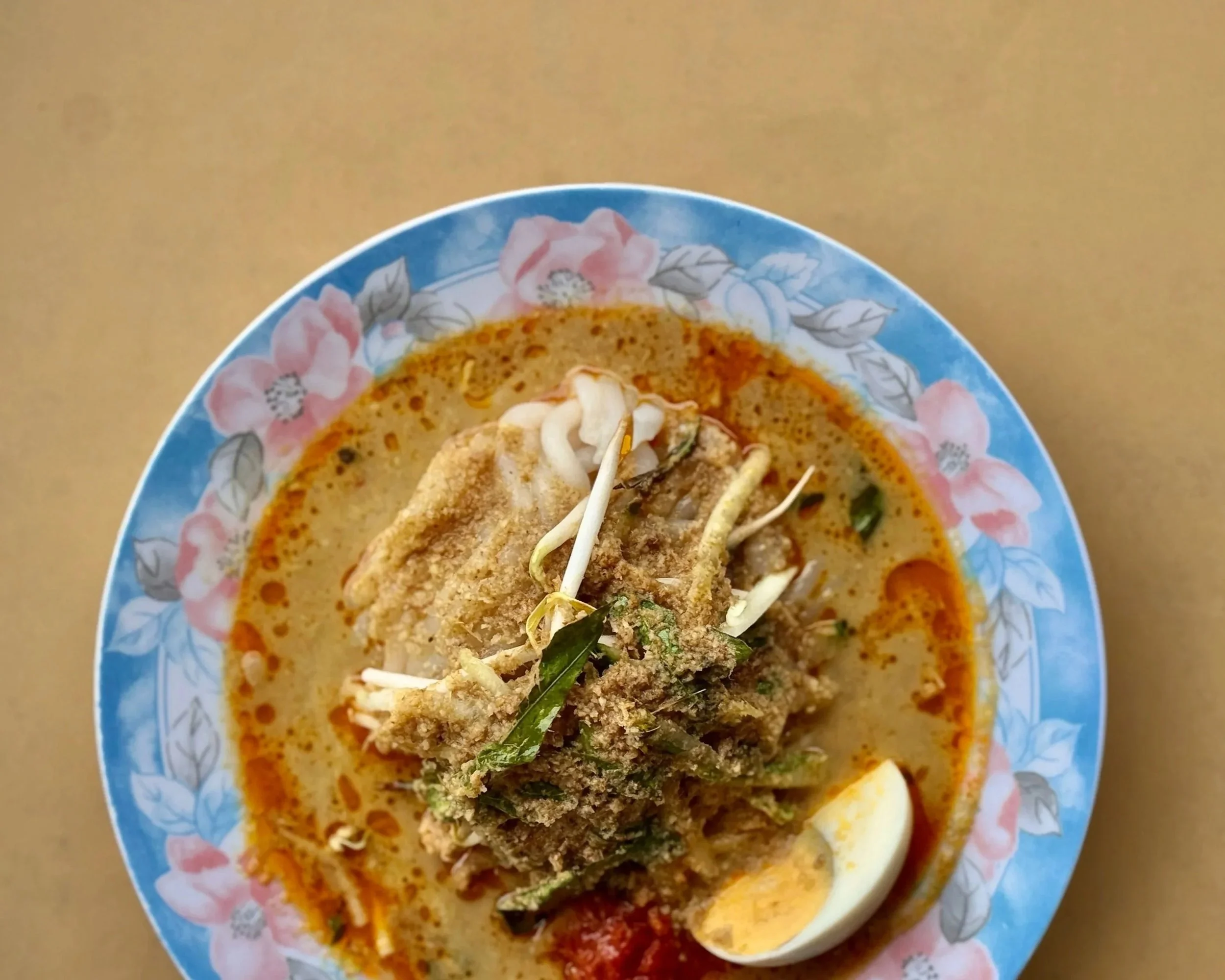
Returning to a home he spent his life marketing as a destination for global travellers, Renjie Wong finds himself face to face (for the first time) with Singapore’s original laksa, the laksa Siglap. It is rare, complex, an exercise in textural convolution, and a gravy which guarantees splashes across shirts and table surfaces. To his surprise, Renjie finds it may be the most Singaporean experience of them all.
I adore Katong laksa. Fiery orange curry, fried tofu puffs, poached blood cockles, a heaping dollop of funky sambal atop an already maximalist bowl — it’s the kind of universally appealing dish that every good Singaporean grows up on, and one that has found its way onto tourism ads, Business Class menus, and subpar ‘Singaporean’ restaurants the world over.
I’ve spent much of my career abroad marketing Singapore as a travel destination for global travellers. To anyone who would listen, I evangelised the mind-altering pleasures of this Very Local Dish™. Katong laksa is unctuous from fresh coconut milk, packed with oceanic funk from dried fermented shrimp, and its rice noodles are famously optimised for efficiency by being snipped into bite-sized segments so they can be eaten with a soup spoon. What could be more Singaporean than that? The damn dish is practically a national manifesto.
Last year, after more than a decade away and deeply homesick for Katong laksa, I moved back home determined to understand Singapore more deeply. Then I discovered that Katong laksa is not, in fact, Singapore’s original laksa.
I’ve always known about laksa’s regional variations, of course. Its etymology speaks to its wild plurality: believed to derive from Persian lakhsha — ‘one hundred thousand’ — laksa was once used across the ancient Malay world as a broad term for noodles. In Malaysia and Indonesia alone there are, quite possibly, lakhs of laksas: Penang’s version sours its mackerel broth with tamarind and pineapple, for example; Sarawak’s charges in the opposite direction with shredded chicken and a broth that booms with bassy spice.
Singapore’s Katong laksa is rich, balanced, and (in my mind) unparalleled, but as it turns out, our original laksa is actually something else altogether, something rather more complex. I first encountered the elusive laksa Siglap while exploring the bustling Geylang Serai Market — the sprawling heart of Singapore’s Malay community, located across the road from my home studio and cultural space, 52cc.
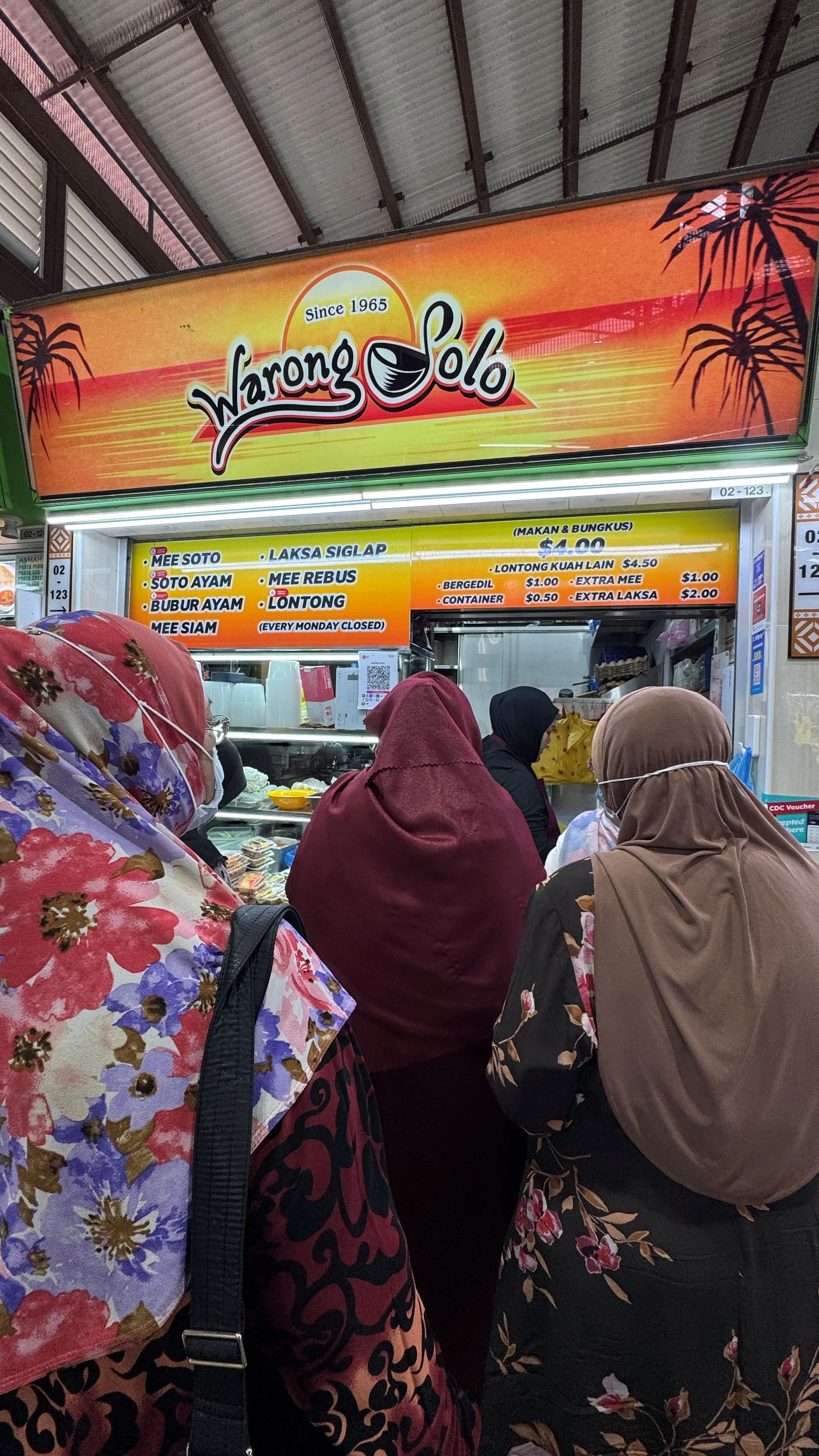
Warong Solo, Geylang Serai Market.
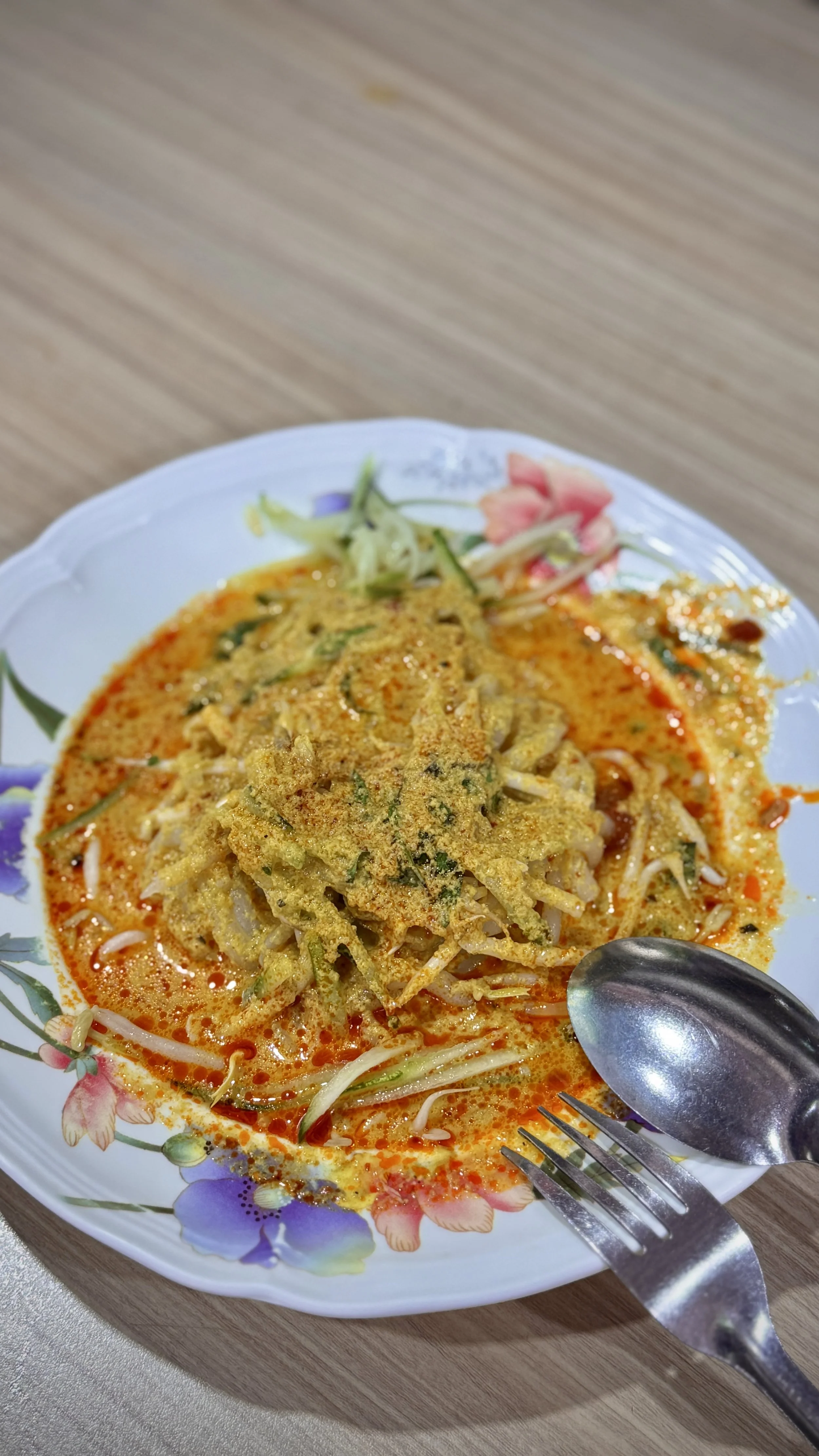
Laksa Siglap, Geylang Serai Market
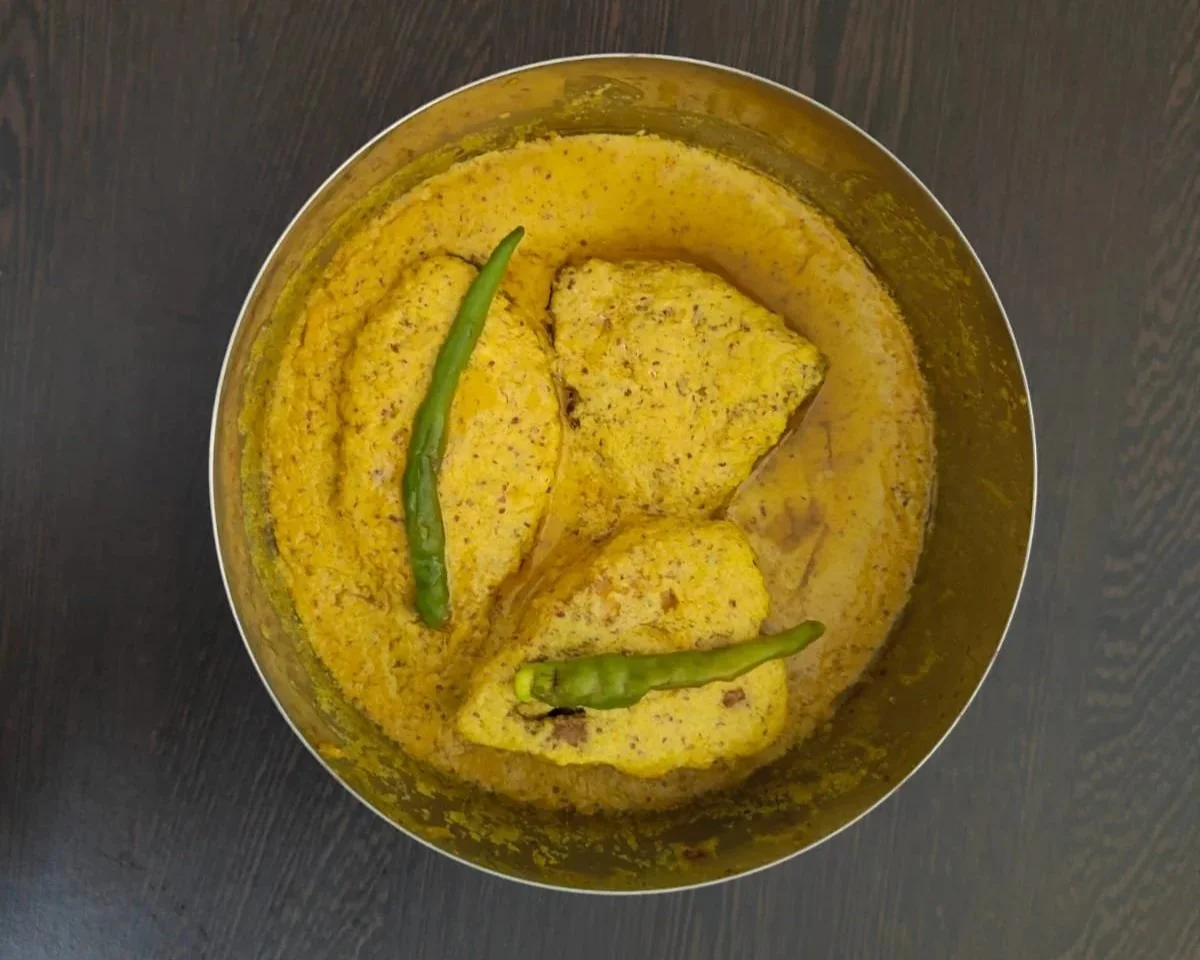
Rooted in the historic Johor Sultanate — the wealthy maritime kingdom that governed Singapore for three centuries — laksa Siglap is defined by what the tides brings in to our shores. Instead of relying on dried shrimp for umami, its pale yellow gravy deploys fresh ikan parang, a tasty if notoriously bony herring common in local waters. The fish is simmered gently with spices, before being pounded into a thick pulp to release its flavour. Every last infinitesimal pinbone must then be painstakingly picked out by hand — a process that, when executed properly, takes hours and also the patience of a grandmother with strong opinions.
The resulting ragù is uniquely meaty, yet lighter on the spice than Katong laksa, and laden with grated coconut rather than milky homogeneity. It arrives carefully ladled over a plate (never a bowl!) of fat, chewy noodle nests made from rice and sago starch, the latter introduced by Indonesian Bugis seafarers, among Singapore's earliest settlers. Something about this dish seems to exist between two worlds: for how confoundingly laborious the gravy is to prepare, garnishing remains disarmingly spartan, with little more than julienned cucumber, beansprouts, half a boiled egg, and a few sprigs of daun kesum, the citrusy herb so essential to Malay laksa preparations that English simply calls it ‘laksa leaf’.
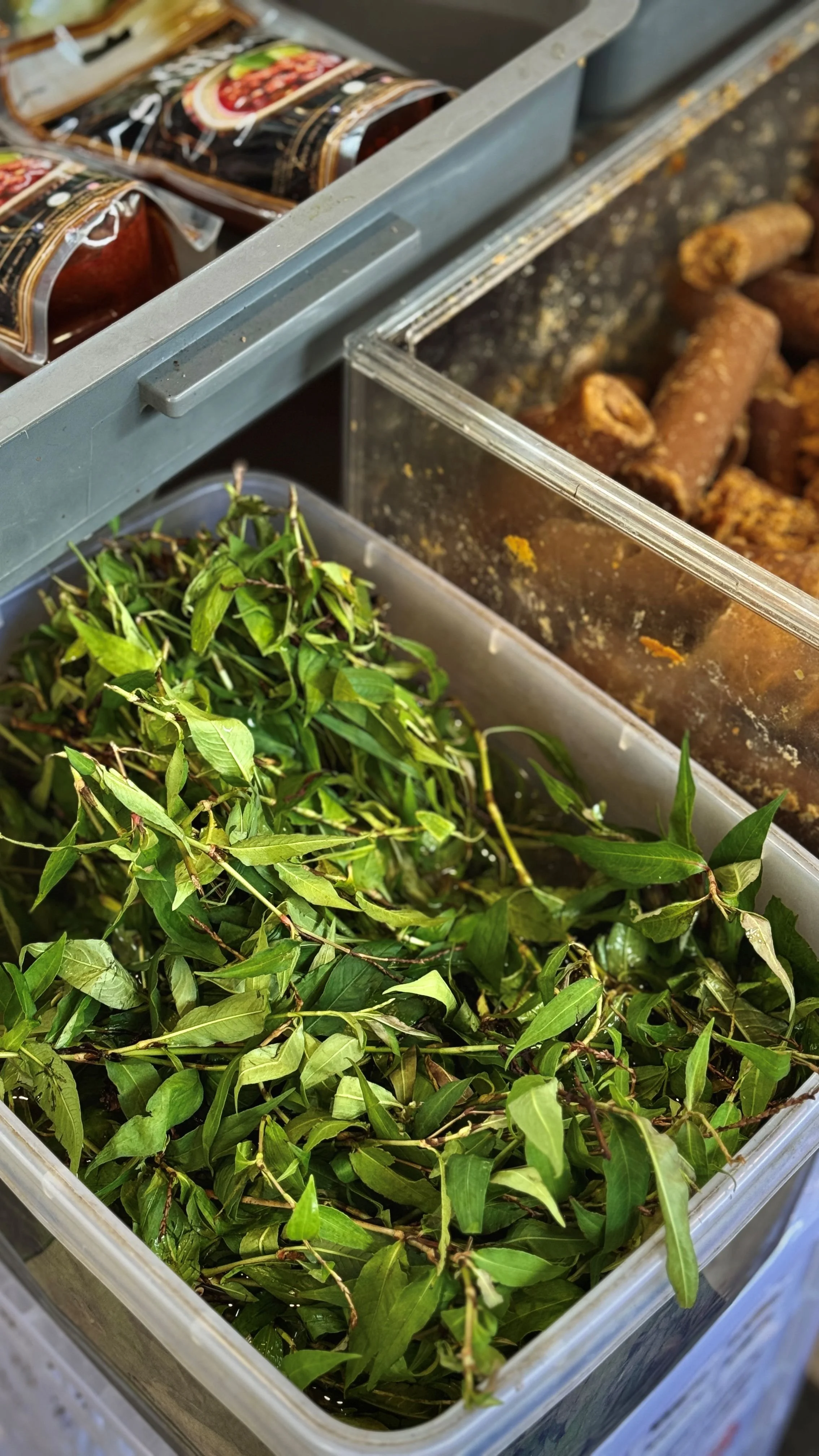
Laksa leaves
The dish I ordered felt fundamentally, philosophically different from any laksa I’d ever eaten in Singapore, and I was immediately hooked. If it seems strange that I only encountered laksa Siglap in my thirties, it is because the dish is vanishingly rare: eclipsed by the omnipresent Katong laksa, there are only six known hawkers continuing to serve laksa Siglap today. Happily I discovered that three operate within striking distance of 52cc — including one just downstairs, at Warung Selera Masakan Kampung — and so I promptly embarked on a laksa Siglap spree.
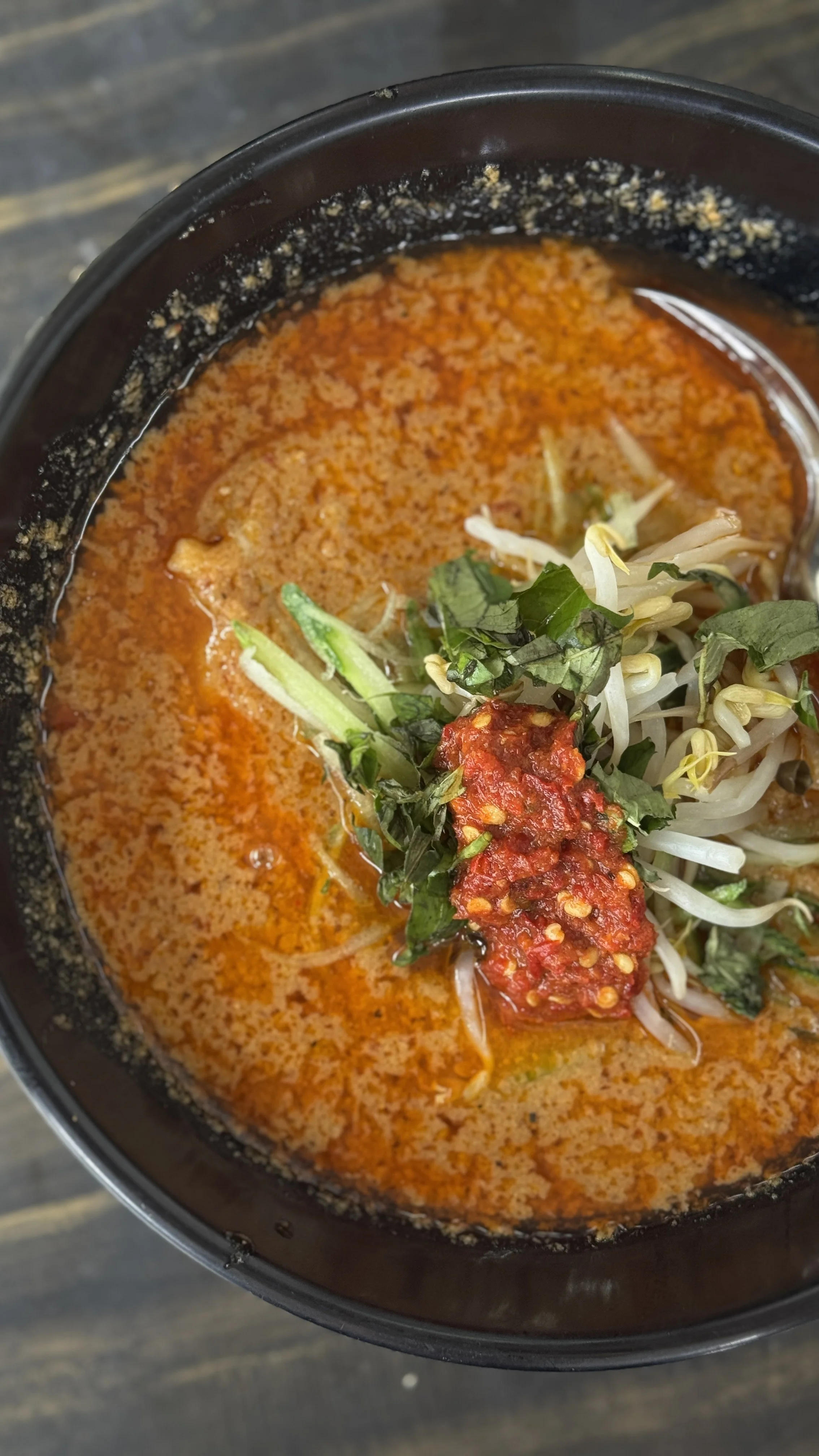
Laksa Siglap, Warung Selera Masakan Kampung
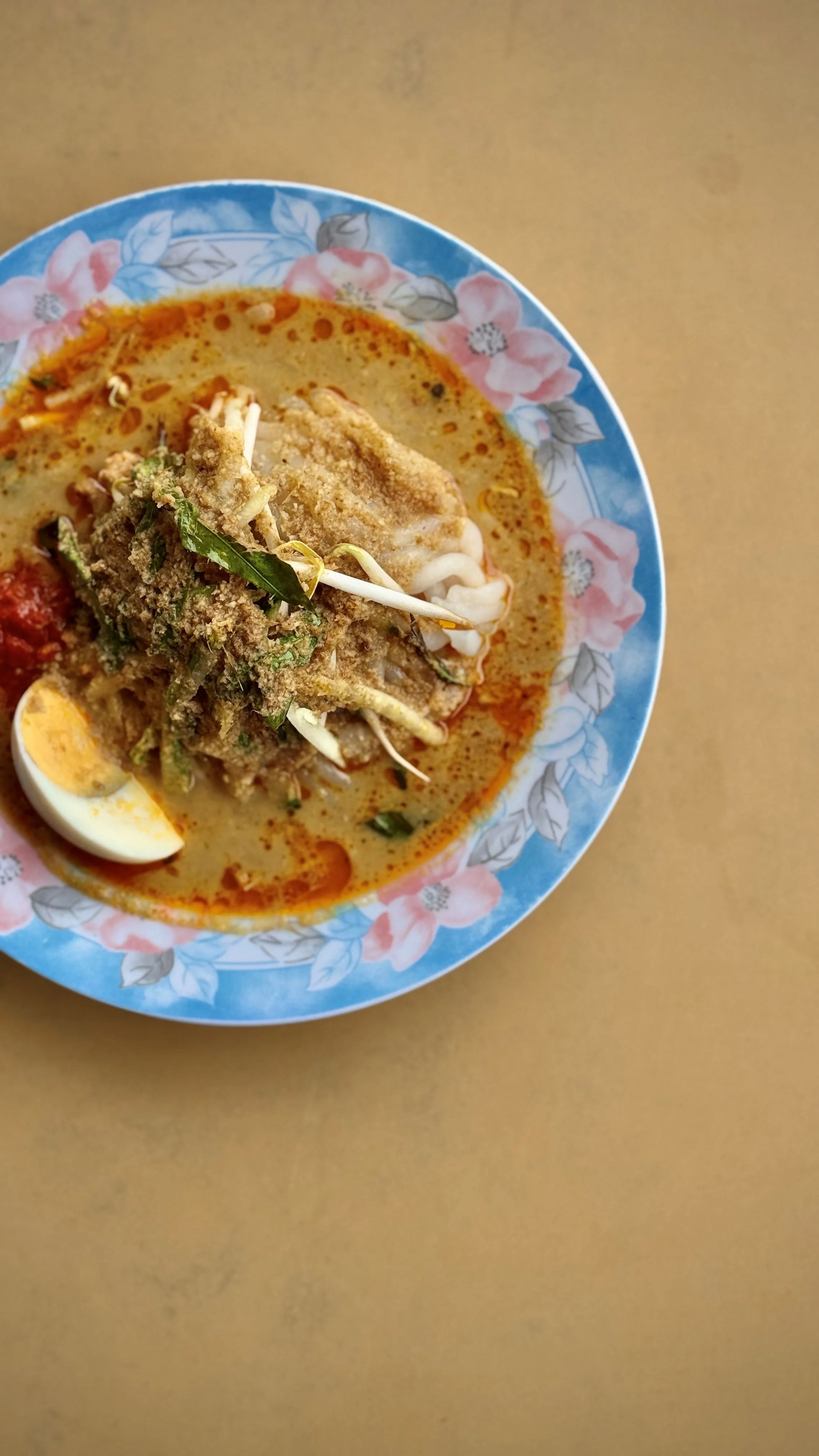
Laksa Siglap, Chew N Chat
Halfway through my fifth plate — at the charming but deeply unfortunately named Chew N Chat food court — it struck me why laksa Siglap remains less celebrated. The dish doesn’t quite conform to our contemporary conceptions of noodle comfort. Whereas Katong laksa delivers lush, immediate gratification, nothing about laksa Siglap feels readily accessible or streamlined for consumption: an exercise in textural convolution, its gravy is pulpy, its garnish crisp, and its noodles so defiantly chewy they stage a small rebellion in your mouth. The thick, tangled strands all but guarantee gravy splashes across shirts and table surfaces.
And yet, that complexity and glorious messiness feels like precisely what makes Singaporean cuisine — and Singapore — so fascinating today.
For years, I had been trained to articulate Singapore through export-friendly narratives: efficient, innovative, Deliciousness For Dummies. These stories weren’t just invented, to be sure, but they were largely acronymic; they marketed Singapore as neat and winningly legible to the world. Like the spoon-friendly Katong laksa, they are universally appealing, if only because they’re necessarily uncomplicated versions of the Singaporean condition today.
Since returning home, though, my most illuminating encounters with Singapore have been through less packaged experiences. I can’t say I’ve felt particularly inclined to visit any of the world-famous attractions, and God forbid I step foot in an Orchard Road shopping mall. All those are wonderful, yes, but my real re-education — in what makes Singapore fascinating today — has happened instead at dawn at Geylang Serai Market, watching Malay aunties and Michelin-starred chefs politely duelling over rare produce. At 4am frog-leg porridge suppers beside sleepy Vietnamese karaoke hostesses, I’ve learnt how Singapore eats. In grungy indie galleries housed in restored Modernist shophouse lofts, I’ve watched how Singapore designs. At elaborate dinner parties inside botanical design studios hidden within industrial warehouses, I’ve experienced how Singapore hosts.
Like laksa Siglap, these versions of Singapore can be confounding, contradictory and occasionally chaotic. But they are, to me, where the real magnetism of Singapore today lies. In my homecoming journey, laksa Siglap has become an unlikely guide to understanding what it means to experience a city constantly deciding between movement and rootedness.
Katong laksa will always have its place in my heart, and in the global imagination; it will always be our Miss Singapore Congeniality. Laksa Siglap happily gives us none of that spectacle, since it’s difficult to explain, it’s challenging in mouthfeel, and it splashes gravy on your shirt. It makes you work slightly harder for your dinner… and that’s precisely what makes it so ineffably delicious.
Which, come to think of it, might be the most Singaporean experience of them all.
Renjie Wong is a Singapore-based creative and founder of 52cc, a forthcoming private cultural space in the Joo Chiat-Geylang Serai neighbourhood, dedicated to presenting contemporary Singapore. He works across disciplines, showcasing Singapore via food, images, objects, and gatherings that celebrate wonder in the city’s everyday.
ALSO ON GOYA