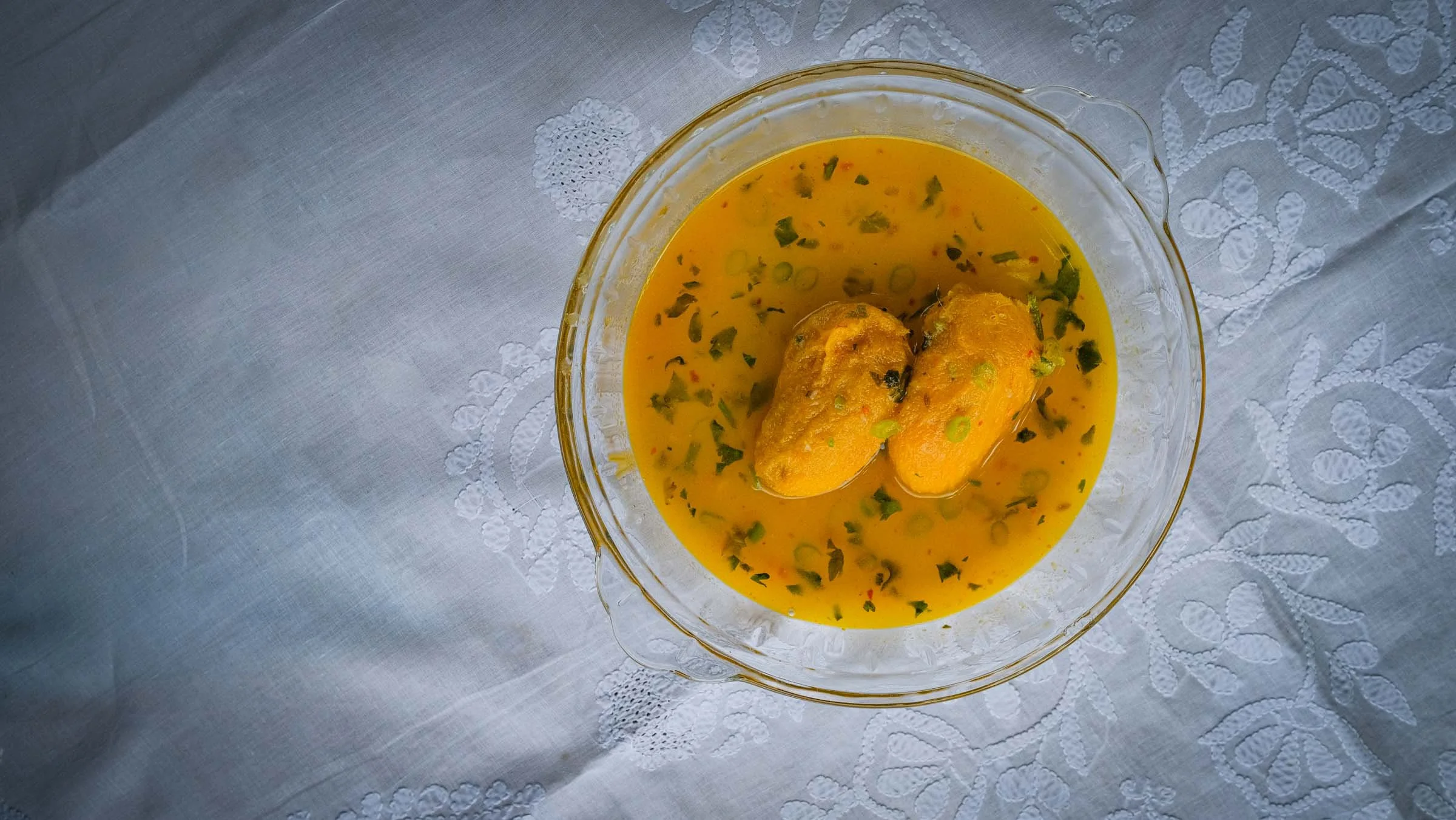
Chhoila: A Fire-Grilled Delicacy from the Newar Community
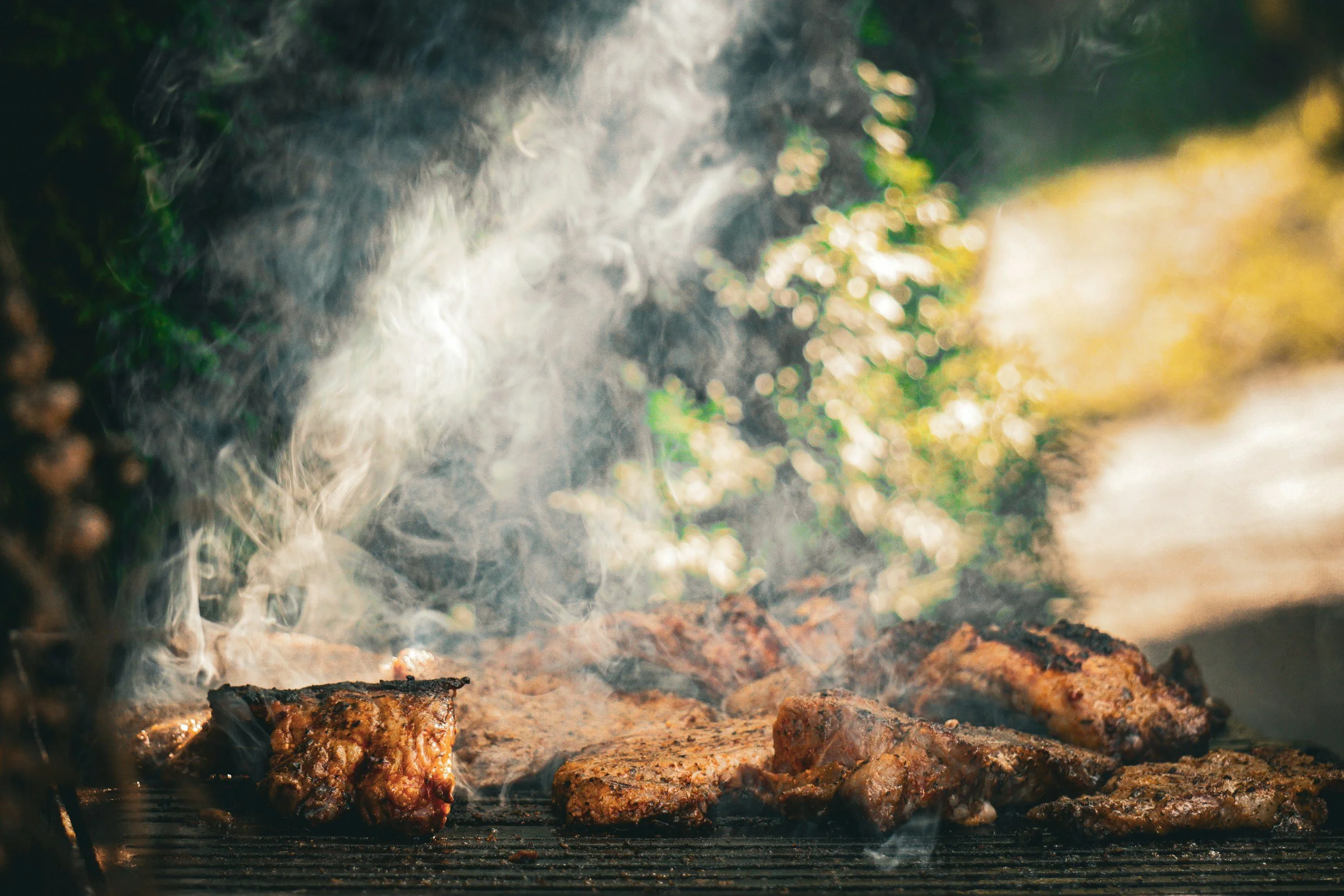
On a visit to Nepal, Ridhi Agrawal learns about chhoila, the grilled meat delicacy of the Newar community. The dish is an important part of Newari festivals, and the centre-piece of the samay baji (traditional platter). Traditionally made with meat, she finds herself enjoying the numerous vegetarian versions.
In many Newar households, the preparation of chhoila (choila), a spicy, grilled meat dish, over a fire-pit is a memory cherished across generations. Traditionally, rice straw was used to create a fire, whose heat would then sear buffalo meat, the star ingredient. This charring of the meat lent the dish an earthy, smoky flavour, and the moniker, haku chhoila (haku meaning black in Newari). The Newar word (छ्वय्ला) romanised is written as chvaylā. In Newar homes, chhoila is prepared in two ways — haku chhoila, and mana chhoila (boiled marinated meat).
Today, modern conveniences like gas and stoves have replaced the traditional process of preparing chhoila, and the buffalo meat is also often substituted with chicken, or mushrooms.
Regardless, this dish remains at the heart of Newari culinary heritage.
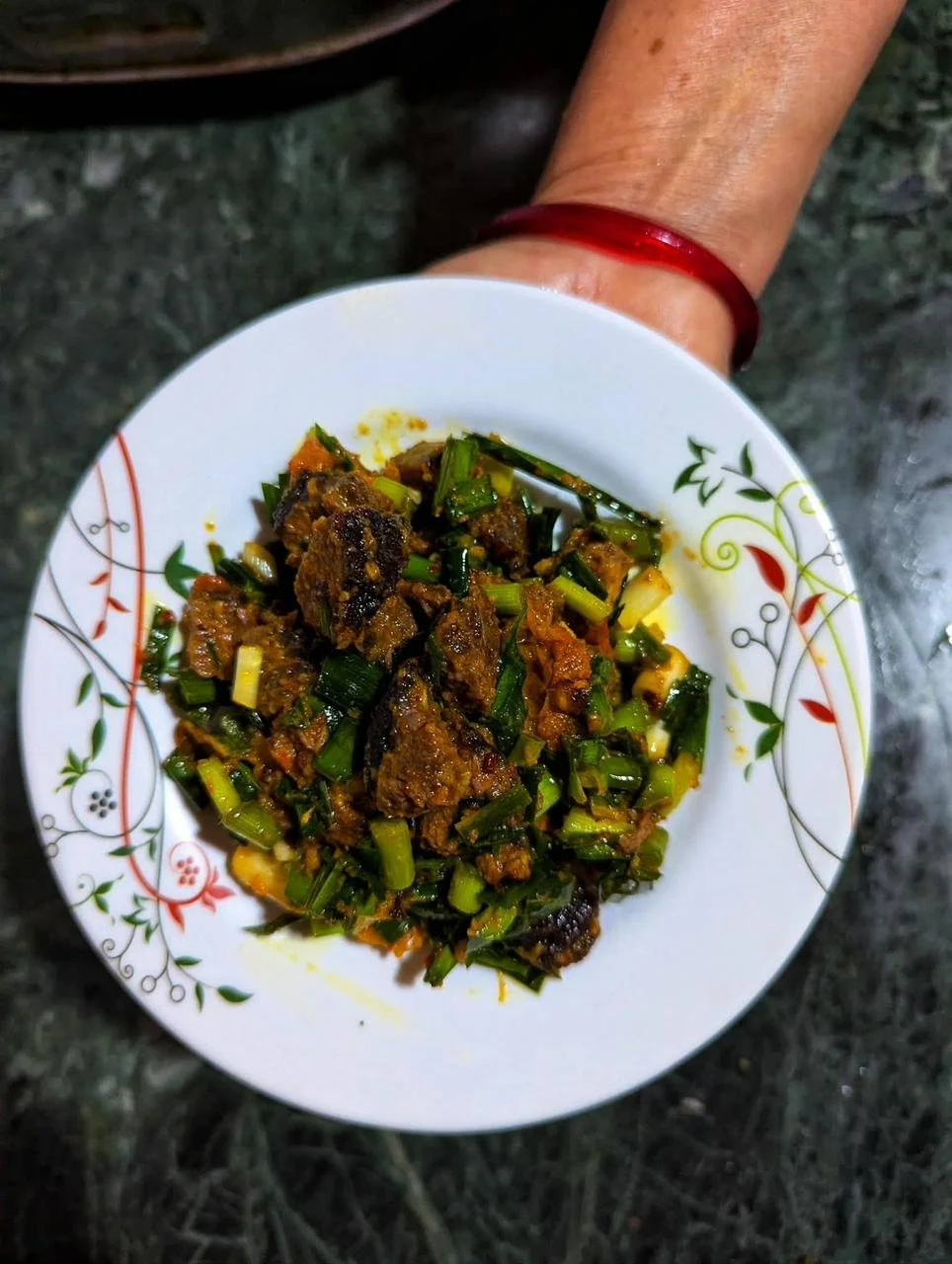
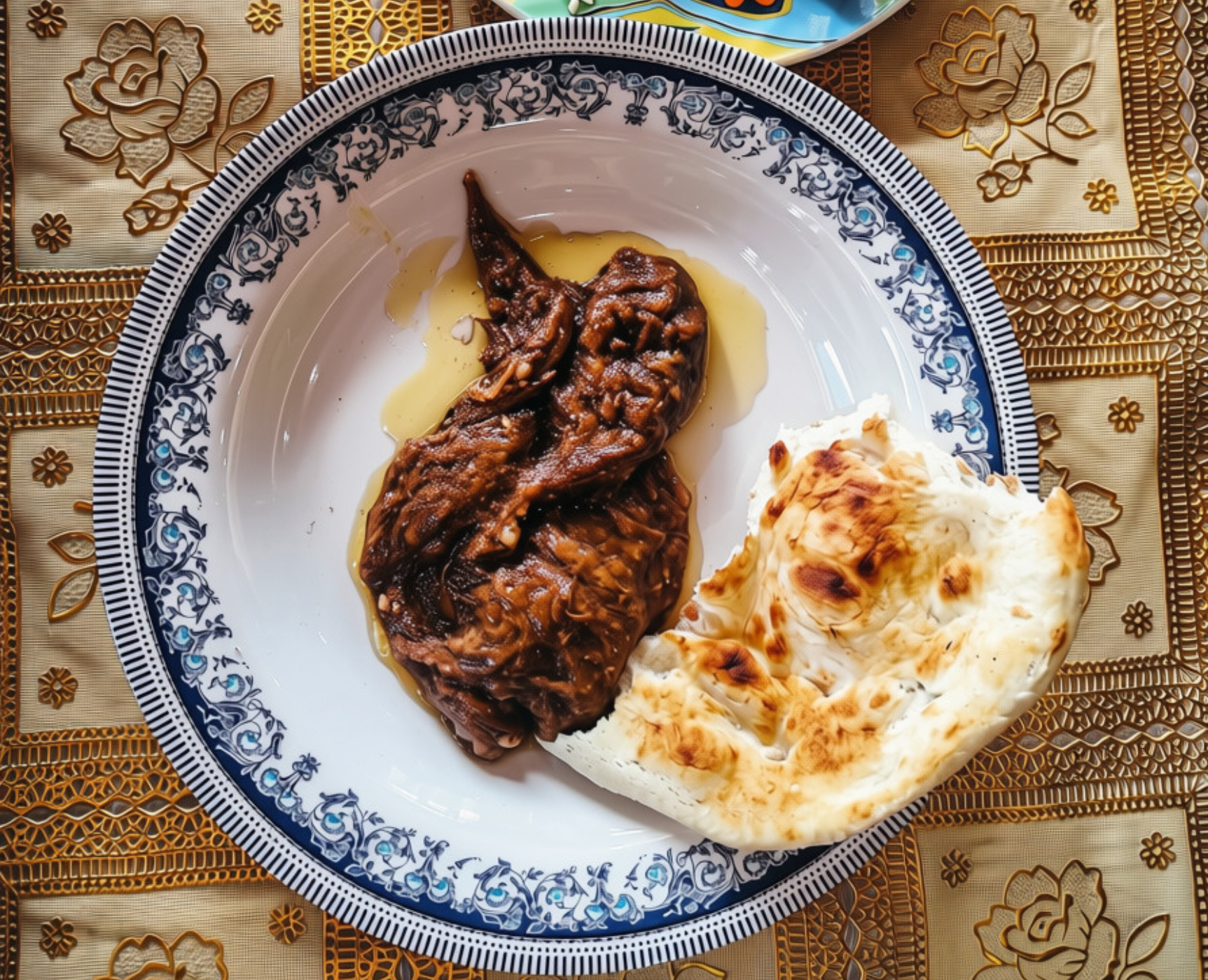
Haku chhoila is a flame-roasted spicy grilled meat dish. Image credit: Community Homestay Network
The Newars are the indigenous inhabitants of the Kathmandu Valley, living across Bhaktapur, Lalitpur, Kathmandu, and the nearby towns like Kirtipur. “In Nepal, chhoila comes from the Newari community,” explains Khika Bahadur Gurung, the head chef of Hotel Traditional Comfort, in Kathmandu. “It is symbolic of celebrations and ceremonial feasts, and is an essential component of Samay baji, the ceremonial food platter.”
Samay baji is more than a meal. The items on the platter — baji (beaten rice or chiura), aila (a local liquor), wauncha (greens), chhoila, and khen (boiled egg) — represent the five elements: earth, water, fire, air and sky. “Chhoila is the fire element,” says Kabita Raut Maharjan, a home cook from Kirtipur. “It represents energy and the life force called Agni.”
The secret of chhoila lies in the masala, which demands that spices be ground fresh in the kitchen. It begins with the red chillies, which must be dry-roasted or lightly toasted in oil, and then ground till granular. Other essential ingredients include ginger and garlic paste, and roasted tomatoes. Newars avoid using tomatoes when the dish is prepared as an offering.
The ingredient that truly defines the dish is the oil. “We make chhoila only in mustard oil,” says Kabita. To enhance the depth of the flavour further, she sometimes adds garlic stalks to the dish in winter.
Tradition & Ritual
The rituals surrounding chhoila are closely tied to the lunar calendar.
“Samay baji is especially prepared in the full moon of Ashoj month [mid-September and mid-October] on the days leading to Dussehra. The chhoila prepared for this specific platter on this full moon day is called chhoila baji,” says Kabita.
On that day, the Newari community eats chhoila specifically made from buff, or water buffalo. On the evening of the full moon night, samay baji is left outside the homes as daan (donation) to the deities, containing five pieces of chhoila.
Beyond the full moon of Ashoj, chhoila is prepared on Ashtami, the 8th day of Dussehra, for Kuchi Bhay. The festival derives its name from manas (a unit of measure) and bhay (meaning feast). This elaborate feast features 12 different vegetable dishes and 12 pieces of chhoila, served on a banana leaf, alongside beaten rice and dishes like bara, fish, and greens. “The 12 different vegetable dishes and 12 pieces of chhoila is a common mentioned tradition, but the number can vary depending on the family or locality. The number 12 is symbolic, representing completeness in the ritual feast,” says Tejashwi Shrestha, manager at Hotel Traditional Comfort in Kathmandu.
Chhoila is offered as bhog to households and ancestral deities, as well as gods like Bhairav or Durga for protection. In most cases, the offering is usually done at the family shrine or sometimes at the local temple, depending on the household’s tradition. It is also served as bhog at Kirtipur’s Bagh Bhairab Temple.
Chhoila plays a central role in Kirtipur’s most important festival, the Indrayani Jatra, a chariot festival dedicated to the goddess Indrayani. Other major occasions for making chhoila include birthdays, and the festival of Makara Sankranti.
New Interpretations
During my many visits to the valley, I would pass many hole-in-the-wall shops selling chhoila assuming it was always made with meat. However, an innovative take on this traditional method, swapping meat for soya bean, tofu, paneer or mushrooms, meant that as a vegetarian, I could experience a meatless version of chhoila.
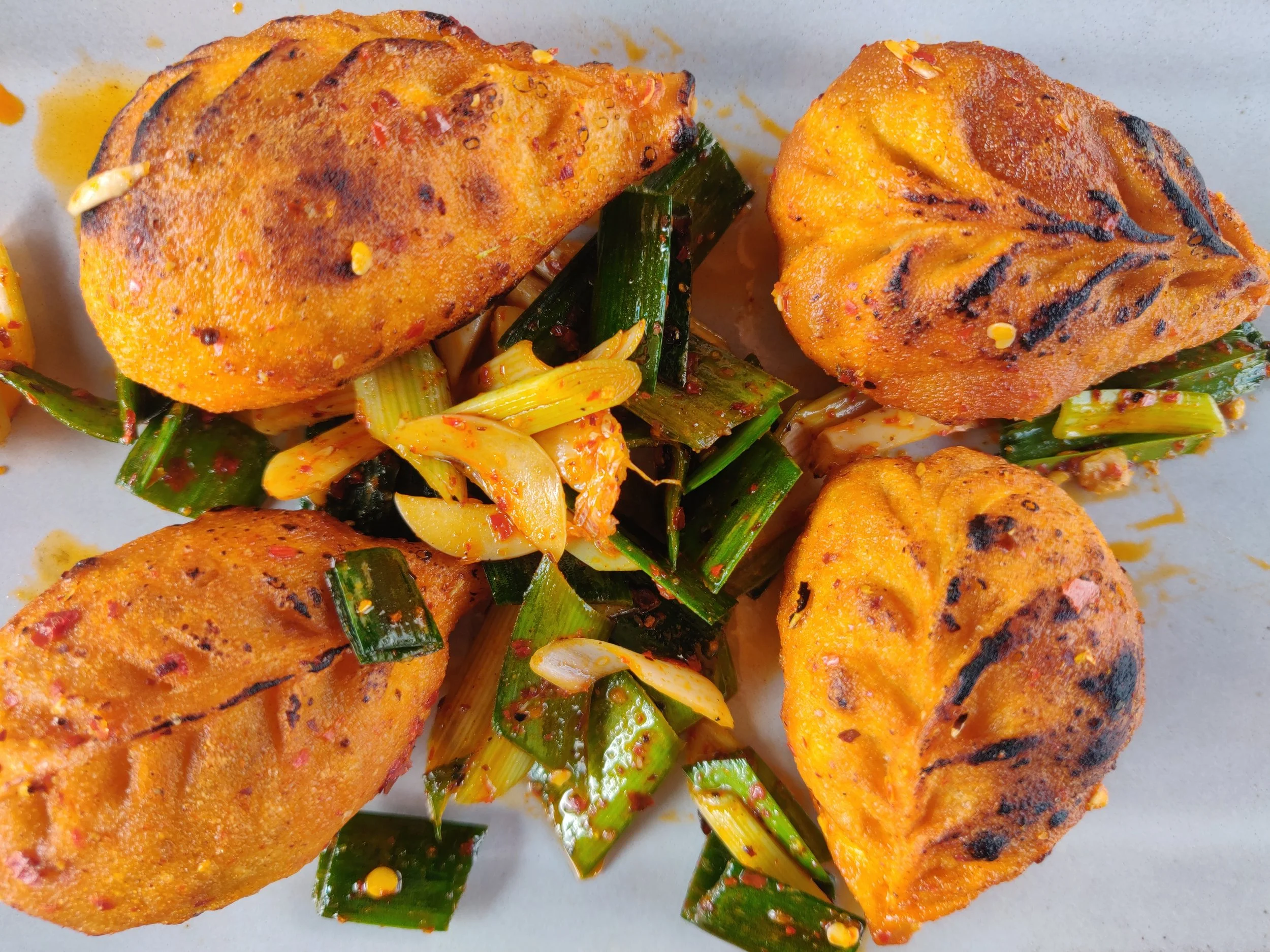
Chhoila momos at Hotel Traditional Comfort in Kathmandu.
On a recent visit to Hotel Traditional Comfort, I tried chhoila momos. Tossed in an assortment of greens like spring onions and sprinkled with spices, the semi-charred momo lived up to the dish's reputation for being intensely piro (spicy). This experience sparked a deeper curiosity, driving me to look further into the history of the dish and eventually recreating a mushroom chhoila in my kitchen.
I followed Kabita’s advice during the recreation, adding stalks of home-grown garlic for a burst of garden-freshness. I chose the dry, spice-rubbed preparation where the mushrooms were thickly coated in a fiery, aromatic marinade, rather than a heavy sauce. To balance this concentrated heat, I paired the dish with beaten rice. The mild, almost neutral flavour of the rice effectively cut through the intense spice, while its distinct crunch provided a satisfying textural contrast to the tender, earthy mushrooms.
What began as a spicy surprise on a plate of momo has evolved into a window to a culture. Through chhoila, I tasted more than just the heat of the chilies; I felt the warmth of tradition, memory, and community spirit that continues to define the Newar people.
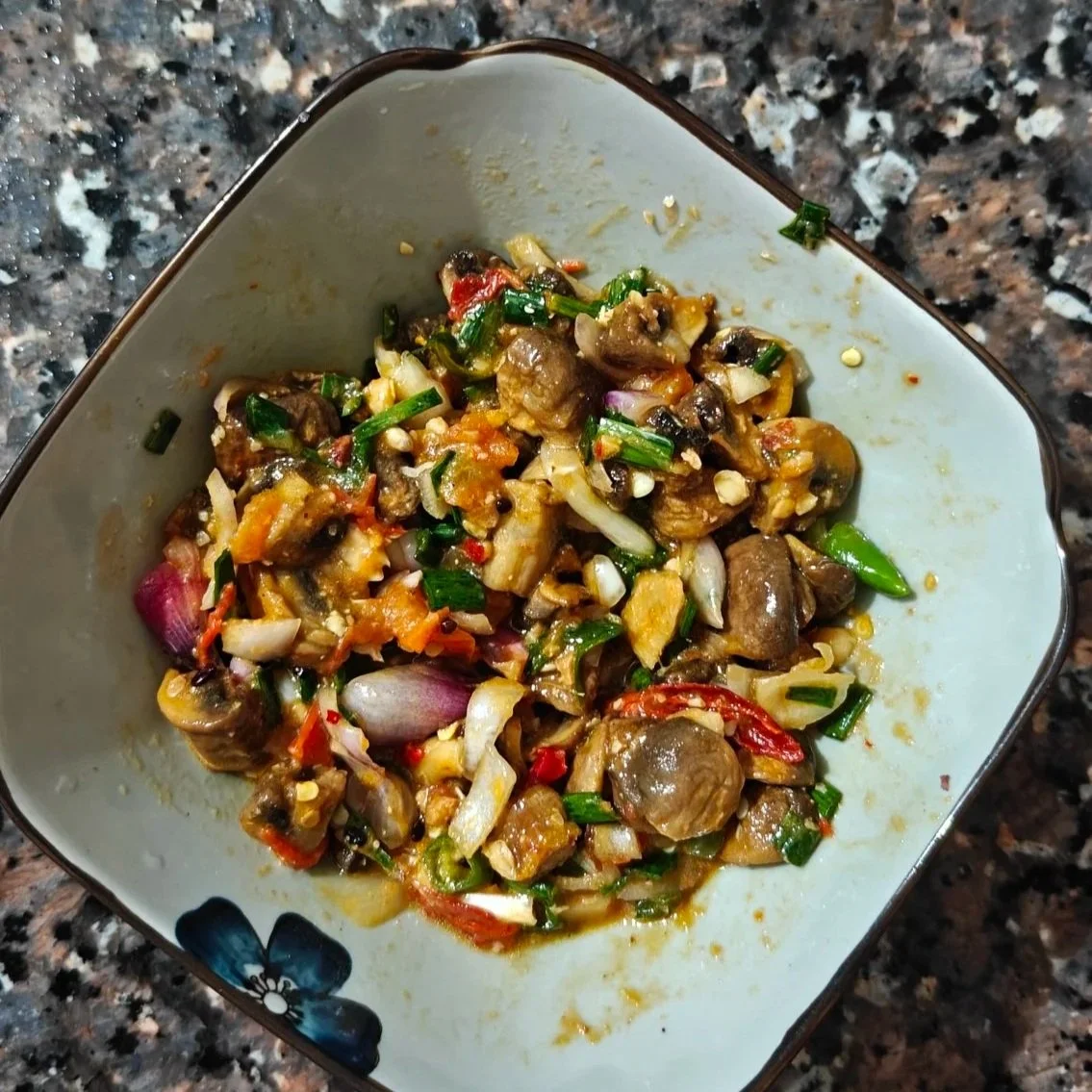
Mushroom chhoila
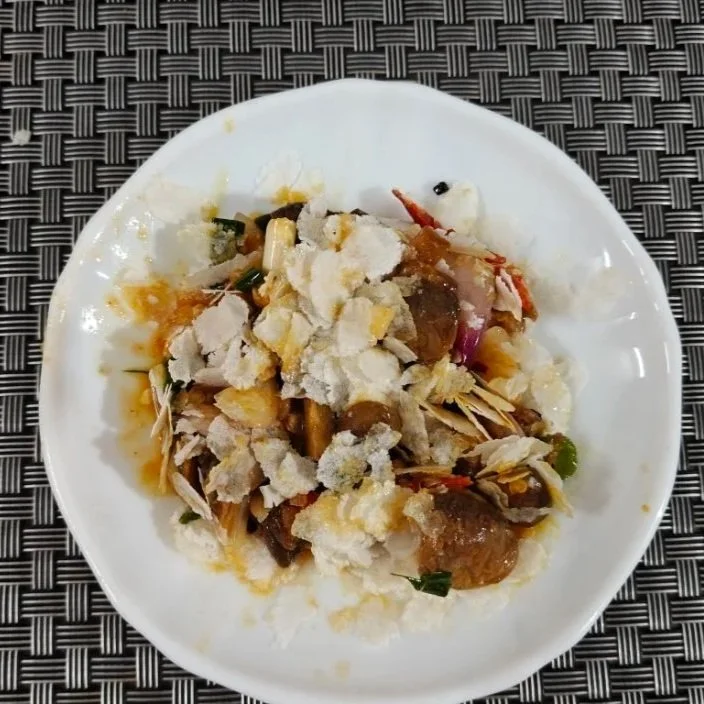
Chhoila with beaten rice.
RECIPE FOR MUSHROOM CHHOILA
Ingredients
15-20 pieces of button mushrooms
1 tsp turmeric powder
2-3 pieces of dried red chilli
3 tbsp mustard oil
Szechuan pepper
2 sprigs of spring onion
2-3 tomatoes
5-6 cloves of garlic, ginger
A fistful of peanuts (optional)
¼ plate beaten rice
Method
Dry-roast some peanuts until reddish-brown, then let them cool for a while. Crush the peanuts and keep aside.
Wash, dry and slice mushrooms in half. In a frying pan, heat two tablespoons of mustard oil. Once heated, roast the mushrooms in a slow flame.
Take some chopped garlic, ginger, tomato, dried chillies and pepper, and grind them in a mixer.
In a pan, heat some more mustard oil, and add some turmeric. Add the above paste and stir till the paste is cooked. Add some finely chopped onion and spring onions to it, followed by the mushrooms. Cook till the mushrooms are done.
Mix the mixture and dress with peanuts for some crunch. Serve with beaten rice.
Bio: Ridhi Agrawal is a freelance writer based in Nepal. She writes on food, arts and culture, and travel.
The reporting for this story was partially supported by Community Homestay Networks.
ALSO ON GOYA