Khinkali: Georgia’s Comfort Food Is a Soup Dumpling
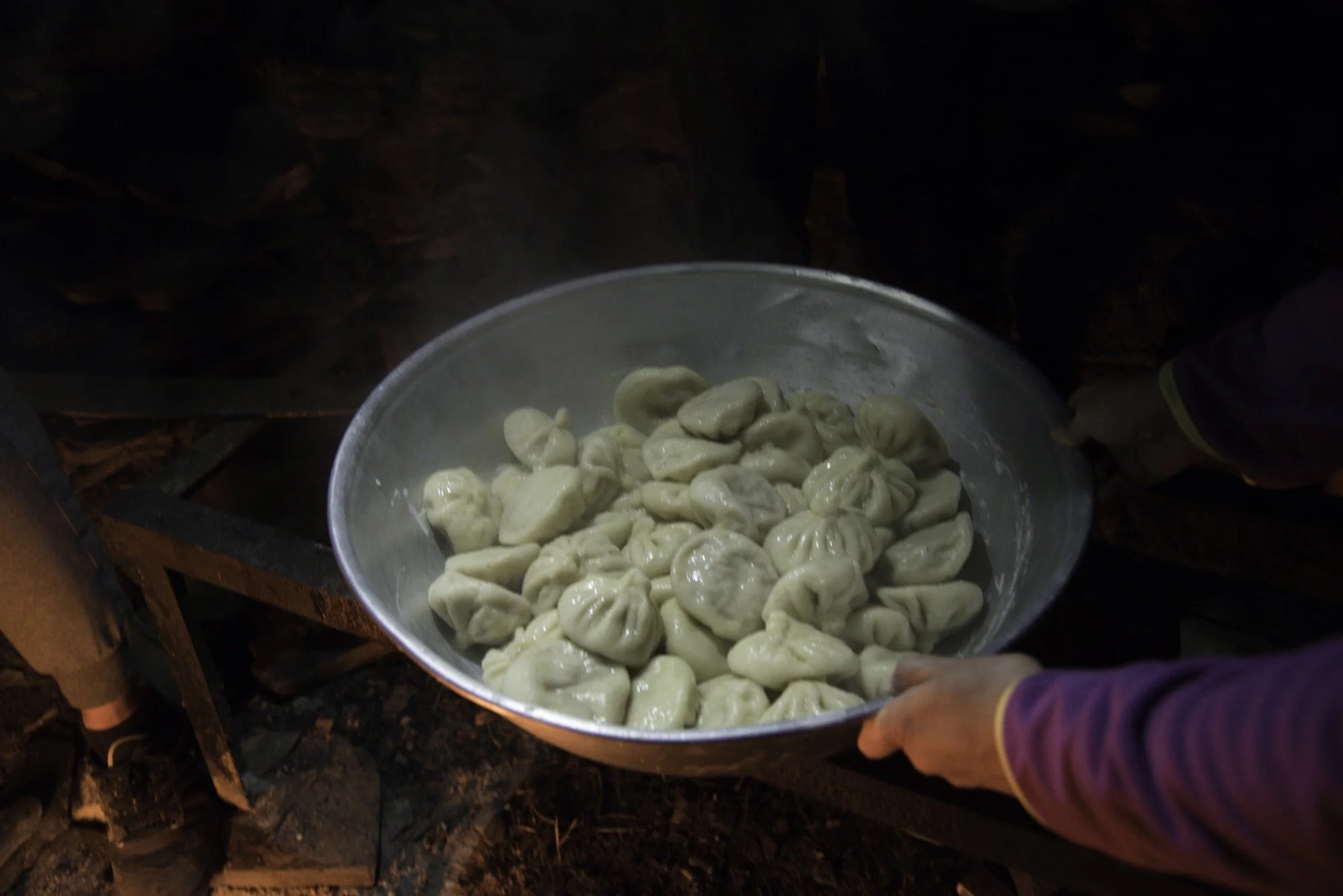
Once a mountain staple, the pleated khinkali has moved from remote highland kitchens to the heart of Georgian social life. Today, it is one of the country’s most beloved comfort foods, finds Henna Shah.
In its earliest form, khinkali was a wholesome mountain meal. Shepherds stuffed dumplings with minced lamb and alpine herbs, then shaped them into 19 folds that gathered at the top into a small handmade knot called kuchi, which sealed the broth within.
Resembling a momo at first glance, the Georgian khinkali carries a history that dates back centuries to the shepherd communities of the Caucasus. Its evolution is often linked to the Silk Route, along which culinary ideas travelled from East to West.
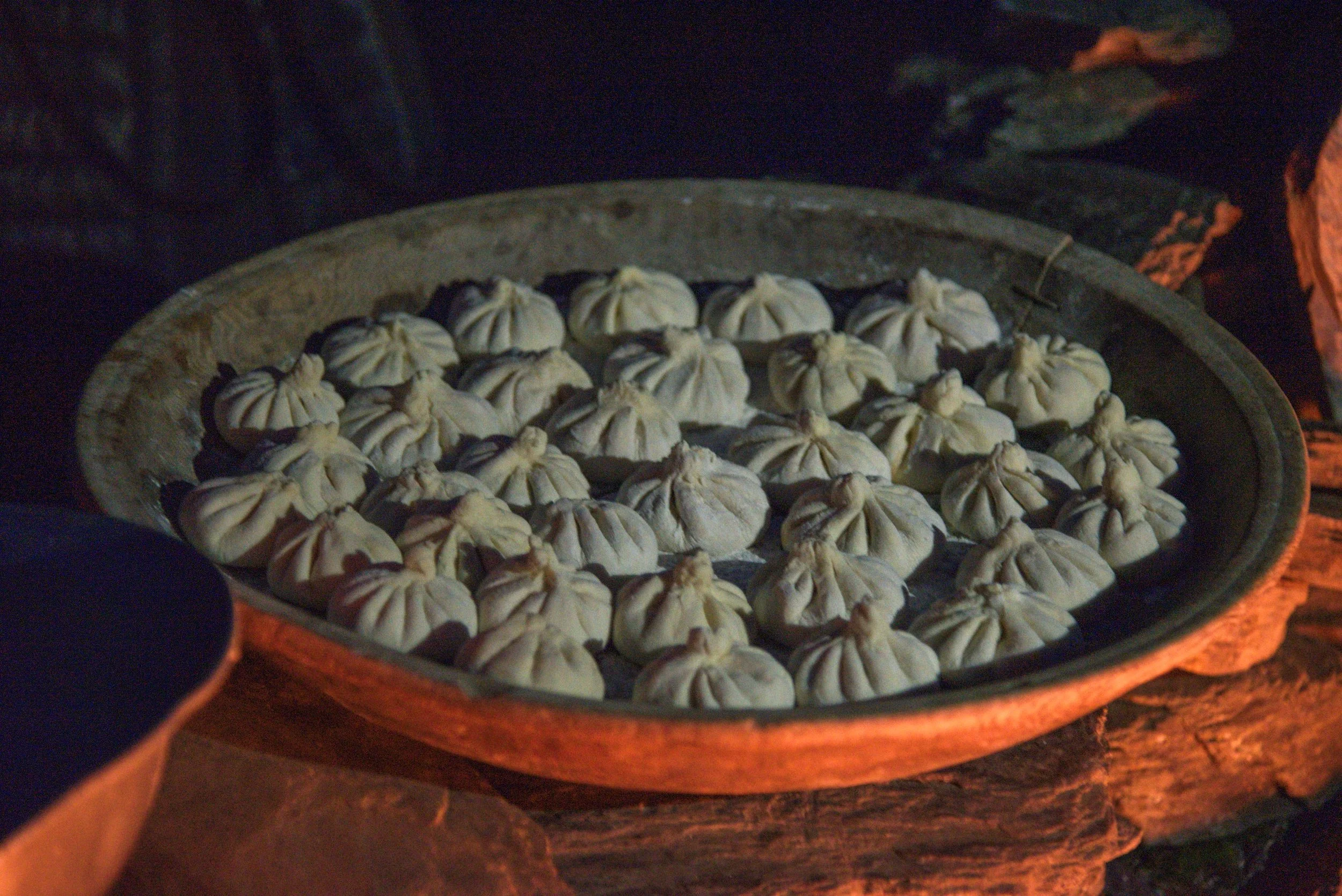
Khinkali is one of Georgia’s most beloved comfort foods.
Khinkali moved from the highlands into the heart of Georgian social life, and today, remains one of the country’s most beloved comfort foods. “Khinkali really brings friends together,” says Irma Laghadze, a fourth-generation Georgian home chef and founder of Georgian Flavors, a cooking school in Tbilisi. “When we want to catch up, especially in winter, we go out for khinkali. We don’t need anything else because it is so filling. There is bread, broth and meat, all in one dumpling. The only thing we need is beer or chacha on the side.” Chacha is a traditional Georgian spirit distilled from grape skin, and is often compared to vodka.
During festive times, when families gather at home, making khinkali becomes a shared activity. Traditionally, men knead the dough, a task that demands strength, while women fill and fold each delicate dumpling. Irma, who is from Kutaisi in western Georgia, remembers her grandmother’s mountain-style khinkali made with minced lamb and locally sourced cumin. Today, in many restaurants across Tbilisi, khinkali is machine-made, commonly filled with a beef and pork mixture, and finished with a larger kuchi at the top, as against the more delicate handmade kuchis.
However, even in this modern avatar, khinkali is eaten by hand, held firmly by the kuchi. You take a small bite from the side, sip the hot broth carefully so it doesn’t burn your tongue, and then finish the rest. The knot is left uneaten on the plate, allowing the host to surreptitiously count how many you have enjoyed by the end of a meal. “If someone asks for a fork or even plum sauce with their khinkali, Georgians are not very pleased,” Irma says with a smile, as I confess to that faux pas.
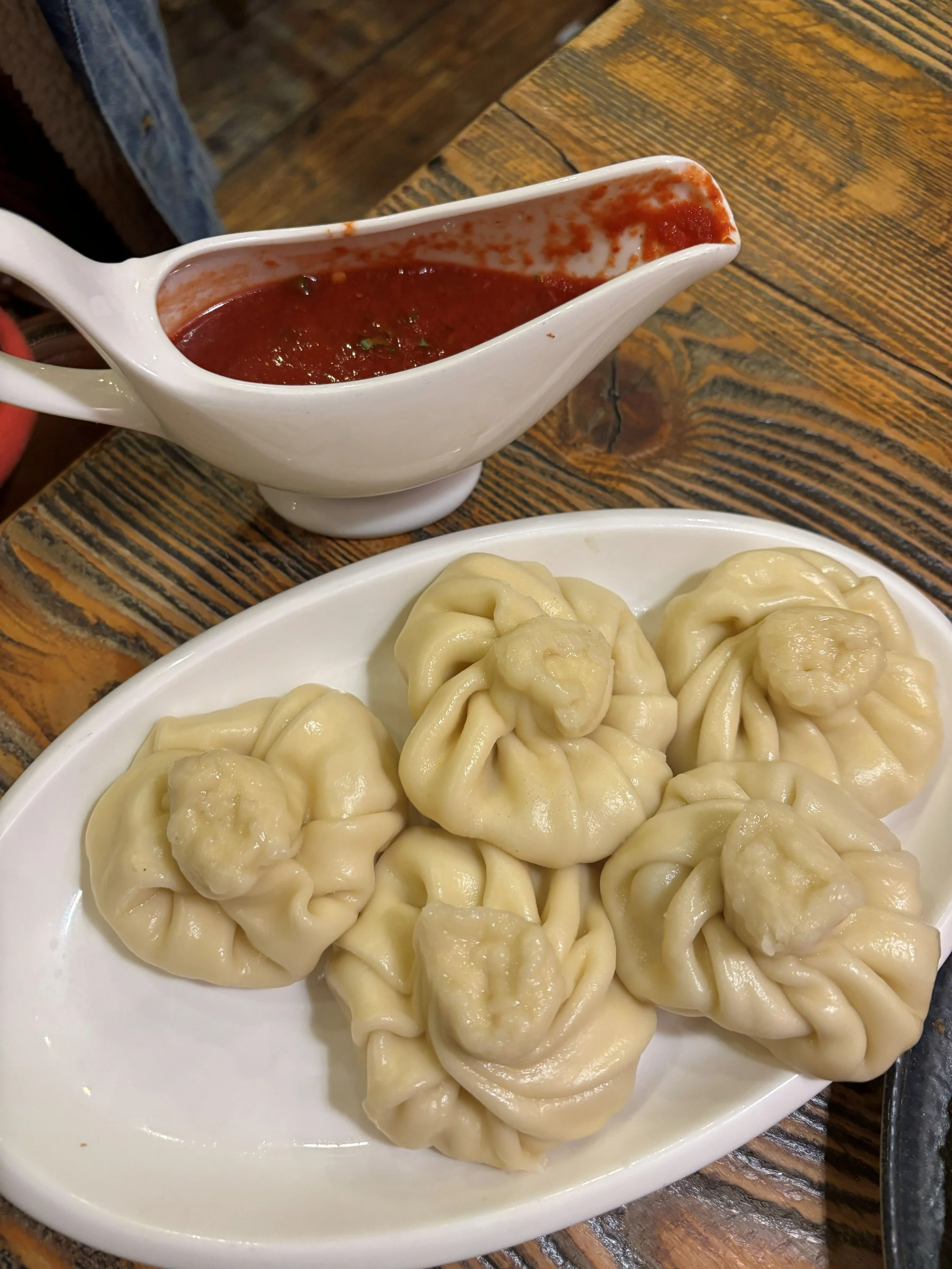
Khinkali at Pasanauri Restaurant in Tbilisi. Credit: Henna Shah
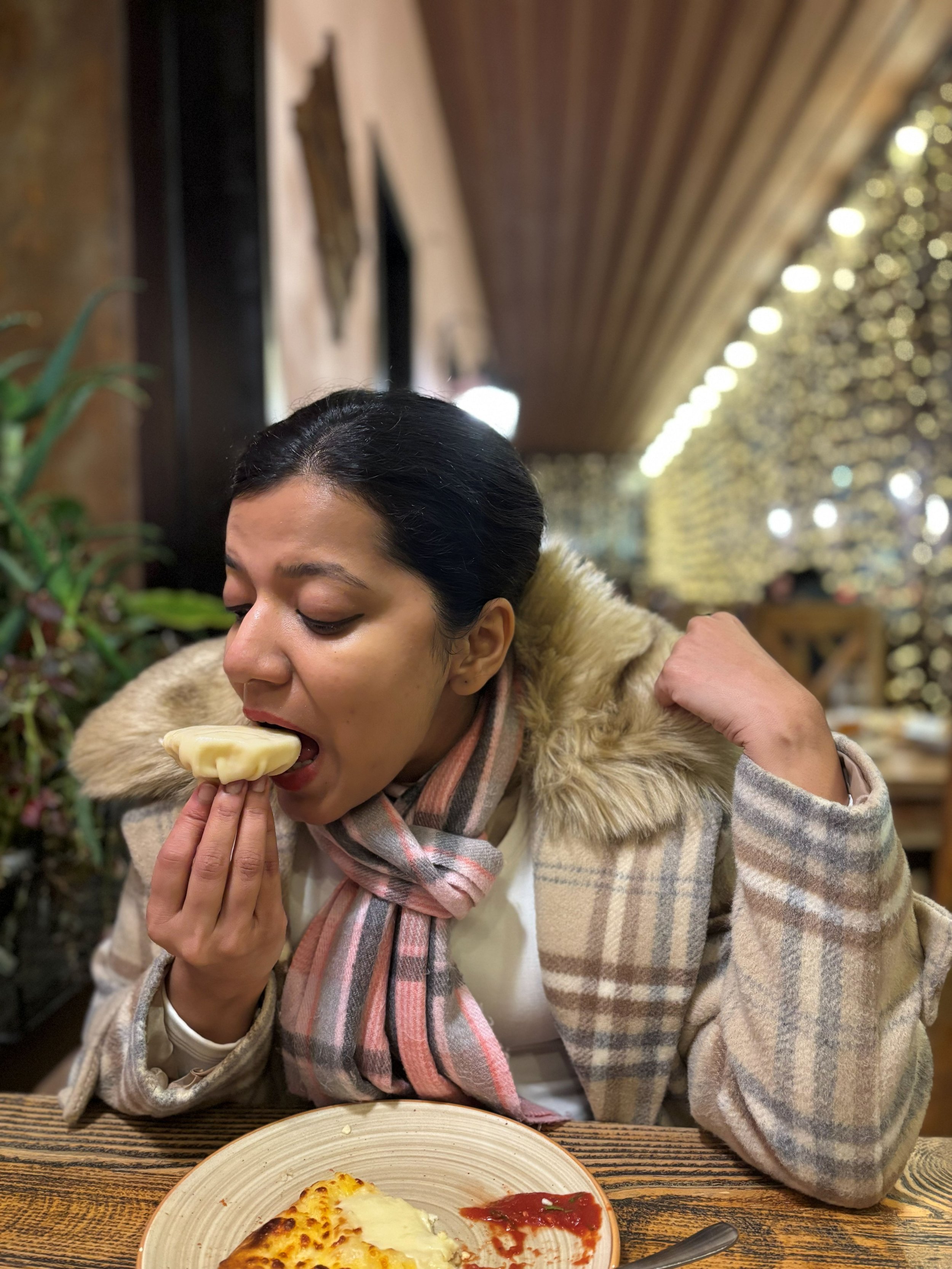
The author demonstrating the right way to eat khinkali. Credit: Henna Shah
If you are vegetarian, like me, the meat filling is often replaced with potatoes, cottage cheese or mushrooms. While less juicy, vegetarian khinkali is widely available across Georgia — of note is the potato-filled khinkali at Pasanauri, a chain restaurant in Tbilisi. Locals also rave about Café Daphna in Tbilisi, which offers a vegetarian variant filled with potato and cheese, served with a drizzle of melted butter in addition to khinkali with a filling of beef, veal and pork.
Georgia’s long Orthodox Christian fasting traditions, which exclude meat and dairy, have helped shape a cuisine rich in plant-based dishes. Hence, at a supra, the traditional Georgian feast, the table often includes vegetarian dishes such as khachapuri (Georgian cheesy bread), lobio (red kidney beans) and pickled vegetables. A tamada, or toastmaster, leads elaborate toasts to love, life and peace as guests raise their glasses of Georgian wine and say, “Gaumarjos!”
IRMA LAGHADZE’S RECIPE FOR KHINKALI
Recipe is from the cookbook, My Georgian Flavours: Recipes from Irma Laghadze’s Family Kitchen.
Makes 30-40 medium sized khinkali
Ingredients
Dough:
1 kg strong white flour (avoid using all purpose flour)
2 cups cold water (add a few ice cubes)
Pinch of salt
Filling:
500g beef mince
200g pork mince
1 medium yellow onion, finely diced
¾ tsp ground cumin
Water or brown stock
Salt and pepper to taste
Method
In a large bowl, combine the flour, cold water and salt. Knead vigorously for at least 10 minutes until the dough is firm, smooth and slightly glossy. Place it in a floured bowl, cover with a tea towel and allow it to rest. Refrigerate it while preparing the filling if needed, ensuring it remains firm.
In another bowl, mix the beef, pork, onion, cumin, salt and pepper. Gradually add cold water or beef stock to create a juicy mixture with enough liquid to form broth inside the dumplings. Stir until smooth.
Lightly flour your work surface. Roll the stiff dough to about 1 cm thickness so it can hold the broth without tearing.
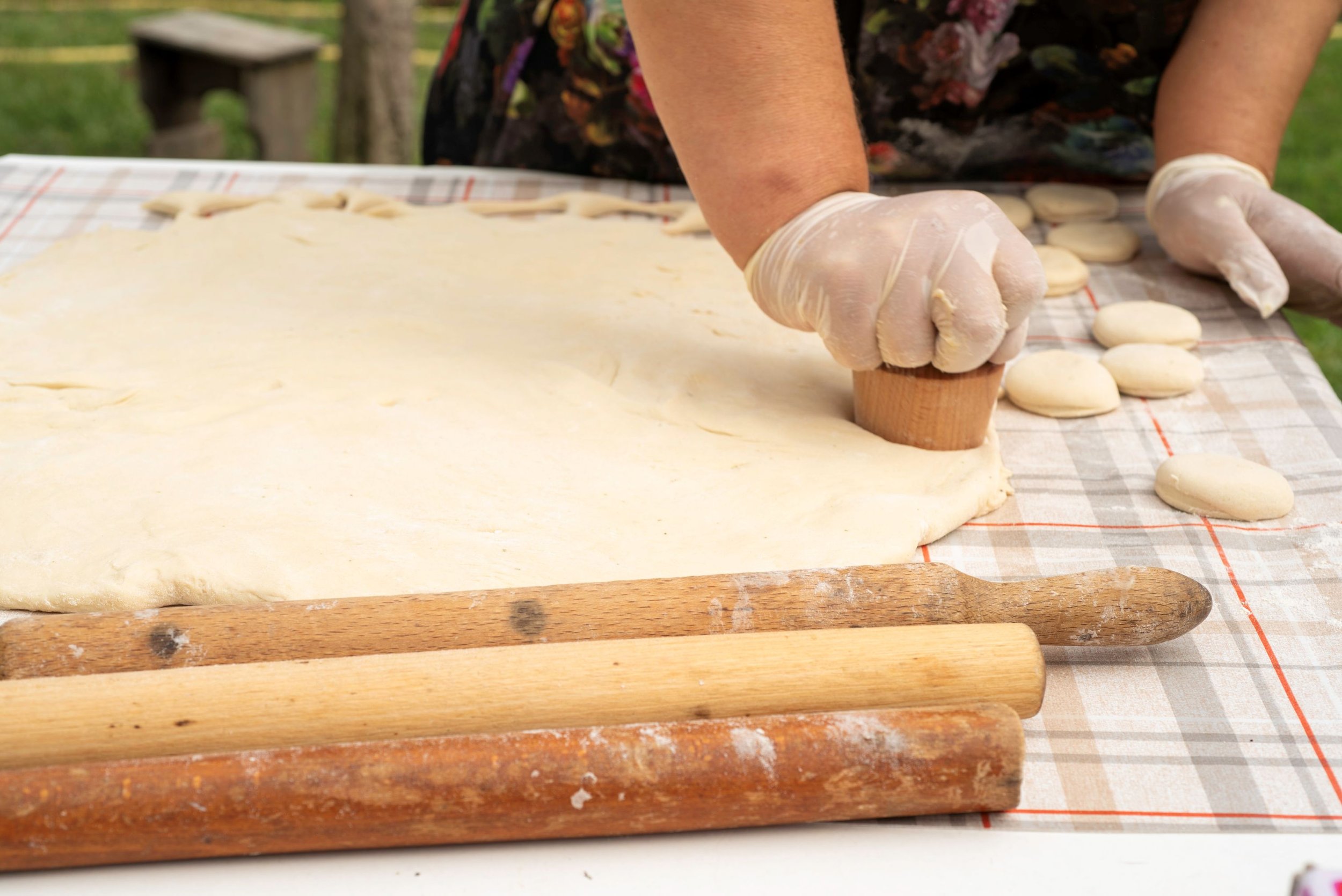
Cut circles using a 7 cm cutter or a glass. Traditionally, a wooden cutter resembling a large egg cup is used. Gather scraps, knead, roll and cut again until all the dough is used.
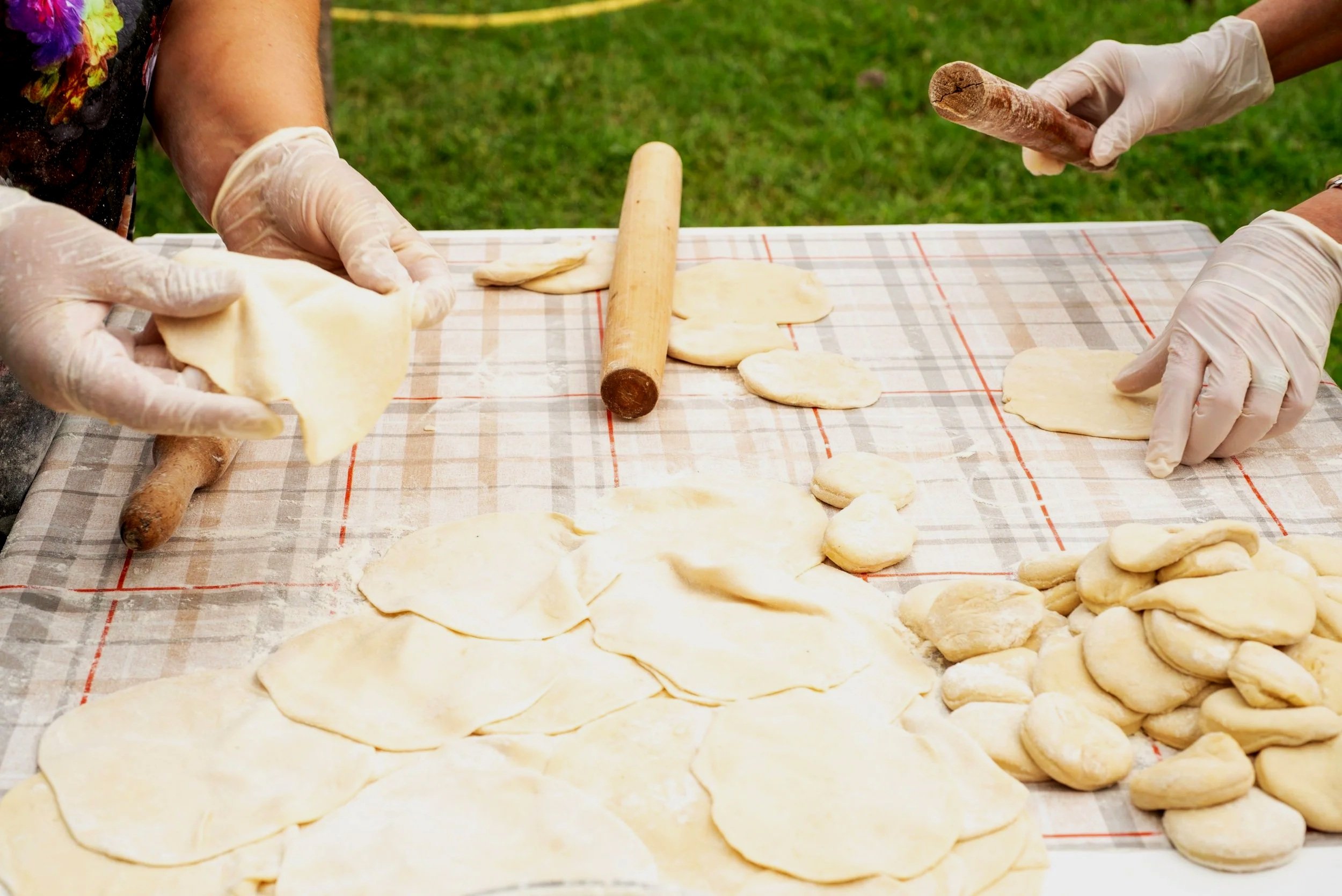
Lightly flour each circle and roll individually to about 10 cm in diameter.
Place 1 tablespoon of filling in the centre. Pleat the edges upwards, forming 18 to 20 folds. Pinch and twist the top to seal.
Arrange the finished khinkali on a floured tray.
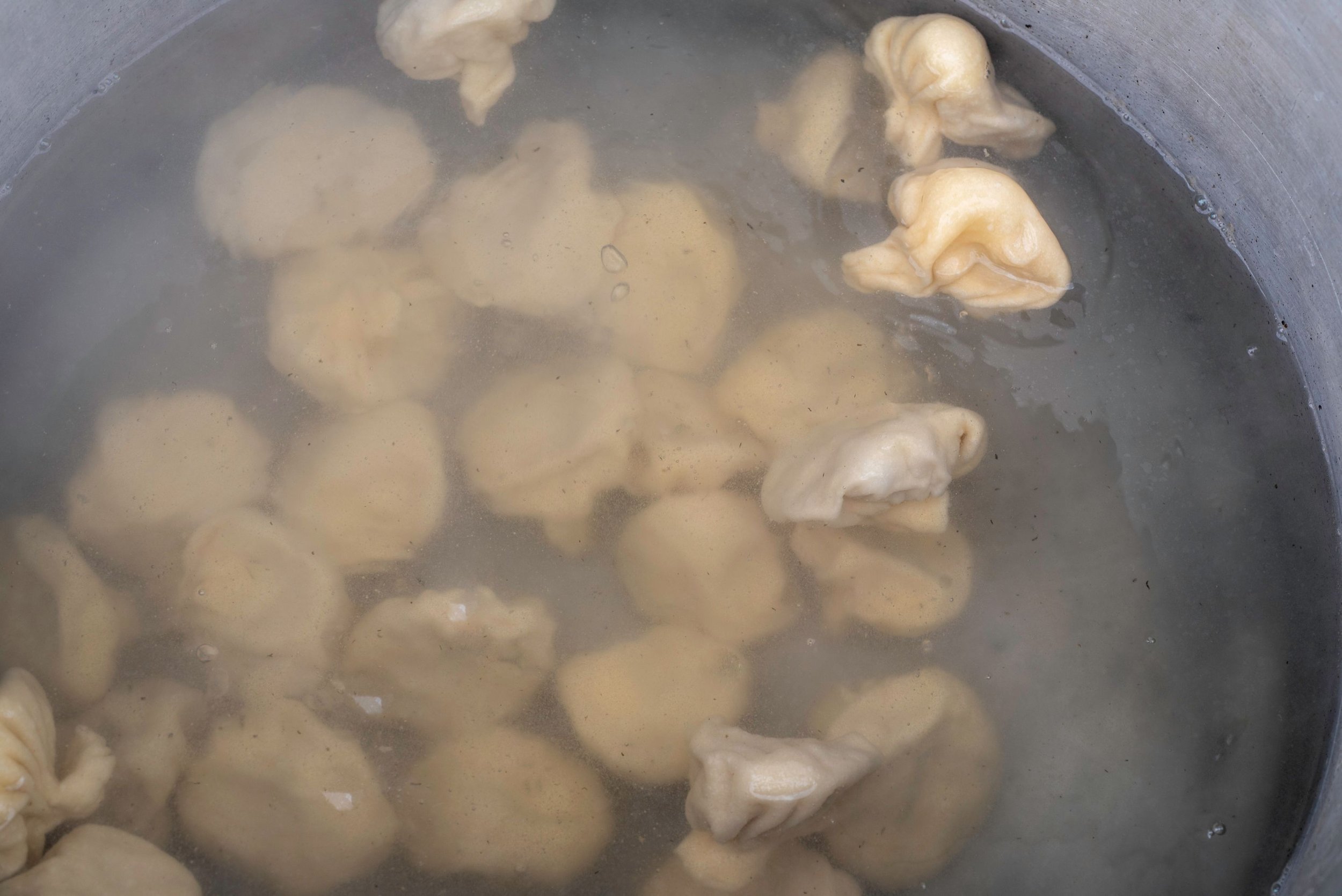
Bring a large pot of salted water to a boil.
Cook the dumplings in small batches, gently shaking the pot after adding them to prevent sticking. Boil for about 7 minutes, until they float and the meat is cooked.
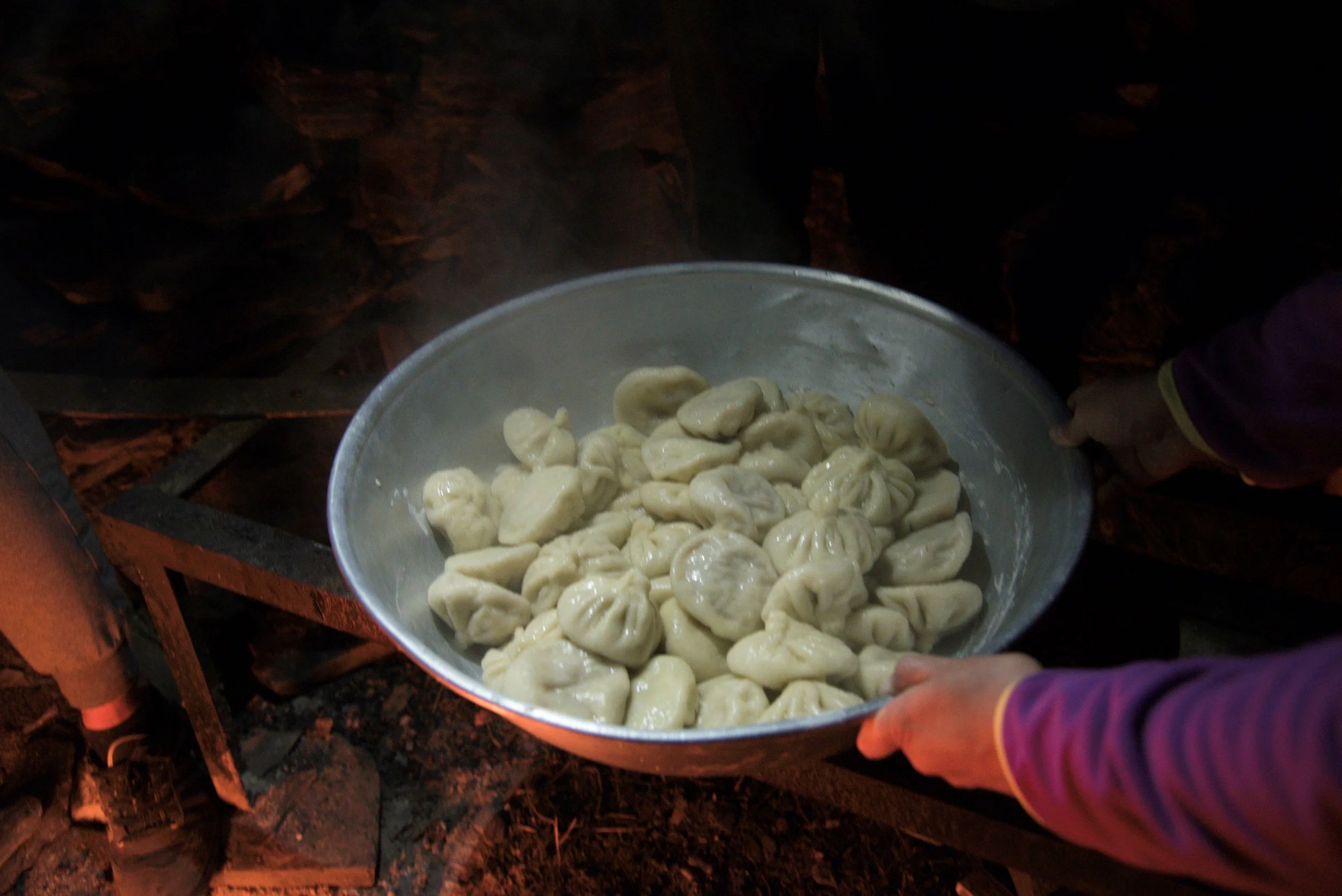
Serve hot, sprinkled with freshly ground black pepper.
Note: For a vegetarian khinkali, replace the meat mixture with an equal quantity of mashed potatoes. Reduce the amount of added water, as the vegetarian variant is not meant to be as juicy.
Henna Shah is a Mumbai-based EdTech marketer and travel writer exploring the world through food trails and cultural rituals. She documents her journeys on an Indian passport on her blog and is a lifelong student of Ayurveda.
Images credit: Irma Laghadze
ALSO ON GOYA

ALSO ON GOYA