Lessons in Belonging from an Abu Dhabi Kitchen
My amma never sat me down and explained our language or who our ancestors were. Instead food became her language, sharing lessons in migration and cultural identity. Jethu Abraham takes us into their Abu Dhabi kitchen.
Friday mornings in our Abu Dhabi apartment always begin with the slow, deliberate hiss of the pressure cooker. This is almost always accompanied by the swift crackle of mustard seeds as my mother finishes the last of her breakfast cooking, pouring the tadka on the coconut chutney. The aroma lingers long enough for me to quickly finish dressing and rush to the dining table for breakfast.
Weekdays are rushed; an invisible gravitational pull that begins long before dawn — everybody hurries to get to school or work, and nobody really cares about having a bite so early. But weekends are different, and deliciously slow. Breakfast is distinctly Keralite, almost by rule — hot, spicy kadala curry poured over steaming cylindrical blocks of puttu or lacey appams, with generous ladles of chicken stew. On the days that Amma has a bit of free time, she would make vattayappams for me, sweet fermented rice cakes garnished with nuts and raisins).
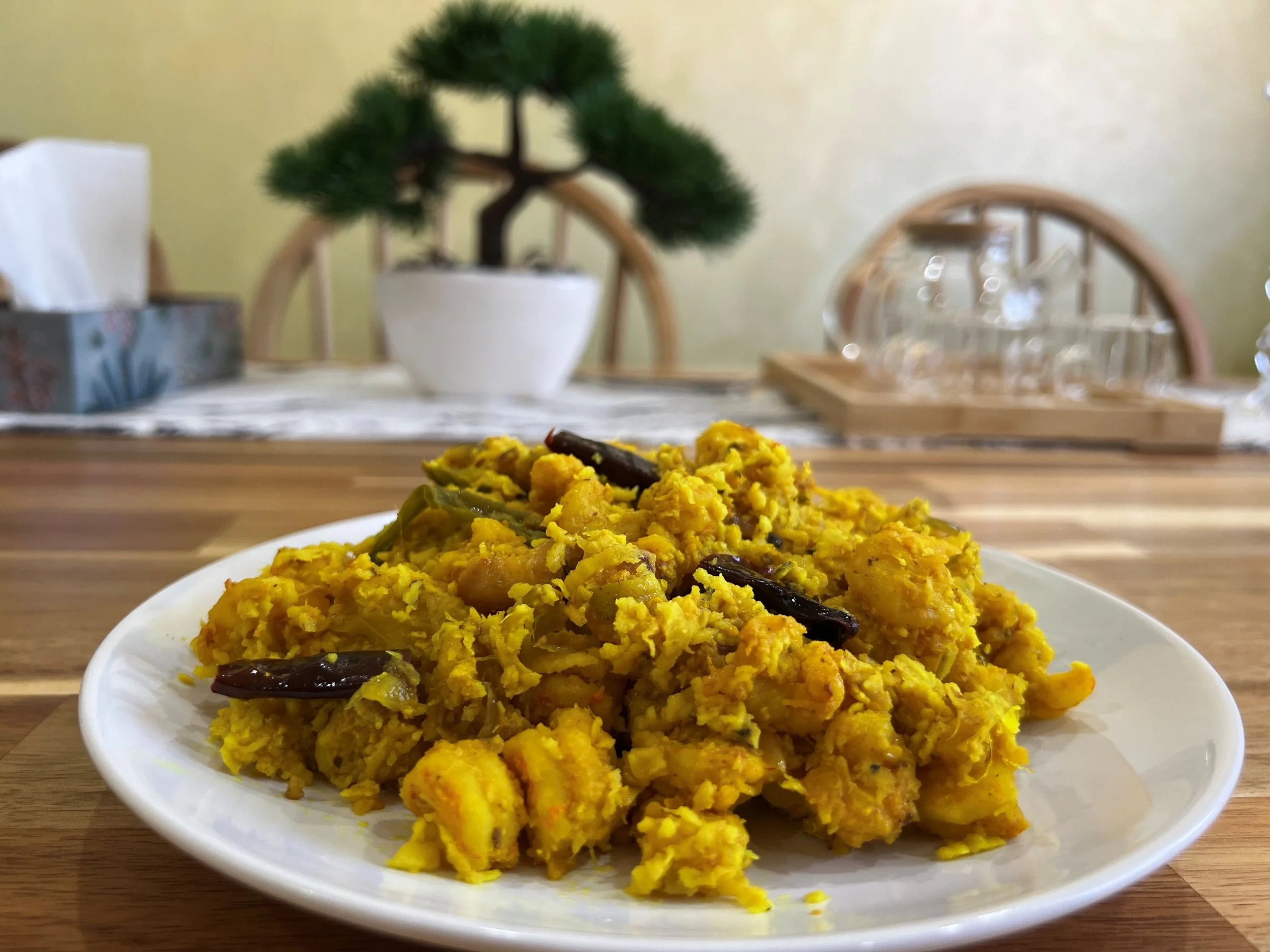
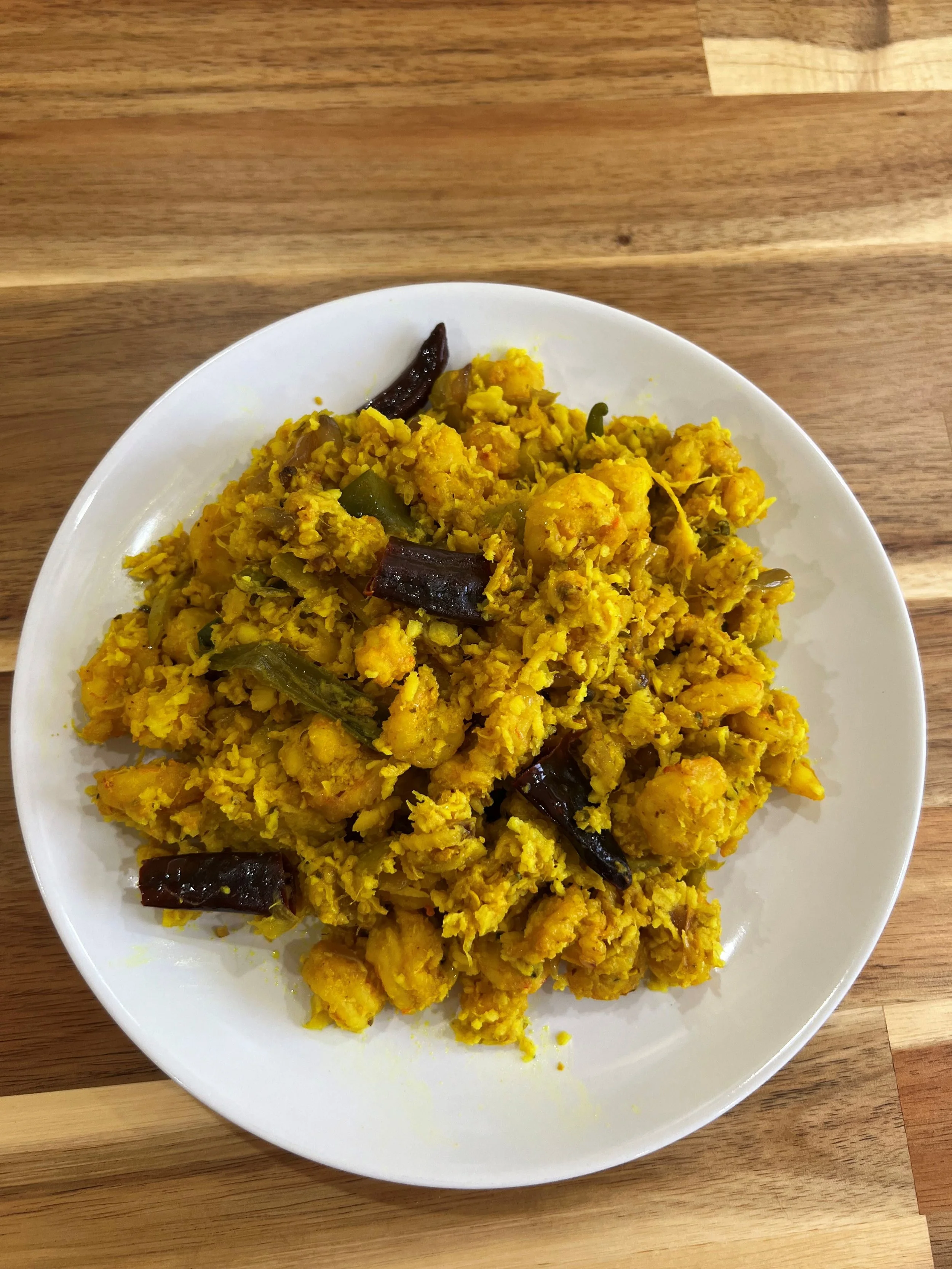
Once breakfast is done, we would dress for Sunday School. I would almost always see my dad come in with the weekend’s catch from the fish market. I was never particularly keen on fish, but I would peek into the blue and orange plastic bags to see if there was any prawns. That to me, was the real catch. Prawns meant one thing only, my favourite, konju peera (prawns with coconut shavings).
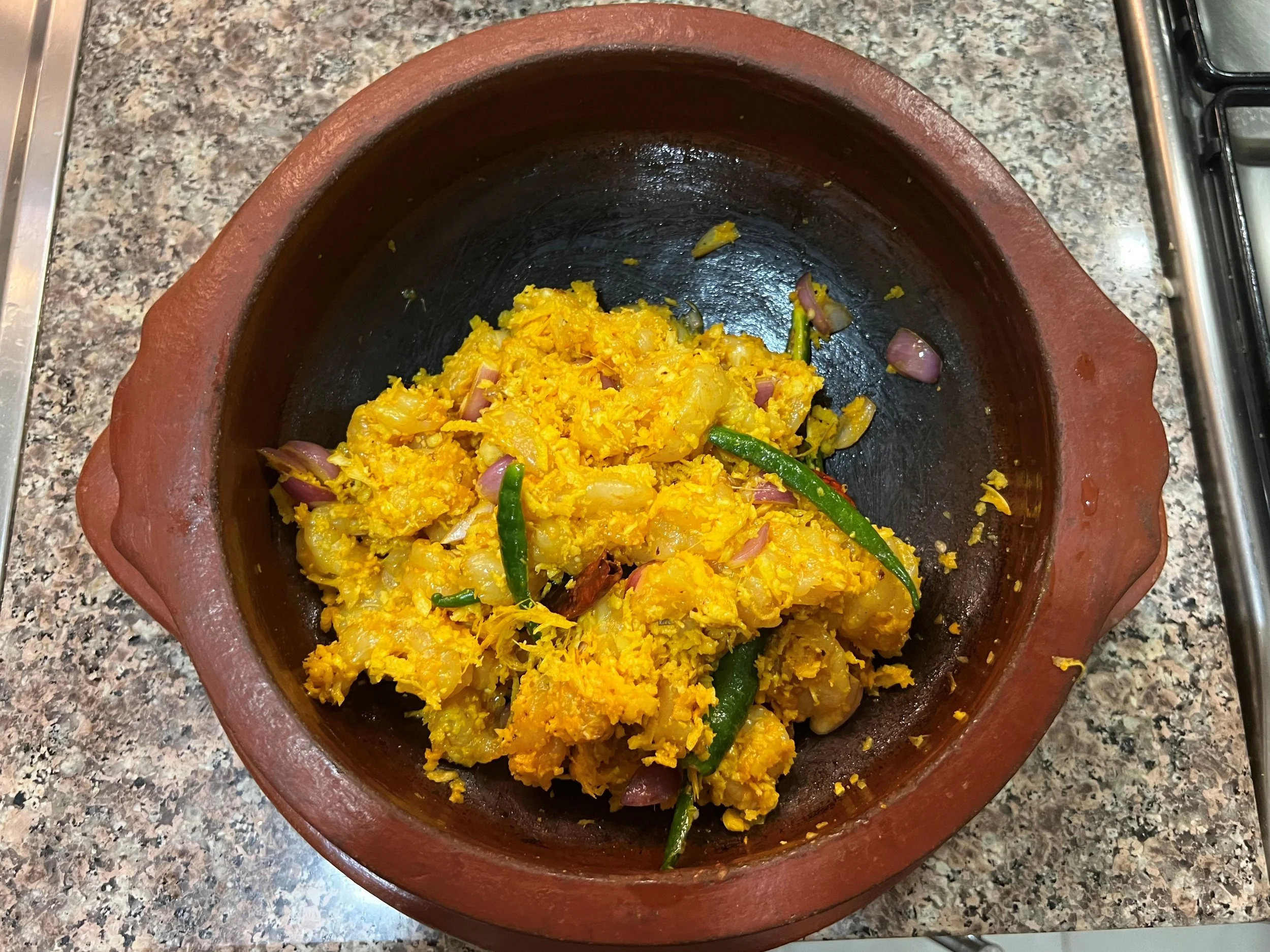
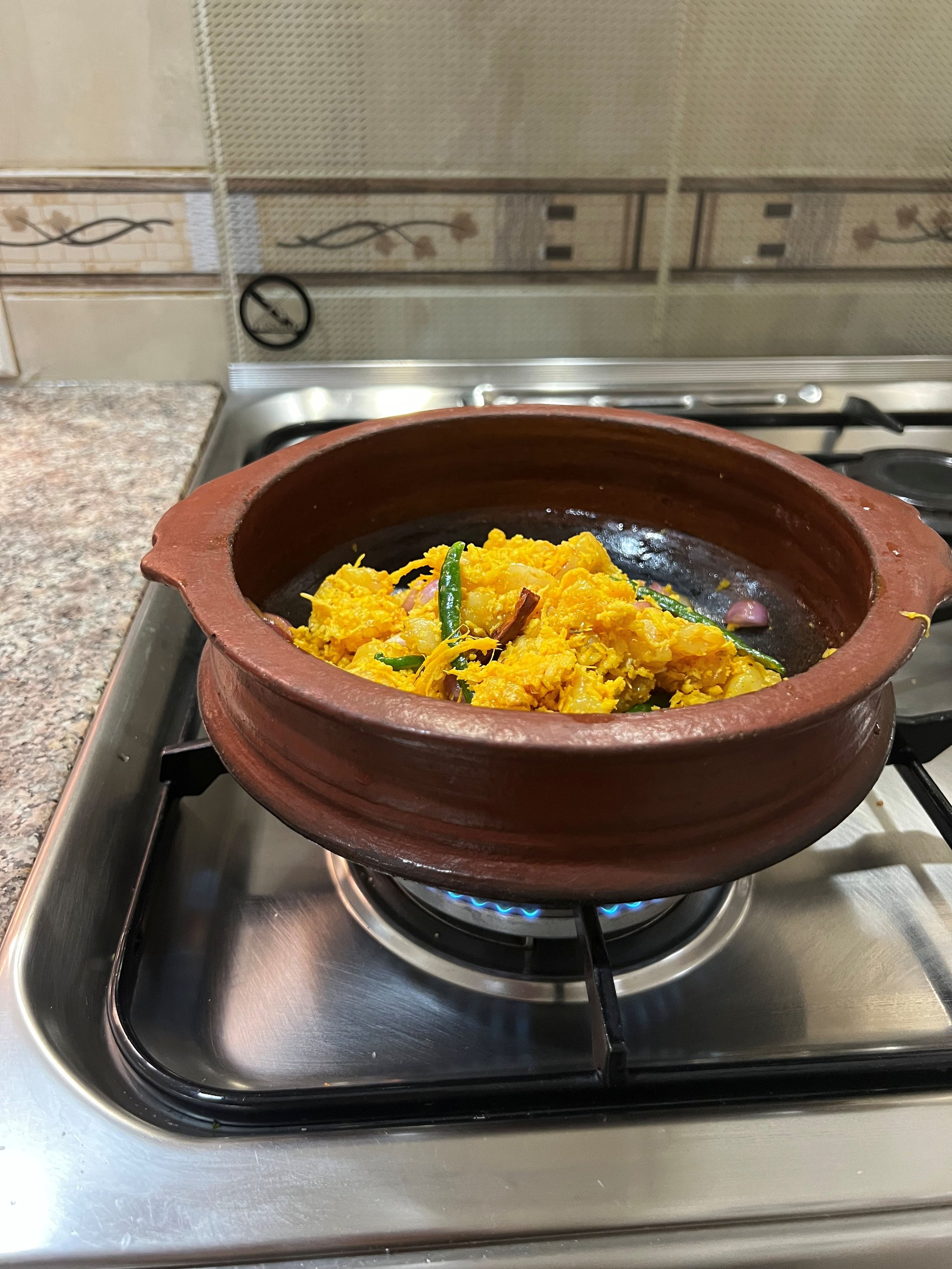
Konju peera is prepared in a traditional clay pot which Amma sourced from Kerala. The pot is first well coated with coconut oil. Separately, a combination of shallots, sliced ginger and garlic, chopped green chillies and curry leaves were mixed with turmeric and coconut shavings, to create a coarse mixture. Then she would place the pot on the stove, sprinkle a few drops of water over the mix, and close the pot to allow the prawns to cook in their own juices. Once the prawns were semi-cooked, slivers of a firm, green mango were added to the mix. In a final flourish, she would lift the lid off the pot, and a rush of fragrant steam would emerge, before she added a pinch of freshly ground pepper and a drizzle of coconut oil.
Looking back I realise, konju peera was more than just a delicious prawn recipe, but a lesson in migration and cultural identity. My amma, a simple and quiet woman, never sat me down and explained our language or who our ancestors were, but instead, shared food with stories from Kerala.
In a fast-paced city like Abu Dhabi, these weekends slowed time down for me, binding me to the strong, coastal flavours of Kerala — a small stretch of land across the southern coast of India. Holiday trips to Kerala were rare, and meant that we would come back with memories as well as carefully packed ingredients from my ammachi’s pathaayam (granary).
Once we got back to our modest apartment in Abu Dhabi, amma carefully went through her stack of spices, dried chillies and black tamarind, precious cargo wrapped carefully in Malayala Manorama newsprint. I would often watch her as she made mental notes on how long she could stretch them. There were also medicinal herbs from the local angadi kada: unexpected stomach bugs were instantly cured by amma’s small ball of crushed nutmeg, mace, dried ginger and sugar crystals. For a child raised on Little House on the Prairie, this became my South Indian version of home.
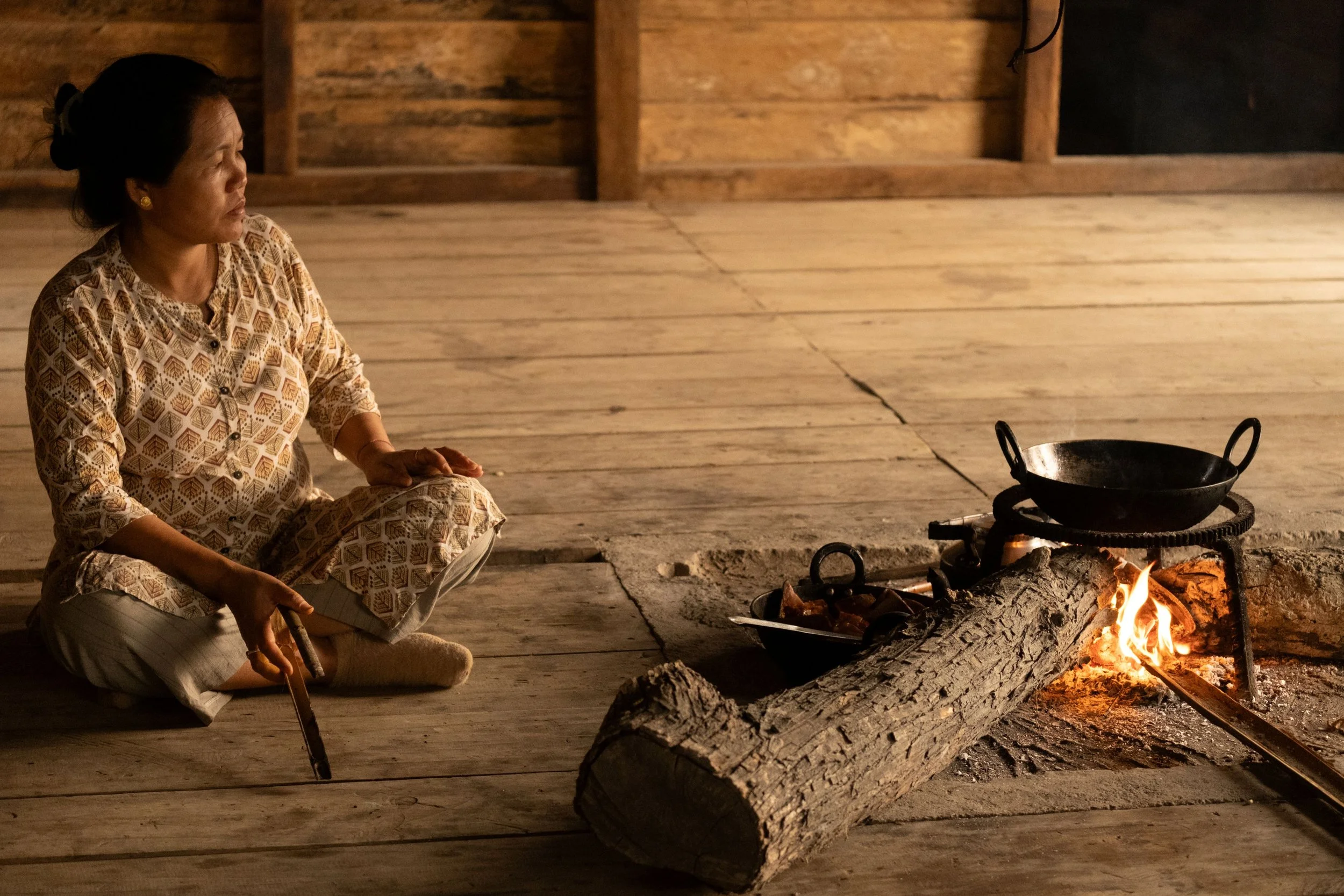
Sometimes sitting on a low-floored kitchen stool and cleaning prawns, amma would tell me stories of a life she left behind. How she would run across paddy fields, returning home from college during lunch break; how her mother would cool the rice (the ultimate act of love) so she could eat it quickly before rushing back to class. She would often tell me of sampling chaampaka (a red bell-shaped summer fruit) with friends from a neighbour’s tree. Almost always, ammachi’s vast kitchen with its huge brass vessels and elaborate stone stoves and glazed clay pots, served as background to her stories.
Born and raised in a bustling, modern metropolis on the southeastern edge of the Persian Gulf, dotted with pristine, white-sand beaches and high-end luxury, I did not run across paddy fields to my grandmother’s warm lunch or sample blood red chaampakas with friends. But the aromatic blend of soft, coconut flavoured prawns and raw mango anchored me to a land far, far away.
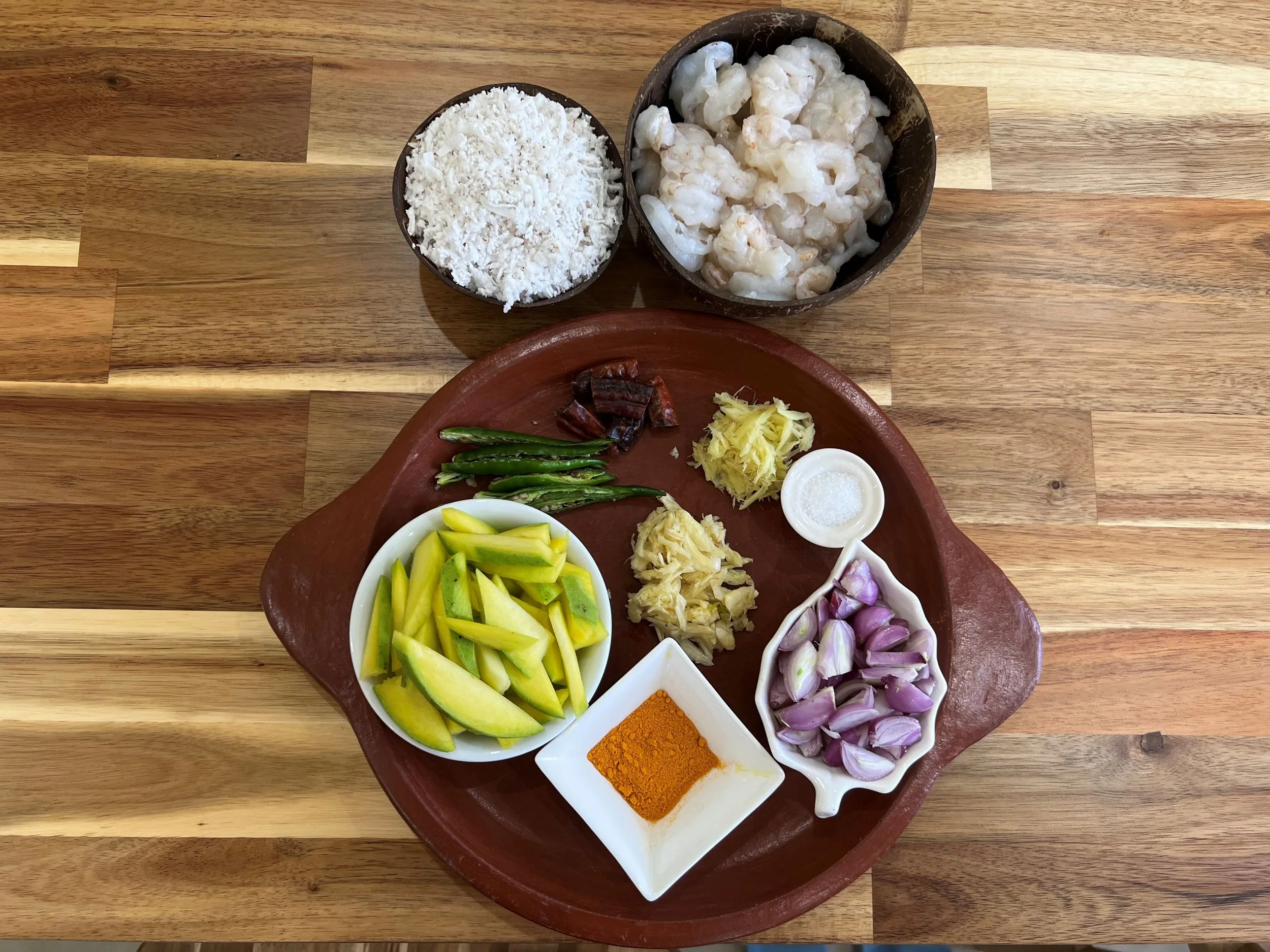
LEELA ABRAHAM’S RECIPE FOR KONJU PEERA
Ingredients
500 g prawns
1 cup grated coconut
½ tsp turmeric powder
10 small shallots
3 tsp chopped garlic
3 tsp chopped ginger
4 sliced green chillies
3 medium-sized tamarind pieces
1 sprig curry leaves
1 tbsp coconut oil
Salt, to taste
Method
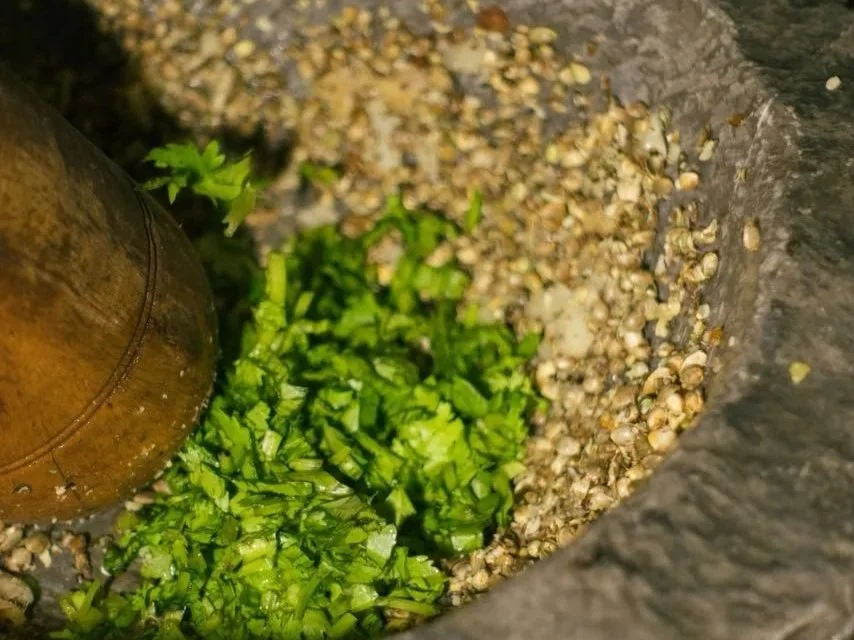
Place the shallots, garlic, ginger, curry leaves, tamarind, turmeric and the grated coconut in a pot. Crush and toss them well with your fingers, until they form a coarse mixture.
Add in the cleaned prawns and salt to the mix, then place it in a well-oiled clay pot.
Toss everything together once again. Cover and cook over low flame for around 15 minutes, or until the prawn is well-cooked.
Once done, finish with a spoon of coconut oil, and allow to rest for half an hour till all the flavours combine.
Jethu Abraham is an editor, born and raised in the UAE, and currently based in Kuwait. She writes on oil and gas, finance and geopolitical dynamics shaping the region. Instagram
ALSO ON GOYA