Nishasta: A Summer Ritual That Feeds Kashmir Through Winter
Every summer in the upper reaches of Kashmir, families begin preparing for winter. Wheat is soaked, ground, washed and strained until only its starch remains. This becomes nishasta — a pantry staple that will reappear months later as a warming halwa, eaten in the cold for strength, recovery, and healing. Umer Farooq Zargar documents the slow, meticulous labour behind a tradition that turns grain into sustenance for the long winter ahead.
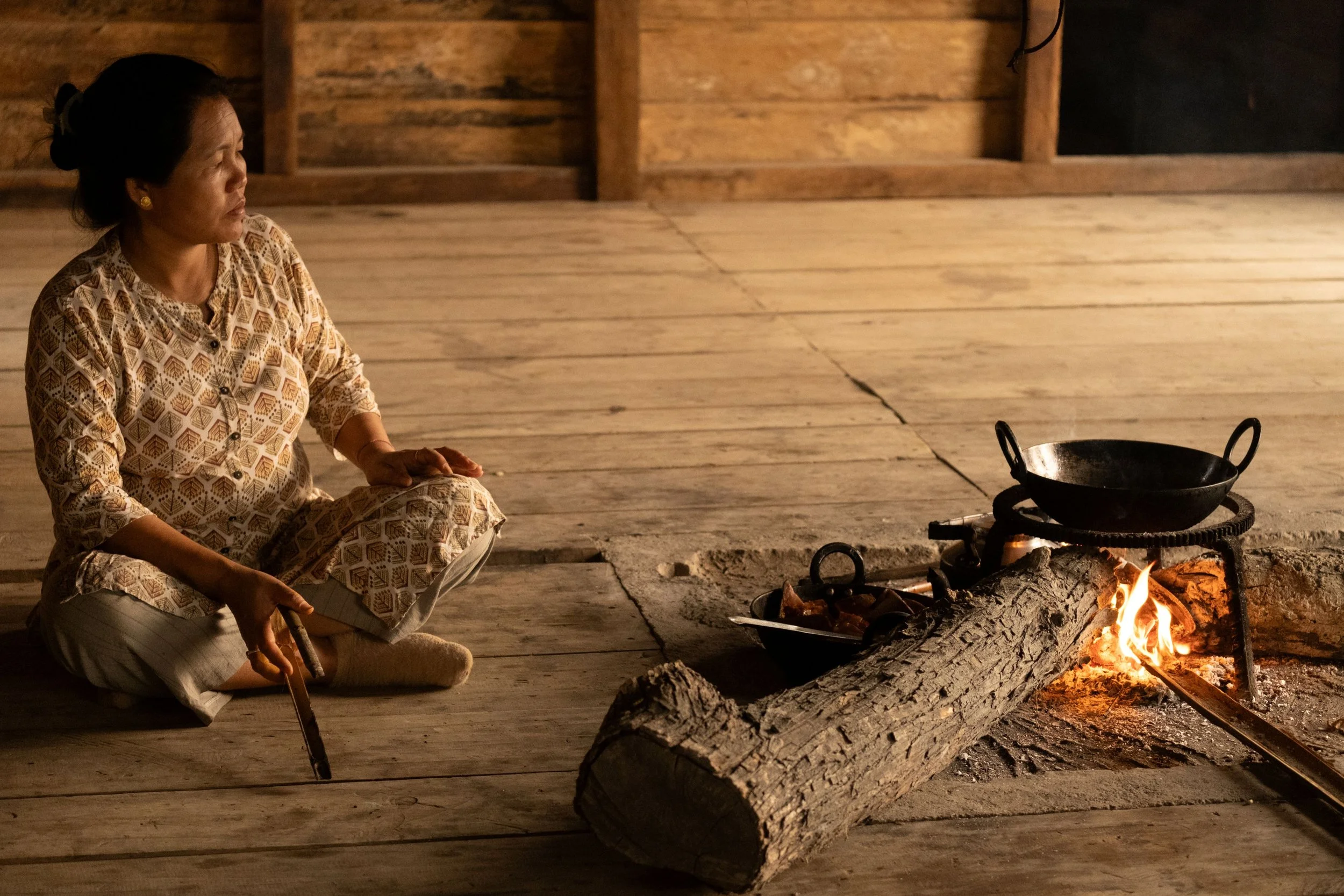
In many Kashmiri homes, winter mornings begin quietly: snow covers the rooftops, blocks roads and cuts electricity; people wear pherans and use kangries (fire pot) for heat. In some kitchens, in the upper reaches of Kashmir, mornings see someone in the family cooking nishasta (or nishaat), wheat starch.
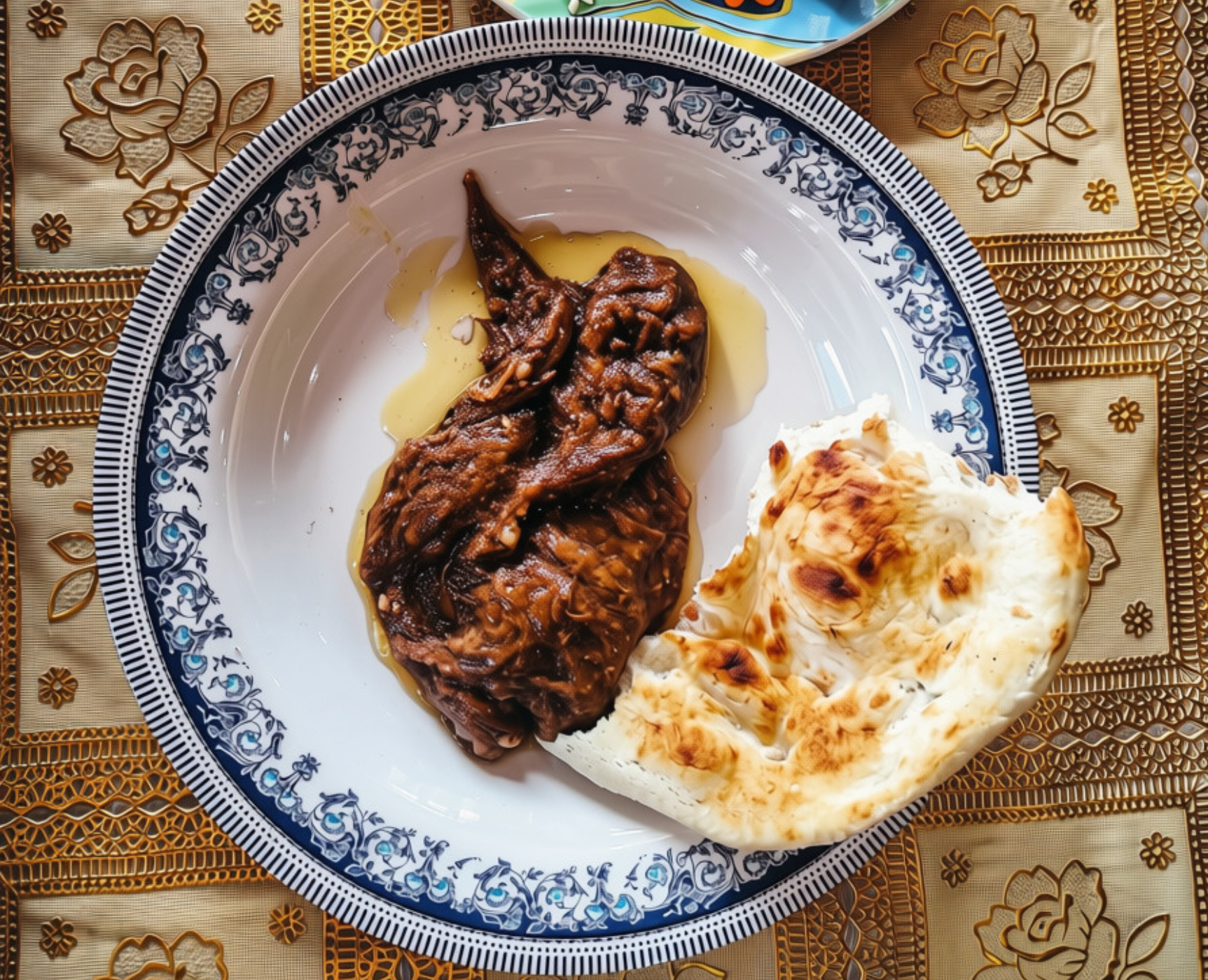
Nishasta is usually consumed as a warm drink, or a halwa — dried starch is mixed with water to form a smooth paste, sugar is added, and the mixture is cooked slowly in ghee over low heat, stirred continuously until it thickens and turns a shade darker. For texture, some homes add dry fruits like almonds, and cashews.
Very few households in the village now prepare nishasta from scratch. This dish is mostly eaten in the Northern Kashmir districts of Baramulla, Kupwara and Bandipora. “Decades ago, we would collect wheat to make nishasta from forests and nearby slopes,” explains Mohammad Ameen Choudhari, from the Kandi area of Uri district. “Our generation was deeply connected to this practice. We would spend days in the forests collecting the raw grain, drying it, cleaning it, and then preparing it carefully.”
The process of making nishasta begins in the summer — wheat grains are soaked for several days, then ground. The mixture is strained repeatedly, until the starch settles at the bottom. This starch is dried in the sun and then stored. Haleema Begum, from the village of Boniyar, explains that it is not something to be prepared in a hurry. “When I was young, my mother would tell me, ‘if you rush nishasta, it will not keep well until the winter’.”
“My grandmother taught me how to make it when I was 18. She explained that one has to keep stirring — that is the secret. If you stop, it sticks and the texture is ruined,” says Sabreena Ashiq, a college student from Bandipora.
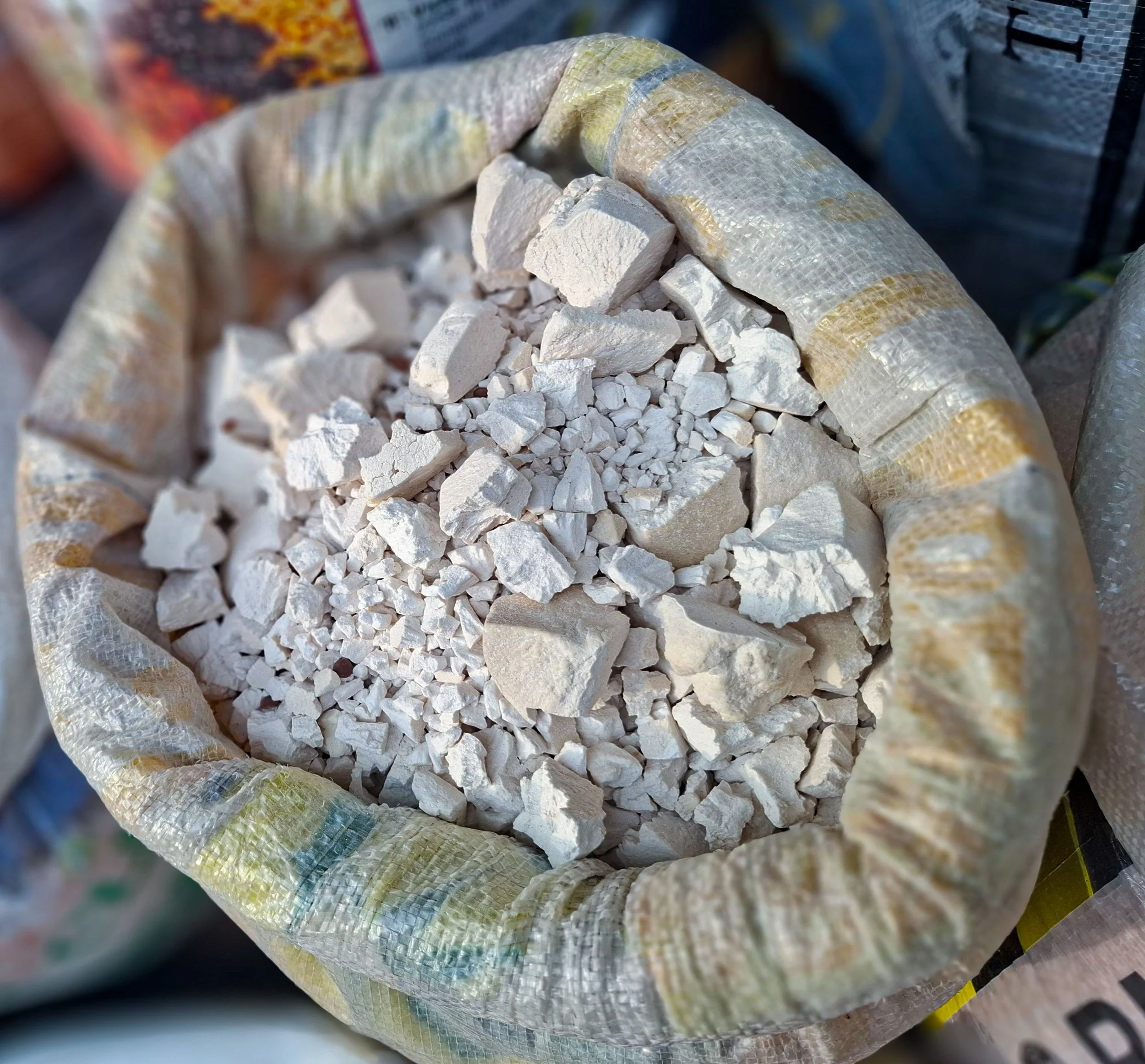
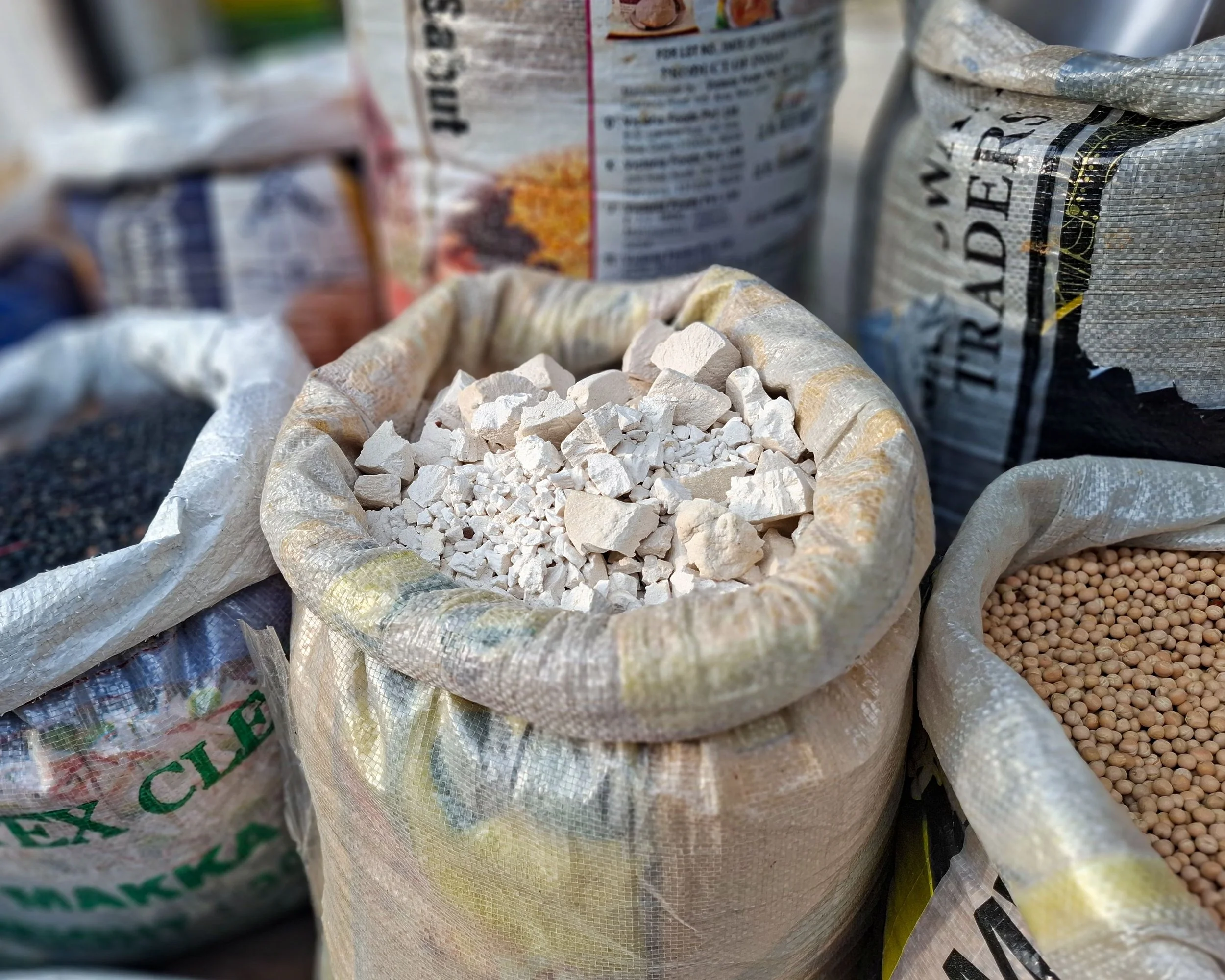
Solid nishasta, in its dried form, displayed for sale in a market.
“In the summer, we would sit in the courtyard and clean the wheat together. It was not just about food. It was about spending that time together, and sharing stories, while preparing for winter,” says Hajira Begum, from Kandi village of Rafiabad Baramulla.
While nishasta is widely valued for its health benefits, much of its reputation comes from generational knowledge rather than formal medical prescription. Families in the region describe it as energy-rich because it is prepared with wheat starch, ghee, and dry fruits; all calorie-dense ingredients important in helping keep the body warm during Kashmir’s winters. Village elders explain that nishasta is beneficial for gut health, as well as help strengthening the body’s muscle and bones.
“When my daughter delivered her first baby, I made nishasta halwa for her every week,” adds Hajira. “Our elders believe it gives strength to the back and bones. After childbirth, the body feels weak, so this helps in recovery.”
Sabreena notes that very few households in her village now prepare nishashta from scratch. “Earlier, almost every family made it in summer. Now people buy it from shops. The process is long, and many don’t have the time.”
For the few who do, nishashta remains a warming winter treat.
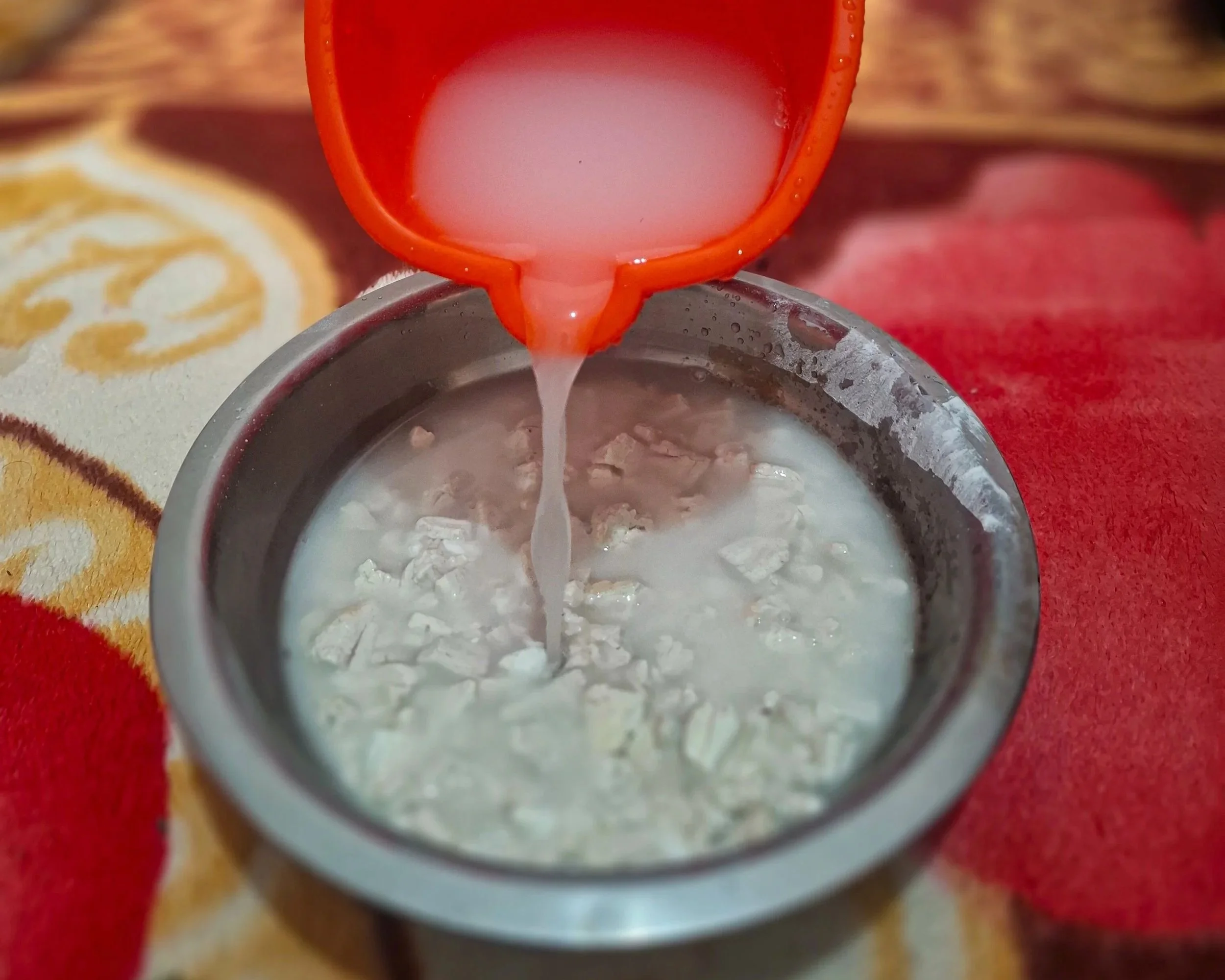
Water is added to nishasta to soften and dissolve it, and is left for several hours before cooking.
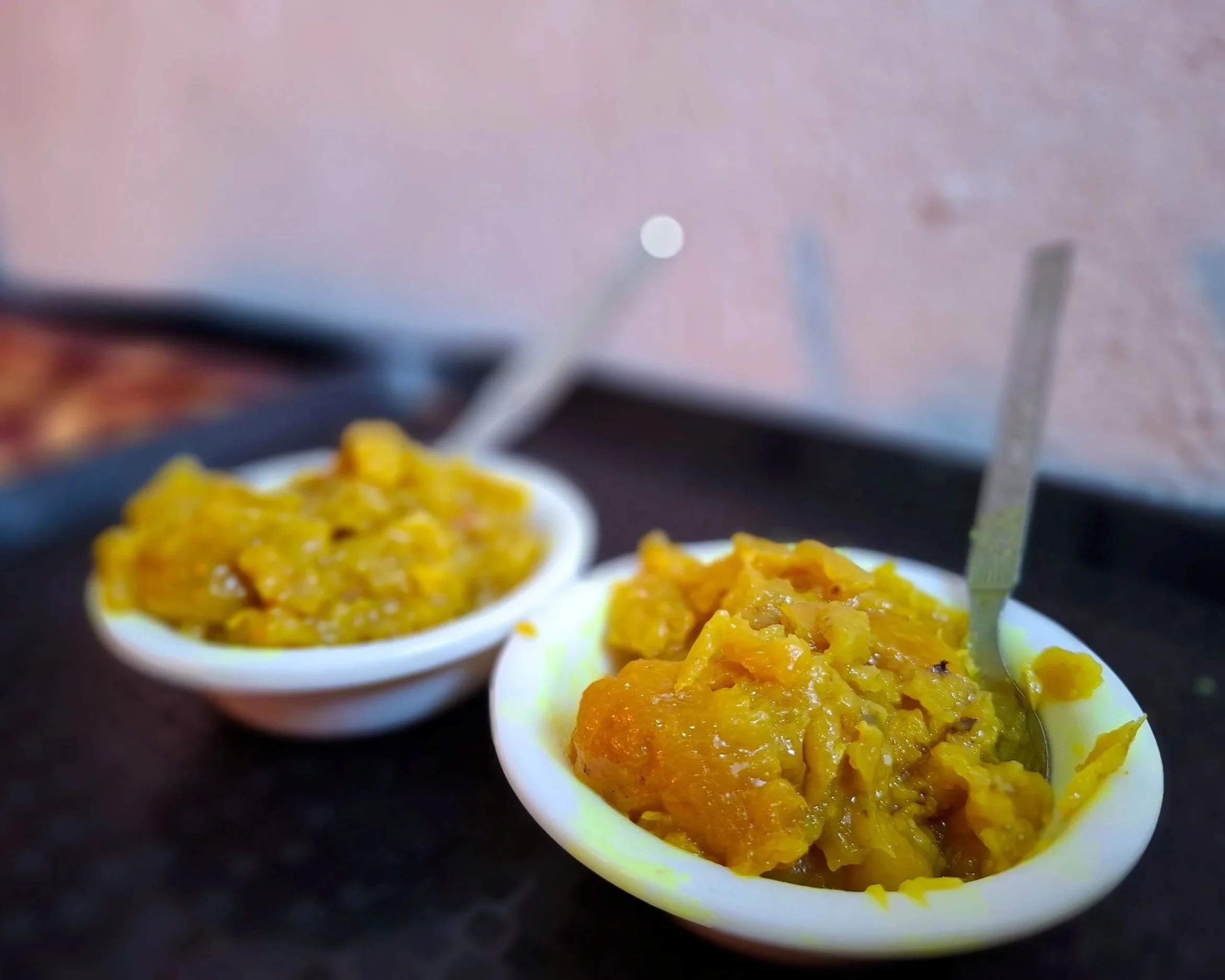
Nishasta is commonly consumed in Kashmir as a halwa.
RECIPE FOR NISHASTA HALWA
Ingredients
1 cup nishasta (wheat starch)
2 cups water
½ cup sugar
½ cup ghee
1 tsp turmeric
2–3 cardamom pods (crushed)
A few strands of saffron (optional)
Almonds and cashews (optional)
Method
Soak the nishasta in water for 6–8 hours or overnight
Mix well to form a smooth paste
Heat ghee in a heavy pan on low flame, for around 20 minutes
Add the nishasta mixture and begin to stir continuously
Cook slowly until the mixture thickens and turns a buttery yellow
Add in the sugar and dry fruits while continuing to stir
Keep cooking until the ghee begins to separate from the mixture
Garnish with almonds or cashews and serve warm
Umer Farooq Zargar is a freelance journalist based in Srinagar, Jammu & Kashmir. He is dedicated to documenting untold stories, focusing on social issues, the environment and climate change, culture, tradition, and conflict.
ALSO ON GOYA