Ding-Ding on a String: An Anglo-Indian Recipe for Preserved Meat
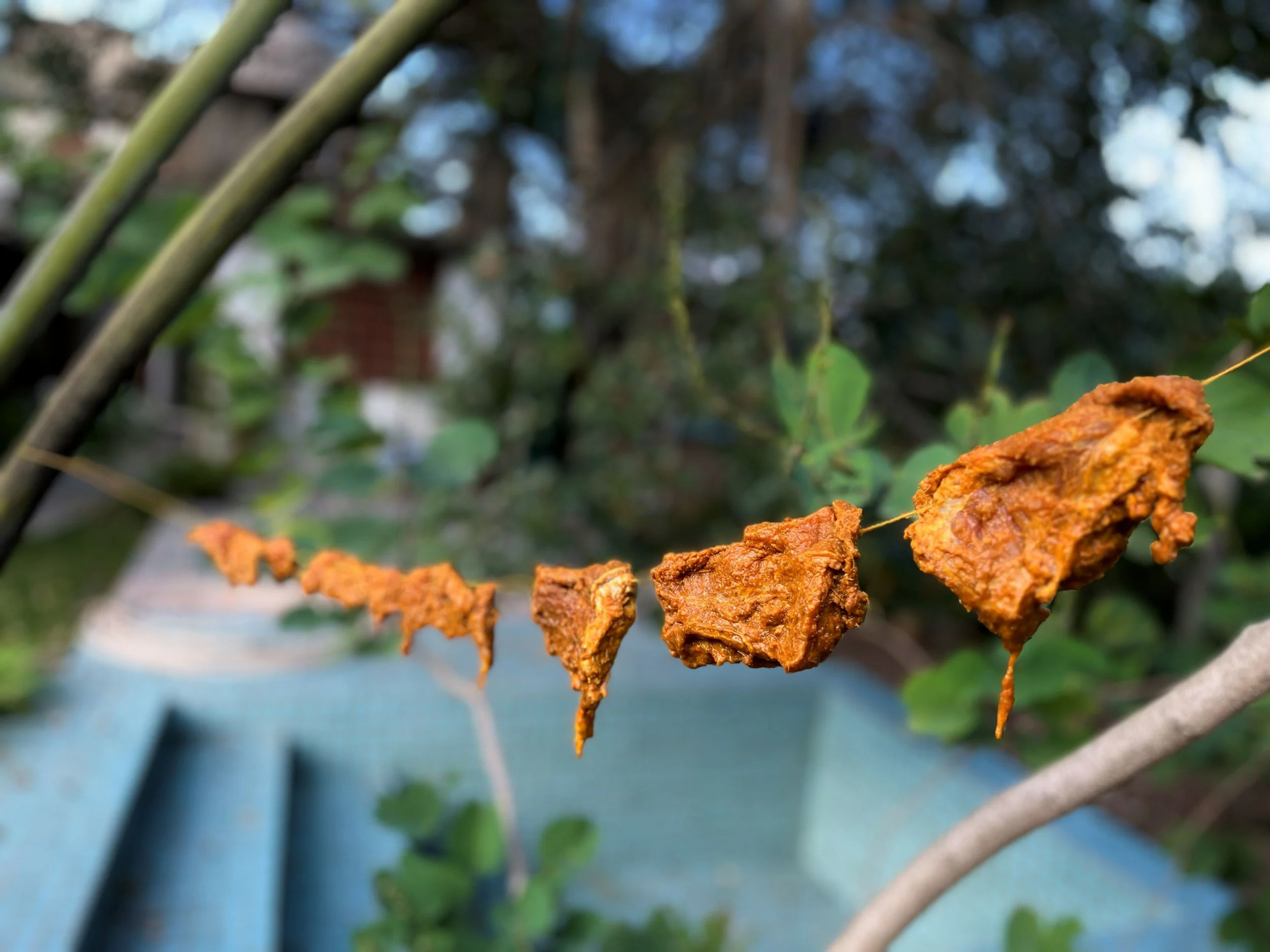
The Anglo Indian take on the beef jerky is a story of nose to tail eating, a grandmother’s precious marinade, and creating a salty companion to simple meals. Ryan Frantz shares a family recipe for Ding-Ding.
One of the most anticipated events in an Anglo-Indian colony was, without doubt, a hunt. Sometimes it involved a feral bull, sometimes a wild boar, sometimes a duck, and occasionally a rabbit that had the misfortune of being slow. But the most coveted quarry was the wild bull, because everything from its hooves to its head was destined for a dish (or ten).
A bull hunt also meant more meat than one could consume, respectably, in a few days. So what does one do with the excess? Ding-Ding to the rescue!
Naturally, a day after the hunt, strings of Ding-Ding would appear in the colony’s front yards like festive bunting.
And festive, it was. To label Ding-Ding sun-dried meat was like calling Elvis Presley a singer. It is so much more than that! It was the Bombay Duck of the South — a meal in minutes — the antidote to the days when you had nothing to cook and needed to put out something quickly.
As soon as the meat came in from the hunt, nana (my grandma, Barbara Frantz) with the help of a few abled bodied men, would heft out the shank end of the leg, carve out a kilo of beef from it, and then proceed to slice it into gleaming red slivers. The slivers would then have the marinade massaged into them — not casually mixed, or tossed, mind you, but rubbed in. Each sliver would get individual attention till it was evenly coated, before the next round of tough love, which involved forking the meat with great vigour for at least ten minutes, or tenderising it with a mortar and pestle.
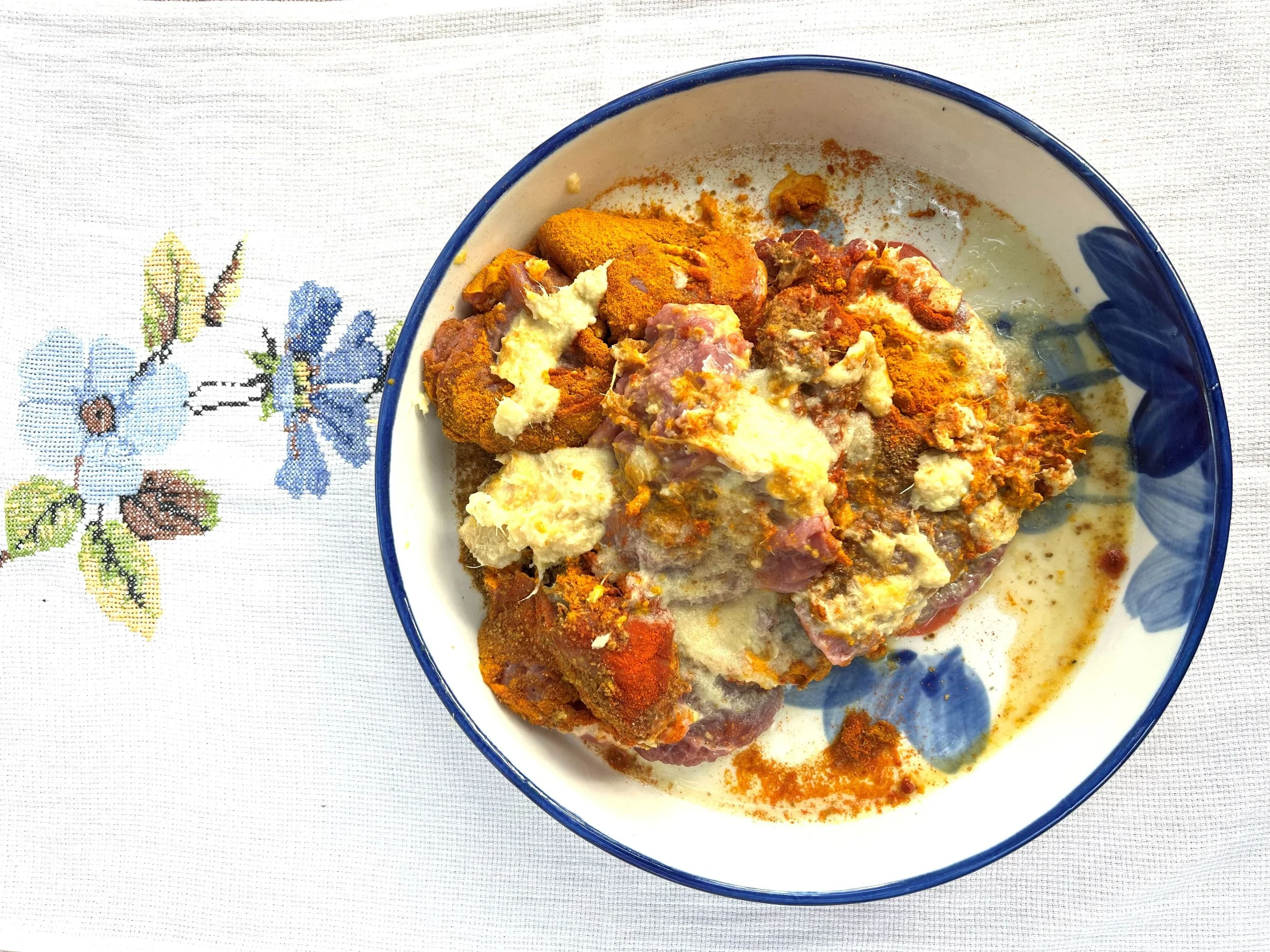
Everyone had their own version of the Ding-Ding marinade, but we loved Nana's best, of course. Her marinade for Ding-Ding was pretty much the same as for her vindaloo — a heaped teaspoon of turmeric, two teaspoons of chilli powder, two heaped teaspoons of cumin powder, very generous pinches of salt, a tablespoon of ginger-garlic paste and two tablespoons of vinegar. Some families eliminated the ginger-garlic paste. Some favoured pepper powder instead of cumin, while others still, a dusting of mustard powder, even as some swore by a dash of green chilli paste.
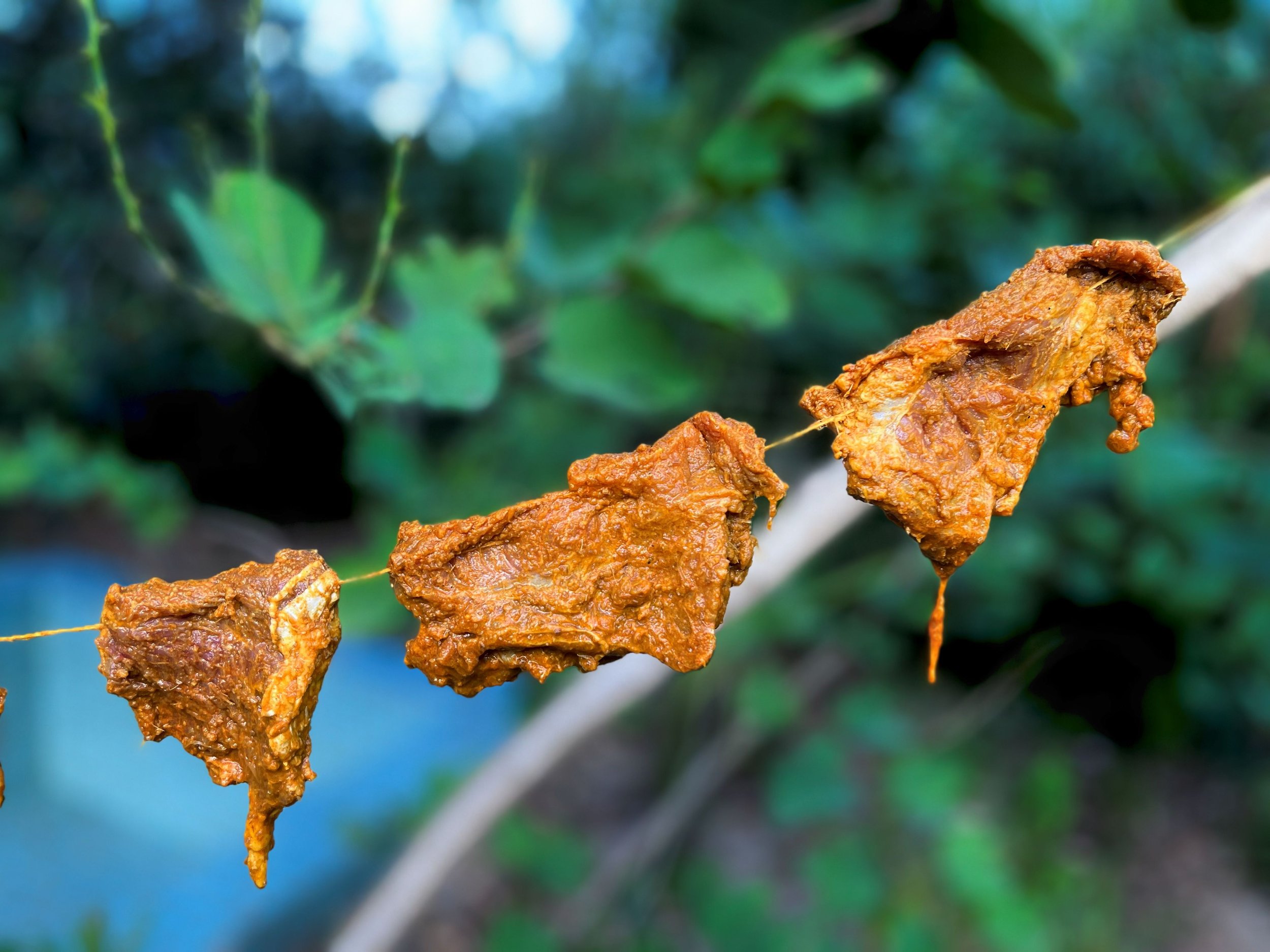
Once marinated, the Ding-Ding would be strung on to thick white cotton string with a large cobbler’s needle, and hung out to dry in the sun. That done, everyone was assigned Ding-Ding watch duty to shoo off crows, monkeys and other fauna who thought they had a claim to the drying meat. Some families simply had a meat drying cage made of chicken wire to help with this.
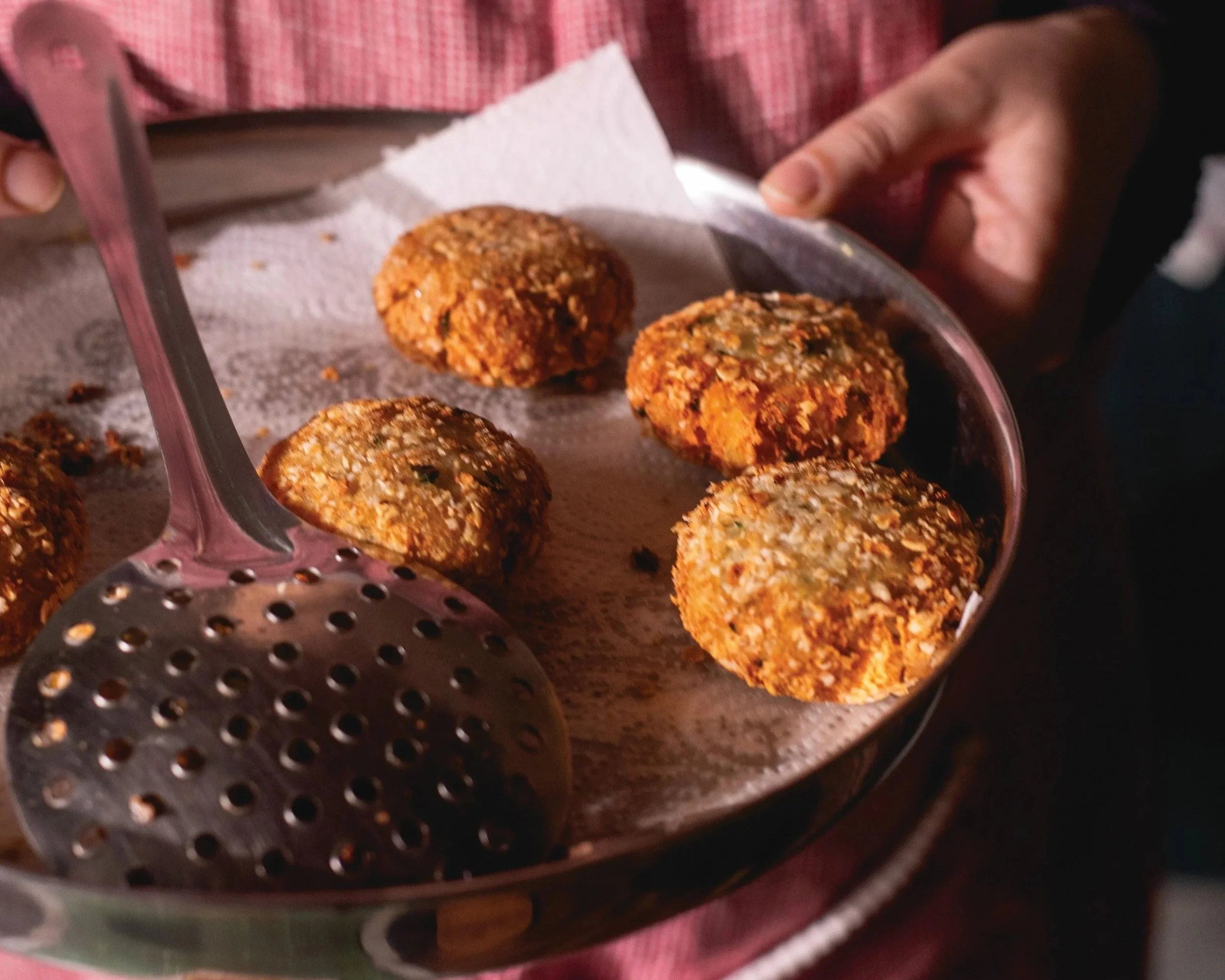
Once dried to slightly-drier-than-beef-jerky texture, the Ding-Ding would be de-strung and stored in airtight glass jars and used whenever required at a later date where the dried meat pieces would be soaked in cold water for a couple of hours. Each piece was then pummeled with a rolling pin before being shallow fried to crispy perfection and enjoyed with rice and rasam.
Ding-Ding done, Nana would roll up her sleeves and declare war on the suet, but that’s another story entirely.
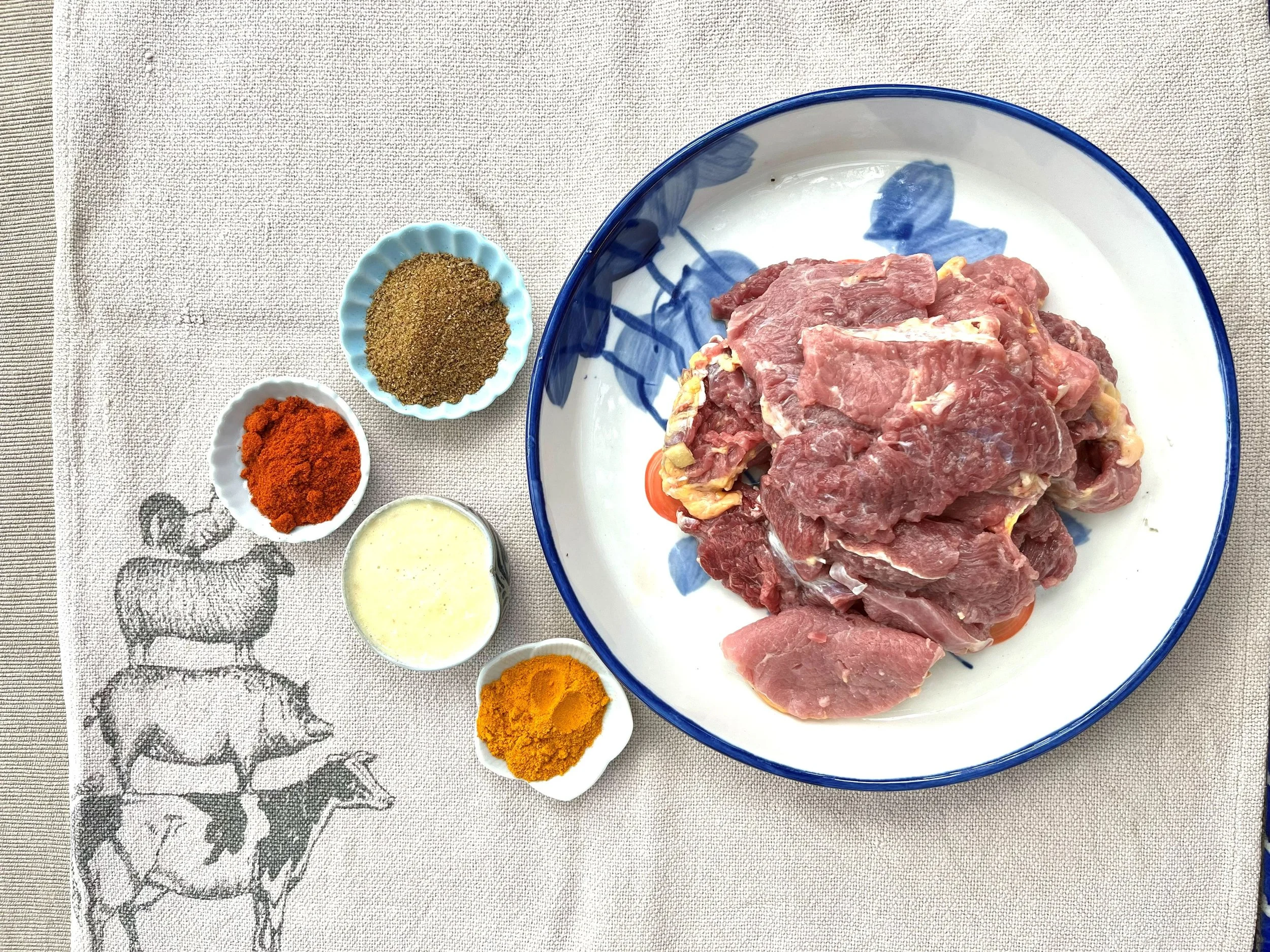
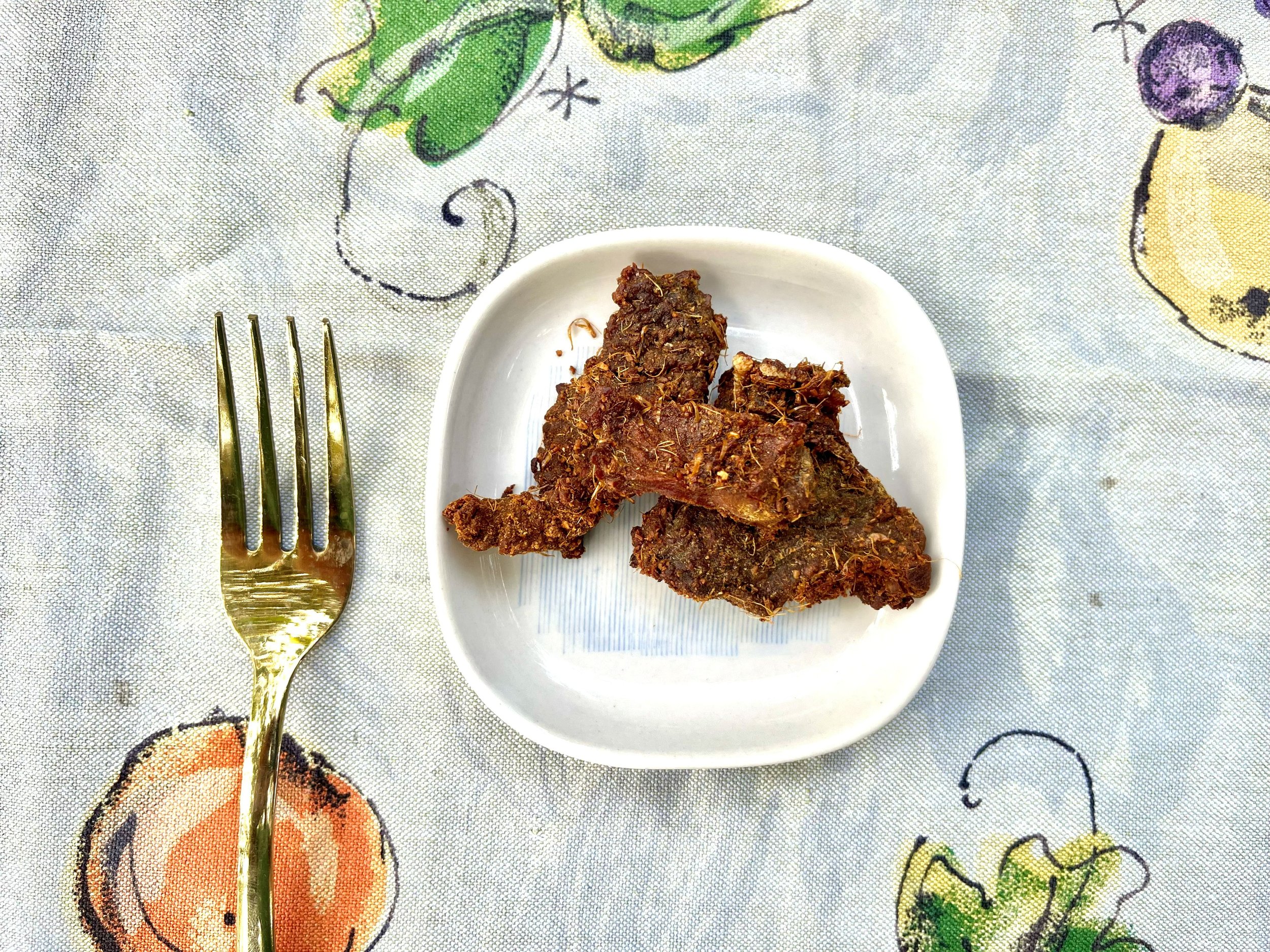
RECIPE FOR ANGLO-INDIAN DING-DING
Ingredients
1 kg beef (round)
1 tbsp ginger-garlic paste
2 tsp turmeric powder
4 tsp chilli powder
2 tsp cumin powder
2 tbsp vinegar
1 tbsp salt (or to taste)
Method
Slice the beef into thin pieces. Alternatively, you may pound the meat gently with a mortar till flattened.
Mix all the marinade ingredients together and rub them into the beef.
Using a large needle and cotton thread, treadle the beef slices onto a long string thick enough to hold them all. Space the slices evenly so they don’t touch one another.
Suspend the string in the sun to dry, ensuring it is placed away from birds, insects, and other animals that might try to consume it.
Allow it to dry for a couple of days in direct sunlight until the meat has lost all moisture and is completely dehydrated.
Remove from the string and store in an airtight jar.
Fry until crisp before eating.
Optional: Soak the dried meat in cold water for a couple of hours before frying it.
Best enjoyed with rasam or dal, and rice.
NOTE: This recipe is taken from the author’s recent book titled: A Town Called Gooty.
Ryan Frantz is a coffee-guzzling wanderer toggling between Bangalore’s chaos and Pulicat’s calm, chasing sunsets and stories, and is the author of A Town Called Gooty, a 1957-set Anglo-Indian colony novel available on Amazon Kindle.
ALSO ON GOYA