How Chetasi Kane Built a Ghee Business From Her London Apartment
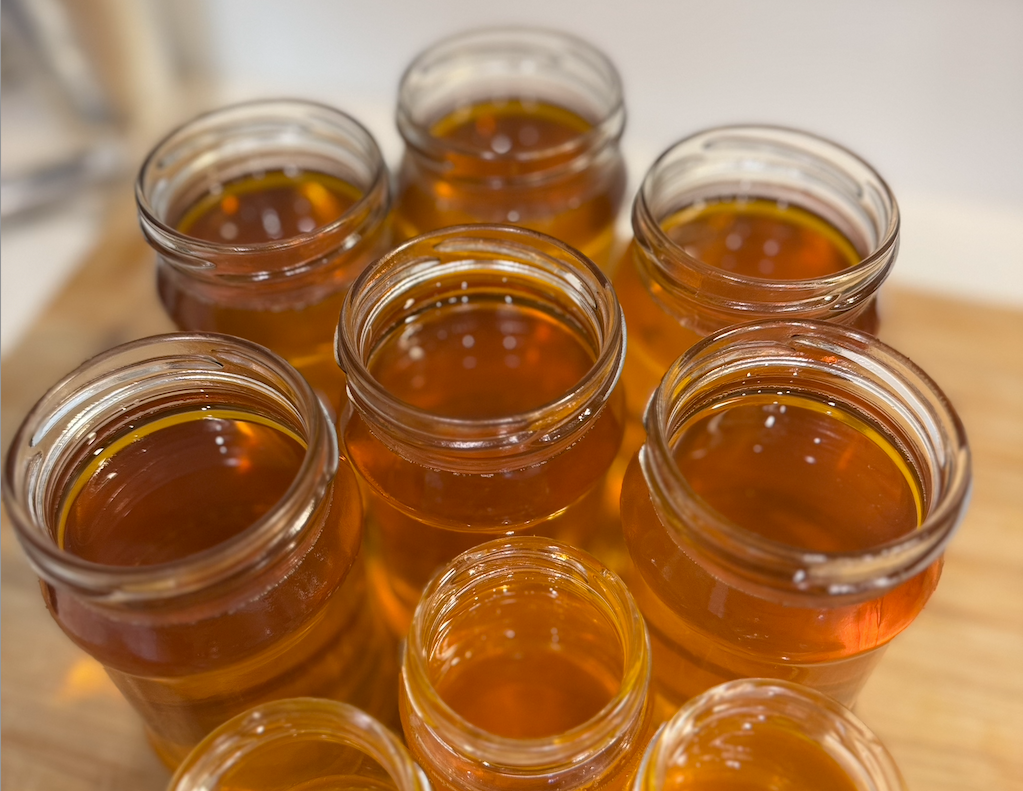
Exactly a year ago, Chetasi Kane started an experiment in her kitchen, driven by the desire to make and eat homemade ghee. A few days of stirring, churning, and smelling later, and she had the final product: liquid gold, now bottled and sold as Ajji’s desi ghee across the UK.
It is a regular spring day in London. Winter is slowly giving way to spring — yellow daffodils are slowly popping out of the ground; the days are becoming slightly longer; the sun is finally shining (albeit intermittently). Personally, January does not feel inspiring to start anything new. Short, cold, wet days can only inspire hibernation. But the start of spring is something else. It finally feels like a new start and the right setting to start something new.
My large tin of Amul ghee, bought from an Indian Cash & Carry in East Ham, was almost over. It was a moment I had quietly been waiting for, so I could finally attempt making a batch of fresh ghee from scratch. I wanted to move away from refined seed oils and start cooking with desi ghee.
I could use the shortcut method: getting good quality butter from the supermarket, Lurpak or Kerrygold, melting it and simmering it until the milk solids separate. My own nani, when she moved to Kuwait in the mid-60s, used this method. Homemakers resourcefully tackled the unavailability of Indian ghee abroad using this practice, which is still alive in numerous Indian diaspora kitchens.
But that wasn’t what I was aiming for. I wanted the real deal, the way my ajji used to do it in her kitchen.
My brother and I didn’t grow up with grandparents at home, but they were never far. We visited them in Baroda (Vadodara) every six weeks, and they visited us in Ahmedabad just as often. These were short, weekend visits, and many of them coincided with a specific kitchen routine: the making of ghee.
It was never framed as a ritual. It was just a routine kitchen practice in my ajji’s kitchen. Ajji would skim the malai or sai (in Marathi) from boiled milk each day. She used the same ceramic bowl to store this cream. It had a designated spot in the fridge, far away from anything that might contaminate it. The malai would quietly collect for 10–12 days until it formed a small heap. Then it was brought to room temperature. A spoonful of homemade yoghurt was added. The bowl would rest again, overnight, to ferment. We even had a word for this: virzan.
On Sunday morning, ajji would add ice to the bowl and churn the mixture using a wooden mathani. When the butter would float up, ajji would gather it by hand, pressing out the excess liquid. A bit of the fresh butter was kept aside (a treat to go with warm rotis) and the rest went into a thick-bottomed pan, left to simmer over low heat. Over the rest of the morning, the butter would continue to simmer over low heat, till the milk solids separated and settled at the bottom. All of this was eye-balled — she watched for clues from the colour, the aroma, and the consistency. No instructions were written down.
I asked my mom if she had any foolproof method or suggestions. But she came back with, “I gave up making ghee because it was always a hit or miss”. So, here I am, in my London kitchen, not knowing where to begin. All I had were some vague memories of ajji’s preparation, a handful of Youtube videos, and ChatGPT.
We, of course, suffered from that most millennial ailment: lactose intolerance. We never bought milk and never had a practice of collecting malai. The British supermarket shelves, however, did have another solution, double cream.
I bought some packs of double cream from the super market and live bacteria yoghurt. It was still cold in March and room temperature was not warm enough for fermentation. I decided to heat the double cream, let it cool down a little, and then add a couple of spoons of yoghurt. To keep the pot of cream warm, I wrapped it in a towel and placed it inside the oven, and whispered a little prayer.
The next day, I excitedly opened the oven, unwrapped the towel like a present, but the consistency was still watery — it had not set. To taste, there was a hint of sourness. Unsure about what to do next, I once again turned to ChatGPT, on whose advice I decided to refrigerate the cream, bring the temperature further down, and then churn. ChatGPT gave me precise temperature ranges.
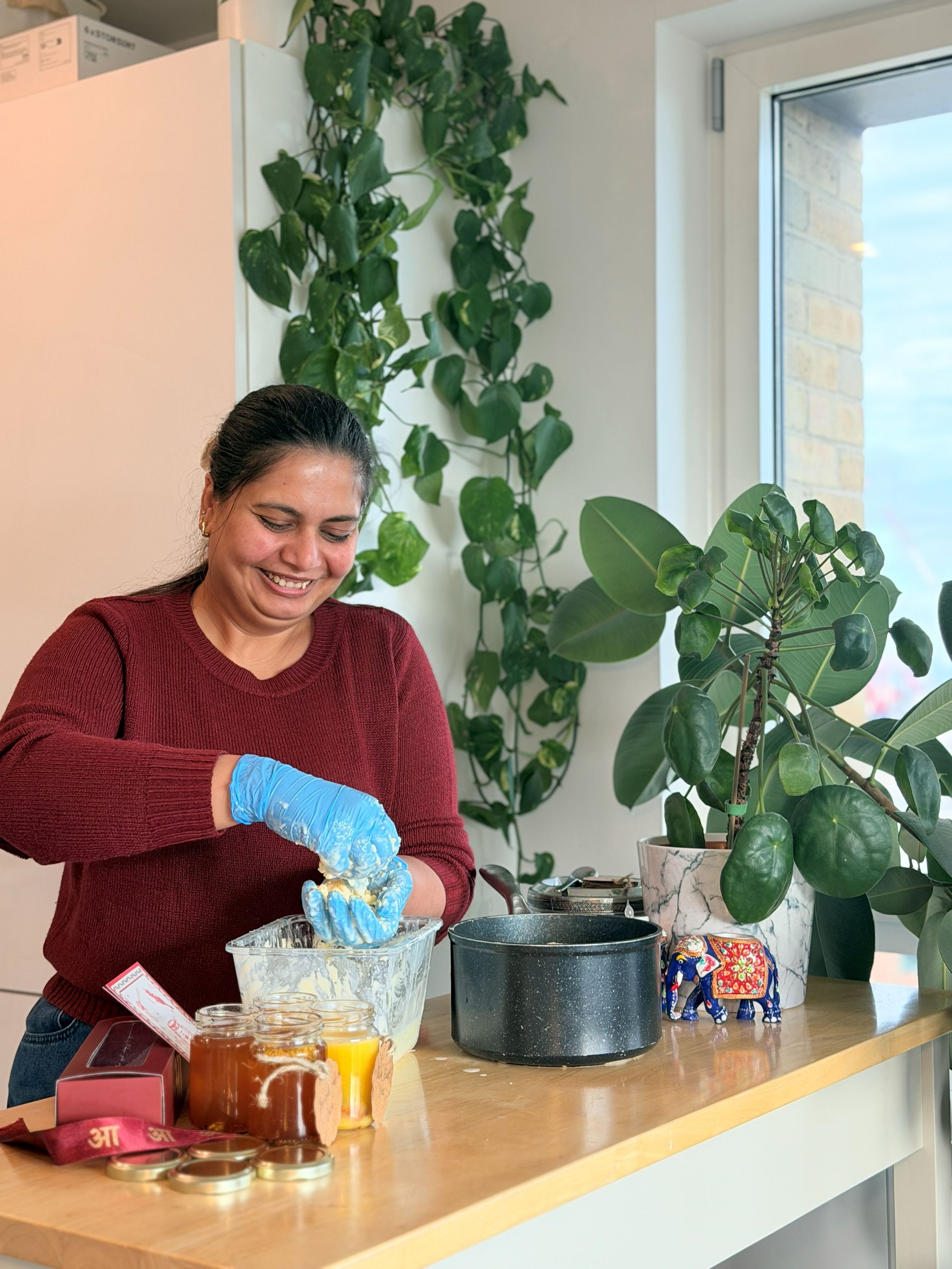
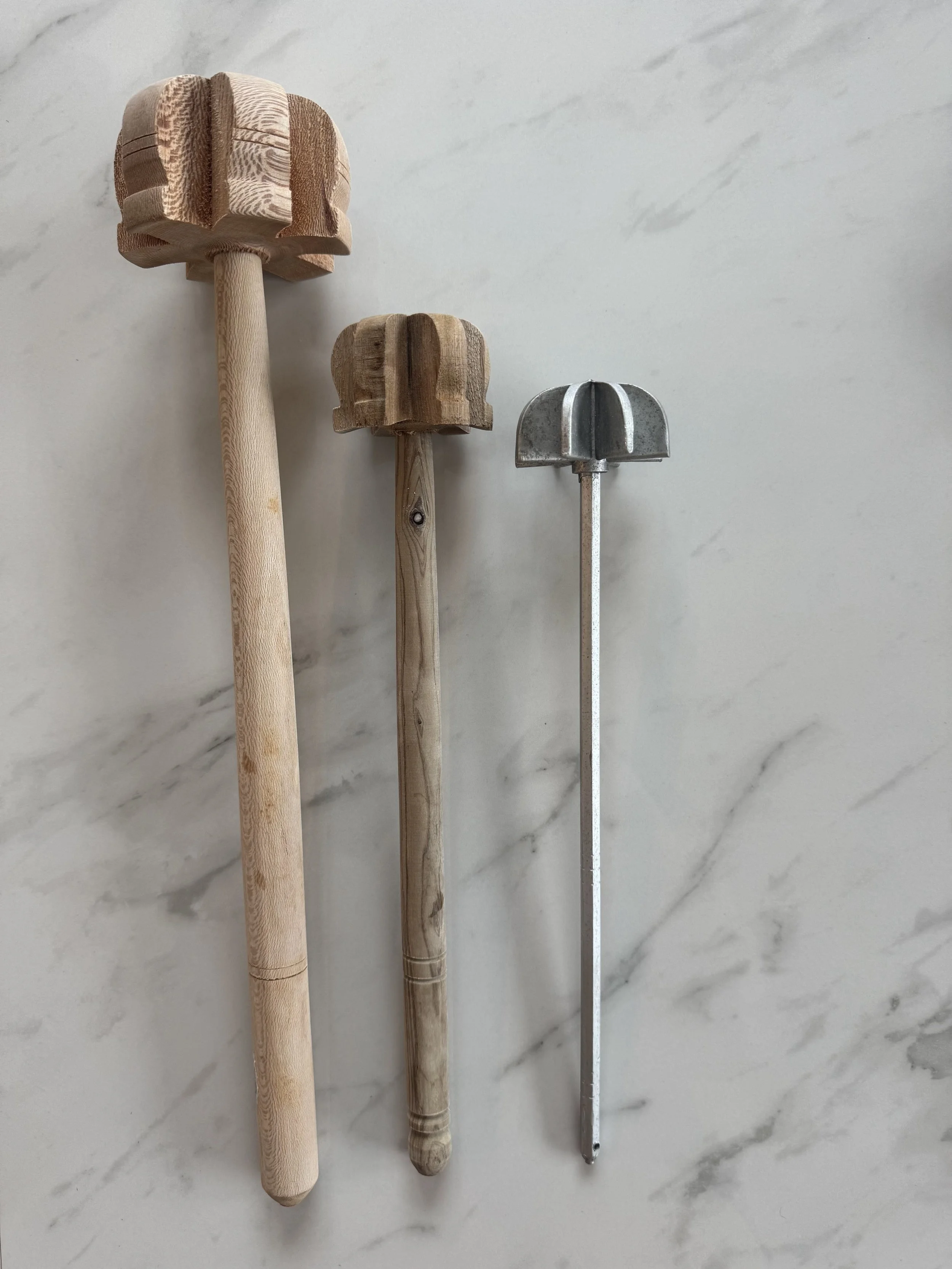
I used an aluminum mathani, which I typically reserve for making chaas, and started churning. Within five minutes, the butter suddenly separated. It was nothing short of magic! I quickly started to separate the butter and squeeze out the excess liquid, just like I had seen my ajji do it. I put the collected butter to melt over slow heat. I kept checking, stirring, and smelling. Finally, the milk solids separated and settled at the bottom. I let them brown before turning off the heat. When the simmering stopped, I strained the ghee and stared at the jar in disbelief. It looked right. It smelled right. And more than anything, it just felt right.
That first batch didn’t just take me back to my ajji’s kitchen. It reminded me that these practices, the ones that feel impossibly far away, are still within reach. All they need is a little remembering, a little improvising, and a lot of patience.
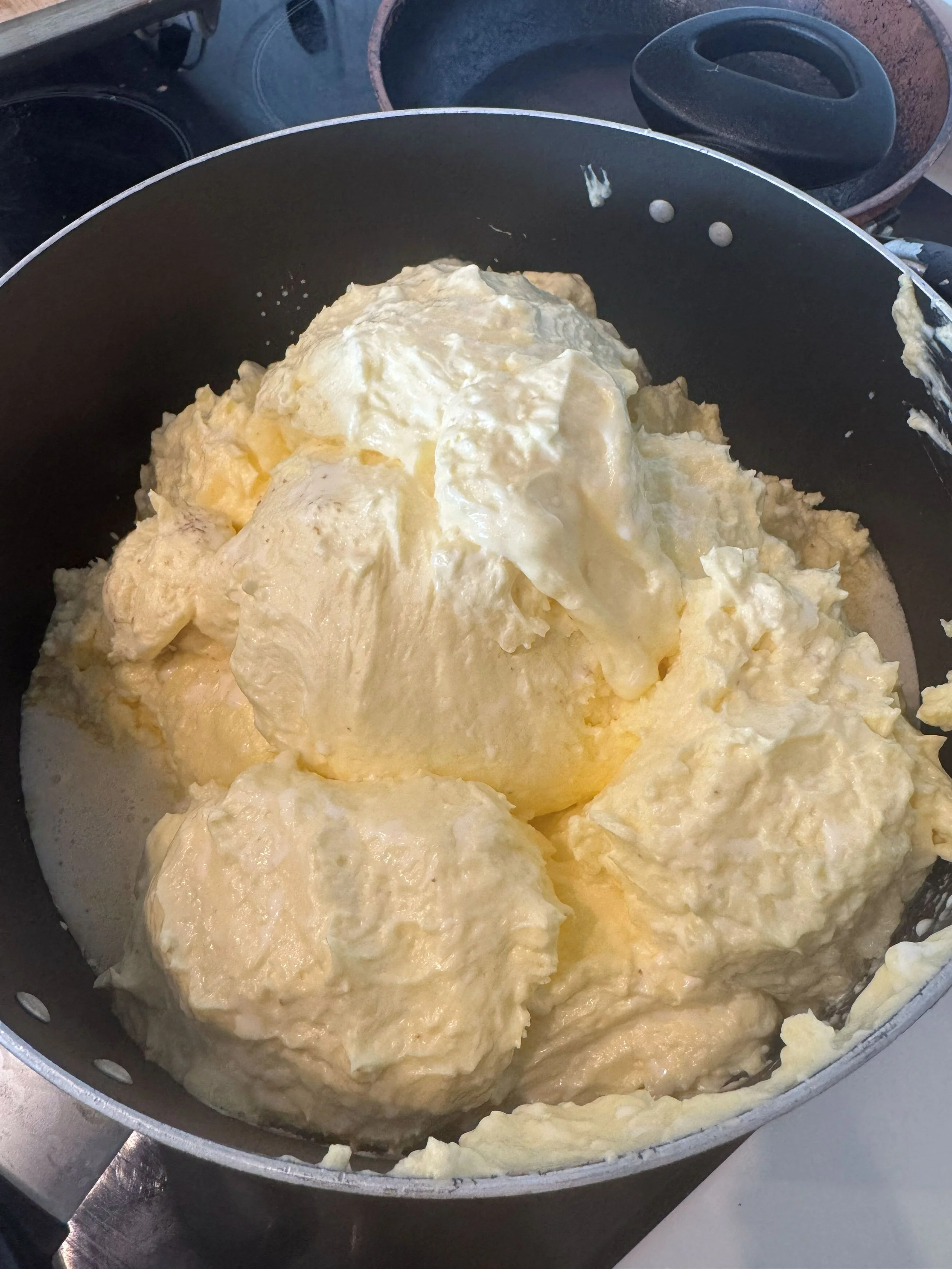
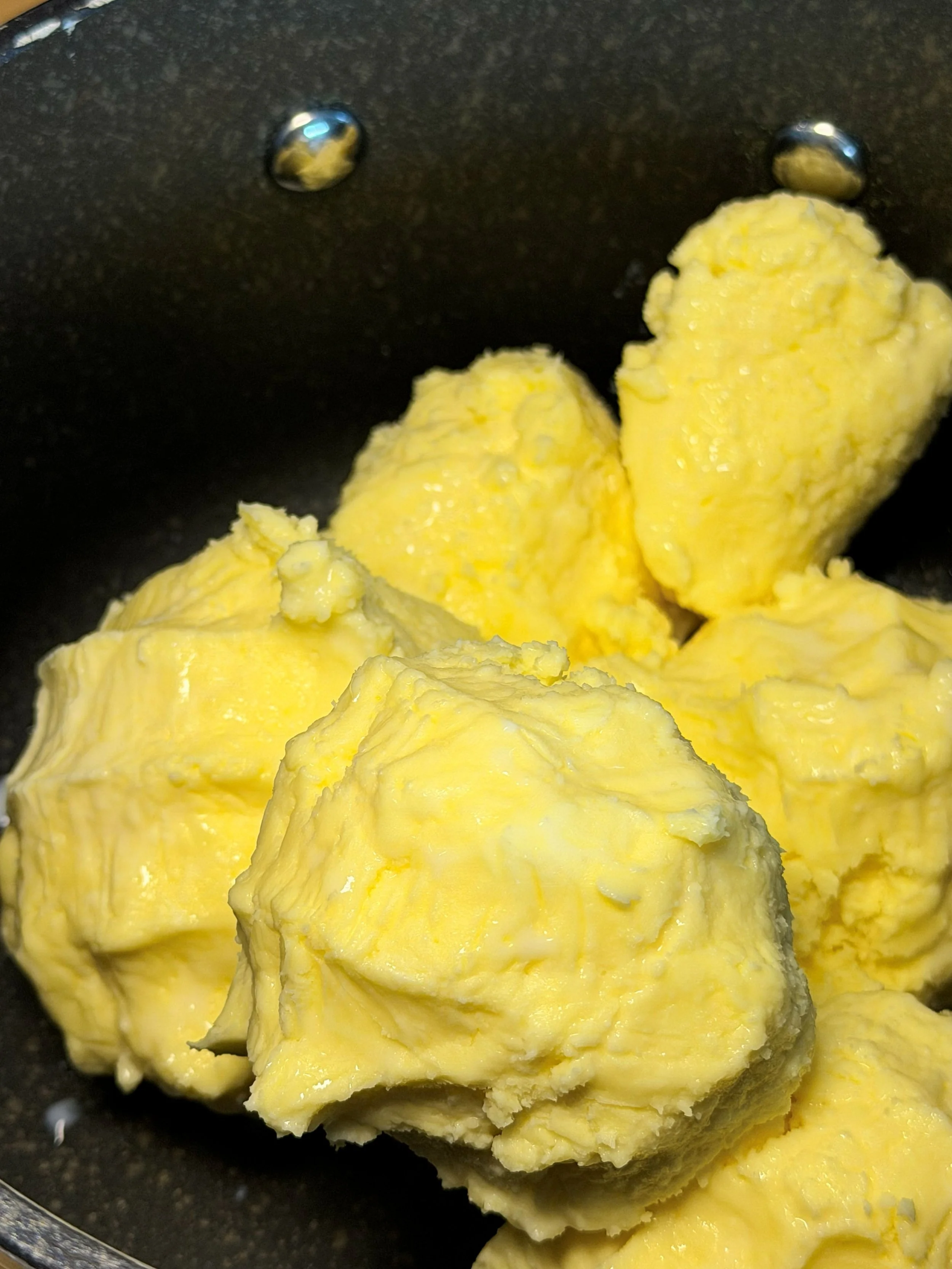
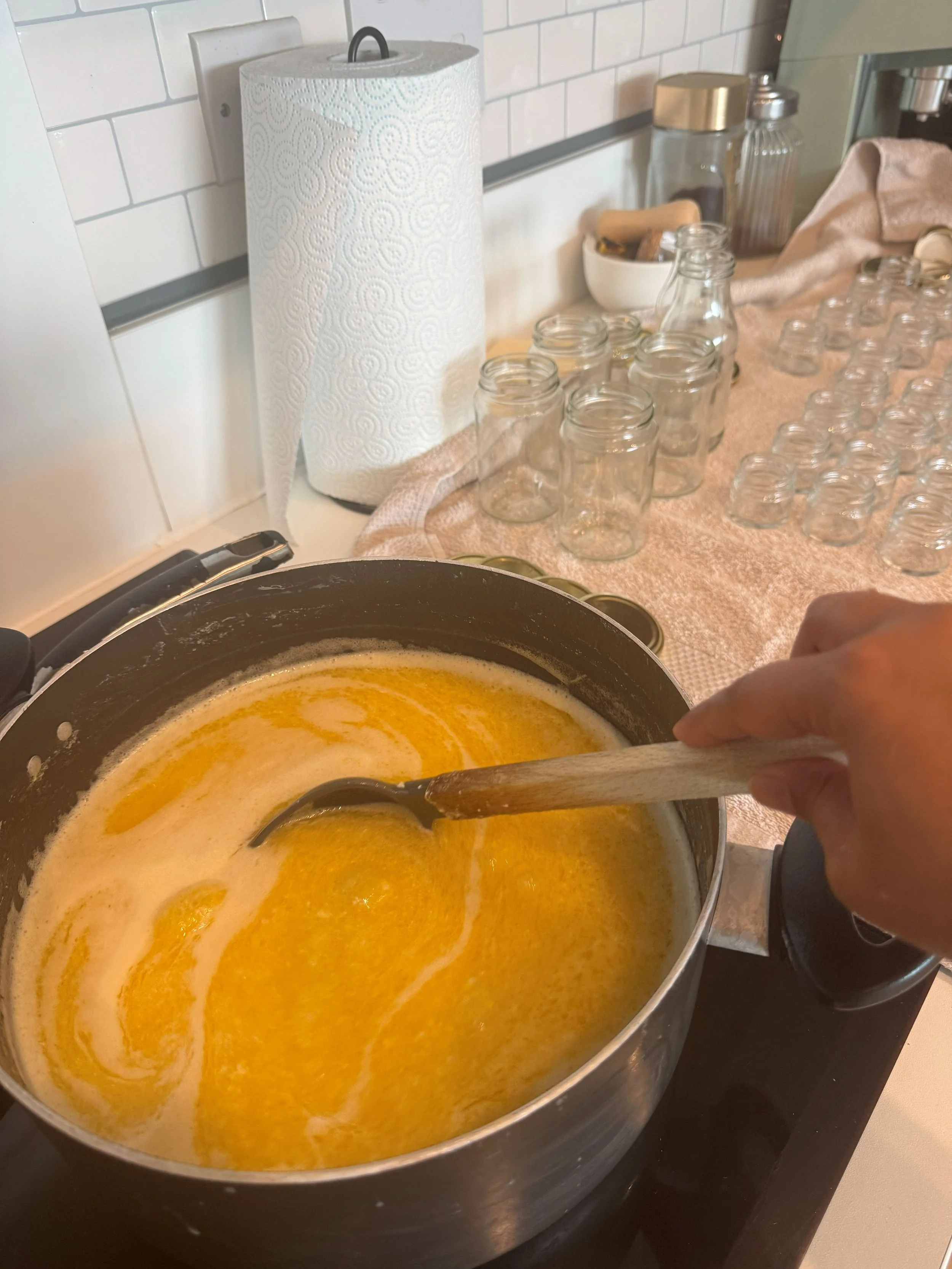
That March afternoon in 2025, another silent resolution was born: to bottle this and share it with others. Some weeks later, I put the label Ajji’s on a glass jar bottle and delivered my first order. Since then, Ajji’s has travelled to kitchens farther than I could ever have imagined. Some use it the way I grew up with it, spooned over warm food and folded into everyday cooking. Others have shared more personal associations: an Indian mother delighted that her toddler has taken to eating ghee with relish; a customer who said the aroma instantly reminded him of puranpoli from childhood; women in the first trimester of pregnancy telling me that food cooked in Ajji’s Ghee was one of the few things they could tolerate. My favourite part is when customers order ghee as a gift for Indian and non-Indian friends. Their excitement for sharing Ajji’s with others is so wholesome.
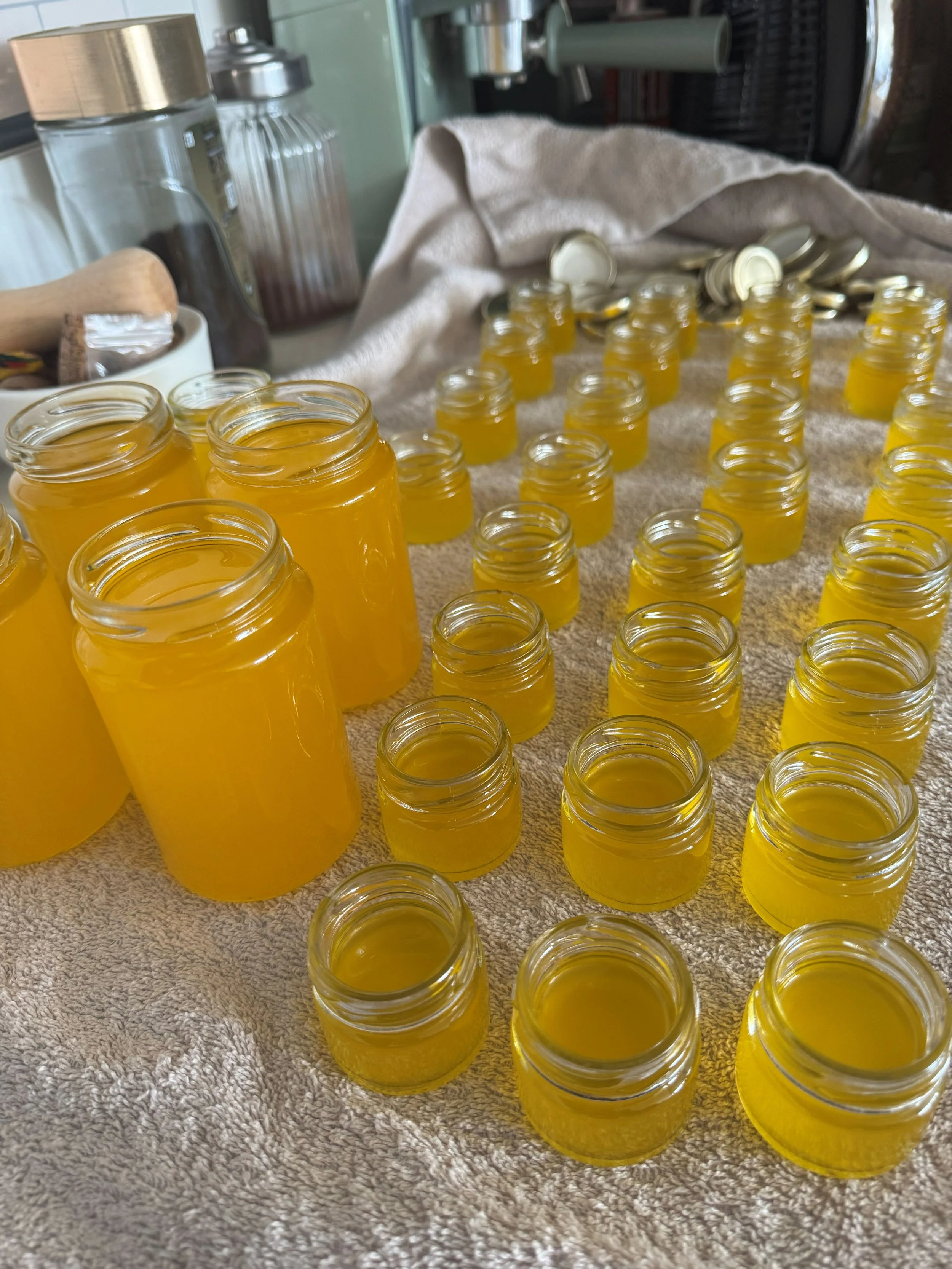
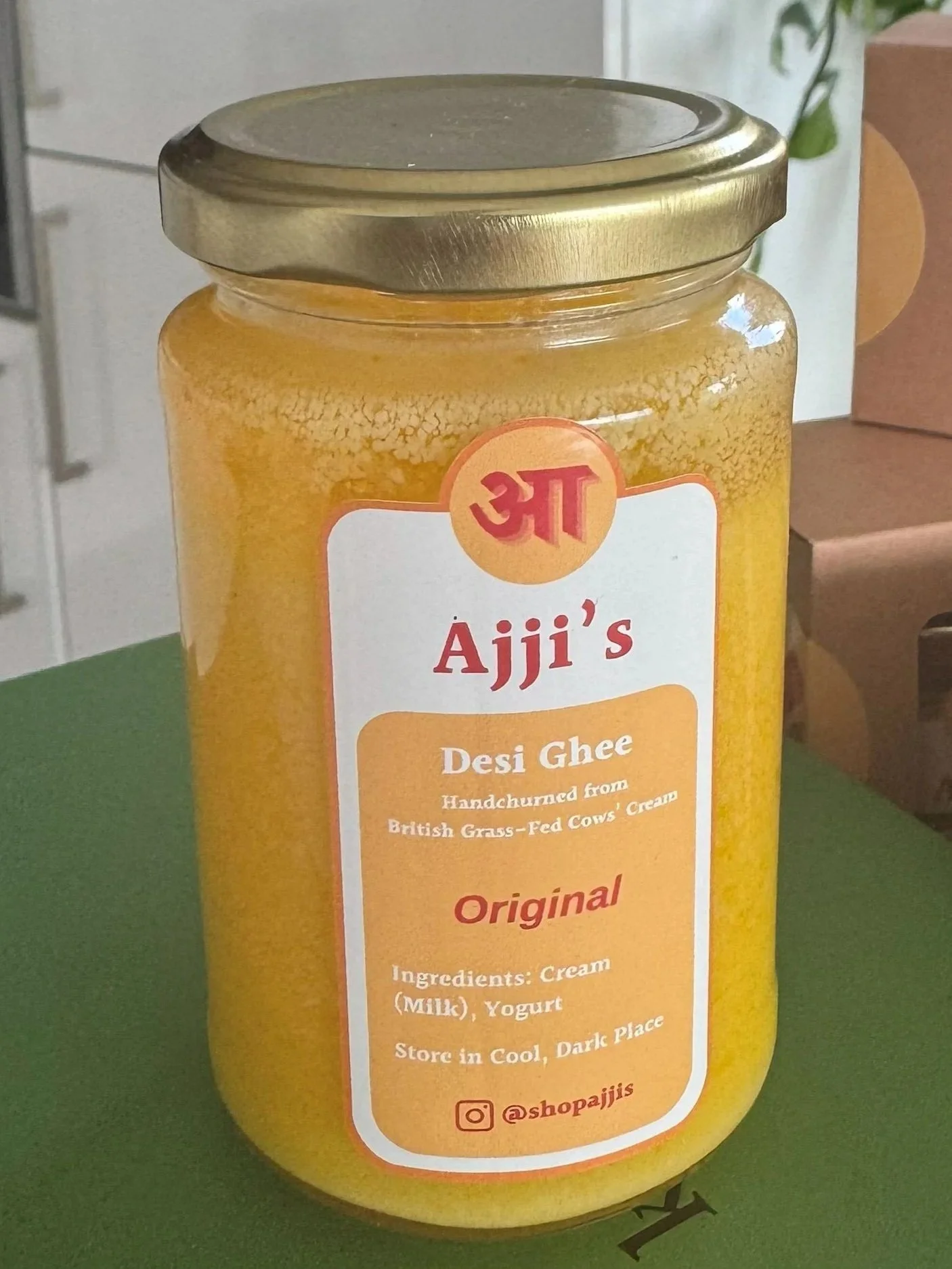
There is something incredibly moving about something that began with a memory of my grandmother’s kitchen, now resonating with the memories, needs, and comforts of others too. I see this as a very high reward, especially in an extremely fast-paced, competitive world.
Recipe for Ghee Roast Figs with Saffron Cardamom Yoghurt
Ingredients
4 fresh figs
2tbsp ghee
200 g Greek Yogurt
2 tsp sugar
4-5 cardamom pods
5-6 saffron strands
Method
Wash and slice fresh figs in half.
In a frying pan, heat two tablespoons ghee. Once melted and hot, place figs fruit side down. Lower the heat and let is roast.
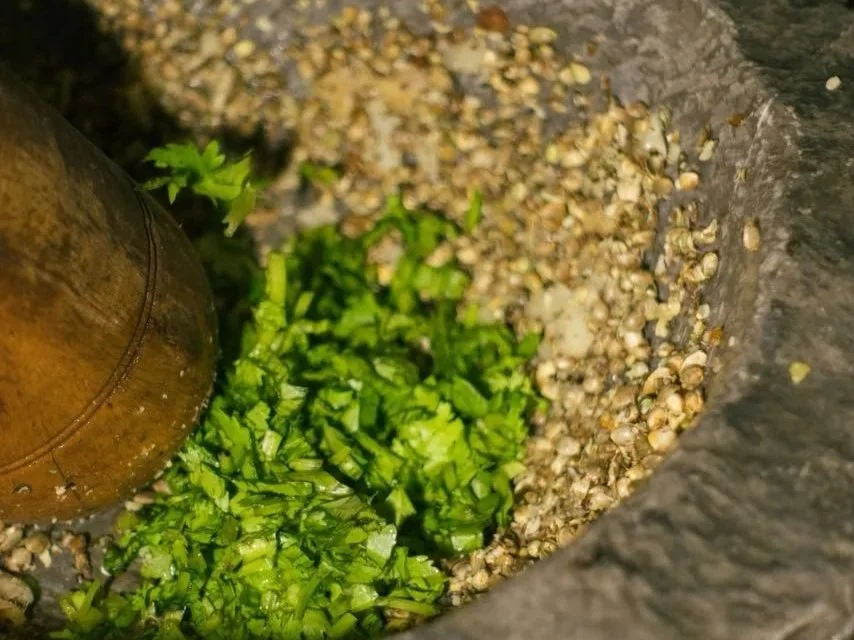
Take cardamom seeds from a pod and lightly grind them in a mortar and pestle. Mix the ground cardamom with the sugar.
In a bowl take the Greek yogurt — ensure it is thick and the excess water is removed. Mix in the sugar-cardamom mixture, along with the saffron.
Check on the figs that would have become jammy and roasted at the bottom.
Serve the freshly ghee roasted figs with the cold saffron cardamom yoghurt.
Chetasi Kane is the founder of Ajji’s Ghee, a small-batch ghee brand born in her London kitchen and inspired by her grandmother’s recipe. She occasionally dabbles in writing and when gets the time, updates her musings on the Bhagwad Geeta on the DailyGeetaProject.
ALSO ON GOYA