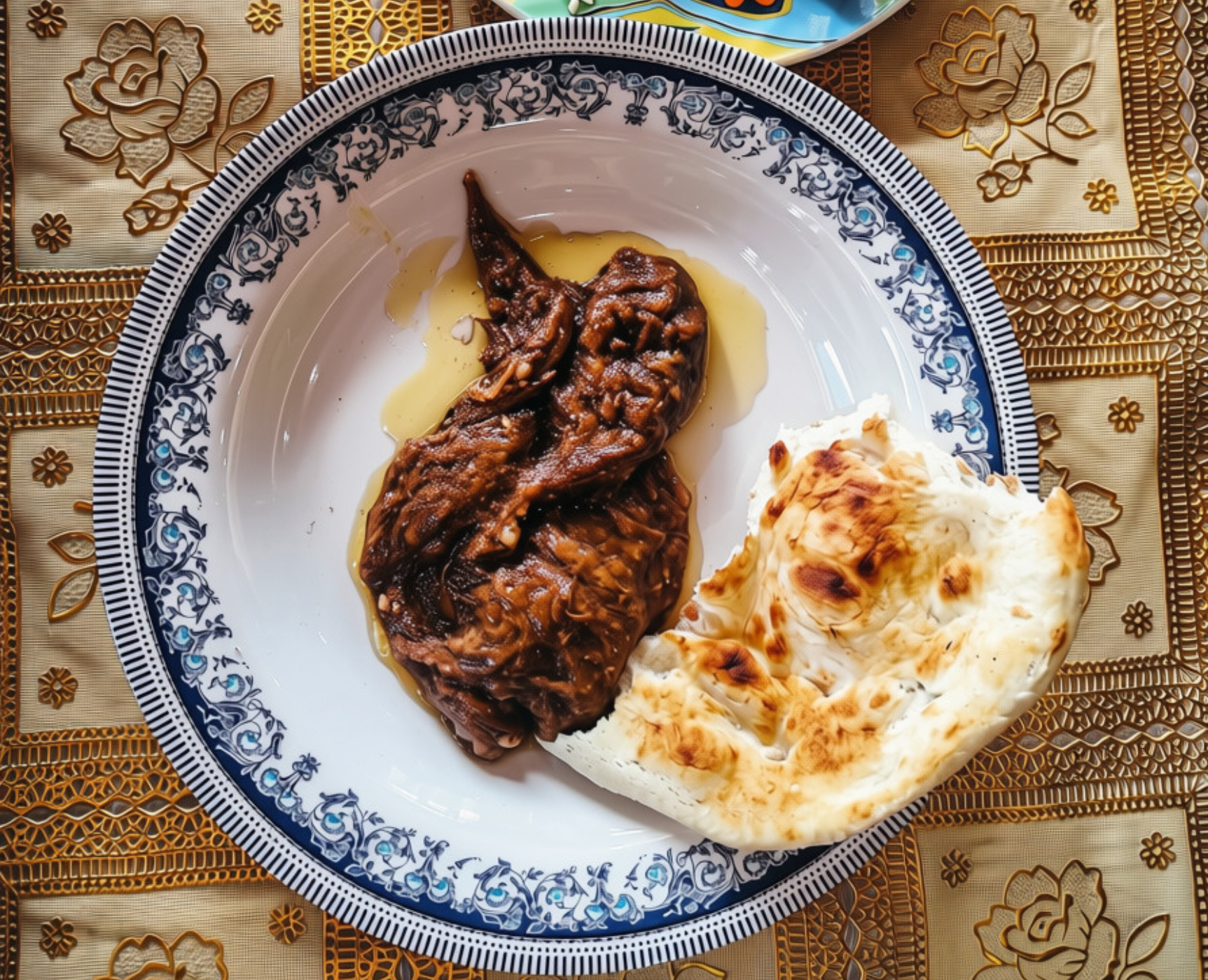
Inside the Dawoodi Bohra fascination with Lasan Kheemo
“The Dawoodi Bohras are a group of Ismaili Shia Muslims and frankly, we are rarely understood.” Insia Lacewalla invites us into the Dawoodi Bohri home, where lasan kheemo is a culinary legacy of who they are, made with fat and spices, and flavoured with green garlic.
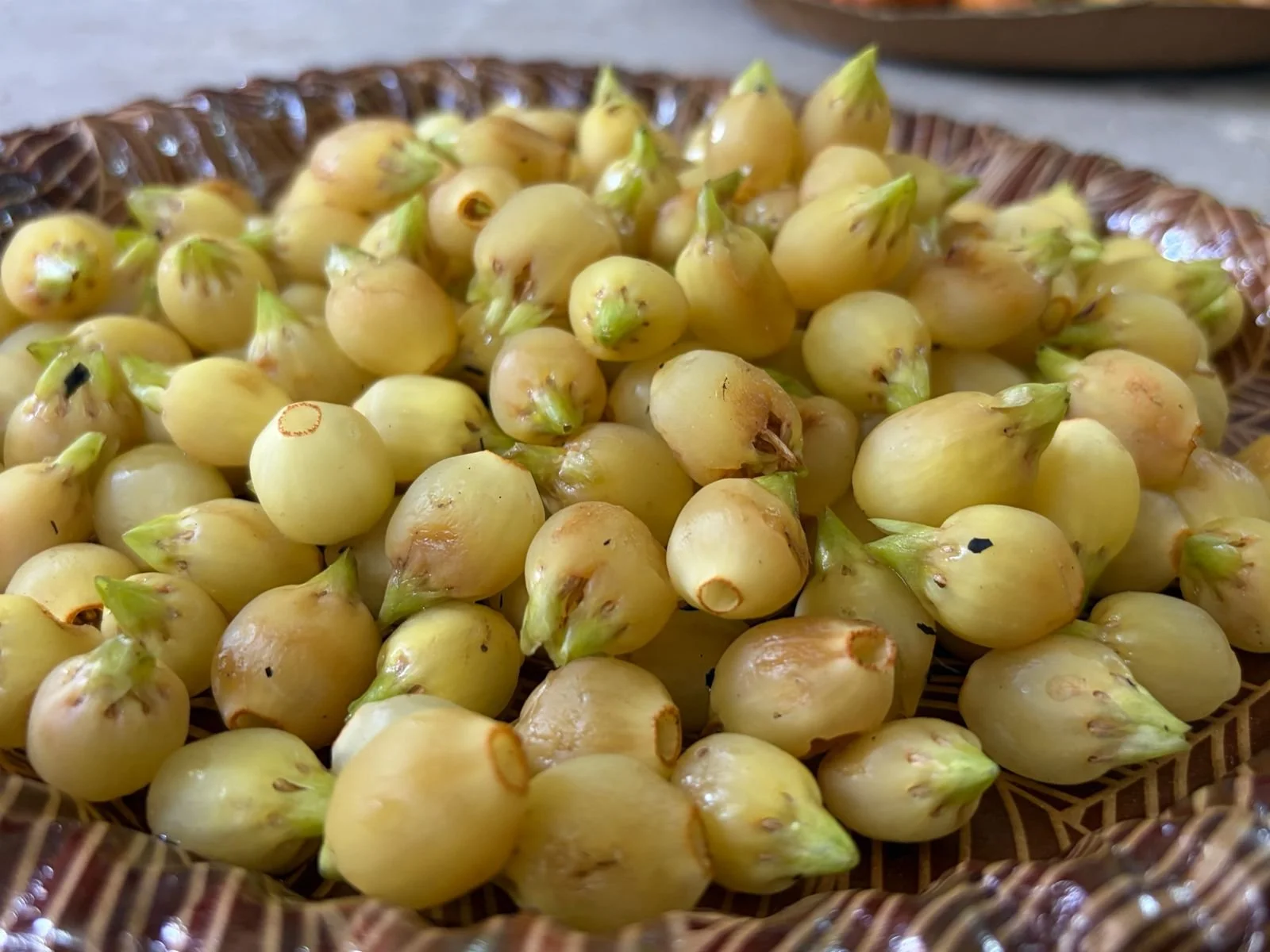
My mother, Tasneem Lacewalla, makes lasan kheemo at least once during winter. The minute her trusted sabziwala informs her on the availability of green garlic (lasan), her preparations begin. Available for only two months between December and January, Bohris value green garlic like gold.
The recipe of lasan kheemo has been passed down to my mother from her own mother, my late grandmother, who ran a catering business from the third floor of her Mohammed Ali Road apartment in Bombay. She served Bohri cuisine exclusively for nearly two decades, all by herself. At 39, I still can’t make lasan kheemo like my grandmother did. However, while attempting to create the dish myself, while standing at the stovetop, watching the dish slowly come together, I have come to realise that what she created was a history of our people, a written legacy of who we are, made with fat, spices and the flavour of green garlic iconic to Bohri cuisine.
A Community of Traders
The Dawoodi Bohras are a group of Ismaili Shia Muslims and frankly, we are rarely understood. In India, where we’ve lived for almost one thousand years, we are frequently confused with Sunni Muslims, with the Khojas, or (most often) with Parsis. In Gujarati, the word 'Bohra' is thought to originate from vohorvu (to trade). Our history traces back to the Fatimid Caliphate of Egypt which sent its missionaries, called dais, to Gujarat in the eleventh century to convert a community of Hindu merchants into an Ismaili offshoot of Islam. These merchants spread along the Western Coast of India and eventually all over the world, primarily East Africa, the Gulf, Britain, and North America. The Dawoodi Bohra community today is approximately one million members strong, led by His Holiness Dr. Syedna Mufaddal Saifuddin.
We have our own calendar, our own prayers, our own architecture and our own cuisine. Our mosques, attached to meal halls or jamat khanas, lean toward an elaborate Fatimid aesthetic, white and gold, arched and ornamented, carrying Egypt in our cultural DNA.
Bohris were merchants who traversed oceans for their livelihood, trading between India, Yemen, East Africa and the Persian Gulf, dealing in everything from fabrics to spices. During their journeys, they learnt regional cooking techniques and cross-pollinated local flavours between terrains. This is the reason that Bohri cooking exists at an intersection of many traditions. It has the warmth and sweetness of Gujarati food, the heartiness of Yemeni harees, and the depth of Mughal meat preparations. Beneath these traditions lies an older Fatimid sense of obligation, that the body is a trust, and nourishing it properly is an act of faith.
Garlic as Medicine
Islamic cuisine was heavily influenced by the Unani medical tradition in the medieval period. Here, garlic was regarded as a heating agent, dry and hot in the second degree, aiding digestive processes, circulatory health, and adding a layer of protection against illness from the cold. The Bohris, who were merchants, spent extended periods on sea and hence had good reason to cook with garlic. Lasan kheemo is therefore medicinal practicality: it is warming, high in protein, and made to support those who physically work long hours during cold weather months.
My grandmother did not know the medicinal classification of garlic but she didn’t need to. She knew her mother, and her mother’s mother before her, prepared lasan kheemo in winter, and the children who ate it were warmer because of it. It was enough.
Simple Dish, Complex Preparation
Lasan kheemo is a simple dish. It is prepared with minced meat (almost always beef, though some households use mutton), desi eggs, a quantity of garlic that would alarm the uninitiated, and finished with a reckless amount of piping hot ghee. The ingredients may be few and simple but it’s the technique that makes it special.
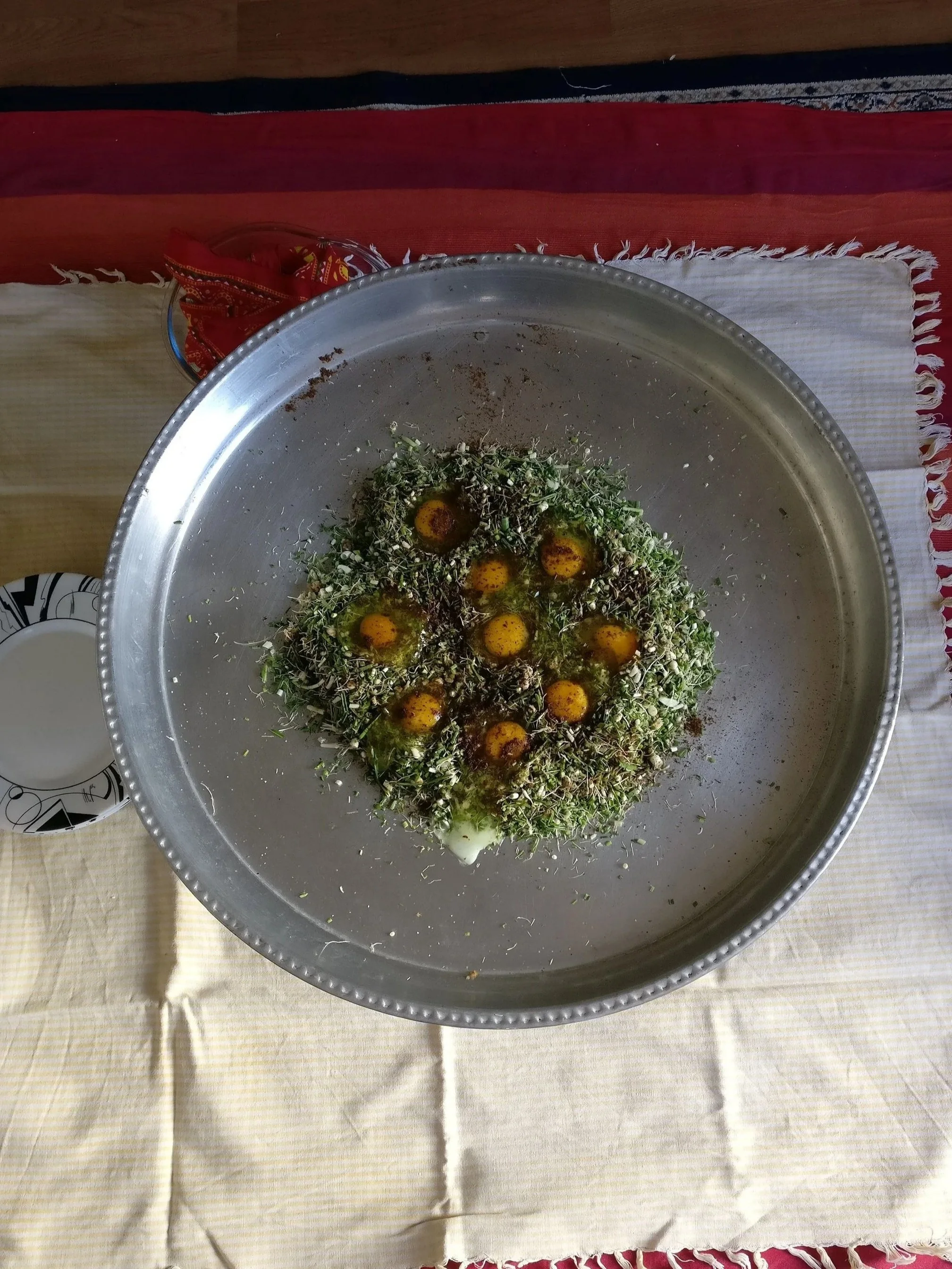
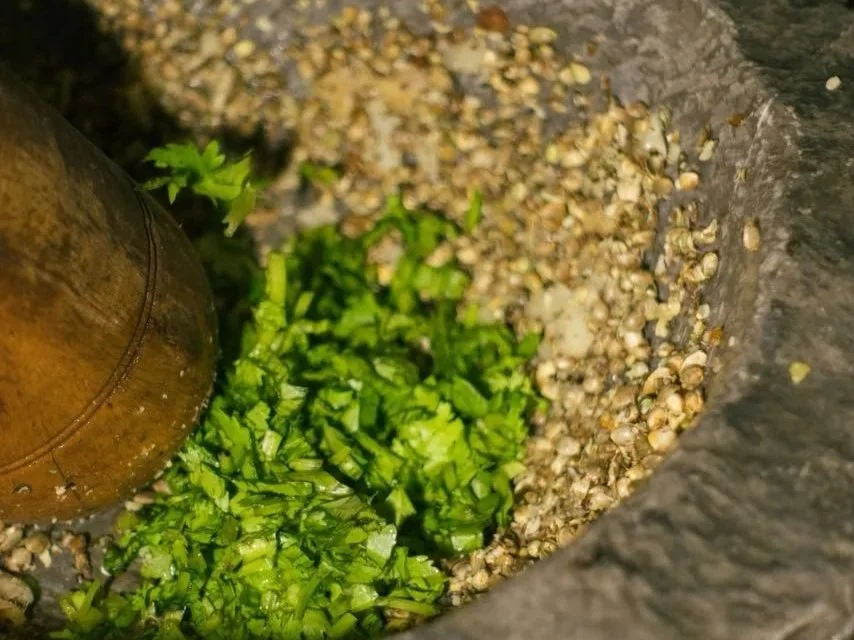
The fat must be rendered, the garlic must lose its sharpness without wilting, and the eggs must be cooked with precision (almost poached, but with ghee). The green garlic is washed, and then left out to dry. If even a single drop of water remains, it can turn the strong pungency of the garlic acrid. After drying, the garlic is finely chopped, including the leaf, bulb and roots. Using a slicer is unacceptable; this must be done entirely by hand with the same care and precision of an omakase chef. The knife cuts through cleanly, leaving the garlic sharp, alive and slightly aggressive.
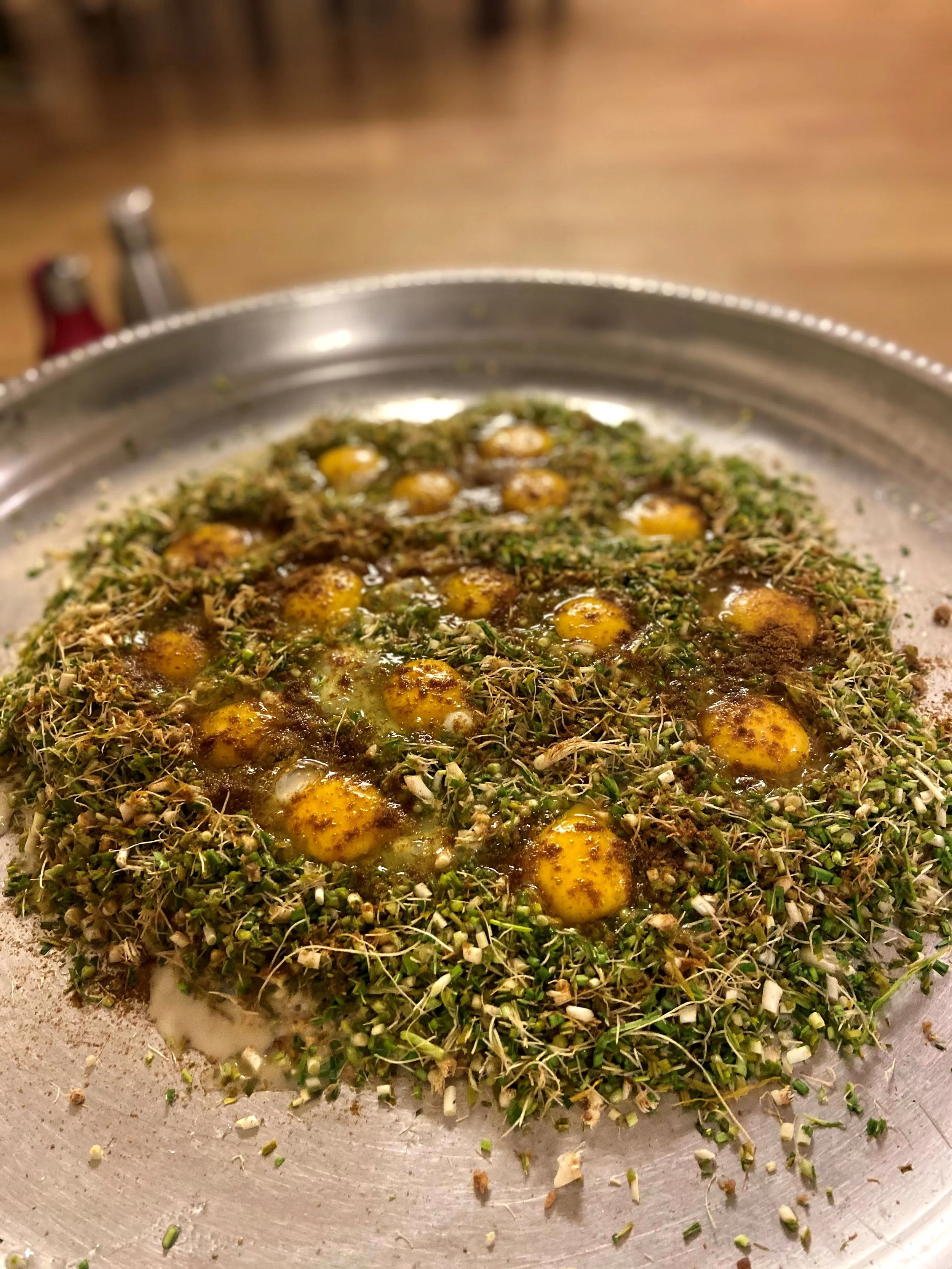
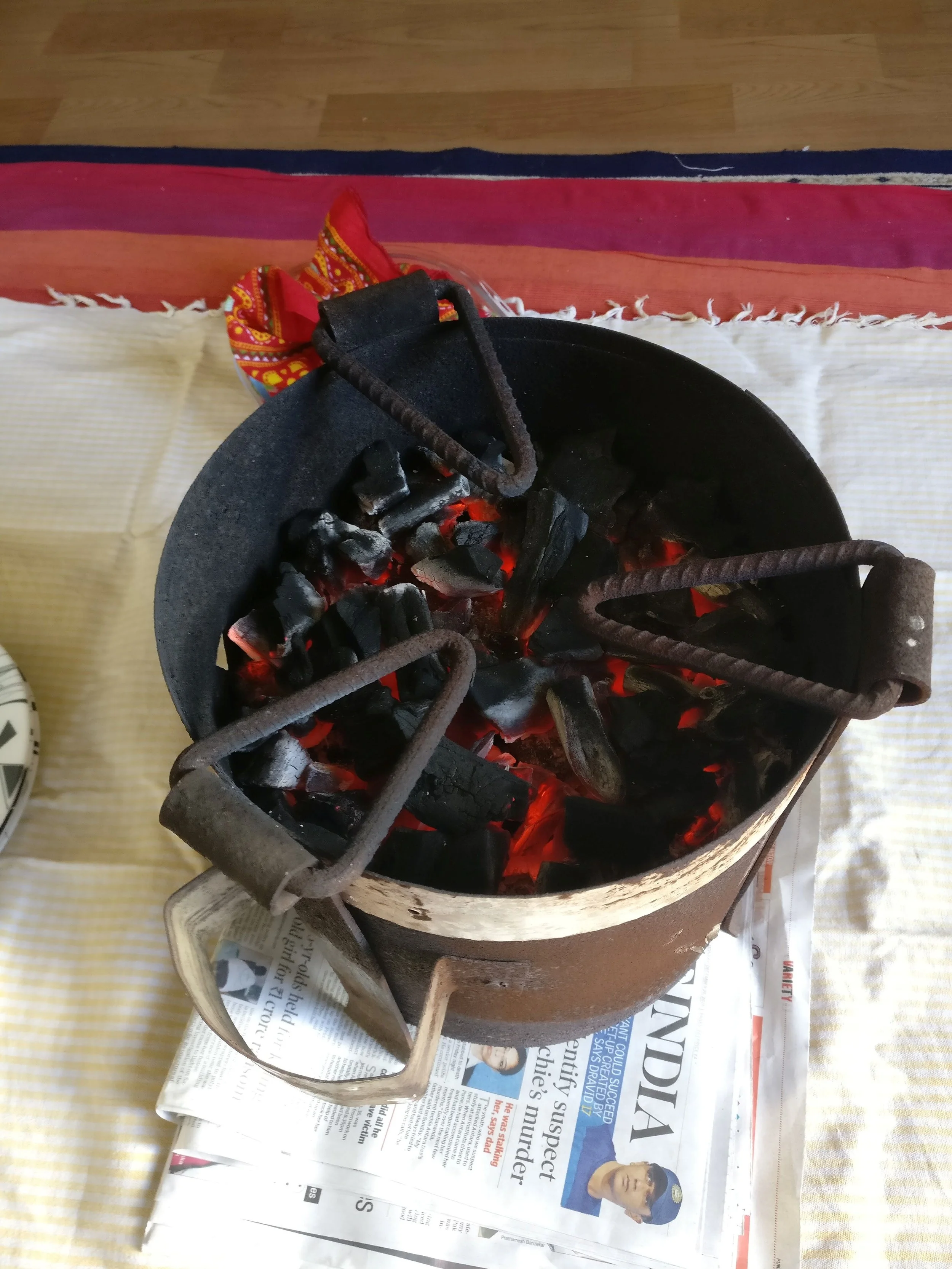
The ground beef is cooked with salt, ginger, garlic, and green chilli before being placed on a large aluminum platter known as a thaal, that serves eight people. This thaal is then placed over burning coals in a sigdi. There is roughly two inches of ground beef in the center of the thaal and about an inch or so of space around the rim. On top of the ground beef, another two inches of green garlic is layered. Small indentations or wells are created in the layer of garlic, by hand. Each well receives one of the desi eggs that have been carefully cracked into them. If an egg yolk is broken, that egg does not make it to the thaal. A generous amount of salt and roasted cumin are sprinkled on top of the eggs. Once the thaal is ready, a steady stream of piping hot ghee is poured over the entire dish. The ghee cooks the eggs from above while the coals hold the heat below. It is paramount that the ghee is sourced from a trusted farm.
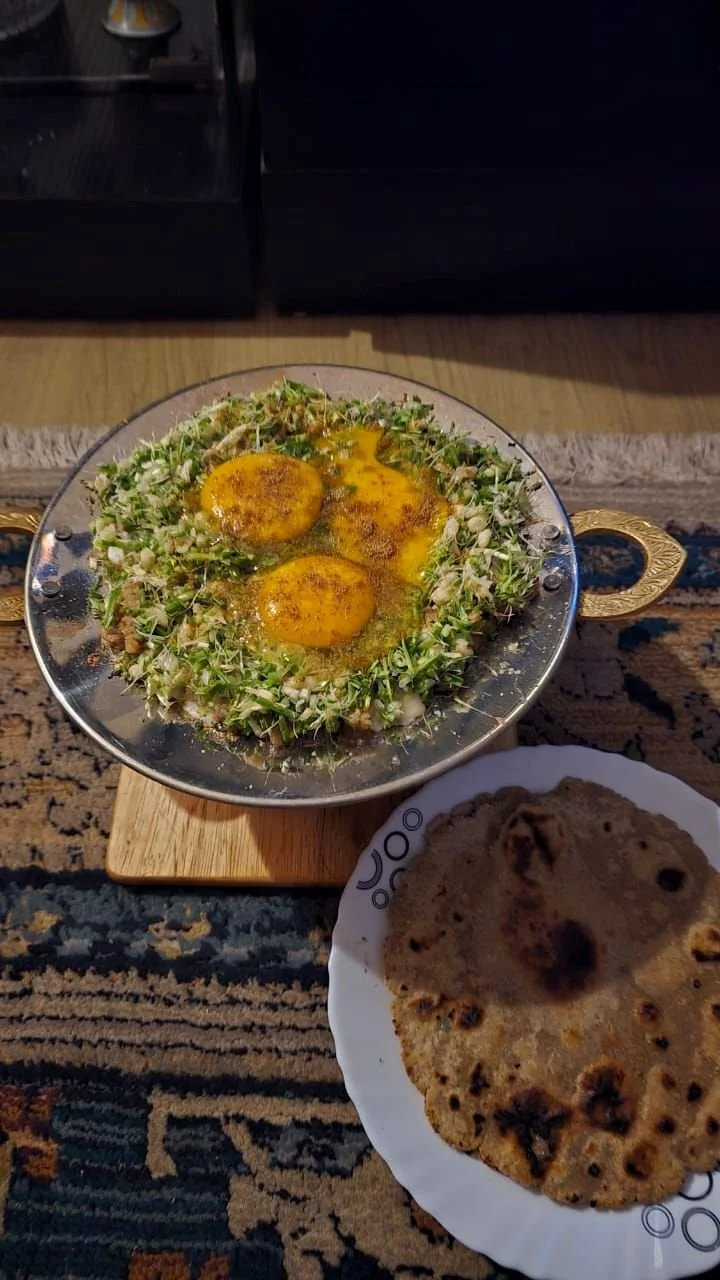
Lasan kheemo is best eaten with bajra rotis that bring an earthiness to every bite. The copious amount of ghee along with the meat can leave you quite thirsty, but water is forbidden. According to the principles of Ayurveda, this dish produces internal heat (pitta) and cold water will extinguish that heat. Sugarcane juice serves as a pretty good alternative, cooling the stomach without dampening that fire. My favourite combination is eating the lasan kheemo with a simple yellow moong dal and rice khichdi.
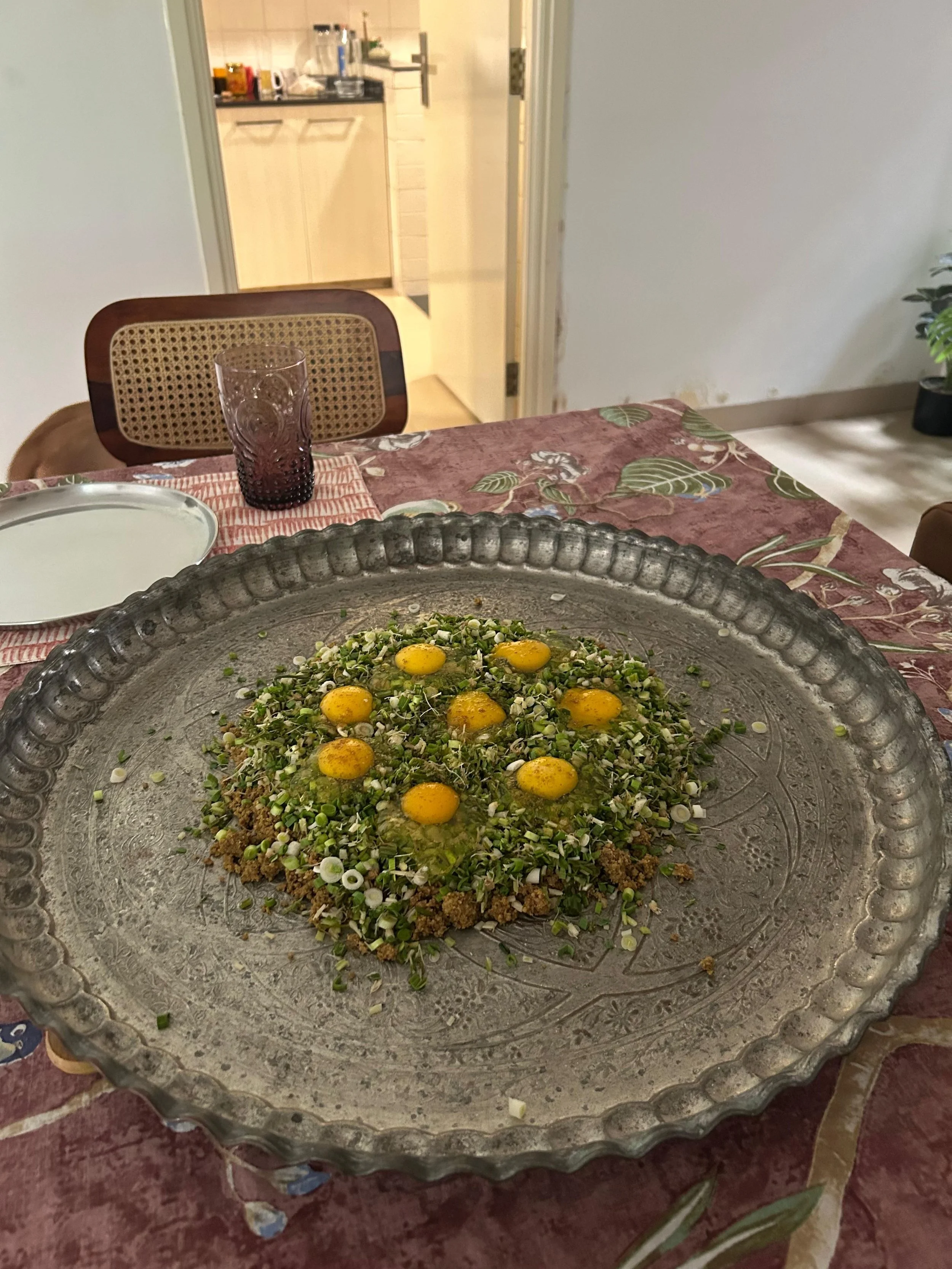
There is always a fight for the khurchan, the slightly charred meat at the centre where the coals are hottest. By now, the garlic, mellowed by slow cooking, is present in every bite but no longer sharp. It transforms from aggressive to insistent. The smell of the ghee hitting the garlic gets me every single time. Suddenly, I am five or six years old again, wedged between my mother and younger sister at my grandmother's one-room flat, watching two adults carry the thaal to the sigdi with precision and care. We were told to stand back when the ghee was poured. I remember obeying without question, and I remember less proudly, eyeing whoever got the biggest egg.
TASNEEM LACEWALLA’S RECIPE FOR LASAN KHEEMO
Ingredients
1 kg green garlic (leaf, bulb, roots), washed, dried and finely chopped (leaf, bulb, roots)
1 kg minced meat
1 tbsp fresh ginger and garlic paste
1 tsp fresh green chilli paste
1 tsp roasted cumin powder
Salt to taste
2 litres of ghee
12 desi eggs
1 sigdi + coal
1 aluminium or steel platter
Method
Heat 1 tablespoon ghee in a pressure cooker. When hot, add ginger, garlic and green chilli pastes and fry till the raw smell is gone. Add the minced meat and fry on a high flame. Then lower the flame, add 1 cup water, salt, cover and cook for 4 whistles or till the meat is cooked.
On a thaal or a large flat platter, apply ghee. Add a layer of the cooked meat in the centre, leaving a couple of inches from the sides.
Top that with the chopped green garlic.
Make a few wells in the layer of green garlic.
Break an egg in each well carefully to make sure the yolk doesn't break. I usually prefer breaking it in a bowl one by one and then transferring it into the well.
Season with roasted cumin powder and salt.
Place this on top of the coal lit sigdi.
Heat ghee in a sauce pan till it is piping hot.
Pour this over the eggs. Make sure to wear oven mitts to protect your hand.
Best enjoyed hot and with bajra roti, khichdi and sugarcane juice.
Insia Lacewalla is a food and travel writer based out of Goa and is the founder of W.E. - a social members' club for women in Goa.
ALSO ON GOYA