Kitchen Confidential: Inside the Idu Mishmi kitchen
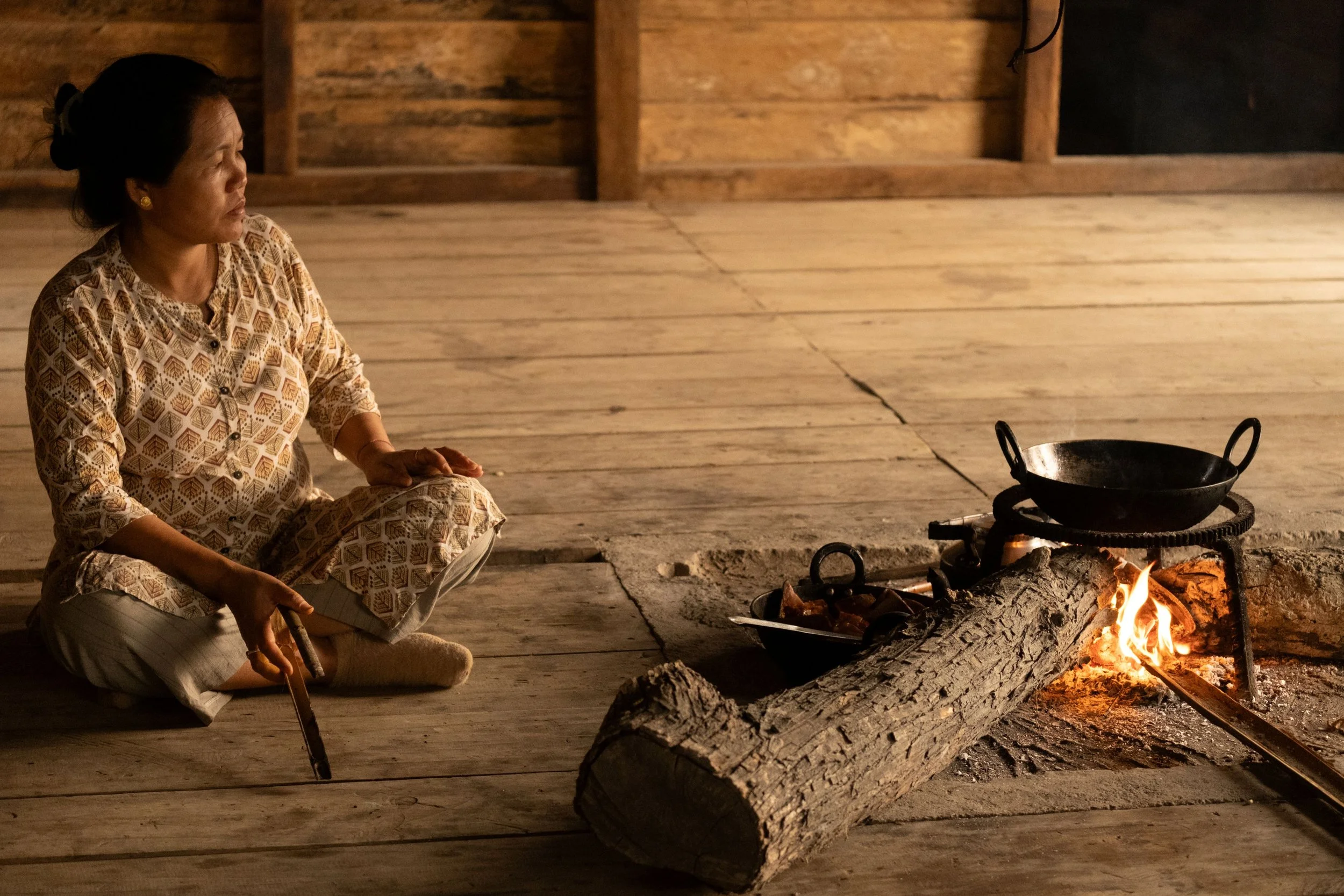
The Idu Mishmi people, one of the tribes living in Eastern Arunachal, have a unique relationship with food. And nowhere is this more evident than in the central portion of their home—the kitchen, finds Niviya Vas.
It was a pleasant spring day. We stood outside the Idu longhouse, observing the many plants and herbs that Nani (mother) Heli has cultivated with care. Around us, roosters, hens and their little young ones scratched and pecked at the earth, searching for worms and bugs. By the coolness of a pond, ducks waddled and quacked in gratefulness for the grain that Nani had sprinkled for them. From within the house came the sound of firewood crackling.
Here, Nani Heli and Nani Shanti sat by the hearth, constantly adding more wood to the fire whenever it demanded more fuel. The aroma of fragrant herbs mingled with the smoke from the hearth, a scent that felt almost divine. We sat around the cooking space through invitation, and watched as the fire transformed herbs, vegetables, meat and aromatics into dishes that the Idu Mishmi people have been consuming for decades.
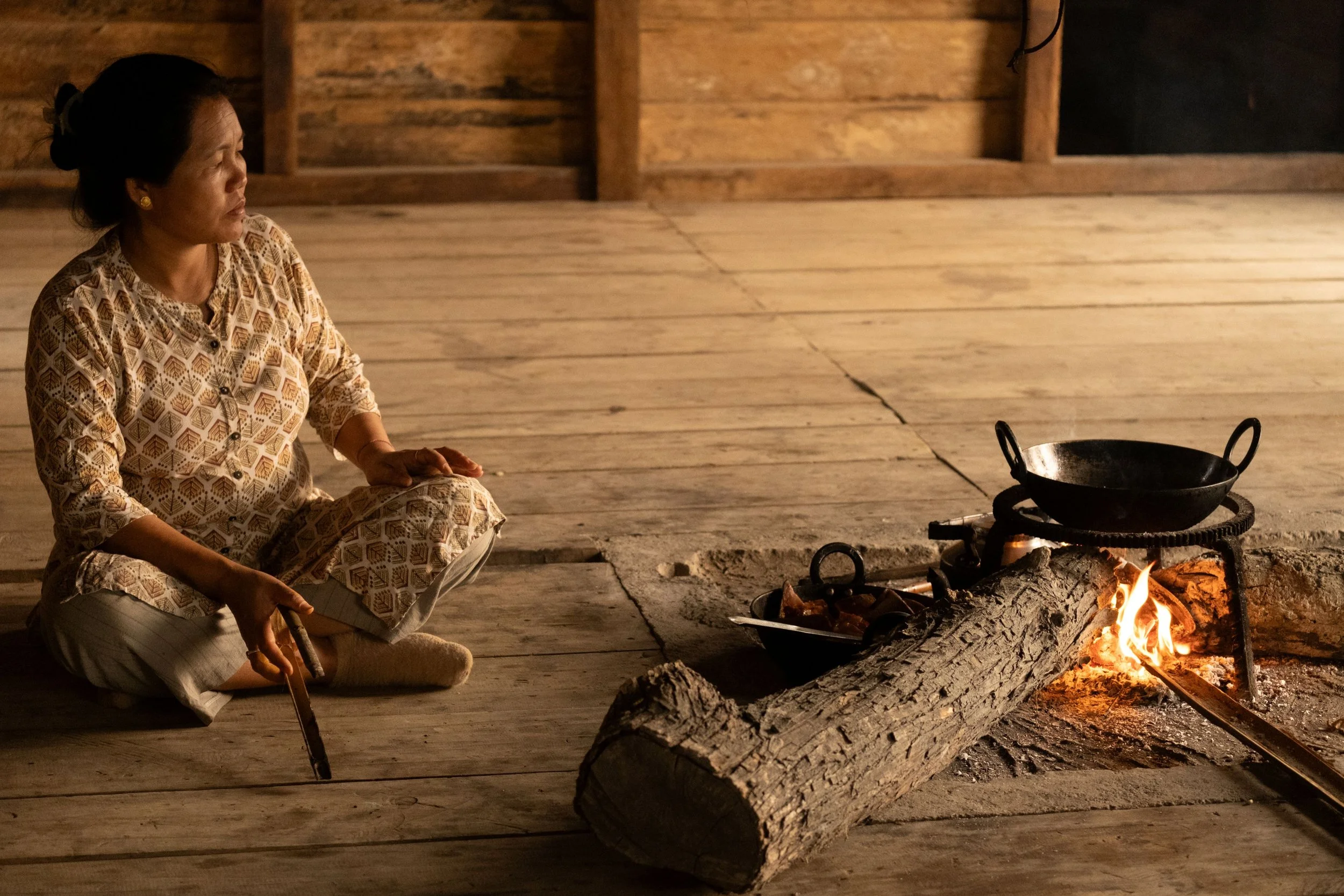
Nani Shanti sits by the hearth of the engoko.
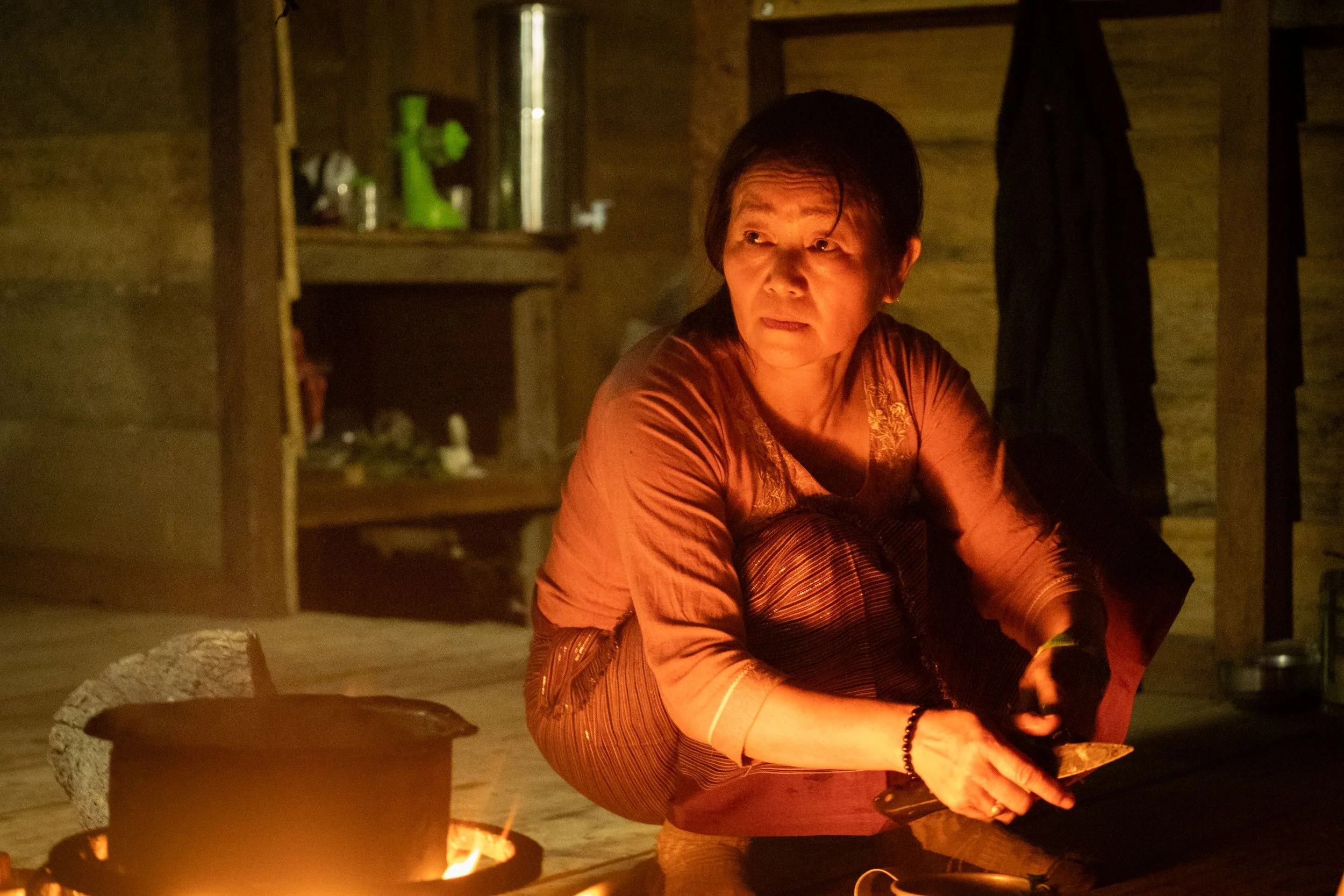
Nani Eli
Foragers, hunters, and agriculturists, the Idu Mishmi reside in the Dibang Valley region of eastern Arunachal Pradesh. They speak a distinct language, one that UNESCO has registered as one of the least spoken in the world. Their relationship with their land is unique, and informs how they live, partake of its gifts, and share with the community.
Hunting is a social activity for the Idus. It is often ritualistic and therefore partaken in with great reverence. Land informs, guides, and supports their culture as animists; their values include a deep respect and reciprocity for gifts of the forest spirits. This is evidenced in their legends and taboos — the Idus are forbidden from hunting all felines, particularly the tiger, whom they consider and fear as their brother. The hoolock gibbon is also considered kin, and is untouched. Some large domesticated animals such as Mithun are sacrificed and consumed during weddings and festivals.
And while agriculture is a subsistence activity where the Idu people grow rice, local vegetables, fruits, and cash crops, foraging plays an important role in how they use hyperlocal and seasonal ingredients. And it’s the cooking space where all the elements — people, produce, meats, and oral recipes — find a common home.
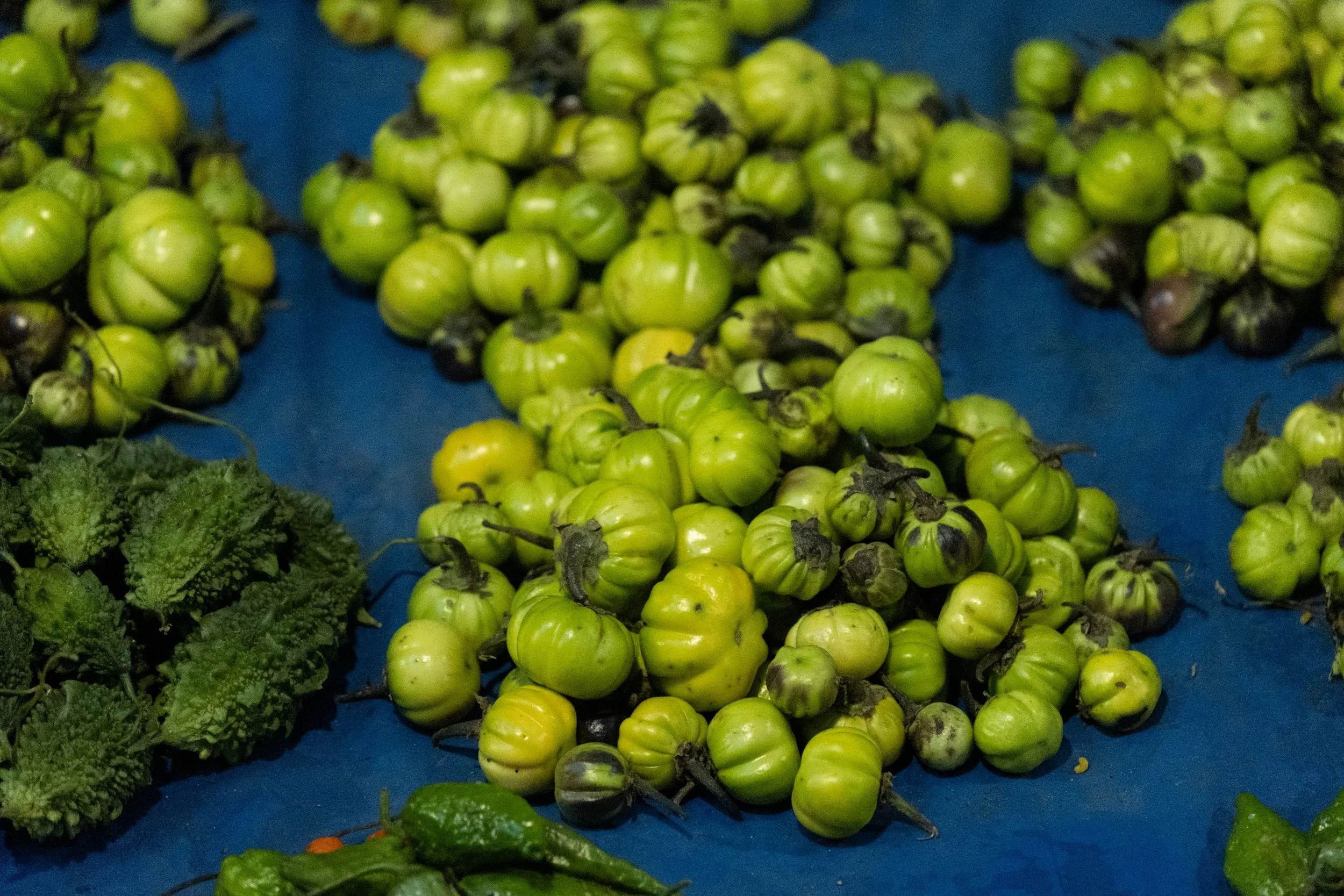
Seteka or scarlet eggplant.
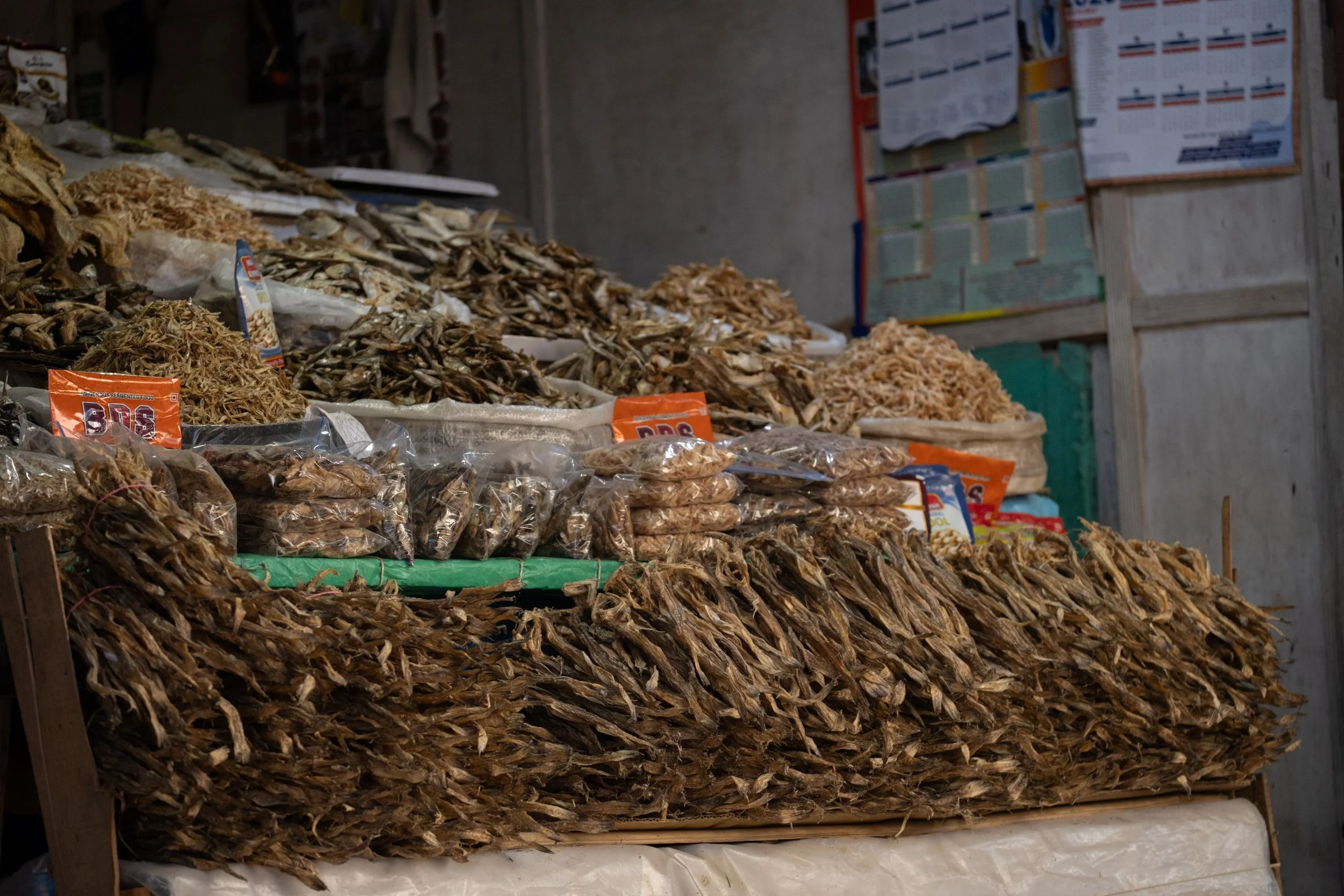
Dried fish.
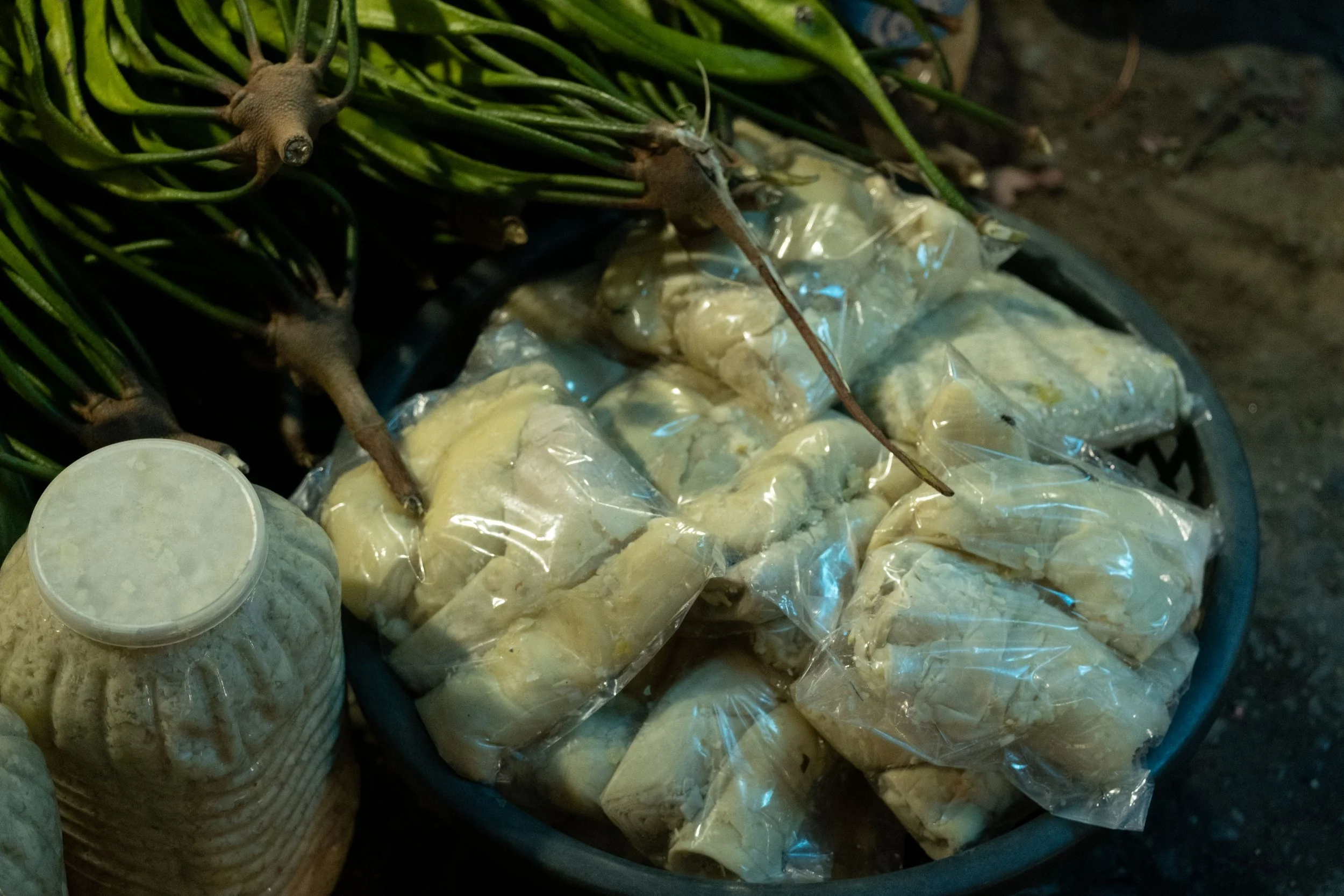
Apushu or fermented bamboo shoot, when wet. Apushi Anjita is fermented bamboo shoot but dried, with ginger.
The Engõkõ
The engõkõ, or the cooking space, is the heart of an Idu home. Here, shamans sit and chant, negotiations happen, roosters are sacrificed, and firewood is dried. It’s an area of social gathering, ritual, and ancestral tradition. By the Engõkõ, cooking unfolds in its own time, in a pace undictated by symbols of modernism. Comprising of multiple sections, every part of the Engõkõ serves a specific purpose and has a significance rooted in the food culture of the Idus.
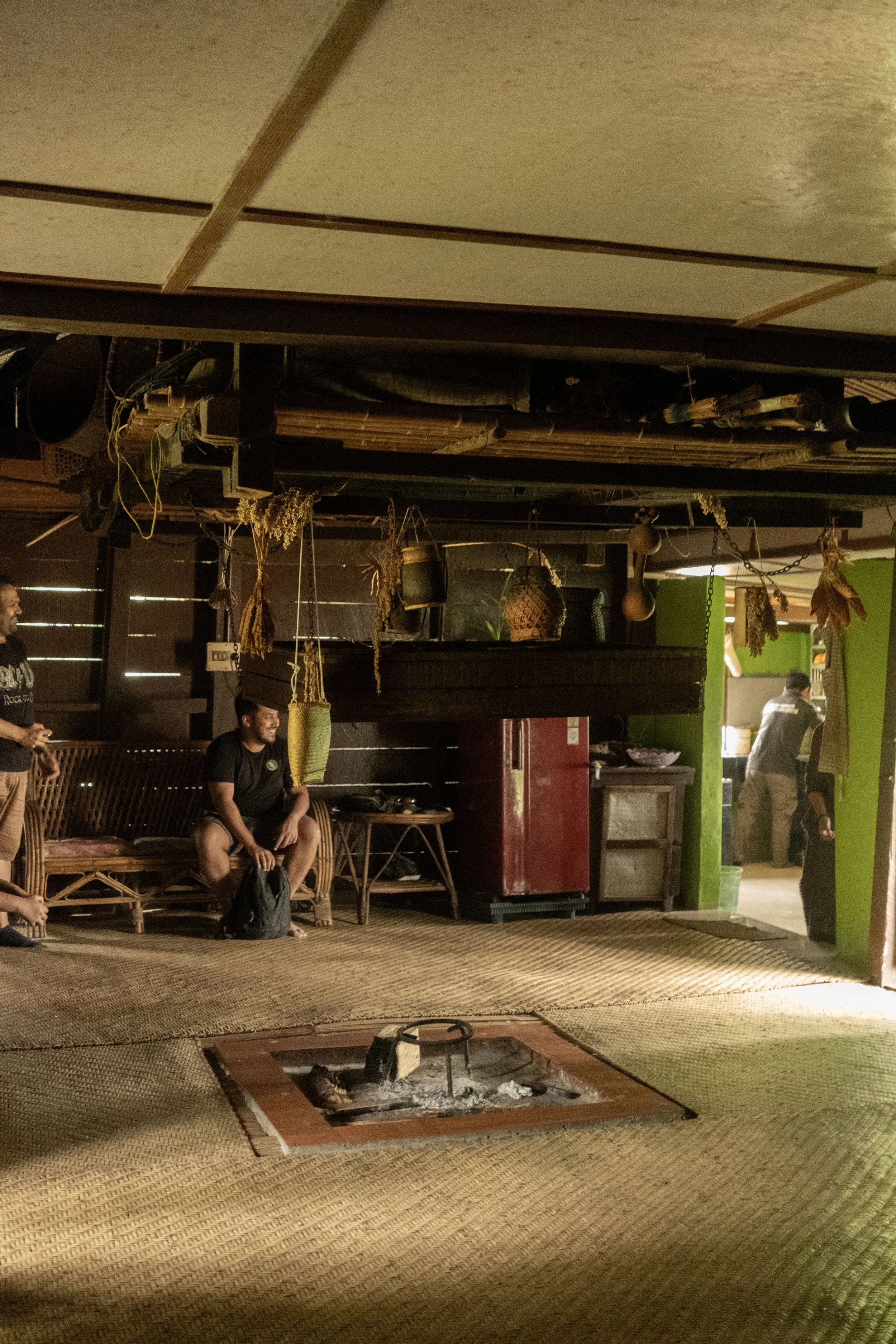
The Idu Mishmi kitchen in the base camp of EECEP (Elopa-Etugu Community Eco-Cultural Preserve).
In a traditional Idu home, there can be multiple engõkõs. The first one is in the Alonga, the compartment reserved for the male head of the household. In the alonga, the patriarch receives and entertains his guests. The second engõkõ is further in the house, in the Apina, the compartment for the female members. There are as many apinas with engõkõs as there are wives and daughters, with private rooms where they sleep.
Many traditional homes have given way to hybrid structures that contain the first engõkõ in the alonga for rituals and traditional preparations, and a modern kitchen for everyday cooking. The apina may not have an engõkõ.
The engõkõ has a hearth where the fire is lit. A rectangular wooden frame, a layered smoking and storage rack, is suspended above this fireplace. The engõkõ is used for fire-cooking foraged herbs and mushrooms, local rice, millets, bamboo shoots, and meats including chicken, fish, duck, forest rodent, pork, and, when the occasion calls for it, mithun (drunk ox).
Idu foods typically do not employ mainland masalas and spices to highlight the flavours of a dish. Instead, they rely on local spices, and on the quality of the produce and meats, fresh or fermented. This type of culinary preparation retains the flavours of the ingredients, and brings balance between protein, carbs, aromatics, and flavouring agents like pra (salt), inchi (king chilli), and dried bamboo shoot.
The Atto, the smoking and storage rack that hangs above the engõkõ, has intention. Traditional Idu diet includes smoked meats, and the position of the rack is ideal for this purpose. The open fire in the engõkõ smokes and dries the meat and fish placed on the perforated bottom of the Atto. The Atto is also used to store grains and seeds, and to dry firewood. The thought is simple: meats and grains left outside to dry could go bad due to insects and the climate.
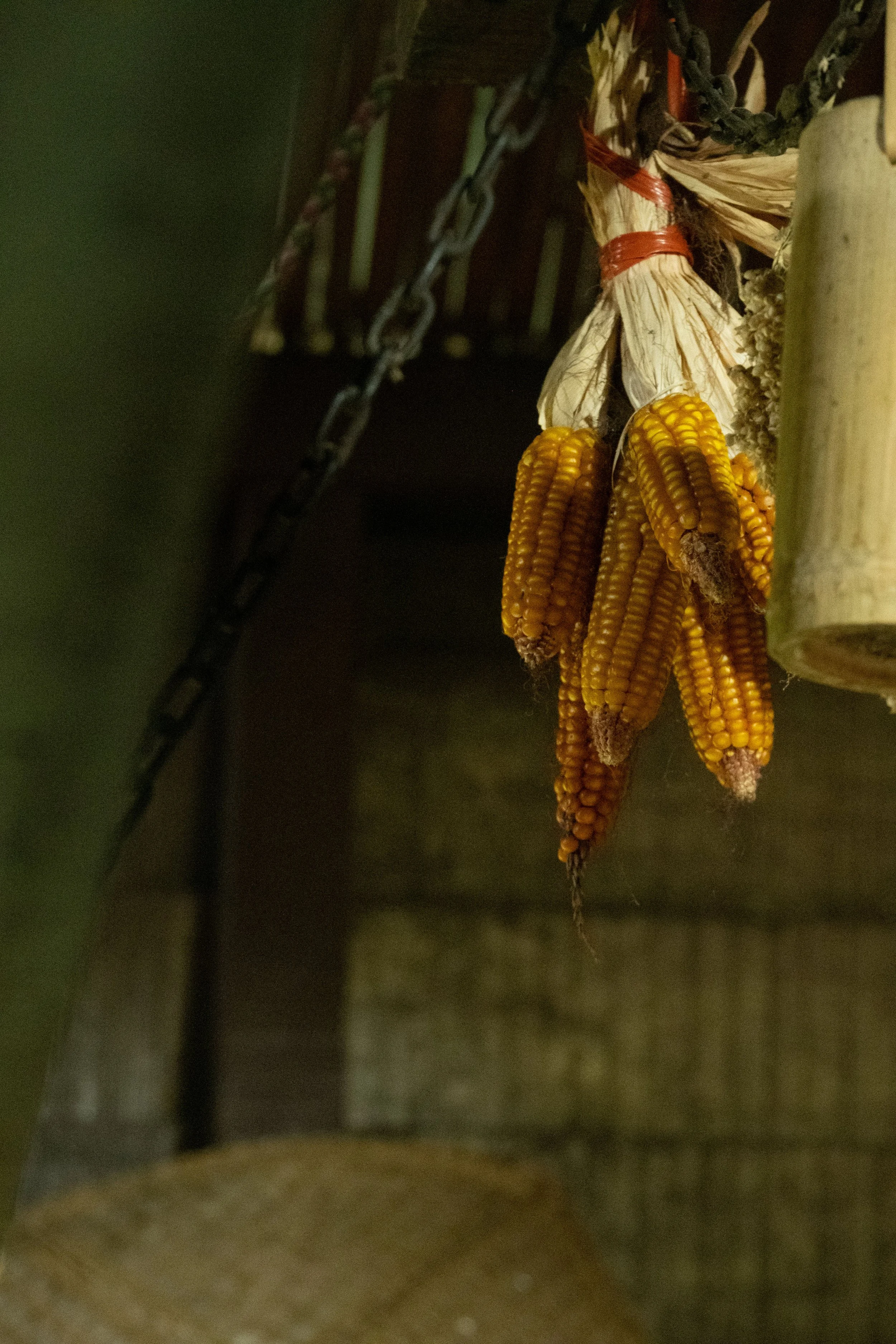
Atto is the smoking and storage rack in the kitchen. Hung from it are typically cobs of native corn called ambo…
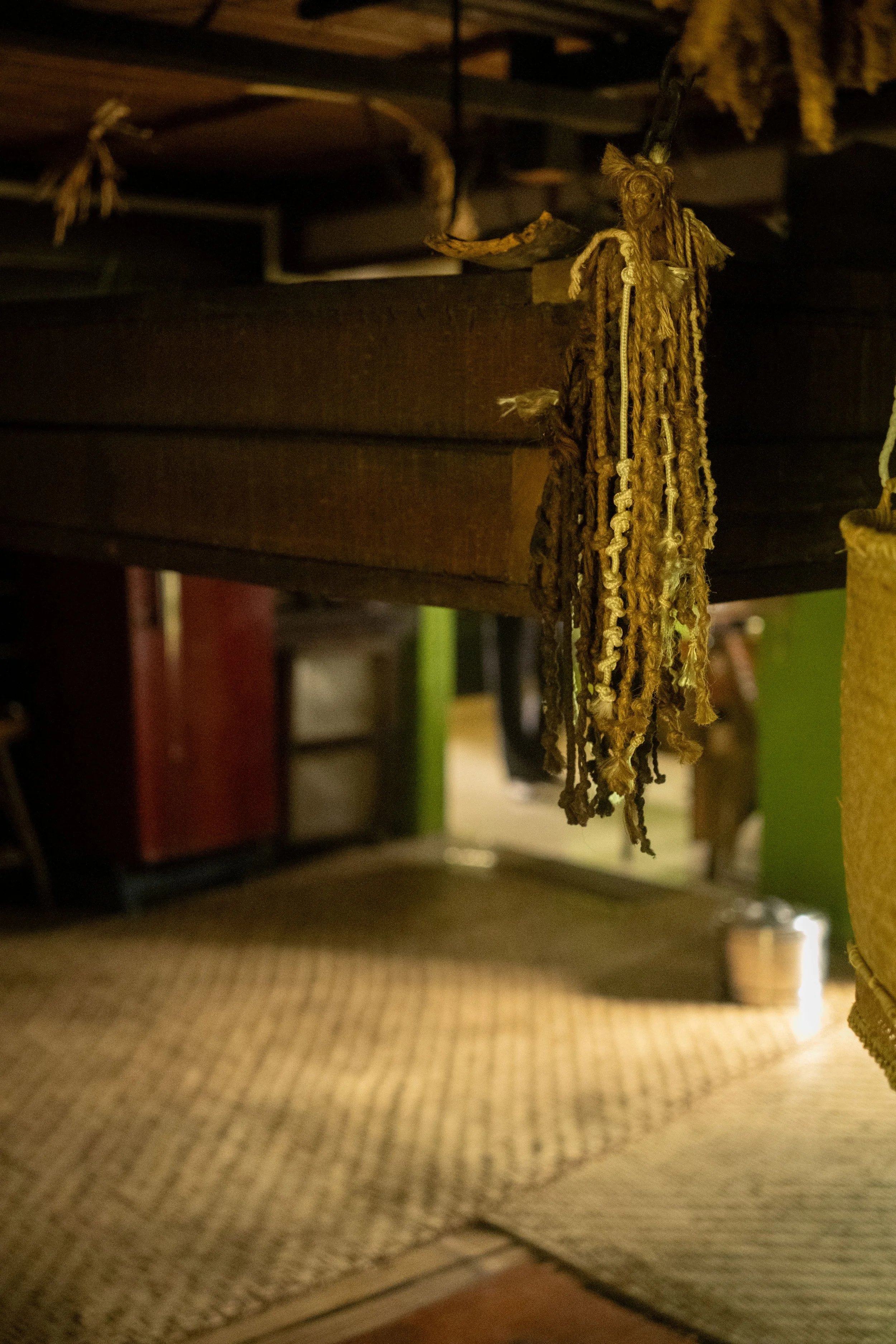
…and tayi (knotted threads that are invitations to one of the biggest rituals in the Idu community, called Reh)
Hung from the Atto, we see cobs of native corn called Ambo, bunches of dried millet, woven handbags, mugs made from bamboo, and knotted threads. Conservation Anthropologist Dr. Sahil Nijhawan tells us that these threads, known as Tayi, are invitations to one of the biggest rituals in the Idu community, called Reh — a five-day ceremony that’s traditionally organized when an Idu man or woman considers their life fulfilled. At these massive feasts where the kin, particularly from the maternal side of the family, are invited, gifts of Mithun and food offered to earn societal and spiritual merit. Each knot represents the number of days that count down to the first day of Reh. While Whatsapp invites have replaced ritual invitations for the most part, the traditional calendar threads nod to a time before roads connected the Dibang Valley, when people would have to plan their travels weeks, or even months, in advance.
Hunting in the Idu culture is synonymous with certain taboos that work to maintain balance in the forest. When an Idu man hunts a large wild animal that doesn’t belong to him, he has to pay a price in the form of the taboo period, a way of protecting the self from the spirit’s anger. This five-day purification process is marked by isolation and abstinence from physical relations.
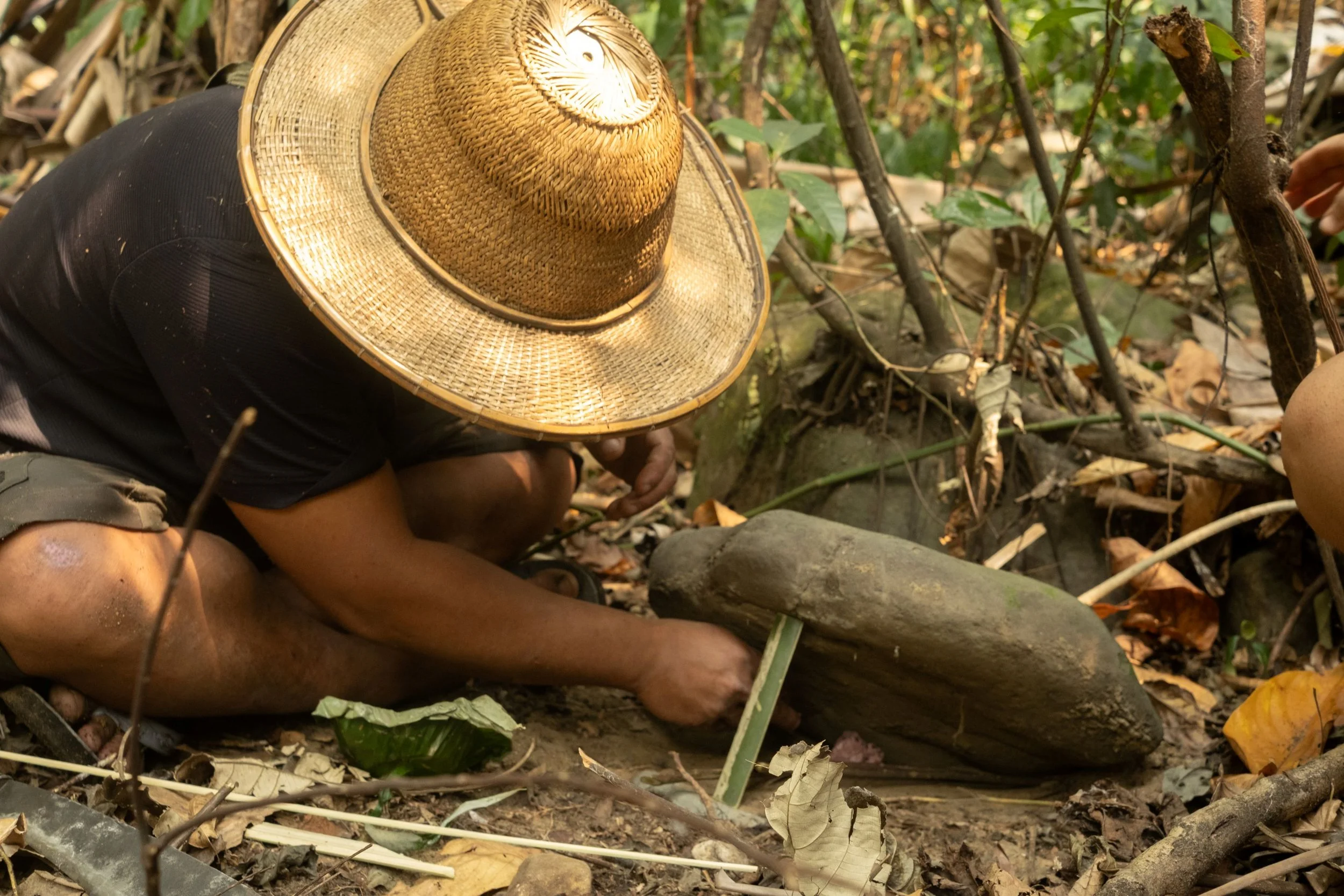
Azo ‘Laha’ Linggi setting the rodent trap, drapa, which caught our meal for the next day.
On one side of the engõkõ is a wall with animal trophies, called Amuni. The amuni in Nani Heli’s home displays the skull of a Mishmi Takin, the antler of a Sambar deer, and the jaws of wild pigs, all hunted by the man of the house. It is said that the spirit in the amuni — that the hunter derives his power from by keeping it pleased — is in direct communication with the spirit of the high mountains that oversees all creatures. If a taboo is broken, the spirit in the amuni informs the spirit of the high mountains, who will then met out the punishment.
Menstruating women avoid walking past the amuni. Large jungle meat is consumed by men and children, while women typically refrain from eating it.
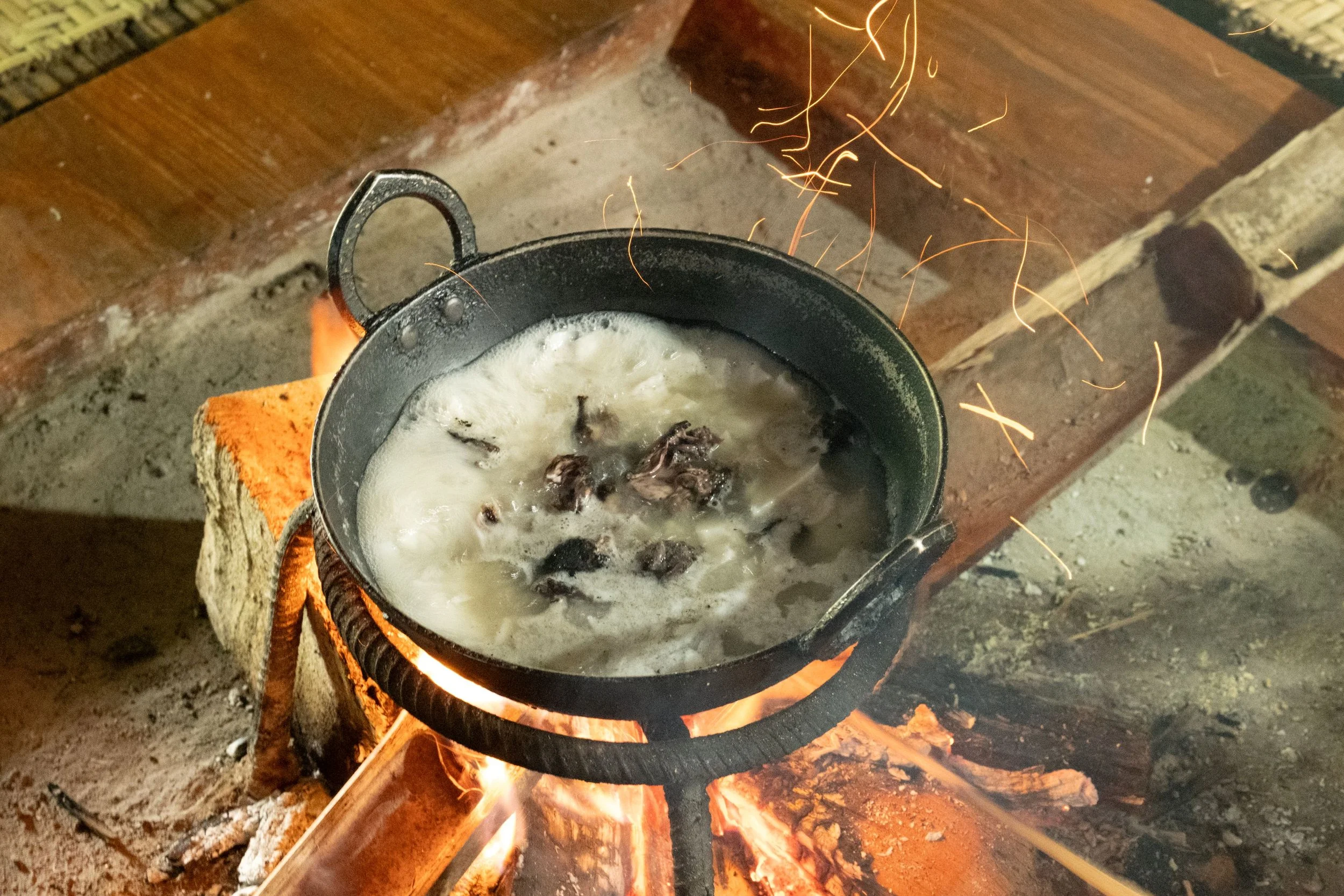
Nani Heli and Nani Shanti take turns to stir the contents of the vessel placed atop the flaming logs. In the vessel, sona (local tuber) and chunks of roasted ashango (jungle rodent) that community ranger Azo Linggi had trapped the previous evening, simmer in an aromatic broth. We partake in making the dish, as community typically does.
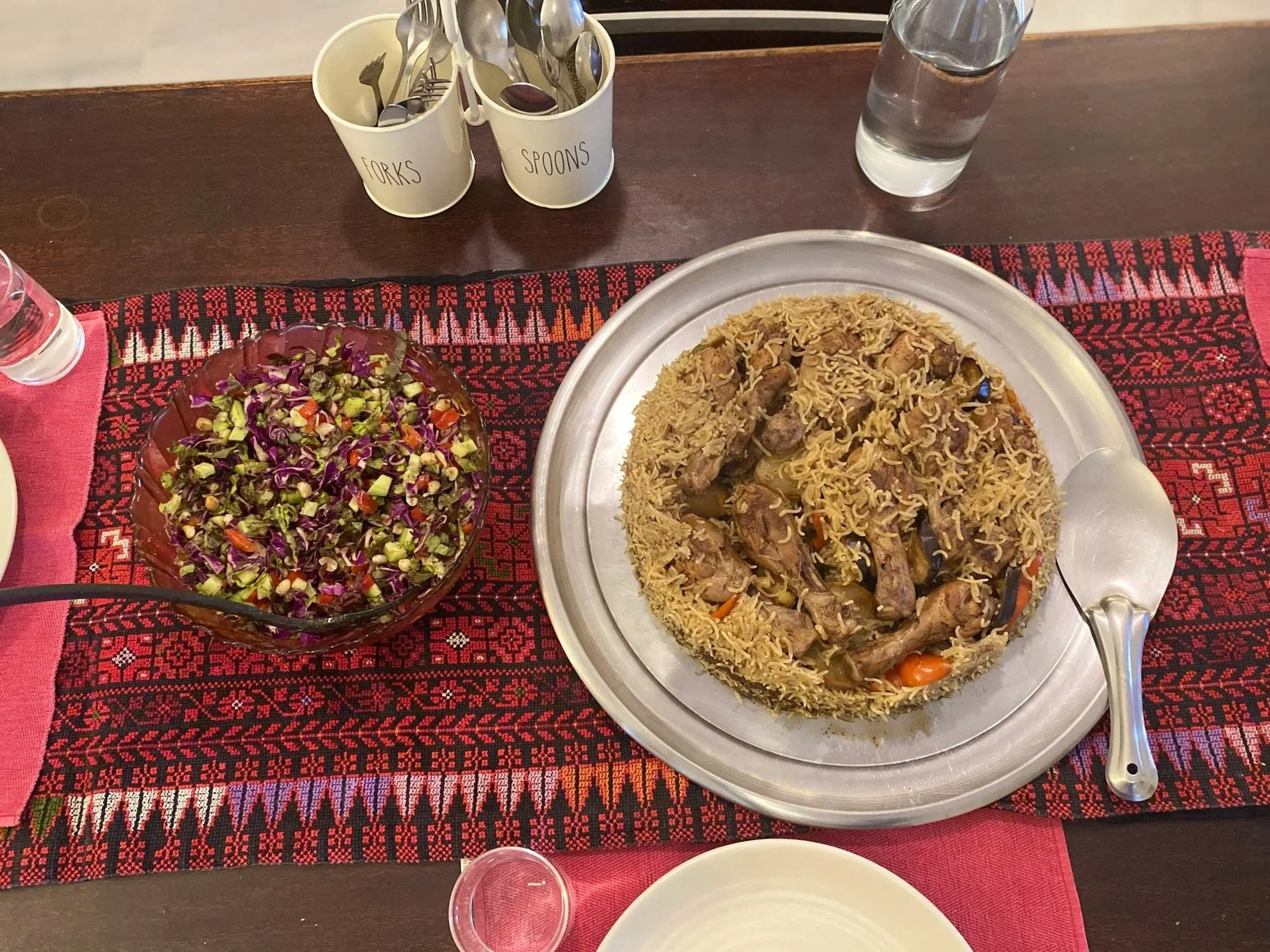
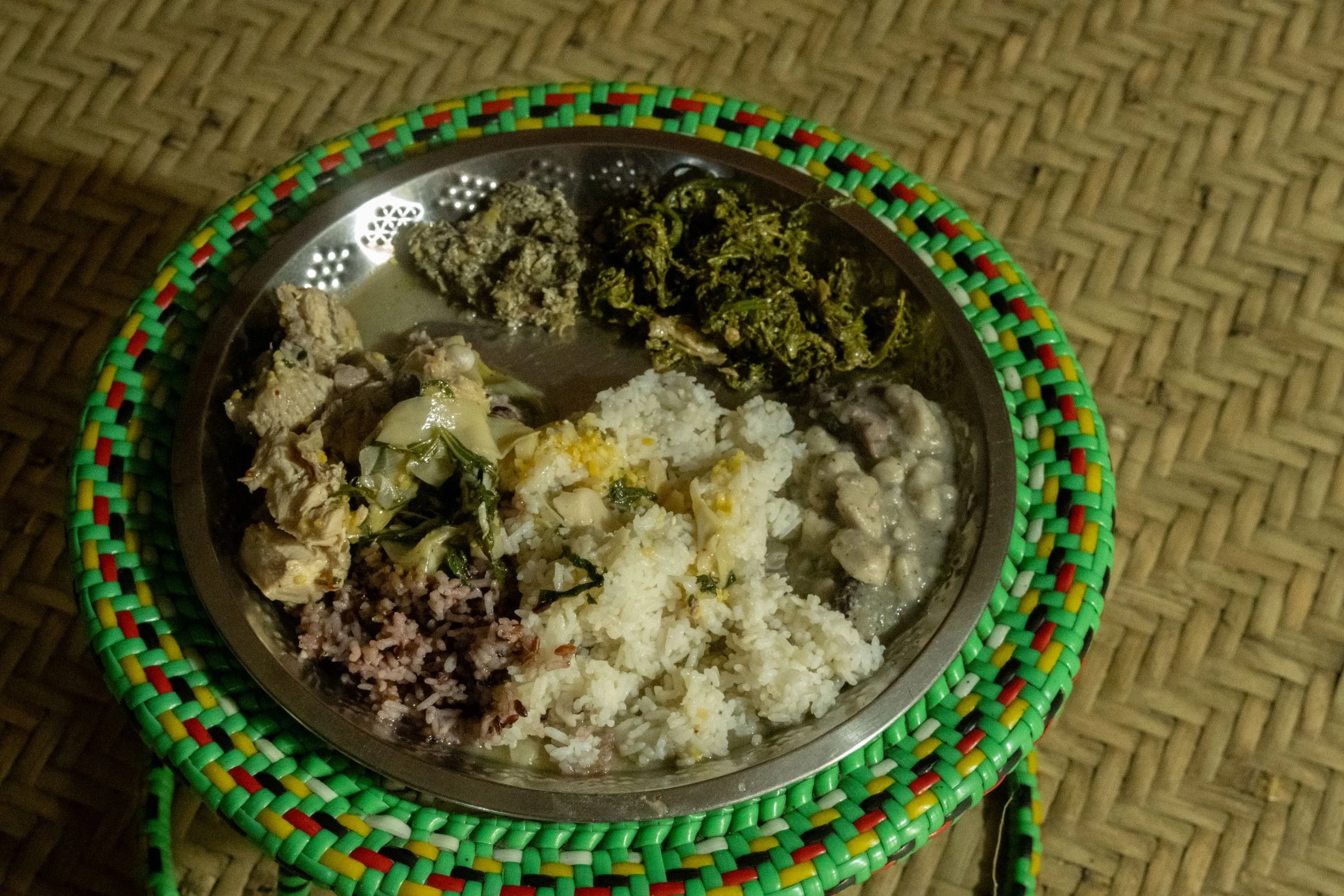
Lunch is served, and we form an orderly line. We serve ourselves heaps of local rice and chicken ashumbri (corn grits), anjichu (fiddlehead ferns), and some apapo inchi (banana flower and king chilli) chutney to top it off. In silence, we sit around the engõkõ to eat. The only sounds that pervade the space are those of light chewing.
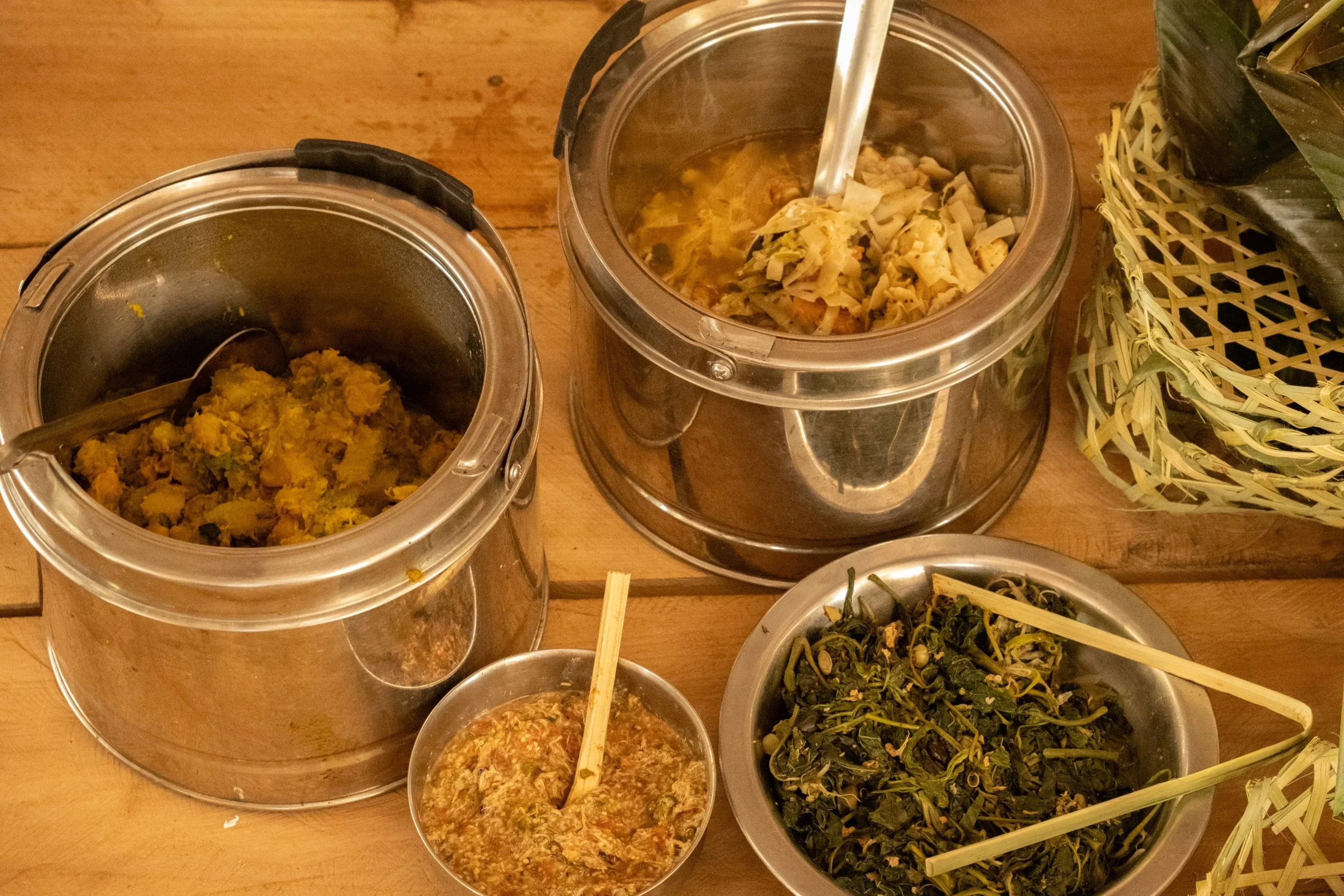
Clockwise from top left: Chekapo (pumpkin) stir fried, fish + apushu boil, boiled greens, and apopo inchi (banana flower chilli chutney).
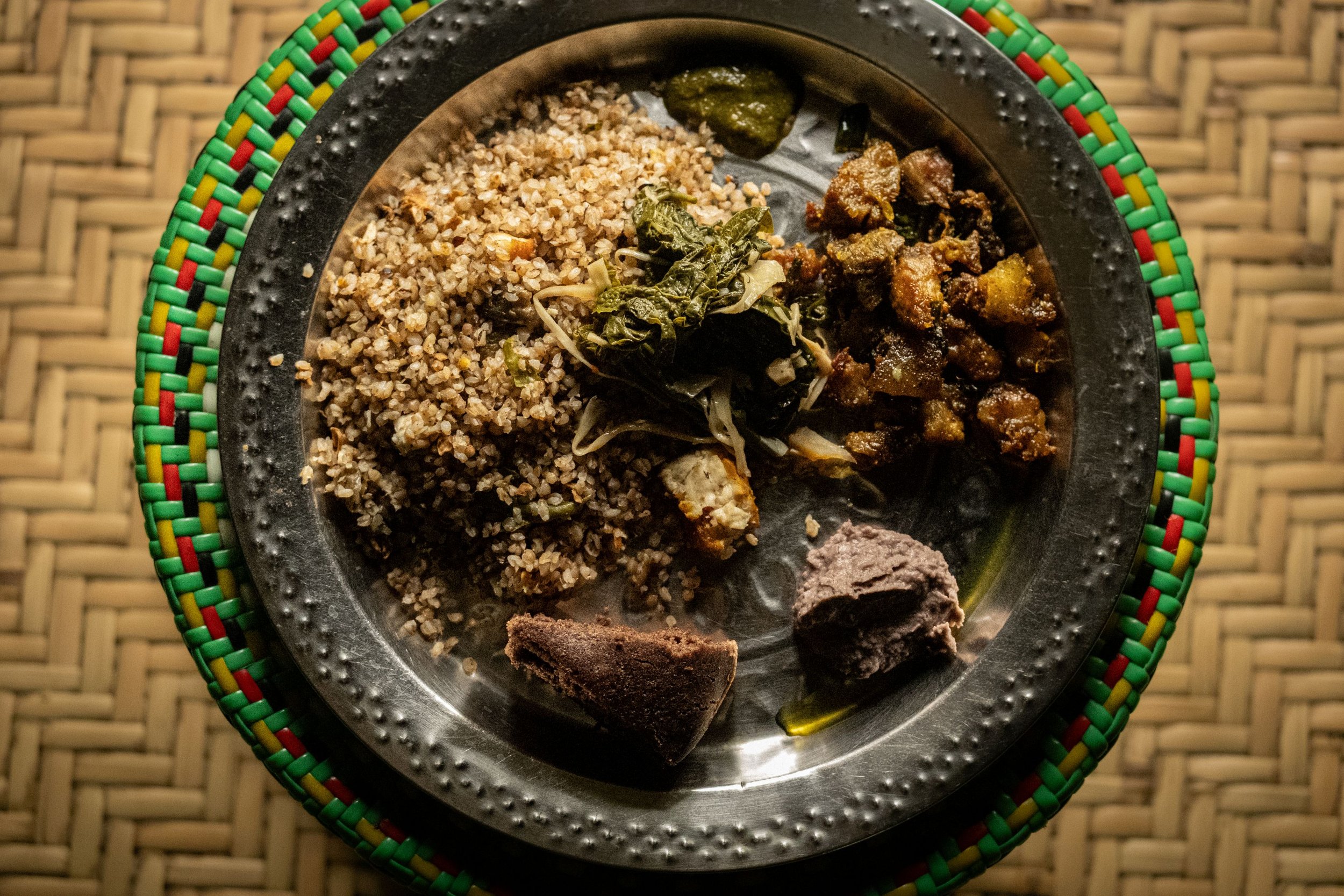
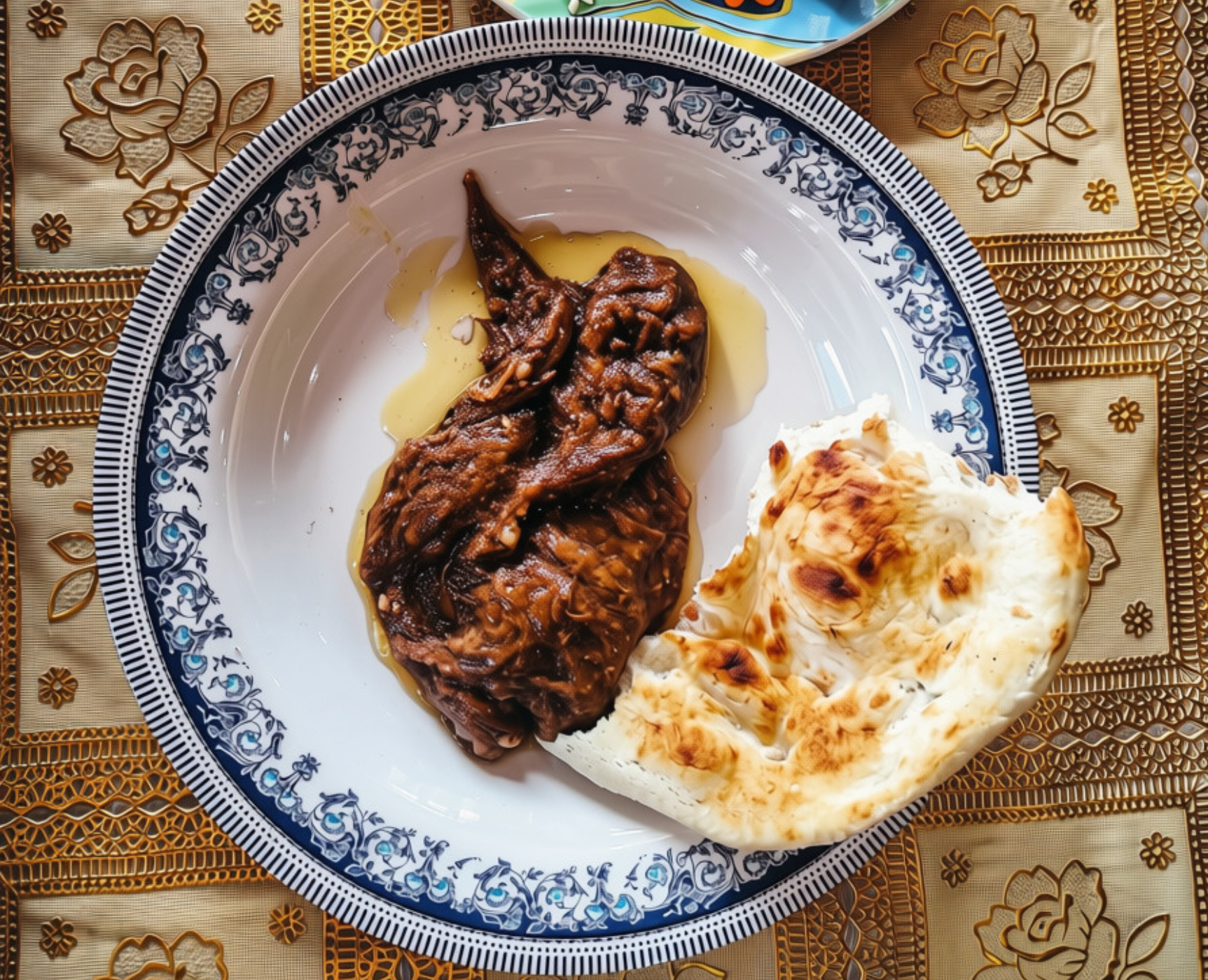
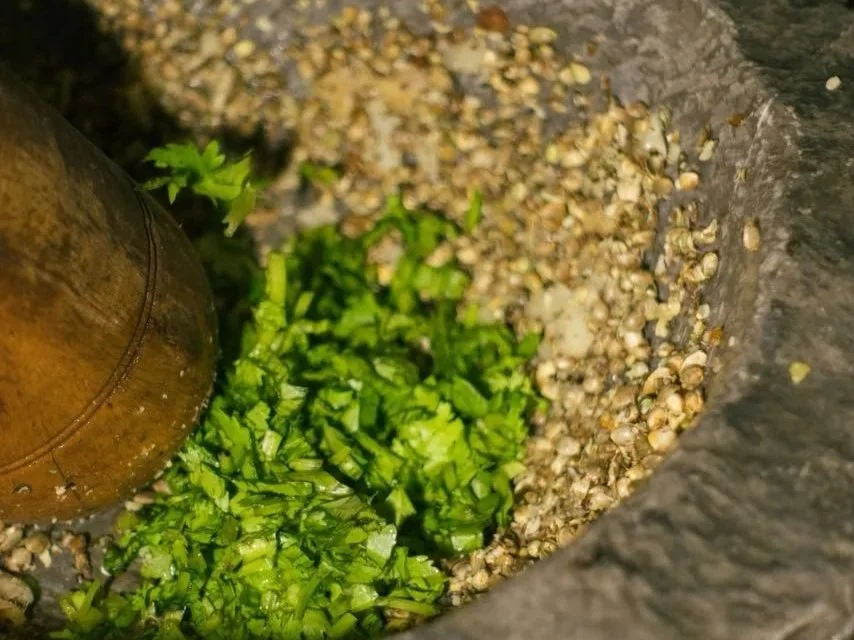
Our meal: Anga anunu, andoye (local Idu beans) hummus, finger millet (yamba) bread, fried pork, tupurna leaves boiled with apushu and chutney made of mint and amulina (fishmint).
Nani looks at us with mild apprehension. We return her gaze, hoping that our contentment shows on our faces. “Pra iba!” (thank you) and “Ha Pra Ma Tando” (the food is very delicious) we blurt, our mouths stuffed. A glass of yu thuyi (a type of rice wine) later, we bid adieu to Nani’s engõkõ and the Idu people that kept us, nourished us, and cared for us during our time in the lower Dibang Valley.
Recipe for Anga Anunu
Note: Anunu is a dish mainly eaten by Idu women, when fish is the protein used. Fish is mostly eaten by the women.
Ingredients
Smoked or dried fish, or smoked pork
Apushi Anjita, fermented bamboo with dried ginger
Ekato, buckwheat flour
Inchi, King Chilli powder
Salt to taste
Method
Add water to a deep vessel, and bring it to a boil. Add the apushi anjita, your choice of meat, and eka. As the ingredients cook, add the chilli, and salt to taste.
Add other aromatics or herbs per your liking.
Once well cooked, let the dish cool, and serve.
References: Insights shared by the Idu community, Nani Heli, Nani Shanti, and members of the Elopa-Etugu Community Eco-Cultural Preserve (EECEP) (known as the Dibang Team), conservation anthropologist Dr. Sahil Nijhawan, community elder Naba Jibi Pulu, members Iho Mitapo, Eja Pulu, Eha Tacho, and Shreyas Danappa, founder of Map My Stories.
Niviya Vas is a copywriter by profession, and a travel-rooted writer by passion. She writes on topics and perspectives that put people, places, and cultures at the heart of it all. She also shares her travel experiences on her blog, Commoner's Causeway.
ALSO ON GOYA