One Batter, Two Pans: What Unites the Appam and the Hopper?

They are both lacy pancakes made with fermented rice batter, in specific utensils, and paired with special foods. What unites the appam of Kerala with the hoppers in Sri Lanka? Nisha Thomas gets cooking to find out.
It began, as most things in my house do, with an appam.
Back home in Kerala, appams were never special-occasion food — though no celebration felt complete without them at the centre of the table. Mostly, they just appeared: on school mornings, on Sundays, when guests came over, on days when someone had soaked rice the night before and remembered to grind it.
I don’t remember being taught how to make them. I remember watching — my mother soaking rice in a steel bowl, grinding it with coconut and cooked rice, yeast and sugar, leaving it overnight. The batter always smelled faintly sour the next morning. There was a warmth to it — slightly yeasty, slightly sweet. If you stood close enough, you could see tiny bubbles breaking at the surface. It felt like the bowl was breathing.
The Indian Appam
In coastal Kerala, rice and coconut are simply what grows. The air is humid enough that fermentation feels less like a technique and more like something that happens if you leave the batter alone long enough.
When my mother made appams, the consistency of the batter determined everything. If too thin, it rushed to the bottom, refusing to climb the sides. If it was too thick, it sat heavy in the centre. Our chatty, the pan used to make appams, was shallow and wide. It allowed the batter to stretch thin at the edges and stay soft in the centre. The result was always the same: a fragile lace that crisped at the rim, and a middle that held coconut milk stew like a sponge.
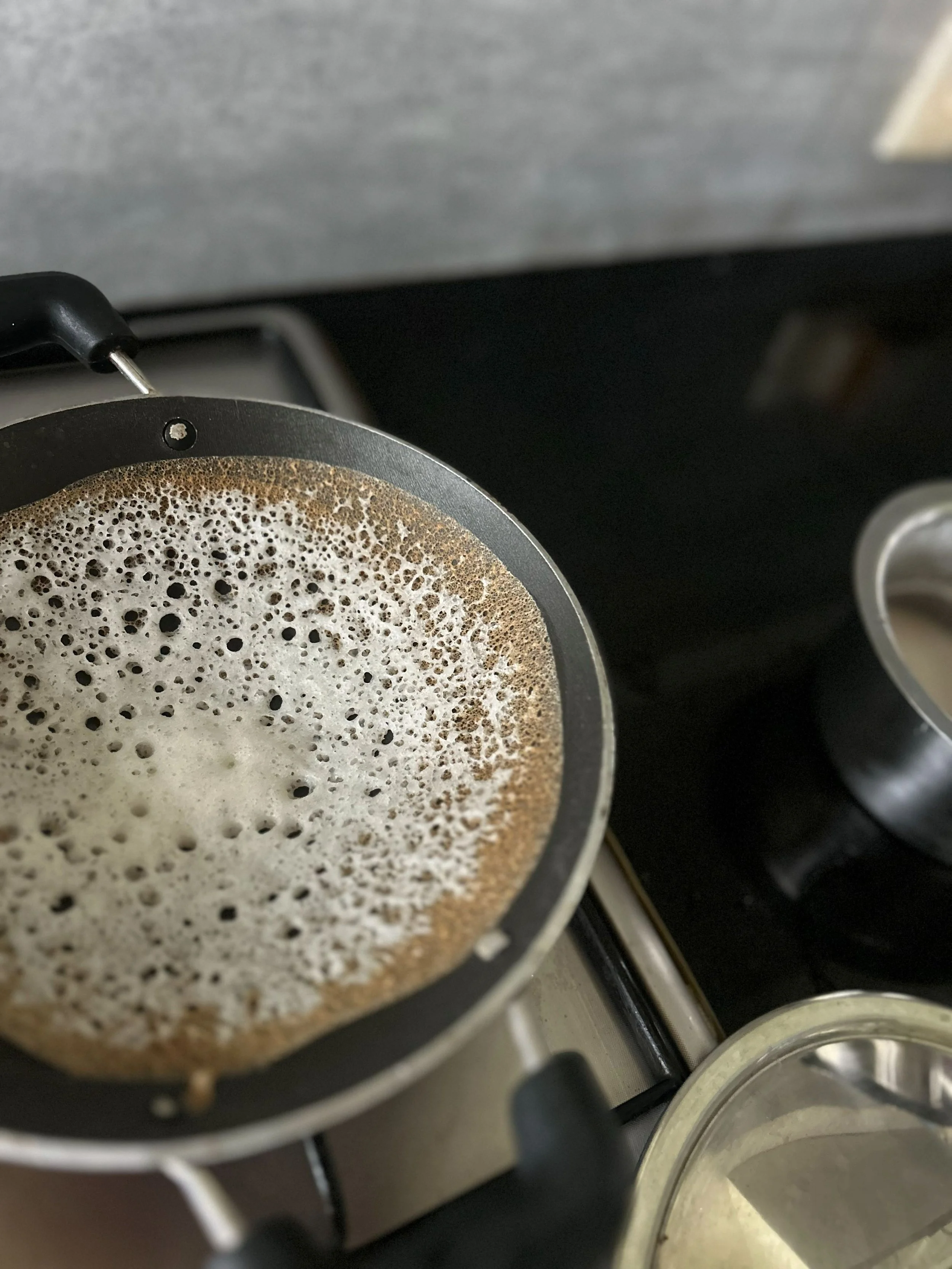
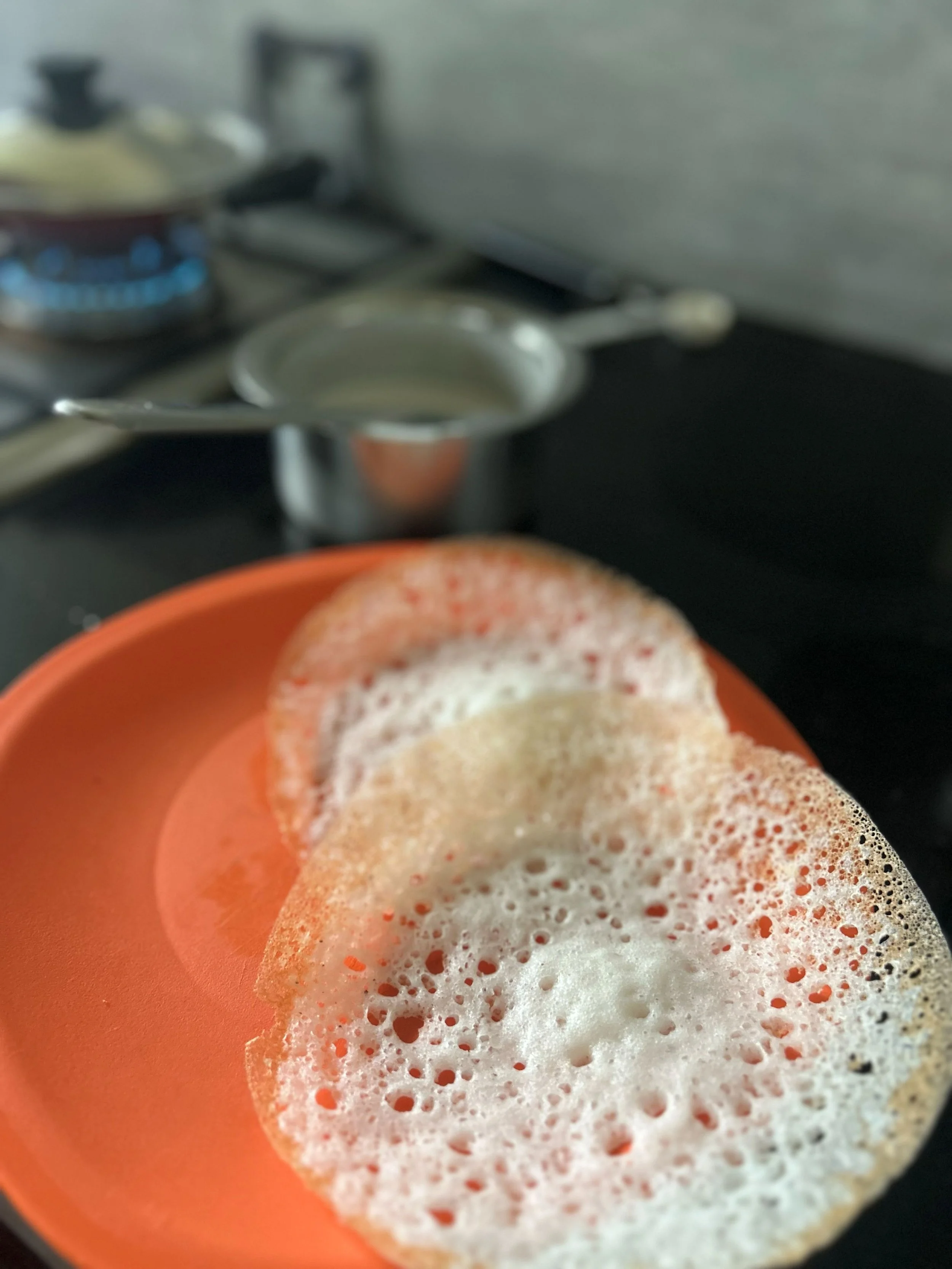
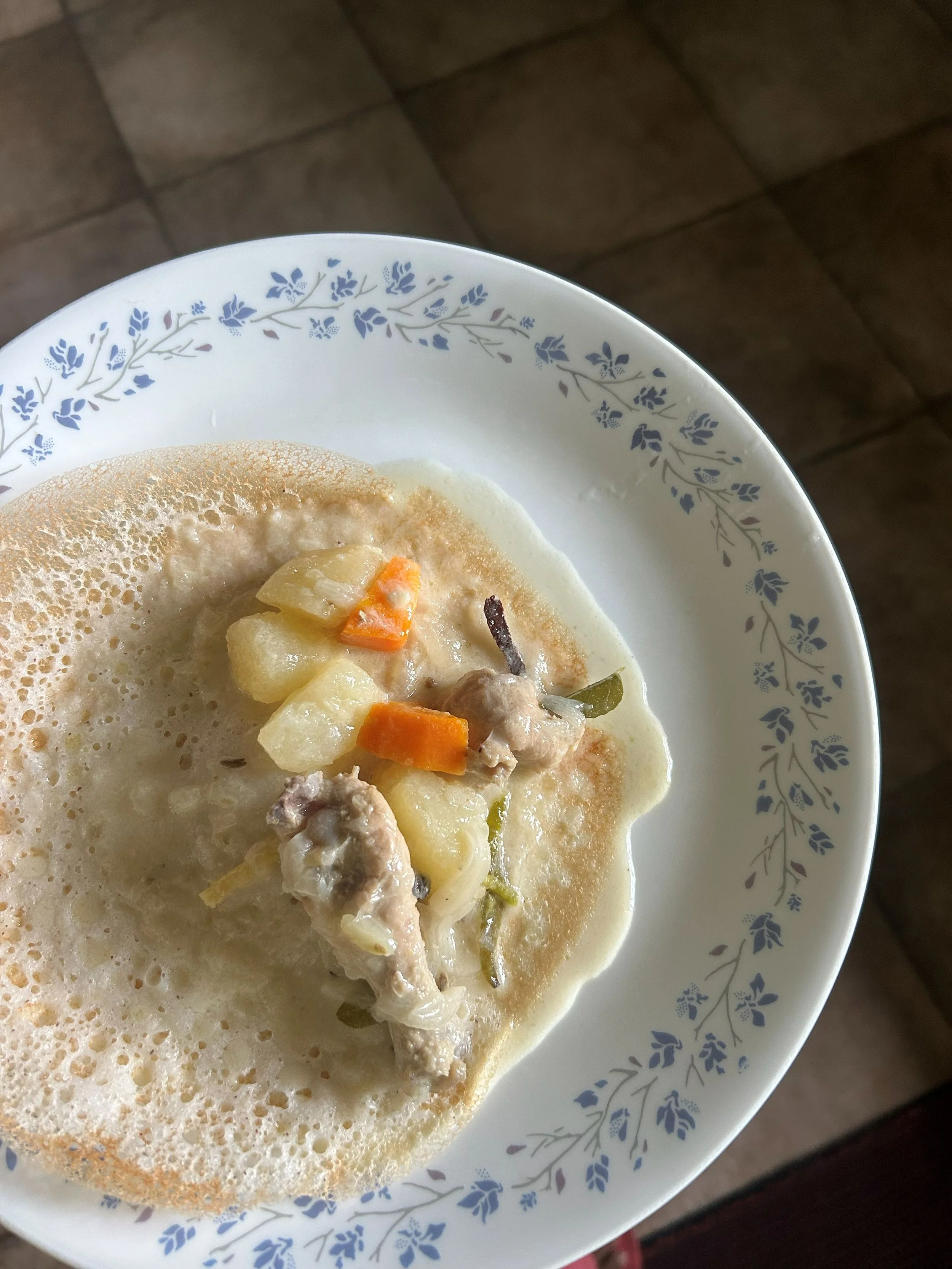
Appam and chicken ishtu. Credit: Nisha Thomas
Tresa Francis, chef and founder of Coracle in Bangalore, grew up making appams long before restaurant kitchens entered the picture. She describes a slightly different method. “The rice was soaked, lightly roasted, and then pounded by hand into flour. We didn’t grind fresh batter every time but used that flour and fermented it with coconut milk,” she says.
Fermentation, she said, used to depend on what was available — freshly-tapped toddy when it could be sourced, sometimes even coconut water. But it was inconsistent. Yeast, when it became easily available, made the outcome predictable and slowly, it replaced everything else.
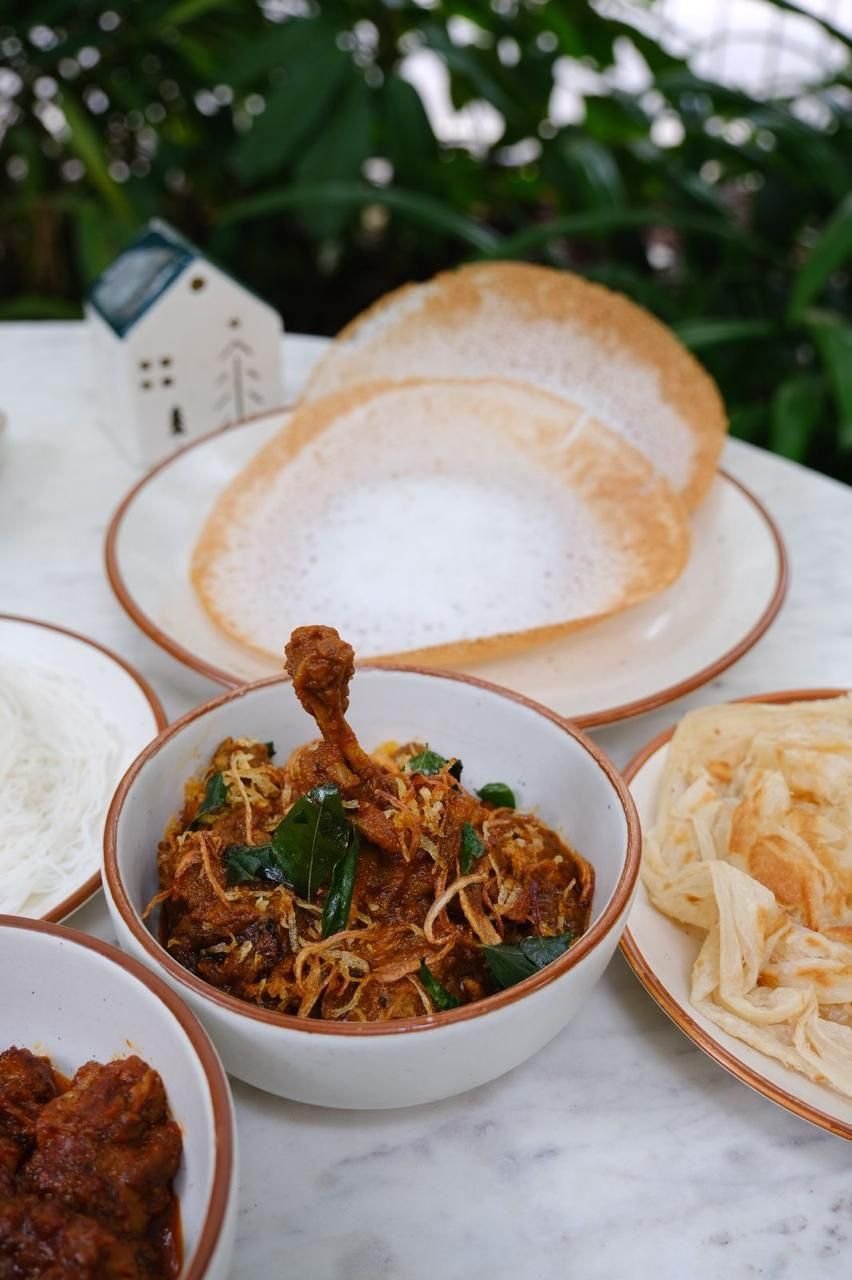
Appams and sides at The Coracle. Credit: Tresa Francis
It’s only recently, she added, that she’s seeing an increased shift to grinding soaked rice instead. “But the flour version holds better,” she said. “Even when it cools, it doesn’t collapse the same way.”
I never thought much about where appams came from. They were ours. It was only years later, in Colombo, that this belief was challenged.
Hoppers in Sri Lanka
On a recent trip to Sri Lanka, I found myself doing what I always do on holiday mornings: mentally scanning the breakfast buffet so I wouldn’t miss anything noteworthy. At the live counter, a chef was lifting delicate rice breads off a pan and stacking them neatly beside a label that read hoppers.
They looked like appams, but not quite — they were deeper bowls as opposed to the shallower appams back home, slightly thicker at the edges, served with lunu miris, a fiery red-chilli-and-onion relish instead of our mellow coconut-milk sides. One bite, and it was both comfortingly familiar and thrillingly foreign. I watched the chef swirl the batter in his well-seasoned appa pan, their chatty. It was deeper, almost like a small wok. When he swirled the batter, it climbed higher up the sides and settled into a tighter bowl. The centre pooled thicker. I must have been staring too intently, because the chef laughed and asked, “You want to try?”
And so I did.
He showed me how to tilt the pan just enough for the batter to climb its sides in a perfect thin film, and how to wait for that exact second when the edges crisp but the centre stays tender. When he lifted one off the flame, it looked sturdier than the appams I grew up with. The edges were crisp and browned, but the centre rose more prominently, almost domed.
Still buzzing from the thrill of having made that first hopper, I landed in Pettah, Colombo’s wild, sensory-overload of a market, determined to find a chatty of my own. I passed shops selling little pieces of the island’s produce, woven palm baskets, spice shops, souvenir stands, T-shirts, and finally, a small shop stacked with cooking vessels, specifically, appa chattys.
I instinctively picked one up, knowing that this is the very one coming back home with me. The chatty left a faint grey smudge on my fingers as I handed it to the vendor who wrapped it in old newspaper and tied it with string.
Culinary Cousins: Mapping the Difference
My encounter with the hopper made me ponder on the differences it and the appam. “The batter is intentionally thinner, rice soaked, ground with coconut milk, fermented, and then lightened further with a little baking soda. It has to move quickly,” says cookbook author and TV host, Tasha Marikkar. “The pan is deeper, so the batter needs to climb the sides in one swift and fluid motion of the wrist.”
The technique adjusts accordingly. The batter is poured into the chatty with the non-dominant hand and it is tilted swiftly with the other, so it spreads into a thin lace along the sides while gathering softly at the centre. A thin layer of oil applied to the chatty between each hopper, helps the edges crisp.
Just like in Kerala, Tasha said in Sri Lanka too fermentation relied on toddy or even pieces of stale bread. Now, most people use baking soda or yeast. The batter has changed slightly with time, even if the form has stayed familiar.
The pairings are different, too.
In Kerala, appams are most often paired with ishtu — a pale, coconut milk stew made with whole spices and either vegetables or meat. It’s mild and subtle in flavour and the appam soaks it in slowly. If it isn’t an ishtu, it is a coconut or coconut milk-based gravy.
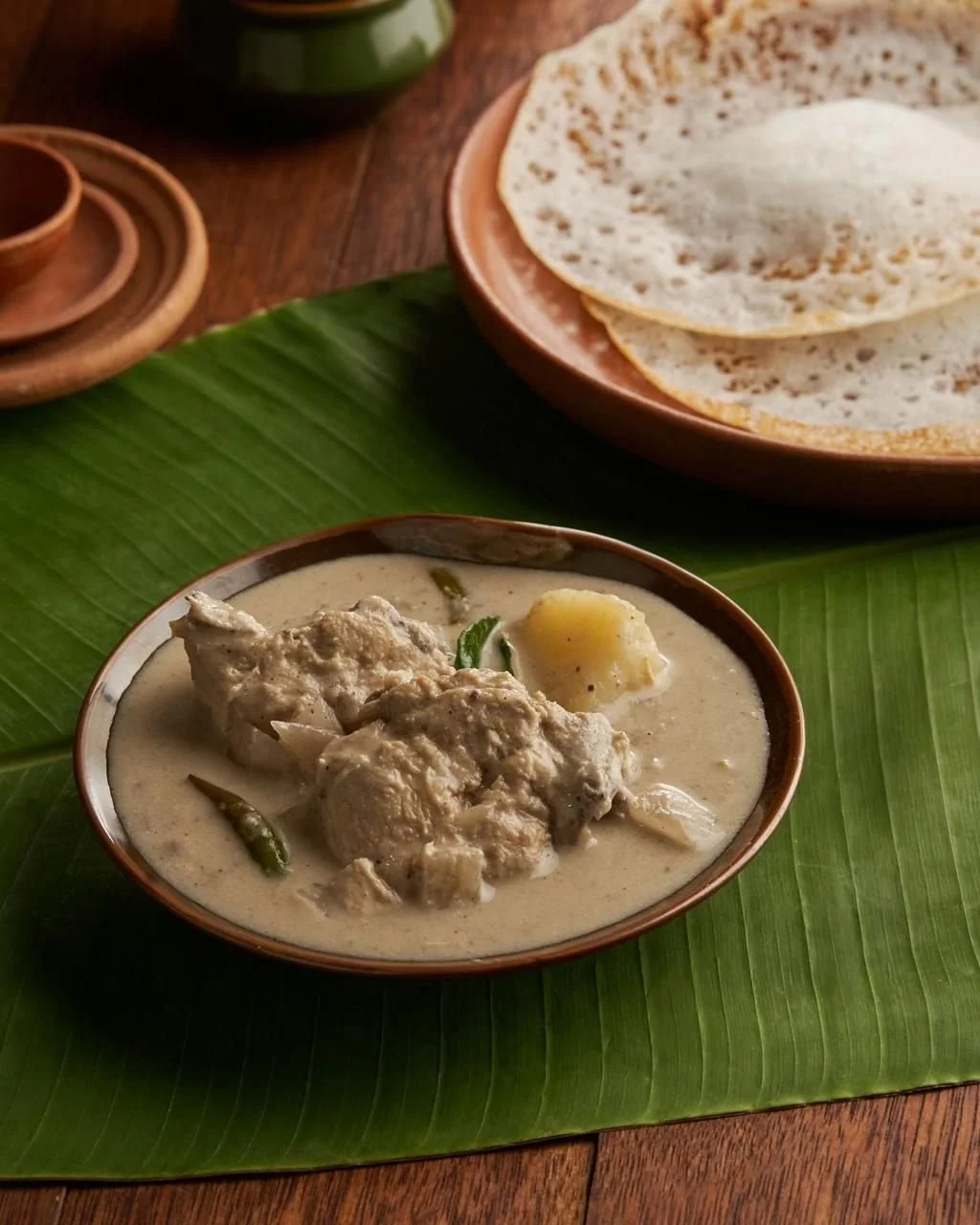
Appams with a hearty ishtu at The Coracle. Credit: Tresa Francis
In Sri Lanka, the pairing moves in another direction. For breakfast, hoppers come with sambols (something like a relish) — lunu miris (salt, red chillies, onions, lime juice), pol sambol (fresh grated coconut, onions, chillies, lime and salt condiment), sometimes a sweeter sini sambol (sweet, tangy and spicy caramelized onion relish). For other meals, they’re eaten with deeply-spiced curries — fish, black chicken, and mutton. The hopper, in that context, feels less like something that absorbs, and more like something that holds.
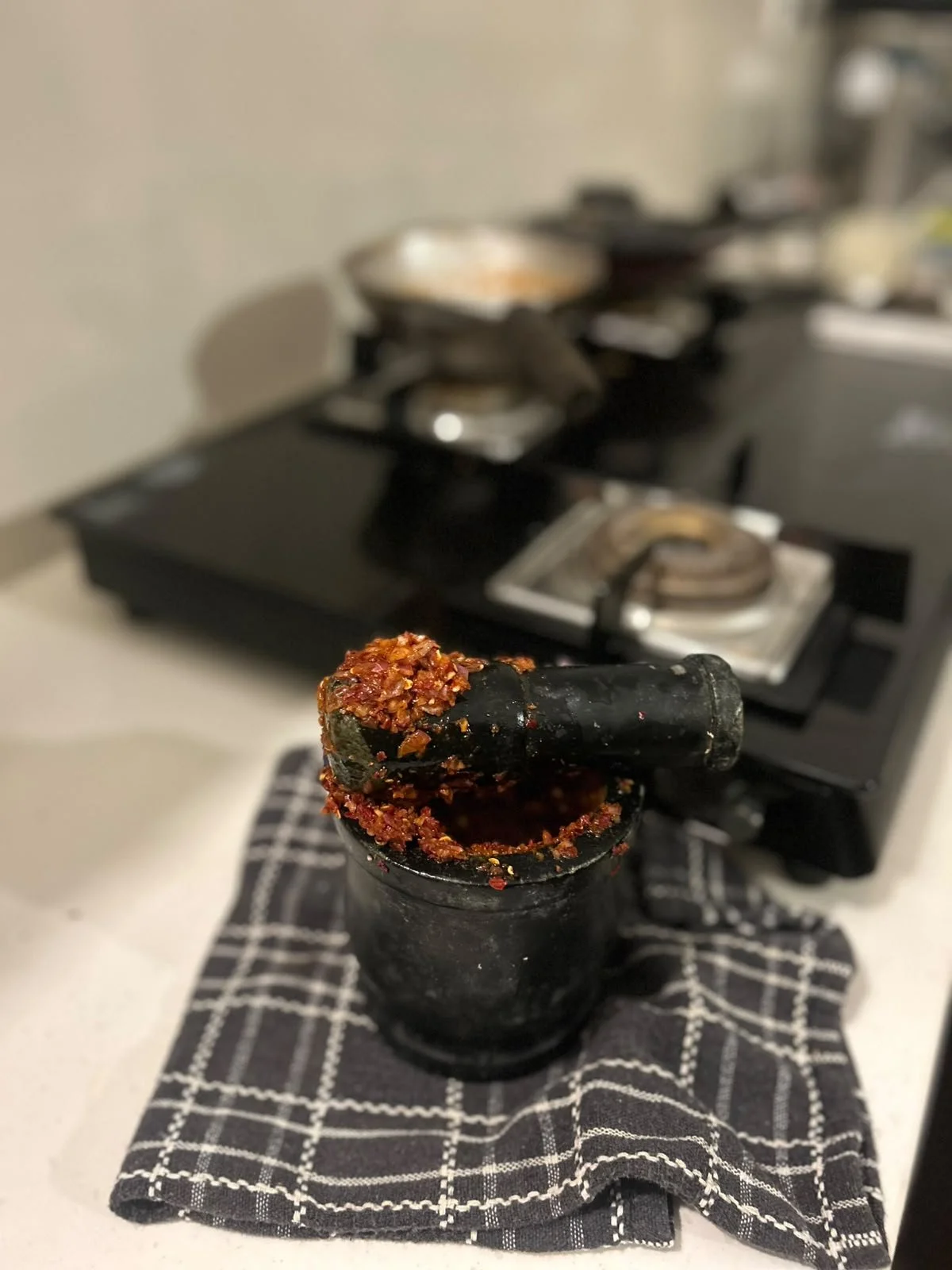
Lunu miris
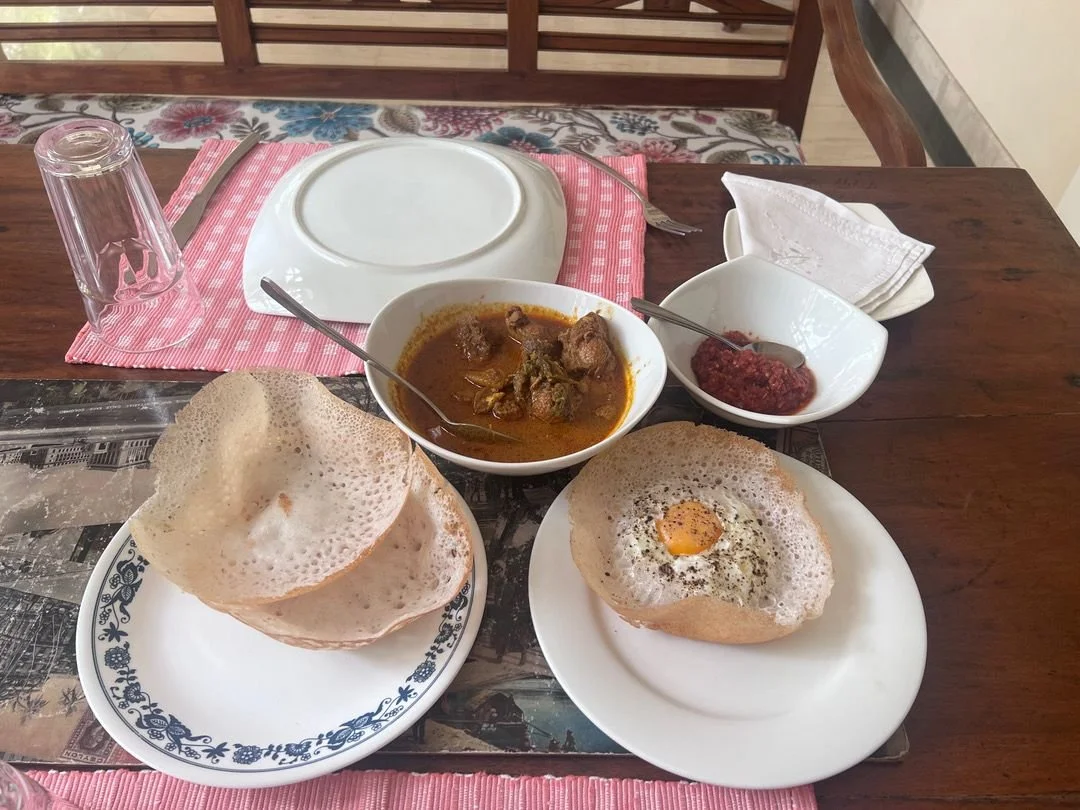
A Sri-Lankan lunch: plain hoppers, egg hopper served along with a black chicken curry, and lunu miris (a type of a fresh relish/chutney). Credit: Tasha Marikkar
That is when it struck me how much identity can hinge on something as small as the curve of a pan.
The coasts of Kerala and Sri Lanka face each other across the same stretch of sea. Boats have moved between them for centuries. Rice and coconut have travelled the coasts. People, too. It’s hard to imagine the batter didn’t move too.
Dr Kurush F Dalal, archaeologist, historian and culinary anthropologist says “There were three major waves of migration from South India to the then Anuradhapura (now Colombo), two of them from Tamil Nadu comprising of South Indian royalty for marriage with Sri Lankan monarchs, mercenaries and plantation workers etc, and another wave of weavers and soldiers (Salagama) who migrated from Kerala to the present day Colombo. It is likely that this is the group that brought appams with them to the Sri Lankan coast.”
References to appam appear in early Tamil literature, with food historian KT Achaya tracing versions of it back nearly two millennia. But origins, like recipes, don’t stay still. And Dalal said the same thing “What travels across regions is rarely a fixed recipe, but a way of cooking. Techniques shift, ingredients adjust, and over time, something familiar begins to look distinct.”
Now, in my kitchen in Coorg, the Sri Lankan chatty sits beside the Keralite one. When I make appams in the deeper hopper pan, the batter behaves differently — it gathers at the centre, forming a pronounced bowl and the edges crisp quickly. It feels like the appam is getting ready to cradle something in it, lunu miris, sambol, maybe an egg? In the shallower Kerala chatty, the batter spreads wider and thinner. The lace feels more fragile with a crisp brown border along the edge while the centre stays pillowy soft. It seems almost designed for stew poured alongside, not inside.
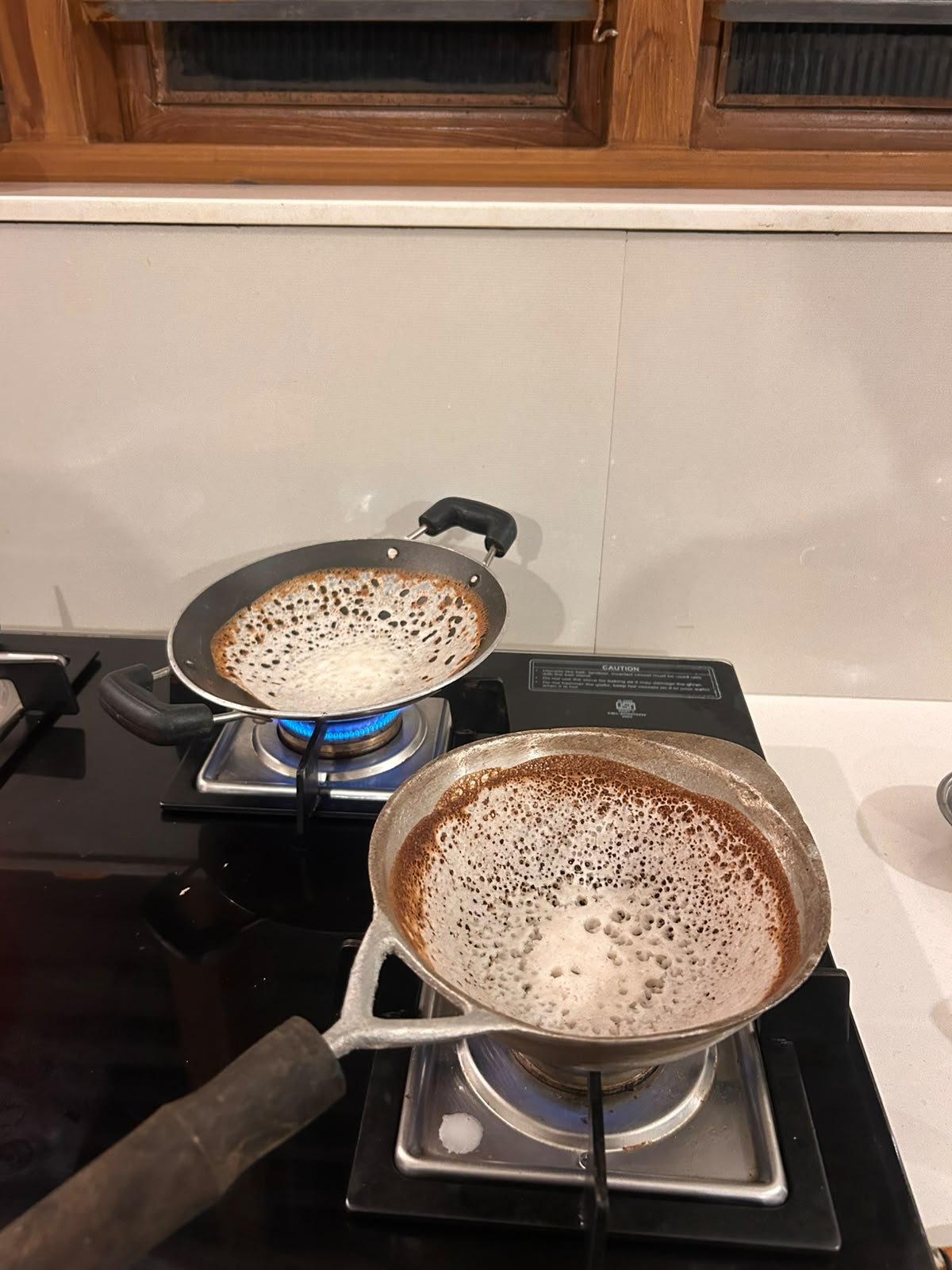
The appam chatty (behind) and the hopper chatty at the author’s kitchen.
We tend to talk about food history in grand terms — empires, trade routes, colonial influence etc. But most continuity lives in our home kitchens. It lives in the shape and depth of the pan, how long someone leaves the batter to ferment. In how thin they pour it. In whether eat it with a delicate stew, coconut milk or lunu miris/sambol.
When making appams now, sometimes I reach for the Kerala one. Sometimes the Sri Lankan. The batter spreads. The edges crisp up. The centre stays soft. And when it hits the pan, it still makes that same soft sound. A small hiss, almost like a sigh.
ANUJA KURIAN RECIPE FOR APPAM
This recipe for soft-centered appams with delicate, lacy edges comes from my aunt Anuja Kurian, a fabulous cook and generous hostess.
Ingredients
2 cups rice flour
2 tbsp semolina (rava)
1 cup (plus more as needed) coconut milk
2 tbsp sugar
1 cup water
Salt, to taste
1 egg white (beaten)
Method
Cook semolina with water into a loose porridge consistency and cool completely.
Mix with rice flour, yeast, sugar and coconut milk to form a smooth batter. Cover and ferment for a few hours.
Add salt and enough coconut milk to reach a thin pourable consistency (like single cream). Fold in egg white if using (egg whites make the appams fluffier).
Heat an appam pan. Pour a ladle of batter, swirl in one quick motion to form lacy edges, cover and cook until the centre is soft and edges are lightly golden.
Note: A little extra sugar deepens the colour of the lace.
Nisha Thomas is a newly-minted farmer at Anaikadu-Pottamkulam Estate, Coorg with a deep love for life forms, specialty coffee processing and mushroom farming. Follow her farming journey on @anaikadu.
ALSO ON GOYA