A Recipe for Yak Harissa from Kargil
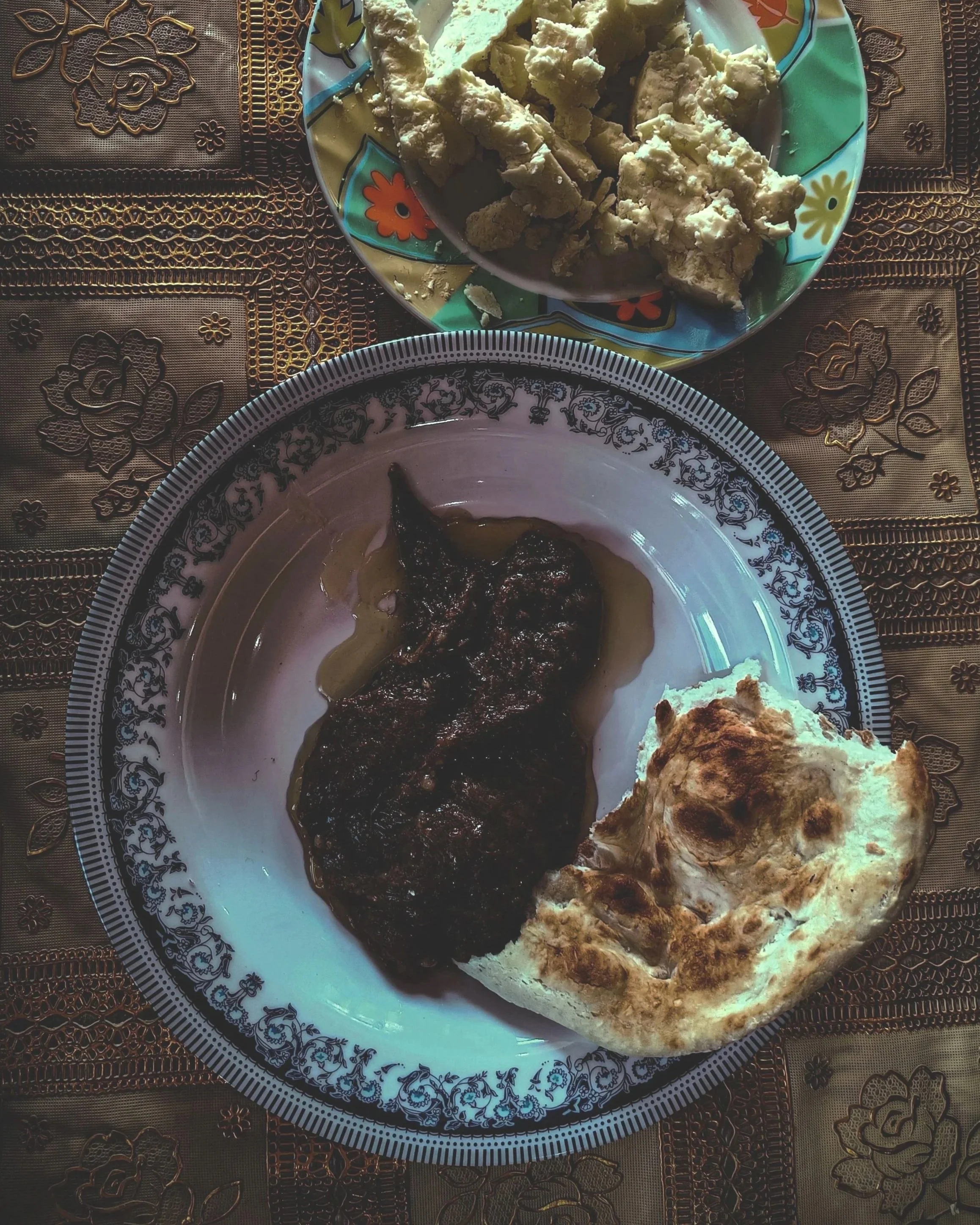
Yash Saxena’s book: Stories from a Kargili Kitchen is a documentation of foodways, recipes, and lived realities from Kargil in North Western Ladakh. This particular recipe blends traditional Harissa-making methods with high-altitude Himalayan knowledge of cooking Yak meat. An excerpt from the book.
Kashmiri Harissa likely traces its origins to Persian and Central Asian influences. The term “Harissa” itself comes from the Arabic verb harasa, meaning “to mash” or “to squash,” since grains are broken and pounded before being cooked to create a porridge-like consistency. Harissa and its variants are found throughout the Levant and the Arab states of the Persian Gulf region. With many recipes and names such as keşkek in Turkey, Tajikistan, and Azerbaijan; Harees in Arabic Gulf countries; Haleem and Khichra in India; and Boko boko in Zanzibar, this dish has permeated almost all Islamic Asian and African cultures. It even has the honor of being Armenia’s national dish!
Harissa is regarded as both a delicacy and a calorie-dense powerhouse, traditionally prepared on special occasions. In Lebanon, it is cooked communally during religious observances like Ashura. Across the Arab world and South Asia, it is often served during Ramadan, festivals such as Eid ul-Fitr, and at weddings. In Armenia, it is a ceremonial Easter dish. In Kashmir, it is an important part of Ramadan as well as cold winter mornings as a savory breakfast delicacy.
Yaks are the woolly mammoth-like cousins of cows whose specialized adaptations allow them to live in conditions of high altitude, low temperatures, and strong winds. These adaptations also provide special characteristics to the products derived from the animal - most visible in Kargili foods like Chhurphe and Yak Harissa.
Compared to beef, Yak meat contains less than half the calories, nearly three times less fat, and significantly more protein. It’s also richer in essential vitamins and minerals. It is also packed with more minerals and vitamins than other red meat. While fat usually contributes to the juiciness of red meat, Yak meat, being up to 95% lean, draws its succulence from a high concentration of omega-3 fatty acids, making it both healthy and flavorful.
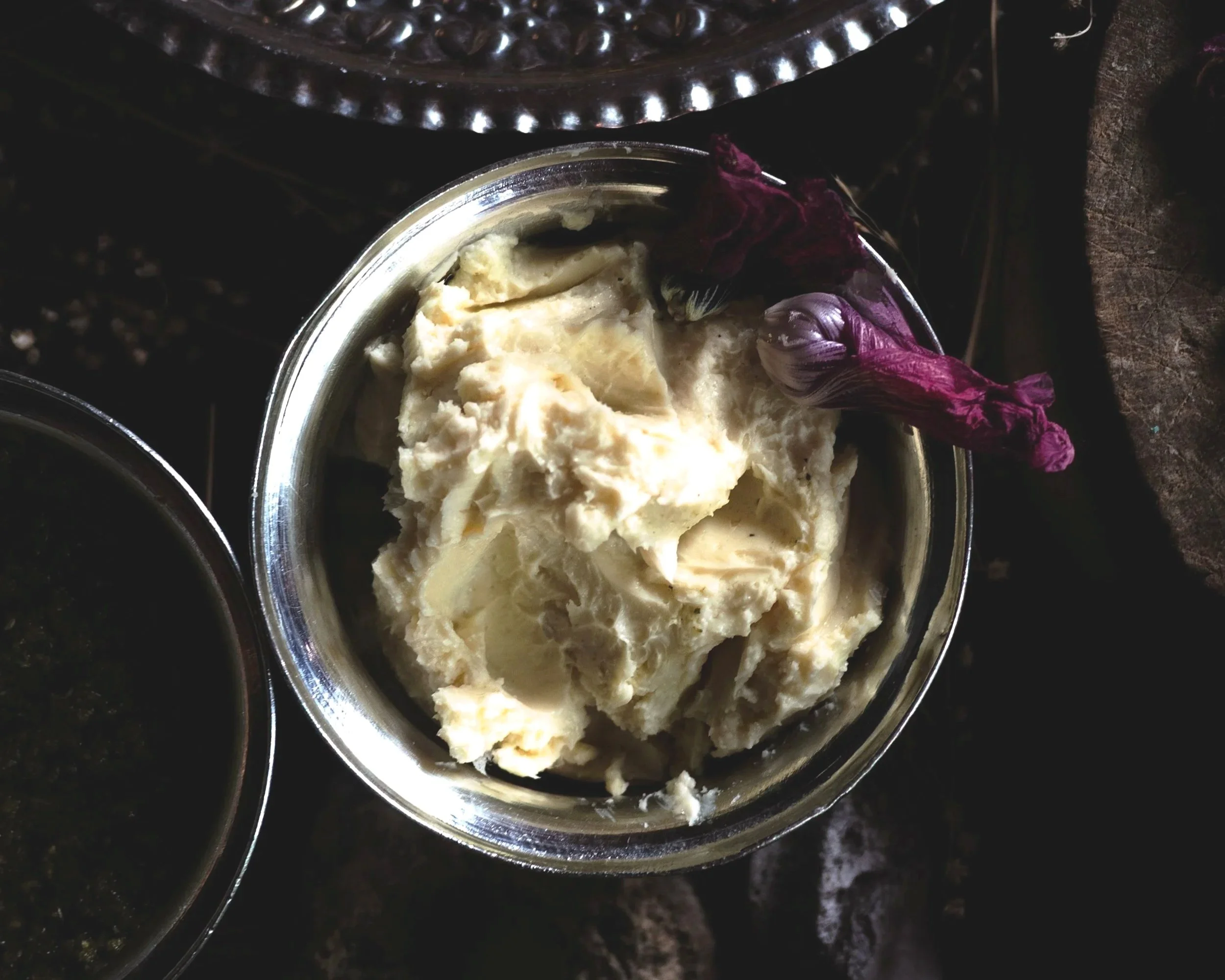
Mar (local cow butter), which is added to the dish.
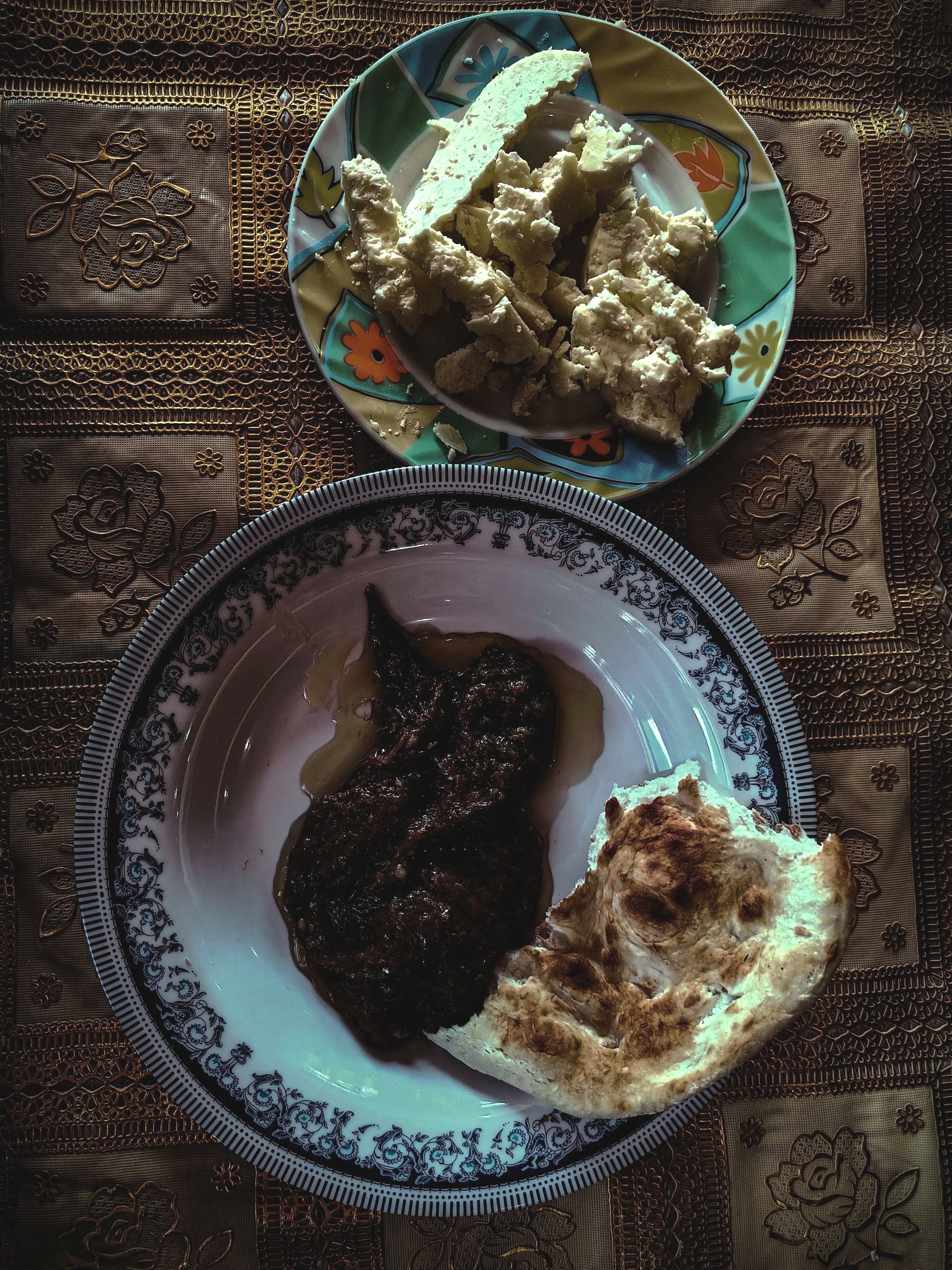
RECIPE FOR YAK HARISSA
Ingredients
1 kg Boneless Yak/ Buff/ Beef
1.5 liter water
1 cup of cooked rice
½ cup cooked whole wheat
½ kg onions, sliced (keep aside 1 cup onion sliced for garnishing later)
4 garlic cloves
8 black peppercorns
4 cloves
2 cinnamon stick
2 black cardamom
8 green cardamom
¼ cup fennel seeds
¾ tsp turmeric powder
1 ½ tsp thanyir (yellow chili powder from Manali)
1 cup mustard oil
Salt to taste
Method
In a degchi (as a substitute for a doltok, a heavy carved stone vessel), add all the meat, sliced onions, whole spices along with the water, cover, and cook for about 2.5 - 3 hours on low flame. Alternatively, use a pressure cooker and cook for 7 - 8 whistles on medium flame.
Turn off the heat and let it sit for 10 minutes with the cover on, or until the pressure is released from the cooker.
Open the lid of the degchi/ cooker and roughly mash all the ingredients with a zarbu (big wooden spoon). The meat should have separated from the bones by now. Remove them at this stage. Keep them aside for now. (Cook it covered for some more time if the meat is still attached to the bones).
Filter the remaining stock and remove any of the visible spices like cardamom pods and cinnamon sticks. You must be left with at least 2-3 cups of yak meat stock at this point. Empty it into another container.
Take 1 cup of stock and add the cooked rice and wheat to it. Cook the rice in the stock on medium flame, stirring constantly until it forms a smooth paste. If you’re using a cooker, consider transferring the contents to a more open-mouthed utensil for the following steps since it requires lots of movement.
Add the turmeric and thanyir. Cook it for 10 minutes on low flame till it incorporates fully. Add the remaining stock slowly to this mix, while stirring so nothing sticks to the vessel.
Add salt and cook all the contents whilst stirring regularly for about 1 to 1.5 hours or till you get the required porridge-like consistency. This is an important step since the smoothness of the harissa depends on this. Make sure to put in the manual labor required for this step!
Meanwhile, fry one large sliced onion on the side until it starts to become golden brown.
Check the mixture for salt. Add more, if required. If there is more salt in it, add small quantities of milk till it is neutralized while stirring.
Once the oil starts leaving the sides of the cooker, your harissa is cooked and ready! Garnish with caramelized onions and serve hot!
Typically, Harissa is eaten as a breakfast dish tempered with ghee, and fried onions on top. Serve the dish with Skyuri Taki (leavened whole wheat bread) or Kashmiri girda bread and mar (homemade butter) on the side for added luxuriousness.
Note:
All recipes are from regions that lie at ~9000 ft above sea level or more. High altitude means lower atmospheric pressure, which affects how food is cooked. All recipes that involve boiling or simmering in water will take ~20 -25% less cooking time on average when cooked at sea level. For example, a recipe that simmers for 2 hours in Kargil would take 1.5 hours to cook in Goa.
Yash Saxena is a traveller, storyteller, and mountaineer whose work moves between food, art, and identity. Their practice blends storytelling, art and philosophy to understand how people find meaning in what they eat and create.
ALSO ON GOYA