Mahua: Shaping Food and Everyday Life in Bijapur
During her fieldwork in Bijapur, Prateeti Rajjak follows mahua across seasons and settings, including local gatherings and festivals such as Pandum. She finds that instead of being a tired shorthand for the image of tribal communities as perpetually intoxicated, mahua is seen as a food and a lifeline for their existence.
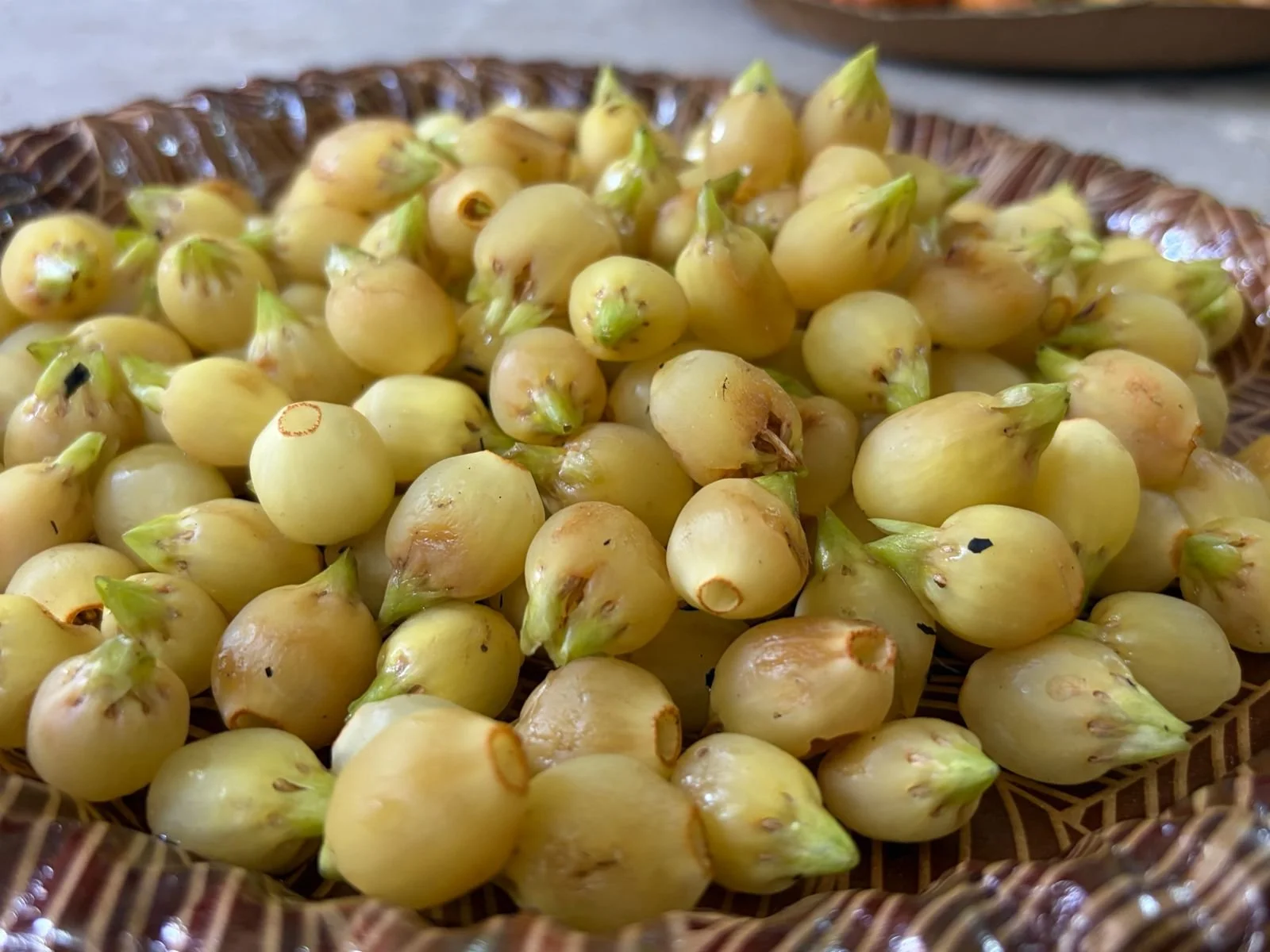
Before the sun begins to rise, the forest floor in Bijapur is already busy. The mahua flowers fall at night — soft, fleshy, cream-coloured — and by morning the ground beneath the trees golden with them across patches of land with burnt soil. Women walk out with woven baskets they have carried every season since they were children, and the gathering itself is unhurried — a particular kind of attention shared by all those who move through the same trees at the same hour, calling to each other through the low light. Everyone seems to know which trees are theirs; there is an unsaid boundary demarcating territories, but one also knows that the fallen flowers belong to whoever gathers them according to their estimated tree and land demarcation. No one owns the forest floor, and the shared temporality creates a collective urgency as March sets in.
This is how the mahua season arrives in Bijapur. Not through a calendar or an online market notification, but through the body's recognition of a rhythm that returns, year after year, in the cool weeks between winter's end and the full weight of summer.
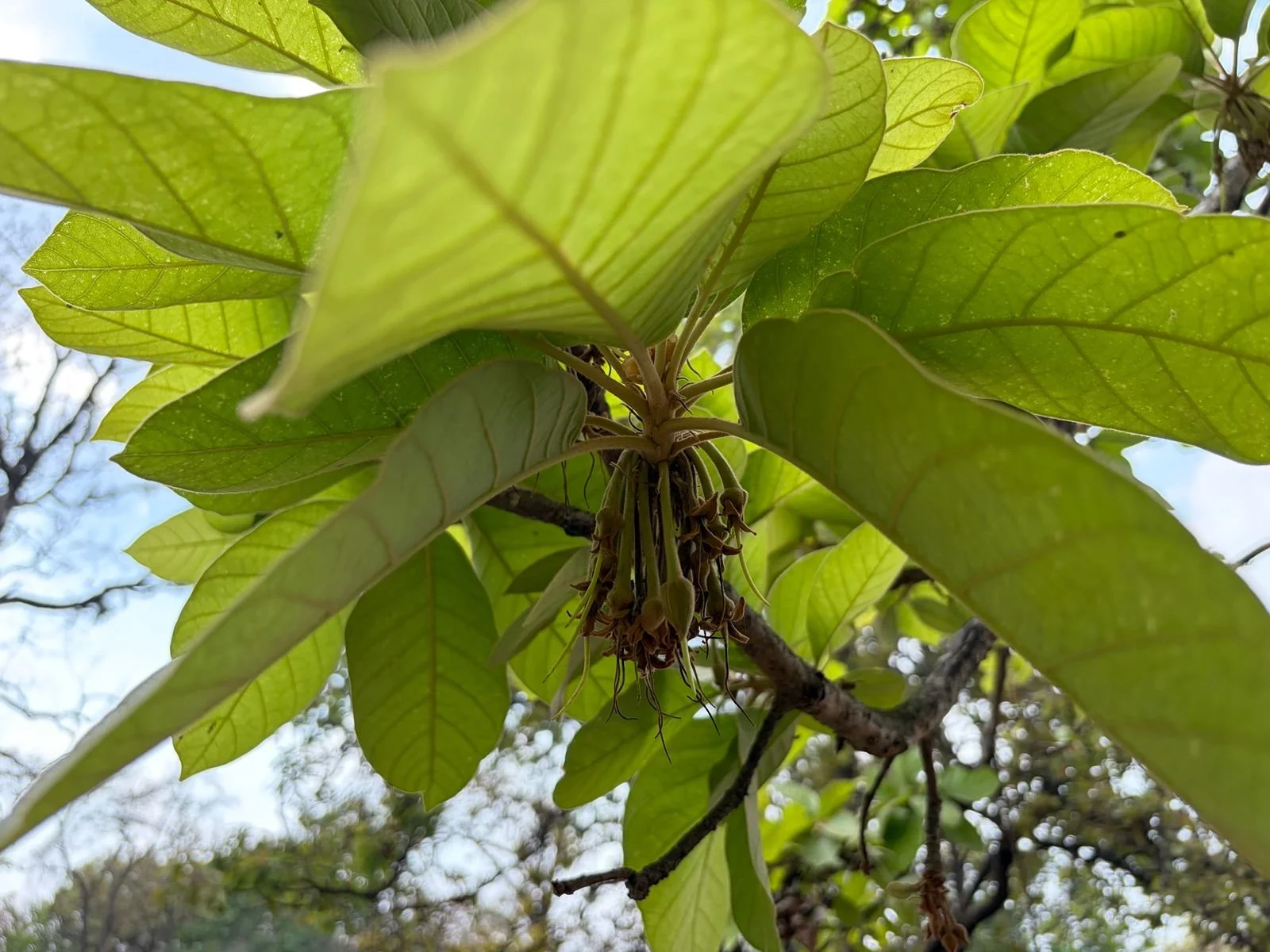
Mahua tree in Bijapur, Chhattisgarh.
Mahua (Madhuca longifolia) flowers bloom briefly, usually between February and April, and communities across central India have built their year around that window for as long as anyone can remember. In Bijapur, a district in southern Chhattisgarh still marked by the long shadow of conflict under the designation of 'LWE' and limited access to formal markets, mahua persists not because institutions have sustained it, but because people have.
The word that usually precedes mahua in popular culture and common understanding is ‘liquor.’ The flower, when fermented, produces a country spirit that has served as the occasion for repeated moral panics, colonial-era prohibitions, and contemporary regulation. That association has since forever has made a colored perspective on how mahua is seen from the outside — reducing it to a problem to be managed, a habit that cannot be reformed, and a tired shorthand for the image of tribal communities as perpetually intoxicated, alongside sulphi, taadi, and other local produce. What it obscures is simpler and larger: mahua is food and a lifeline for their existence. It is eaten — dried and stored, sometimes value added products like Mahua cookies ladoos nectar, stirred into preparations that vary by household and community — across seasons and occasions. And it is memory, passed down across generations and still revered with the whole family involved in the collection process. Children, elders, students all take time out to collect mahua — something like the figures in Agnès Varda's The Gleaners and I, but in villages that were, until recently, inaccessible to government administration in Bijapur.
To follow mahua through everyday life in Bijapur is to not simply find a substance in need of policy attention, but a living system of knowledge, labour, and relationship that has sustained communities across generations — and that deserves to be understood on its own terms before anything else is asked of it.
The mahua cycle in Bijapur does not begin with the collection. It begins with Pandum.
Before the community goes to the forest, the pujari conducts the Dev puja — an offering to the village deity that marks the opening of the season and asks permission, in effect, to receive what the forest is about to give. Mahua flowers are placed before the deity. The ritual is not incidental or decorative; it is the precondition. The forest is not entered, and the flowers are not gathered, until this act of acknowledgement has been made. What this encodes is a relationship of obligation that runs in both directions: the community tends to and reveres the forest, and the forest, in return, provides. The Pandum is the formal recognition of that contract. Only after this does the gathering begin.
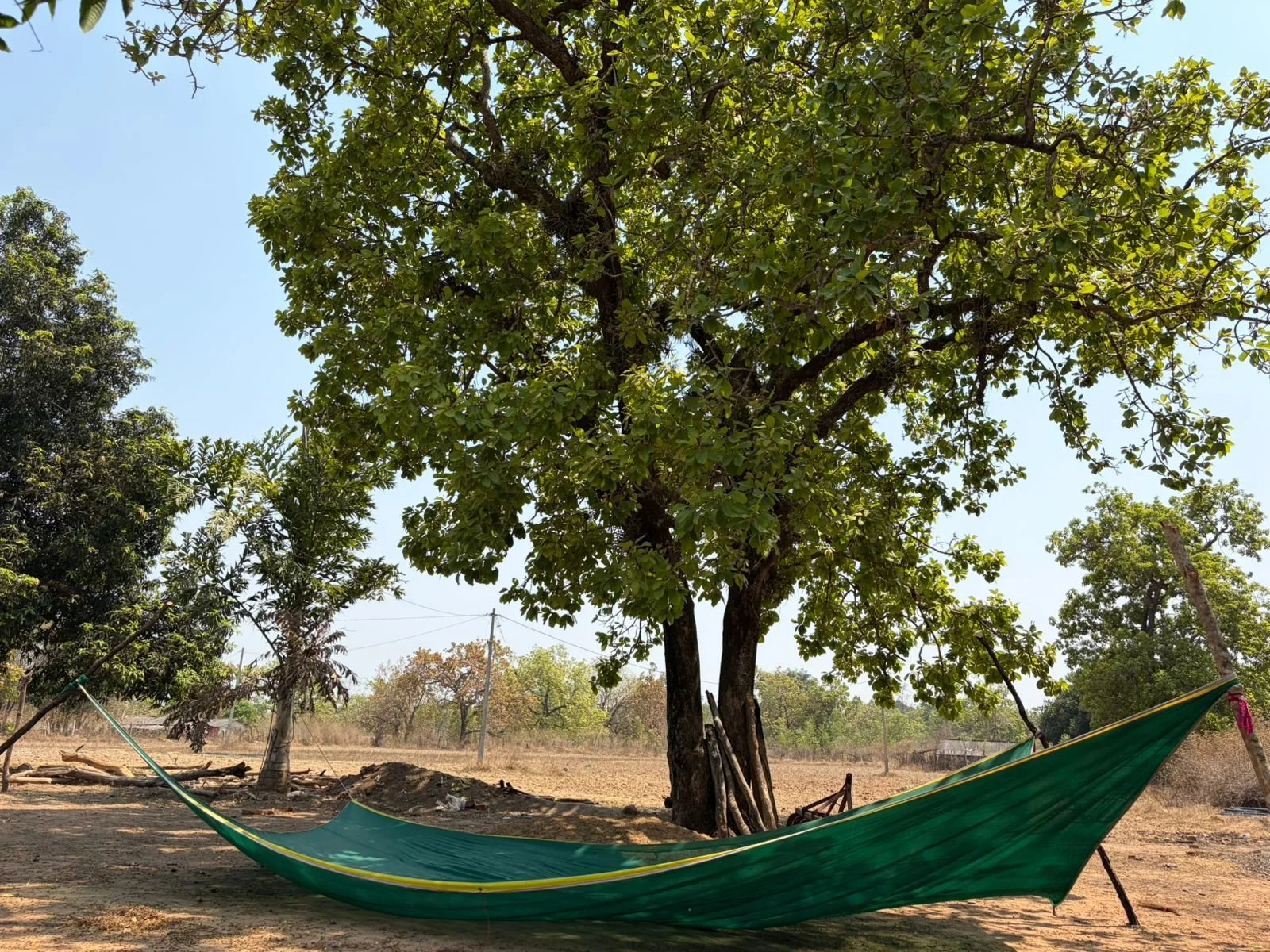
Net provided to Cluster Level Federation by NRLM department, Bijapur Chhattisgarh
The gathering season is a shared season. The knowledge people carry — which trees, which paths, how to read the ground for the heaviest fall — was not acquired in any formal way. It came from accompanying a mother, and her mother before that. Children participate too, many of them home for the summer from government hostels, ashrams, and porta cabin schools — the season coinciding, as if by design, with the break that brings them back. Recently, with the intervention of bringing back immigrant and dropout children too, sometimes the reason would be that families would require more hands in collecting forest produce across the year if there are less earning hands in the family. There are older women who move slowly and know the most. There is an implicit distribution of the work that does not need to be negotiated because it has already been settled by practice. The flowers come back to the courtyard. This is where the second kind of labour begins.
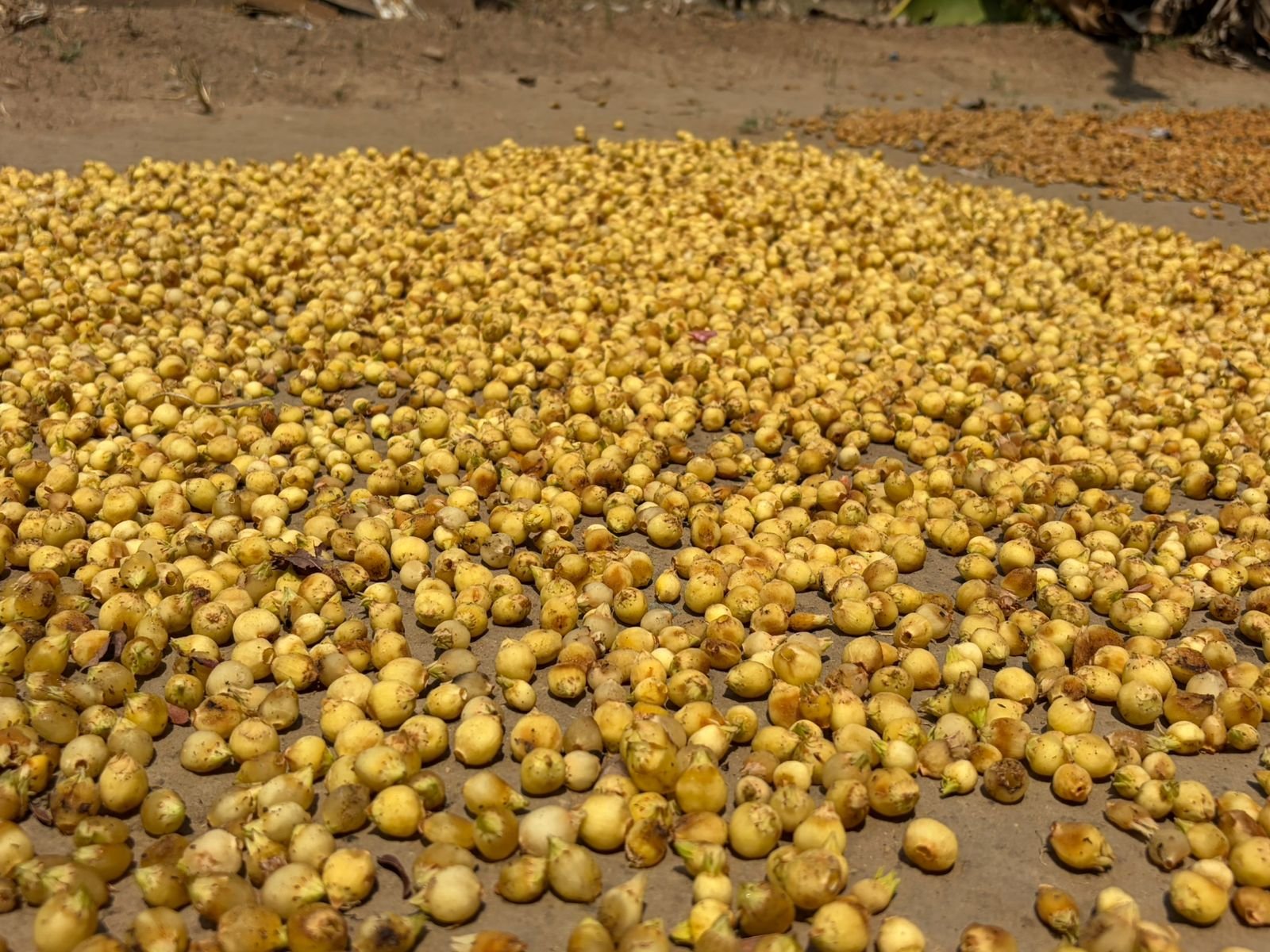
The gathered flowers are spread across a mat or the clean-swept courtyard floor, and beaten with a wooden stick.

Dried mahua flowers are stored in a woven bamboo basket.
The gathered flowers are spread across a mat or the clean-swept courtyard floor, and beaten with a wooden stick — a rhythmic, muscular work that loosens the debris, separates the flowers from what should not be stored with them, and begins the process of drying. This is not delicate work. It is physical and communal, often done with others, and it produces the smell that marks the season as distinctly as anything else — sweet, warm, slightly fermented even now, entirely itself.
Once beaten and cleaned, the flowers dry over several days under the strengthening sun, their colour shifting from cream to deep amber-brown. When they have lost enough moisture — gauged not by measurement but by feel, the knowledge carried in the hands — they are stored in tokri, the woven bamboo baskets that are themselves a product of the same forest economy. A full store of dried mahua in a tokri carries meaning that goes beyond nutrition: it is a hedge against a lean summer, a resource for hospitality, a form of household security that is sold in weekly haat bazar to the middlemen and traders and cannot easily be replaced.
When the time comes to open the stored mahua — whether to brew it into liquor, to sell it to traders or at the market, or simply to use it — another Pandum is performed. The pujari once again conducts the Dev puja before the store is opened and the mahua released into its next form of life.
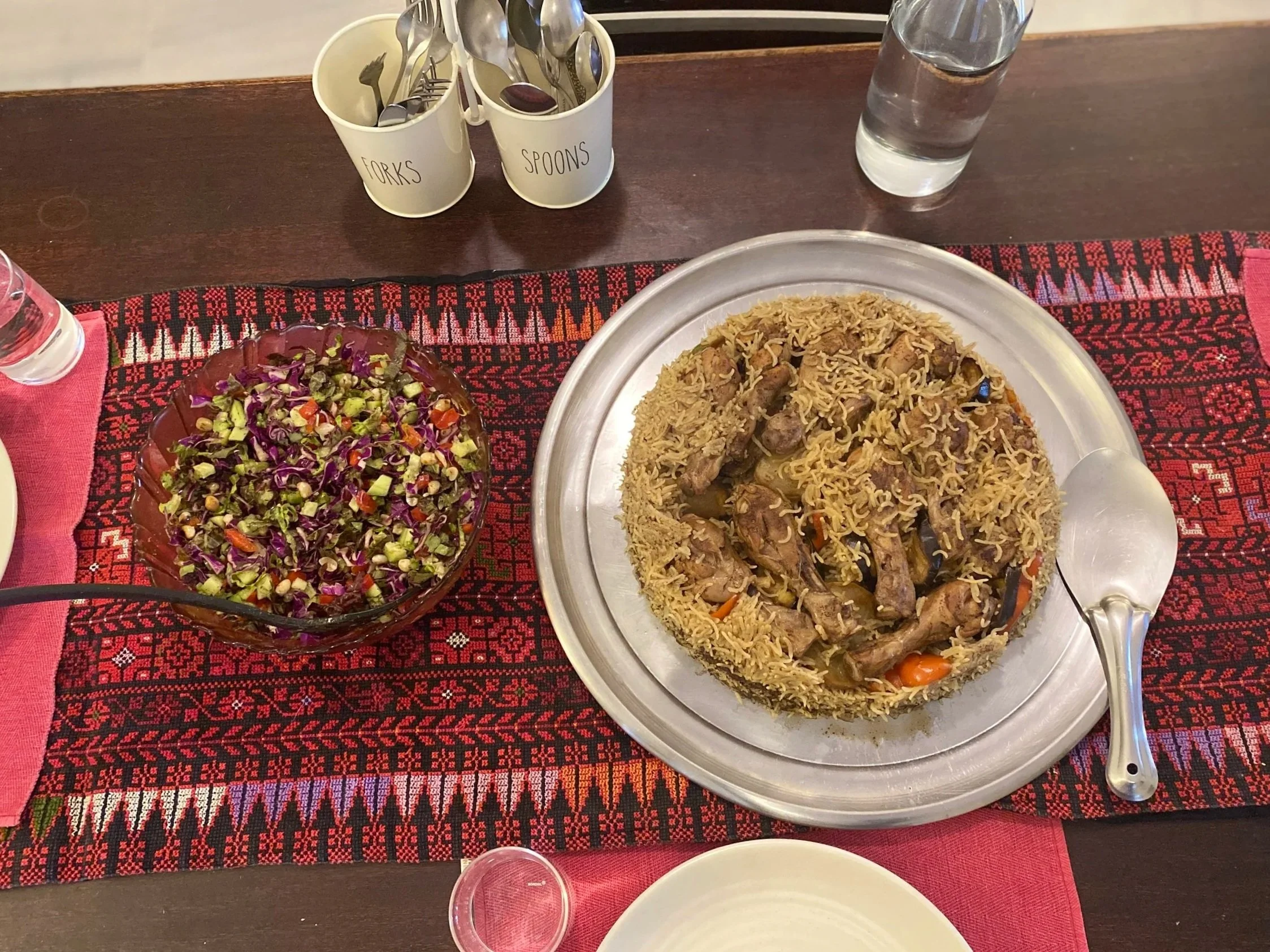
Mahua served in an Annaprashan Program by WCD Department in Bijapur.
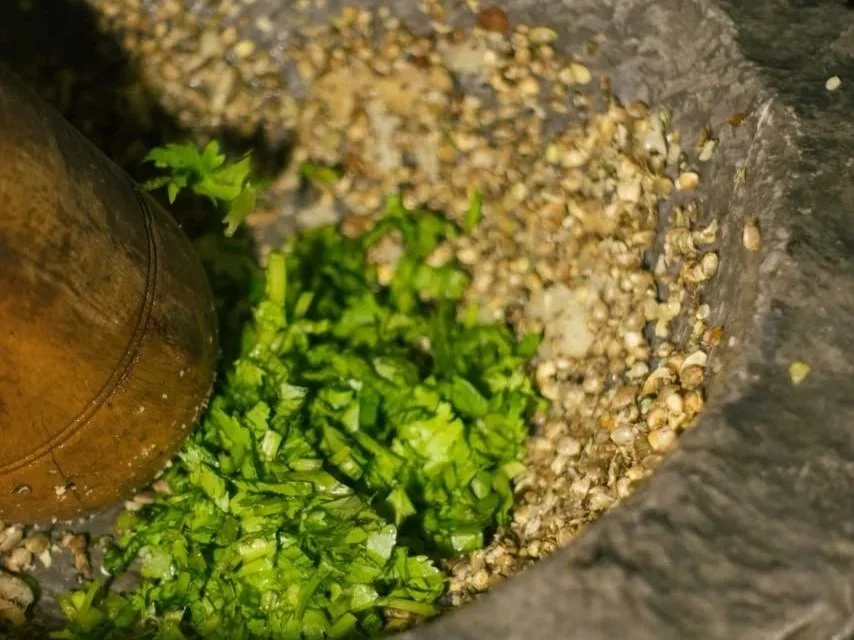
This second ritual is the detail that changes everything about how mahua must be understood. The liquor that emerges from this process is a product that exists within the sacred frame — it is produced within it, released by it, and sanctioned by it. To reduce mahua to liquor and then to regulate or stigmatise the liquor is to strip away the framework that gives the entire cycle its meaning and its order. The community is not drinking despite the sacred; they are drinking, when they do, through it. Between the first Pandum and the second, mahua is food in the most ordinary and sustaining sense. Dense ladoos are a staple gift for visitors and a practical food for people working through long days. Ground into flour, the dried flowers can be added to rotis. Boiled, they produce a sweet liquid used in preparations encountered in nearly every household. The taste is strong and distinctive. Children eat it and do not think of it as unusual. It is, in the most direct sense, ordinary food.
The decision to see mahua primarily as the precursor to liquor requires actively ignoring everything else it is and everything that came before. In this year, the Bijapur district administration has taken a step to introduce the concept of food grade mahua through NRLM departments and in each CLF(NRLM) nets have been distributed for women in SHG groups to collect and store these flowers thus reducing some physical labour.
Communities in Bijapur hold knowledge about mahua that no policy document contains — which trees produce the sweetest flowers, how to read a year's harvest against the previous year's, what a thin harvest might mean for the months ahead, the precise feel of a flower dried just enough to store without spoiling. This knowledge is not romantic. It is practical and exact, tested across seasons and refined across generations. The contrast with external framings is not simply a matter of perception — it is a difference in what questions are being asked. External framings ask: what is mahua worth, and to whom? The communities ask: what does mahua need from us, and what does it give back? The first question produces a commodity. The second produces a relationship.
Bijapur is a district where the administration has slowly, painfully established its presence — security camps, new roads, the gradual return of movement — even as the shadow of decades of conflict continues to wear away in 600 plus villages. In this context, the question of whether mahua can be a site of genuine investment and value addition, one that serves communities rather than extracting from them, remains open and urgent. But it cannot be answered well by anyone who has not first understood what mahua already is and the historical context of this district. It is a form of continuity that the forest makes possible and that people actively sustain. To call this resilience risks making it heroic in a way that flattens what it actually is — which is closer to the ordinary, daily refusal to stop doing what makes life liveable.
There is a question worth carrying out of Bijapur: what becomes visible when we begin from lived practice rather than from categories? The answer, in the mahua season, is something like this — that food carries time, that gathering is not merely an economic act, and that communities sustain their own coherence through the very acts that outsiders are most likely to misread or reduce.
The pre-dawn walk to the forest, the beat of wood against dried flowers, the tokri filled and set aside, the Pujari's words spoken before the season opens and before it closes — these do not need to be recognised as cultural heritage or incorporated into a value chain to be complete. A standardised and effective planning and ensuring people’s trust in MSP and value addition efforts with access to network, roads and healthcare along with last mile education.
What changes, if we allow that to be enough, is not the practice. What changes is what we are able to see — and therefore, eventually, what we might be able to protect.
Based on fieldwork conducted in Bijapur district, Chhattisgarh, during the author's tenure as a PPIA Fellow with the district administration from 2025.
ALSO ON GOYA