Maqloubeh: A One-Pot Meat and Rice Dish from Palestine
A traditional Palestinian dish, maqloubeh is a hearty one-pot meal of meat, rice and vegetables. In recent times, Priya Desai finds, it has taken on a deeper meaning, becoming a powerful symbol of resilience, survival and endurance.
Maqloubeh, also known as upside-down, is a traditional Palestinian dish popular in Central and West Asia, across Jordan, Syria, Iraq, Iran and Lebanon. I learned the recipe from my husband Tariq, whose father was born in Palestine. It is now a beloved staple at our dining table in Richmond Town, Bangalore. A warm, hearty dish of layers of meat, rice and vegetables cooked and turned upside down on to a large plate, it is comfort food at its finest.
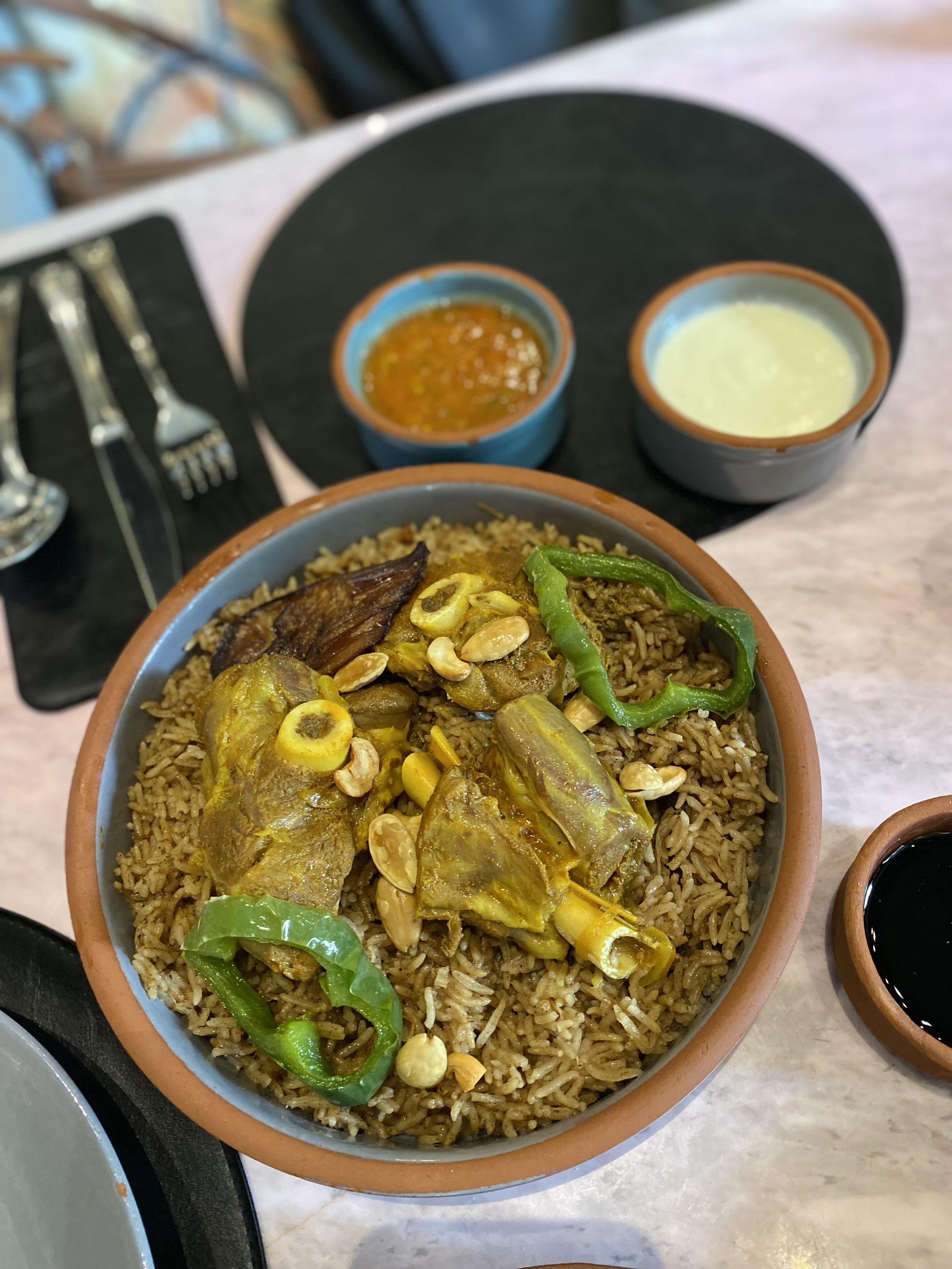
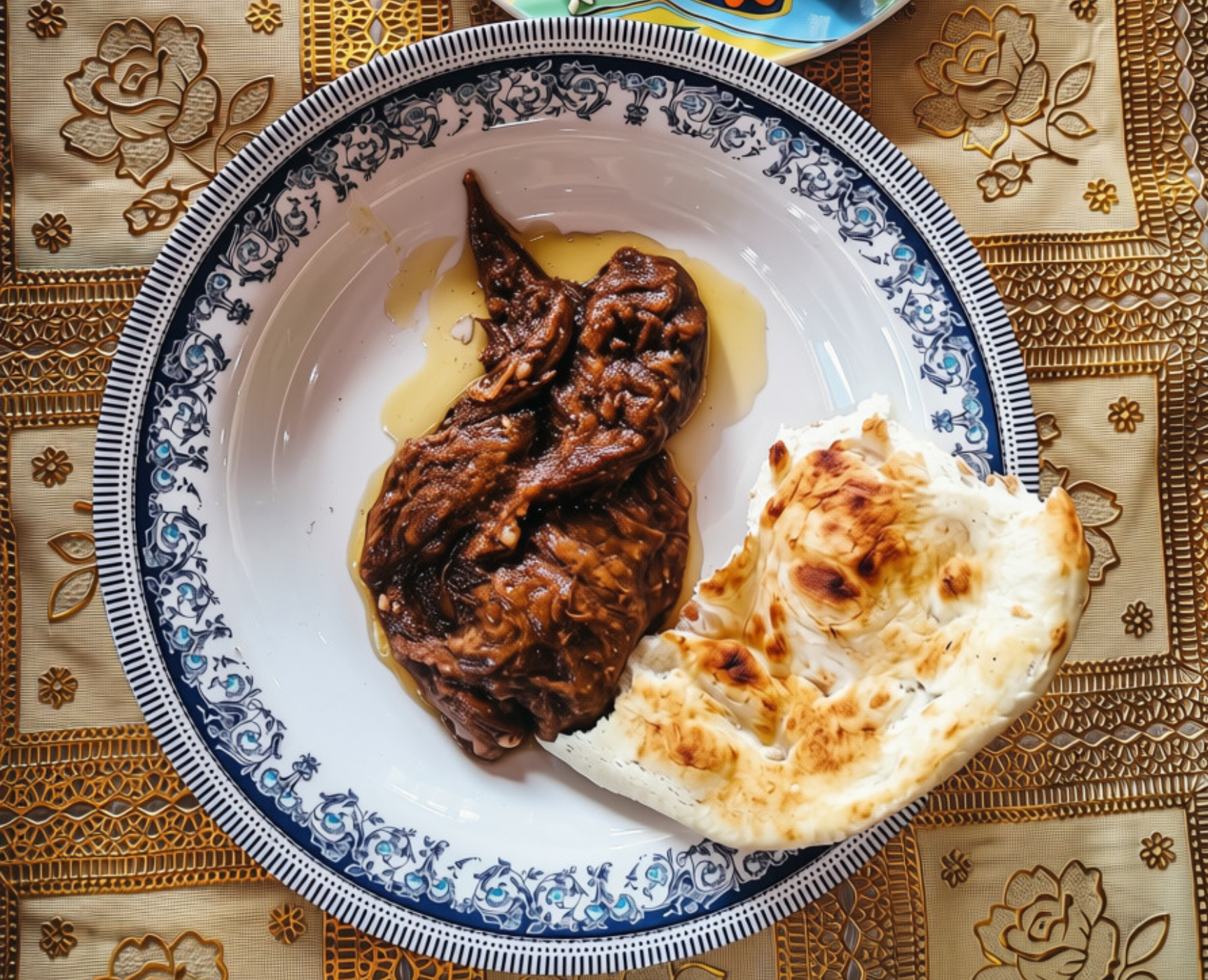
Lamb maqloubeh at Halab Penang Malaysia.
The history of maqloubeh or maqluba spans several centuries and is believed to have originated in medieval Baghdad. The earliest documented mention of maqloubeh is in a 13th century cookbook Kitāb al-Ṭabīkh, The Book of Dishes, written by Muhammad Baghdadi. However this version is an egg dish rather than a pilaf. Over the centuries it evolved across the Levant into many iterations, both vegetarian and non-vegetarian. In Palestine, it was refined to become the modern version we know today, and where it is much more than just a meal. Maqloubeh in Palestine is a ritual; in more recent times it has become a powerful symbol of resilience, resistance, survival and endurance. It is traditionally prepared for large family gatherings and on holidays like Eid.
When I first cooked maqloubeh, I found it cumbersome and alien. I was a reluctant cook to begin with, and this is a dish that really tests your patience. The saving grace was that my picky daughter loved it from the get-go, which was one reason to keep going until I perfected it. Soon enough I grew to love it, experimenting with different versions. A versatile dish that looks like a rice cake, maqloubeh means ‘upside down’ in Arabic and that is exactly how the dish is served, introducing a moment of sweet suspense in the kitchen as you flip the dish out of its cooking pot, hoping it will hold its shape[1].
I myself have never attempted this final flourish, afraid that the pot will fall unceremoniously to the floor. There’s a celebratory flair to upside-down, as it makes its way to the dining table from the kitchen. It takes a certain amount of skill and upper body strength (and a prayer) to achieve this final flip.
The food of Palestine and this dish in particular was a revelation to me. It showed cooking as an act of care, not drudgery. It gave me the gift of the taste and smell of a land I will probably never see in this lifetime. Tariq too has never been to Palestine, but he has seen it across the Dead Sea from Jordan. To know a homeland only through taste and smell and grainy photographs and a handful of stories, is to hold a deep fracture unlike any other. Tariq is one generation removed from the displacement his father experienced in 1967, when he fled with his mother and siblings on foot from their home in East Jerusalem. Tariq’s sido, his paternal grandfather, crossed over to Jordan and his wife and seven children followed him there, and then on to the Gulf, never to return.
But even to be one generation removed from it is to carry the pain of it deeply. Maqloubeh is much more than just a dish of rice, meat and vegetables. It brings us, our small blended family of three in Bangalore, closer to a land and its people who will perhaps not exist in our daughter’s lifetime. It is layered and complex, much like the Palestinian people who have endured the unspeakable over the past century — a slow, steady, excruciating erasure. And so we keep making it, each time a refinement, every time a reminder of who we are and where we come from, more so when it is continually snatched away. We have had the privilege of sharing this dish with many friends and loved ones over the years.
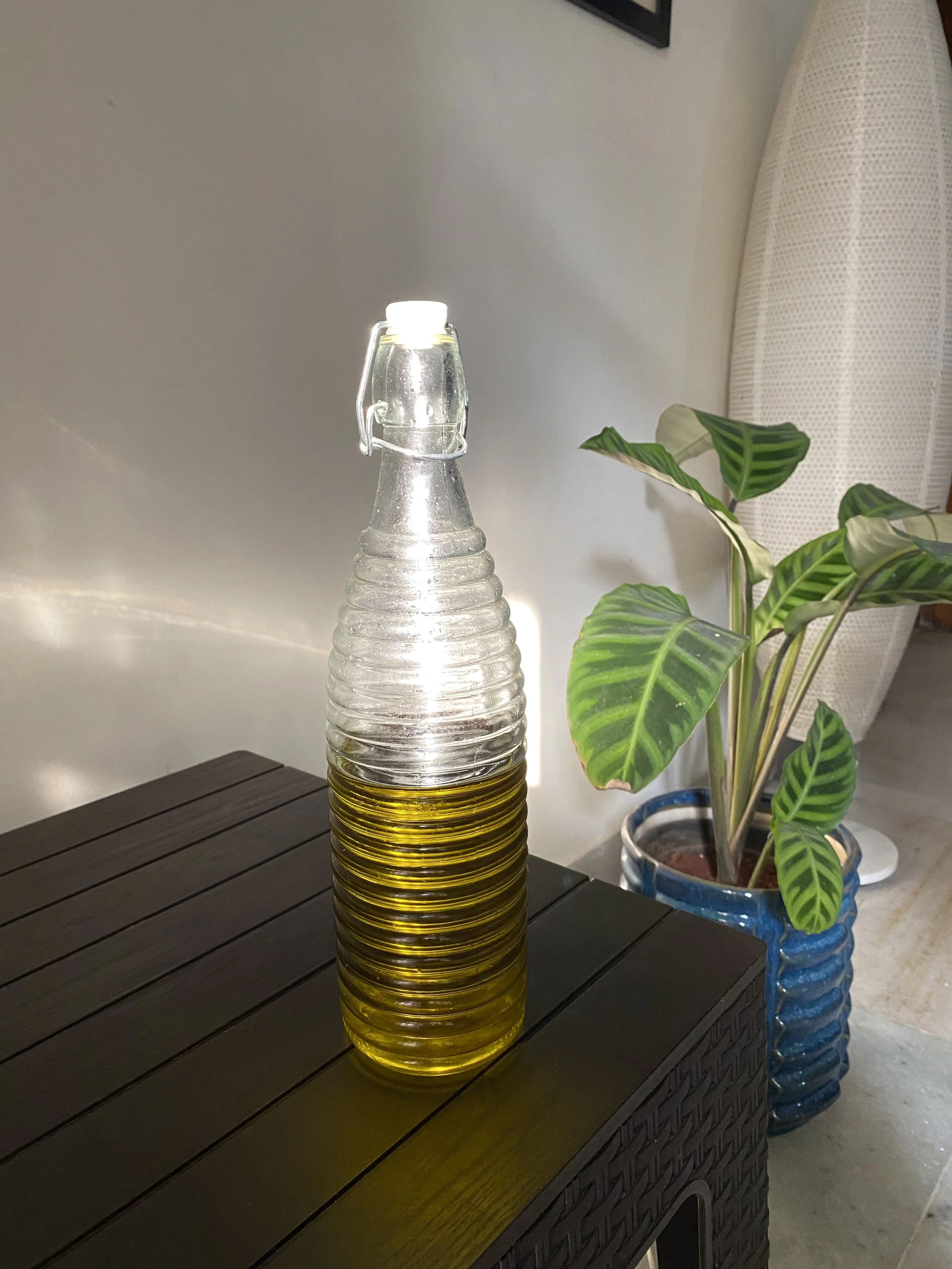
Olive oil from Palestine.
We used to do only brinjal and potato originally. Our daughter detests brinjal, going only for the potato and chicken. Then we found a vegetarian variation of maqloubeh in Yasmin Khan’s gorgeous cookbook Zaitoun, which used bell pepper and it is so much better! I would skip the potato if I didn’t have a picky twelve-year-old at my table. You can also use tomato and garlic to add a different flavour profile and finish it off with fried almonds or pine nuts. We had a delicious version of upside-down at a popular Middle Eastern restaurant called Halab in Penang, Malaysia with lamb and green bell pepper which was mind-blowing.
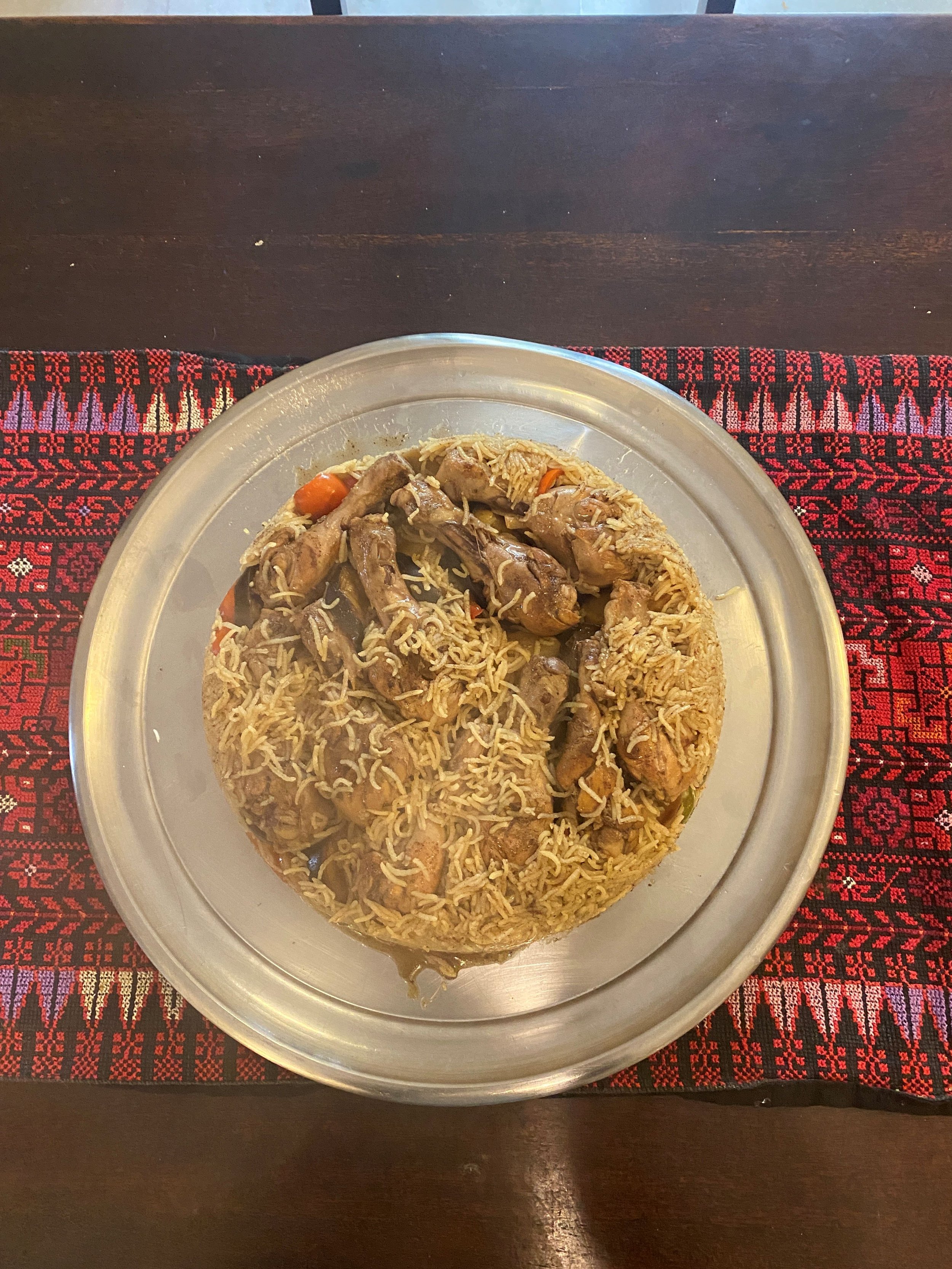
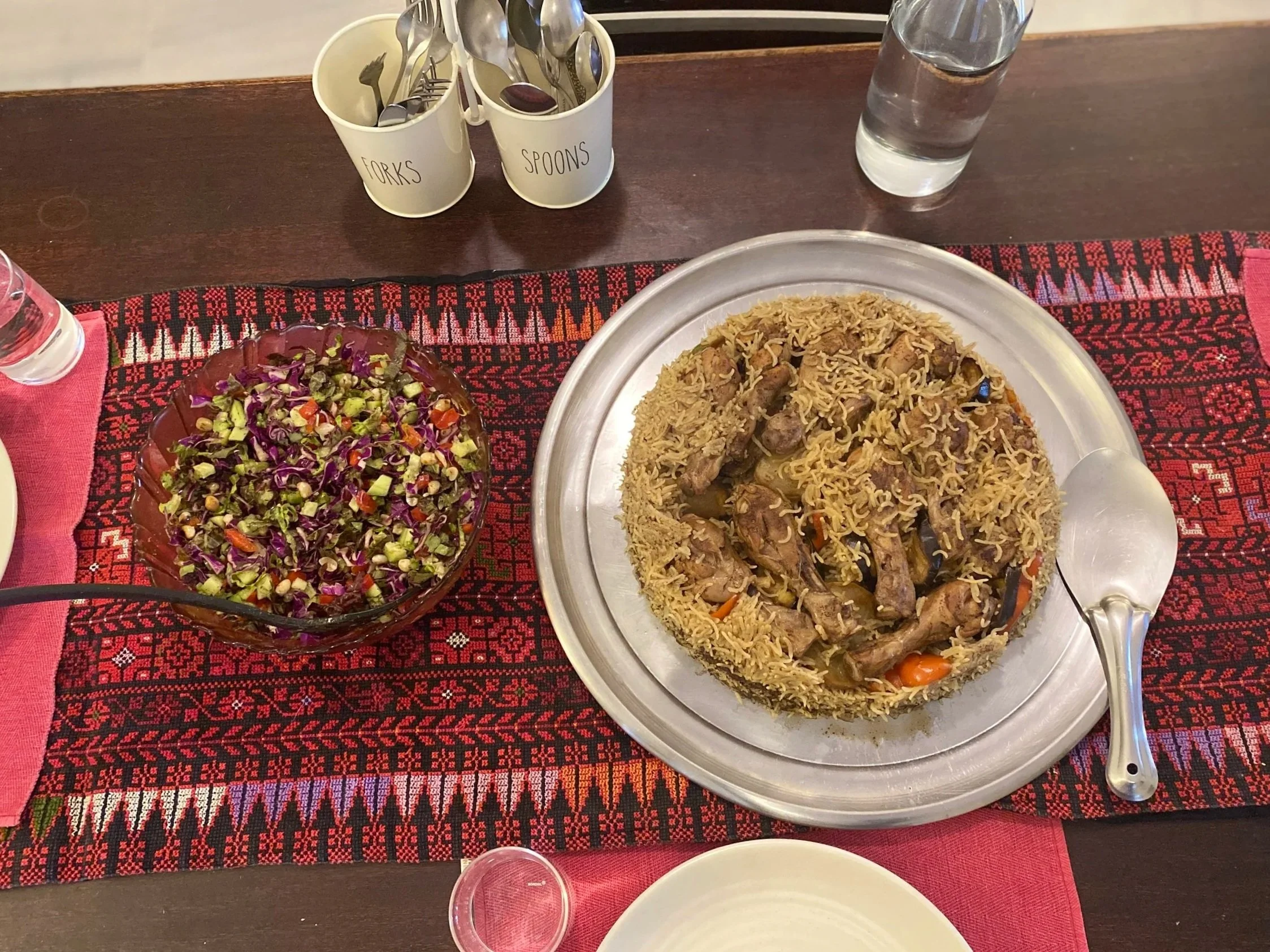
The runner on which the dish sits is traditional Palestinian embroidery hand stitched by women in the West Bank. My mother Rani bought it for Tariq when she visited Palestine, Israel and Jordan in 2012.
This is the recipe of Suraiya Al Wari, Tariq’s teta (paternal grandmother) who never got to return to her home. She was a small, feisty, somewhat intimidating woman who embodied the Palestinian spirit. We hope that maqloubeh lives on for many generations to come through small efforts such as these to document, to preserve and to honour a heritage that has given us nourishment, sustenance and some sense of belonging.
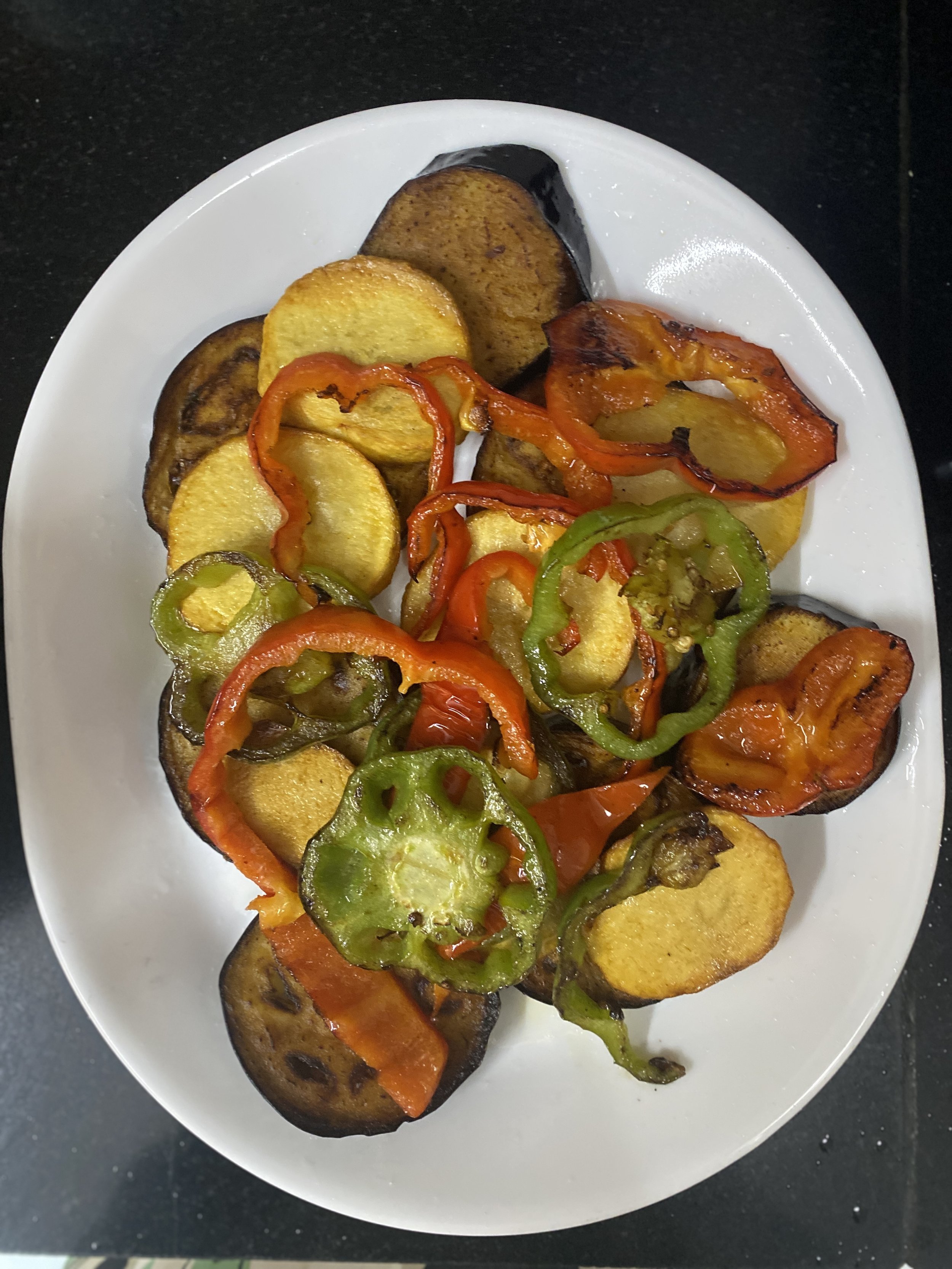
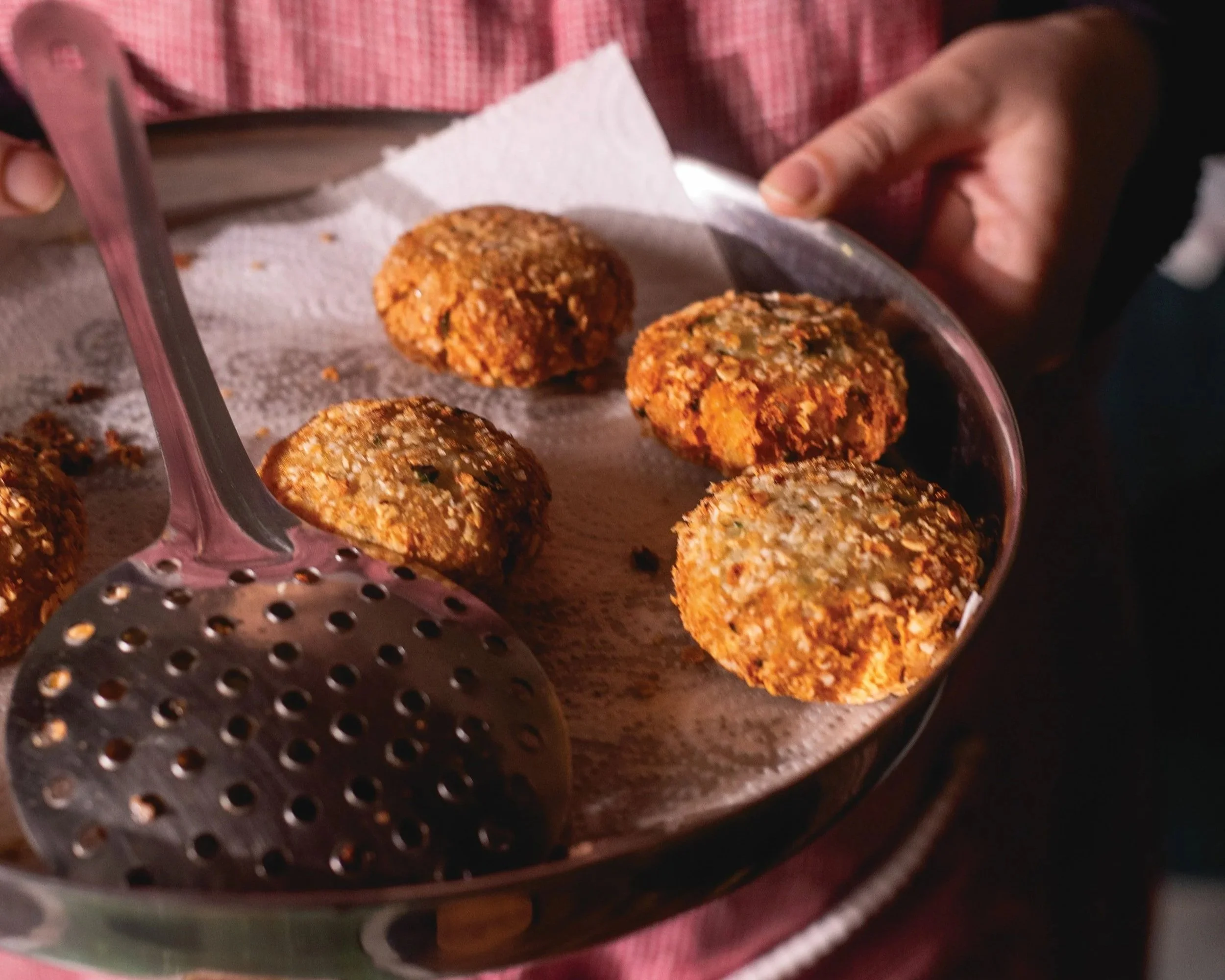
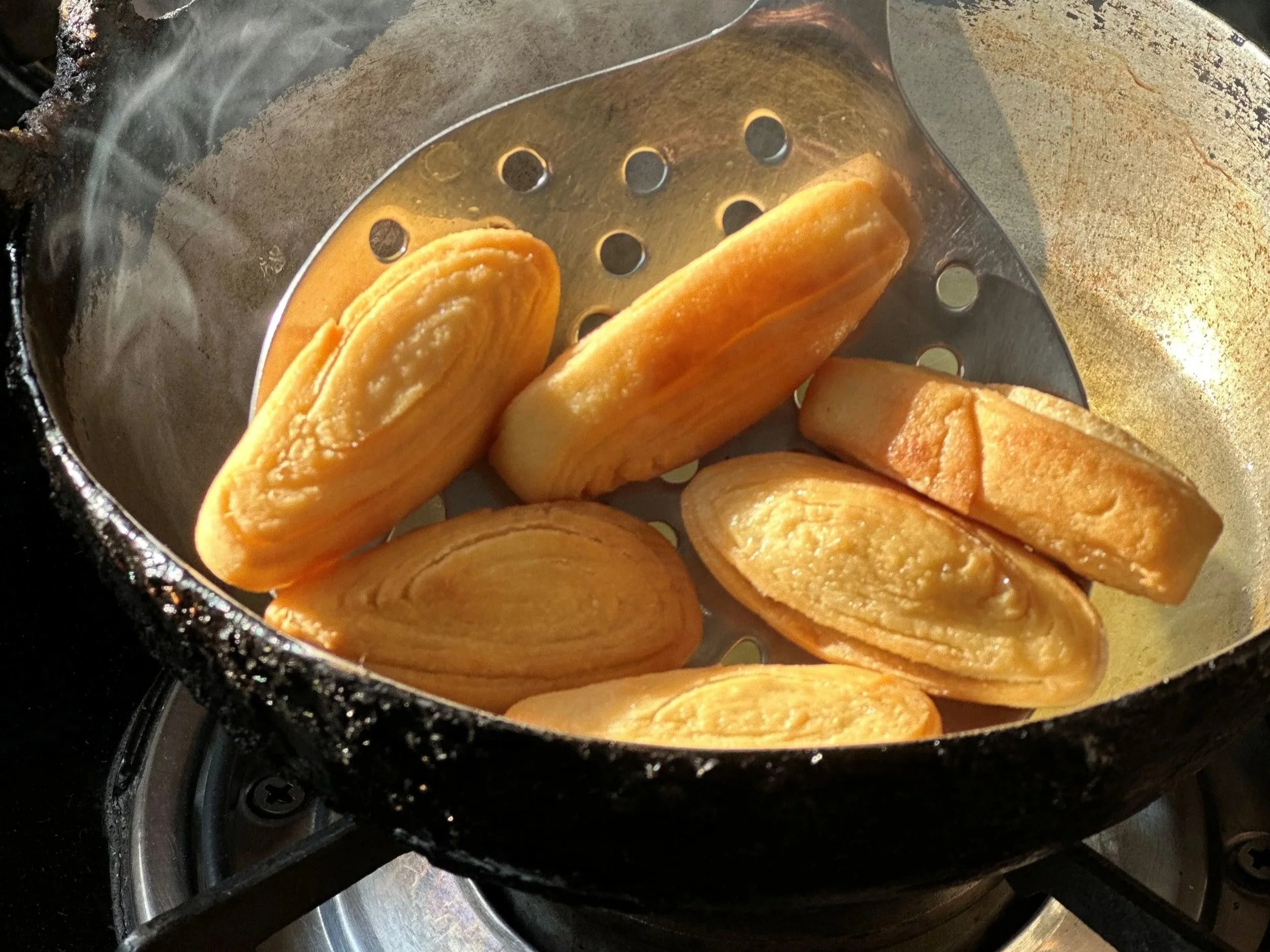
Shallow fried potato, brinjal, bell pepper.
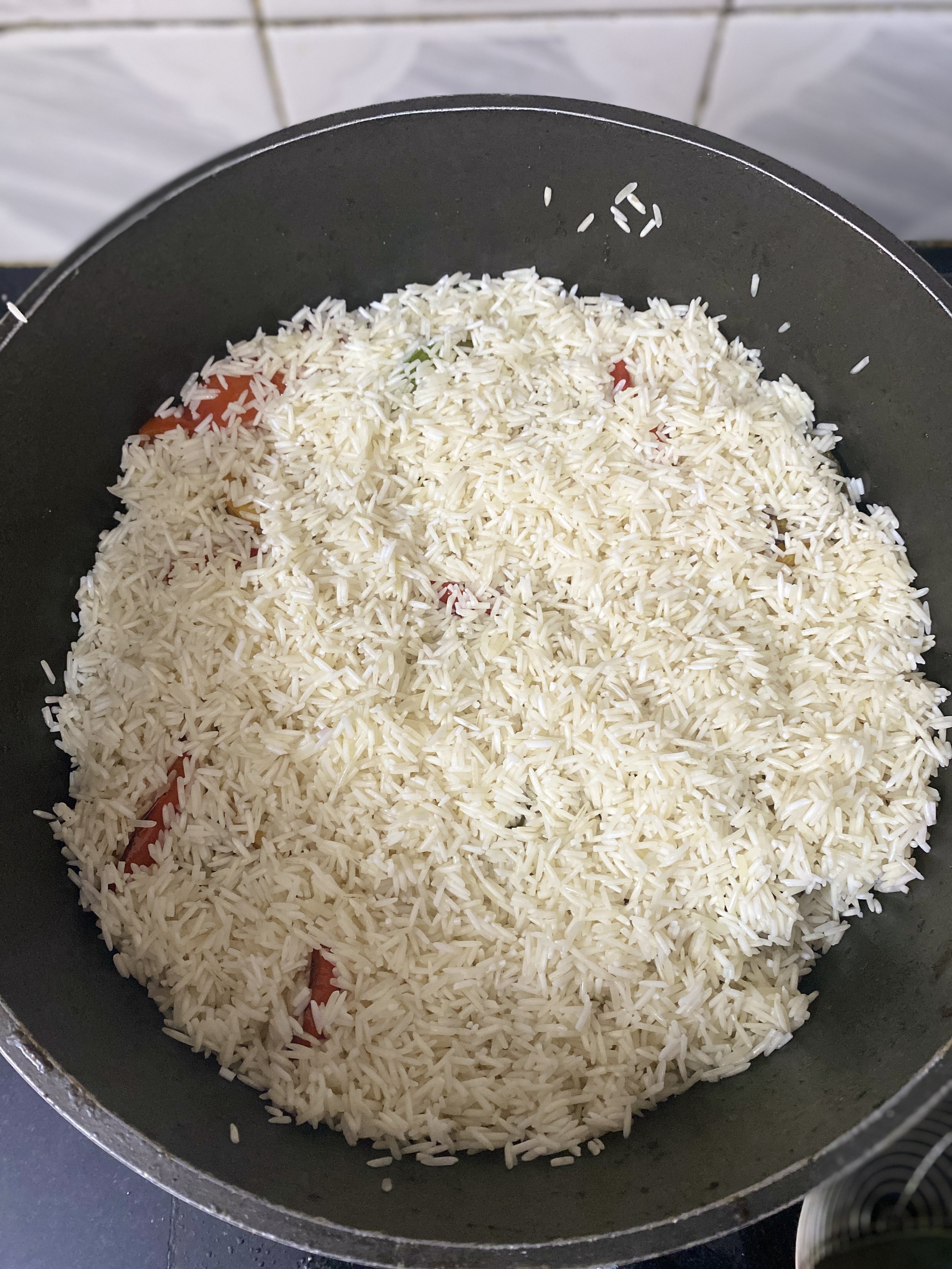
Rice layered on top of the veggies and chicken.
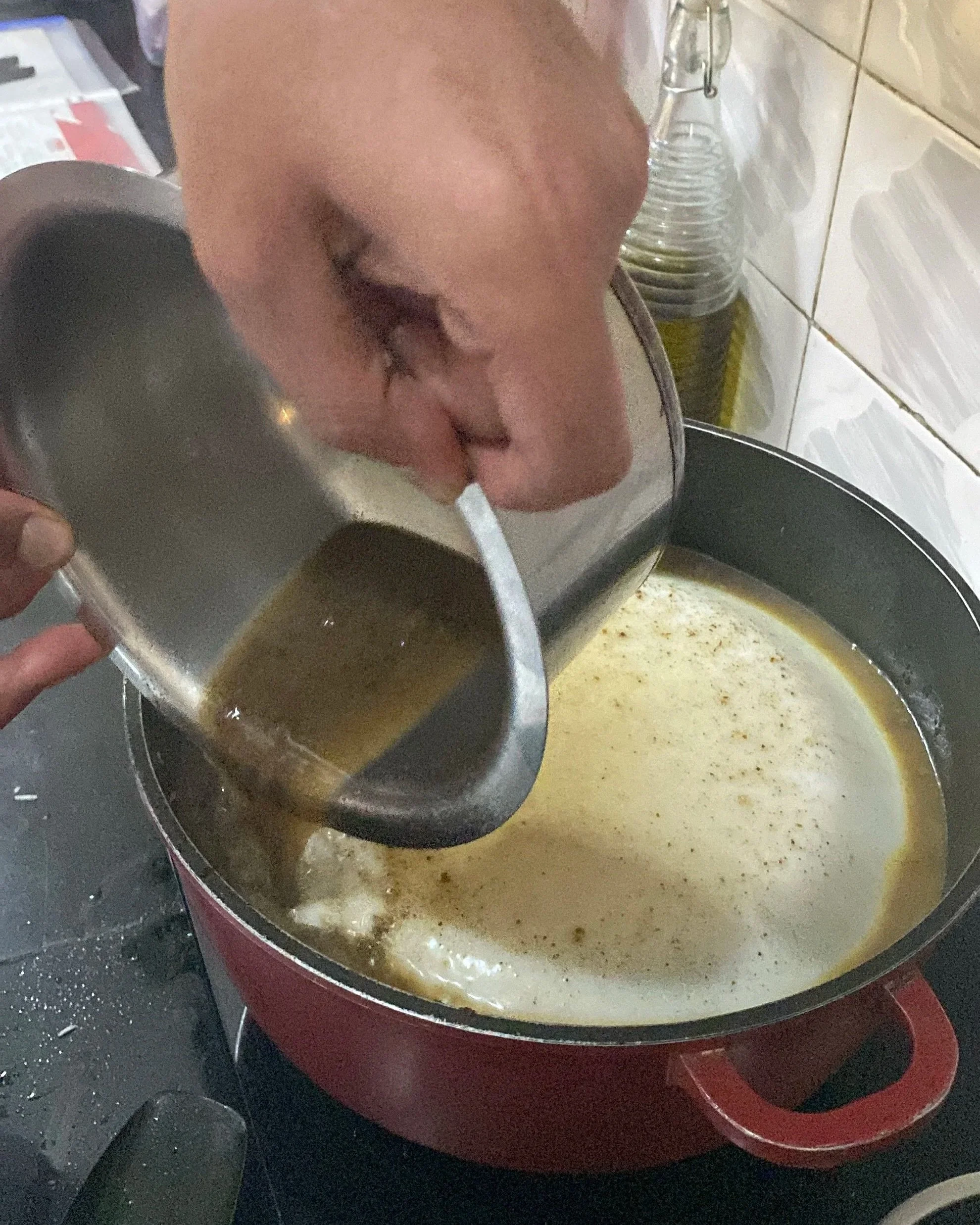
Adding gravy to the pot.
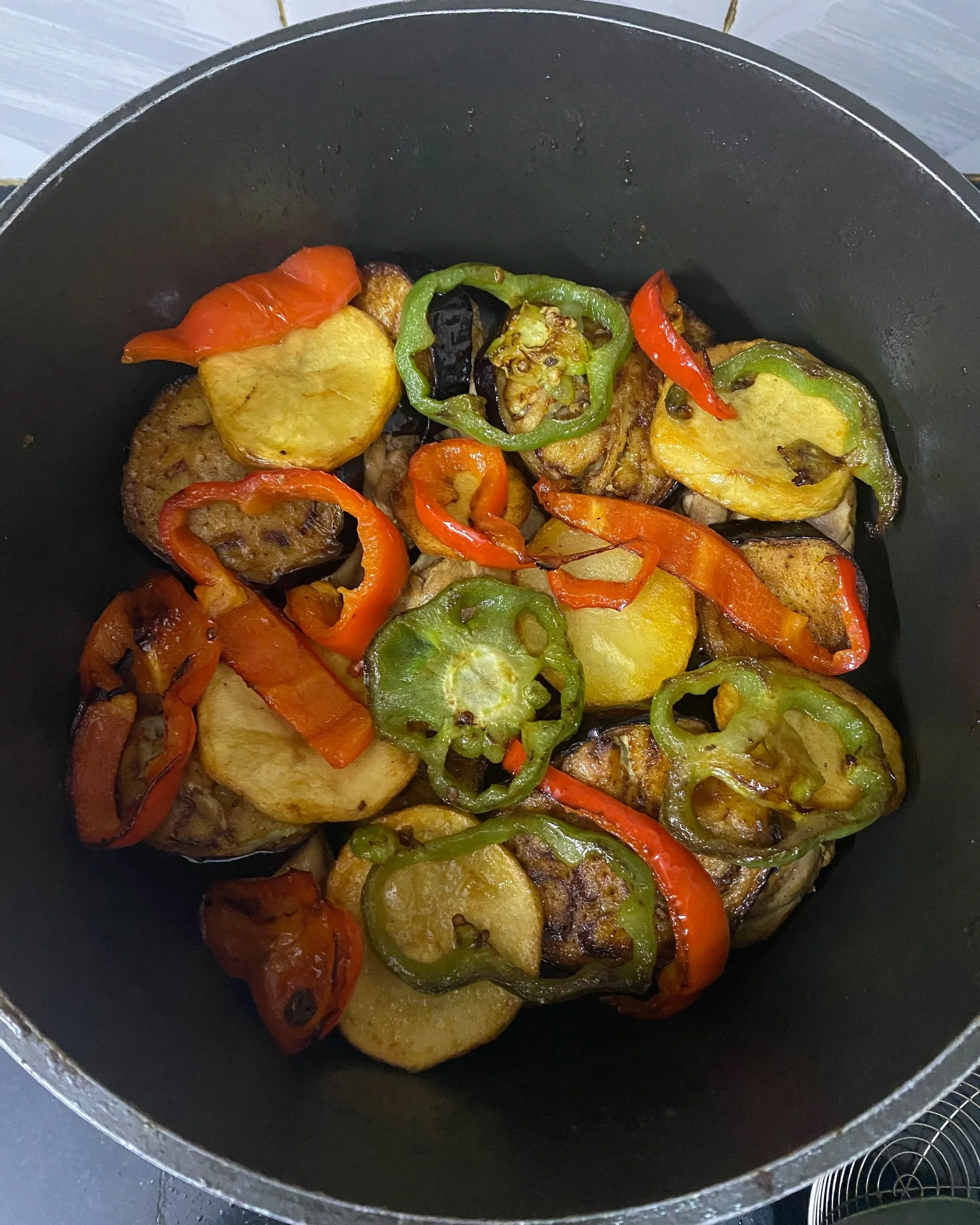
Veggies layered on top of the chicken in the pot.

Maqloubeh is served with a simple salad dressed with olive oil, sumac, dried mint and salt.
SURAIYA AL WARI’S RECIPE FOR UPSIDE DOWN
Ingredients
1 brinjal/aubergine cut into rings
2 medium potatoes peeled and cut into rings
1 green/red bell pepper cut into rings/slices
Olive oil
Middle Eastern 7 spices or baharat powder (available on Amazon, however I recommend getting it from any Gulf country where it is widely available). I got the bottle on the right from Amazon India because I am running low on my Gulf stash; it’s not quite the same.
Cinnamon powder
Nutmeg powder (optional)
Turmeric powder
Salt
Black pepper
3 cups basmati rice
6 cups chicken broth (we use a cube of Maggi chicken stock mixed in 6 cups water)
1 kg chicken drumstick and leg with bone
Method
Shallow fry brinjal in olive oil in a deep pot until browned on both sides. Remove and put on a plate. Sprinkle with salt while hot.
Shallow fry in same oil, potato rings until browned and crisp. Remove and put on same plate on top of brinjal. Sprinkle with salt while hot.
Remove oil from pot. Fry the bell pepper until browned on both sides. Remove and place on top of the brinjal and potato. Set aside.
Add a little oil back into the pot. Then roast the chicken in the pot. When it changes colour and starts to brown, add 1 teaspoon salt, 1 teaspoon cinnamon powder, 4-5 tablespoons Baharat/7 spice powder, ½ teaspoon turmeric powder, ½ teaspoon black pepper powder. Roast the chicken in the spices until cooked, alternating between medium and high flame for 10 to 15 minutes.
Then add broth. Scrape the spice mix off the chicken and the bottom of the pot with your ladle, letting it blend into the broth. Cook with the lid closed on high flame. Let it bubble for about 10 minutes.
Remove all gravy from the pot. Layer the fried and salted brinjal on top of the chicken. Then layer the potato on top of the brinjal, followed by the bell pepper. Finally, layer the washed uncooked rice on top of the chicken and vegetables.
Put a plate upside down on top of all the layers in the pot. Add the gravy that was removed earlier, back into the pot, letting it seep down into the pot around the edges of the plate. Add more water if needed, measure the gravy out so it’s exactly double the quantity of rice (6 cups gravy for 3 cups rice). The plate keeps the layers in place as the rice cooks in the gravy.
Close the lid and cook on high flame. After five minutes reduce to medium flame. When the rice is almost cooked and stops moving around, remove the plate with mittens from the pot. Cover with lid and cook till the rice is done. Do not mix, this is not biryani! The layers need to be intact. You can tell when it’s cooked when you don’t hear a bubbling sound on opening the lid. Then turn it upside down on a plate and let it sit on the plate for a few minutes, allowing the flavours to seep through the layers. Remove the pot.
Serve with everyday Palestinian salad with a simple dressing made from olive oil, dried mint, sumac and salt.
[1] Zaitoun: Recipes and Stories from the Palestinian Kitchen by Yasmin Khan.
Priya Desai started writing as a copywriter 20 years ago. She pivoted to the development sector in 2011, working on water, sanitation, literacy and public health, and lives in Bangalore.
ALSO ON GOYA