The Women Conserving Kashmir's Wild Edibles' Heritage
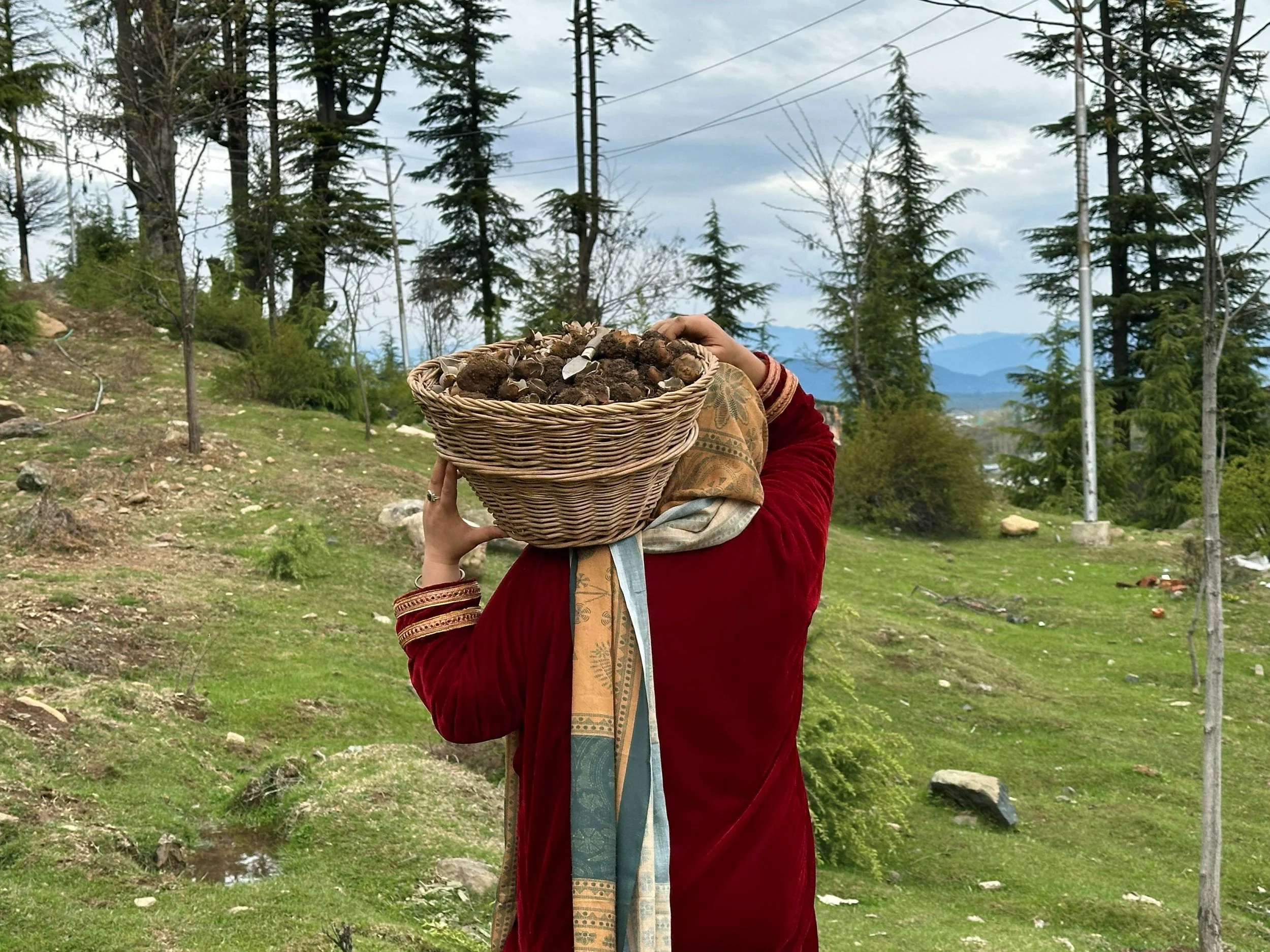
In Kashmir's Kupwara, women have been foraging for wild greens and mushrooms as a means of sustenance, through the decades. On a foraging trip with friends, Fouziya Teh finds that women remain the custodians of this knowledge despite social stigma, and changing modern habits.
My maternal and paternal grandmothers, Mukhti (Nani) and Hajra, spent their whole lives close to the Shamsbari mountain ranges in Kupwara district, Kashmir Valley. They assumed the conventional responsibilities of caring for their family, tending the land, cooking, and farming.
I grew up in Srinagar city. In summer, the family members used to bring us curd, vegetables and fruits during their visits to Srinagar for medical check-ups. Alle Kanji was my father’s favourite greens. My mother would peel away the thorny pumpkin stem and leaves while sitting at the balcony. Our neighbours were curious about those big leaves because alle kanji was alien to them.
A city might be a confluence of cultures but it is still bereft of some traditions.
It was not until February, 2020, during my visit to a market close to Muizenberg, Cape Town, that I saw people selling pumpkin leaves on the roadside. At that moment, I felt seen, even if I was thousands of miles away from home. I packed my father’s favourite alle kanji and prepared it for my peers that day.
Social media has become another confluence of cultures. Many people are documenting their food practices, which may seem different to others. Whenever I come across a food content creator from Kupwara district, while some comments reveal the ignorance of those around us, others impose a civilised palate, “People from Kupwara will eat anything”. Maybe they don’t know the blessing of being connected with the land and to the forest.
Alien Foods in Kupwara
One such alien food is sajkan, a wild mushroom that is famous in the north Kashmir districts of Baramulla and Kupwara. As spring announces its arrival in March, the forest floor is lit up with a variety of mushrooms. The community holds an indigenous belief that when lightning strikes in early spring, all the mushrooms come to life. This also marks the season of foraging. The dry winter bed in the forest and across the valley gradually becomes green. Since mushrooms are short lived, women in the rural areas of Kashmir, such as my grandmother, would hurry to the nearby forest in the village to collect them; a one time opportunity bestowed by nature.
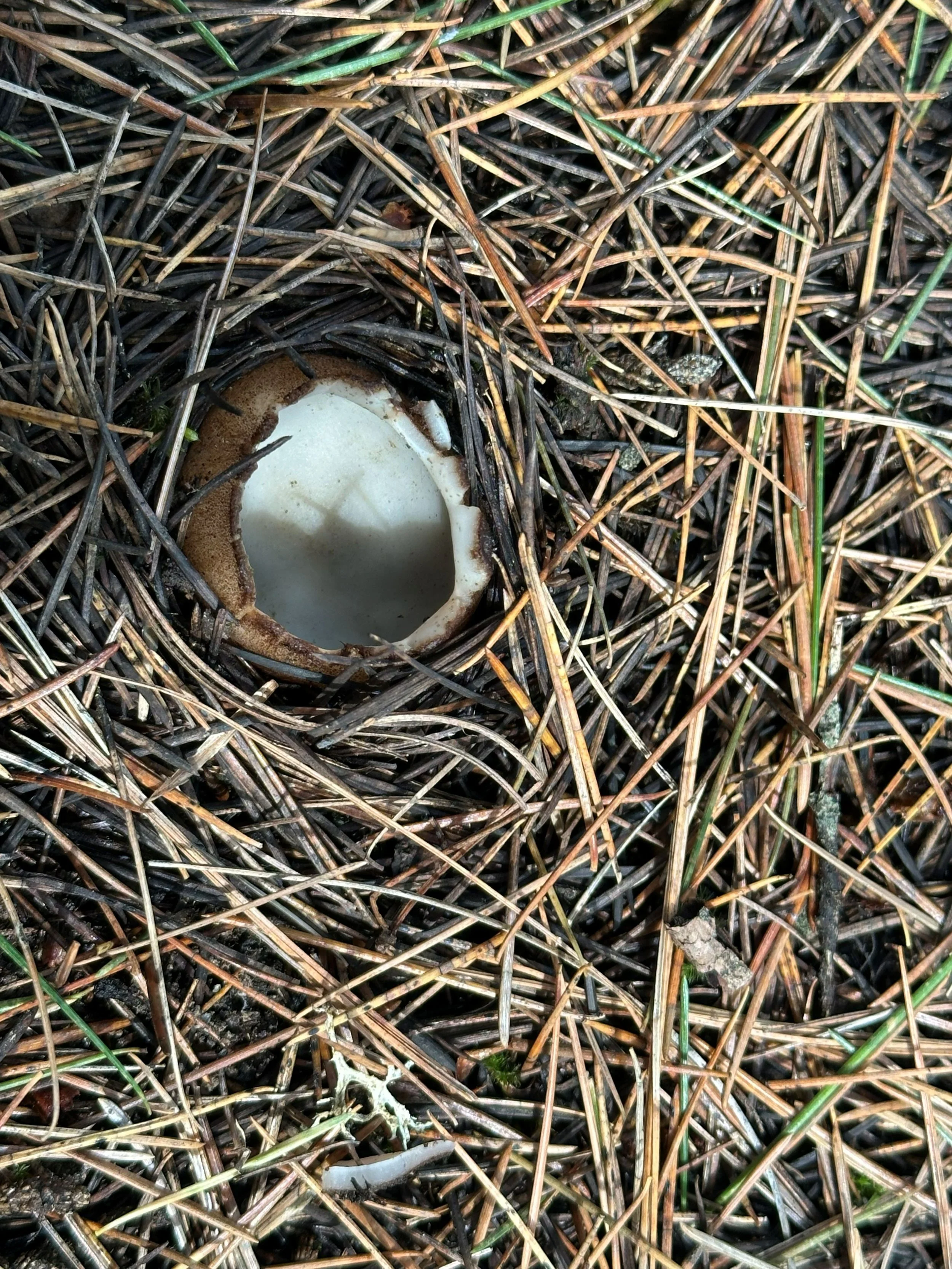
Sajkan (Geopora arenicola) is a wild edible mushroom that grows in the moist loamy soil in the forest.
After years of promising myself that I would go for mushroom foraging, I get the chance this year. My mother’s best friend, Sara Appa, invites me on a foraging trip to Tarathpora forest. Before leaving, my mother gives me a huge green tub and knives to collect sajkan.
Sajkan (Geopora arenicola) is a wild edible mushroom that grows in the moist loamy soil in the forest, mostly at the root of pine trees. The name ‘kan’ refers to ears in Kashmiri. Sajkan opens like ears in a forest. The way I understand it is that when the harsh winter ends and women throng the forest in spring, sajkan opens its ears to listen to their winter woes, their moments of joys and echoes, and their dreams. It’s a spring invitation from a wild witness waiting to listen.
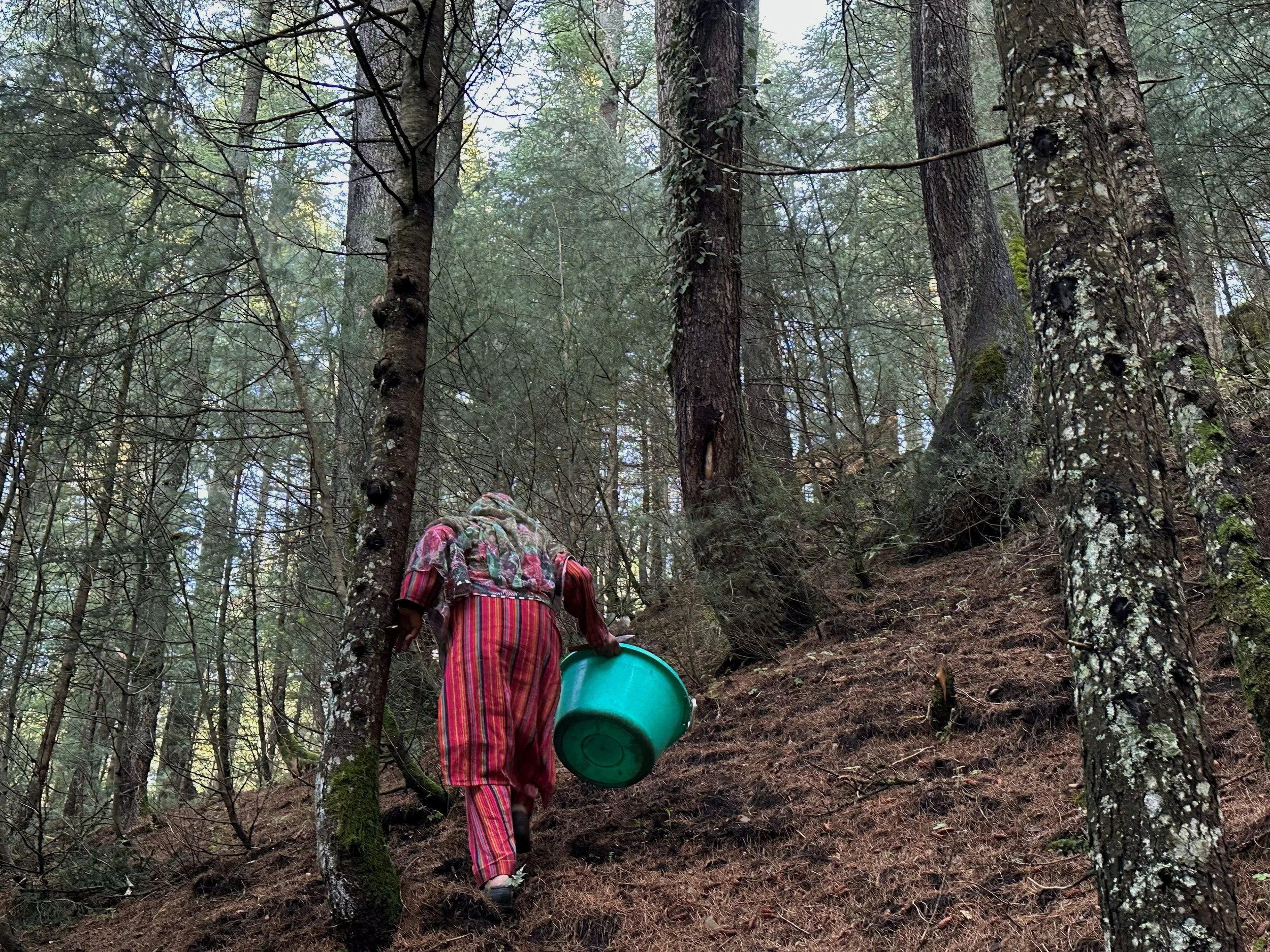
Sara Begum or Sara appa, the author’s mother’s childhood friend collects mushrooms for personal use in Tarathpora Forest, Kupwara.
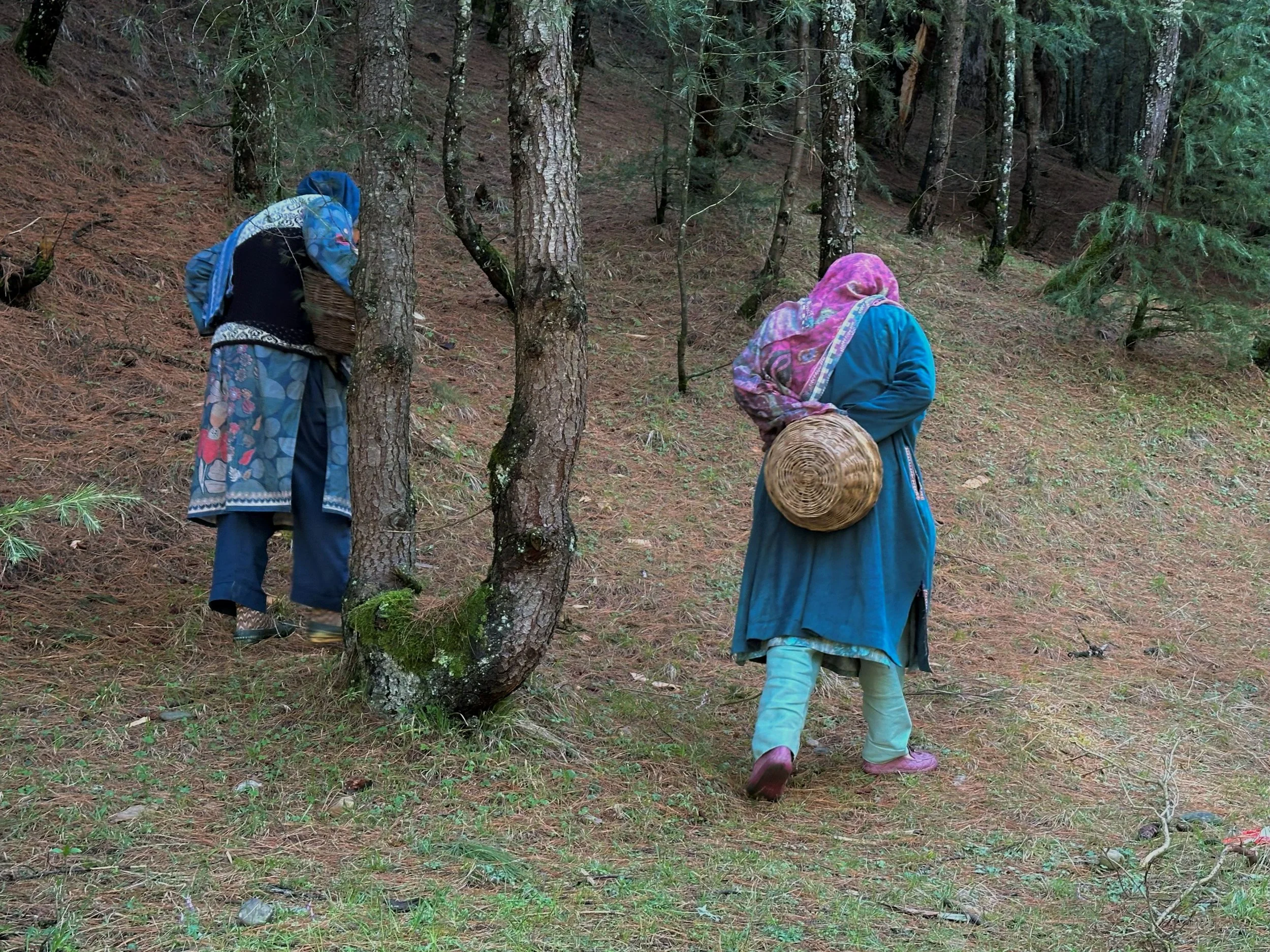
Sara appa is joined by her two friends. Due to the military presence, women prefer to go foraging in groups for rather than solo.
I pick up Sara Appa and her two neighbours. One of them says, “The military will be in the forest. Anyway, they won’t do anything. They do their job and we will do ours”. Due to the military presence, women prefer to go foraging in groups rather than solo.
Sara appa takes my green tub while I carry a smaller willow basket. Despite its abundance in the forest, sajkan becomes visible when it has to. I might miss it while others in the group might notice a bunch of it at the same spot. It chooses to bless whom it wants.
For vast stretches we cannot find any.
I think of my maternal grandmother, my Nani, and her willow wicker basket. Along with other women in the neighbourhood she would forage wild greens such as handh (dandelion greens), nunar (purslane), lessi (amaranth), soutchal (mallow), abej (common sorrel), and jangli praan (wild garlic). It was a time when vegetable plants were still young, so they would look for wild greens and sajkan.
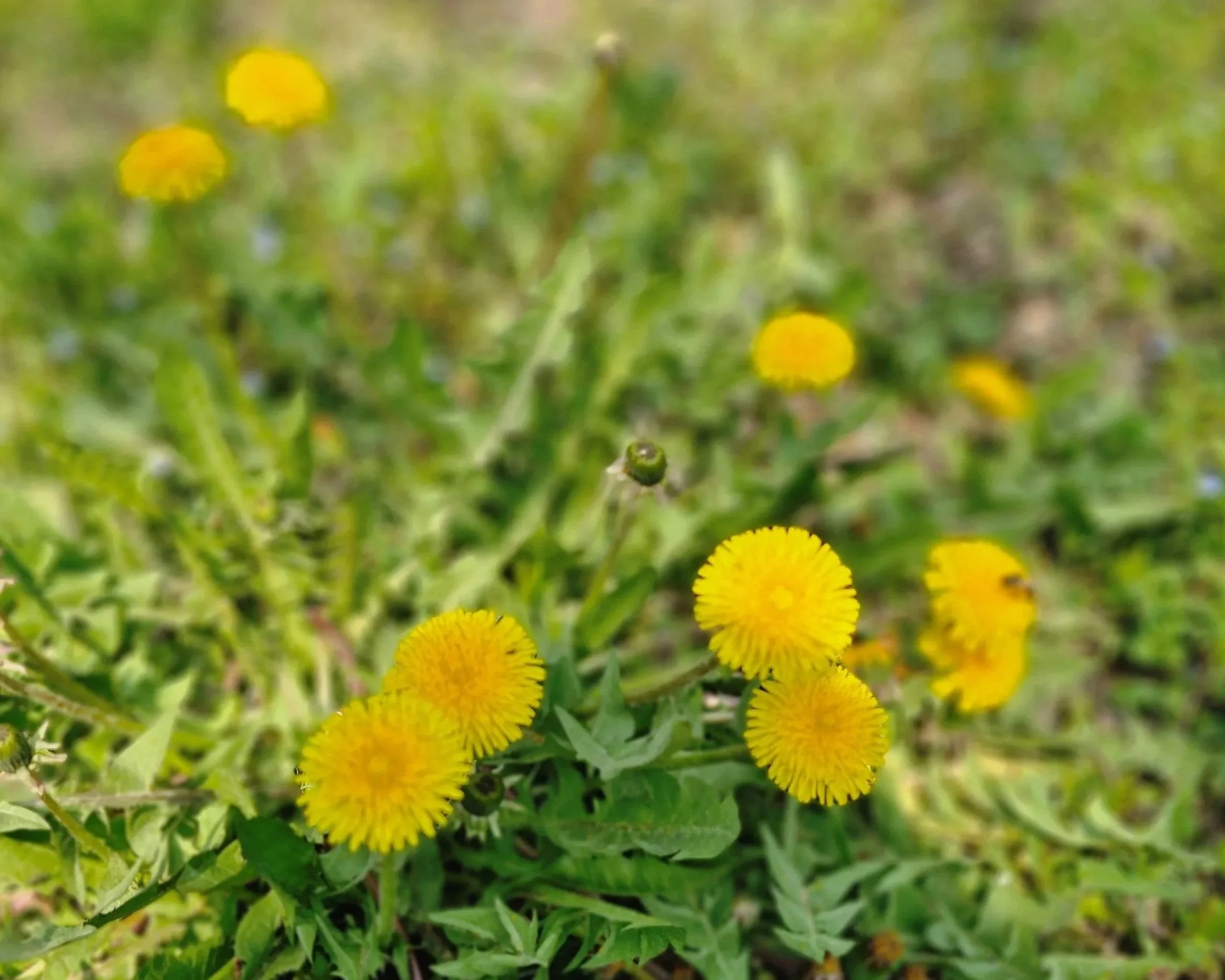
Dandelion. Credit Hirra Azmat
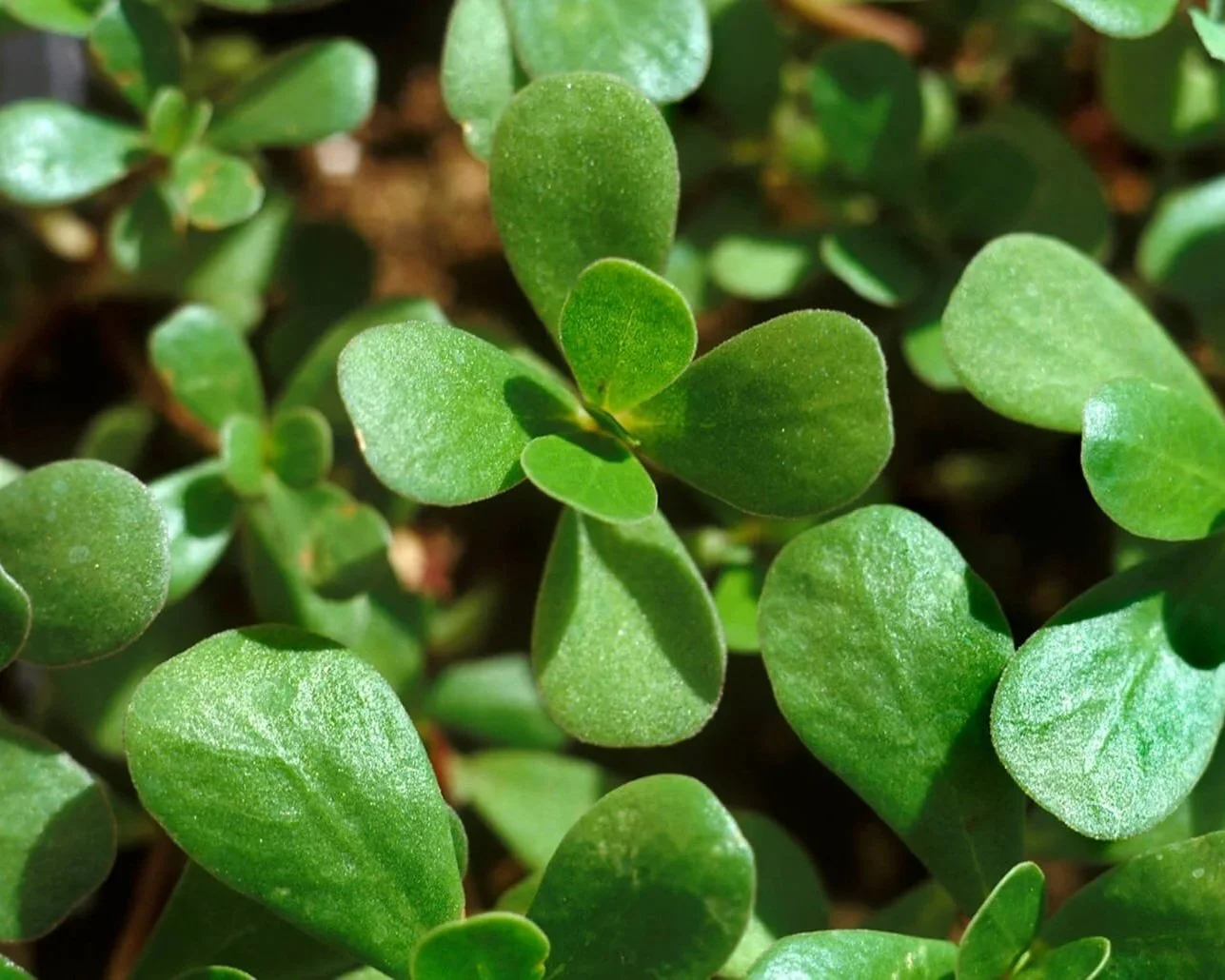
Purslane (Stock image)
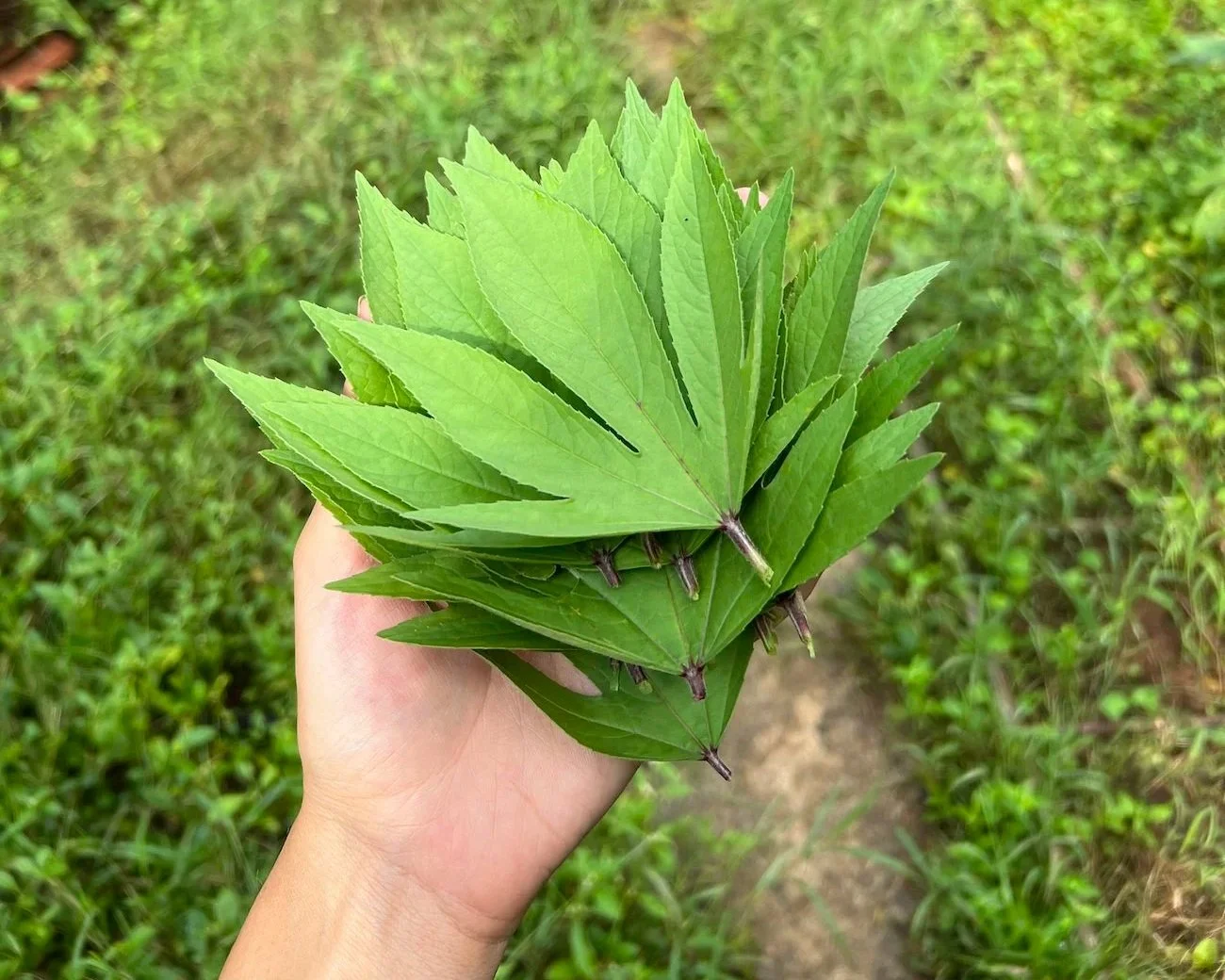
Sorrel. Credit Simran Moorjani
Foraged Food on The Plate
There is no textbook guide on how to prepare these recipes.
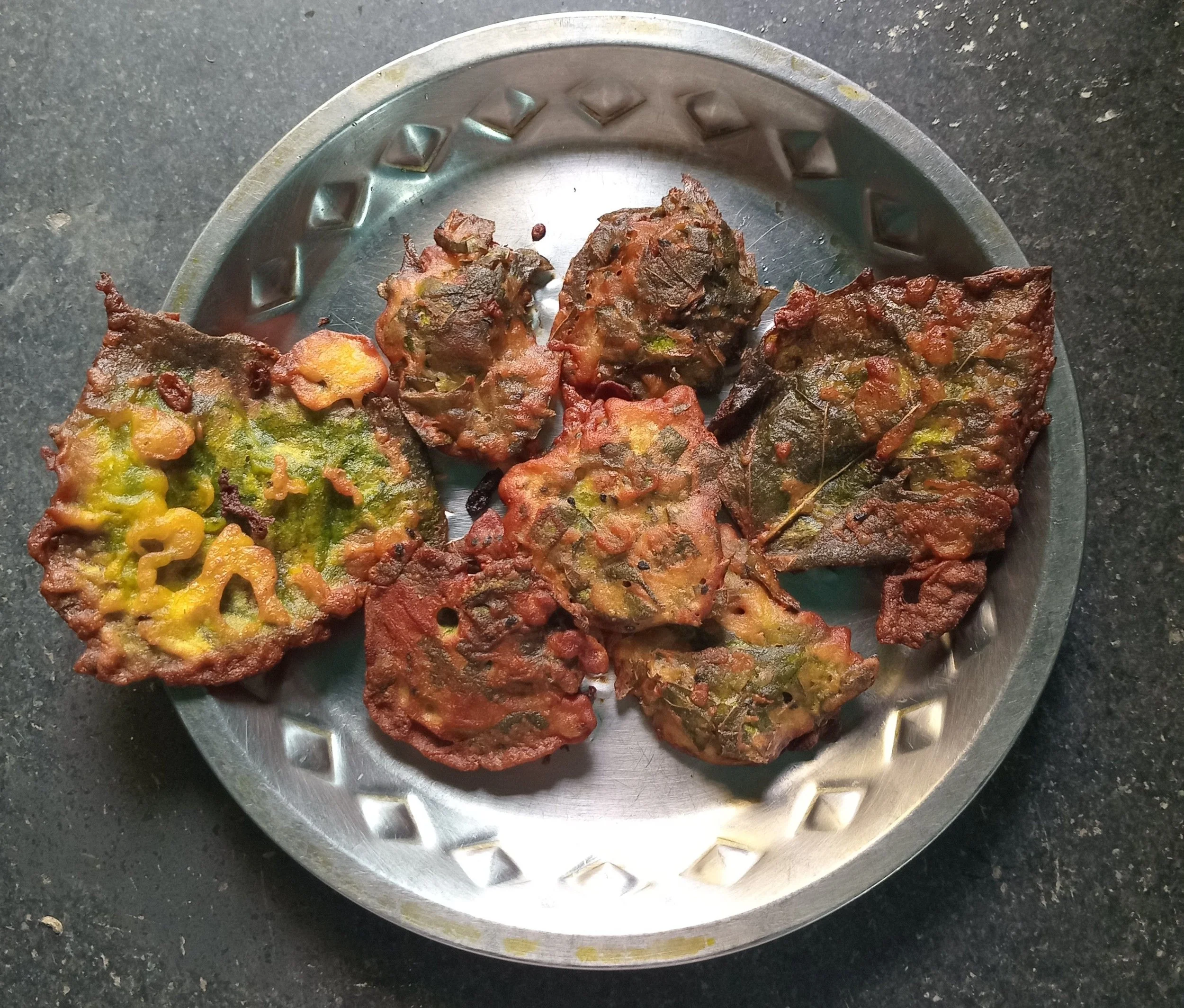
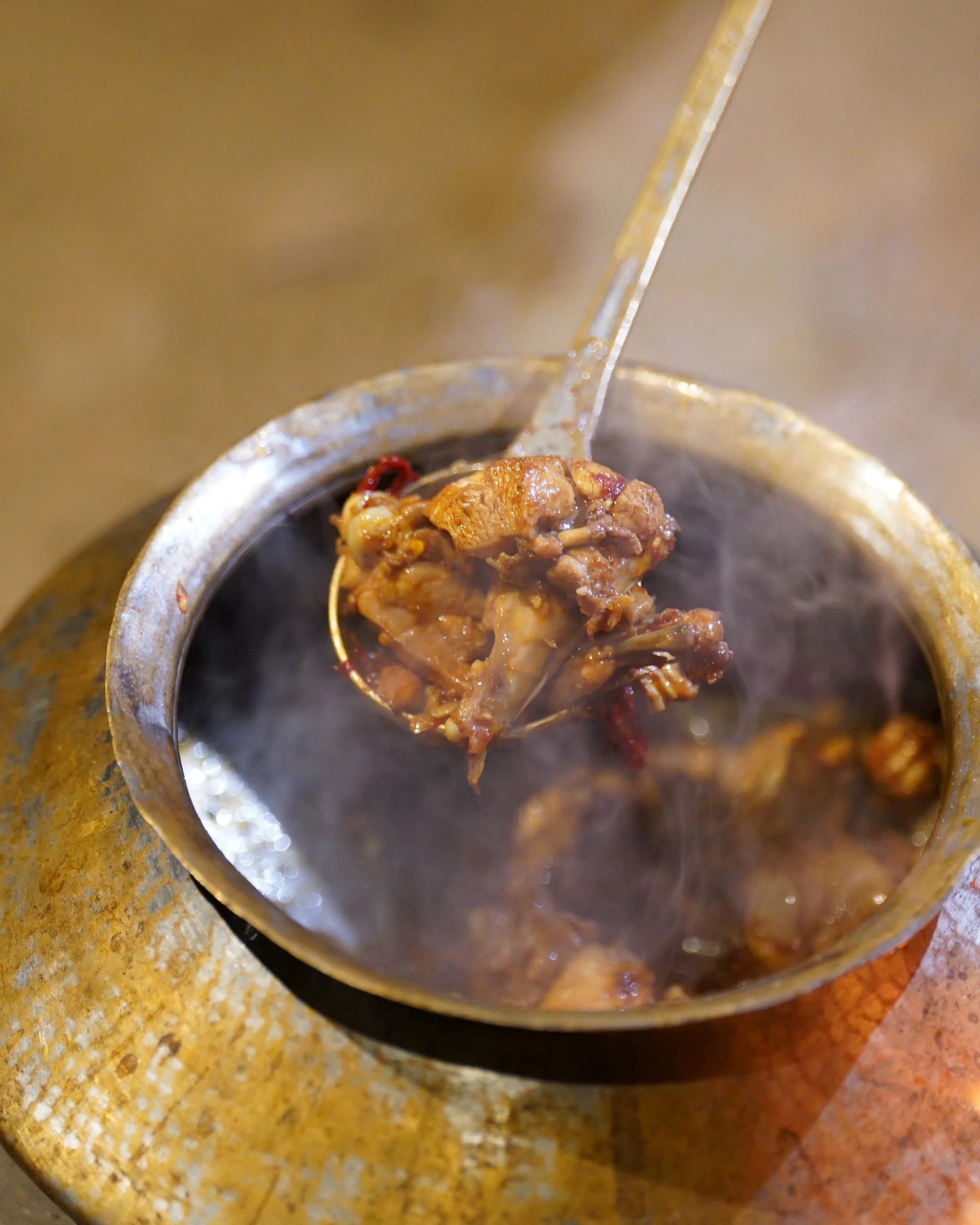
Handh’e Kokur, a dry dandelion infused chicken curry is famous in Kashmir, and prepared for lactating mothers. It is accompanied by a mix of lessi and nunar as a side dish. Soutchal has multiple variations in each family, some prepare it with brinjal and some with egg. My mother prefers to pressure cook sajkan. I like the tangy sautéed Abej in my omelette.
My mother recalls that only my grandma knew the exact location of where the mushrooms bloomed in our apple orchard.
Firdous Lone, independent researcher and the founder of Historeel, tells me that women from Gujjar Bakarwal community, Pahari women, Kashmiri women, women from Shina community in Gurez valley living near the forest have knowledge about the wild forest produce. “This knowledge is passed down through folk songs and folk tales. The famous poem of Habba Khatoon ‘Walo Myeni Posh’e Madno’ (Return, O My Flowery Beloved) talks about going to forest, and foraging dandelion, jasmine and basil. It’s been 400-450 years since Habba Khatoon died and the knowledge still exists”, said Firdous.
No Shame in the Forest
By afternoon, I am tired. Sara appa has filled my tub with sajkan but has joined another caravan of women to go deeper into the forest. I am amazed by the passion of those women. In that wilderness, were women of all age groups, tending their inner wild child while taking a break from household duties.
A couple of days later, my relative Shaziya urges me to forage for sajkan again. Her in-laws disapprove of her going to the forest to collect mushrooms. “They all enjoy eating it. They devour it. There’s no shame in eating but there’s shame in going to the forest”, she says, visibly angry. This shame stems from the privilege of one who is, and isn’t allowed to forage wild edibles. “In our family, they care more about what society will say, and why their daughter-in-law goes foraging when they can afford to buy food,” she says.
The same story is true for a lot of women but there are the ones who are resisting the memetic desire to fit into modernity irrespective of their socio-economic background, much like some individuals in big cities who take more effort to purchase from their roadside vendor or weekly markets than ordering online.
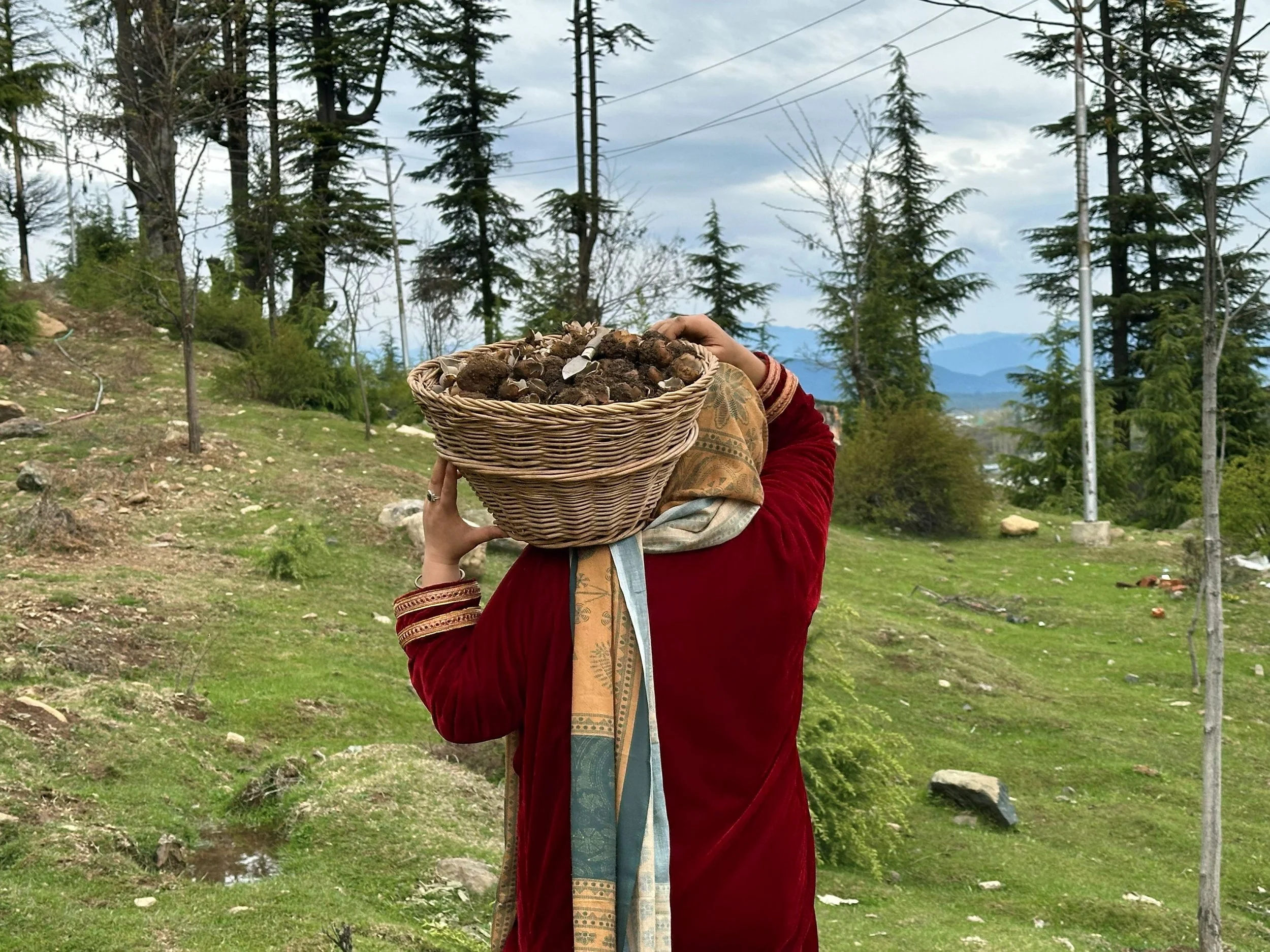
The author’s cousin, Shaziya, with her foraged sajkan.
We pack our baskets and knives and go to the Chowkibal forest near her home — just us two. “As a child I used to dream about collecting sajkan whenever I went to the forest with my mother. This is knowledge we should pass down to our children.”
From Family to Market
A couple of years ago, this collective mushroom harvest was only to feed the family. Now, there is a shift, and women are gathering the wild forest edibles and edible greens for commercial purposes. They travel from their villages to Srinagar city to sell them. Sajkan sells at ₹200 rupees per kilo, but it deserves more because it is labour intensive work.
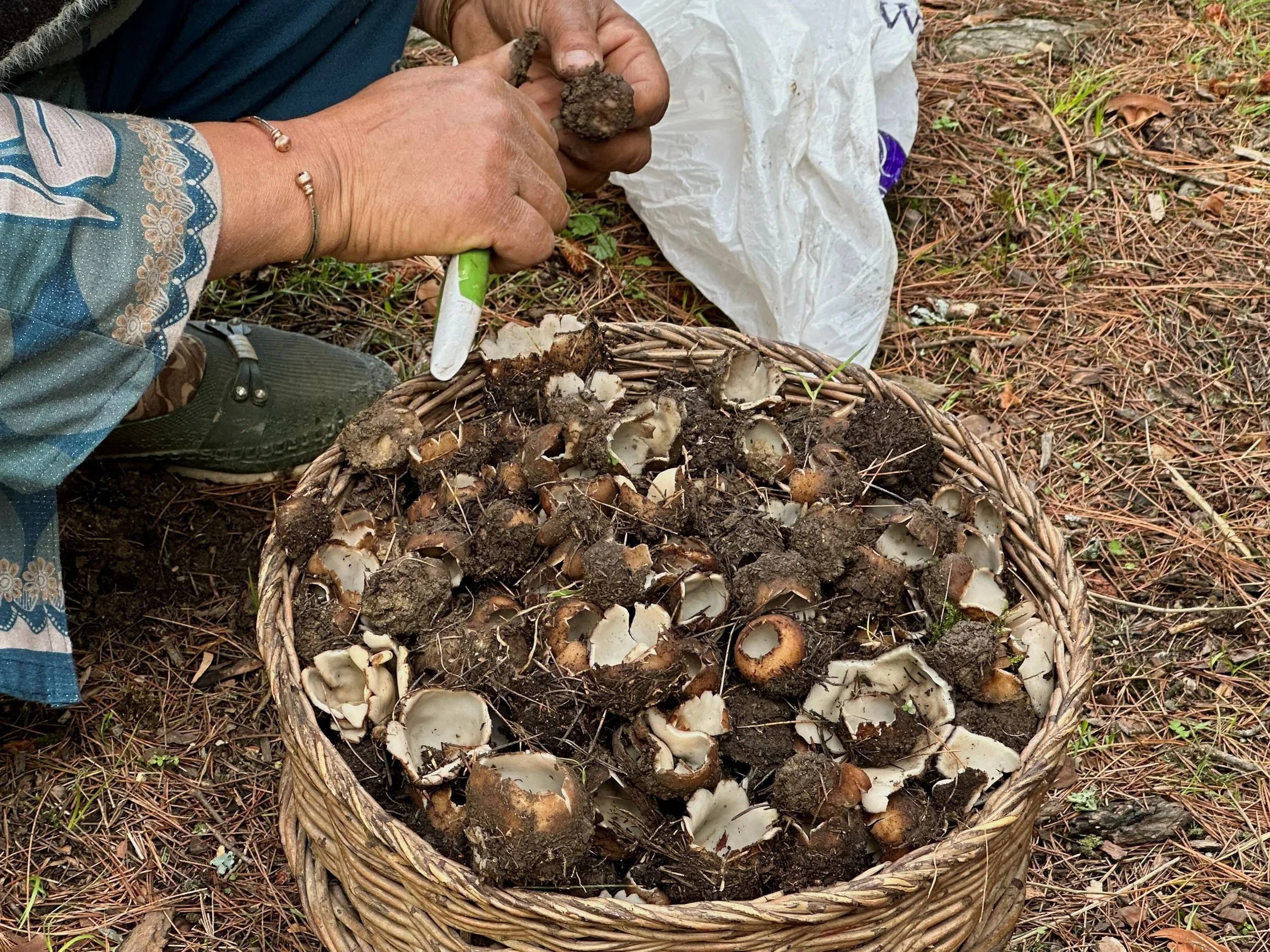
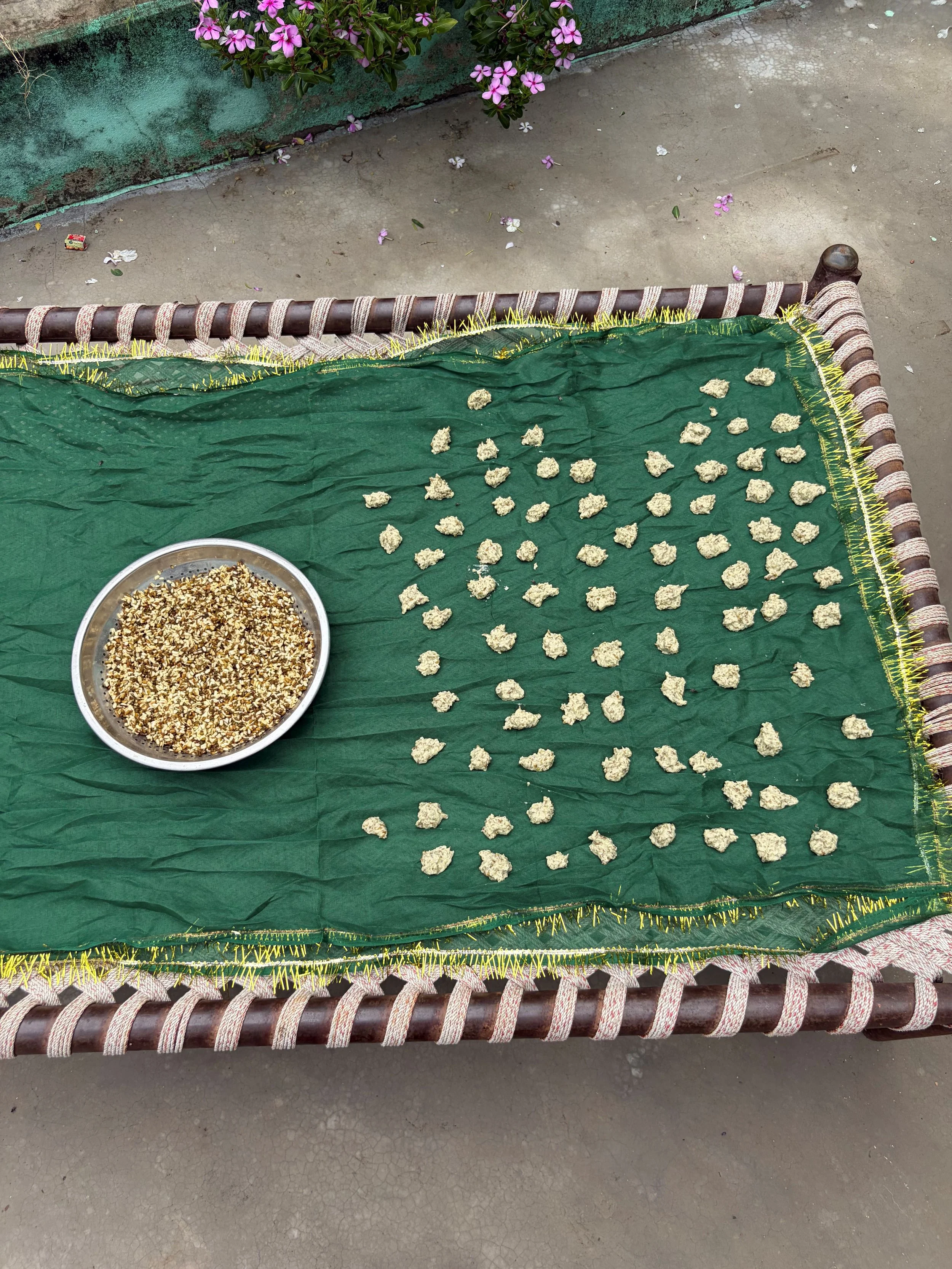
Women sit and scrape the mud and pine leaves from the collected mushrooms.
The wild edibles are not alternate foods, but part of our food heritage. “These wild edibles had become a source of food security for those living near forests when the drought-like conditions caused by less rains was prevalent during Afghan and Sikh rule in Kashmir. While those living in plains were struggling to find food”, said Firdous.
Foraging becomes a passion once you begin it. Markets may have brought everything close to us, but forging a connection with land is our responsibility.
Next year, I dream of taking all the children in the family to collect sajkan and other wild edibles.
Fouziya Tehzeeb is a freelance writer and narrative practitioner based in Kashmir Valley. She is part of Youth for Himalaya and other youth climate groups.
Images credit: Fouziya Tehzeeb
ALSO ON GOYA