Not an Inherited Feast: The Modest Archives of my Mother's Kitchen
Sonali Verma grew up thinking her food history was unremarkable as there were no elaborate preparations that made family stories, and no recipes carefully passed down through generations. In this essay, she examines what we leave out when we call only some food heritage, and how we might count the rest without turning it into a story of resilience or lack or 'elevating’ products of constraint.
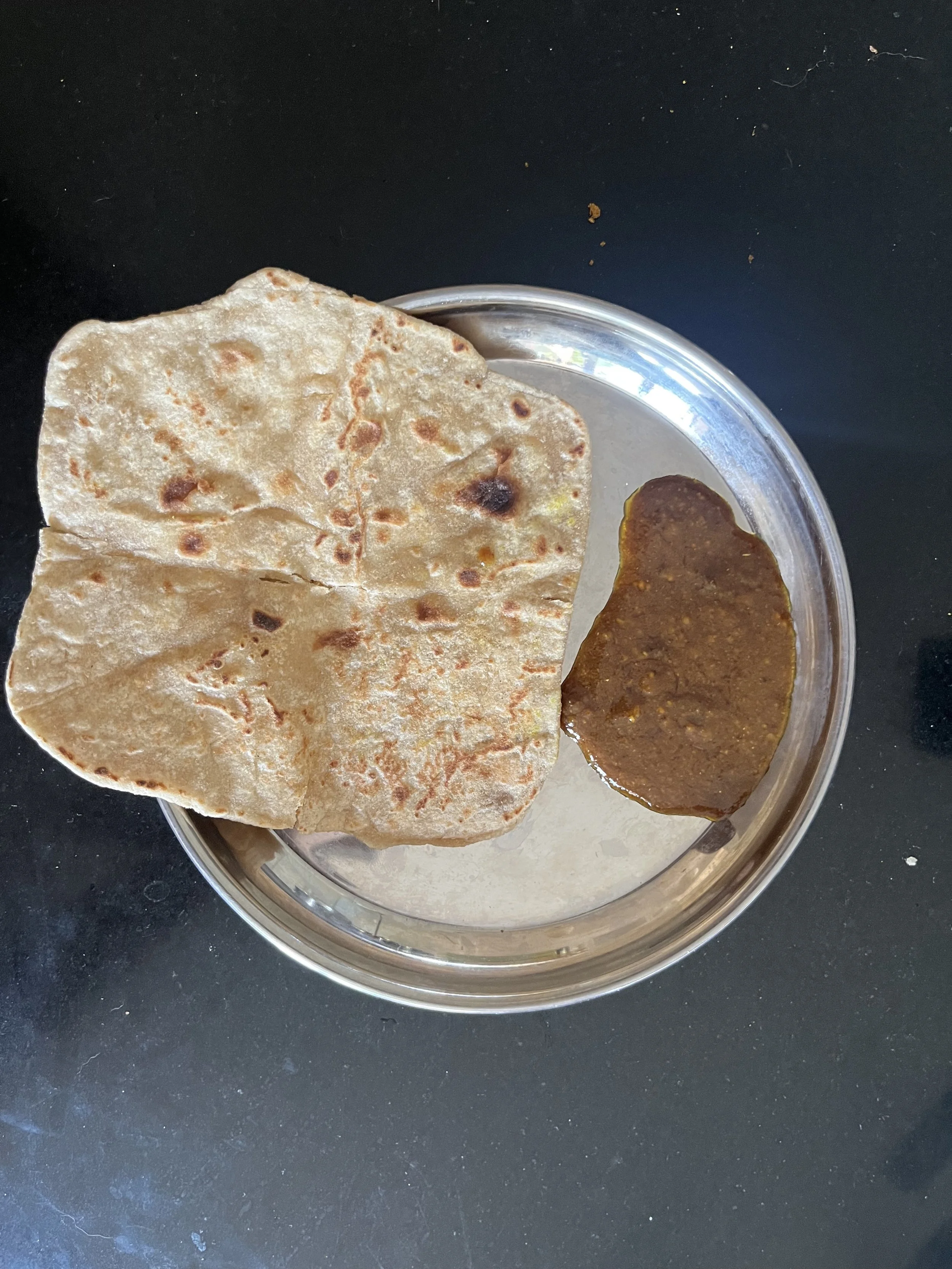
Growing up, my mother had a few go-to meals for after a day’s work. Lunch was usually curd rice or lemon rice or khichdi. Chapatis we couldn’t finish on the day turned into a bread poha or were fried as a snack. The Maggi masala I found too spicy and couldn’t finish with my noodles would be used as a makeshift chutney for parathas. These were quick and practical meals, made in a household of two, where time and resources were limited.
Roti with Maggi masala chutney.
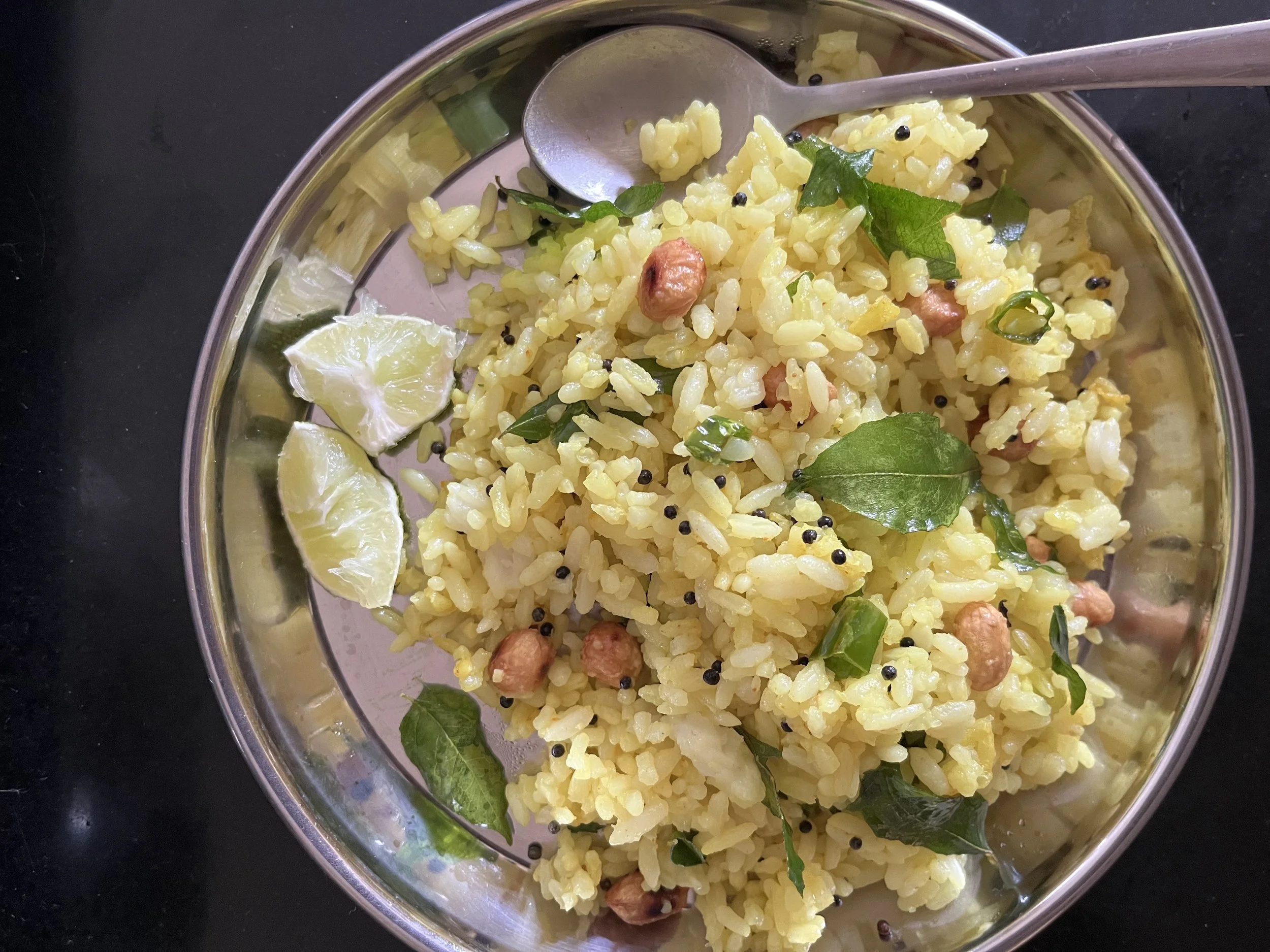
Lemon rice from the author’s kitchen.
My mother learnt to cook through improvisation, through recipes borrowed from her friends, and through those she saw in women’s magazines. She kept some of them in a small, neatly handwritten journal. It is a modest record of how she fed us, drawing from whatever she could get her hands on, rather than from a singular family lineage.
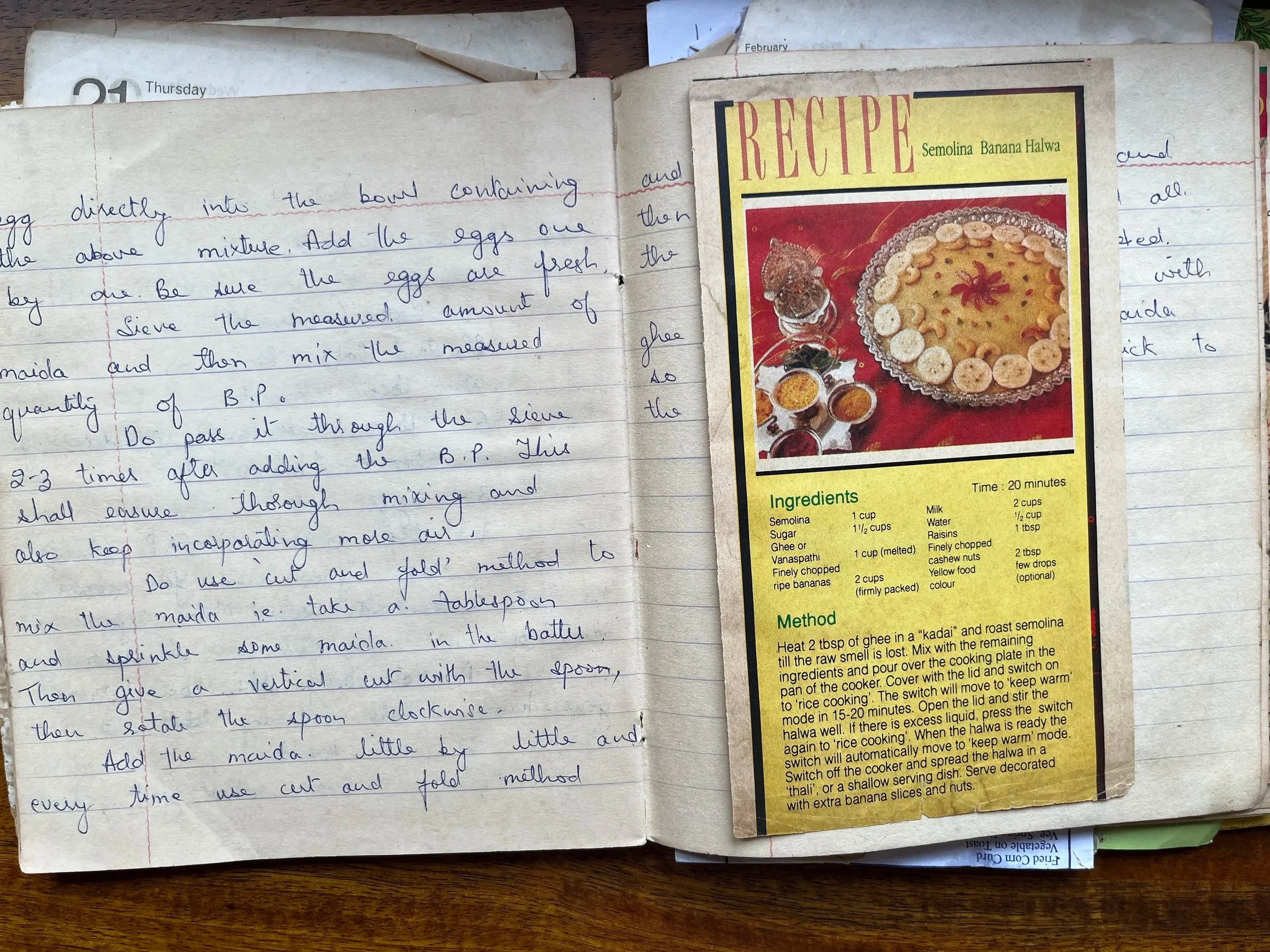
The author’s mother kept a diary of all her recipes.
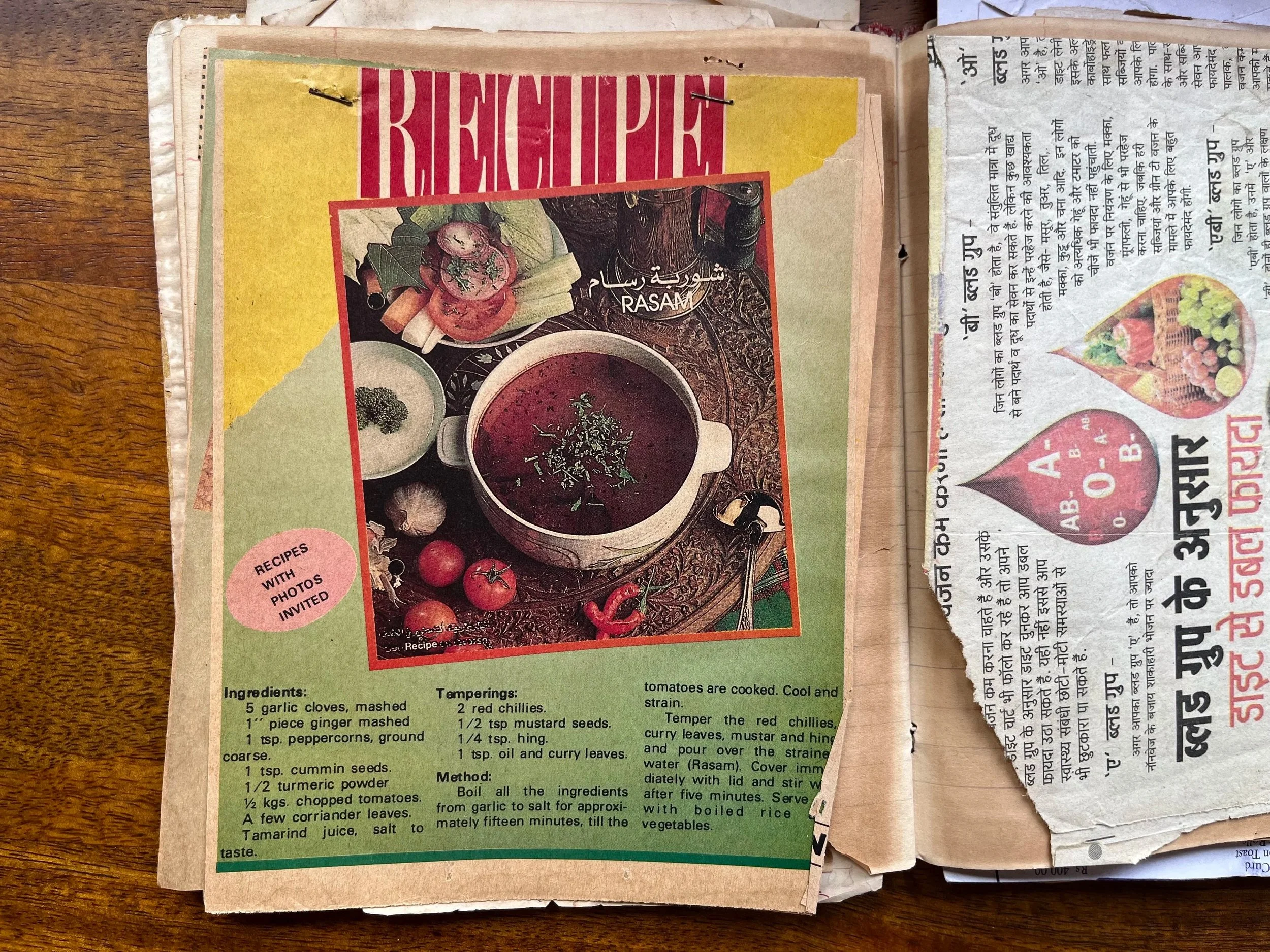
Some were cut and pasted from magazines of the time.
Perhaps it is because of this that I grew up thinking our food history was unremarkable. There were no elaborate preparations that made family stories, and no recipes carefully passed down through generations. Food was not something we discussed as culture or heritage. Lately, I have wondered whether I have come to associate unremarkable food and the absence of a particular kind of food memory for an absence of inheritance altogether.
This essay is an attempt to ask why my mother’s cooking, made with care and invention, wasn’t something we thought of or spoke of as heritage, and what we leave out when we call only some food heritage. I also wonder how we might count the rest without turning it into a story of resilience or lack or 'elevating’ products of constraint.
Krishnendu Ray, professor of food studies at New York University, questions the picture against which ‘unremarkable food’ is measured. “So much of the attention to this kind of cooking, especially on social media, is performative,” he says. “We edit out the realm of necessity, as if everyone lives in an abundant world, of material and of time.” What he calls the taste of necessity is the work of “making something out of highly confined circumstances”.
The performance of good taste, Ray argues, assumes an abundance of time, ingredients, and infrastructure such as space, water, energy and waste disposal. Convenience, by contrast, is often a response to their absence. “Convenience is about time. If commutes are difficult, what you’re always trying to conserve is time,” he says. “Single-pot meals and industrial food like Maggi allow that quick fix under time poverty. That’s linked to class, and class isn’t only about money. The poor and the lower-middle class are also time-poor.”
My mother was always short of time. She taught, cooked, looked after me, and ran the house. “I wanted to spend no more than 30 minutes in the kitchen in a day”, she told me. Her “confined circumstances”, as Ray put it earlier, also released her from the pressures that come with cooking for a large or patriarchal family, and she was free to play around with food the way she wanted.
Cooking knowledge in a changing domestic life
My mother’s cooking was not an anomaly, I realise, after speaking to others about the food they grew up eating. Many were children of single mothers or working parents. They recall eating practical, basic meals: roti with ghee and sugar, leftover roti crumbled into a kachumber with curd and sugar, imli rice, hakka noodles with capsicum and heaps of ketchup, and a sausage macaroni served as a quick treat for a child.
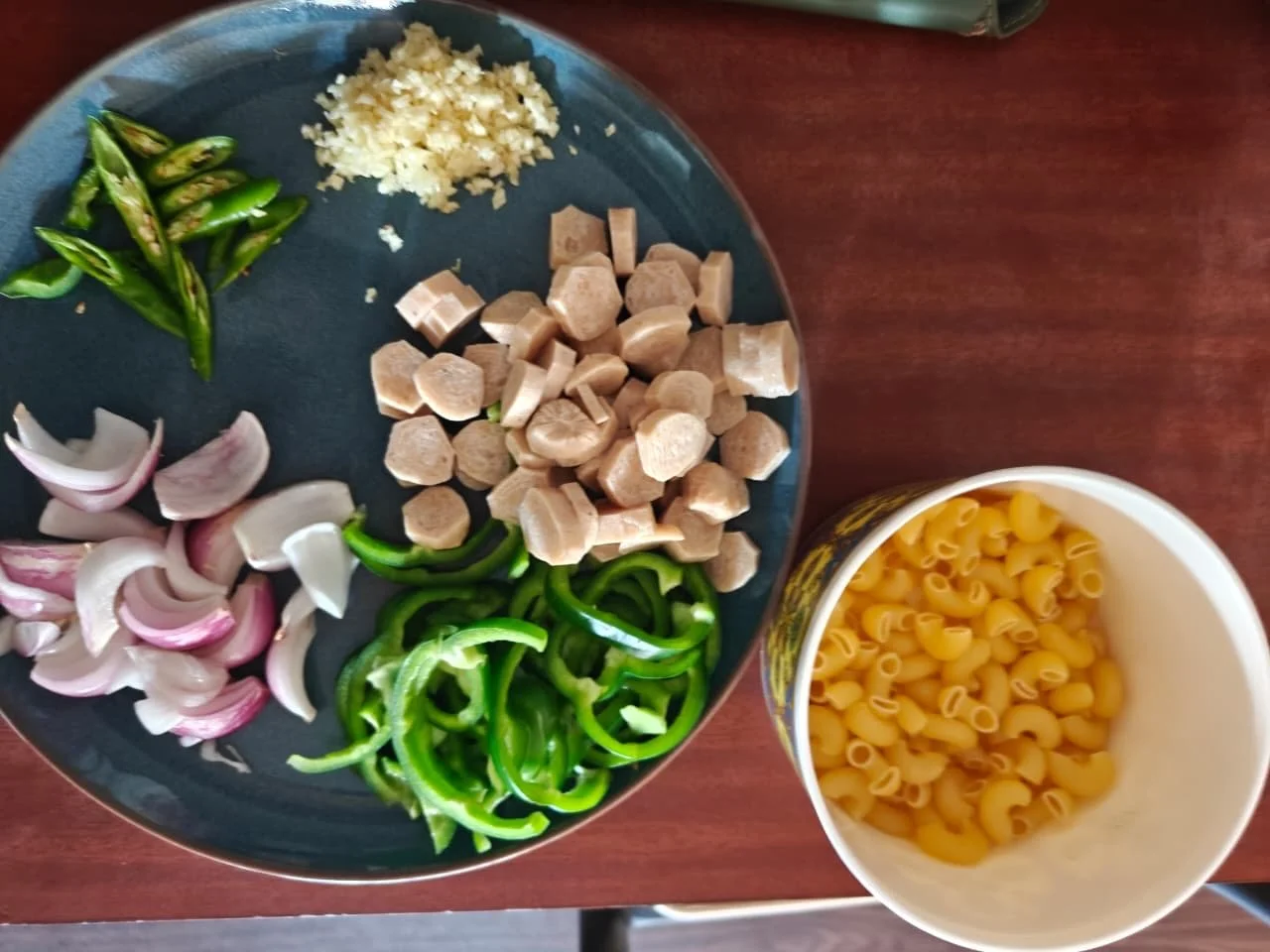
The author’s friends, who had working parents, recall eating practical, basic meals like sausage macaroni.
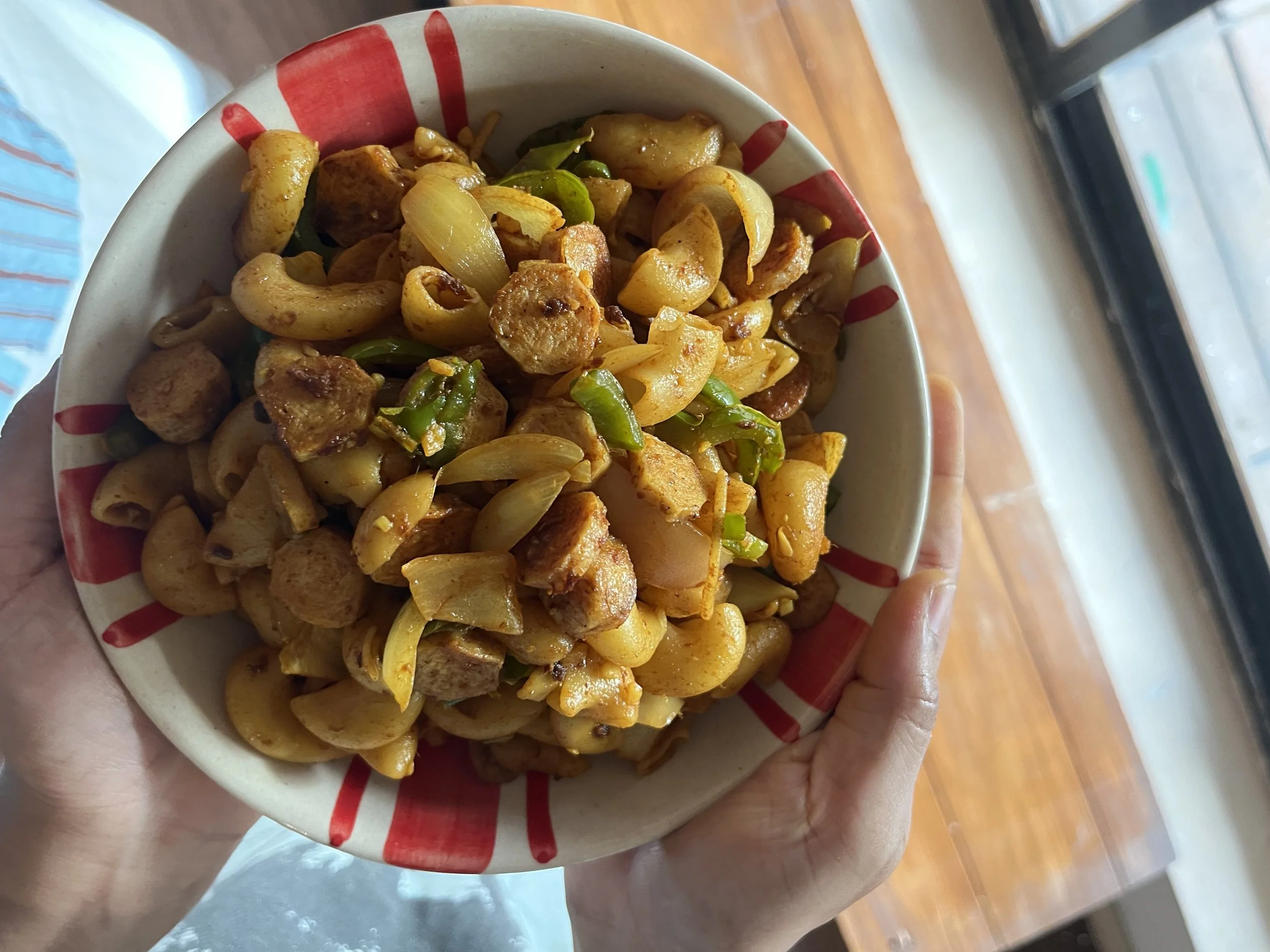
Devika Gowri’s sausage macaroni.
Devika Gowri, a food anthropologist who runs Alt Food Co, a community kitchen in Goa, sees these meals against the changing conditions of domestic life in India. The informal transmission of cooking knowledge that is often more glorified — learning by watching and being told — is becoming harder to sustain, they suggest, as women who traditionally did much of the cooking and teaching are now spending more time doing both paid work and unpaid housework.
Additionally, some cooking knowledge that would previously have happened through practice is now happening through a packet. Garam masala in both our houses came from an MDH/Everest packet; homemade paneer was not a given. As Gowri pointed out, when a parent works outside the home, there is often no one with the time to make paneer from scratch.
Documentation of survival foods
"Survival foods rarely get documented," Gowri notes. The documentation of a recipe, they believe, depends a little bit on whether the cook is proud of it and there's an expectation that it'll be passed on. A dish has to be raised to a standard that the community itself may not accord it before it counts as a foodway. The reverse is also true: a cook who is embarrassed by a dish is unlikely to write it down or pass it on.
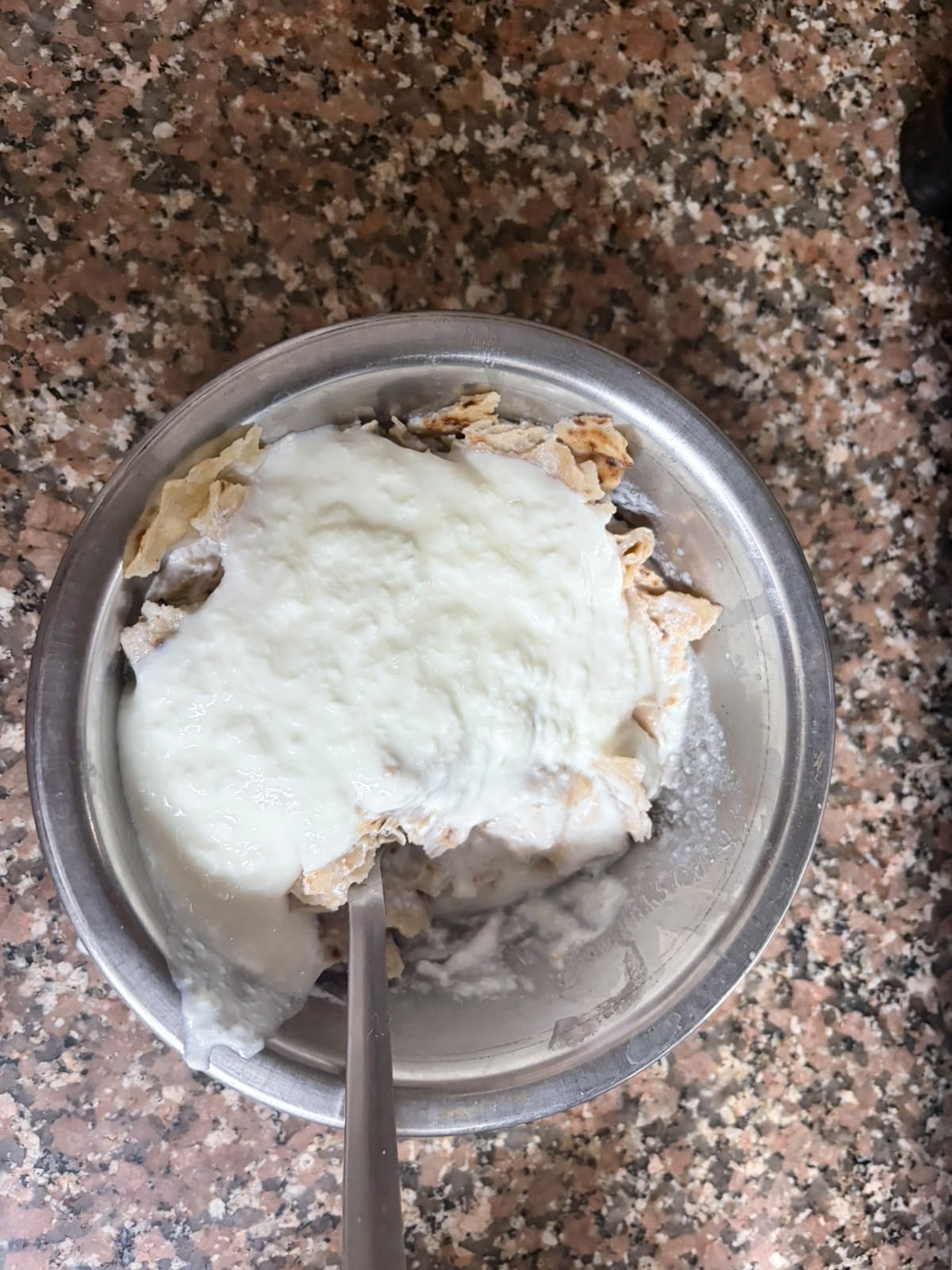
Dahi roti from a friend’s kitchen.
This could explain why food heritage can appear so much more orderly than everyday eating actually is. Cookbooks and culinary histories tend to make cuisines legible through named dishes, ingredients, techniques, and rituals. The anthropologist Arjun Appadurai’s essay, ‘How to Make a National Cuisine: Cookbooks in Contemporary India’, studies cookbooks in English written for and by urban women in India, and argues that while these books build a national cuisine out of regional food, they do so by selecting a few characteristic dishes while humbler dishes are kept out of the cosmopolitan view. In Goa, an essay by Malavika Neurekar finds that most community cookbooks are by Saraswat Brahmin women, so that Goan Hindu food comes to mean Saraswat food.
Gowri sees the same pattern in Kerala, where early cookbooks described how a particular community ate, such as Brahmins, Syrian Christians, or Nairs, and left out the plain. And caste tends to sharpen this. Shahu Patole’s Dalit Kitchens of Marathwada, for instance, draws attention to Dalit food practices that have been marginalised within dominant accounts of Indian cuisine.
Documentation also leaves out who did the cooking. “In this romantic post-facto narration, we kind of elide over” the work involved in cooking, says Ray. While cooking can be a source of pleasure and care, it is also repetitive, exhausting, and unequally shared. What is often mistaken in hindsight for a labour of love, he said, “is, in fact, not; it is full of resentment” wherever the burden of work is unequal.
Talking about food at the communal table
I was recently at a large dinner table where, as it often does, the conversation was around food and cooking. People spoke in great detail, and with pride, about how their mothers and grandmothers would cook dishes that became family legacies. These stories sounded like heirlooms, and telling one felt like claiming a place in an established lineage.
I have often felt outside these conversations. The sociologist Claude Fischler has written that commensality — the practice of eating together — creates a sense of belonging, but can also create a sense of othering among people who don't know the food or the rituals or who don't have the resources to participate. I do contribute to the talk, mostly with what I have picked up from things I have read and places I have travelled to. But it comes from experience, not from tradition, and I can feel the difference.
Aashna, a baker in Goa, recognises this feeling. At communal tables where people share family recipes, she told me, “I know I'm an outlier.” Her mother, a nurse in the army, learned to cook from other women in the army; she cooked quick meals, big batches of sambar that would last you out for five days and a "rice week" of imli, curd and lemon rice. Aashna’s own love of baking was partly fostered by Enid Blyton books about picnics and treats. As an adult, she started baking cakes with flavours she had wanted as a kid. Her food repertoire was built through reading, memory and experimentation, rather than being passed down as a family recipe book
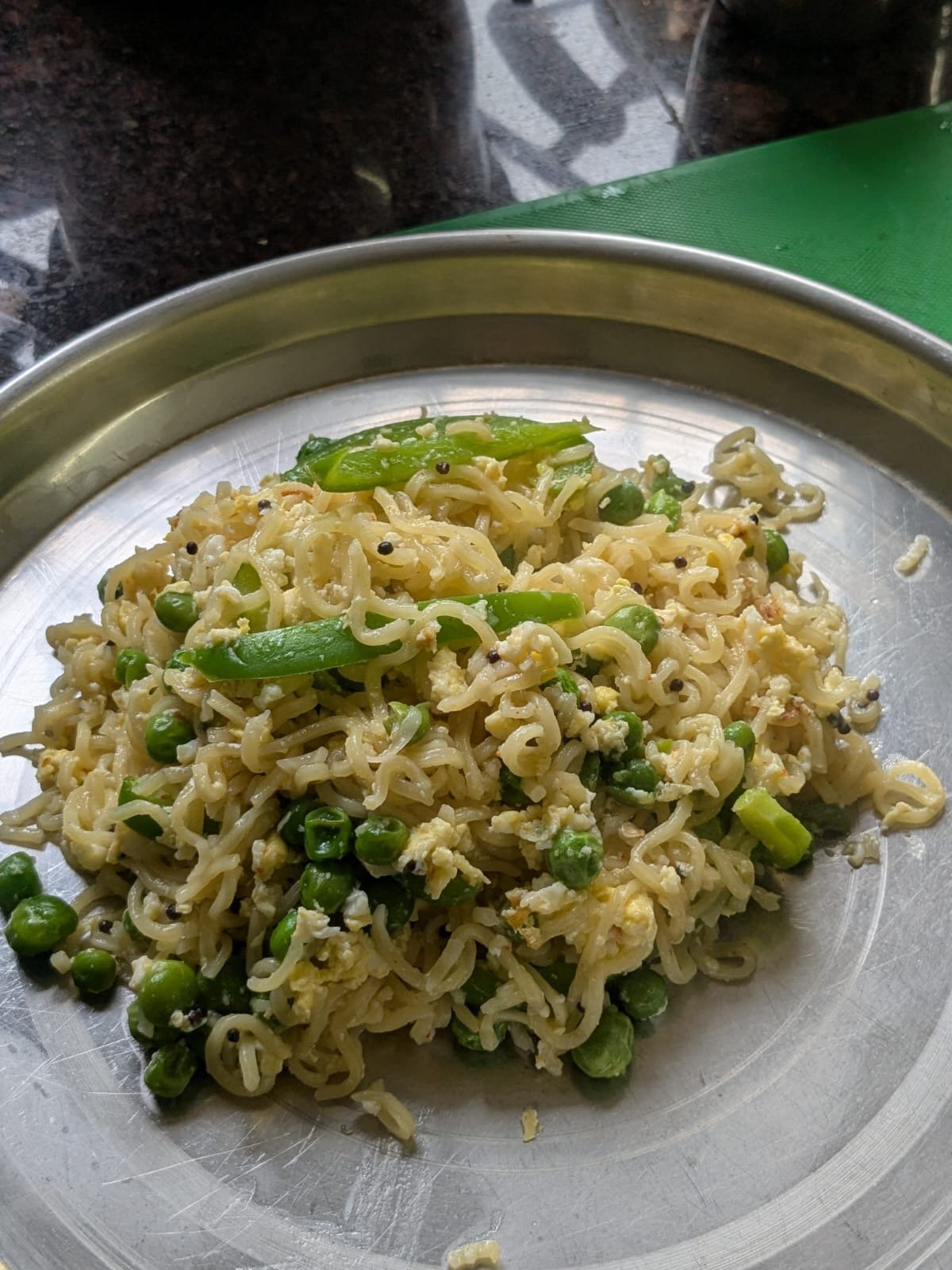
Aashna’s quick noodles with capsicum, onions and peas.
In Shared Devotion, Shared Food, the historian Jon Keune examines how commensality in western India can express ideals of inclusion while leaving caste distinctions intact. Gowri sees something similar in feasts such as the Onam sadya. While the feast is related to community, they said, it also marks social and economic standing, shaped by networks of invitation and obligation. Being invited to the table does not mean everyone sits at it on equal terms.
Heritage, without romanticising labour and constraints
Clearly, much of our food history is a product of migration, labour, caste, economic restraints, as well as the disparate amounts of time people have. So how do we broaden what we call heritage without making everyday food special or exceptional first?
One way might be to not romanticise or aestheticise every improvised meal or food associated with scarcities. “The sentimentalisation and aestheticisation of the food, after all, is done by a class that is very upwardly mobile,” says Ray. For him, the first step is to look beyond individual dishes. Food, he argues, is not simply an object to be admired or reproduced, but a product of relationships: between the person who cooks, the person who eats, and the social institutions that make the meal possible.
To think about food as heritage is also to think about who prepared it, the circumstances they were in, and whose labour is unaccounted for. We should be documenting the plurality of eating practices, the everyday, the convenient and the impromptu — all without labelling it as authentic or tragic.
This could also change how we teach food. Ray notes that food gets “zero attention” in Indian schools, and that cooking and eating can be a lens to view ecology, labour, caste, migration and history, as well as chemistry, not only in how a dish is made but the history of the ingredients, who prepares them, and what it takes to produce them. My mother did a small version of this at her school — teaching about food through their kitchen garden where children grew herbs and cooked with them, and teaching fractions through baking cakes and bread.
Looking back, I think her recipe book is perhaps the only food archive we have in our house. It still holds those everyday dishes from her early cooking days, plus a few more she has added over time. When I asked her what she would pass on, she said, “Eat and cook simple food, and be able to look after yourself”. That, in itself, may be an inheritance.
Sonali Verma is a writer and climate communicator based in Goa.
ALSO ON GOYA