Of Mavin Gojju and Tok Dal: Mapping the Mango Across Two Cultures
As mangoes flood the markets and homes this summer, Ranjini Rao looks deeper into her multi-cultural kitchen and the many ways in which mangoes star in it. From a spicy maavina gojju from her Karnataka roots, to the charred aam pora shorbat from Bengal, the fruit acts as a bridge between two culinary worlds.
Summer is dedicated to the indisputable lure of the king of fruits, the mango.
Cutting up a raw mango evokes a train of nostalgia. The smell of metallic tartness as the knife slices through, creating bite-sized pieces. All this precedes the ritual of pickling the mangoes in earthen jars — coated with crushed mustard and chillies, with generous layers of salt between them. Asafoetida crumbling in warm oil and settling with a sizzle on top, to then be stirred with the typical long-handled, dry ladle, under the keen supervision of mothers and grandmothers.
We all have our favourite mango recipes, some of which employ a particular part of the fruit, and those that spare none of it. Raw mango thokku, gojju, aam panna, chutney, are all delectable in their own way, and yet it is the salt and chili-powder sprinkled Totapuri that brings us the full-bodied essence of it, not to mention the rush of after-school memories.
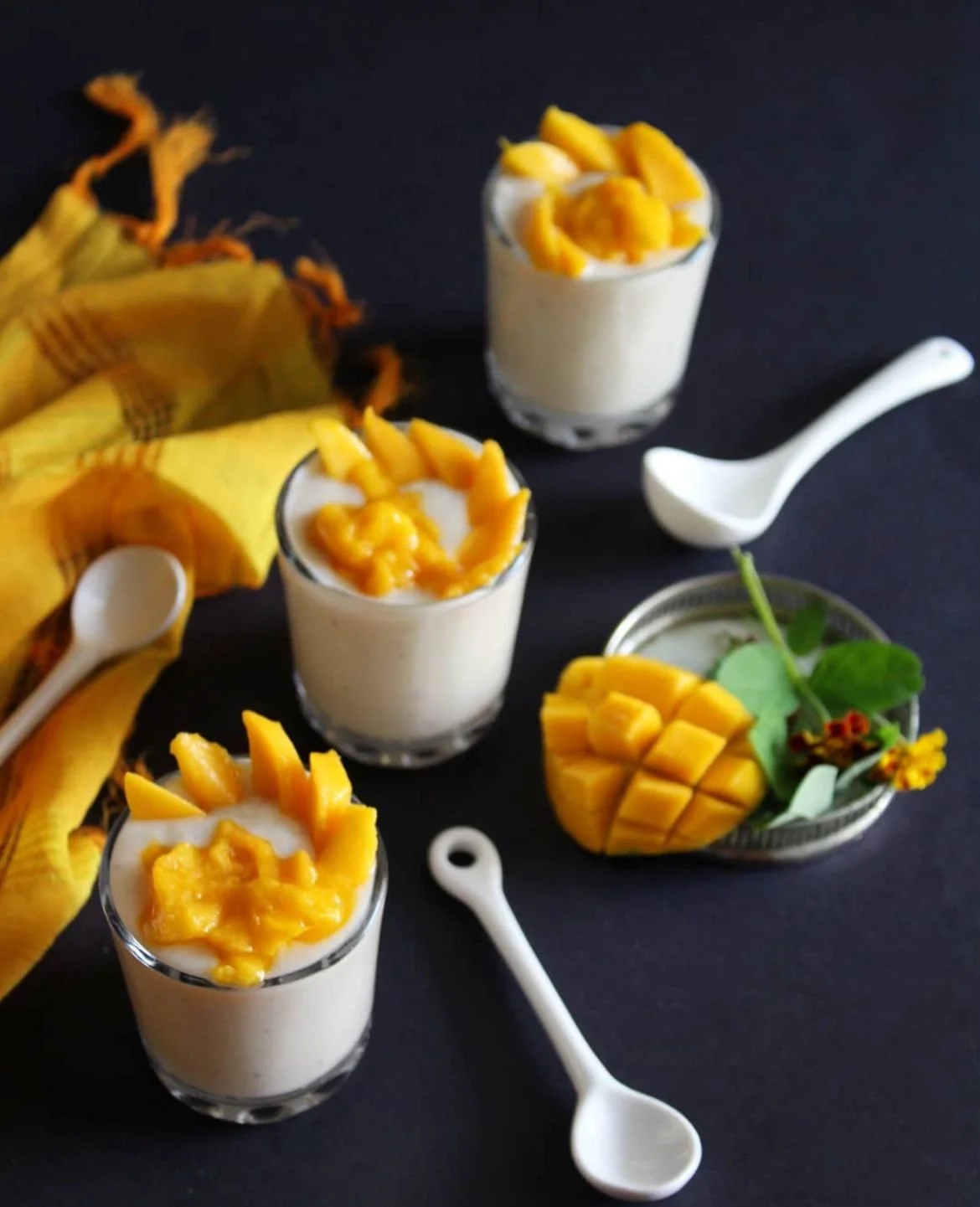
Mango Phirni. Credit Ranjini Rao

Aam Panna
The ripe fruit is used in wobbly puddings and runny kheers, creamy smoothies and frothy lassis, its pulp beaten down to leathery squares or folded into cake batters. And yet it is the whole mango, its flesh bitten into and relished with eagerness, as the juice trickles freely down the elbows, that holds the most appeal.
In Karnataka where I grew up, mangoes are relished at every meal: seekarane served with pooris for breakfast, sour and spicy mango chitranna for lunch, and a whole fruit after dinner. The different local varieties are treated based on their fibre and pulp content, and even the thickness of their skins. Baby mangoes are de-skinned and cooked whole in a spicy coconut gravy, to be eaten with hot rice and ghee. Appemidis are pickled whole, after being salt-cured and rested in brine for a few days. For chutneys, Nekkere mangoes work great. In the world I came to inhabit twenty five years ago when I married a Bengali, I saw that that the mango similarly found its way into everything, from sweet to savoury dishes.
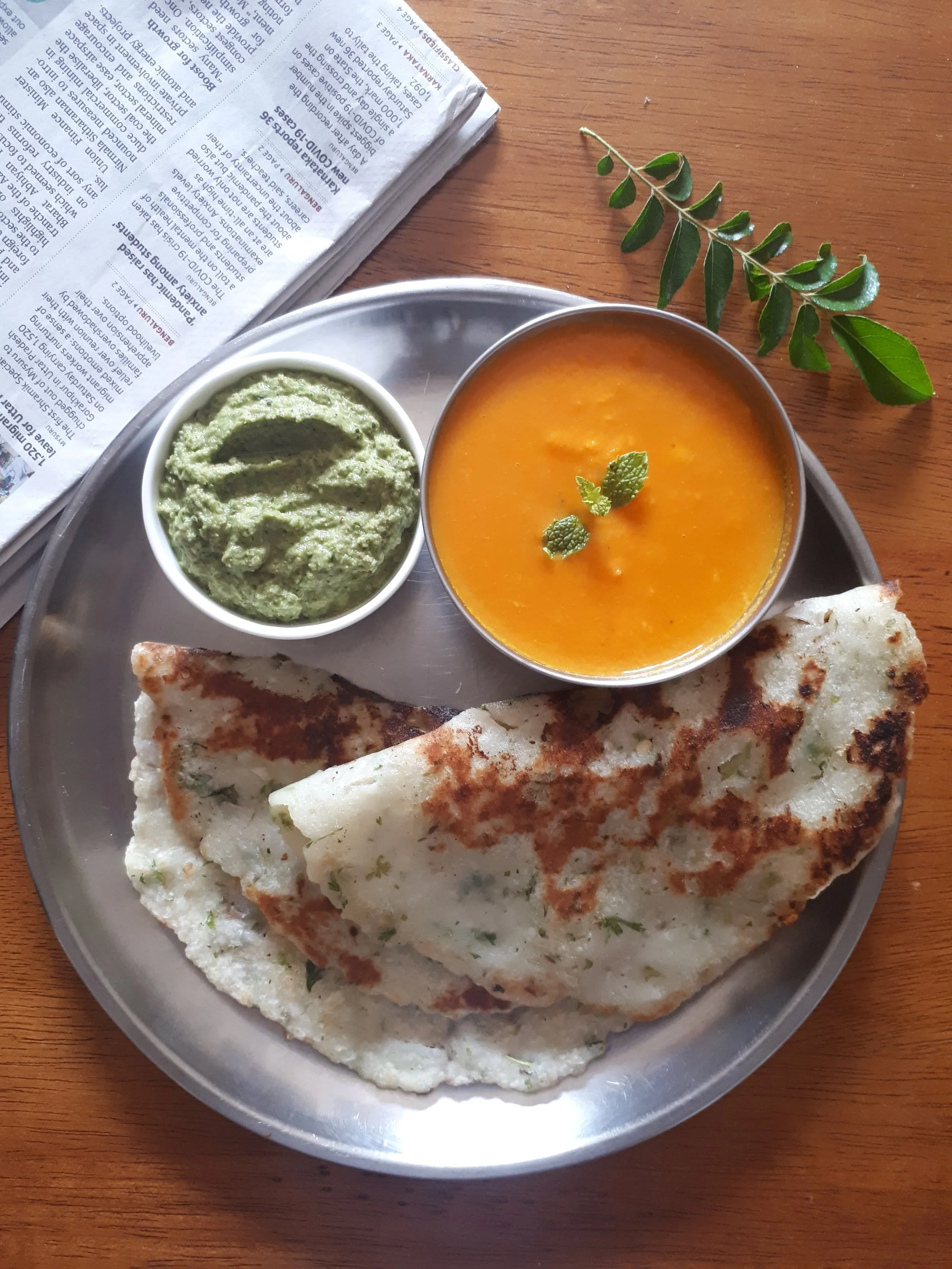
Akki Rotti with Seekarane. Credit: Ranjini Rao

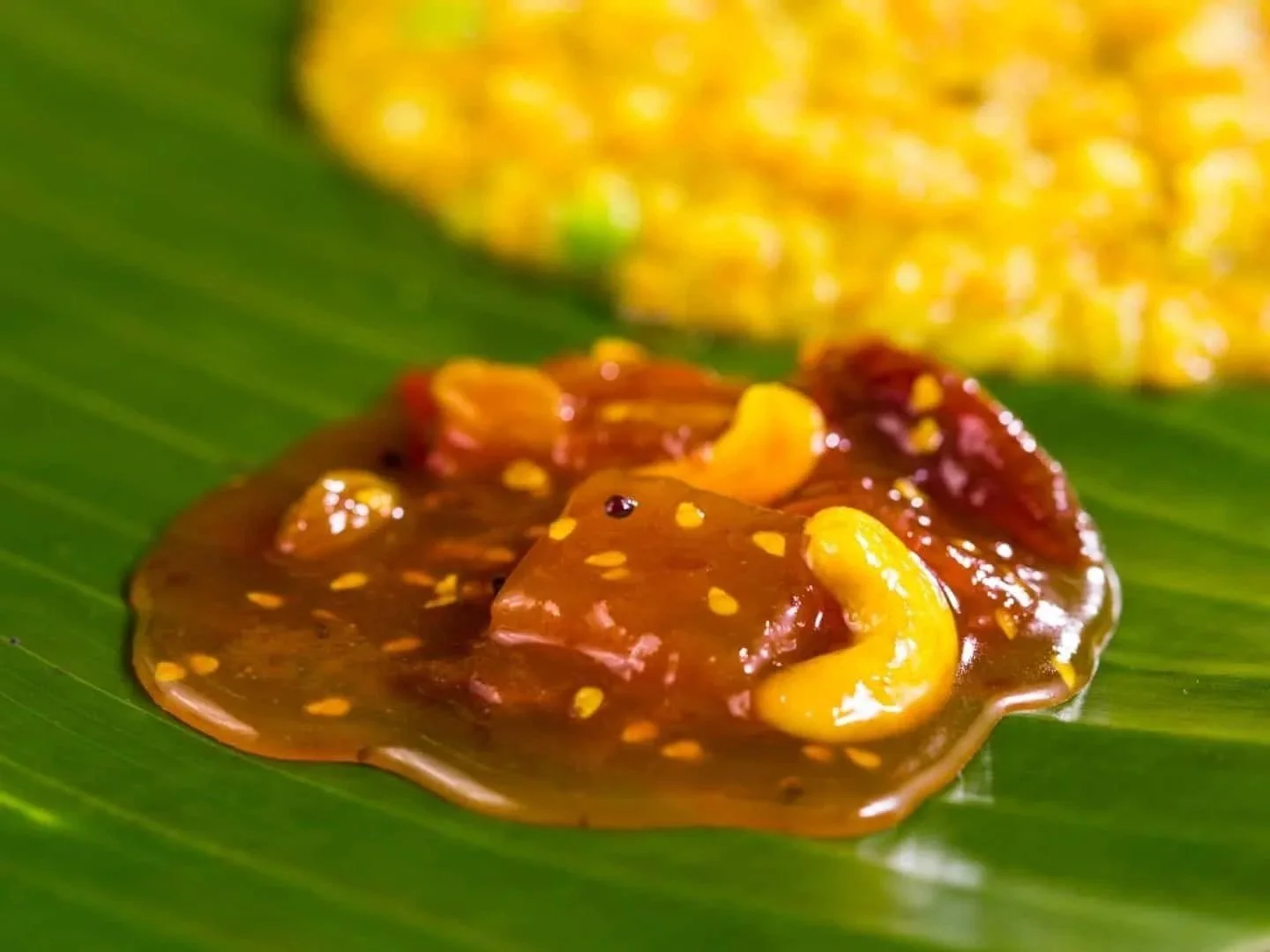
Mango Gojju
Today, in my bi-cultural kitchen, the mango finds much use: the sharp, mustardy flavour of maavina gojju and the tangy bite of raw mango in chitranna, done two ways — one, where grated raw mango is mixed with hot rice and ghee and tempered with crunchy dals and peanuts, hing and chillies; two, a hot and spicy mango red chutney mixed with rice and ghee. On the other side, there’s tok dal, sweet and sour mango chutney simmered with panch phoron, and ripe mango used in chilled payesh, topped with muri for crunch.
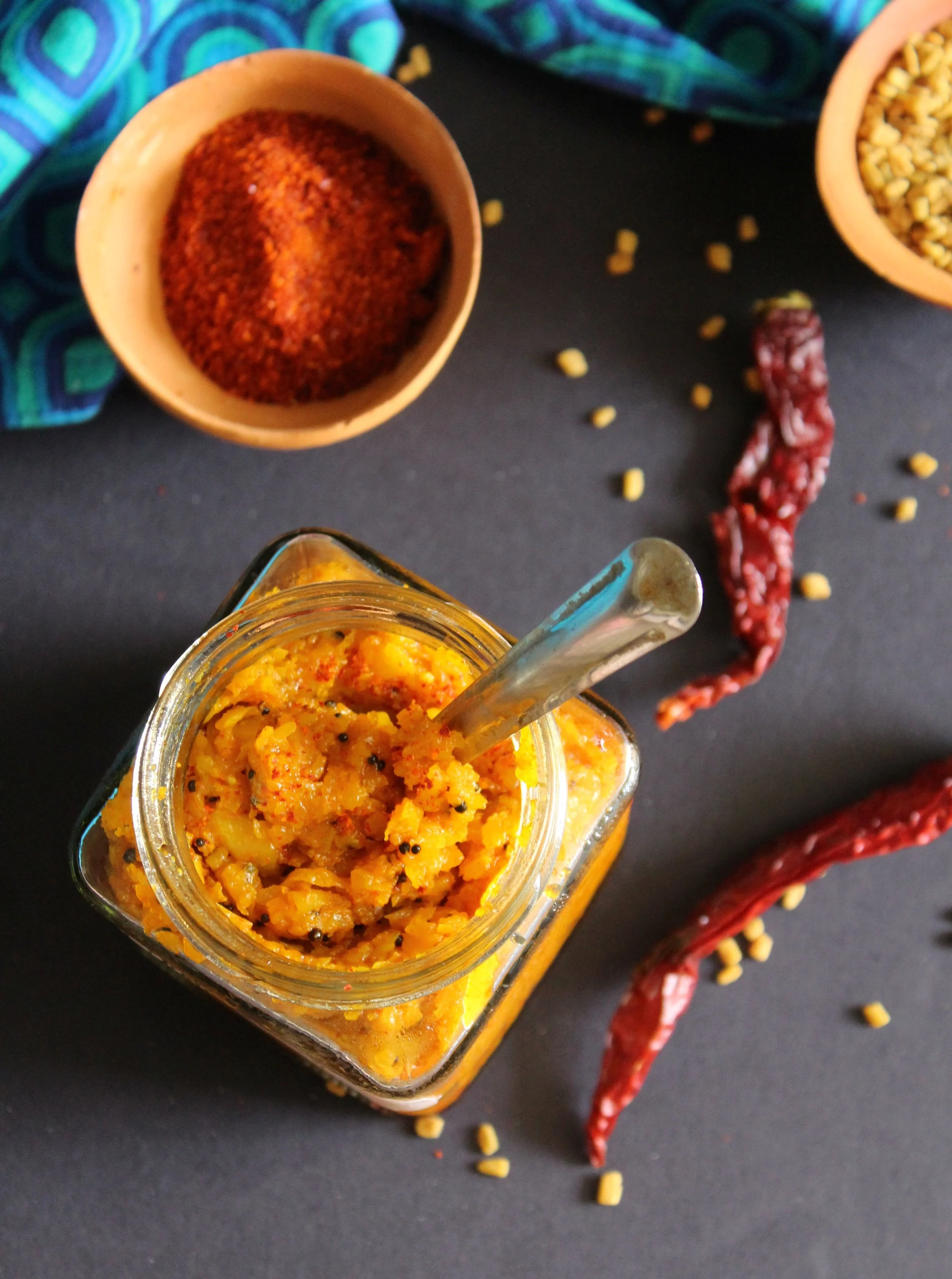
Mango Thokku, Credit Ranjini Rao
The mango is beloved by both communities.
The sight of mango blossoms on the trees takes Jayanthi Prahlad, a retired banker and home chef, back to her childhood and to exam season. She thinks of mangoes as the most versatile summer ingredient. “One of my favourite desserts is a simple recipe: just cut up a ripe mango (Badami or Raspuri work great), and dunk them in freshly extracted coconut milk, with a drizzle of honey. Chill it in the refrigerator and it’s good to go.”
A traditional mango dish in the season is tovve (a mango dal), which isn’t so much about measured spices or detailed processes, but about how you cut the raw mango. “We cut it into thin, oblong slices, the way you would a potato, to make chips. Once the toor dal is boiled till soft (but not watery), we add in the mango slices, fresh grated turmeric, salt, and give it a good mix. Close the lid and let this sit for a while. Just before serving with rice, we season the tovve in a generous dollop of ghee, with mustard, cumin, fenugreek, red chillies or red chilli powder and a dash of hing,” she says.
Up North, in West Bengal, summer evokes the sights and smells of raw mango slices cured with salt and left to dry on open terraces: the anise-like notes of Malda, the fibrous, mildly sweet flesh of the Fazli, and the sweet and sour flavours of the blush-pink Rumani. For Priyanka Dey, Monitoring and Evaluation Coordinator at Quest Alliance, it also brings back memories of pickles. “As a child growing up in Calcutta, summers came with not only the heat and humidity but also with Kalboishakhi jhor, the famous nor'westers of Bengal, which were sudden, dramatic evening storms. For my cousins and me, they meant one thing, raw mangoes fallen on the ground. The moment the storm passed, we would run outside, scanning the ground beneath the trees for raw mangoes shaken loose by the wind. We would wash them, peel them, and slice them into small, firm cubes. Then came the spices and the mustard oil, tossed together before being spread out and placed under the sun,” she says.
Bengali tomato chutney with dates and mango leather. Credit: BongEats.jpg
One of the most distinct summer treats from the region is the aam pora shorbat: raw mangoes are charred on open flame, then the flesh is scooped out and pureed with salt and spices. For Priyanka, mango recipes are more than just cooking — they are time tested remedies, designed to bring relief from the summer heat. And the non-recipes are where the mangoes lend themselves to a bigger canvas of memories. “Take Aam Tel, for instance,” she says, “the generous mustard oil that sits in the pickle jar coating the raw mangoes and spices, soaking up the sun over several days, building up into something precious on its own. A drizzle of this over a bowl of muri (puffed rice) eaten as an evening snack can transform any ordinary moment.”
In Kolkata’s sweet shops, the mango takes centre-stage too, around May, with desserts like aam sandesh, aamer mishti doi and aam kalakand. The season is a celebration that Bengalis revere with childlike earnestness.
“It is about memory, belonging, and the particular sweetness of a summer that, no matter how far you go, you never quite stop craving.”
As I savour a chilled glass of aam tok on my sun-burned yellow verandah, I think about seasons and changes and the convergence of cultures, mindsets, change and constants — and how mango seems to be at the delicious centre of it all.
Ranjini Rao is a multipotentialite working at the intersection of food, words, and intentionality to craft immersive experiences for conscious living. With 25+ years of impact as author, educator, and curator, she champions mindful storytelling as a path to meaning, connection, and lifelong learning. You can follow her on Instagram.