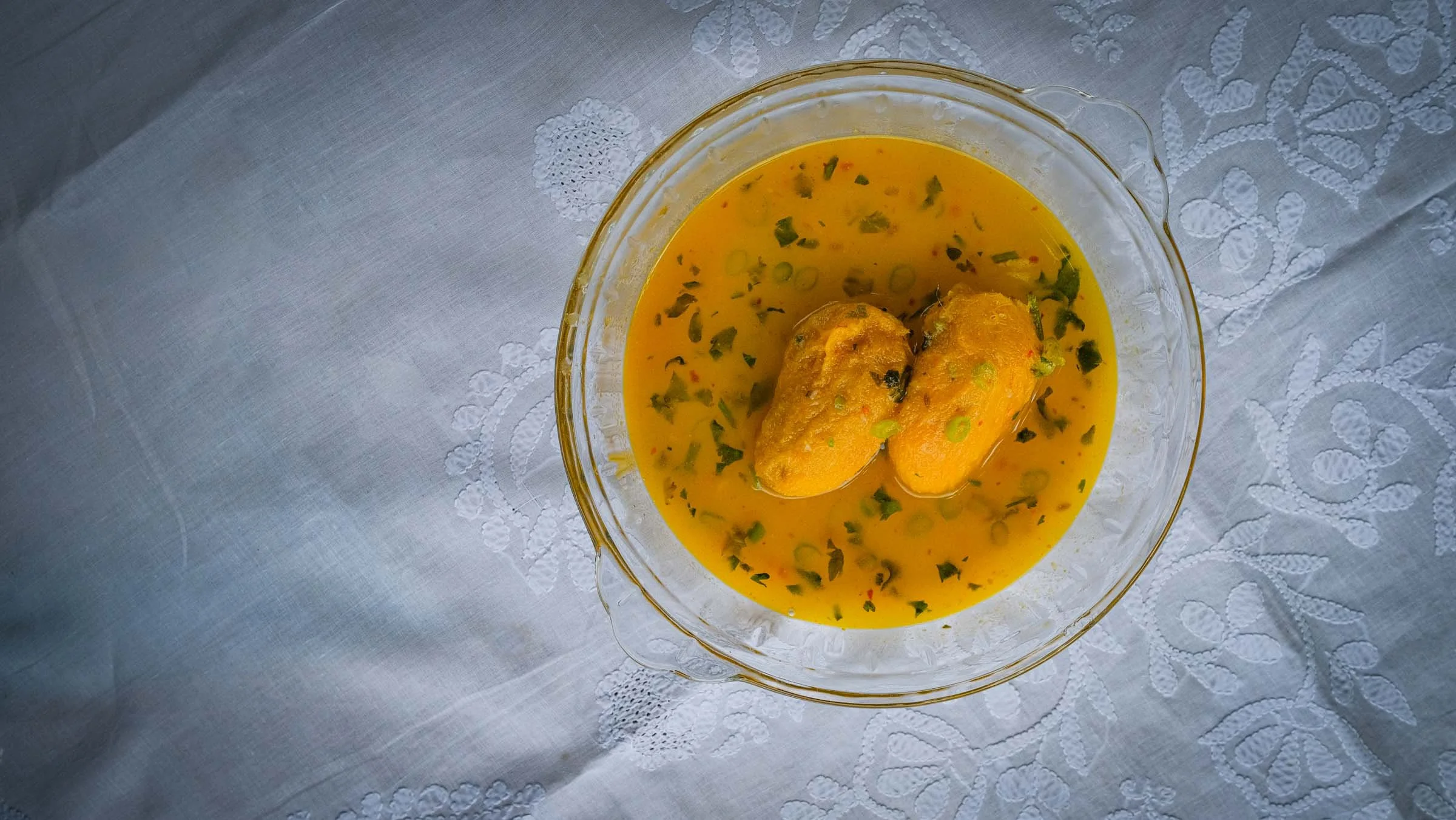
Pal Mee Siam: A Tamil Muslim Noodle Dish from Singapore
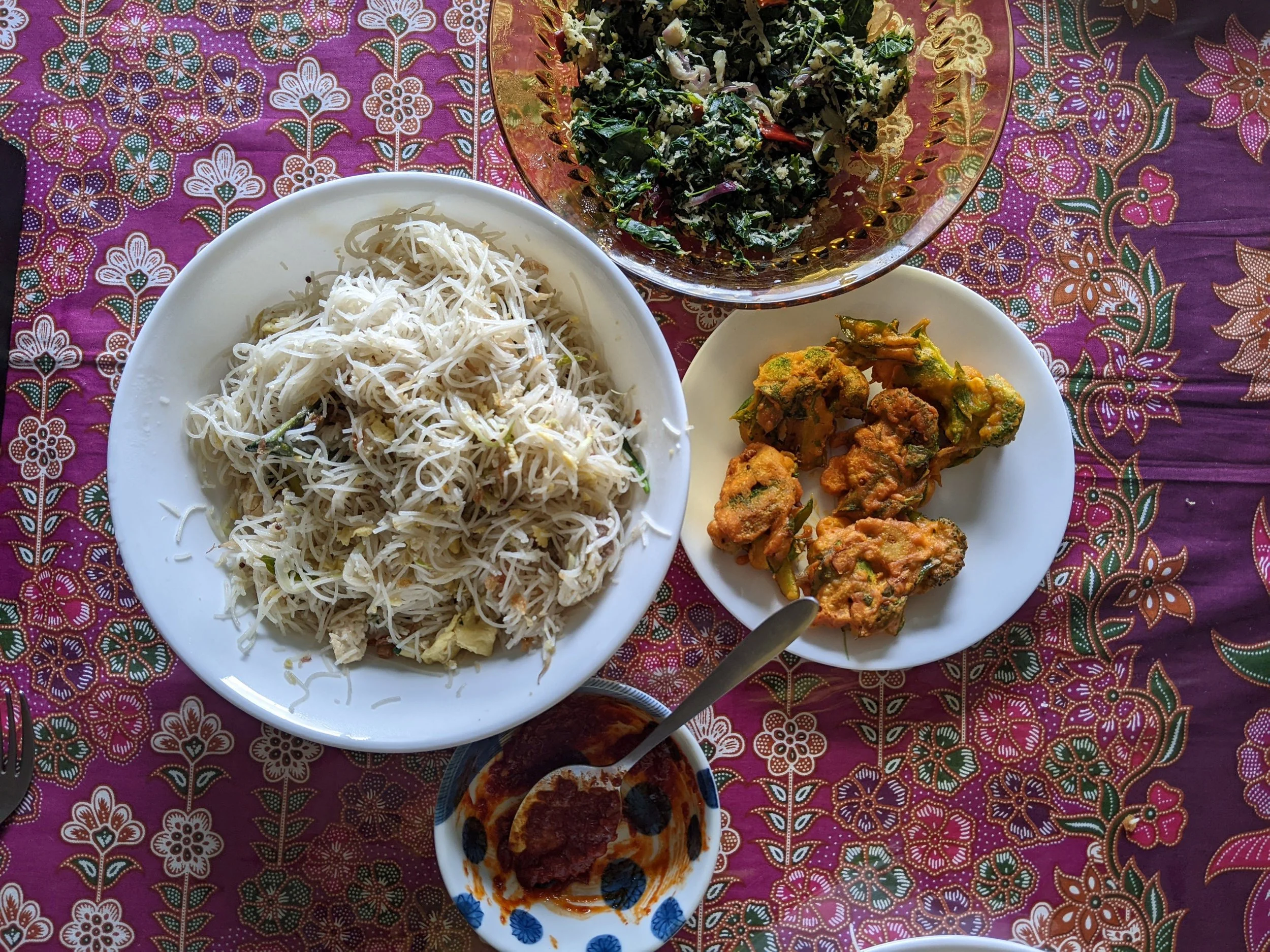
Taahira Ayoob’s grandmother would cook for students at Bukit Merah Primary School in Singapore. One of her star dishes, which was beloved across children from multiple ethnic backgrounds, was paal mee siam, a nourishing coconut milk–based rice vermicelli dish cooked in beef broth, which graces the tables of Tamil Muslims in Singapore.
At the funeral of my paternal grandmother, Malkar Meera, my aunts began telling me stories of their mother and grandmother cooking batches of paal mee siam at Bukit Merah Primary School, in Singapore.
Until then, I had never thoroughly investigated the origins of this beloved dish.
Paal mee siam is a semi-dry, coconut milk–based rice vermicelli dish cooked in beef broth, served with tofu, chye sim, bean sprouts and tender mutton bits. It is typically prepared for large family gatherings, prayer sessions, iftar meals, or dinners where more than five people are expected. The ‘paal’ in its name refers to the coconut milk used to cook the noodles with vegetables, shorthand for thenga paal, the Tamil word for coconut milk. The sweetness of freshly squeezed coconut milk binds the noodles with the vegetables, and makes the heat from the sambal that the noodles are served with bearable.
The dish itself is relatively simple, but its foundations require care and time. Before assembling the noodles, the mutton must be cooked ahead of time and the sambal prepared.
Sambal is eaten widely across Southeast Asia. Outside the region, it is often described as a chilli relish made by pounding or grinding fresh or dried chillies. The word comes from the Javanese sambel, meaning crushed or ground. Chillies are turned into a thick paste, combined with salt, sugar or fermented seafood, and eaten alongside rice or noodles.
My great-grandmother, whom we called Kitengi Ma, learnt to make sambal from her Malay neighbours. They soaked dried chillies until plump, deseeded and blended them into a paste, which was cooked slowly until burgundy. Palm sugar, belachan (toasted shrimp paste), tamarind, kicap manis (sweet soy sauce) and vinegar were added to balance the heat and extend the shelf life.
In Kadayanallur, the village in Tamil Nadu where my relatives and many other Tamil Muslims in Singapore trace their roots, dried chilli or chilli powder was typically used in curries and gravies. This style of sambal was something Kitengi Ma encountered and adopted in Singapore. It entered our family kitchen three generations ago.
From her Teochew neighbours, she also learnt about different noodles: kway teow (flat rice noodles made with a bit of tapioca, for a bouncy texture), thin rice vermicelli, egg noodles and much more. My aunts say she favoured the springy, soft texture of rice vermicelli, allowing it to replace rice in certain dishes like Biryani and Kurma, which were typically made, or paired with, rice.
Over time, she began improvising out of availability. What started as a base of shallots, mustard seeds, dried chilli and curry leaves evolved with lemongrass, pandan and tofu. Since Kitengi Ma was cooking at Bukit Merah Primary School for children from multiple ethnic backgrounds, she wanted to create something nourishing and accessible, so she added chye sim, bean sprouts and eggs for colour, texture and nutrition. The sambal remained the star. She would grind dried chillies freshly, then cook them down with palm sugar, anchovy powder instead of belachan, and a dash of vinegar until they darkened to a deep crimson. For the students, she measured carefully, adding just under a tiny teaspoon to each portion.
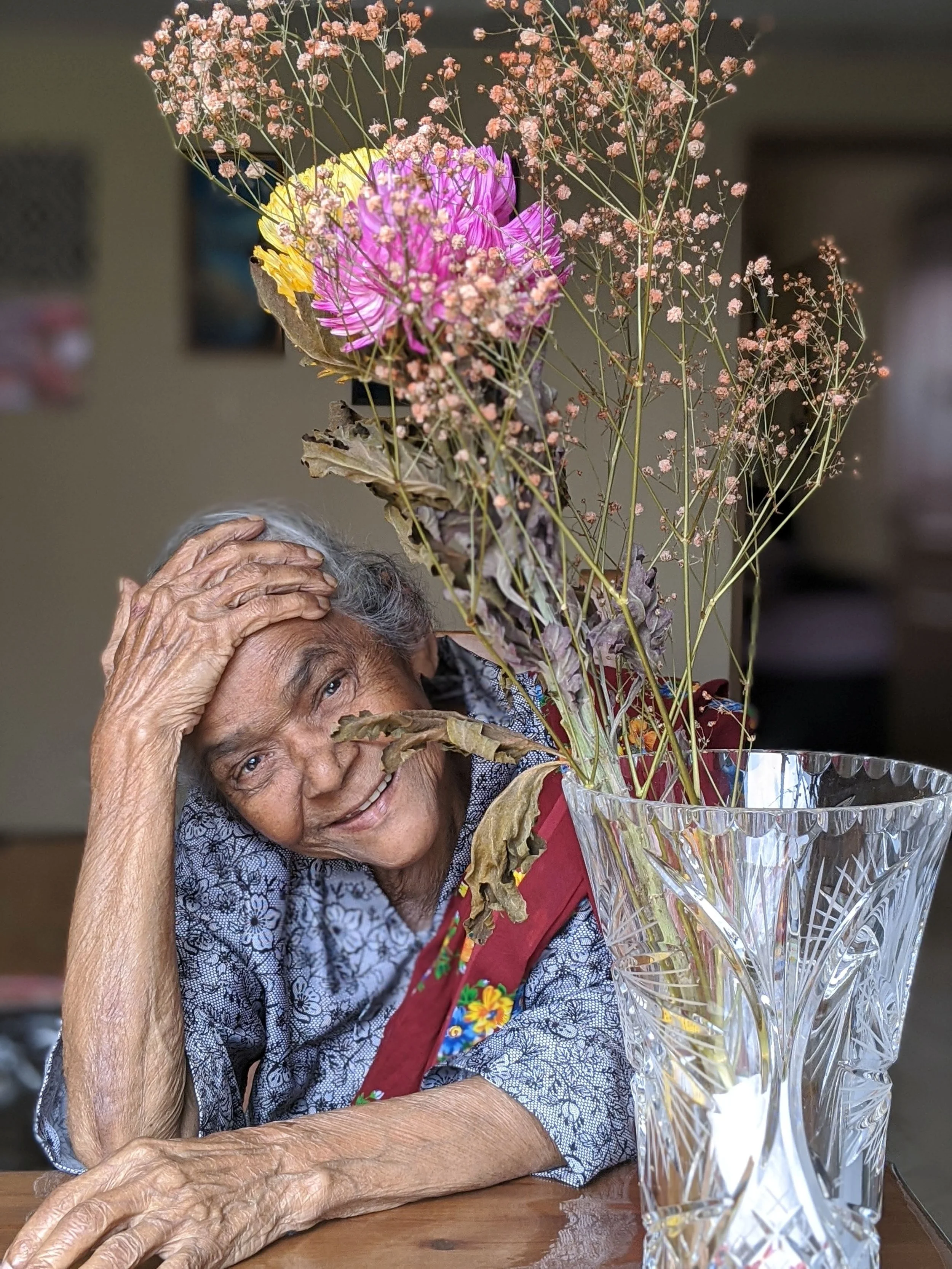
The author’s paternal grandmother, Berama, who inherited the recipe of paal mee siam and handed it down to her.
Like my great-grandmother Kitenge Ma, many Tamil Muslims from Kadayanallur were enterprising when they arrived in Singapore. They banded together to create coalitions of support for housing, money lending and even marriage, under the umbrella of the Singapore Kadayanallur Muslim League. My grandmother, Berama and her family grew up in enclaves with many people that developed strong communal bonds. Through this support, some opened money-changing businesses; others traded in textiles, perfumes or food. In March 1946, the Singapore Kadayanallur Muslim League established Umar Pulavar Tamil School to strengthen Tamil language education and bilingual learning in Singapore.
Many Tamil Muslims moved to Singapore between the early 1930s and the years surrounding independence in the 1950s. My relatives were weavers and farmers, searching for a more stable life. As children, we were often told the story of how they travelled for ninety days by boat across the Straits of Melaka, carrying dried fish to sustain them and ward off seasickness. I feel a deep sense of awe and gratitude toward those great-grandparents who endured long journeys to build the safety and security we now inherit.
One of the last pictures I took of my grandmother is of her smiling beside a bouquet I had brought her. In continuing to cook this dish and share it with others, despite the labour it demands, I am reminded of the effort it took for them to integrate into Singapore and to build a life here, which I too get to do, in a small, consistent way even after she has left us in this world.
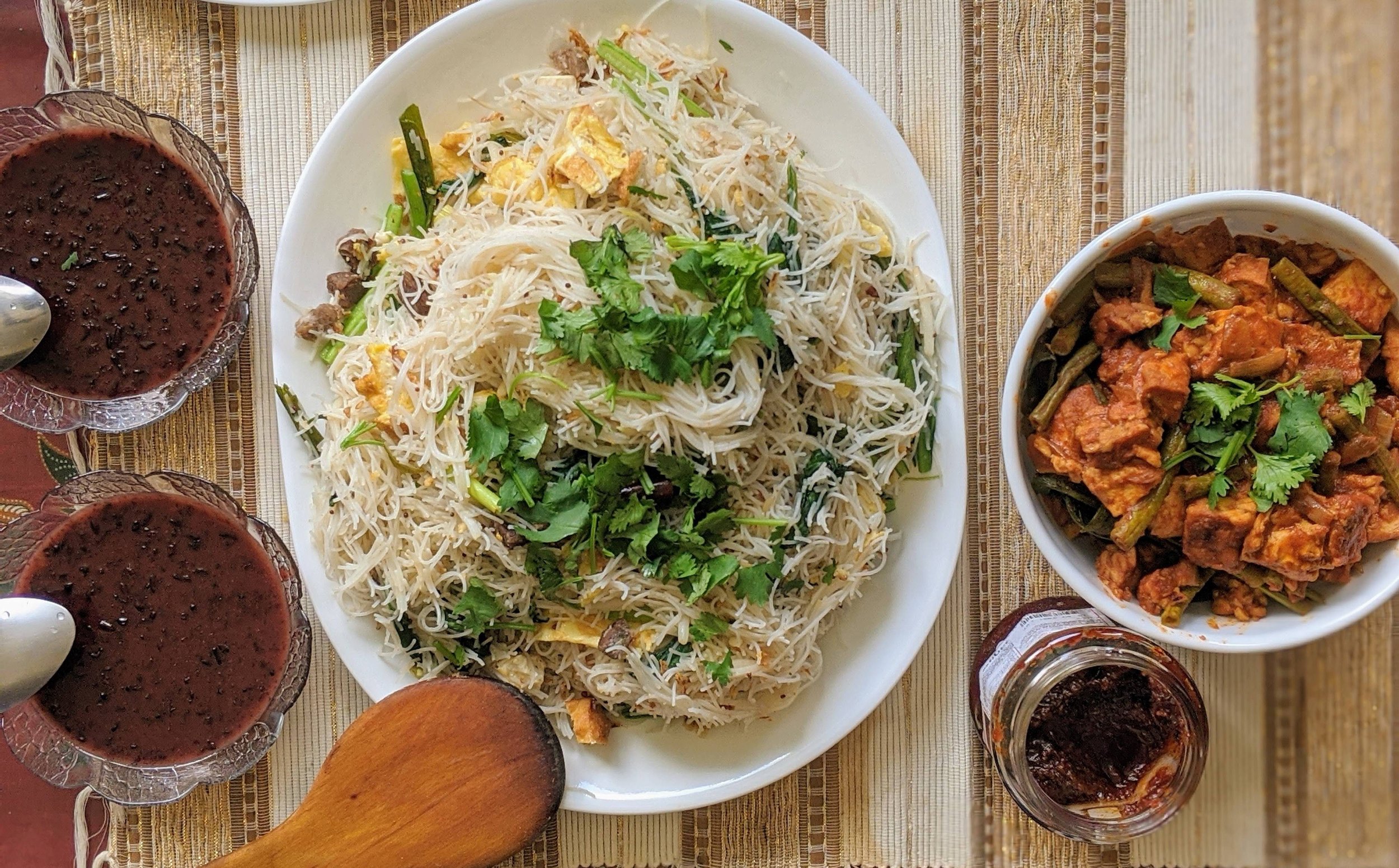
RECIPE FOR PAL MEE SIAM
Feeds between 4 hungry people or 6 people
Ingredients
1 packet of rice vermicelli noodles, approximately 400g (check that the ingredients are mainly rice and water, no tapioca, starch or flour)
1 packet of coconut milk (300 ml)|
1 teaspoon of black mustard seeds
A handful of curry leaves (fresh if possible or if frozen use more)
4-5 eggs
1 Chye sim or a leafy equivalent of green
50 g of bean sprouts
3-4 shallots
1-2 dried chillies
1 lemongrass stalk
1 pandan leaf
1 tablespoon of ginger garlic paste (equal quantity of ginger and garlic ground)
½ cup mutton stock + 150g of mutton pieces in small cubes
For garnishing, fried onions and fresh coriander leaves
Method
Pressure cook 300g of mutton with turmeric, chili powder, pandan for 3 whistles
Keep broth and cut mutton piece into tiny bite-sized cubes.
Heat up a pan with oil, when the oil shimmers, add in shallots till their soft and limp
Add mustard seeds and dried chilli till they sizzle, (they might pop out of the pan) keep the fire at medium or low here.
Add in ginger garlic paste, pandan, lemon grass and fry till fragrant
Add in mutton (just the cubes), fry them lightly, add in mutton stock
Add in coconut milk and let it bubble just a little (fire should still be on low)
Turn off heat.
Separately, add noodles to boiling water, cook according to packet instructions with 2 quills of cinnamon in the pot.
Drain water, and rinse noodles with cold water so they don't stick.
Stir eggs in a bowl and then make a huge omelette and cut the eggs into small pieces.
In the same wok, fry the chye sim and bean sprouts till they wilt (when you press them with your fingers, they should bend but not be completely limp) a little but not completely limp.
Now bring it all together — add the noodles to the coconut broth, then add eggs, chye sim, bean sprouts, and mix the noodles such that there is coated coconut milk on each strand and a level playing field of bean sprouts, eggs and chye sim in each part. Garnish with fried shallots and fresh coriander leaves.
Taahira Ayoob is a writer, cook, and cultural practitioner creating from the intersecting spaces of migration, memory, belonging, and food. Born and raised in Singapore and now based in Barcelona, her work unfolds through storytelling, community cooking, and her project with her mother, Spice Zi Kitchen.
ALSO ON GOYA