Kachariyu & Other Winter Food Rituals in Limbdi
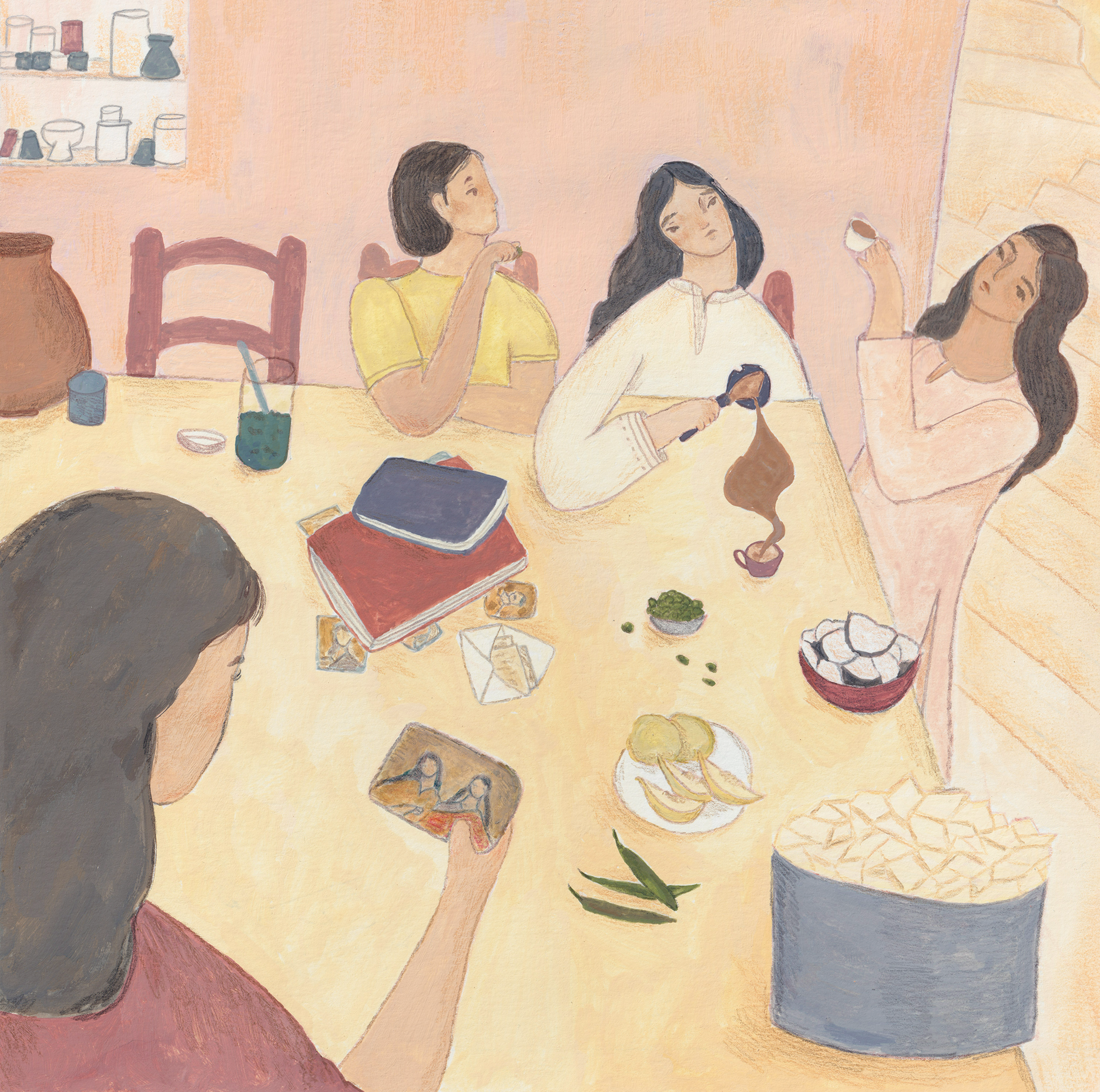
Priya Nirmal finds that food anchors her memories of the place — from roasted water chestnuts and raw papaya stir-fry to kachariyu, a warming winter sweet made from the by-product of crushed black sesame seeds. In that home, the sweet is a morning ritual, as comforting and familiar as chai.
Having grown up in England, my memories of Limbdi are rooted in food. Conversations anchored around the shelling roasted popta — green chickpeas harvested young, still encased in pods — and late night cups of chai are what always come to mind. My mum and her three sisters were raised in this small town, in western Gujarat’s Saurashtra. Their childhoods were shaped by the rich agriculture of the region — lemon, custard apple, pomegranate, almond and mango trees filled the gardens of their home. The word Limbdi comes from the Gujarati word for neem tree, limbdo, a reference to the abundance of these trees in the area. Seasonal fruit and dishes marked the passing of the months, and are still what they return to now.
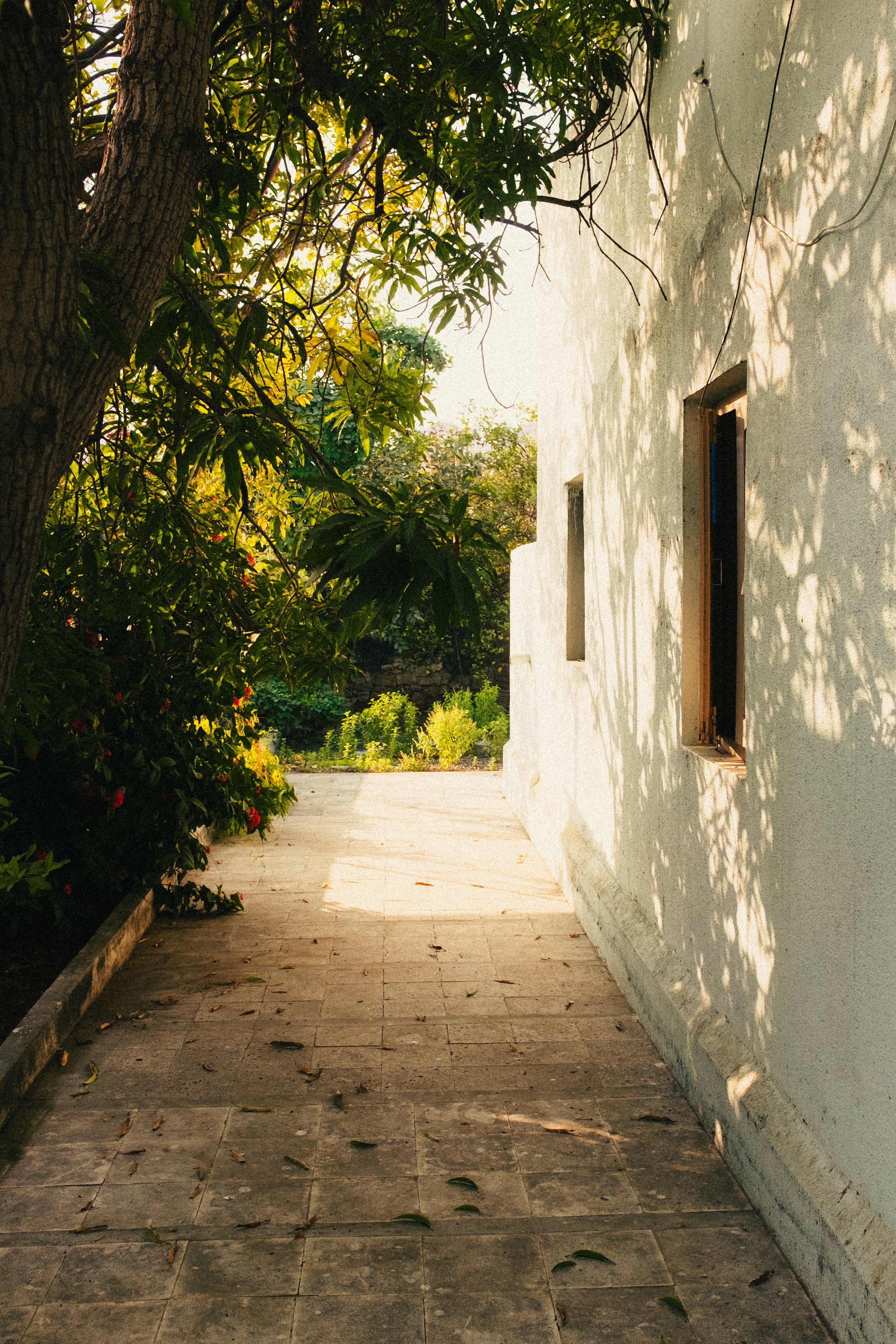
The author’s maternal home in Limbdi.
In the early 80s my grandparents, school teachers by profession, together with their friends and colleagues, built a home on an empty tract of land on the outskirts of town. The community was named Professors’ Society. Although everyone has since moved out, the house remains a haven for extended family. On a visit earlier this year, I was reminded of how our bond with certain places is deeply shaped by food, and flavour at the centre of memory.
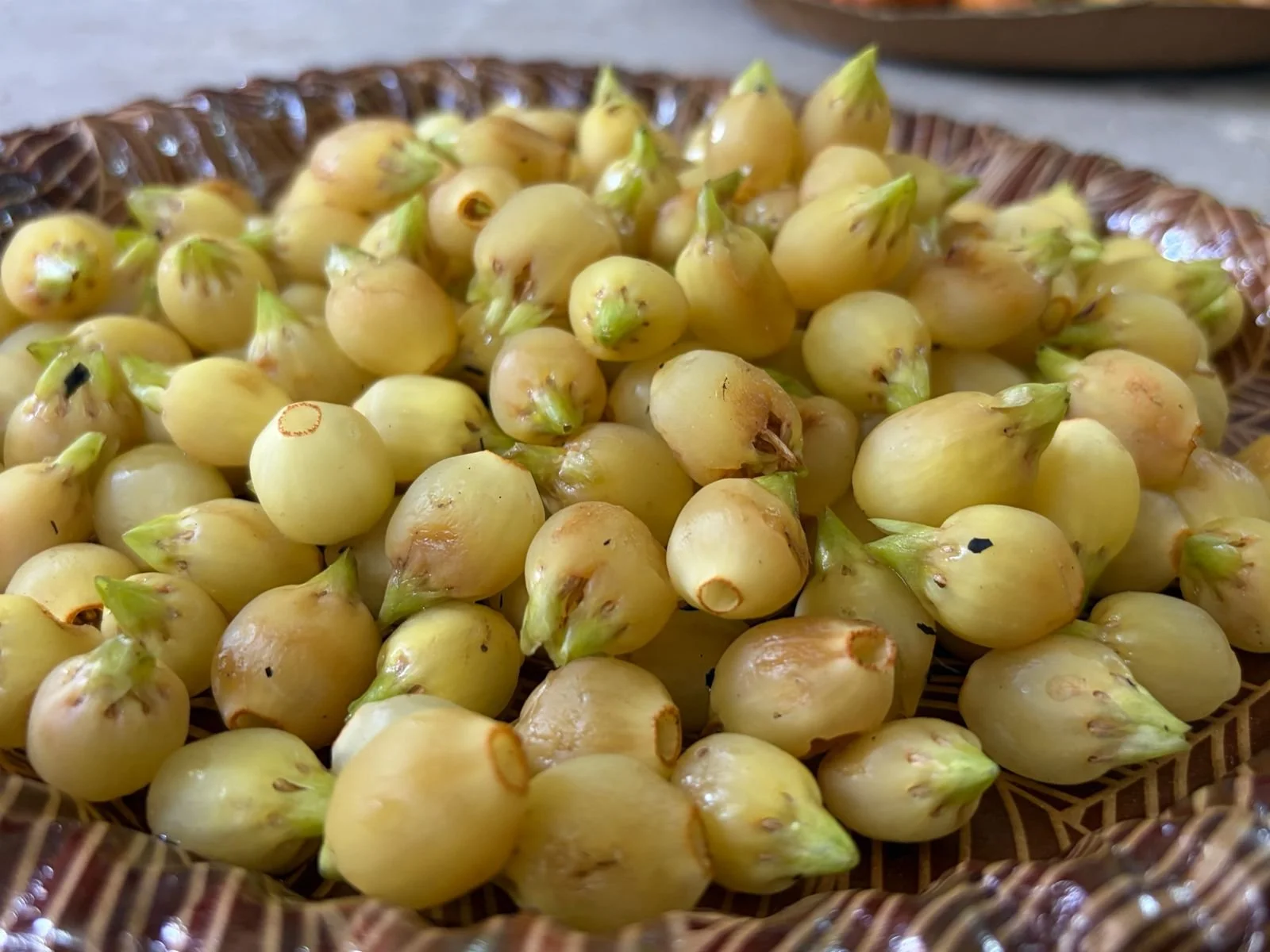
Breakfast on this stay was steamed dhokla, prepared by my great aunt, carrying the sharp flavour of garlic; my grandmother’s recipe. It was accompanied by a local variety of fafda gathiya, thinner and crispier than elsewhere in Gujarat, and so popular that it sells out every Sunday morning. There are green chillies known for their distinct gentle flavour, and sambharo, a stir fry made with raw papaya. We ate guavas, dusted with salt and chilli powder, and water chestnuts, roasted until their skins blackened.
For my mum and her sisters, chai has always been an enduring ritual. One night, it carried us through card games, stargazing on the terrace under the luminous moon. We dug through boxes of old family photo albums stored in the house. Among these was a photograph of my mum taking tea on the morning of her wedding, much like the many cups we were sharing this weekend.
For the author’s mum and her sisters, chai has always been a habitual, enduring ritual.
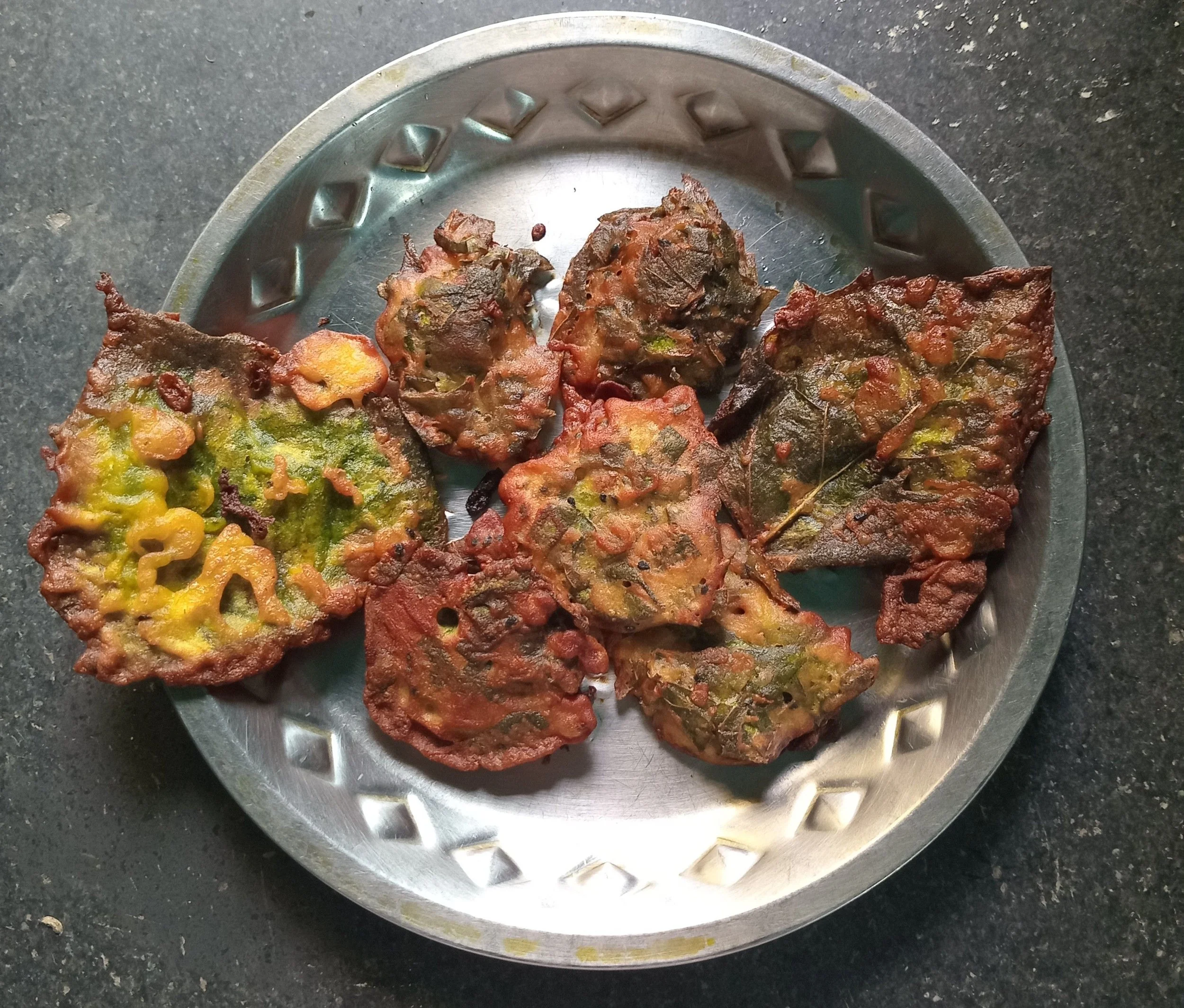
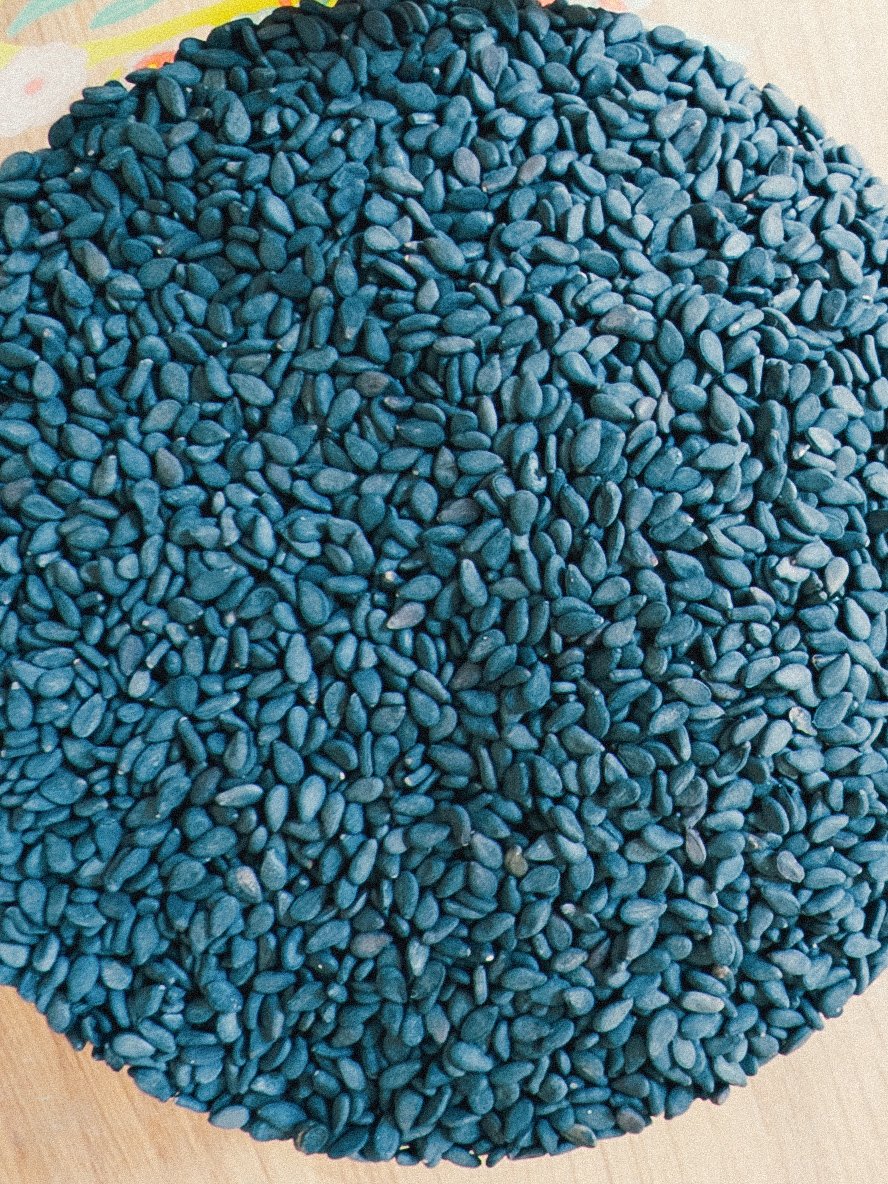
In Limbdi, winter brings a harvest of black sesame seeds. Sesame oil was traditionally extracted from the seeds using a ghani, a wooden press pulled by oxen, yielding in an unrefined, cold-pressed oil which is bottled and sold, as it has been for decades. My grandmother would combine it with coconut oil, herbal powders and henna leaves to create a homemade potion of hair oil. In winter, sesame oil played a role in her kitchen for tempering spices in Gujarati stir fries and as a dressing on snacks like dhokla and patra. Traditional Ayurvedic practices see it as a warming food that balances coolness and dryness in the body, primarily used in cold weather.
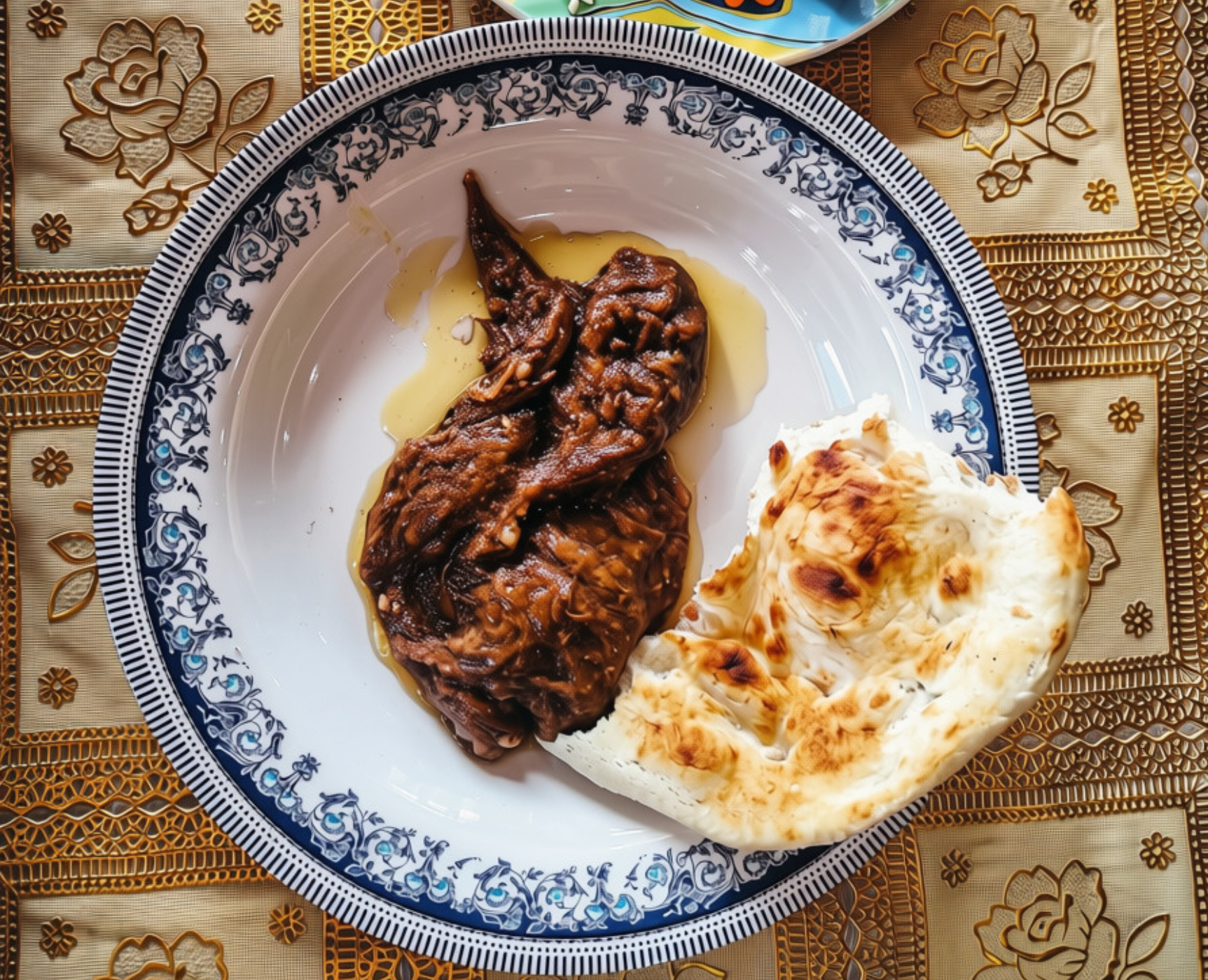
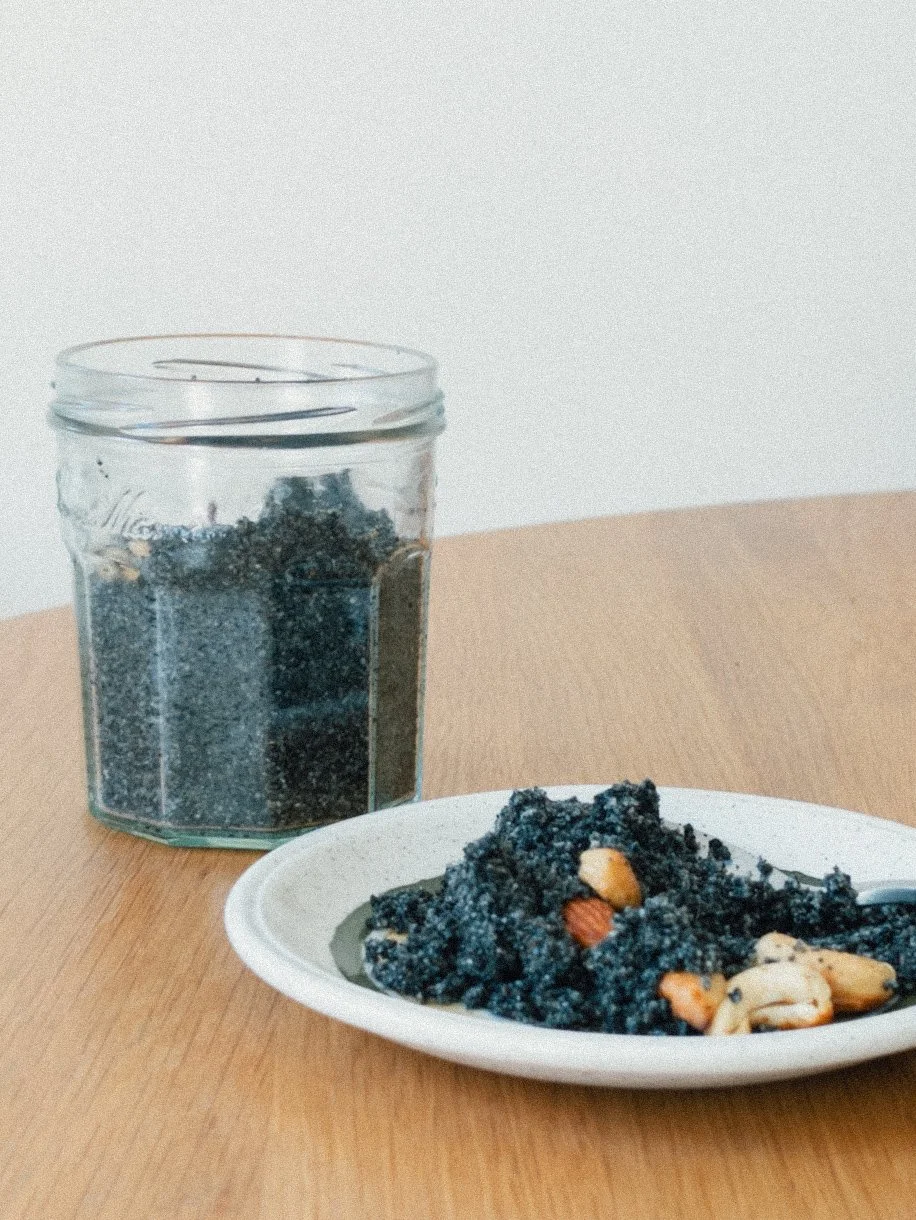
A byproduct of crushed black sesame seeds is created during the oil production process. This becomes a key ingredient in the local delicacy called kachariyu, a sweet blend with nuts, warming spices and jaggery. The name stems from the Gujarati word kacharvu, meaning to crush or grind. A spoonful of kachariyu in the morning is believed to boost immunity and provide nourishment in the colder months. The cold-pressed method of oil production has largely been replaced by machinery, making it widely available online and in supermarkets. Even so, the use of sesame oil and kachariyu in winter is a cyclic practice that still thrives in this region. My aunts continue to cook with it and apply it warm as a remedy for aching joints. In Limbdi, people arrive at shops to buy jars of kachariyu and refill their empty bottles of sesame oil during this short time of year.
RECIPE FOR KACHARIYU
Ingredients
125g black sesame seeds
50 g jaggery
1 tsp ginger powder
1 tsp cardamom powder
1 tsp cinnamon powder
25 g shredded coconut
25 g almonds
25 g cashews
1 tsp fried edible gum - optional
1 tbsp of sesame oil
Method
Lightly roast the black sesame seeds.
Separately, roast the coconut, almonds and cashews.
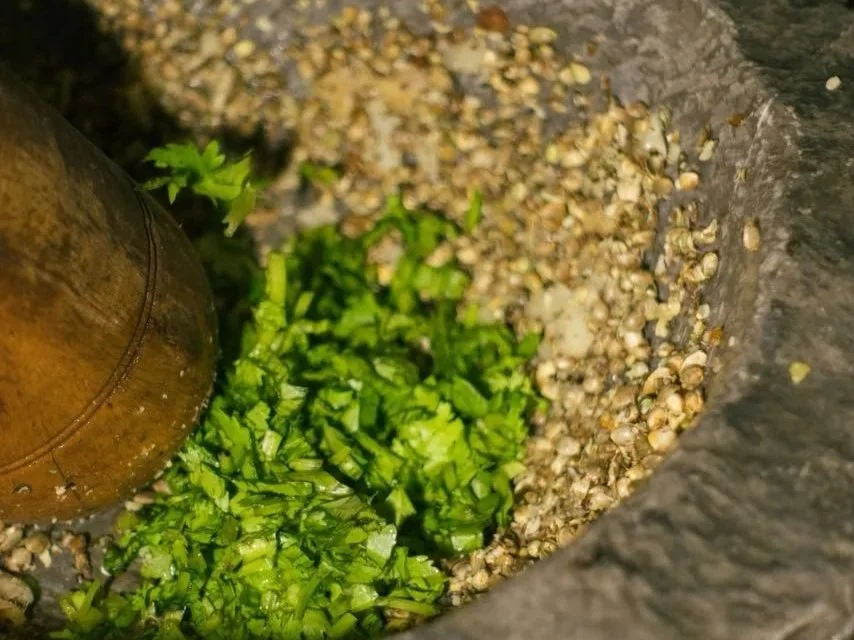
Grind the sesame seeds in a mortar and pestle or a food processor.
Add jaggery, ginger powder, cardamom powder and cinnamon powder and grind again.
Add the shredded coconut, almonds, cashews and edible gum and gently grind again, retaining the texture of the nuts. Top with sesame oil or ghee and more nuts if desired.
Transfer into a jar.
Natural oils released from the sesame seeds will preserve the kachariyu and last up to a month in the fridge. Top with more oil if required.
Priya Nirmal is an illustrator based in England, working in a variety of mediums including gouache and coloured pencil. She is inspired by people, vintage advertising and explores themes of nostalgia and introversion. Her work can be found at priyavignetta.com.
Photos credit: Sai Mehta.
ALSO ON GOYA