Byel Tomul: The Roasted Rice Snack that Welcomes Spring in Kashmir
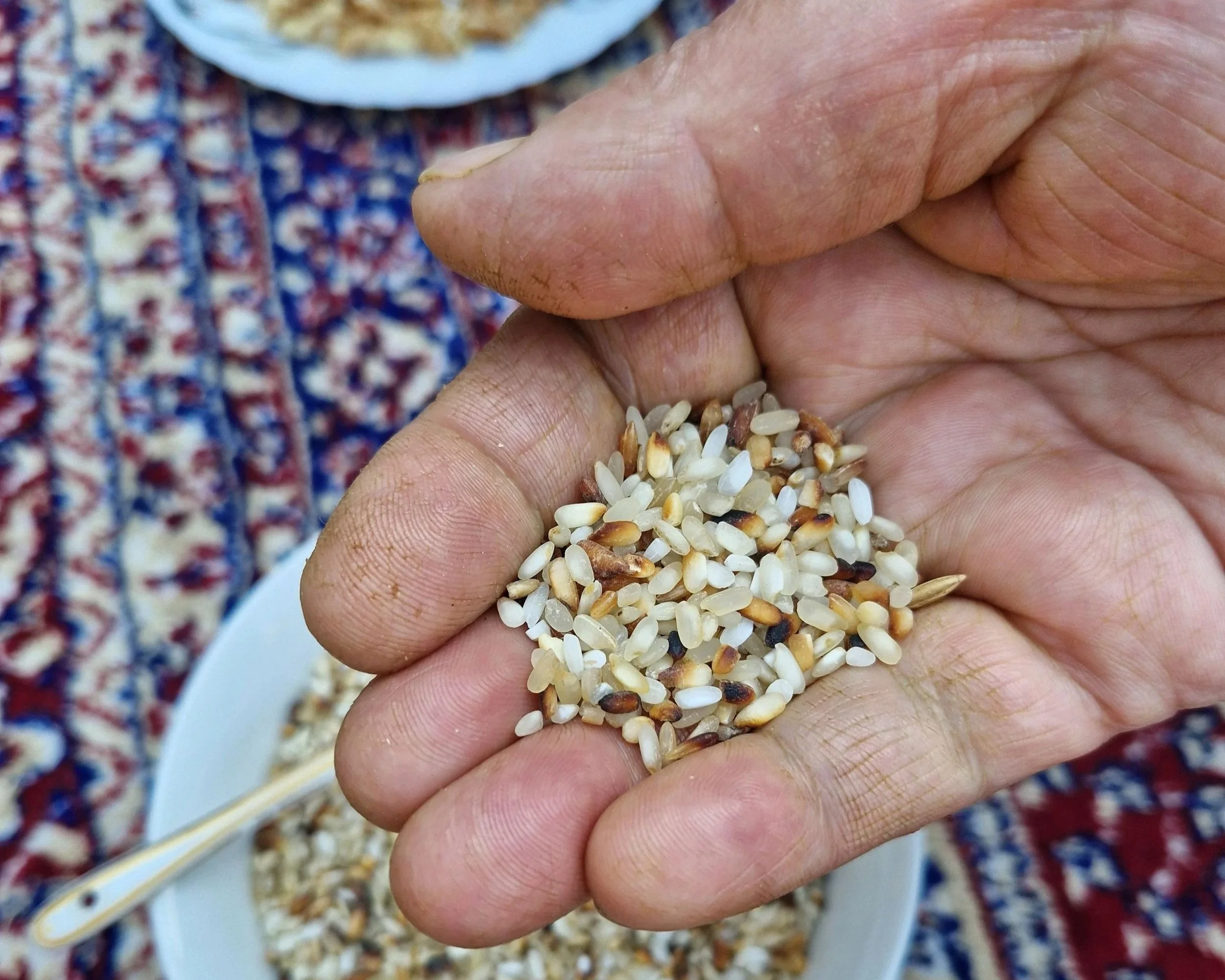
Byel tomul is a crunchy, nutty and lightly sweet simple snack that carries with it the taste of Kashmir's farming season, finds Hirra Azmat.
Wande tchale, sheene galle, beye ye bahaar, Ha zameen daarao byol kar tayaar…. (Winter will pass, the snow will melt and spring will return, O farmers, rise and prepare your seeds for sowing)
The cup is round, handle-less with a cherry blossom painted on it — it is a traditional koshur pyale (pyale means cup in Kashmiri). Abdul Rashid, a farmer who cultivates rice, lifts it, takes a long sip of noon chai (salted pink tea), then spoons in two generous helpings of byel tomul, crunching the crisp roasted rice grains along with the tea. For him, this is the taste of spring.
Abdul lives at Gangerhama village of Ganderbal district in Central Kashmir. The aforementioned lines of Kashmiri verse is about the season when the fields come alive again. After sheene tchath, the biting wind that rides in with snowfall, there is something like relief in watching the fields fill with people and motion again.
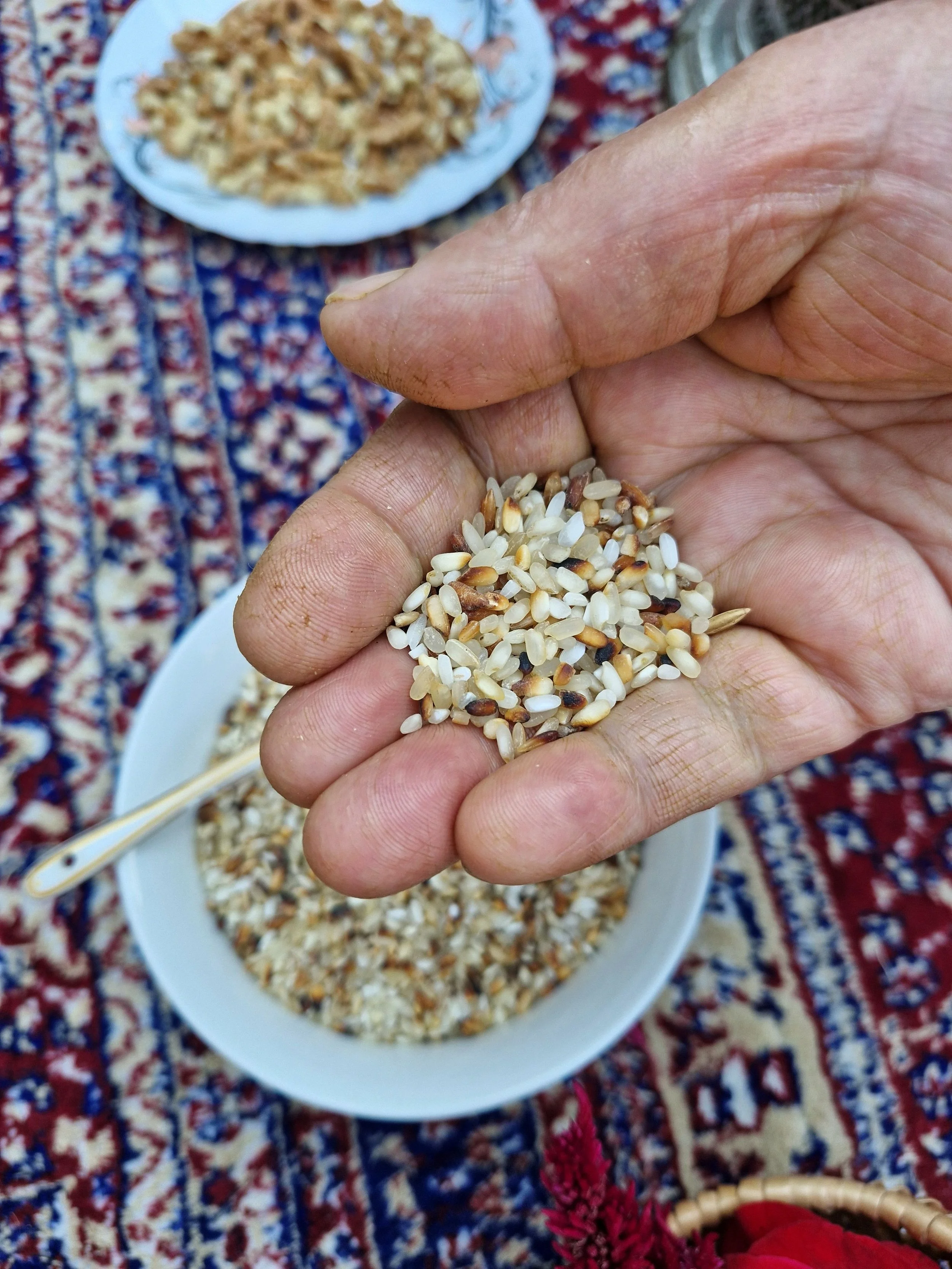
Byel tomul is a crisp roasted rice.
Along with that motion comes byel tomul, a traditional rice snack made from rice grains set aside during harvest, kept through winter, and prepared once the new season begins. The snack has a distinctly nutty, roasted flavour.
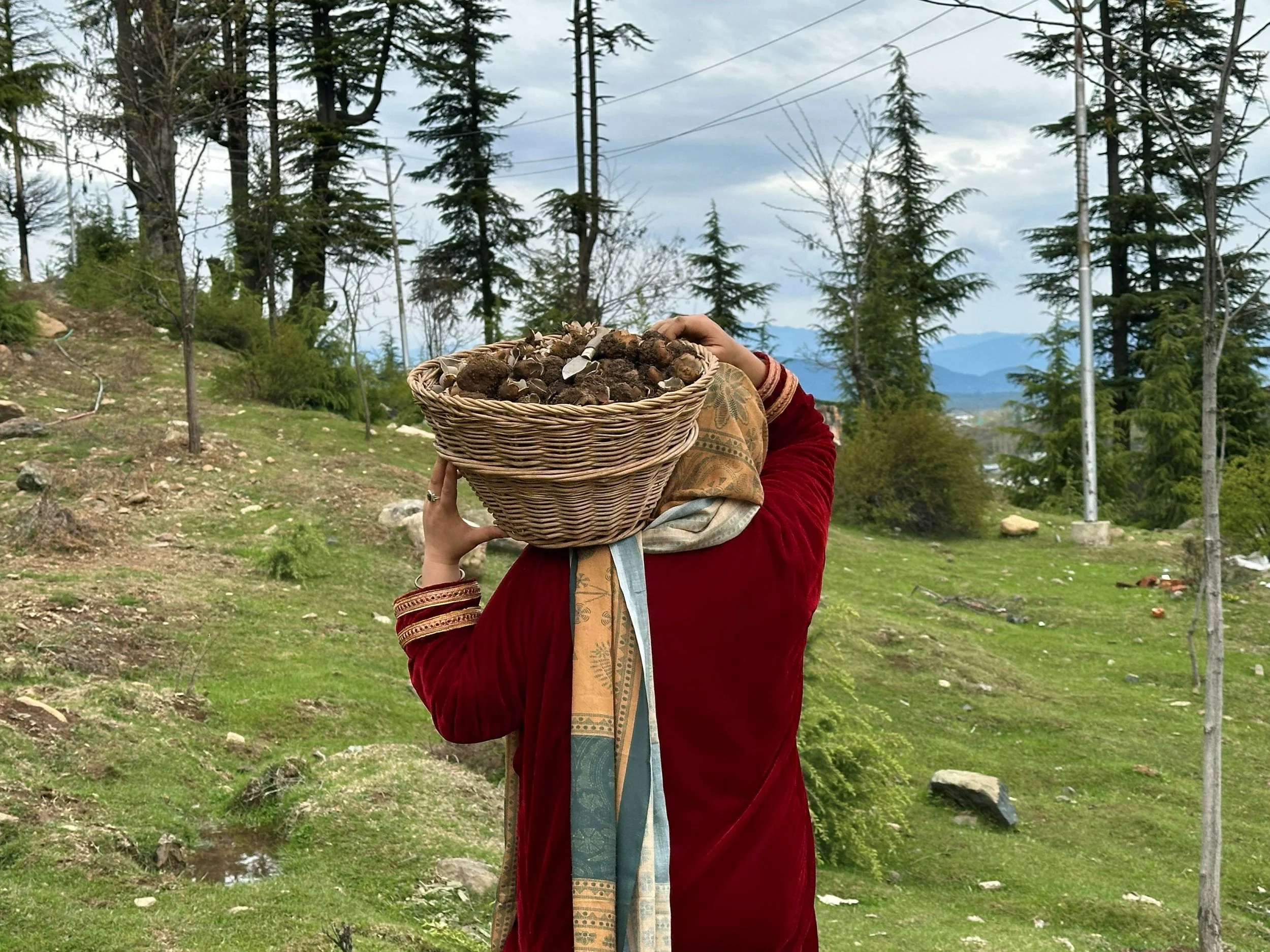
Making it takes patience. “We soak the rice grains, with the husk still on, in water for two days after harvesting. On the third day, we put the grains in a small gunny bag and sun-dry them. The husk comes off and the grain is exposed. We then stir-fry the grains in a pan before taking them to the athe-grate, the traditional stone mill, for grinding,” explains Abdul.
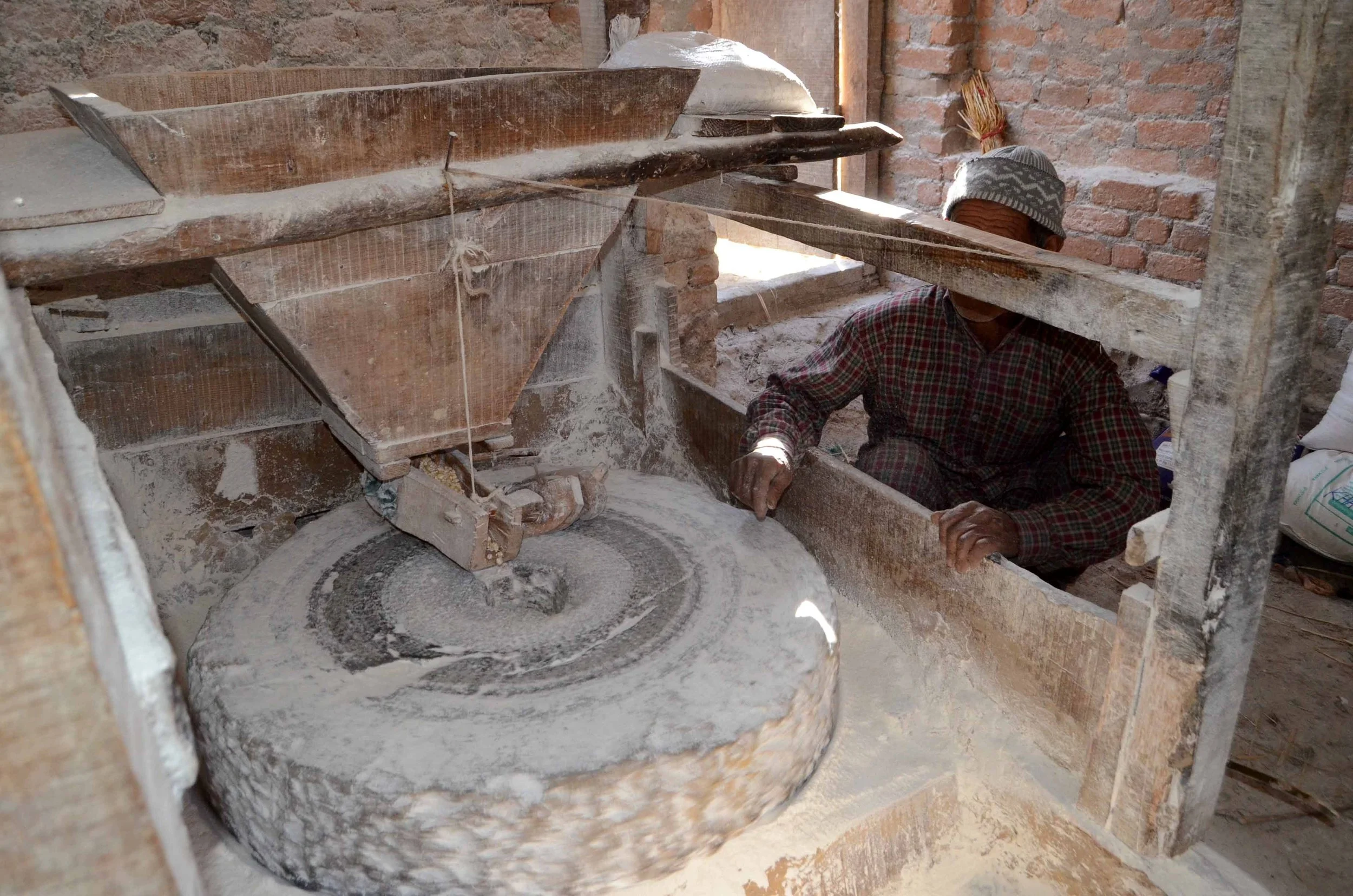
The Kashmiri stone mill.
Usually, the roasted paddy is pounded in a mortar to remove the husk. The cleaned grains can either be eaten whole or taken to a traditional stone mill to be ground into a powder. Mostly though, byel tomul is eaten as a whole.
Byel tomul is generally prepared in April, just as farmers begin treating and soaking seeds and preparing nursery beds for rice transplantation. “It is during this initial stage in April that we save some of the sprouted seeds from the main lot which is meant for the rice crop,” he says.
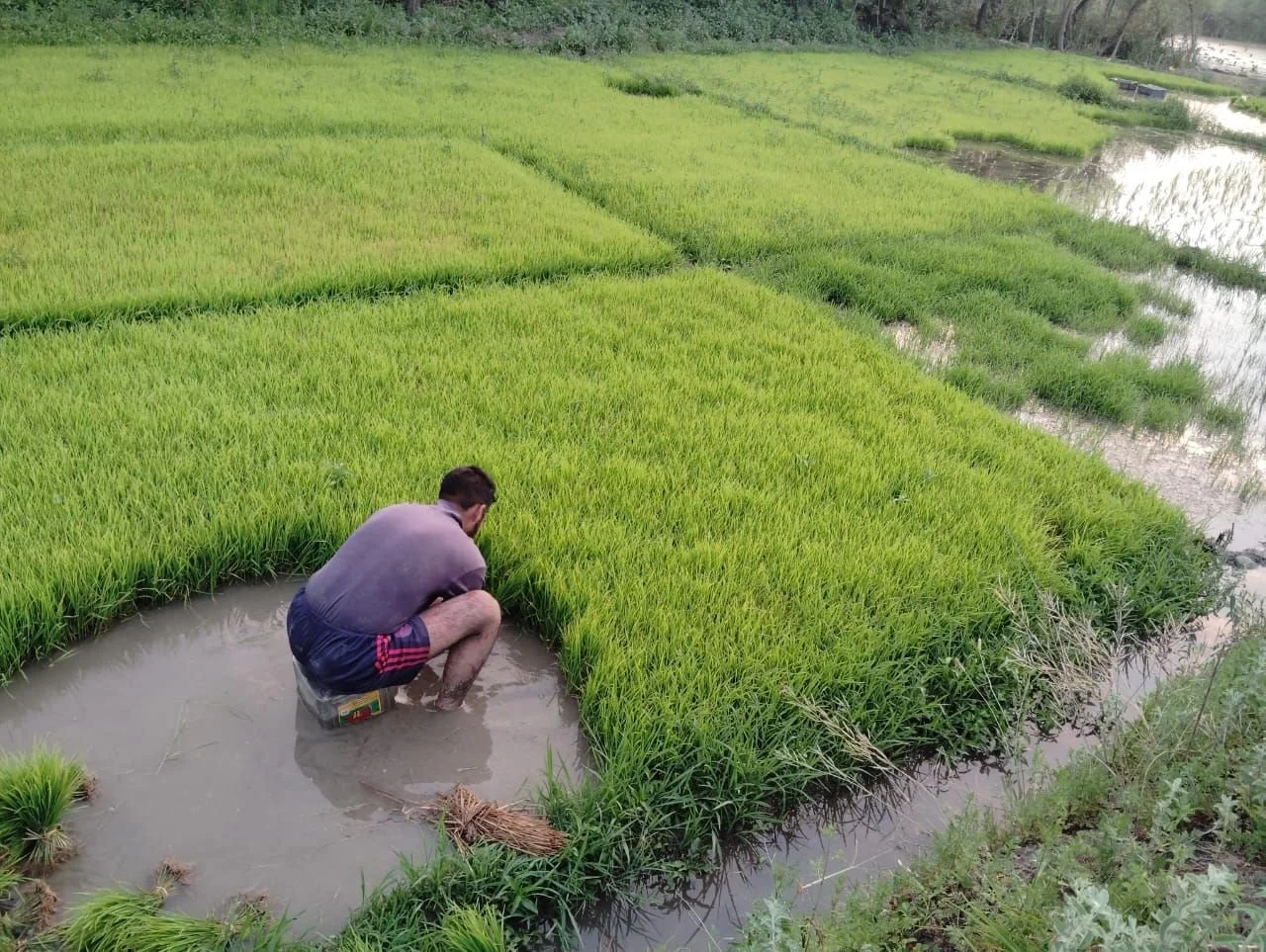
Part of what has kept byel tomul useful in farming households, generation after generation, is that it lasts. Properly soaked, dried and roasted, the rice resists insects and moisture for a long time.
“It can stay good for at least a year,” Abdul says. “The grains have to be completely dry before they're stir-fried. If the rice is still wet when it is roasted, it gets damaged easily and its shelf life is reduced. The harder the grain, the longer it can be stored. The softer it is, the greater the chances of it getting spoiled.”
That hardness, the thing that makes the grain keep, comes entirely from the roasting. Once dried and stored in an airtight jar, the grains can be eaten plain, mixed with sugar and dry fruits, or ground into soth, a powder stirred into noon chai to deepen its flavour. It’s not something you'll find on a shelf, either. “You will only find it with farmers.”
For Waheeda Pandit, a home cook based in Srinagar, byel tomul is a taste tied to childhood. “We would enjoy this snack in every season, mostly with crushed walnuts and sugar,” she recalls. “Our teeth would ache from the cavities, but we would still fill our pockets with it and eat it with the brightest smiles. It was the kind of thing children carried around all day, a fistful in a pocket, doled out between games, never quite finished before it was topped up again.” Decades on, she says, the sound of the crunch alone is enough to bring the memory back and cherish it again with a hot cup of noon chai.
The importance of rice in Kashmir
The harder the grain, the longer it lasts — this rule of thumb turns out to have a fairly precise explanation behind it. Dr. Asif Bashir Shikari, Professor, Genetics and Plant Breeding at Sher-e-Kashmir University of Agricultural Sciences and Technology, can trace it step by step.
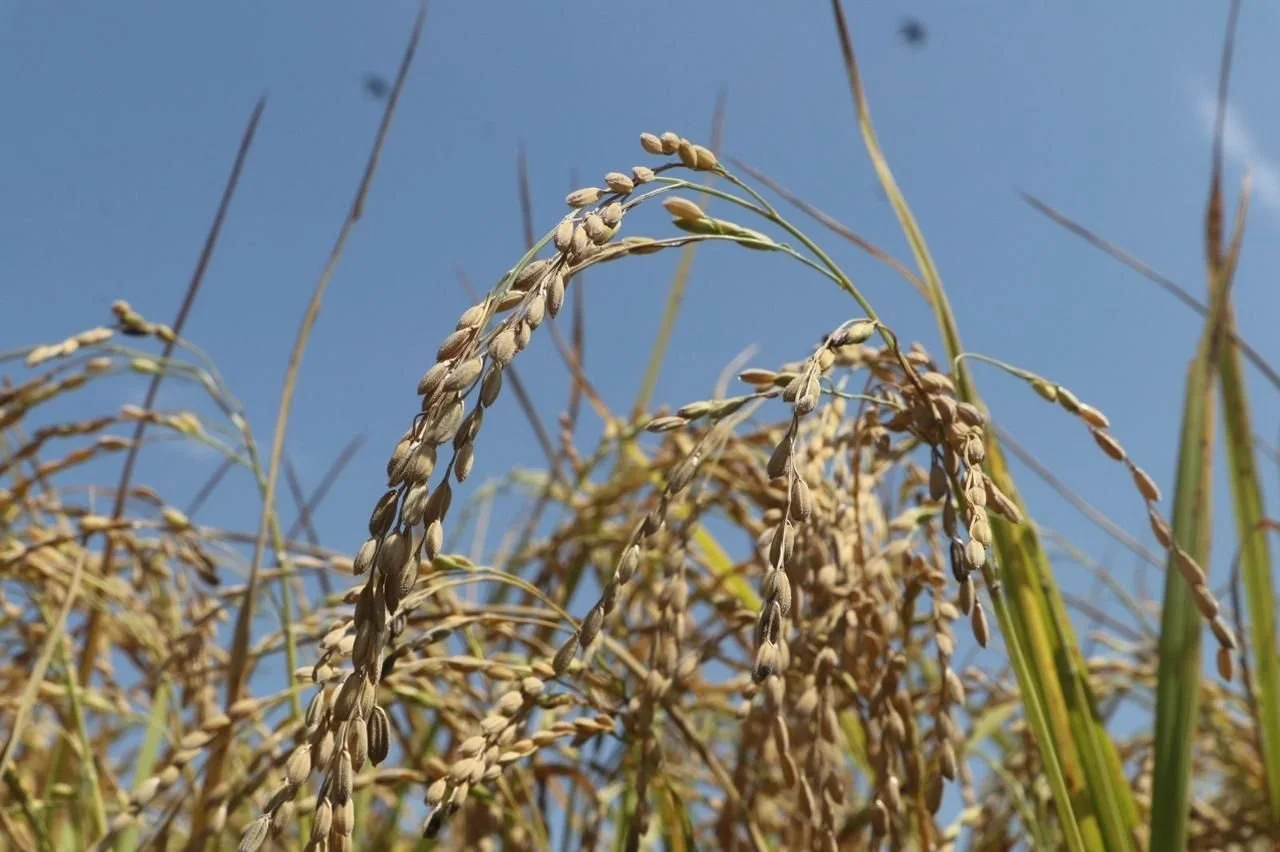
Rice is the staple food for much of Kashmir’s population.
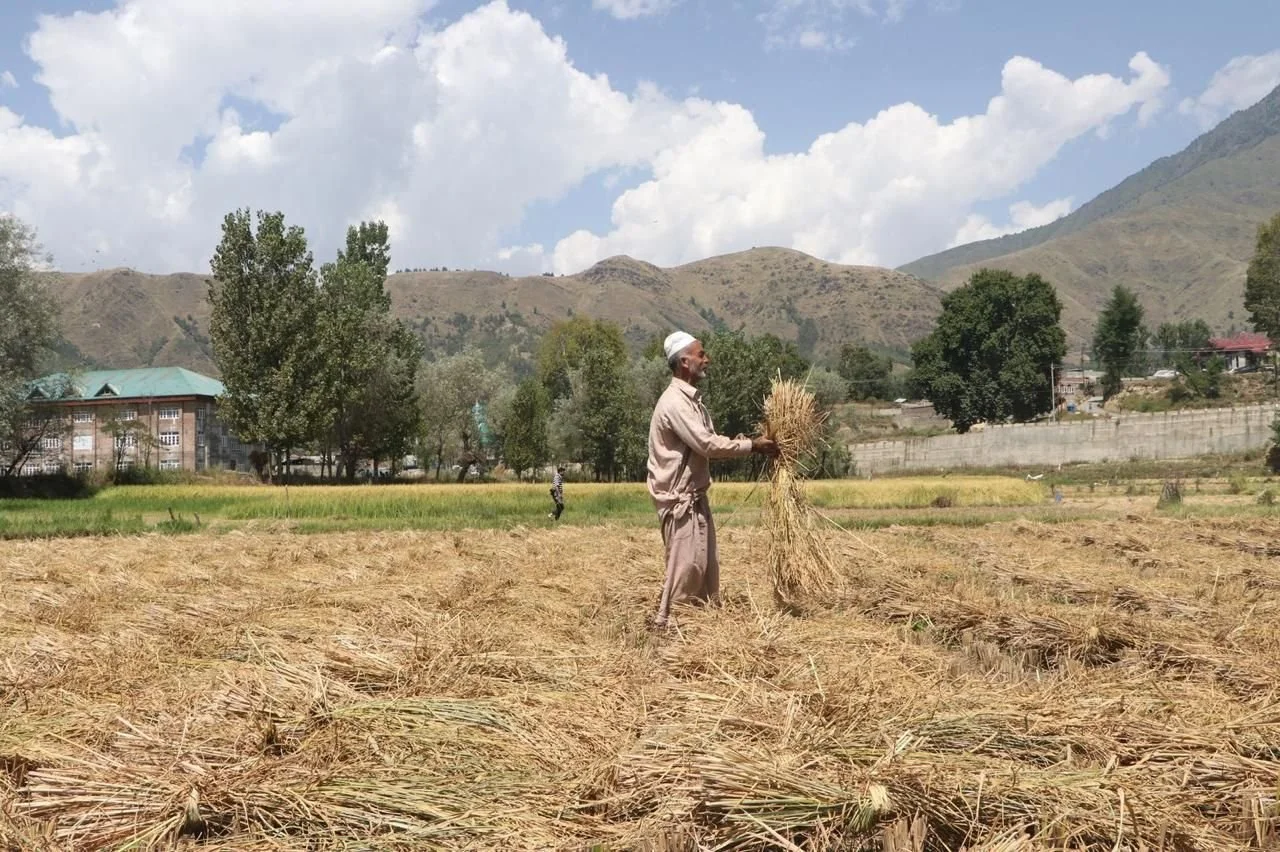
It is grown across a range of conditions in Kashmir.
Rice, he points out, is the staple food for much of Kashmir's population, grown across a range of conditions from the subtropical lowlands of Jammu, below 1,000 metres, up through the temperate Kashmir Valley, to colder terraces between roughly 1,650 and 2,400 metres. "Kashmir’s agro-climatic conditions have made the breeding of temperate and cold-tolerant rice varieties particularly important, distinguishing its rice cultivation from much of the rest of India," he explains.
Byel tomul, according to him, is really three separate transformations layered on top of each other. During soaking, water works its way through the husk, bran and endosperm, hydrating the grain’s starches and proteins, waking up enzymes that begin a slow, limited breakdown, and drawing some soluble compounds out into the water itself. Milling comes next, the husk and outer bran are stripped away, exposing the starchy endosperm, though this also carries off much of the fibre, oils, minerals and vitamins concentrated in those outer layers.
The last transformation is the one that matters most: roasting. As the hydrated grain hits heat, moisture evaporates fast and the structure changes, starch modifies, proteins denature, and reactions between reducing sugars and amino groups begin. Those reactions are what give the grain its brown colour, its roasted smell, its particular flavour and, just as Rashid says, its hardness and long shelf life.
There’s even a small nutritional footnote: ordinary rice runs around 6% protein, Dr Asif says, while byel tomul tends to land somewhat higher, around 8–9%, depending on the grain and how it was processed.
For Abdul and others in Kashmir, byel tomul is a taste of transition: from snow to soil, from winter to spring, and from seed to rice.
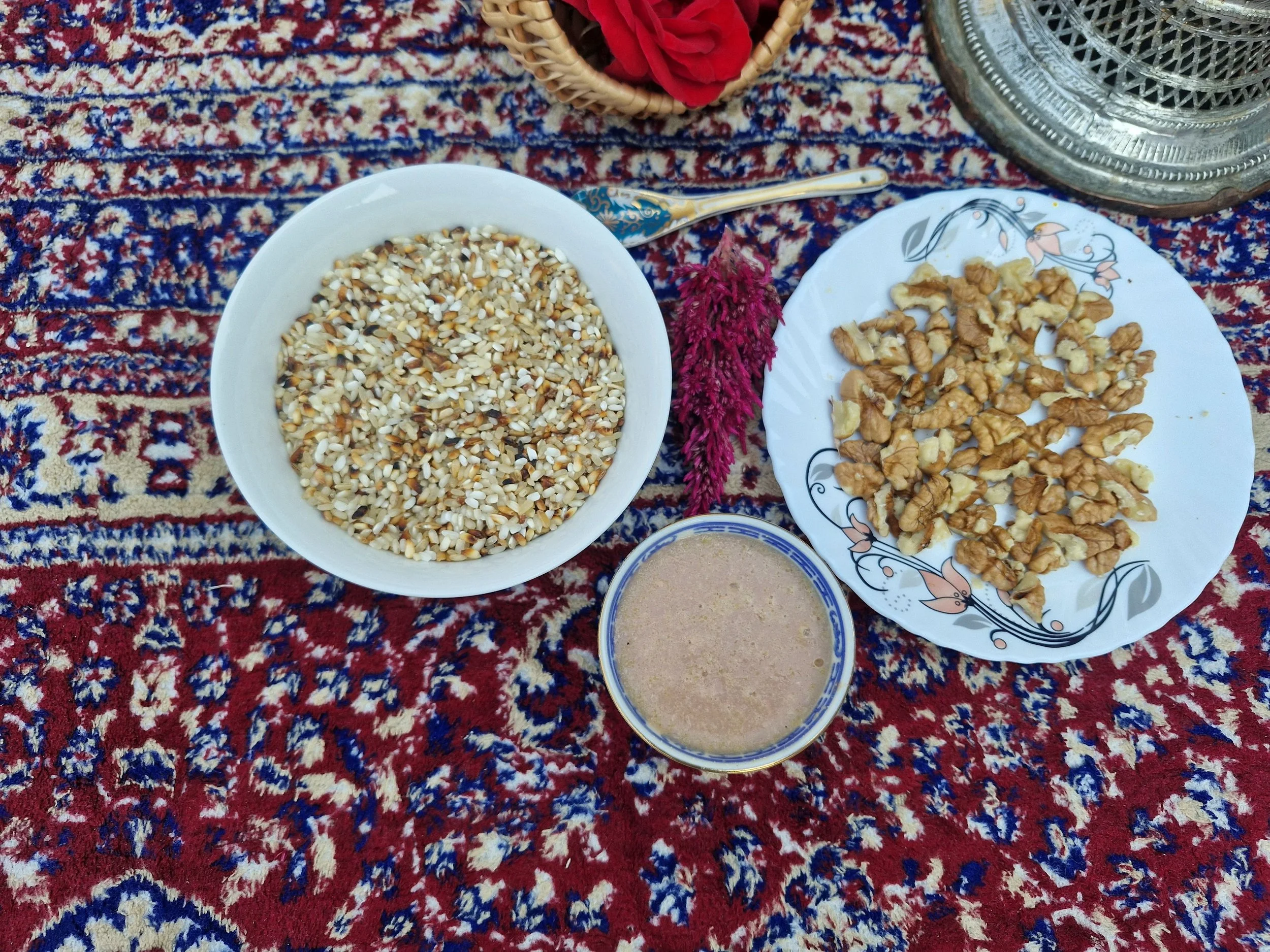
Byel tomul is usually enjoyed with crushed walnuts, sugar, and noon chai.
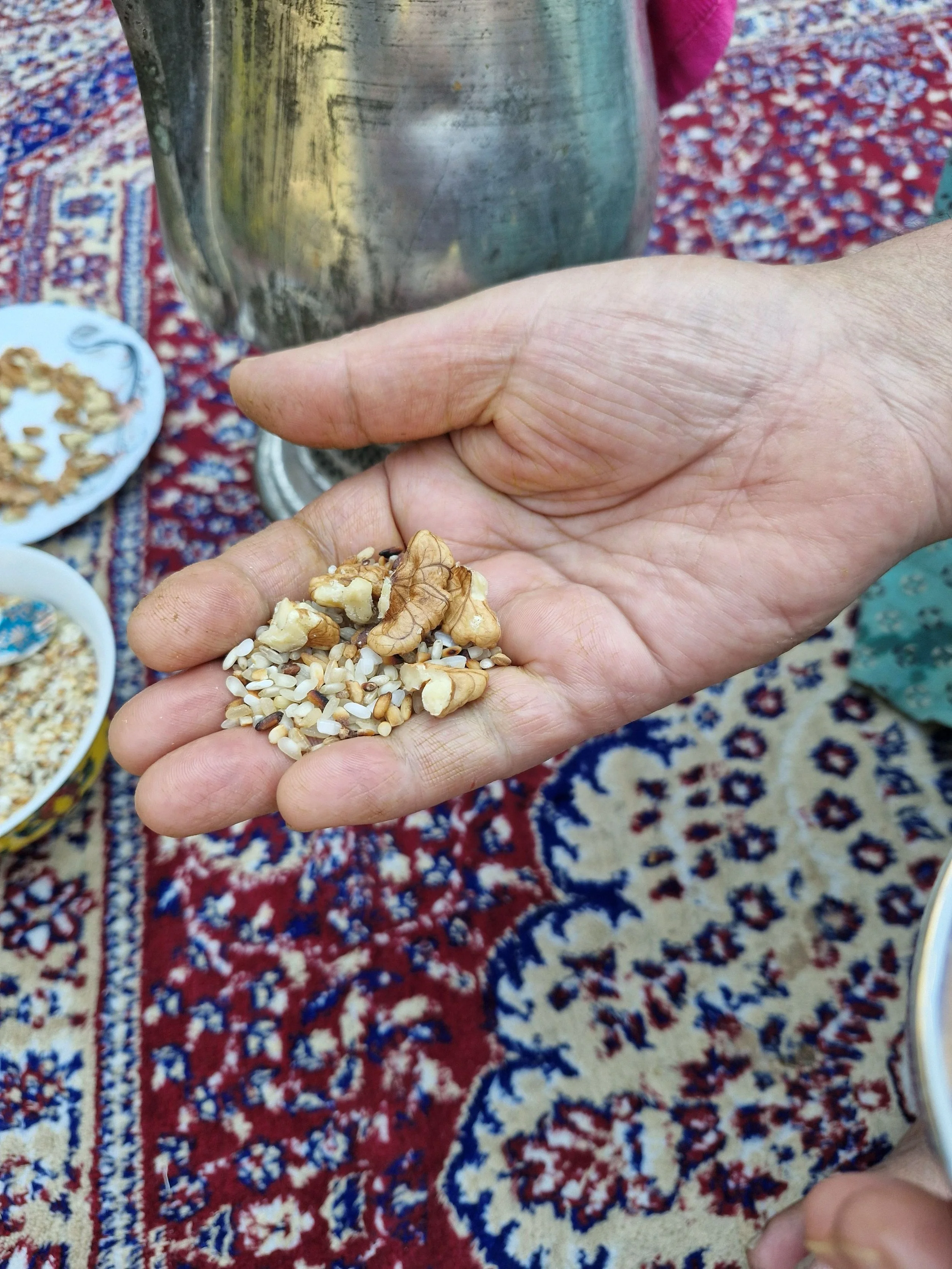
RECIPE FOR BYEL TOMUL
Ingredient
1 kilo of Paddy (unhusked rice)
2 litres of water, for soaking and washing
50 gm sugar, to serve (optional)
100 to 150 grams walnut kernels
100 gm roasted corn kernels, optional
Method
Start by washing the paddy thoroughly in water. The grains can contain some bits of soil and other impurities, so wash them 3 to 4 times. During washing, some very light, empty husks will float to the surface. Remove and discard them.
Once the paddy is clean, put it in a large vessel and add 2 litres water to cover the grains completely. Leave it to soak for three days.
After three days, drain the water completely. Transfer the soaked paddy to a clean cloth or a sturdy bag and tie it tightly. Place the bag on a raised surface, such as a large stone or a mesh, with a vessel underneath to collect the water as it drains.
Leave it for about a day.
Spread the paddy out on a clean cloth and leave it in the sun until it is completely dry. This is important: the grains should be thoroughly dried before roasting.
Once dry, roast the paddy in a wide pan over “medium heat”, stirring continuously. Avoid high heat, as the grains can darken or burn on the outside without cooking properly inside. Slow roasting gives the best result and makes the finished “byel tomul” pleasantly crisp rather than excessively hard.
Roast until the grains change colour and are cooked through. Spread them out and allow them to cool completely.
Traditionally, the roasted grains are then pounded in a large wooden mortar using a heavy wooden pestle. A smaller wooden mortar can also be used for less quantity , although it may take a little longer. The aim is to loosen and remove the husk without crushing the rice into a powder.
Transfer the pounded grains to a sieve and shake them gently to separate the husk. Remove and discard the husk and any unwanted pieces. If some husks remain attached, pound the grains again, but do not over-pound them.
Once the grains are clean, byel tomul is ready to eat.
To serve: mix the roasted grains with a little sugar, crushed walnut kernels and roasted corn.
Hirra Azmat, a journalist based in Jammu & Kashmir, with a focus on science, health, and the environment.
Photos credit: Hirra Azmat, Bilal Bahadur.
ALSO ON GOYA