A Syro-Malabar Recipe for Breadfruit and Beef Curry
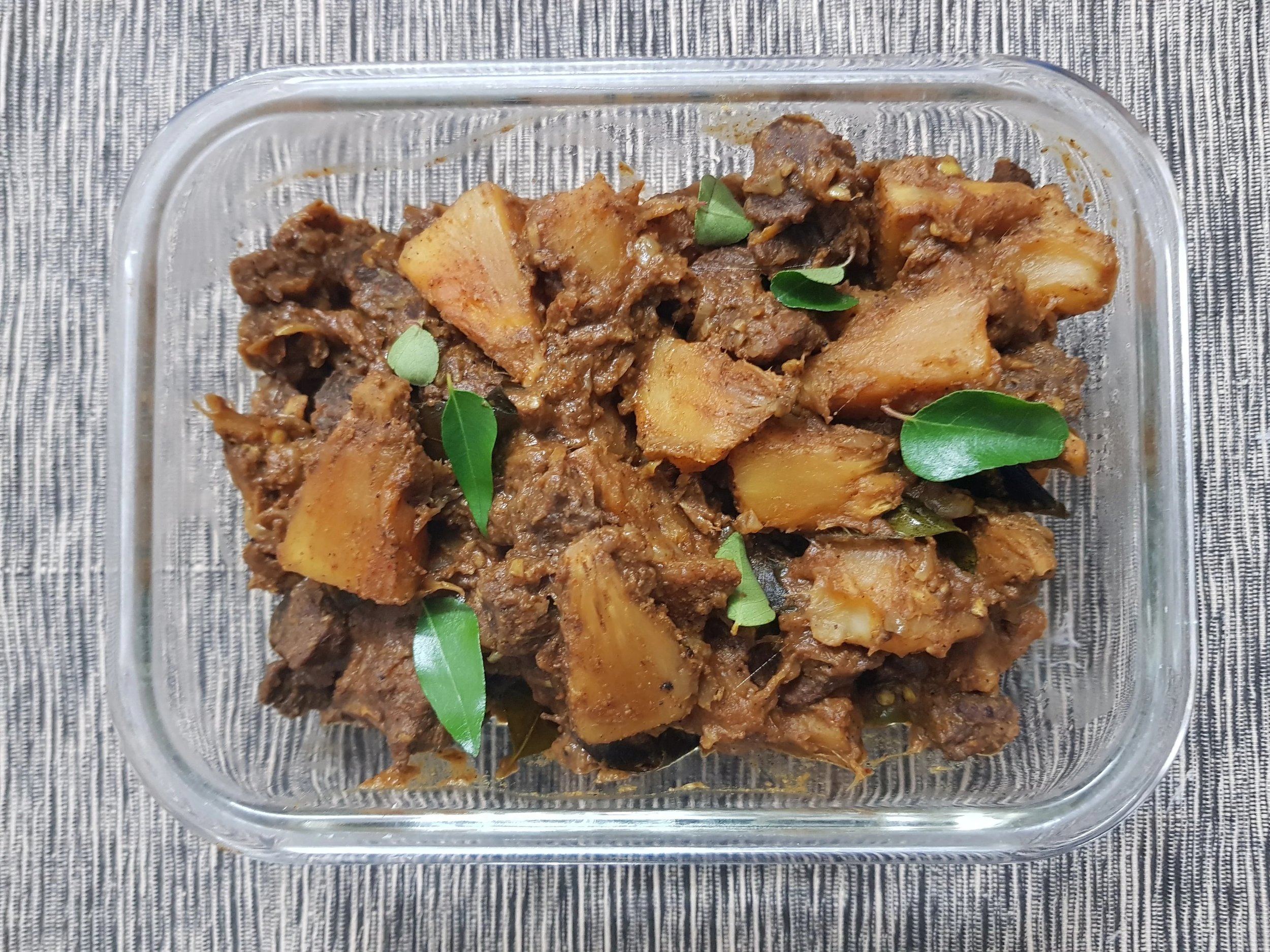
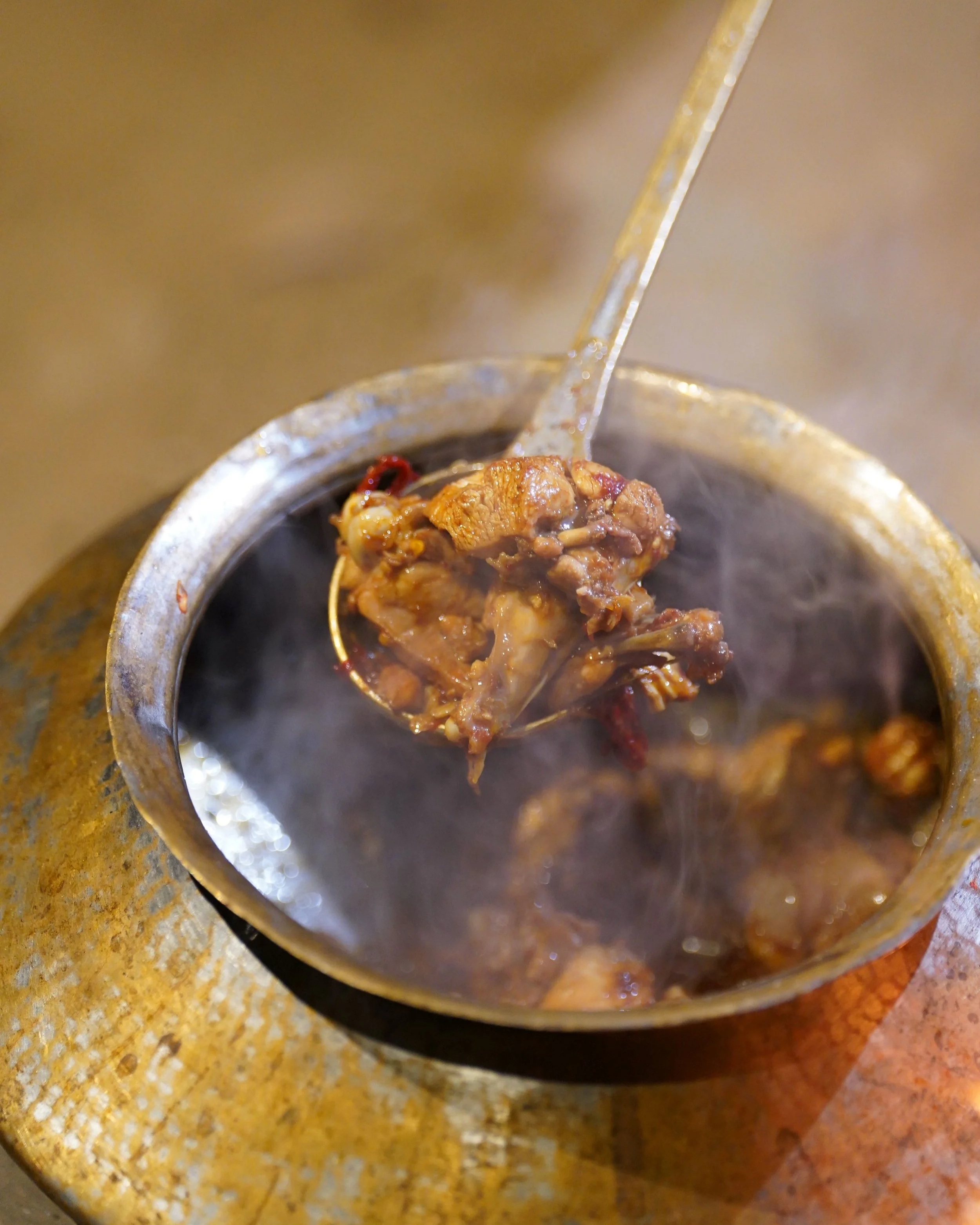
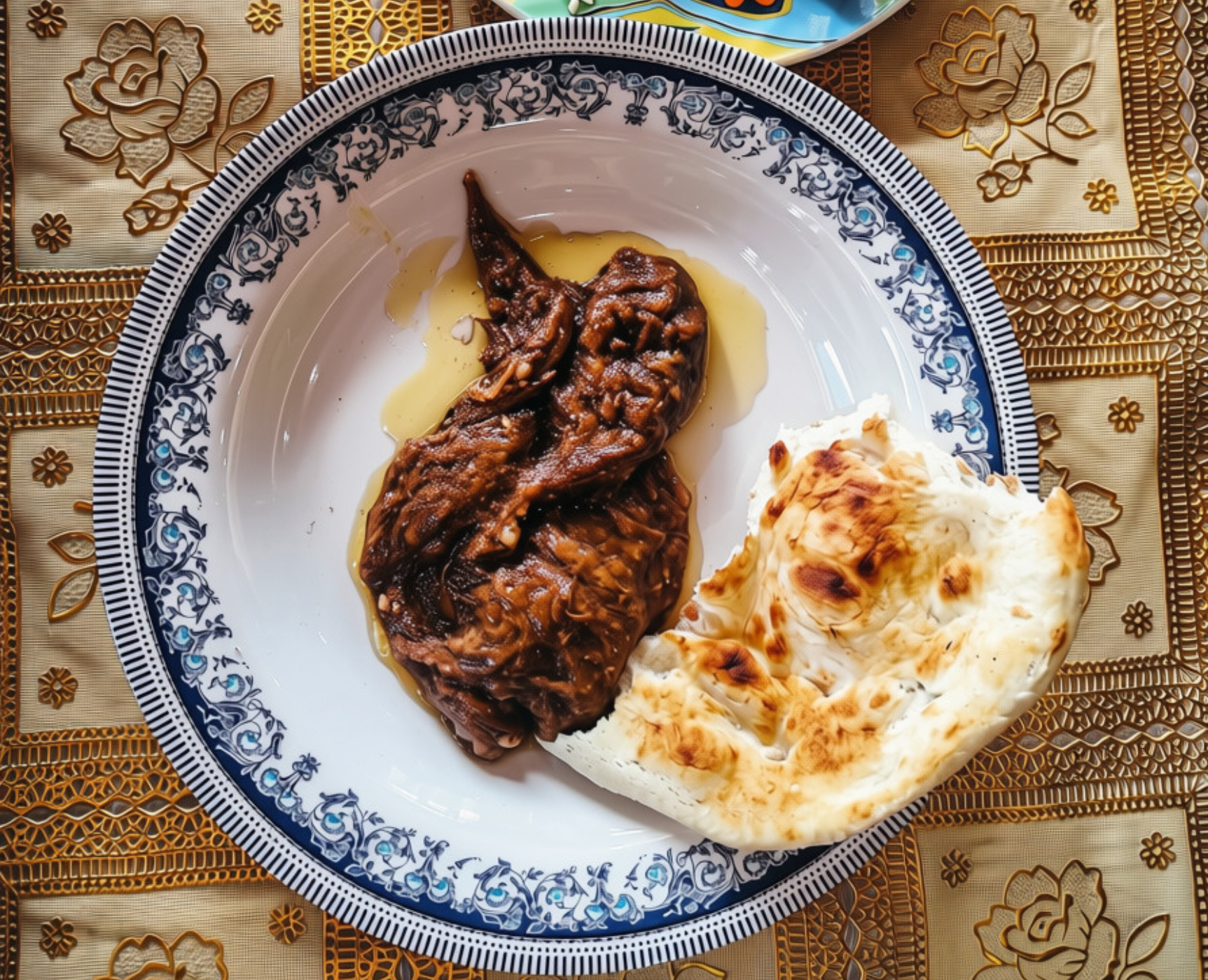
The monsoon’s arrival in Kerala signalled the season for kadachakka. The humble breadfruit, central to many Syro-Malabar Christian dishes, carries both sustenance and memory. Here, Sruthi Vincent looks back on time spent with her father’s cousin, Velliamma, and her deft hand at cooking beef and breadfruit curry.
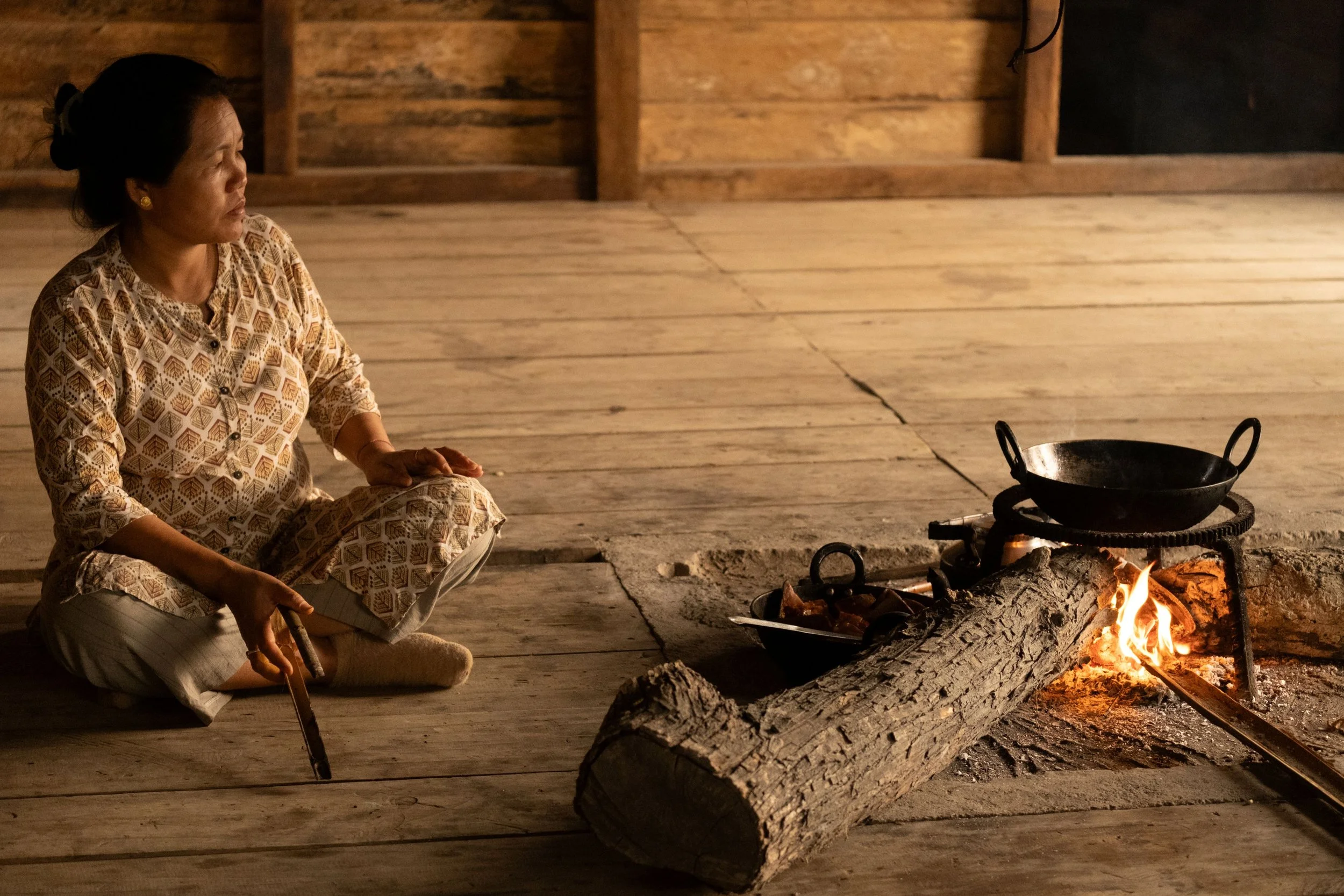
I was born in Dubai and raised in Sharjah for the first 18 years of my life. When the time came to join university, I returned to my hometown Thrissur, in Kerala, to pursue a degree. I stayed at a hostel, and on weekends, I'd return home for a bit of rest, and the delicious food that 'Beep velliamma’ cooked for us. Velliamma was teasingly called ‘Beep’ because she could never pronounce the 'f' in beef. She was a cousin of my father’s, living with us to help care for my aging aunt and uncle. So there I was, spending leisurely weekends chilling with three 70-year-olds.
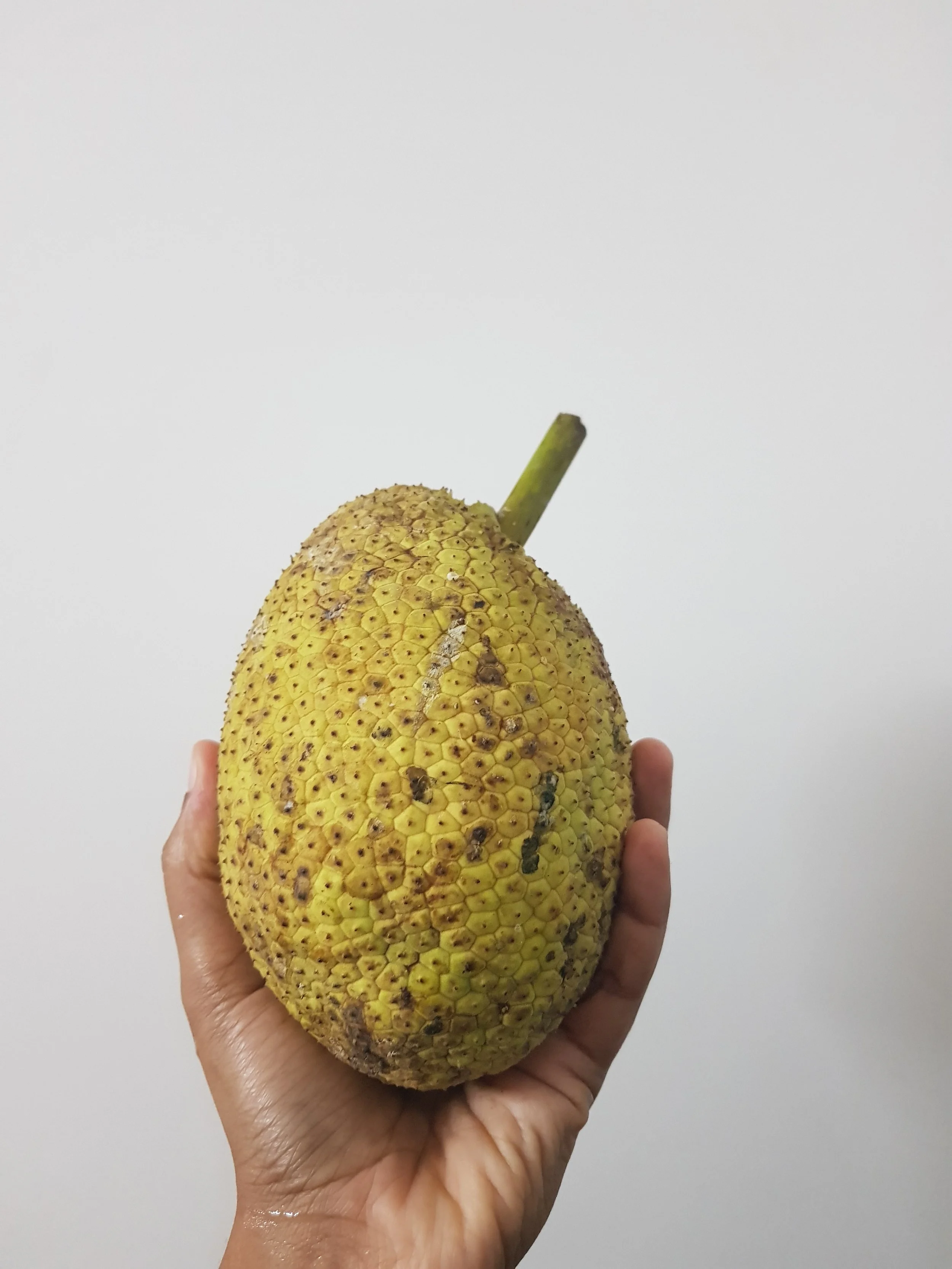
This is where I remember eating kadachakka for the first time and loving it. When the season arrived, just around monsoon, Beep velliamma and I would take an umbrella and a thotti (an angled hook tied to the end of a steel rod to pluck fruits from trees) and go to my cousin's garden. They had a breadfruit tree in their backyard. We’d pluck the kadachakka with rain falling on our faces, securing enough to make an upperi or even better, to mix it in with beef.
Our backyard once had a tree as well, but it had been cut down, and what remained now was the sad stump of a tree I would have dearly loved.
In Kerala, breadfruit trees are not typically grown or maintained for harvesting. They are just backyards trees left to their own devices. They begin to fruit in the summer, and are ready for the plucking with the arrival of the monsoon.
Variations in cuisine have been evident in the stories I heard from my parents who are Syro-Malabar Christians. My mother remembers that it grew abundantly in her hometown in Kottayam, but was never a fruit she had any fondness for. It was cooked to mimic meat dishes, with the addition of garam masala, coriander powder and the like. However, after her marriage, as she migrated to Thrissur, further north in Kerala, the difference in preparation was that beef was mixed in with kadachakka. This was done with all meats — pork was cooked with raw banana, beef cooked with koorka (Chinese potato), chicken with potatoes. In those days, meats were purchased for special occasions, and in small quantities. My father explained that the addition of these vegetables resulted in heartier dishes, and the increased volume helped feed more mouths in lean times.
These histories point to differences in cuisine that rise up from various parts of Kerala, where religion, region and socio-economic status often intersect to create beautiful, hearty dishes with depth of flavour.
Beep velliamma passed away some years ago and I never got her recipe. Now, 15 years later, as the monsoon begins in Kerala, I bought kadachakka from a supermarket and cooked it with beef. It didn't taste quite like I remember, but I savoured it simply for the memories of those delicious days in Thrissur when weekends in the monsoon were about eating and relaxing.
RECIPE FOR KADACHAKKA WITH BEEF
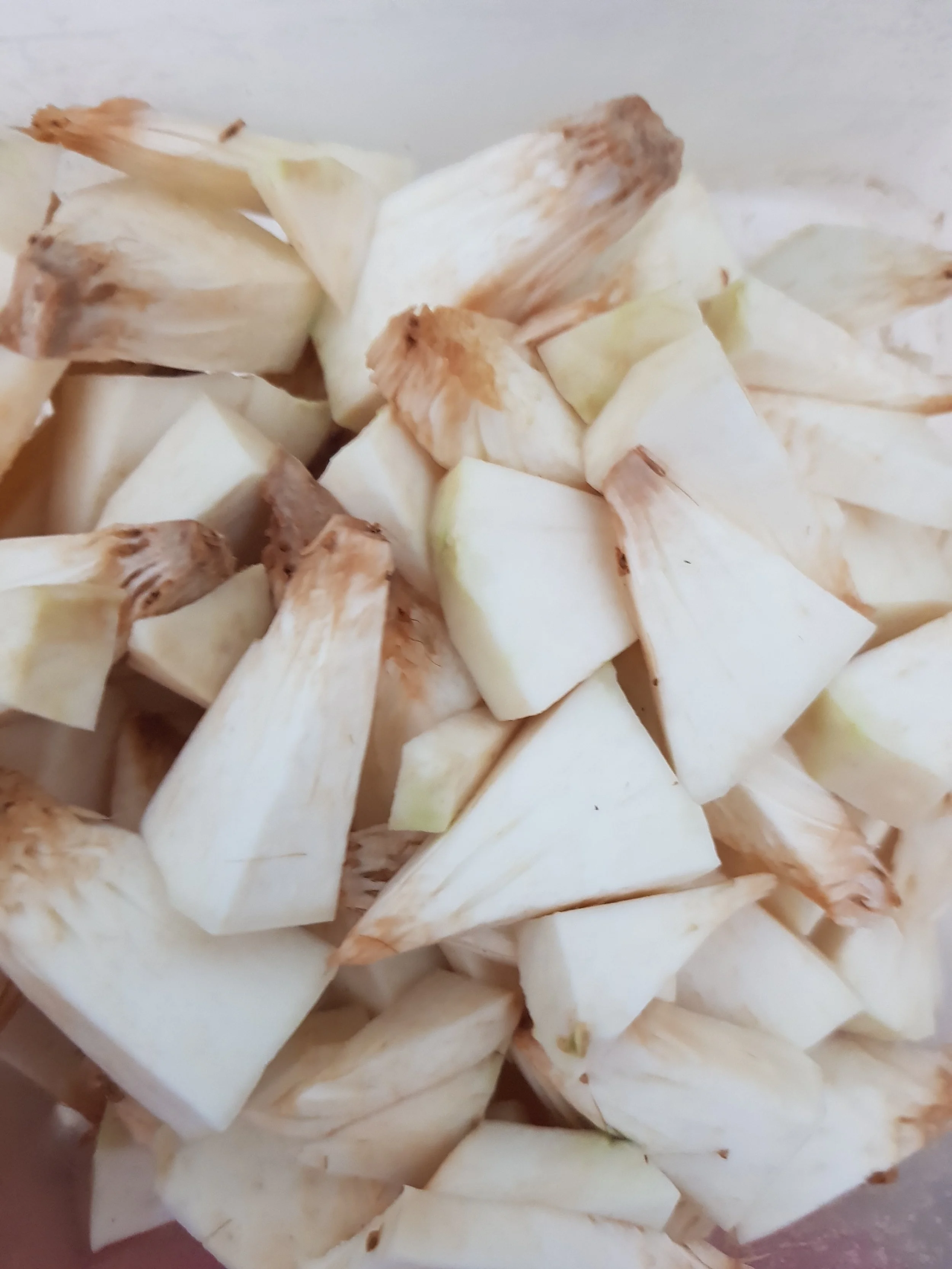
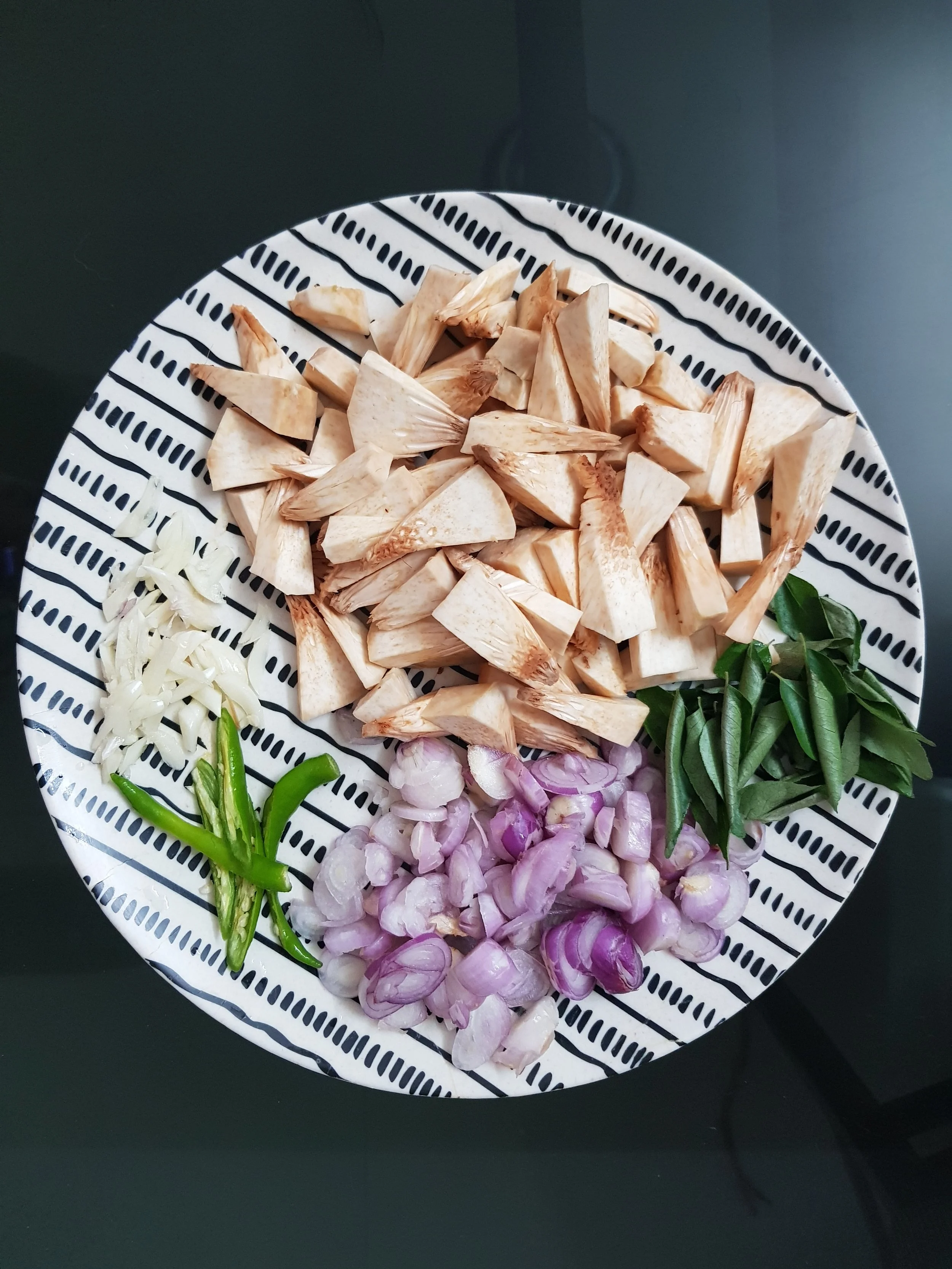
200 g kadachakka, cut into small triangles
200 g beef, cut into small pieces (works with 150g of beef as well)
15 to 20 chopped shallots (the more the better)
2 tbsp of ginger and garlic crushed to a paste
1 green chilli
½ tbsp of Kashmiri chilli powder
¼ tbsp of turmeric powder
2 tbsp of garam masala
2 tbsp of coriander powder
¼ tbsp of pepper (or according to heat tolerance)
Salt to taste
Coconut oil
Method
In a pressure cooker, add in the beef, 1 tbsp of ginger-garlic paste, 10 curry leaves, 1 tbsp each of the garam masala and the coriander powder. Add 2 pinches of salt and a teaspoon of coconut oil and mix the ingredients well. Pour water just up to the level of the beef and cook it for 6 to 8 whistles depending on the cut of the beef.
In a separate pan, heat 2 to 3 tablespoons of oil on medium heat and add in the shallots and the rest of ginger-garlic paste. Let it wilt a bit and then add in the green chilli and curry leaves. Saute for about 30 seconds and add in the Kashmiri chilli powder, turmeric powder and 1 tbsp each of garam masala and coriander powder. Add salt according to taste and pepper as well. To this add the kadachakka and mix well to ensure the kadachakka is coated with the masala.
Immediately add the kadachakka into the beef and cook it in the pressure cooker for one whistle. This will be enough to cook it through. When cooked together the beef and the kadachakka would have blended in so well, as the kadachakka soaks up a lot of the beef gravy.
If the dish is too watery, it can be cooked off on an open high flame for a bit.
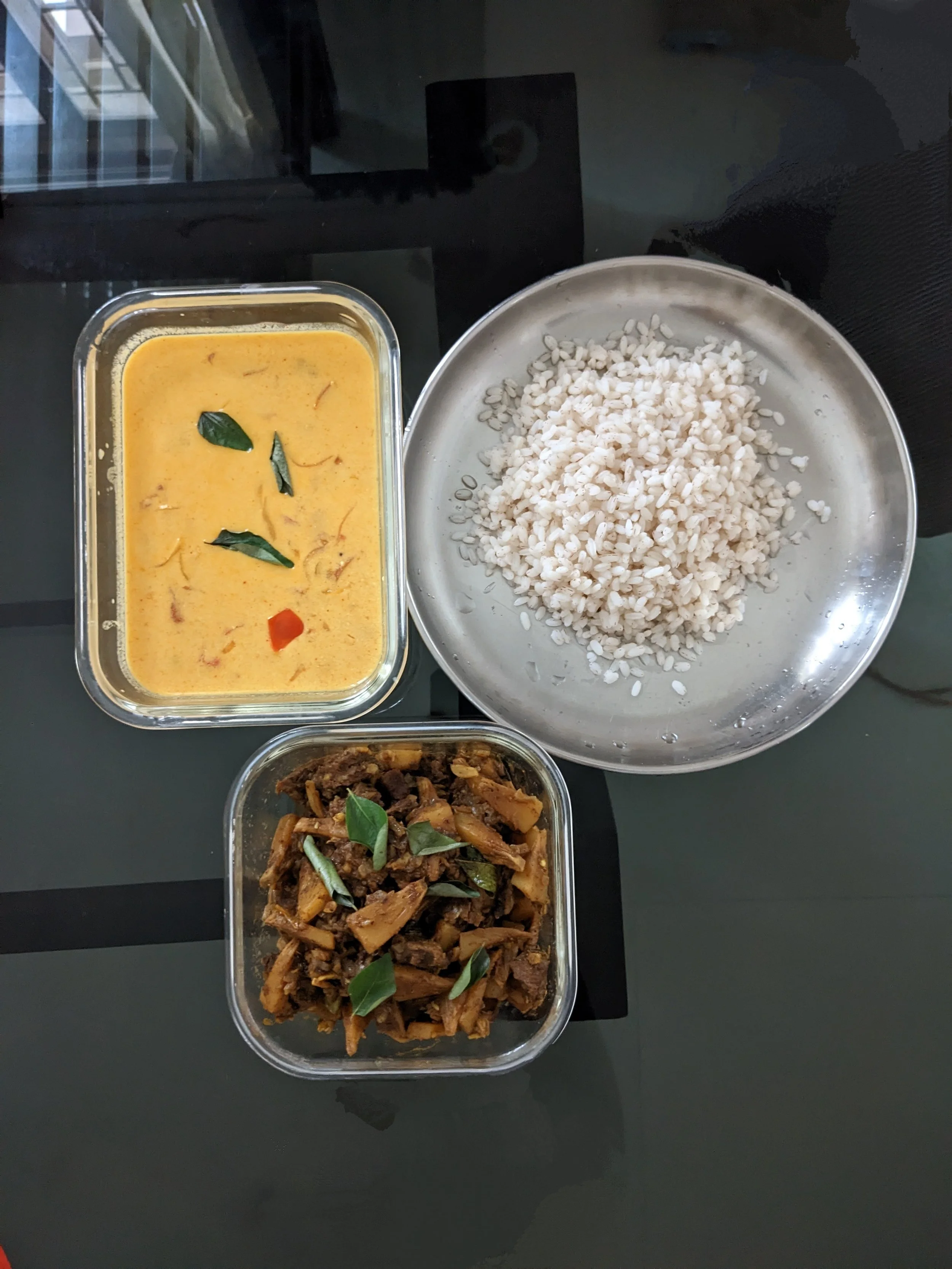
Garnish with a few curry leaves on top and serve with rice and morru kachiyadhe (buttermilk curry).
Sruthi is a full-time therapist from Kochi who loves to spend her free time dreaming of food, thinking of what to cook next, trying new restaurants, and writing travel and food articles along with her husband on their website traveltoeat.in
ALSO ON GOYA