Life with the Siddis: A Chef’s Journey into the Forests of Yellapur
Journeying deep into the Western Ghats, Chef Goku spends time with the Siddi community, whose lives are shaped by the forest they inhabit. In their homes and kitchens, he learns their cuisine, and the intricate relationship they share with the land.
In the forests of Yellapur’s Western Ghats, within the Uttara Kannada district of Karnataka, lies a community who’s life echoes generations of forest-dependent culinary traditions. To the Siddi families who live here, this Lingadabailu forest is not just home, it is both sustenance and livelihood.
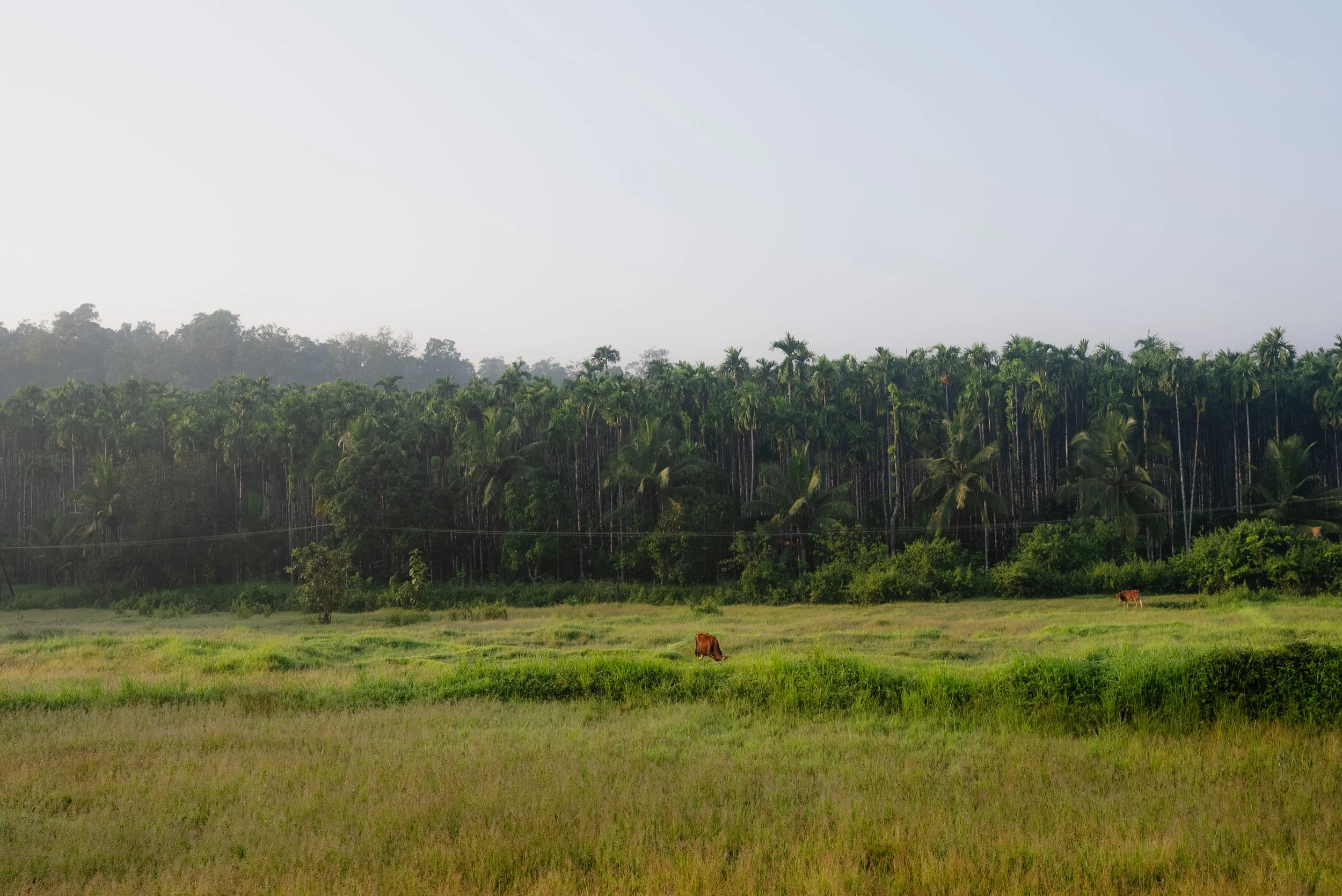
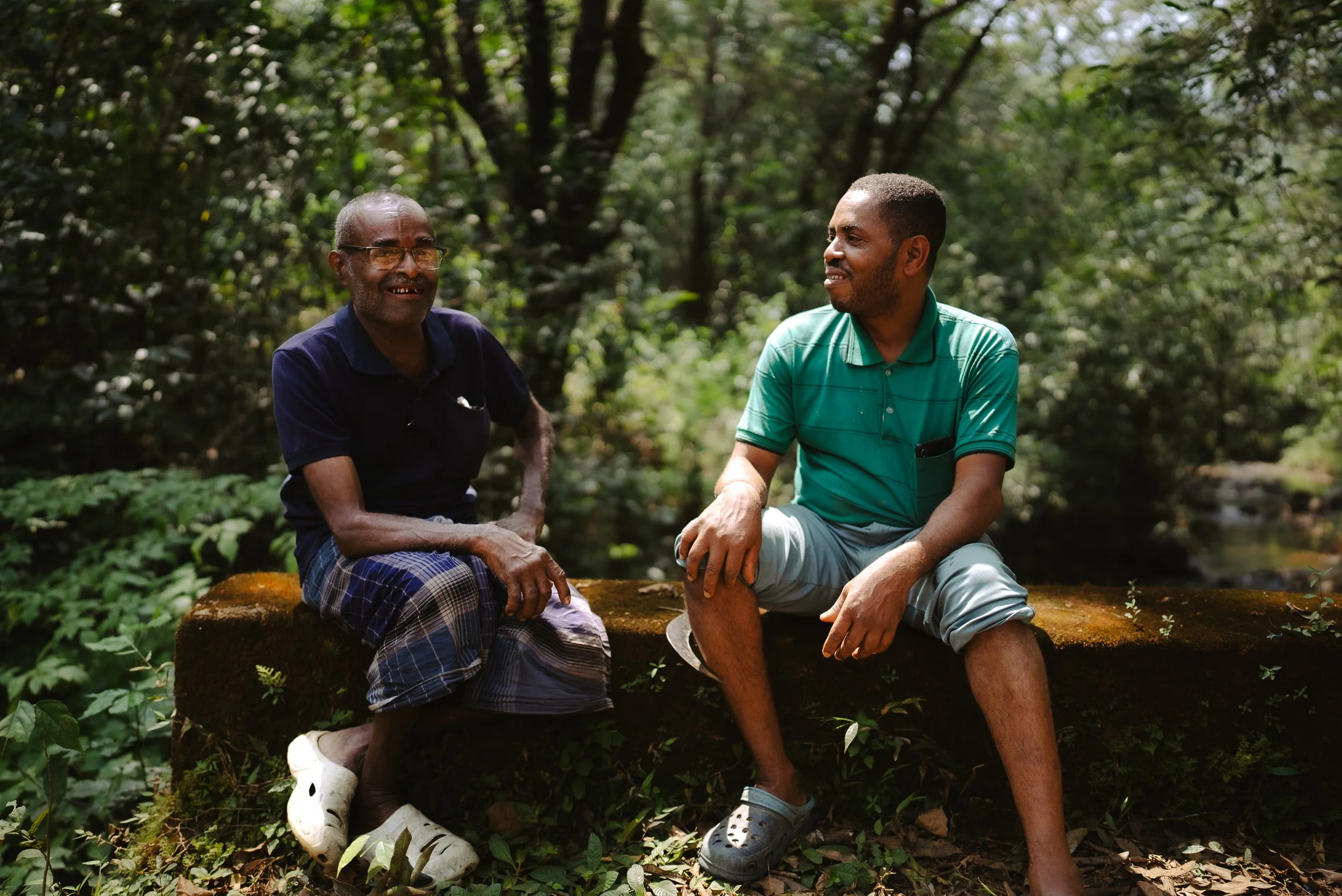
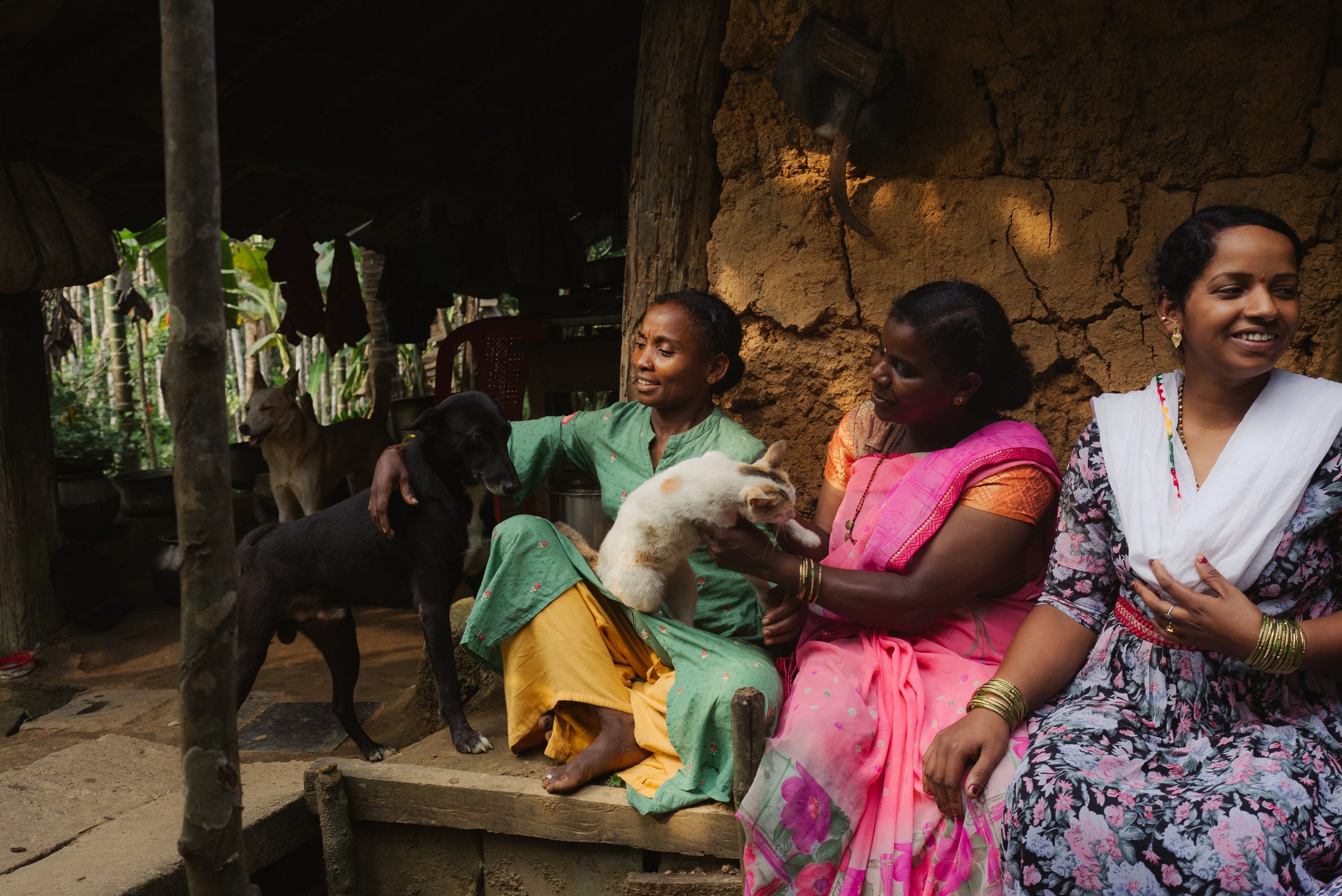
The Siddi community lives in the forests of Yellapur. Photos credit Terrence Manne
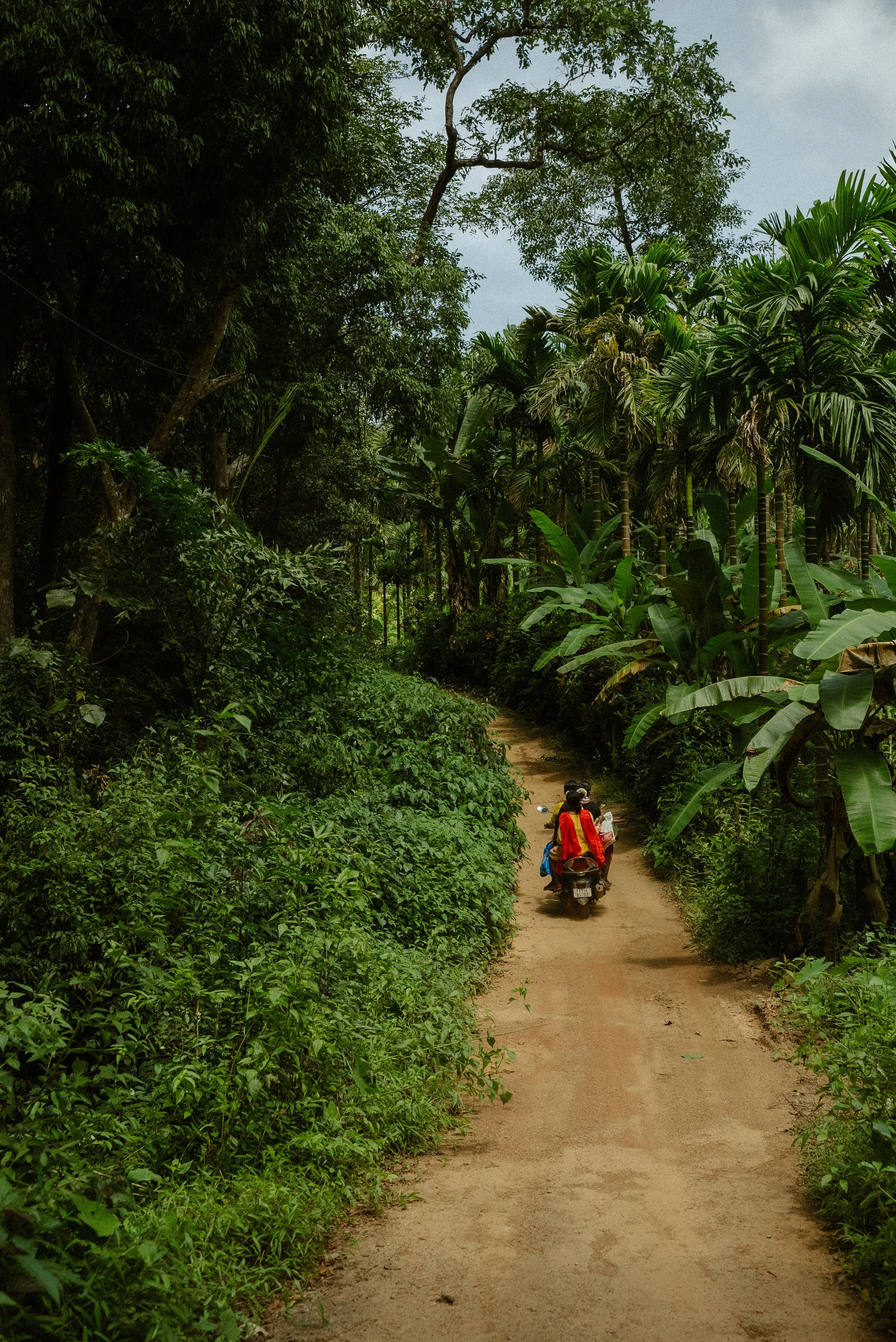
During the British occupation, some Siddis fled deeper into the forests of Uttara Kannada, building new communities that lived close to nature.
The Siddis are of East African Bantu descent, brought to India through centuries of migration and slave trade, some arriving as early as the 7th century, and more during the 16th century when Portuguese ships brought them in during the spice trade. Over time, many became soldiers and bodyguards for Indian rulers. In Kodagu, for instance, they served as palace guards for King Dodda Veerarajendra. During British occupation, some Siddis fled deeper into the forests of Uttara Kannada, building new communities that lived close to nature, preserving fragments of African heritage while embracing the culture and languages of Karnataka. The community in Yellapur are primarily Hindu, with similar customs and traditions as rest of India. Though today they speak Indian languages, follow local religions, and live within Indian customs, traces of their African identity remain, most powerfully in their their reverence for the forest.
Forest Walks
When I arrive at Yellapur, the wilderness of the region draws me in immediately; the forest, the creeks, the land, the foraging paths.
The people look different, their features evidence of an African lineage; yet they speak fluent Konkani and Kannada, dressed in sarees and mundus. The women welcome me into the Damani Community Stay with urli juice, a sweet, cold drink made of horse gram and jaggery. It is earthy and nourishing, the perfect start to a long day of forest foraging.
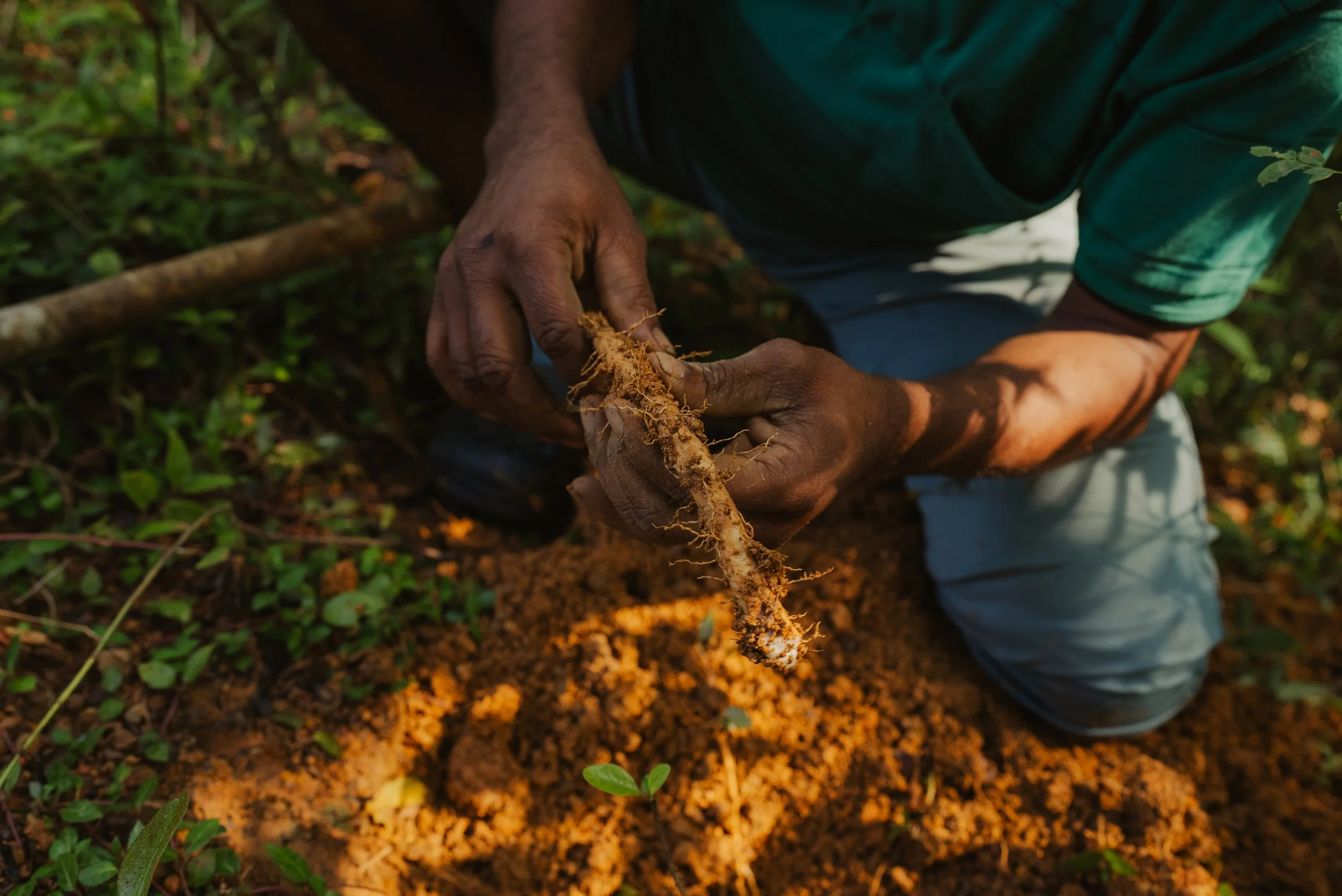
Harvesting wild turmeric or kasturi arishina.
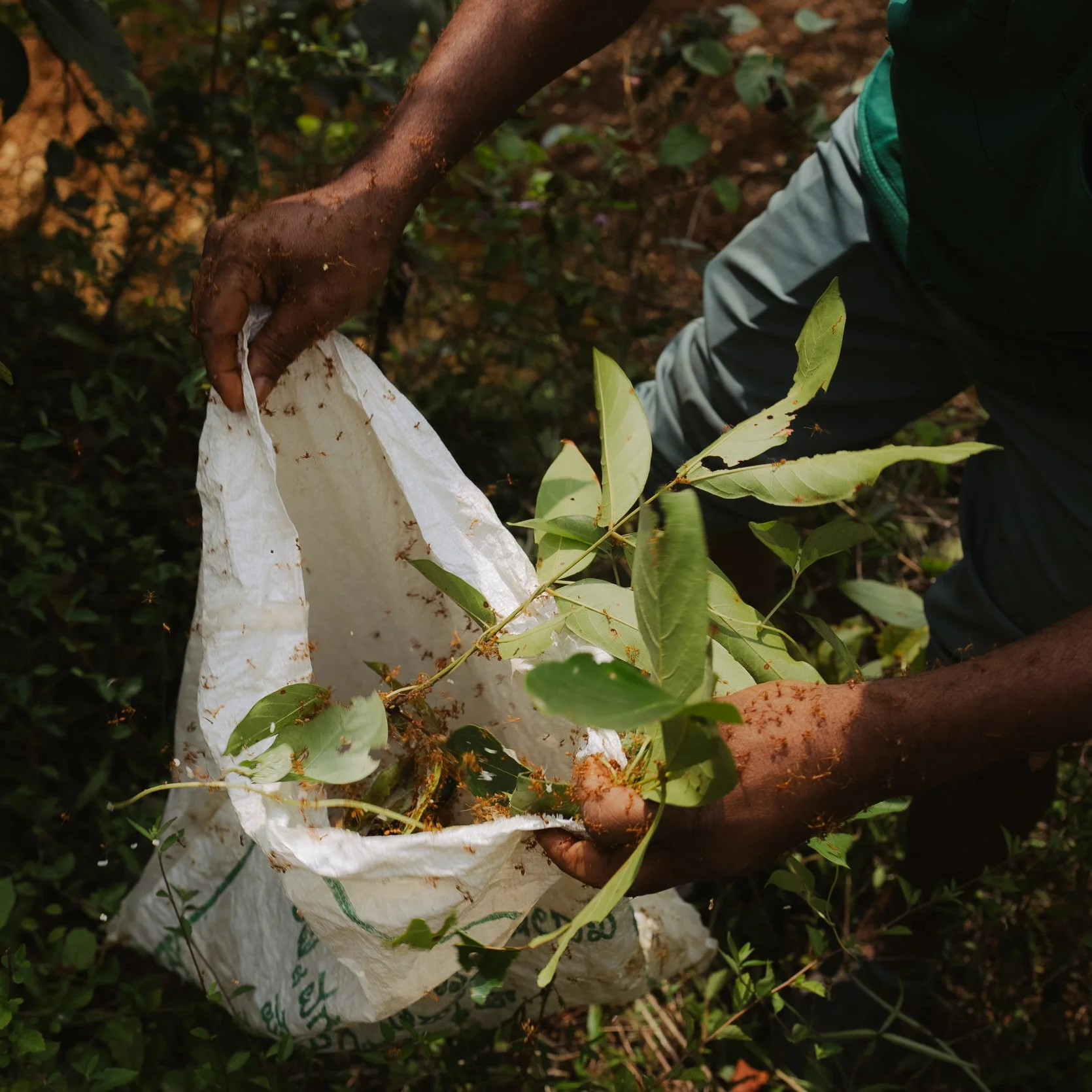
They forage for red ants….
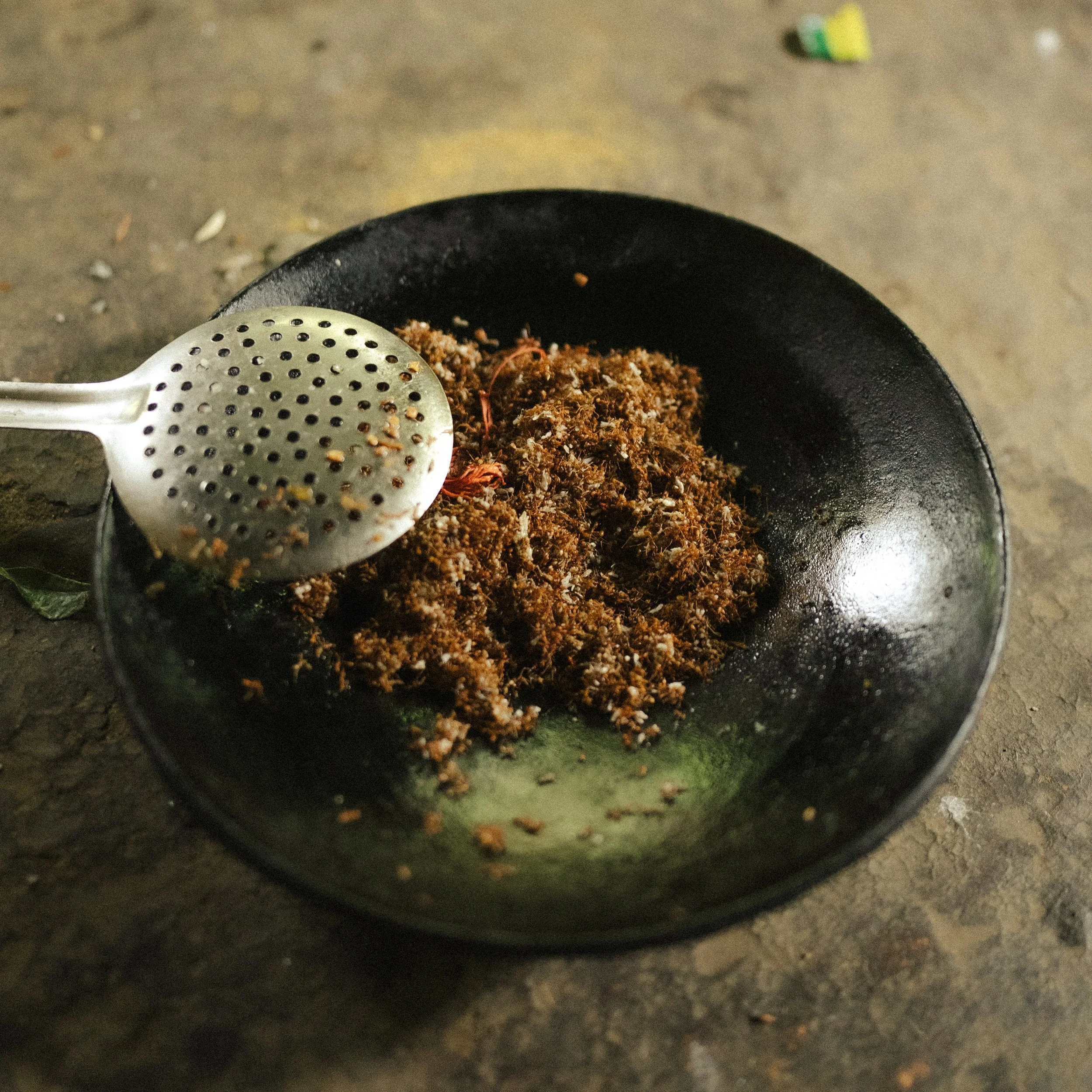
…and dry roast them over gentle heat.
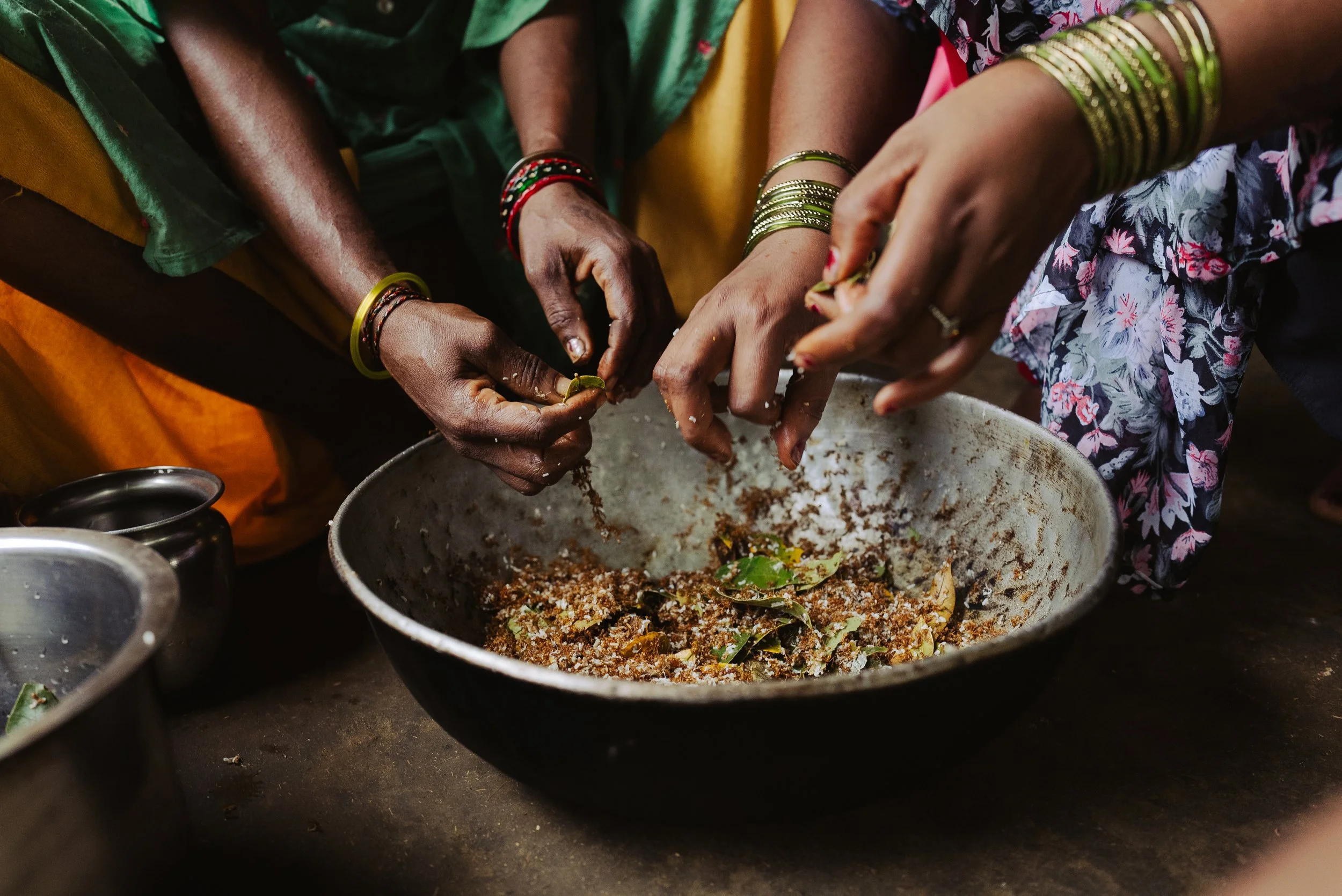
Segregating the ants.
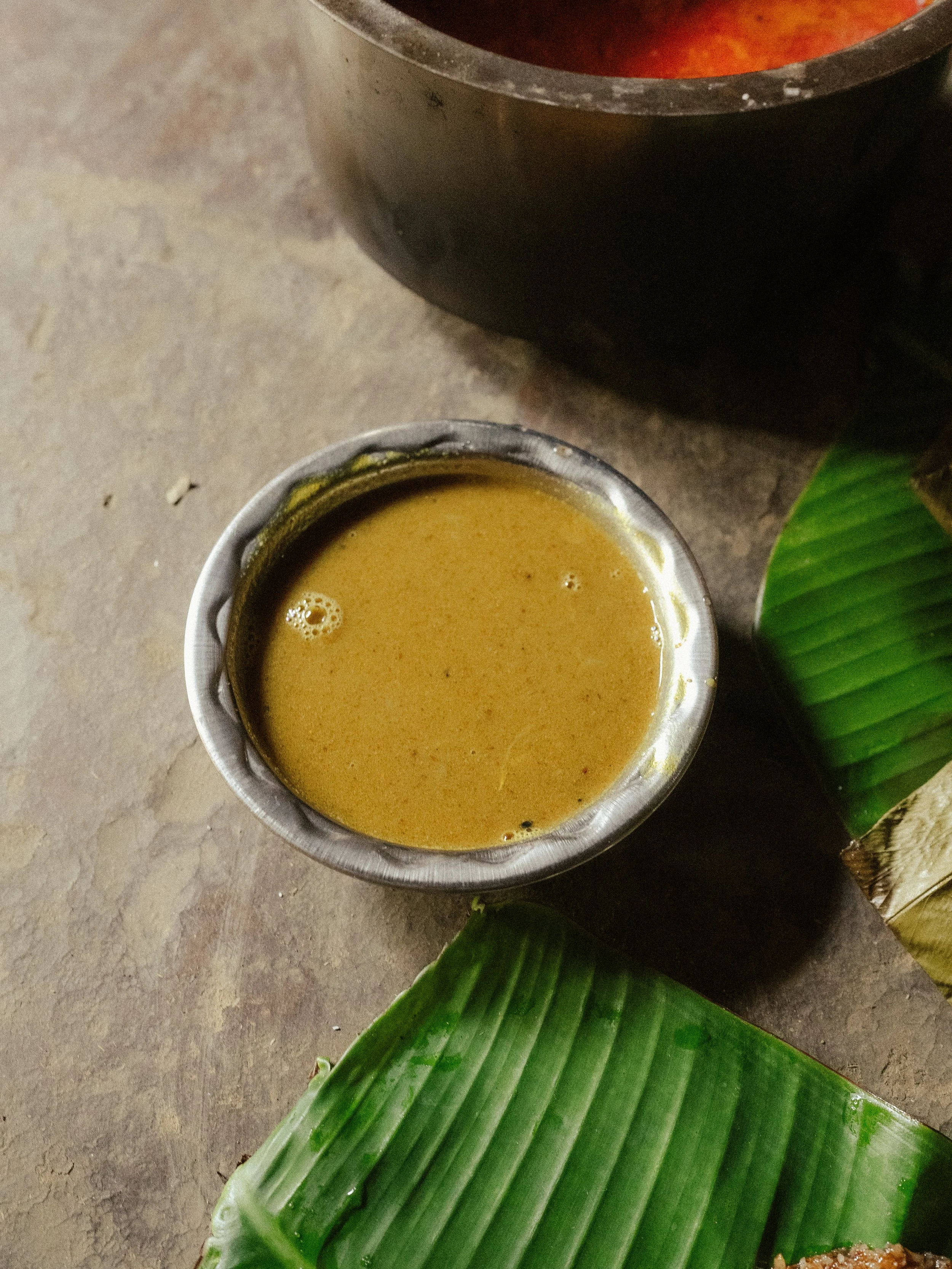
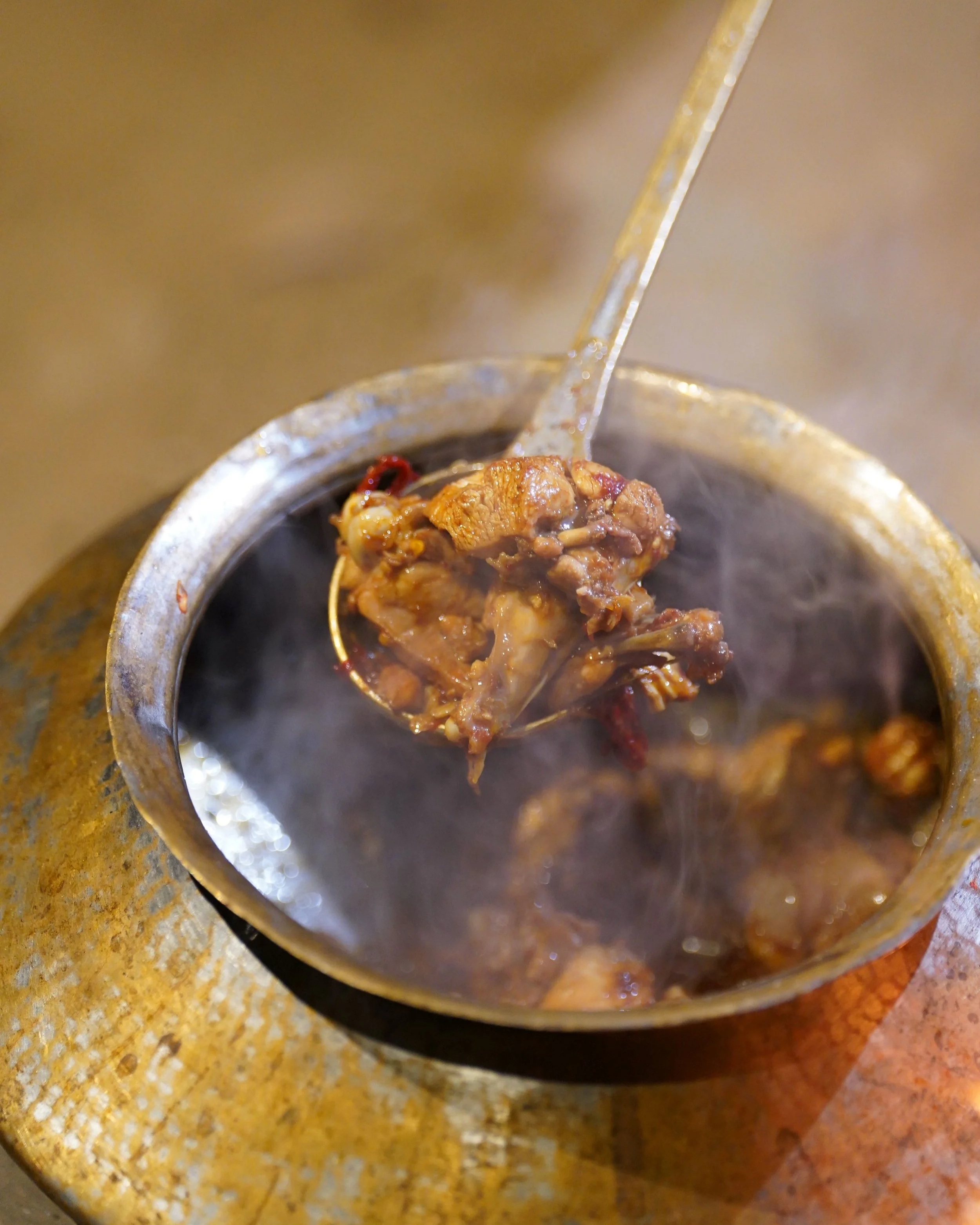
Ant soup.
Manju Anna, the elder of the household, offers to take me on a trek that night. The air is damp with monsoon drizzle and the smell of petrichor, as we walk into the forest under dim torchlight. The forest is alive with unseen movement: leeches clinging to our feet, the croaking of frogs and sounds of insects. At that moment, I recognised this was more than a trip for research, it is a chance to experience a way of life that has endured for centuries, rooted equally in African memory and Indian soil.
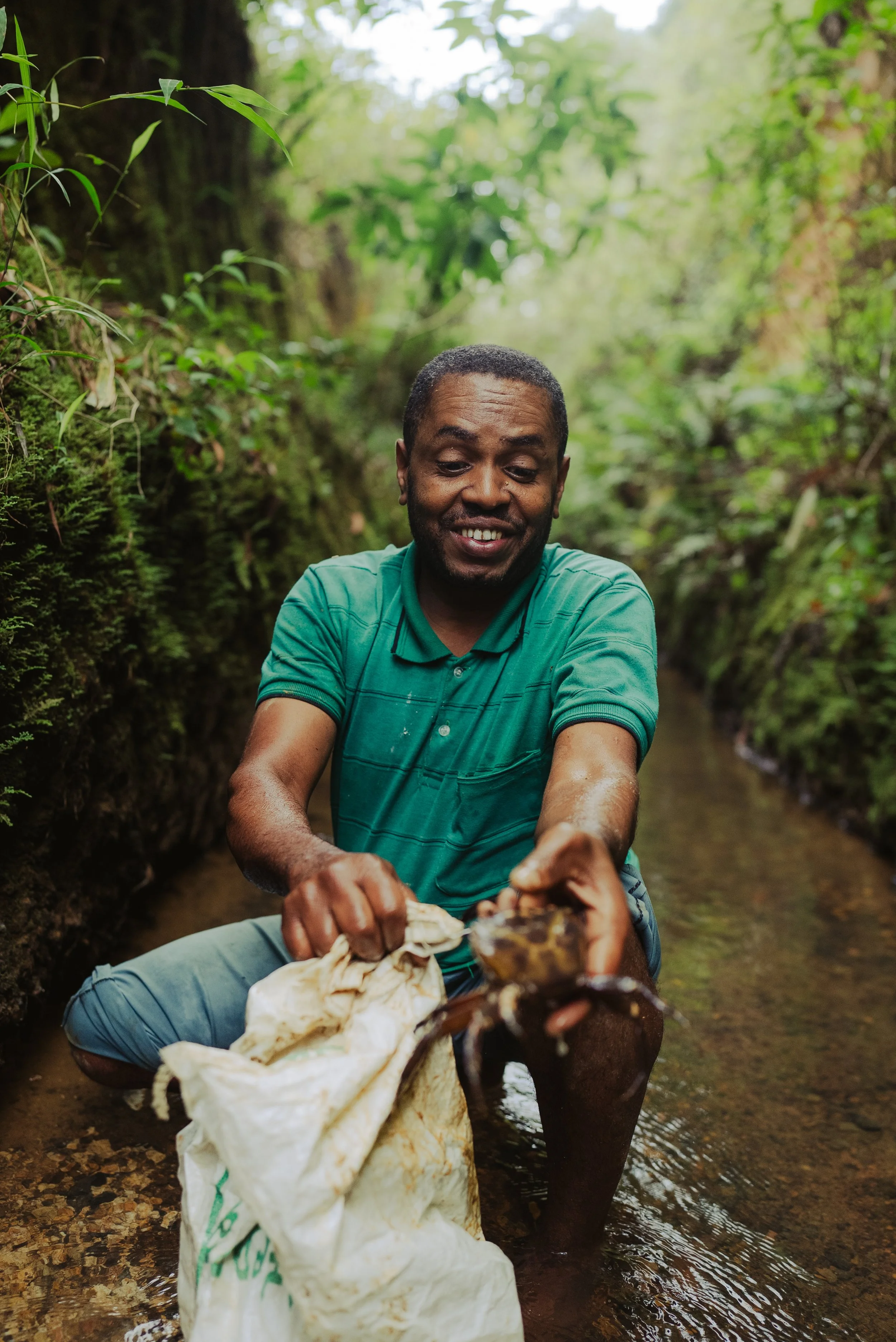
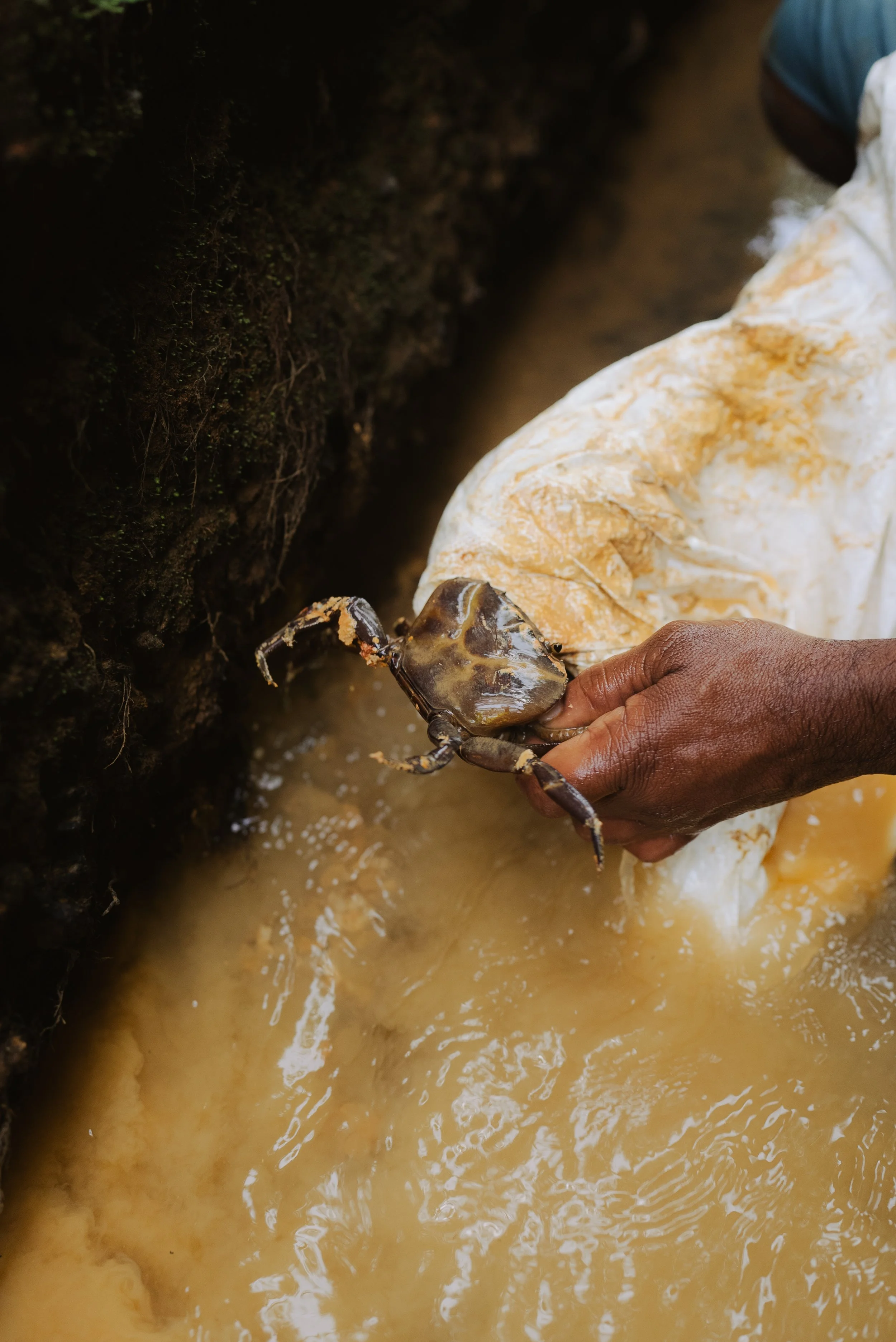
At midnight, we cast the net into the flowing river and use the light of the torch to attract tiny creek fish into the fishing net, a practice possible only in the late hours, when the water flow is low and the fish are most vulnerable and attracted to the light. The next morning, I join their crab-catching efforts in the river creeks, learning from Siddi women how snails, wild turmeric leaves, river crabs, and belette ele, a silvery white forest leaf that glows during the rainy season, are not just food but medicine.
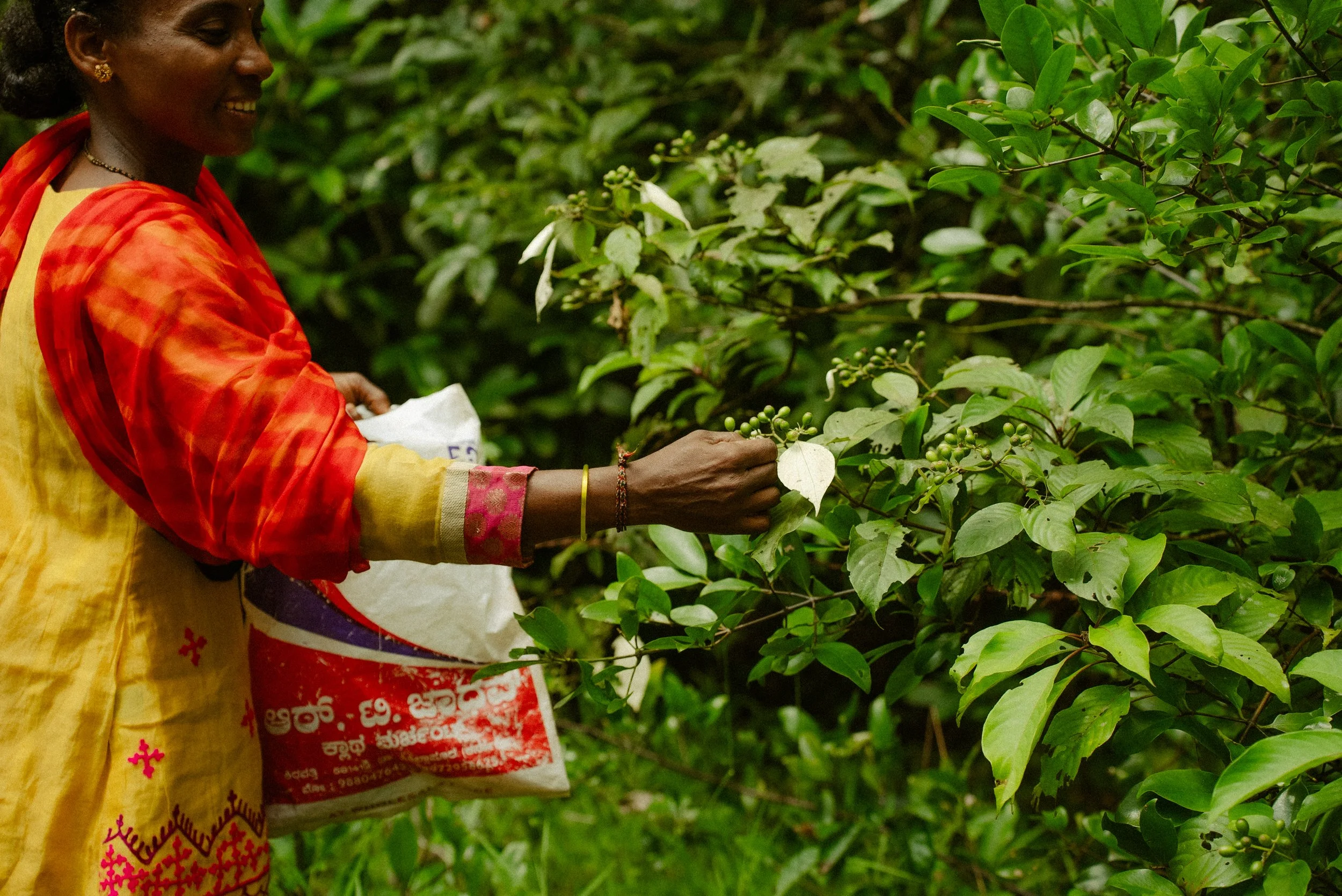
Belette ele is silvery white forest leaf that glows during the rainy season and is considered medicinal.
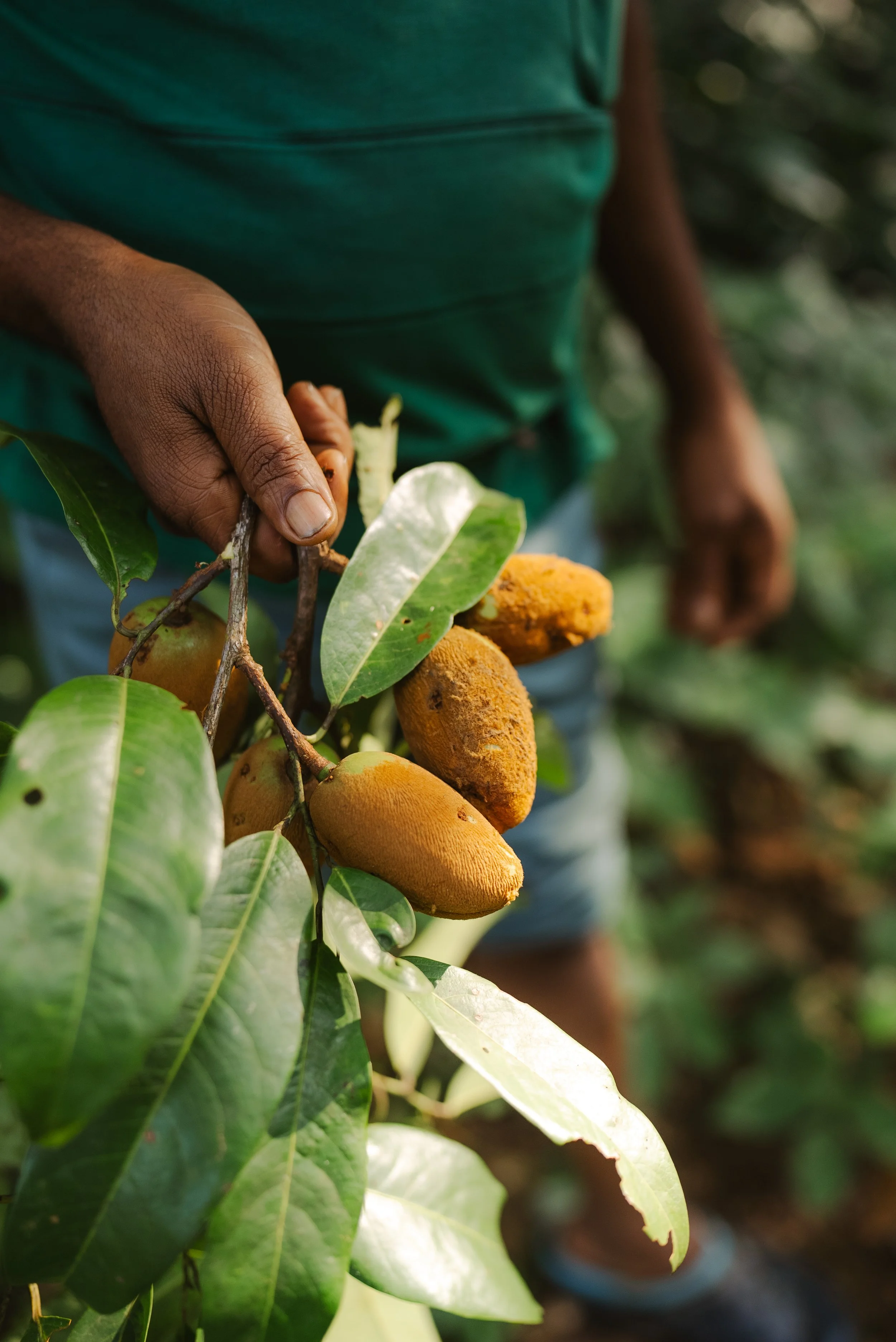
Rm patre is a mace-like spice foraged from the forest.
A Relationship of Reciprocity
“The forest is our pharmacy,” one of the women tells me. “The food we eat is the medicine we need.”
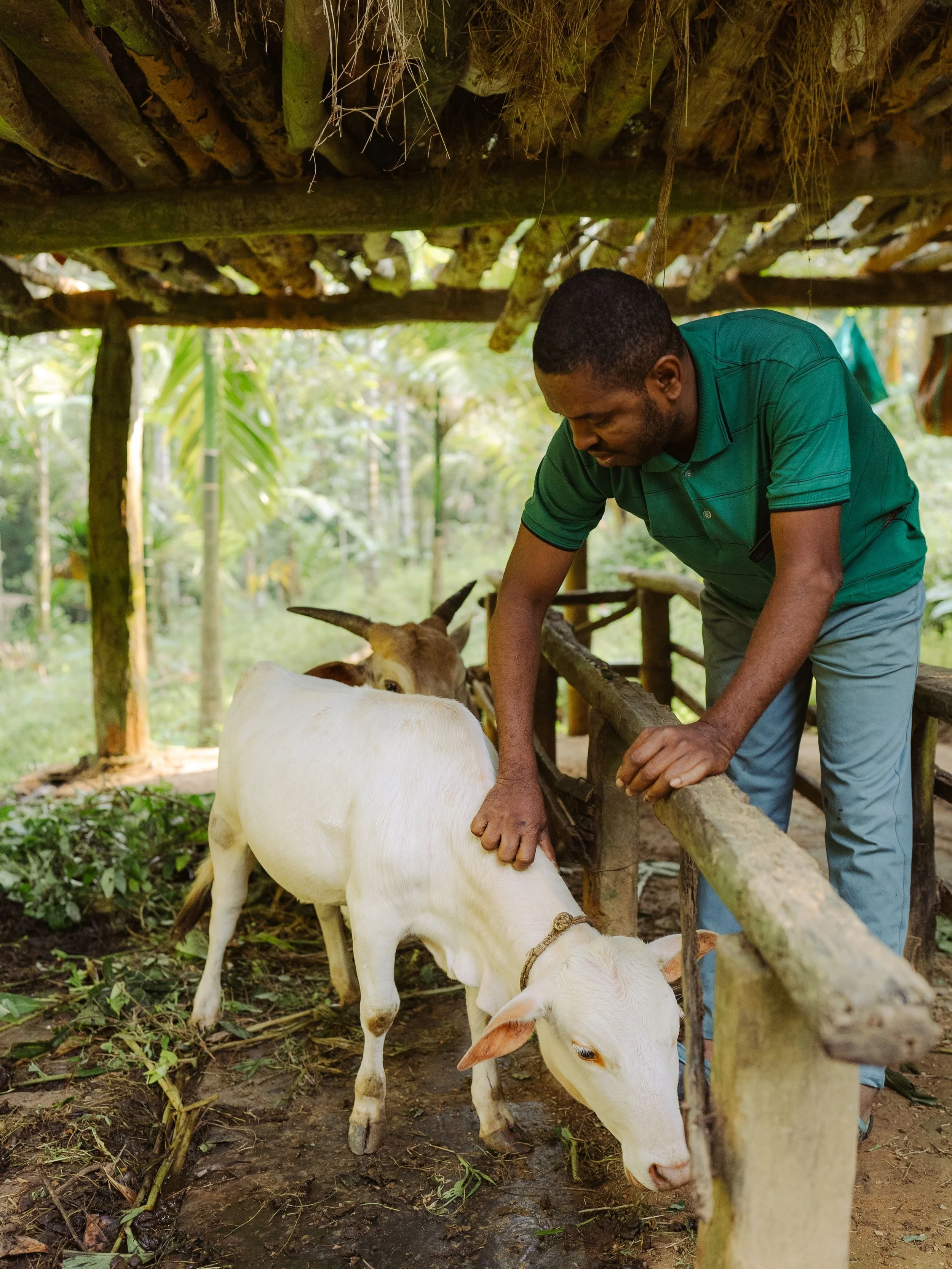
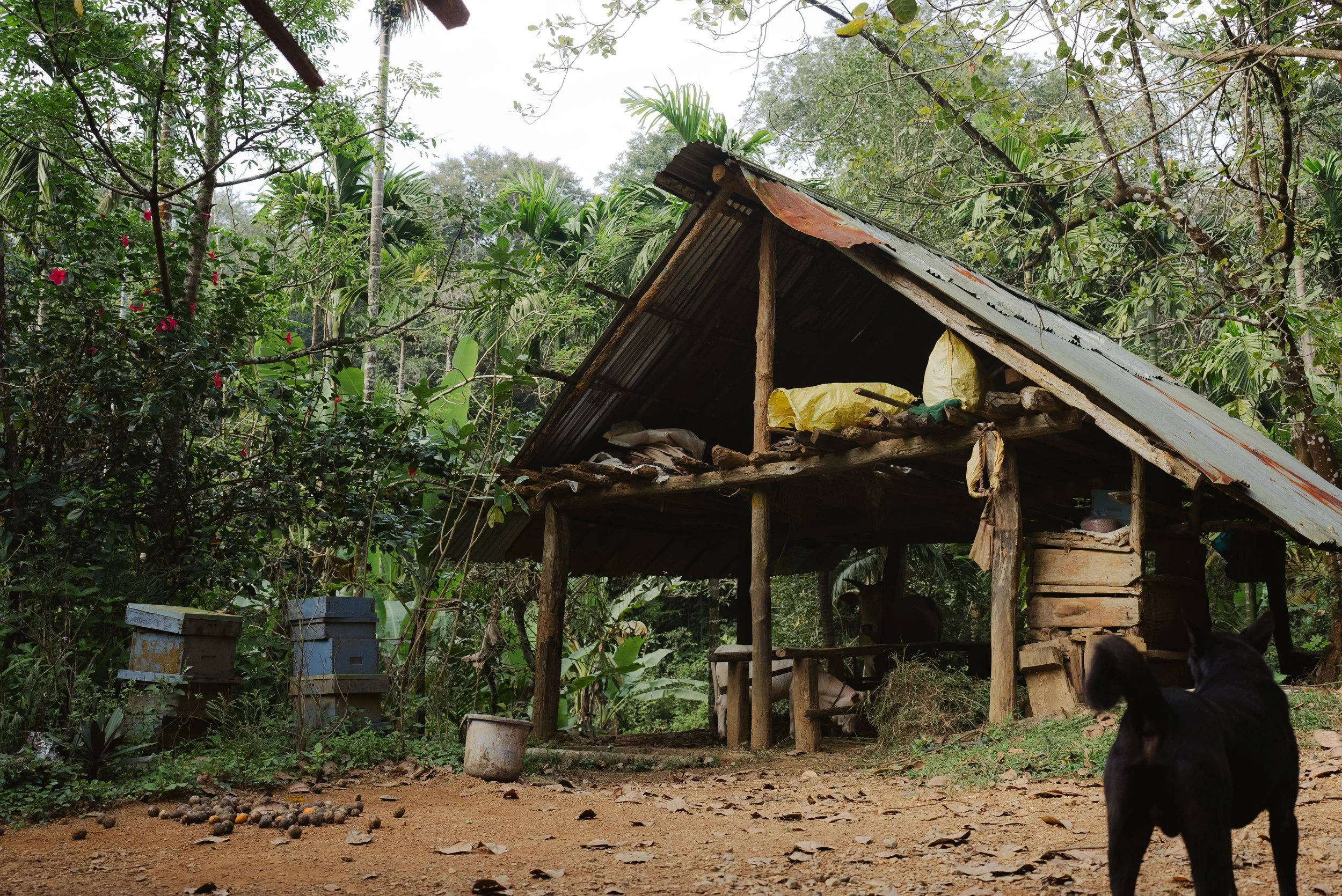
Their relationship with the land is one of reciprocity. They forage within forest, but also plant stems and seeds across, to maintain the forest ecosystem. As a rule, they never take more than what is necessary. They are not conventional farmers; their way of farming is agro-forestry. They cultivate ancient rice varieties like padma rekha, jeddubatha, and sannakki; they maintain bee hives for honey and pollination, especially a particular blue winged bee and stingless bee whose honey is valued for its antioxidant and medicinal properties. They forage for wild plants, fish, crab, ants, and snails; they harvest the tender heart of the wild palm, benne gedde, without cutting down the tree: the central stem is removed, the trunk bound with resin, and the tree is left to heal and grow again.
The Siddi’s culinary history is deep rooted in resilience, survival and adaptation. Over years of living in the forest, they have learnt to speak its language, and learnt what food and medicines the forest offers.
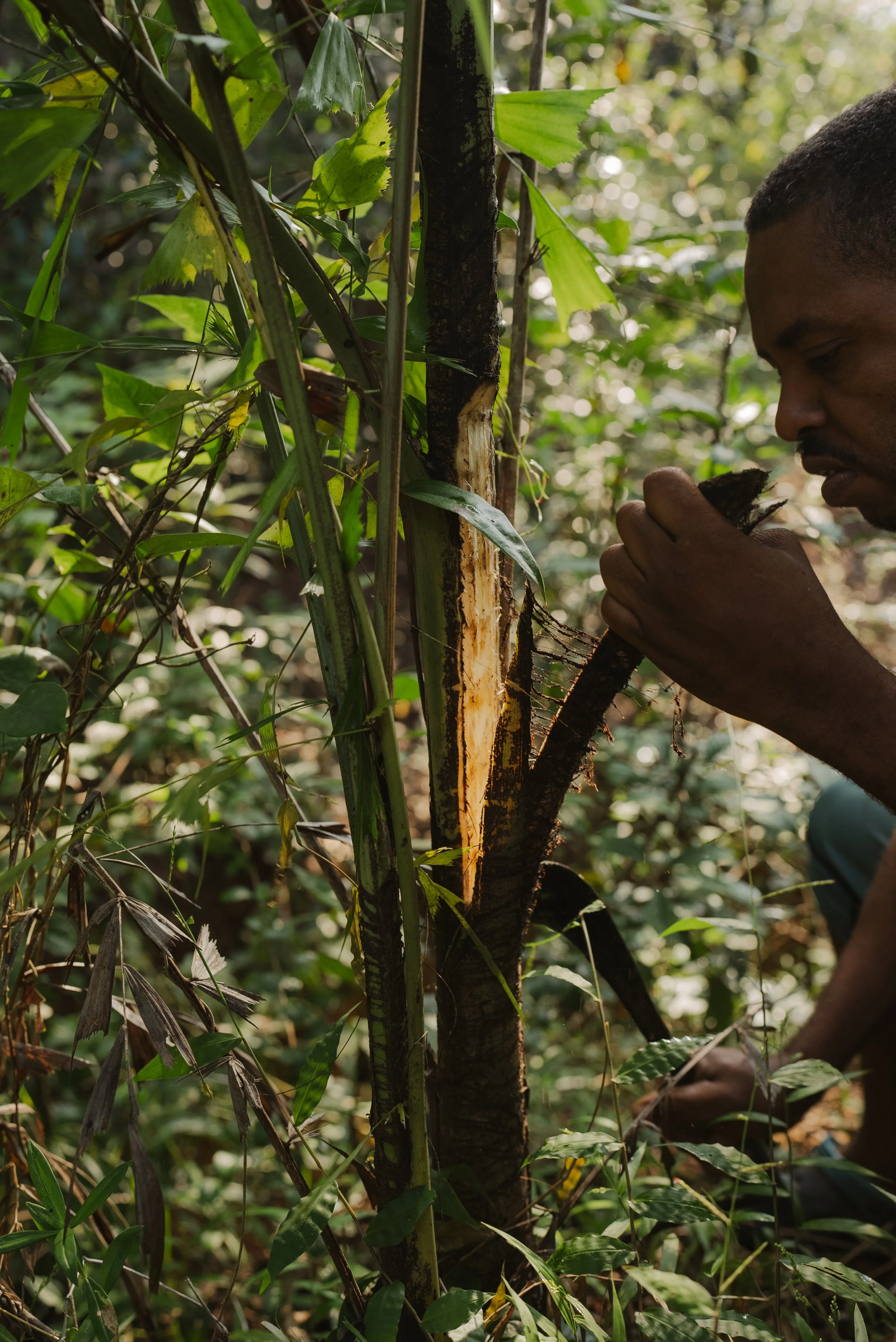
They harvest the tender heart of the wild palm, without cutting down the tree.
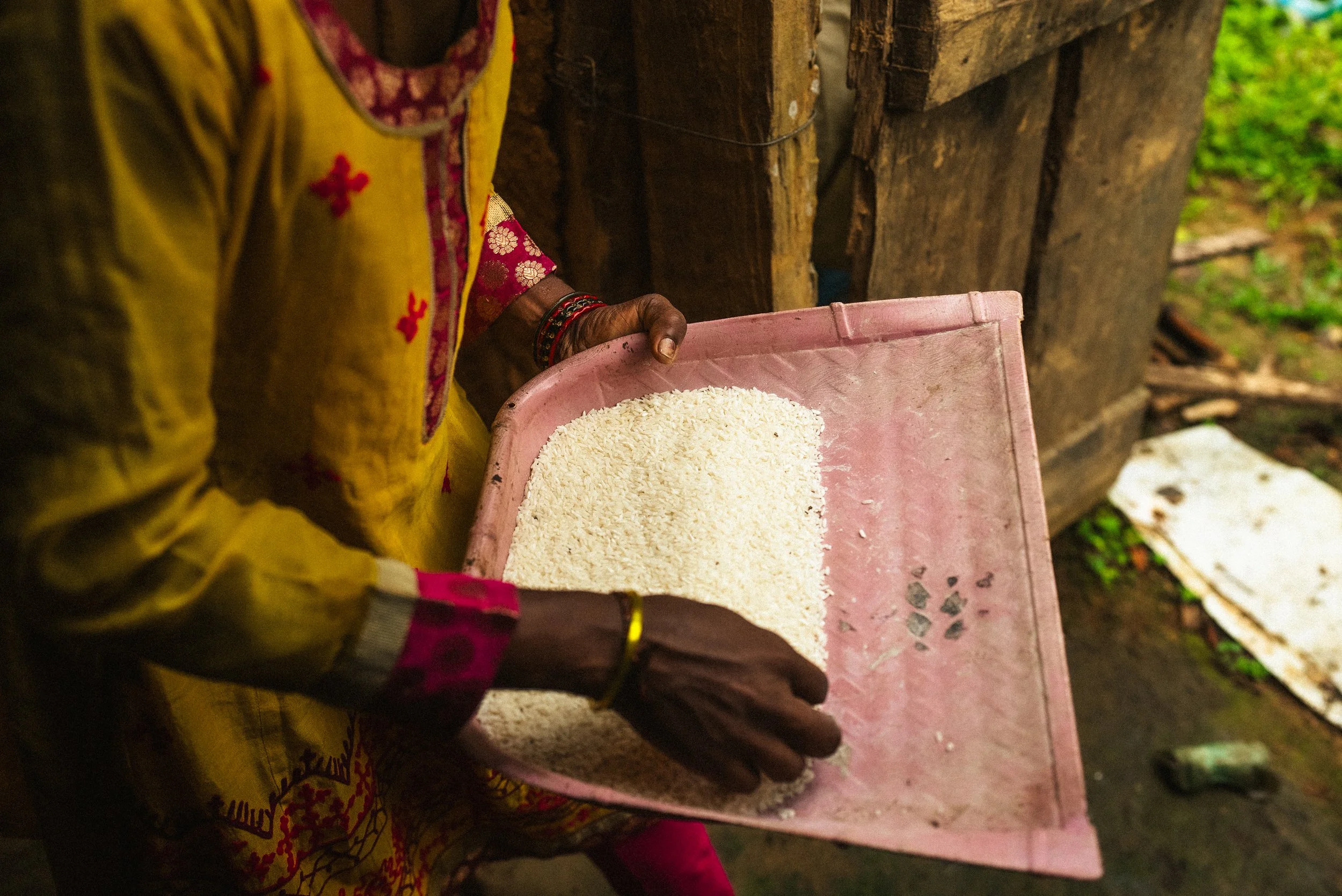
Padma rekha is one of the ancient rice varieties.
In one of the Siddi homes, I see a patch of rice field in their backyard, with lush growth of Padma Rekha paddy, a centuries old, heritage, semi-red rice variety still grown in small patches. The short grain heirloom variety from Uttara Kannada region is considered a superfood for its high fibre content, antioxidant and blood sugar regulation properties. They use this rice to make kadubu (a rice cake) and chitranna (lemon rice). In the paddy fields, edible snails are deliberately protected rather than exterminated, seen as part of the living eco-system. Even the young leaves of Touch-Me-Not (Mimosa Pudica) plant, which I had only known as a shy weed, becomes a cooling chutney or drink here.
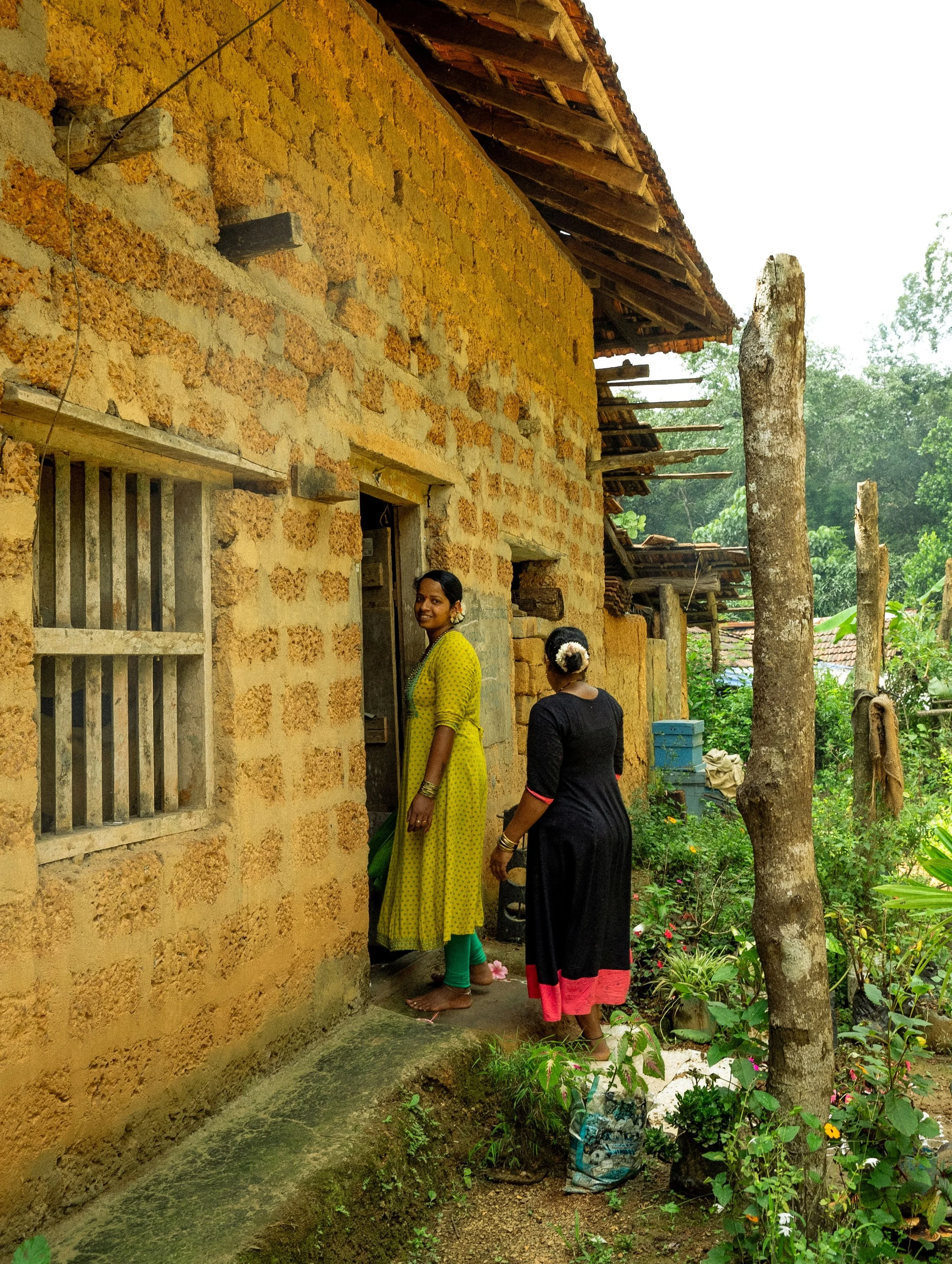
Once we forage all the necessary ingredients, we headed to Hema Akka’s home. All the Siddi settlements are scattered deep inside the Yellapur forest, each house nestled far apart from the other, often separated by thick groves of areca, wild jackfruit trees, and bamboo thickets. Why did they choose to live in such seclusion? One of the women laughs, “If we all lived too close, we’d end up fighting. Distance keeps our hearts close.”
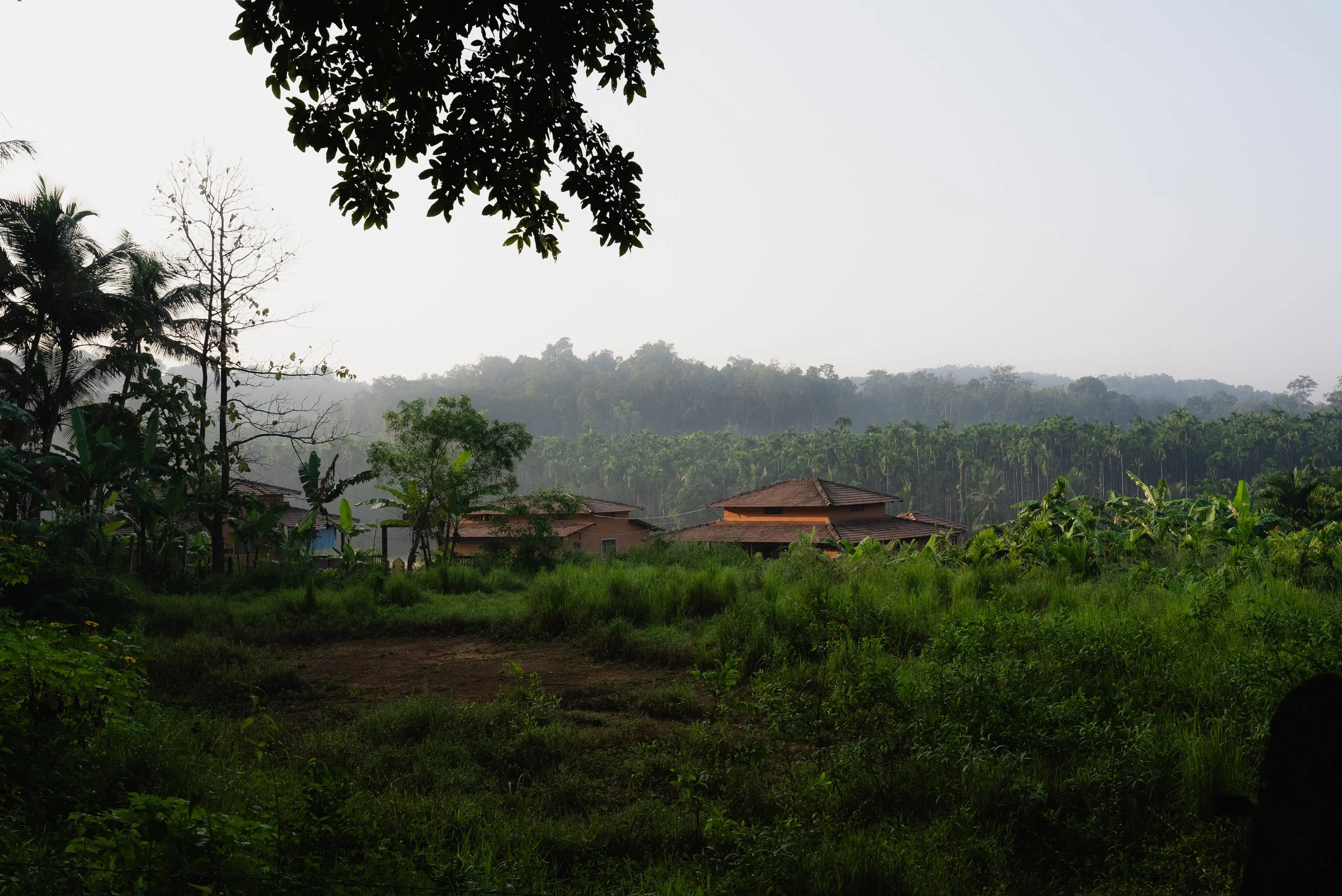
The Siddi settlements are scattered deep inside the Yellapur forest.
Kitchen as a Space for Communion
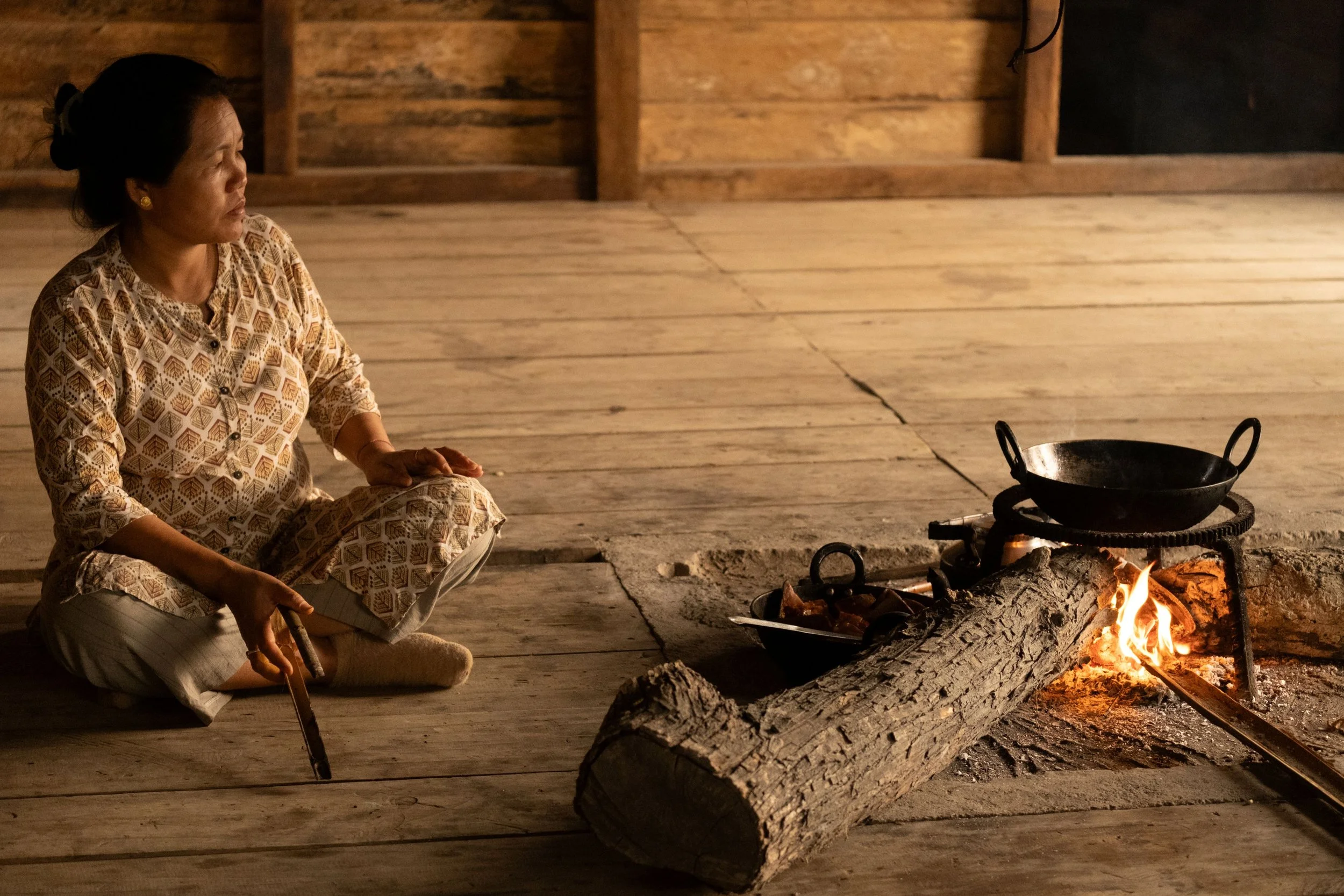
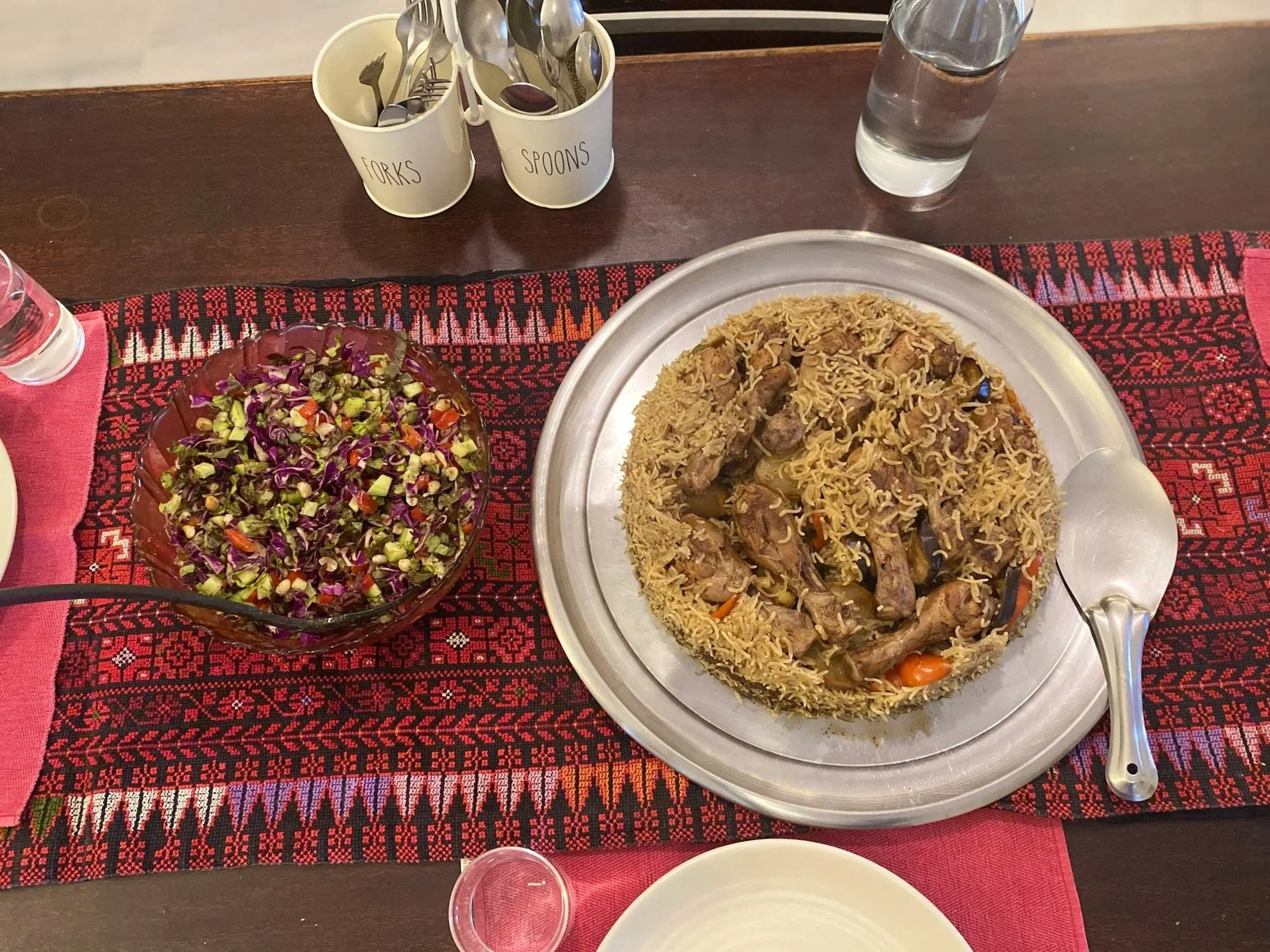
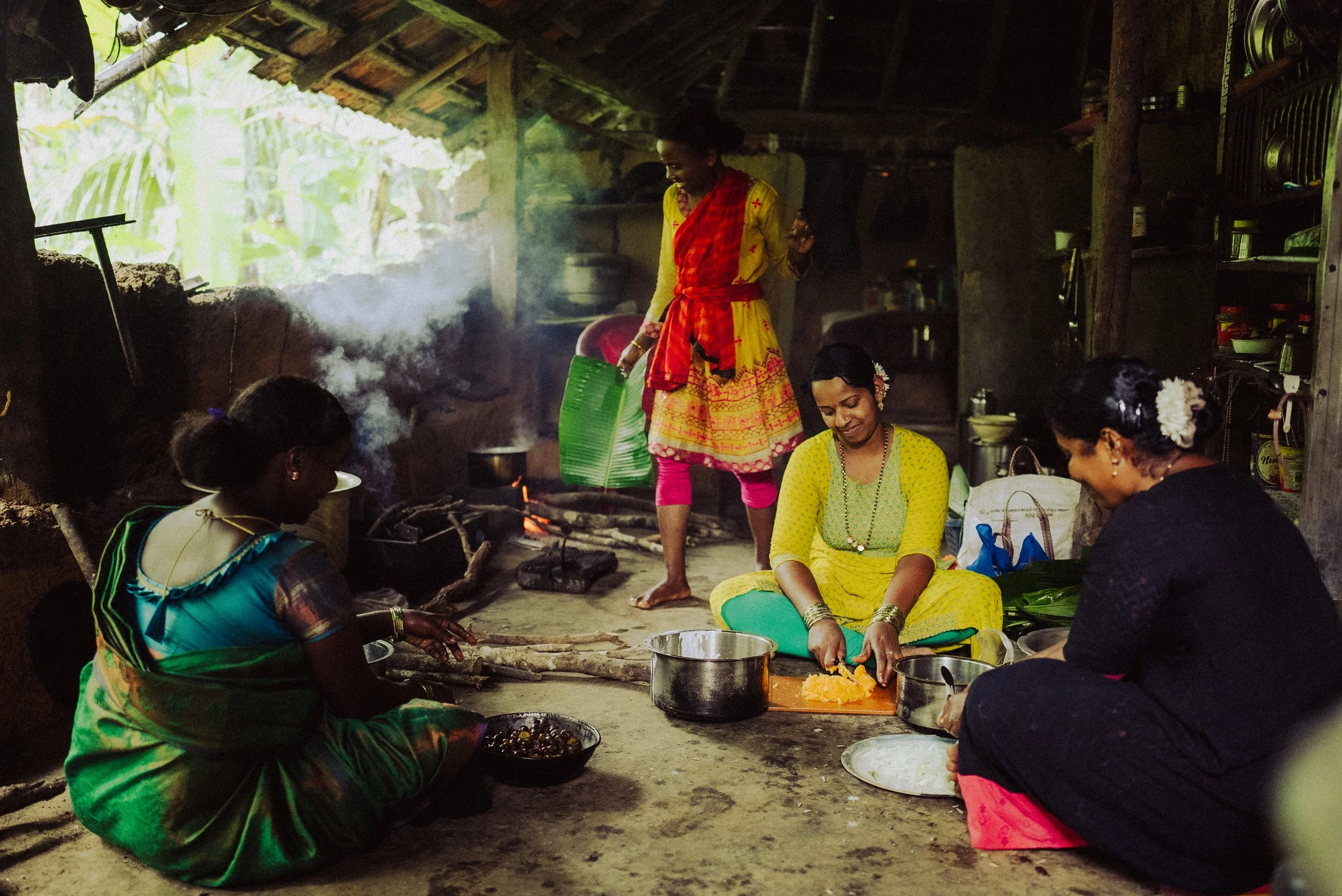
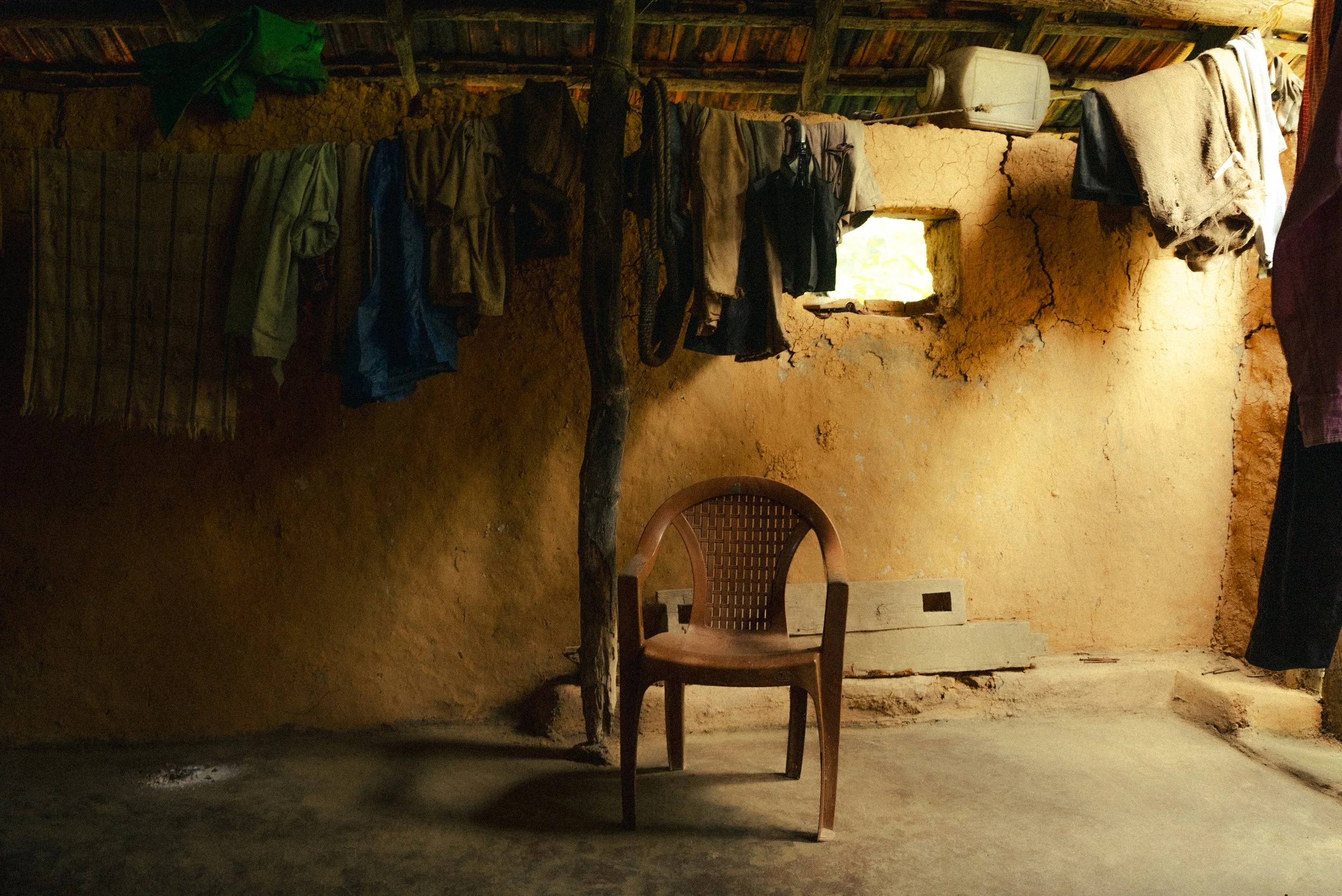
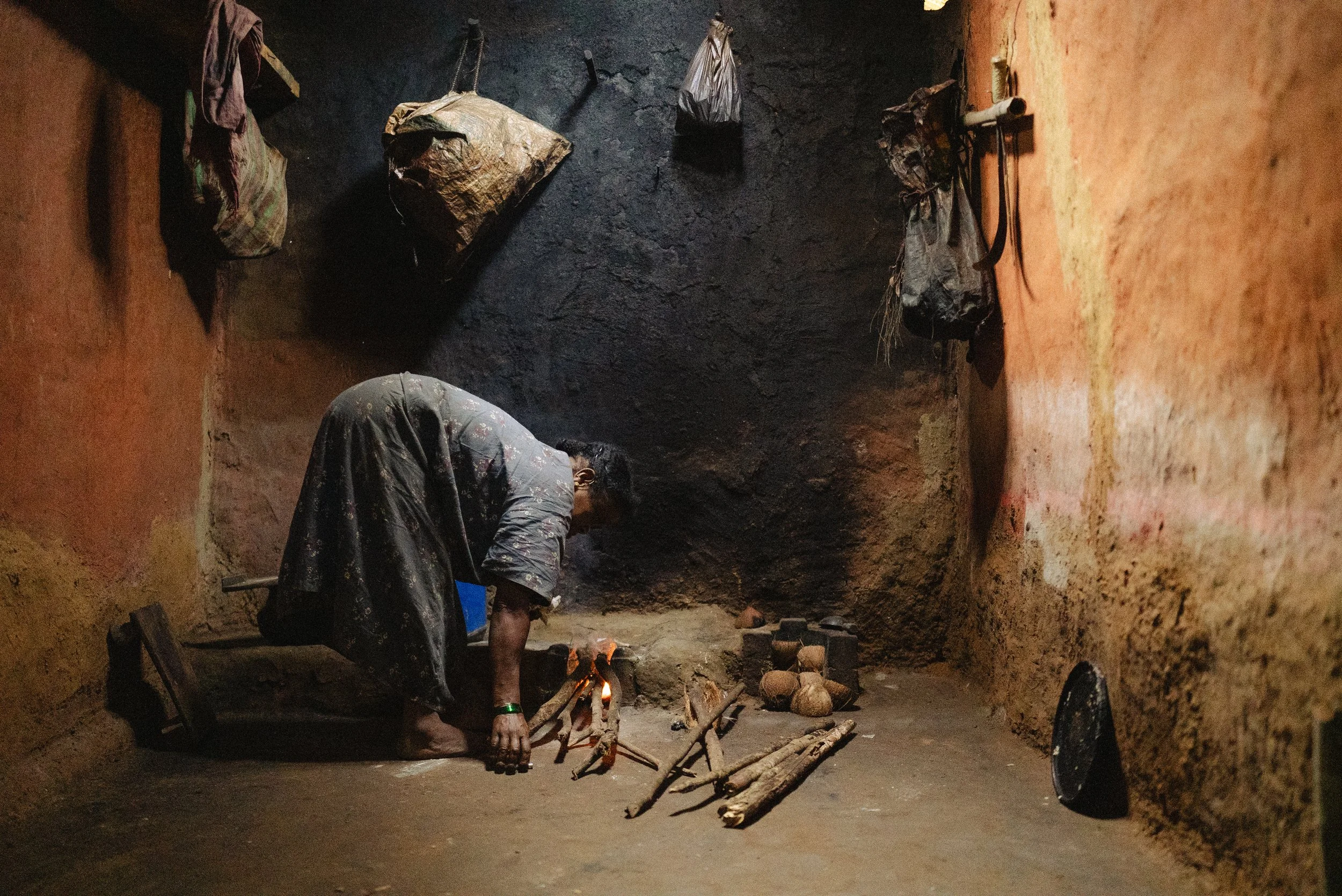
At Hema Akka’s home, she leads me straight into her kitchen. It is cool and dimly lit, perfumed with wood smoke and the faint sweetness of fermented rice water. In one corner sat an ragado (traditional stone grinder), its grooves polished from years of use; beside it, a hearth of clay where wood-fire flames live beneath blackened terracotta pots and aluminum vessels.
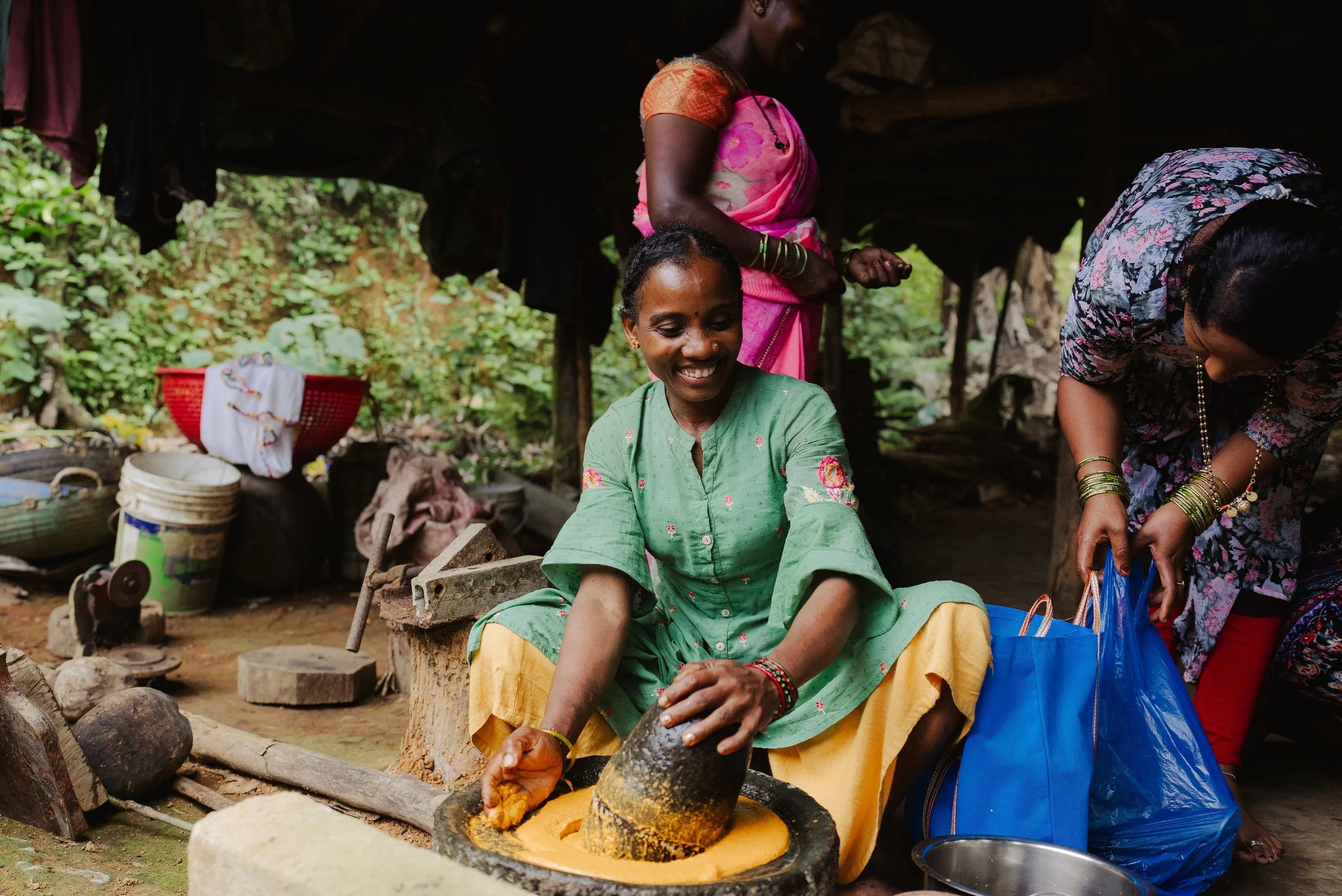
Grinding masala on the ragado.
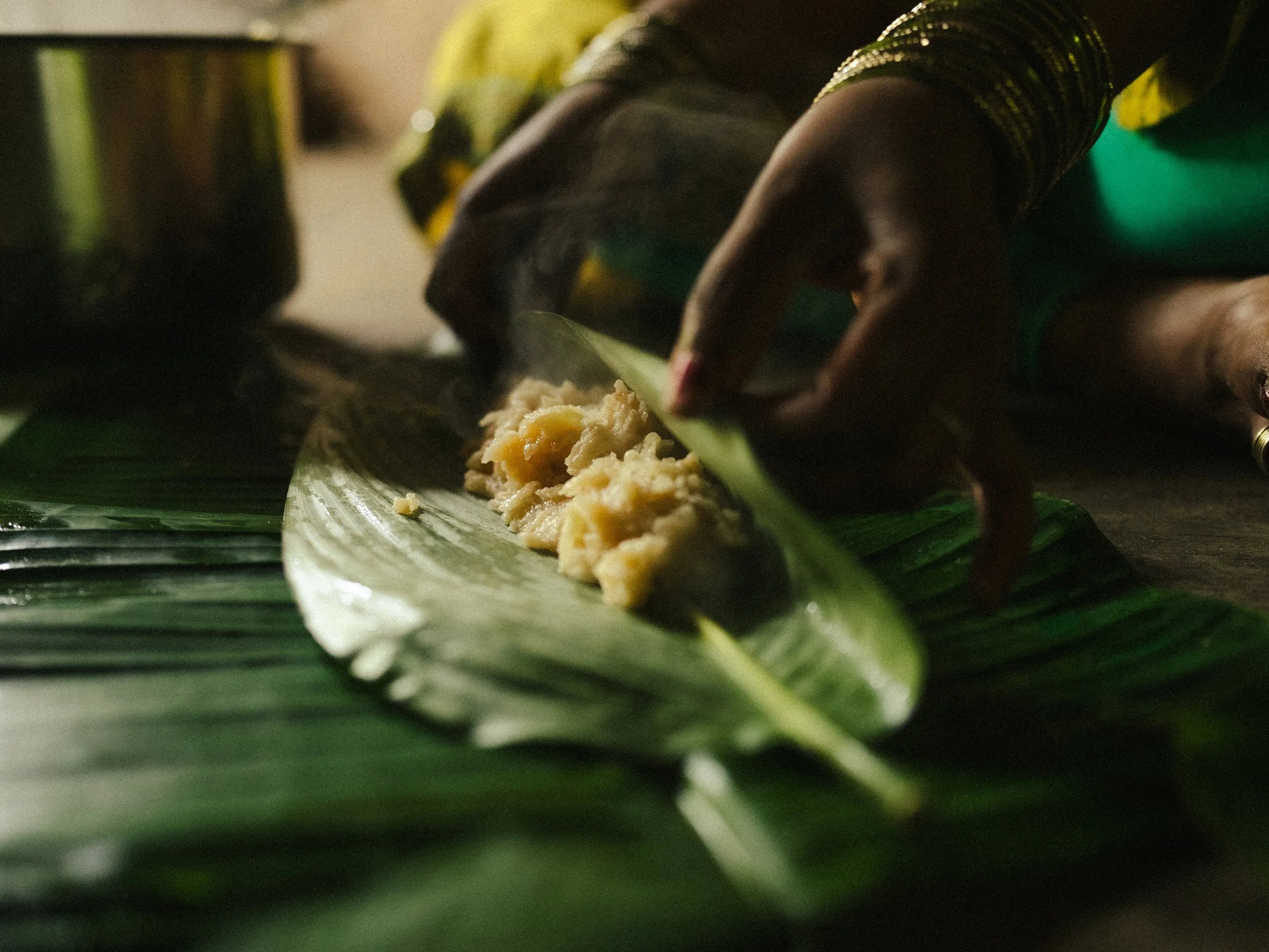
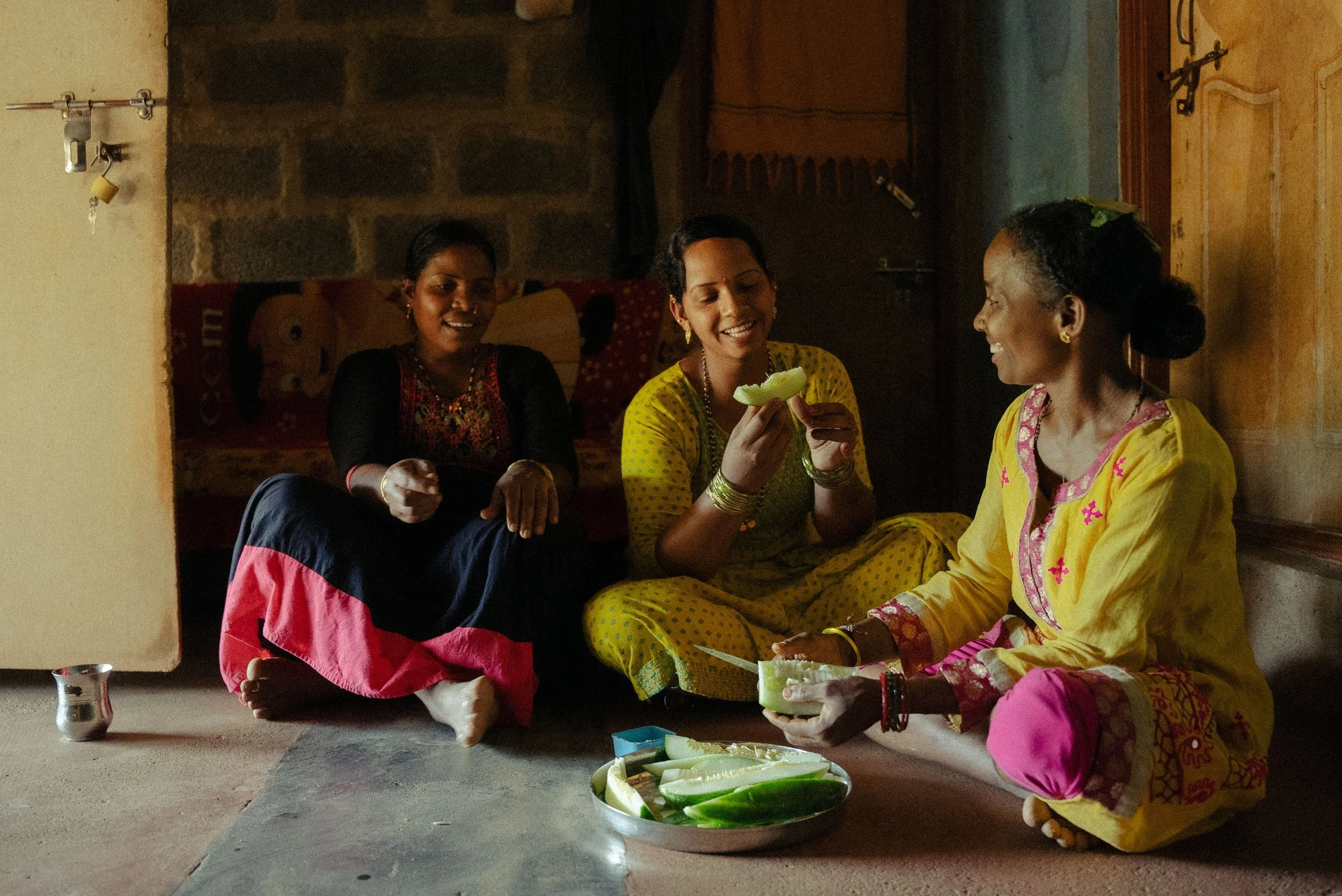
Heritage rice and wild cucumber mixture.
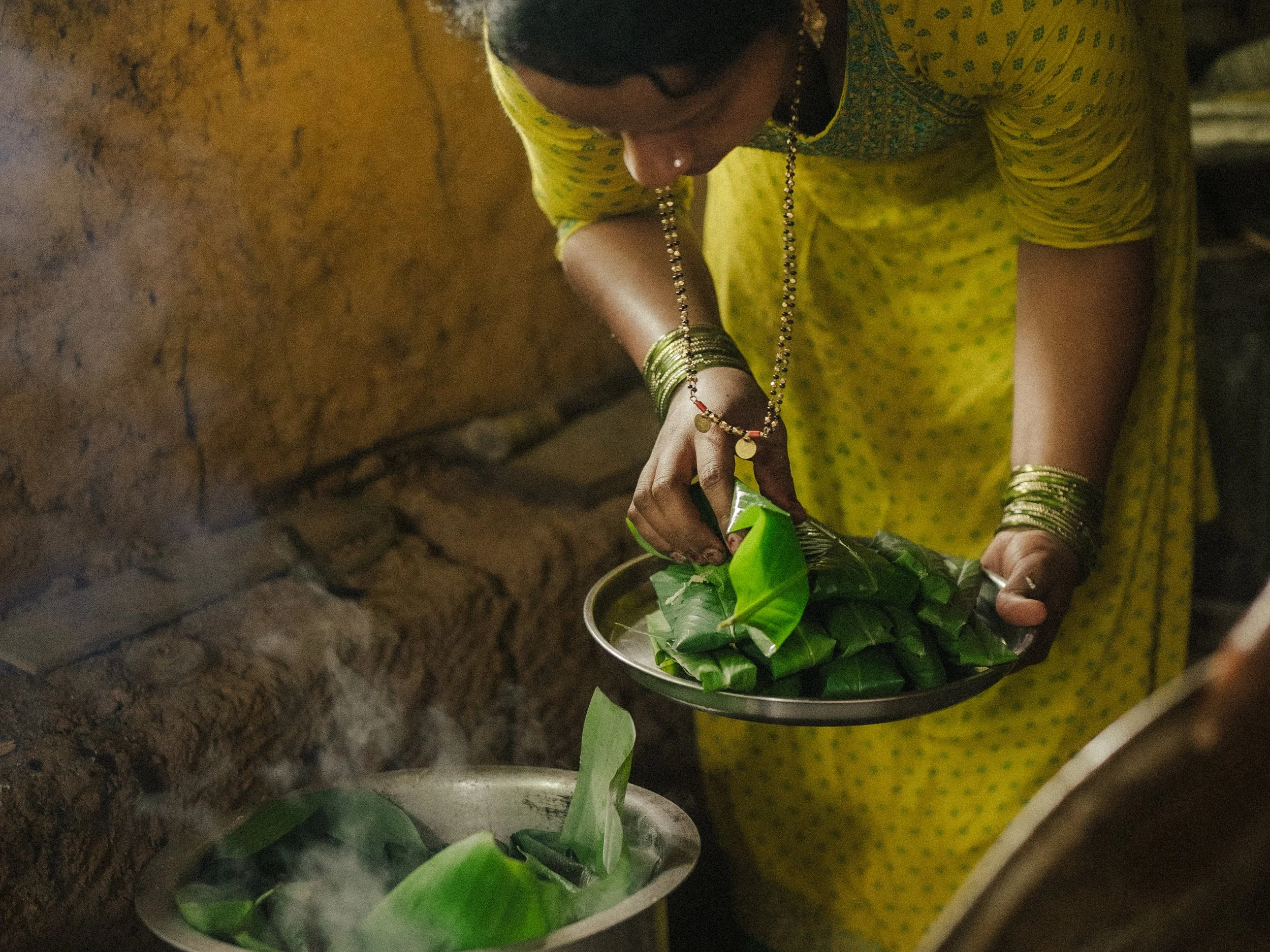
It is wrapped in wild turmeric leaf and steamed.
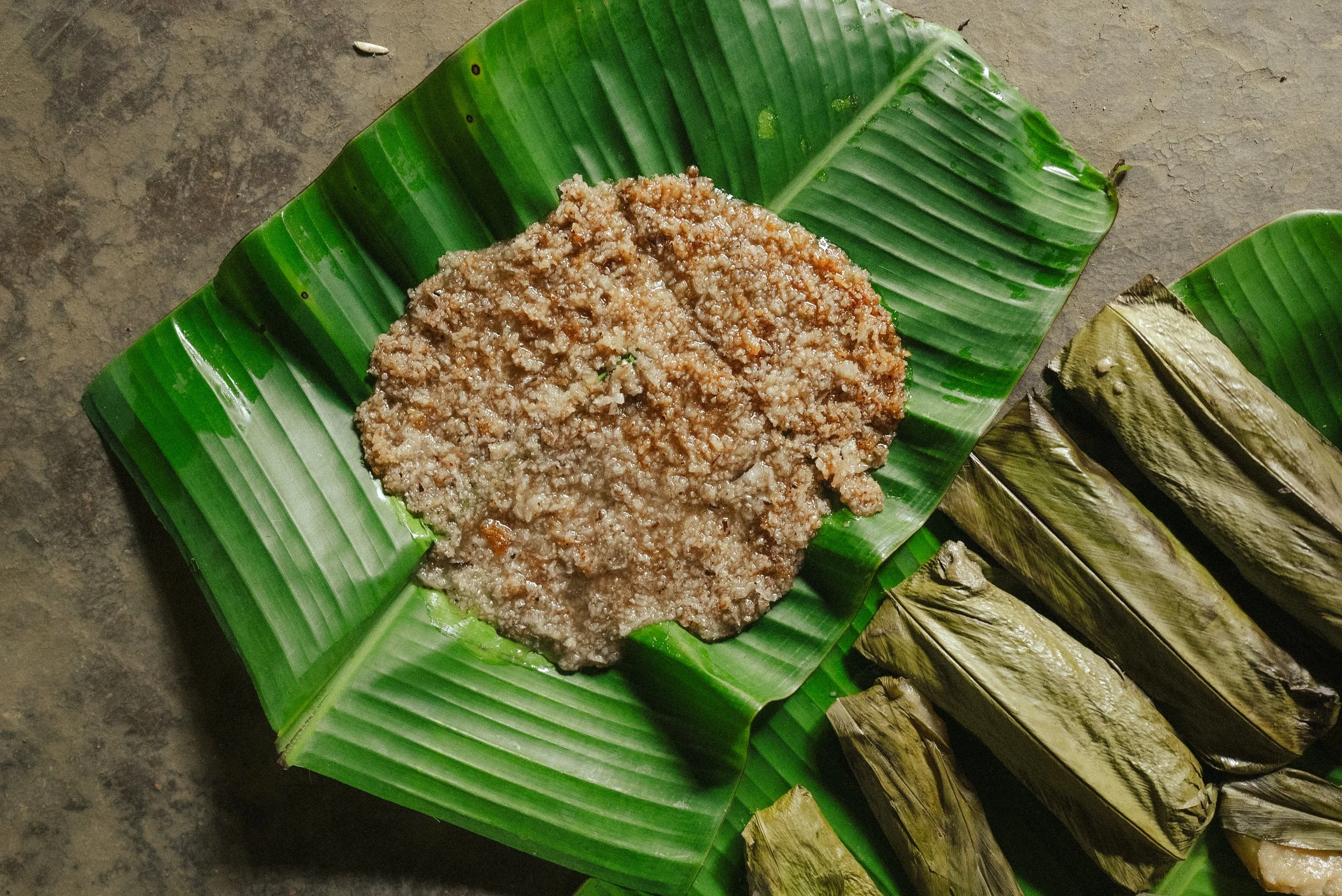
This is a sweet made with coconut and honey, alongside the steamed cucumber sweet.
Around the hearth, the women gathered; laughing, teasing, teaching as we begin preparing lunch. Each of them move with instinctive rhythm: one cleans the freshly caught fish, another grinds wild turmeric and spices on the ragado, and a third tends to the fire.
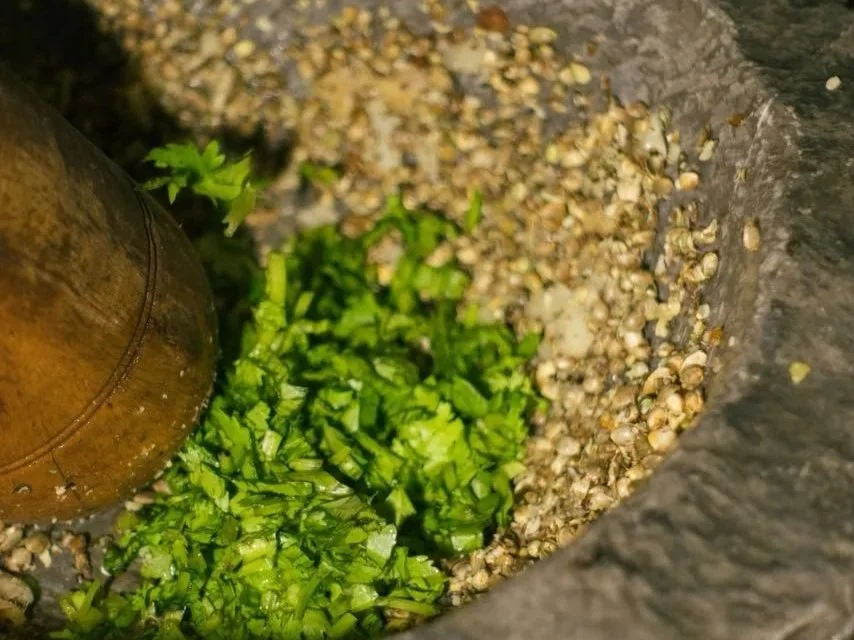
First, she serves mente saaru, a bitter-sweet nutty drink made with fenugreek seeds and jaggery, to quench the thirst.

Mente saaru is a drink made of fenugreek seeds and jaggery.
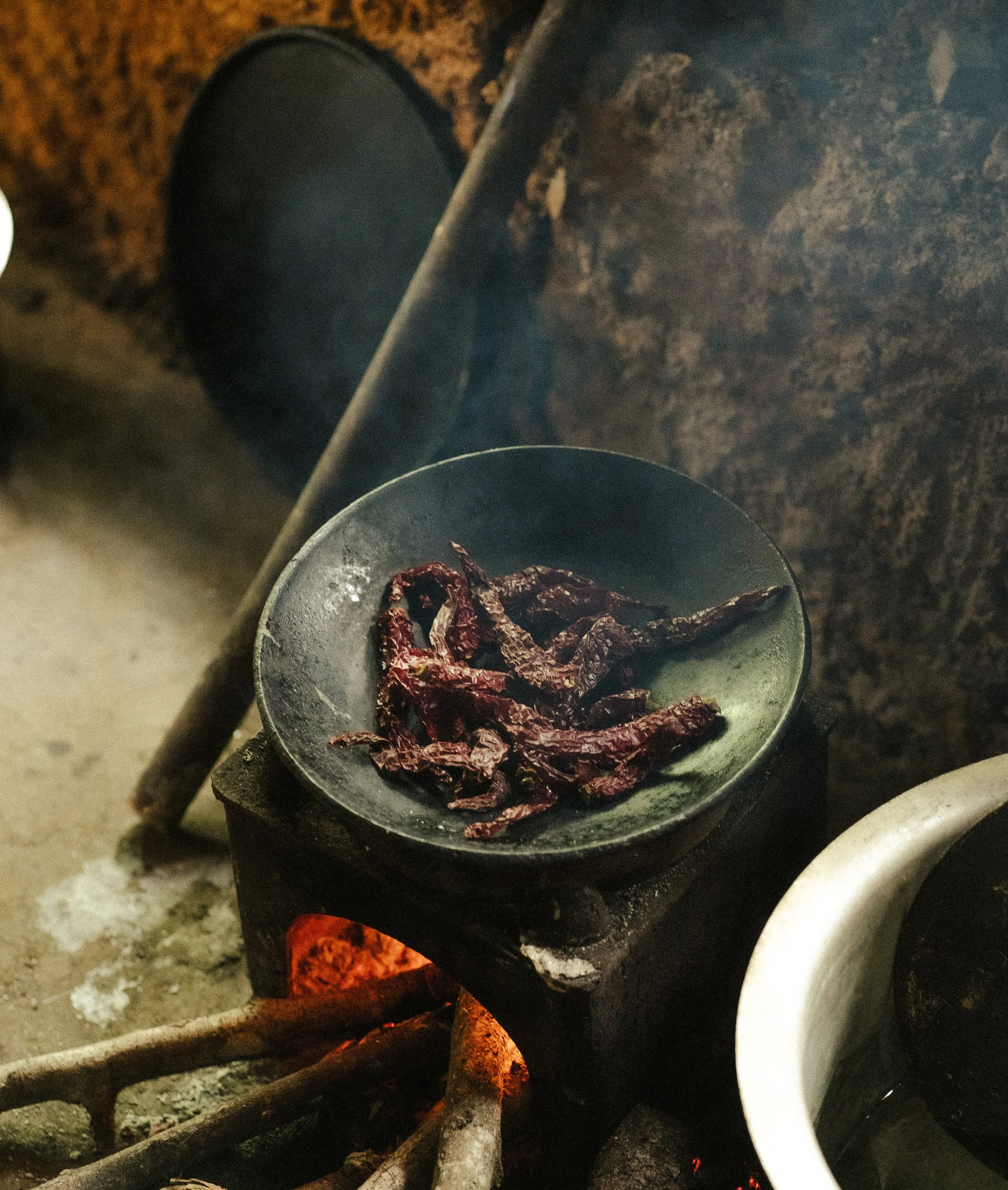
Spices like Byadgi menasu (chilli) are always roasted and ground fresh.
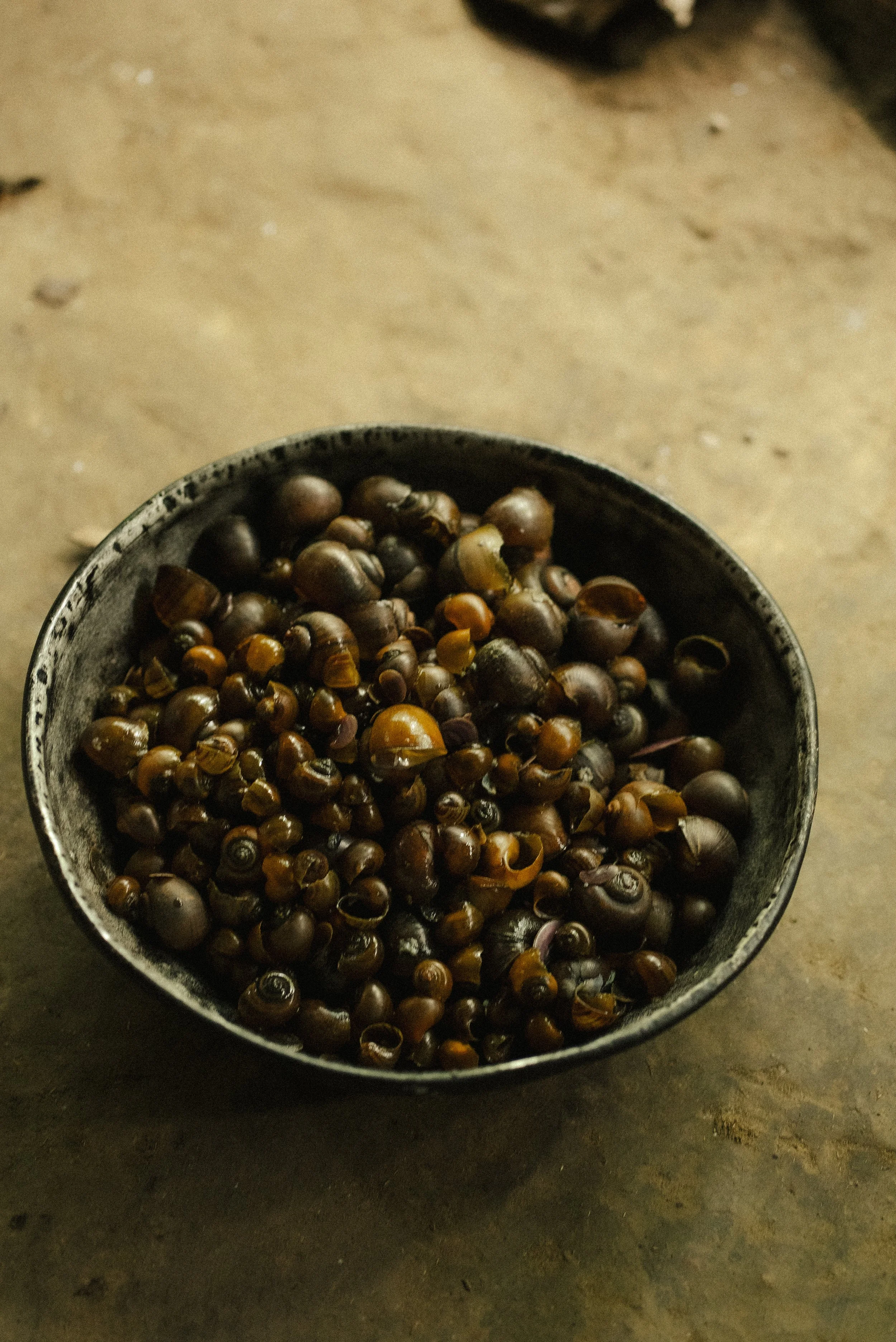
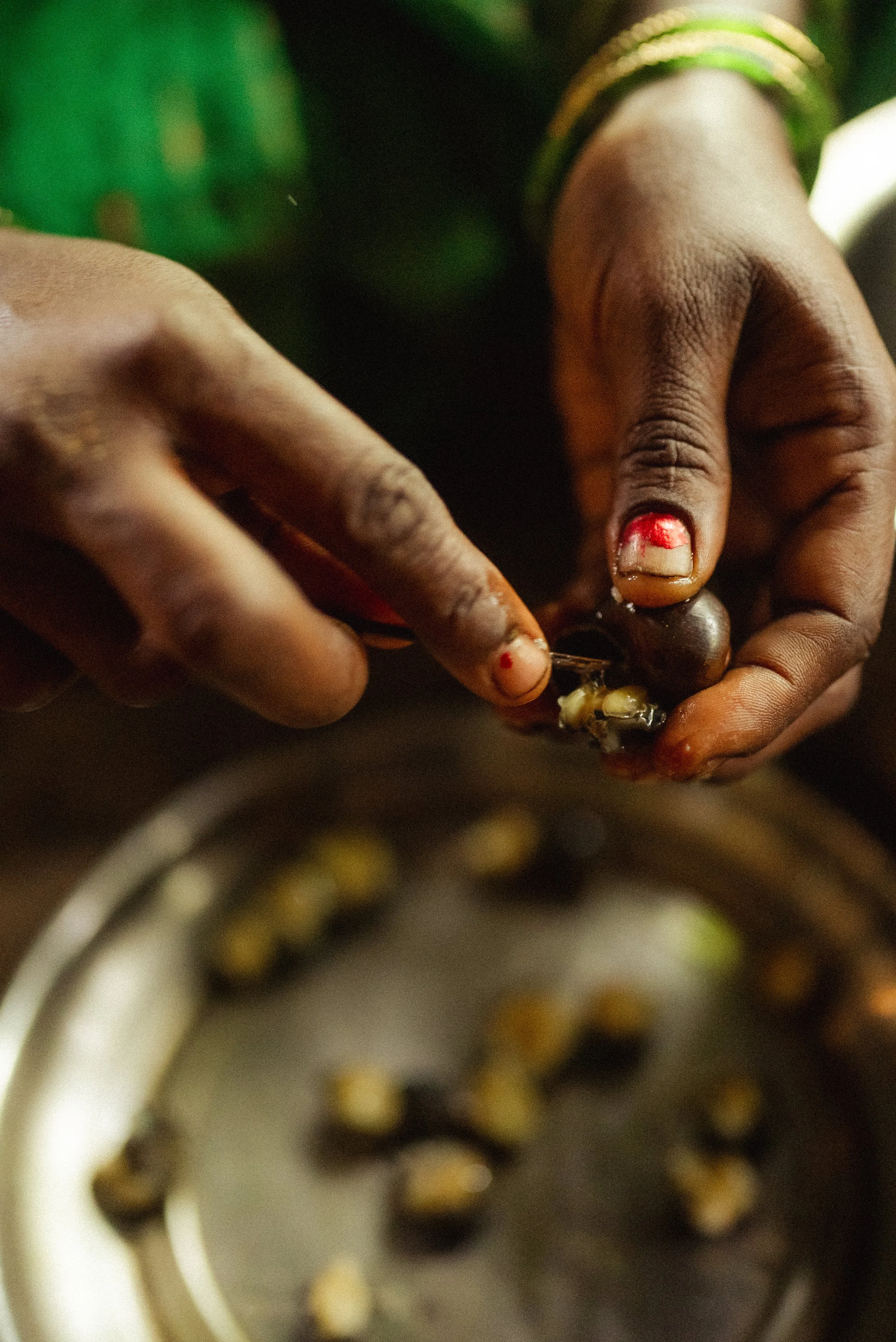
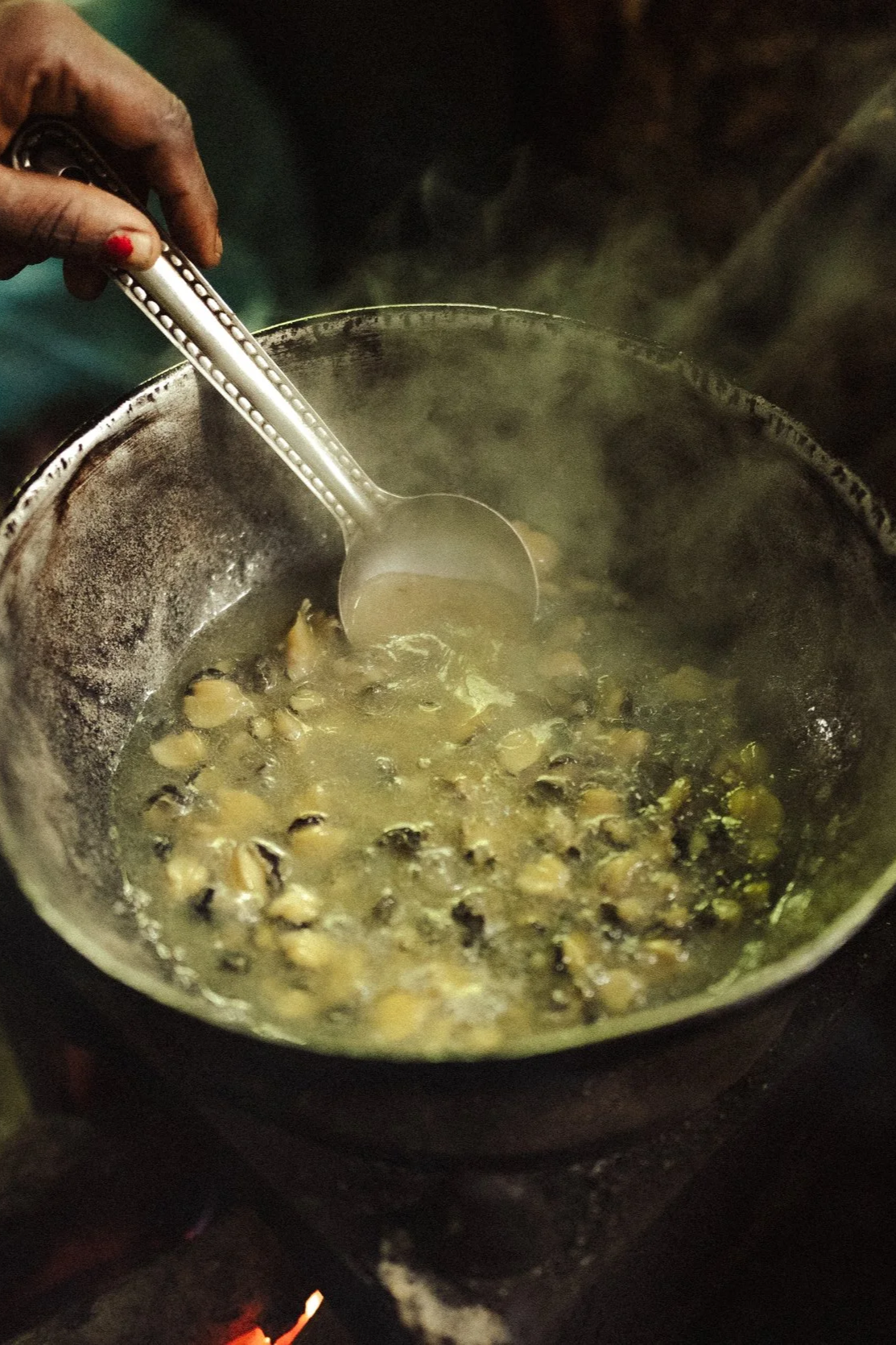
They show me how to prepare the field snails, clean the husk of the rice, harvest wild ginger root, lemon grass and pandan leaves, and dry roast red ants over gentle heat. I learn their recipes, and also why certain spices like Gandhari Menasu (bird’s eye chilli), ram patre (mace like spice), wild ginger, kasturi arishina (wild turmeric) are ground fresh before cooking; how wild greens like Touch-Me-Not are always balanced with fermented foods like buttermilk to balance the astringency, and how smoke itself becomes a flavour, binding the dish to memory.
Watching them cook in that smoke-filled kitchen, I realise that the Siddi kitchen isn’t merely a place of cooking; it is a space of communion, where fire, forest, and food come together in a quiet ritual. As a chef, I often chase novelty. But here, I found something more unique: a living, breathing story on every plate.
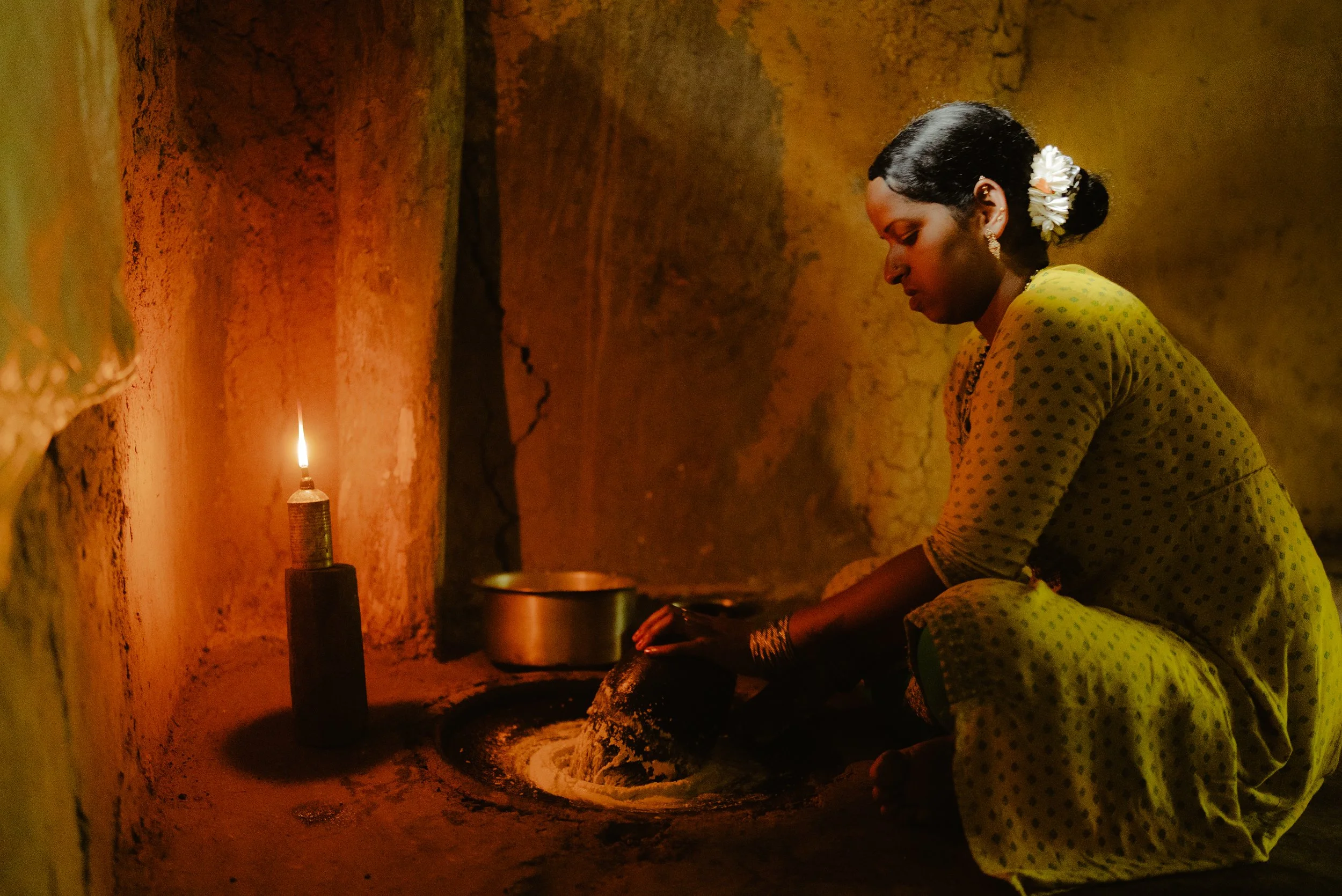
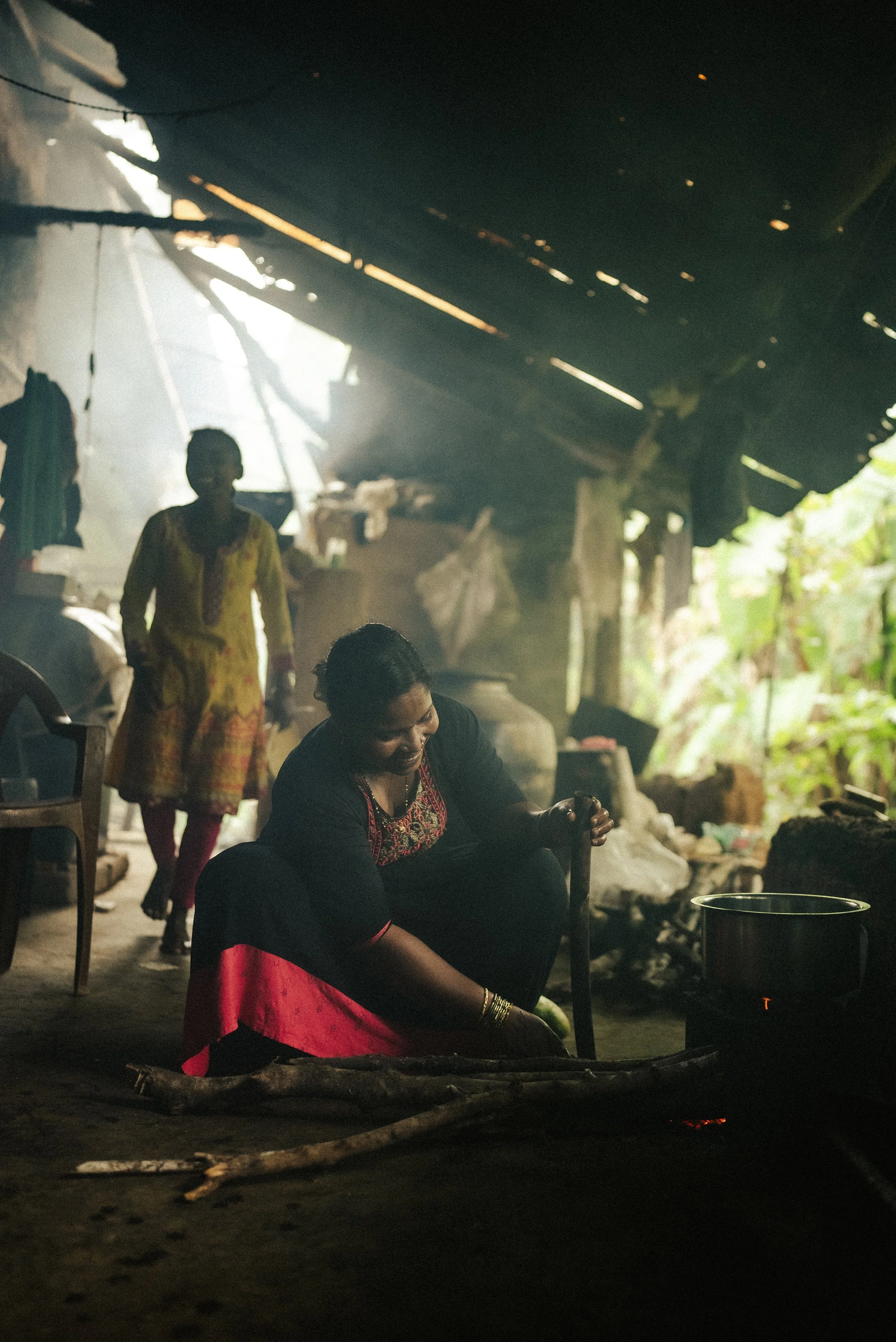
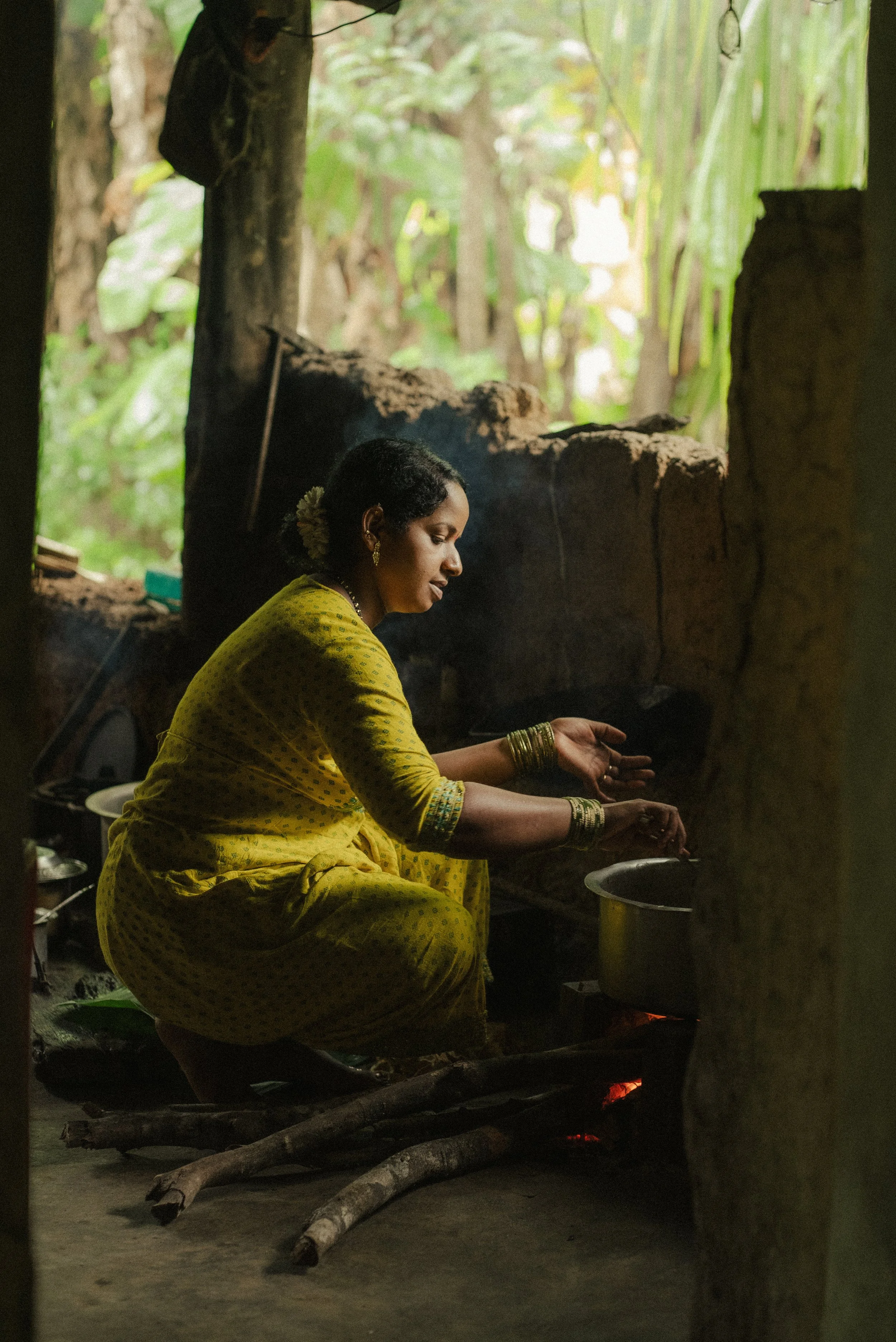
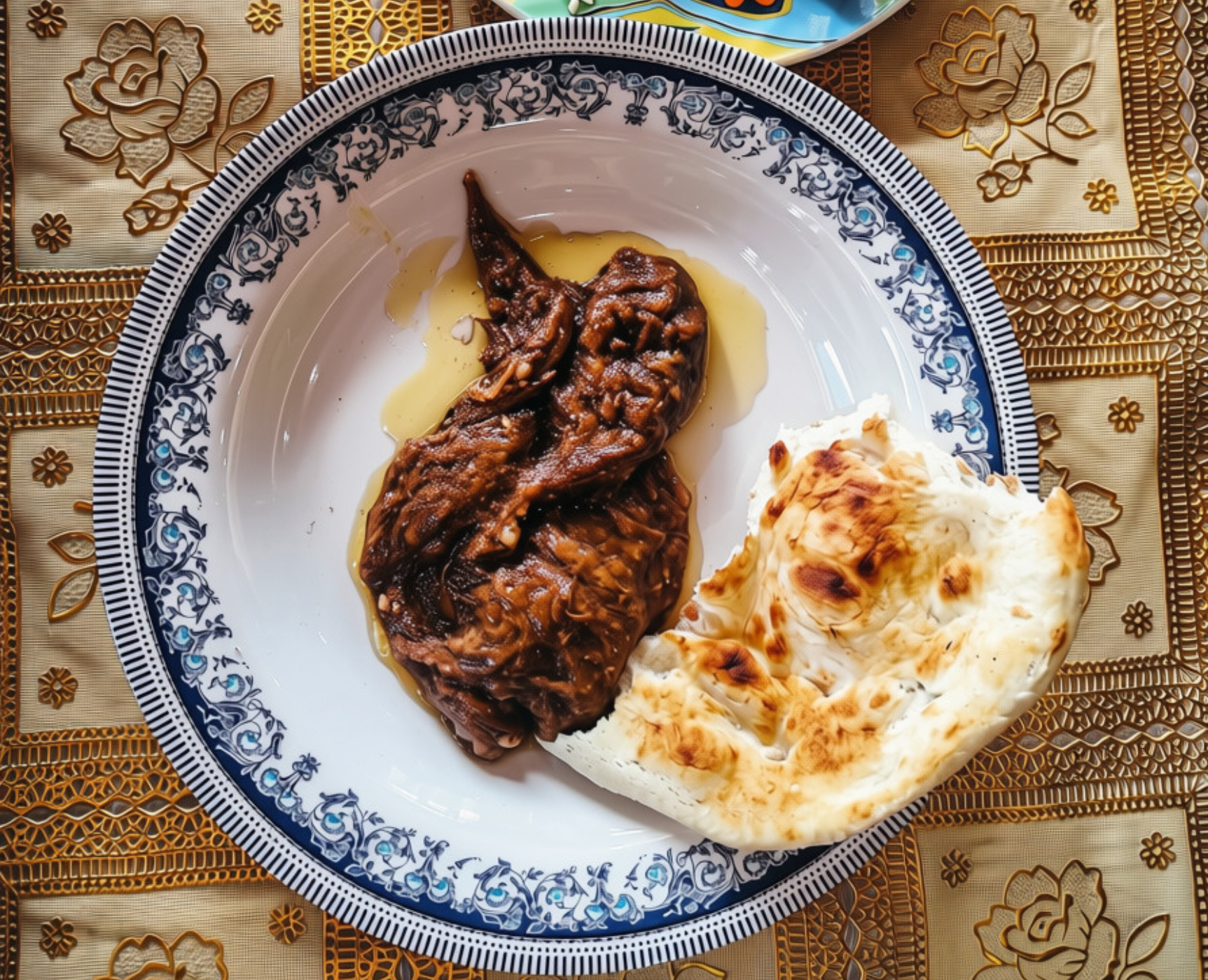
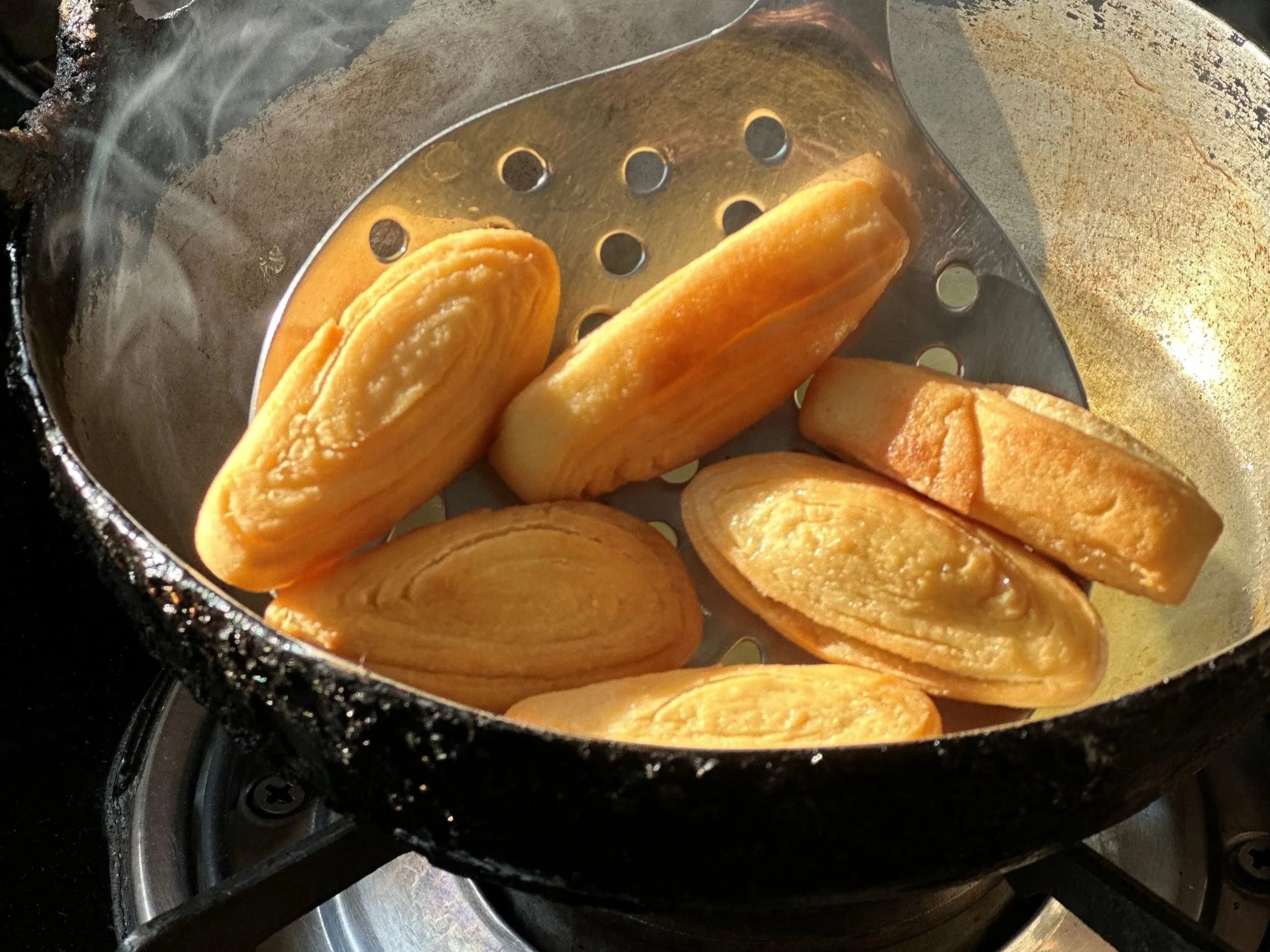
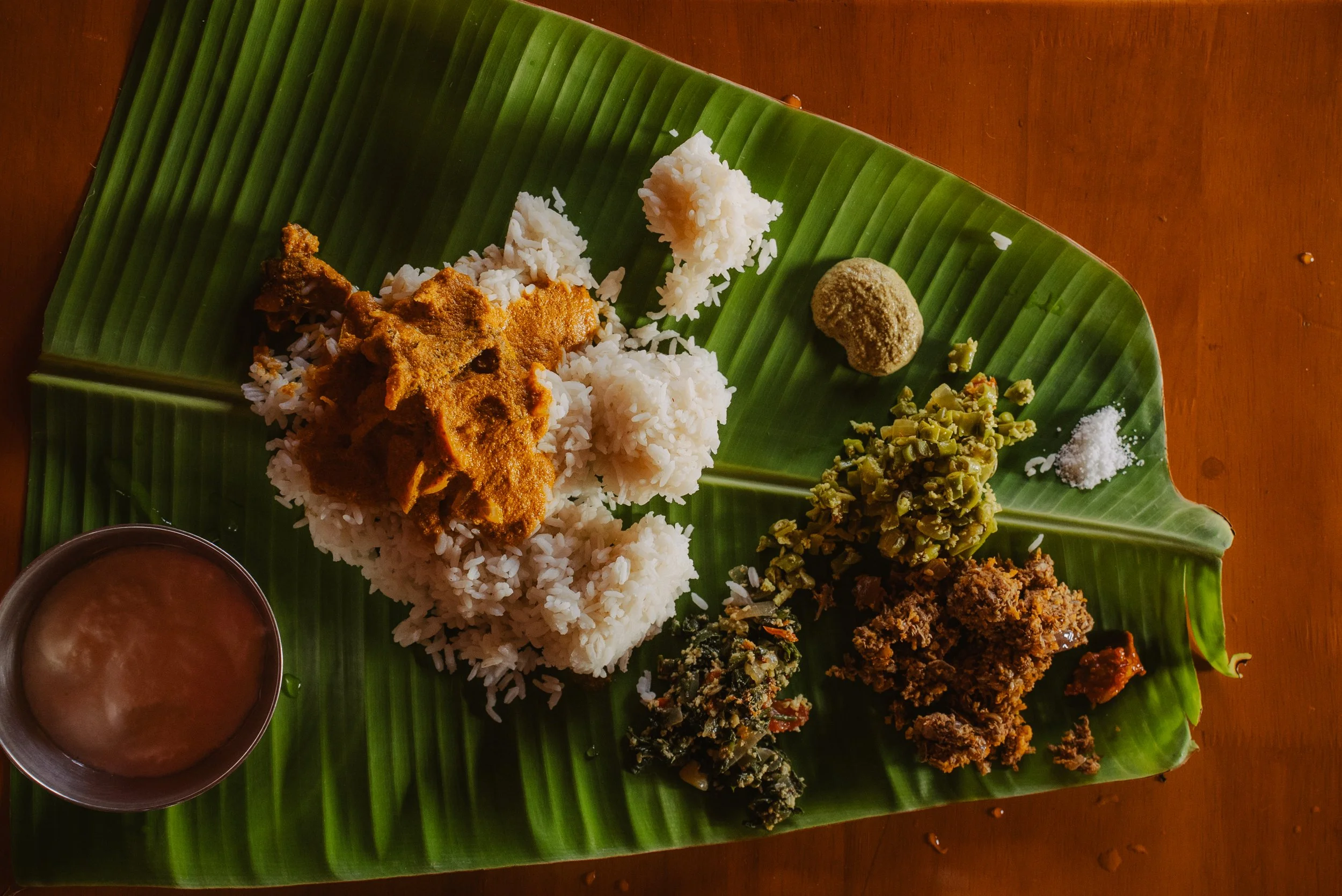
Together, we cook dishes that were simple yet profound. There was vundalaka juice, made with Brahmi leaves and jaggery, and a vibrant red ant chutney and soup given to cure fevers. We steam river fish in wild turmeric leaves, and season it with kandhari menasu and vathe huli (a fermented dry-salted wild monkeyjack). Dried fish turns into kokra, snails become gulle sukka, and white forest leaves transform into crisp bettle-ele bajji. There is sun-dried mutton sukka, salt-dried during hot summer, and a hearty benne gedde saaru made from the palm’s heart. Even dessert carries the forest’s touch: wild jackfruit seed obbattu (sweet flatbread), and kadubu, dumplings made of wild cucumber are served with sweetened coconut milk.
Cooking here is about continuity; it is an extension, an evolution of inherited wisdom. Music, too, weaves through their lives as naturally as cooking. In the evenings, the sound of the Damami, their sacred drum rises through the forest, followed by the voices and movement of Siddi women. The Siddi Dhamaal dance, rooted in African rhythm, shaped by Indian soil, comes alive under the moonlight. Men play the drums while women sing, bodies adorned with leaves and patterns of ash and natural white paint from tree barks, retelling stories of ancestors who crossed oceans and found new homes in forests like these.
Today, visitors can experience this world through Damami Community Stay, an initiative by Suyatri, a social enterprise dedicated to supporting tribal welfare and cultural preservation. The stay is entirely managed by Siddi women. The experience is not designed as tourism but as an immersive, respectful exchange where visitors learn, taste, and feel the balance the Siddis have maintained with their environment.
As I leave Yellapur, I carry back more than recipes. Cooking in that forest under a canopy of trees, with the hum of bees, the crackle of woodfire, and the laughter of women remind me that cuisine, at its core, is human. The Siddi way of life, rooted in forest and creek, bee-hive and paddy-field, drum and dance, taught me that food is more than sustenance. It is an ecosystem, heritage, and identity. And for those of us who tell stories through food, the Siddi reminds us that every plate can be a bridge linking past and future, land and people, survival and art.
Gokul K Mohit aka Chef Goku is an independent chef, food researcher, and culinary storyteller.
ALSO ON GOYA