Poppy Seeds: An Ingredient at the Edge of Empire
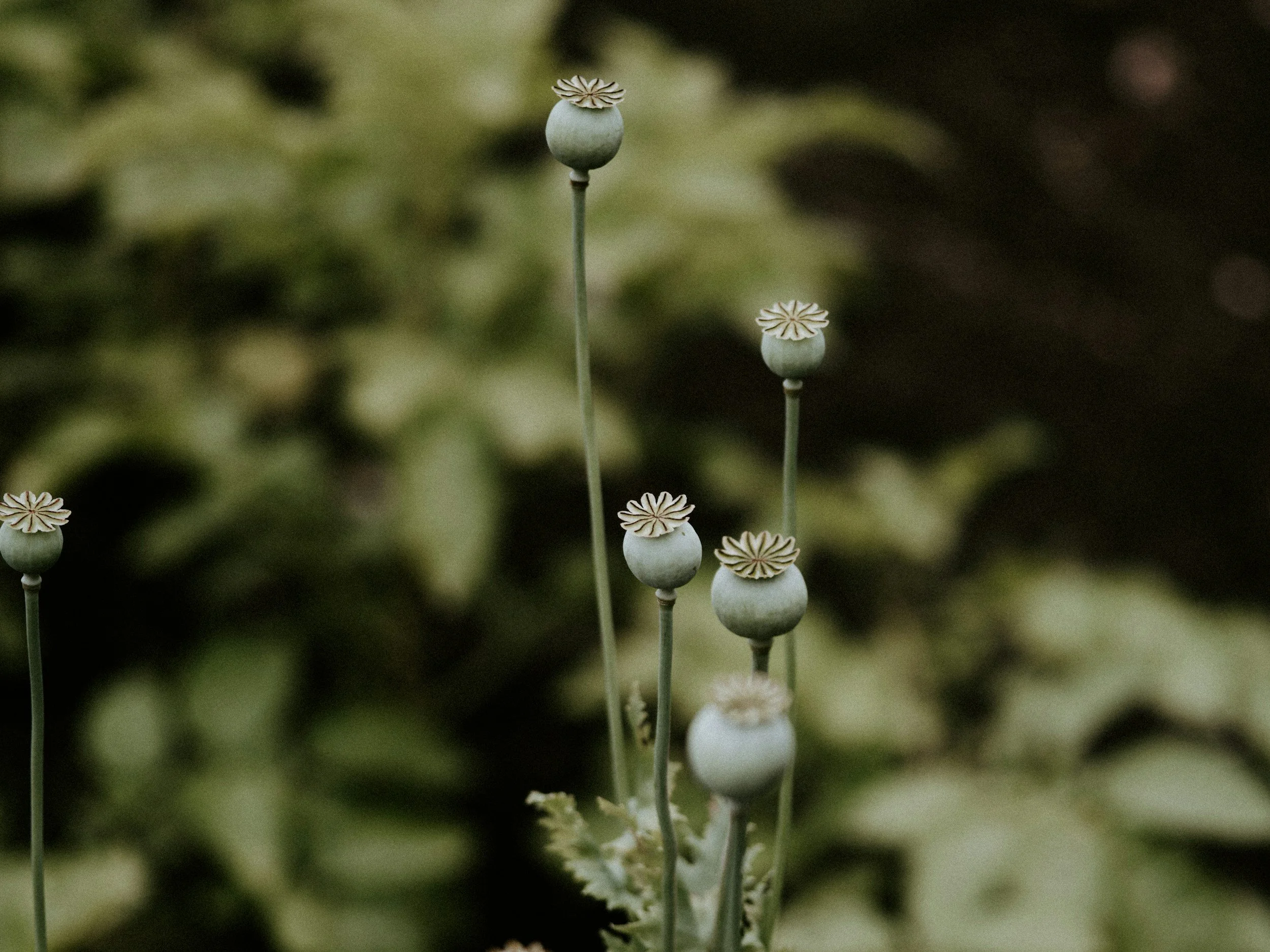
Born of coercion and cultivated under empire, the poppy seed fed both hunger and power. What remains is a cuisine that carries the memory of famine in unexpected sweetness. Paridhi Sinha finds that history, between two different countries, share a common link: poppy seeds.
What could Hong Kong possibly have in common with a warm bowl of postadana halwa?
Quite apart from the coincidence of encountering it while reading about political turmoil in a Sino-British megacity, the existence of modern Hong Kong can be traced to a sweet dessert prepared over a thousand kilometres away — or, more precisely, to a single ingredient within it.
A RECIPE WITH ORIGINS IN WAR
The story begins, like almost every other modern conflict, with the British. In the mid-18th century, the world was a different place. The East India Company was yet to take over India but the process had well begun with the Battle of Buxar (fought in Bihar). In the aftermath of this battle, the company was granted de facto control of Bengal (the present day regions of Bengal, Bihar and Orissa) by the defeated Mughal emperor. The East India Company and the British government’s goals were purely capitalistic in nature; so, when they gained control over one of the richest regions, they focused on profit.
On the other side of the Himalayas was imperial China. Although closed off to the rest of the world, they still participated in trade. The British public had already tasted and fallen in love with tea. But the Chinese guarded the secret of growing and processing tea closely, ensuring their monopoly. The East India Company was in heavy debt from the battle, and saw trading in tea as a way to build profits.
As it turned out, the Chinese had a bit of an opium problem. Opium had been used in traditional Chinese medicine for centuries but, as tends to happen, many began to use it for ‘recreational’ purposes. The addiction problem amongst the populace so severe, that the Chinese emperor banned recreational smoking of opium and trade for such purposes. Despite the threat of capital punishment, the influx of opium in China didn’t stop. The Company saw this as a perfect opportunity.
They forced farmers in their newly gained territories in India to grow opium as the Company illicitly began exporting opium into China. They would buy tea from the Chinese on credit and then pay for it by illegally trading in opium. Unsurprisingly, the Chinese government wasn’t happy with the situation. What began with the local officials seizing and destroying tons of British opium turned into a naval war now known as the First Opium War. The Chinese, with their wooden ships, lost to the modern British navy. The resulting treaty led them to cede much power to the British, including the territory of modern-day Hong Kong.
Meanwhile back in India, this forced opium farming had its own repercussions. After winning the First Opium War, the Company increased their opium trade, further increasing the pressure on Indian farmers. There was also demand for other commercial crops like indigo, but farmers received little to no profit from this crop. British demand for commercial crops increased so much that there was, at times, dearth of land for growing food. Due to several British policies, including this one, the region of Bengal underwent multiple major and minor famines, including the Great Bengal Famine.
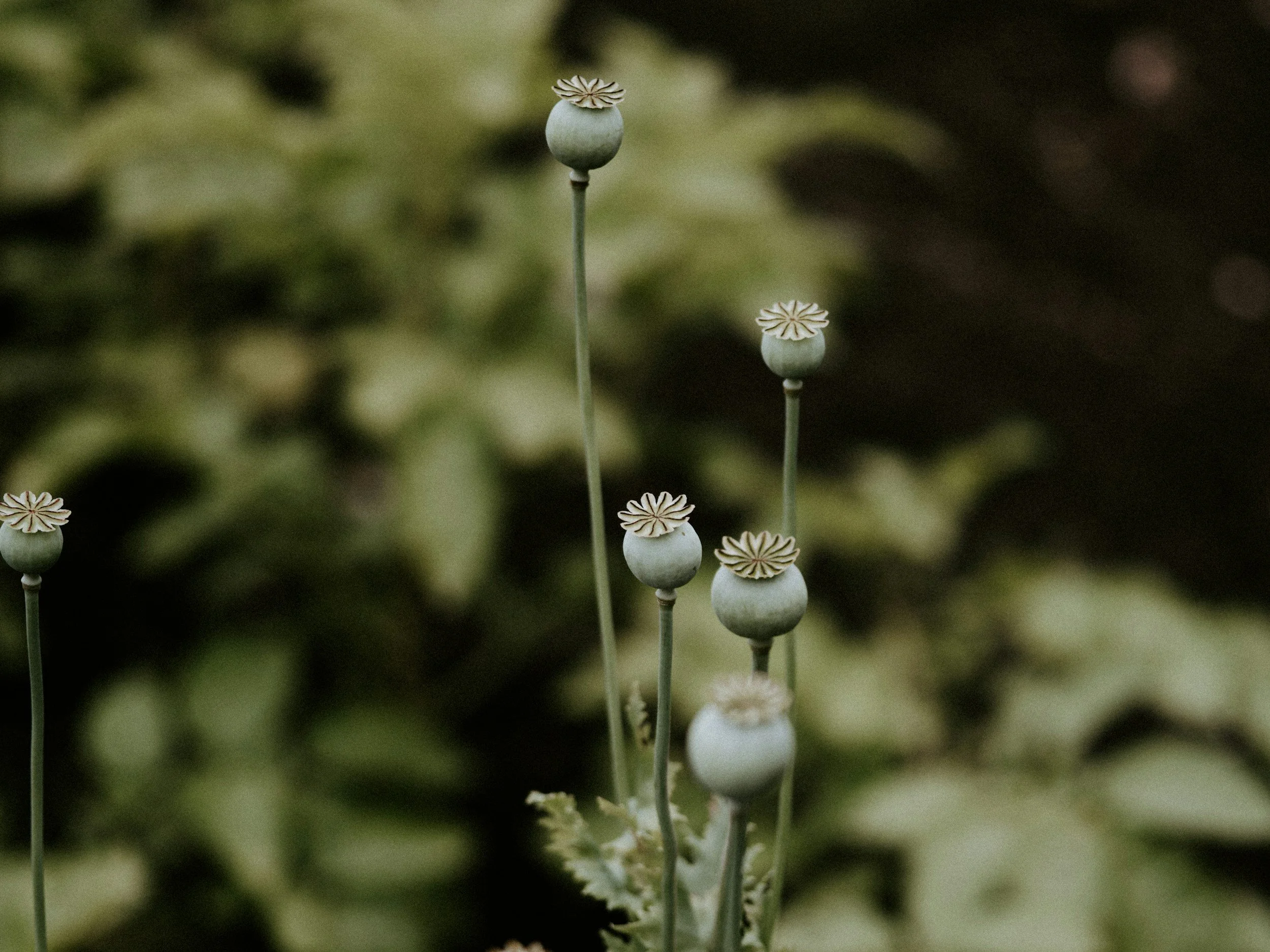
Food was scarce in Bengal and hunger was ubiquitous. But, they had something in abundance, something they had been forced to grow, opium.
Food was scarce in Bengal, and hunger was ubiquitous. But, they had something else in abundance; something they had been forced to grow. Opium. The seeds of the poppy plant (from which opium is derived), do not have the same addictive and intoxicating properties as opium, and slowly became a part of the local food culture.
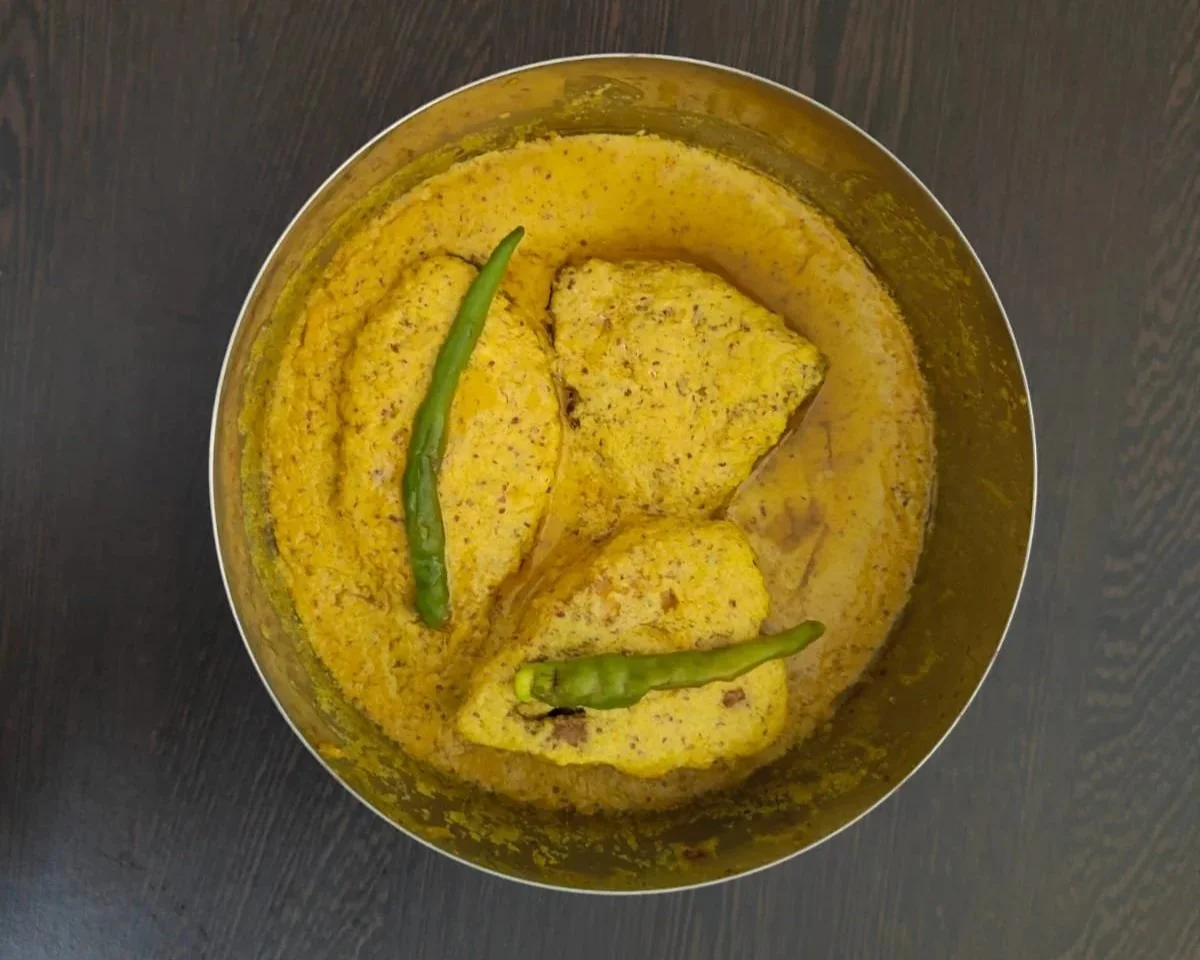
The Bengalis call it posto, and it is a part of their everyday diet even today. In Bengali cuisine, posto is added to fish, to chicken and vegetables, but isn’t common in sweet dishes. In Bihar, they call it posta or postadana.
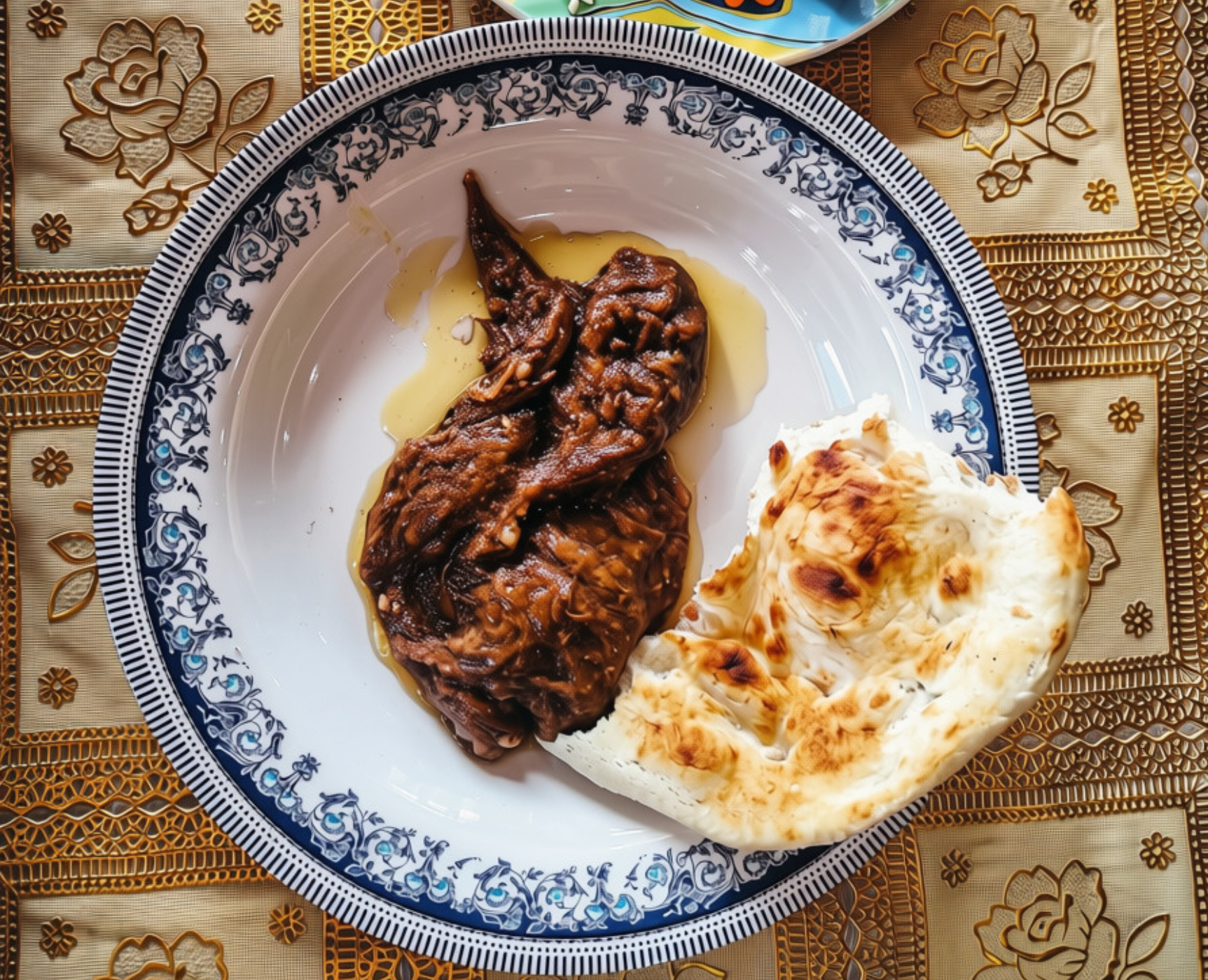
Posta is a rare ingredient in Bihari cuisine. The most well-known dish is the postadana halwa, a decadent, sweet and almost luxurious affair — not one that carries memories of war, famine and survival.
Perhaps this is Bihar’s way of remembering and celebrating an ingredient linked to survival. Or maybe, it is a cultural choice to forget a painful memory by choosing to focus on something sweet.
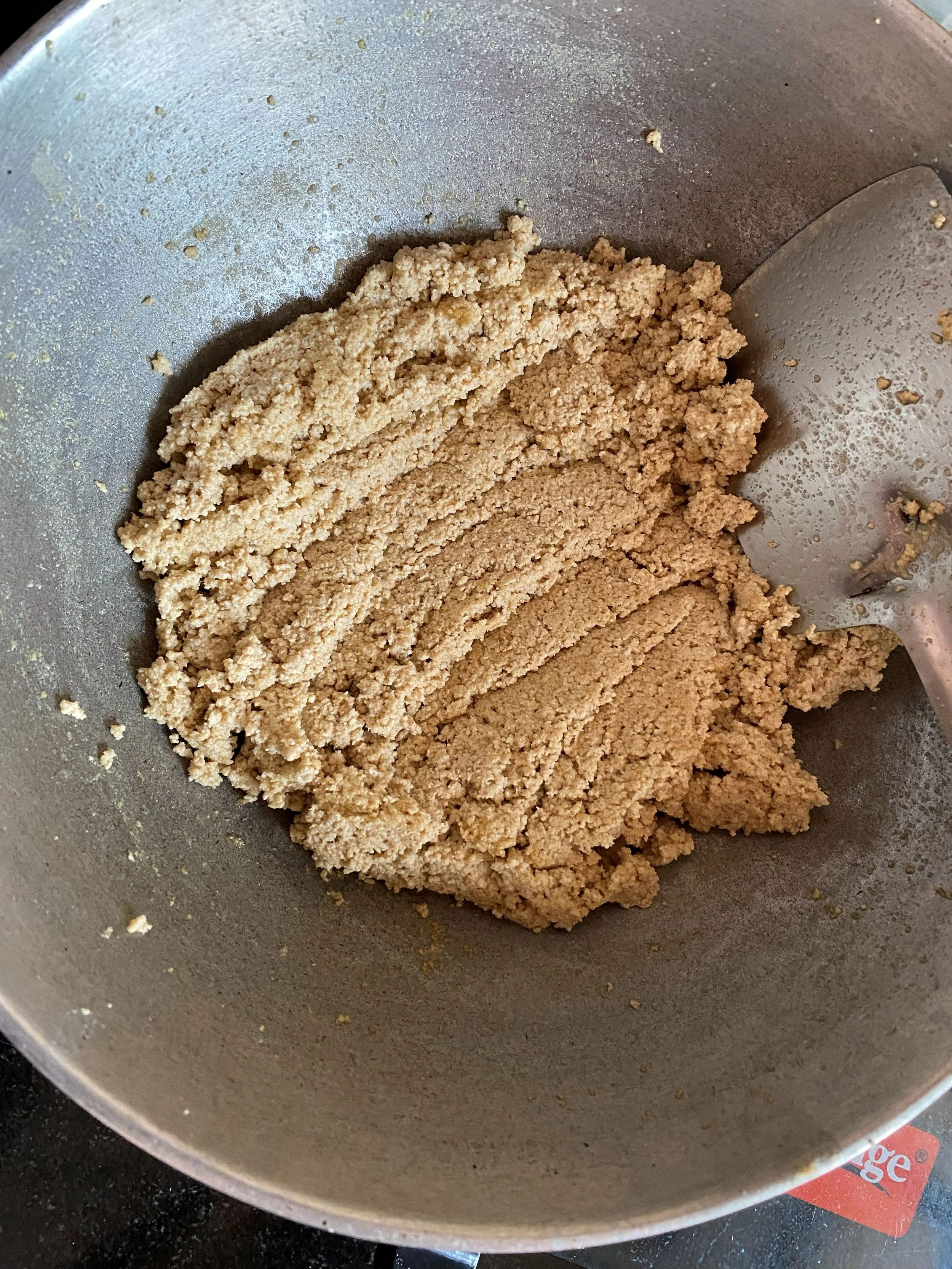
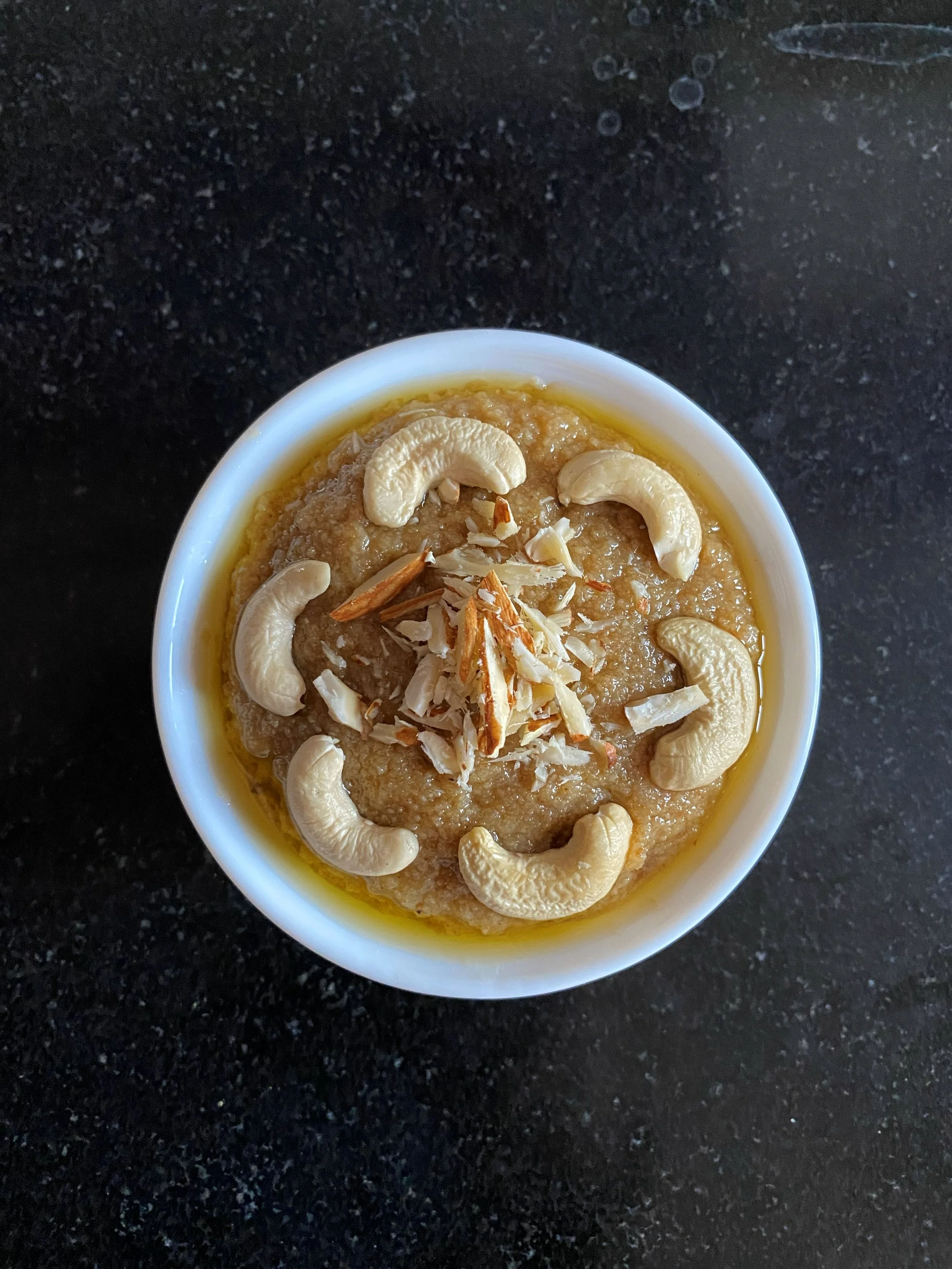
RECIPE FOR POSTADANA HALWA
Ingredients
100 g postadana (poppy seeds)
100 g ghee
500 ml full fat milk
100 g khoya/ mawa
2 cardamom pods
Sugar to taste
Nuts of choice (almonds or walnuts would be great for balancing the texture and sweetness)
Method
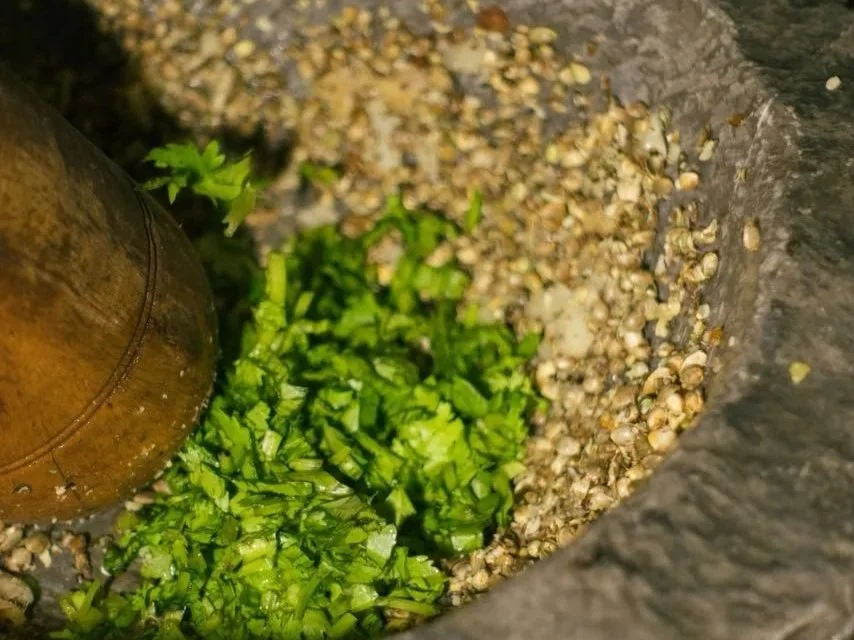
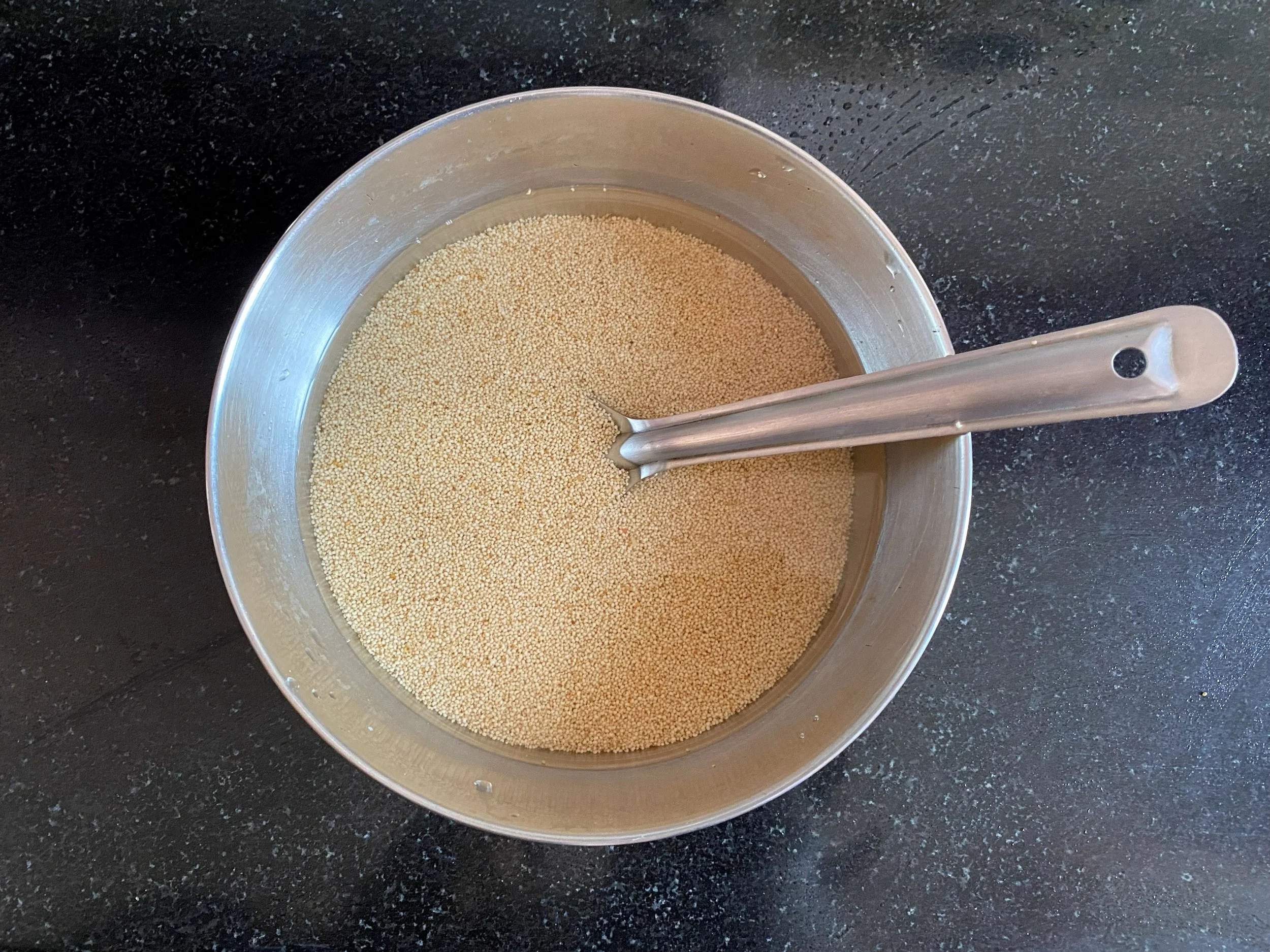
Clean and soak the postadana in water for at least 4-5 hours. Soaking it overnight would be better. Drain the water and add to a blender along with a small cup of milk to form a thick paste.
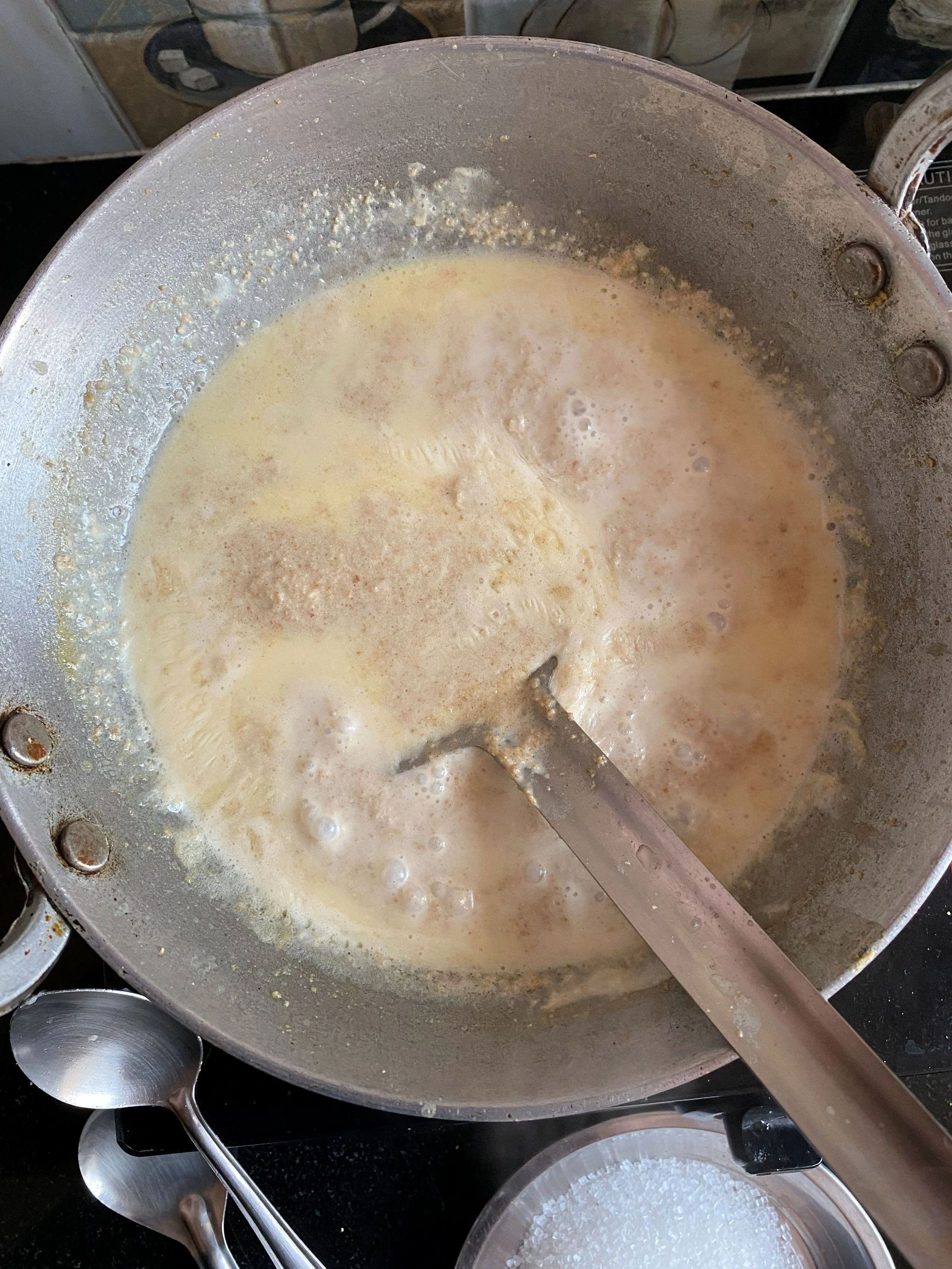
Heat the ghee in a pan or kadhai. Add the paste and cook over low heat.
Keep stirring the mixture while slowly adding the remaining milk. Add the grated mawa along with the milk so that it is incorporated better. It’s a little labour-intensive process and takes a while but it is absolutely worth it.
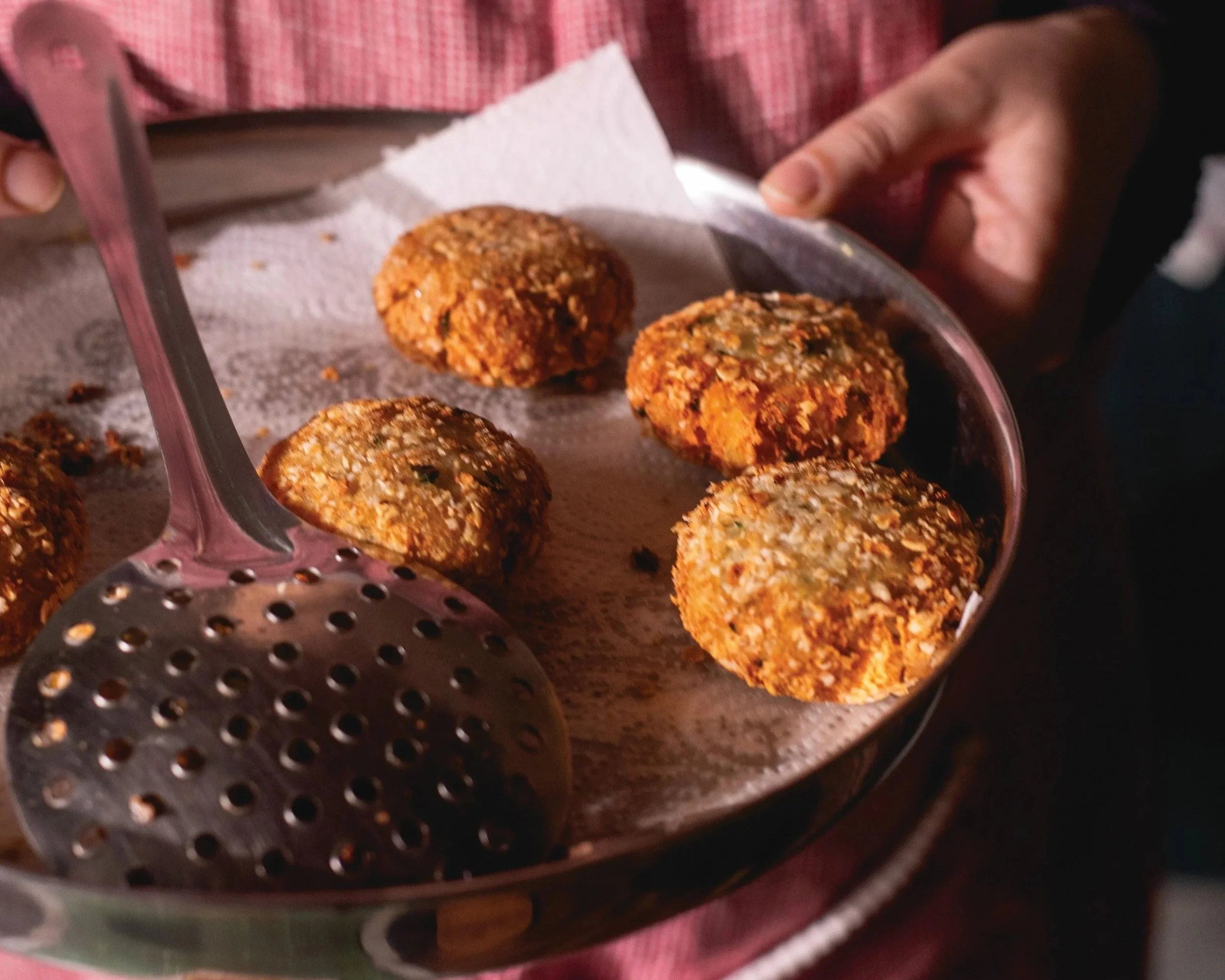
The halwa is cooked till its color turns golden brown and the texture is slightly crumbly.
Add the sugar and chopped nuts of choice just before turning off the heat.
It can be eaten hot or cold. Although I would recommend eating it while it’s still warm.
Paridhi Sinha is a lawyer based out of Patna who is deeply interested in history and culture.
References:
https://www.bbc.com/news/world-asia-india-49404024
https://theconversation.com/exploitation-brutality-and-misery-how-the-opium-trade-shaped-the-modern-world-227356
https://praxis.ac.in/the-story-of-alu-posto-and-opium-trade-an-article-from-the-indian-express-by-pritha-sen/
https://www.whetstonemagazine.com/south-asia-journal/the-true-cost-of-posto
https://www.theguardian.com/society/2023/may/23/out-of-our-minds-opium-imperial-history-opium-wars-china-britain
https://www.aljazeera.com/opinions/2022/12/2/how-british-colonial-policy-killed-100-million-indians
https://www.bbc.com/news/world-asia-india-36339524
https://www.theguardian.com/world/video/2023/oct/12/how-british-colonialism-increased-diabetes-in-south-asians
ALSO ON GOYA