Red Ants and Roti: A Siddi Table in the City
Ruth Dsouza Prabhu sits down to a meal cooked by the Siddis from Yellapur, and through their food, is offered a glimpse into their history, their unique relationship with the forests of the Western Ghats, and the slow emergence of this little-known community into public consciousness
There is very little that can motivate me to sit through Bengaluru’s notorious traffic. A recent delicious exception was a Siddi (an ethnic community living in Karnataka, of African-origin) dining experience, anchored by the women of the community. The group came from the Yellapur Taluk of the Idagundi Gram Panchayat, Beeragatti, about 435 kilometres from Bengaluru.
The women cooking the meal are the backbone of Damami (named for a traditional percussion instrument), a community-run stay in Yellapur. “This is India’s first Siddi women-led, community-based tourism programme,” says Sumesh Mangalassery of Suyatri Community Tourism, a social enterprise in Bangalore. Damami was developed by the Uttara Kannada Zilla Panchayat and Sanjeevini (NRLM) of the Government of Karnataka.
The meal begins with an informal conversation. 43-year-old Manjunath Ganapa Siddi, farmer, expert forager and “doer of all things to uplift my Siddi community”, explains the origins of the Siddis (also known as the Habshis), with a caveat that everything he shares is rooted in oral history passed down from his elders. His knowledge tallies with what has been actively documented of the community, but much additional research is needed for a clearer perspective.
The Siddi Origin Story
The Siddis trace their origins to two groups, the Sidhamus and the Bantus, who lived on either side of a large lake called Nyasa (another name for Lake Malawi in eastern Africa). While the Bantus are a broad cultural group spread across eastern and southern Africa, the name Sidhamus does not appear in written records and is thought to be a colloquial interpretation of the Sidama people of southern Ethiopia. Whether they lived on opposite sides of the river is yet to be substantiated.
During the Portuguese colonial period (and earlier under Arab traders, who initiated the practice, later continued by the British) members of these communities were forcibly placed onto ships and transported to India, first arriving in Goa. The journeys were marked by brutal conditions; many did not survive, dying of starvation and disease at sea.
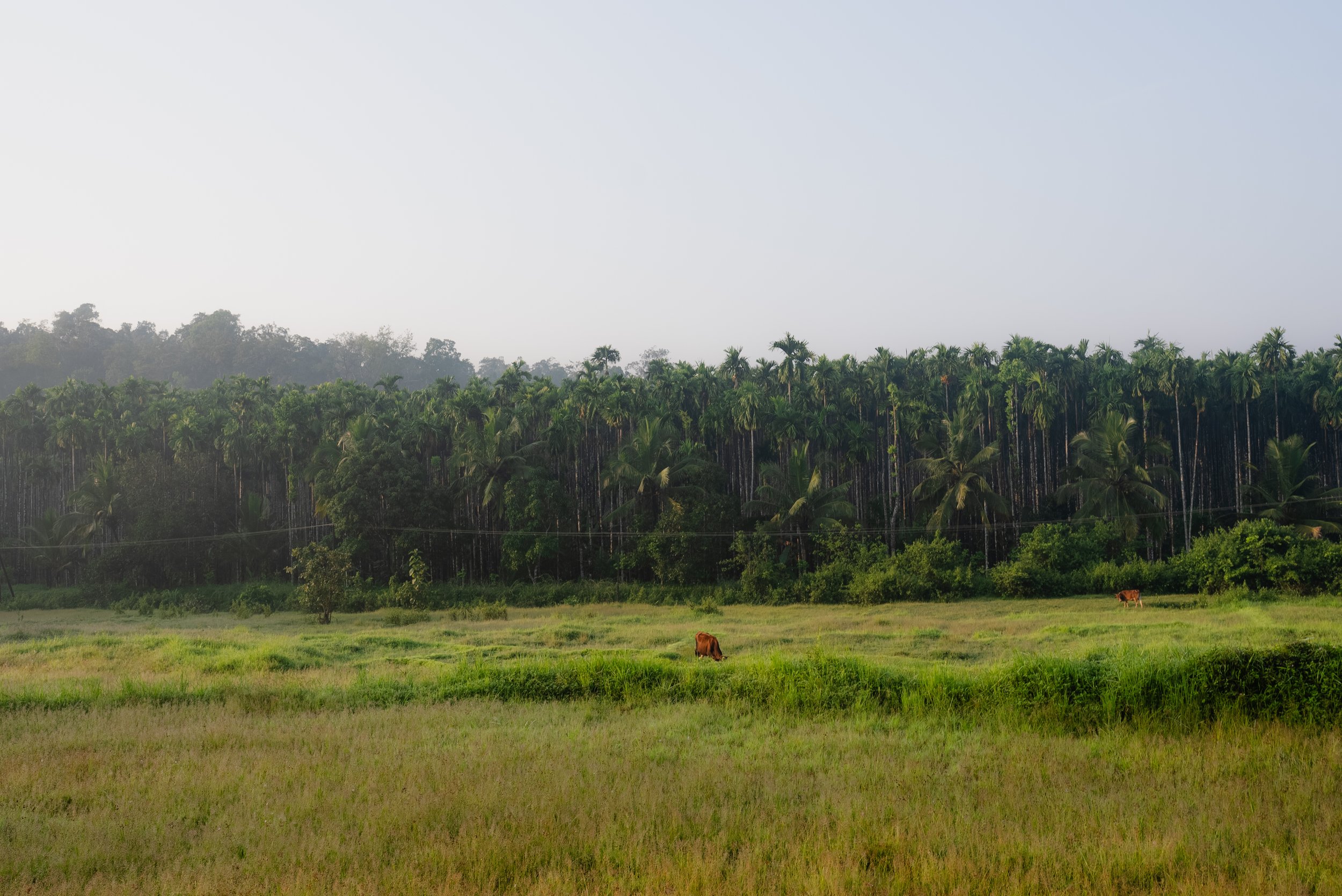
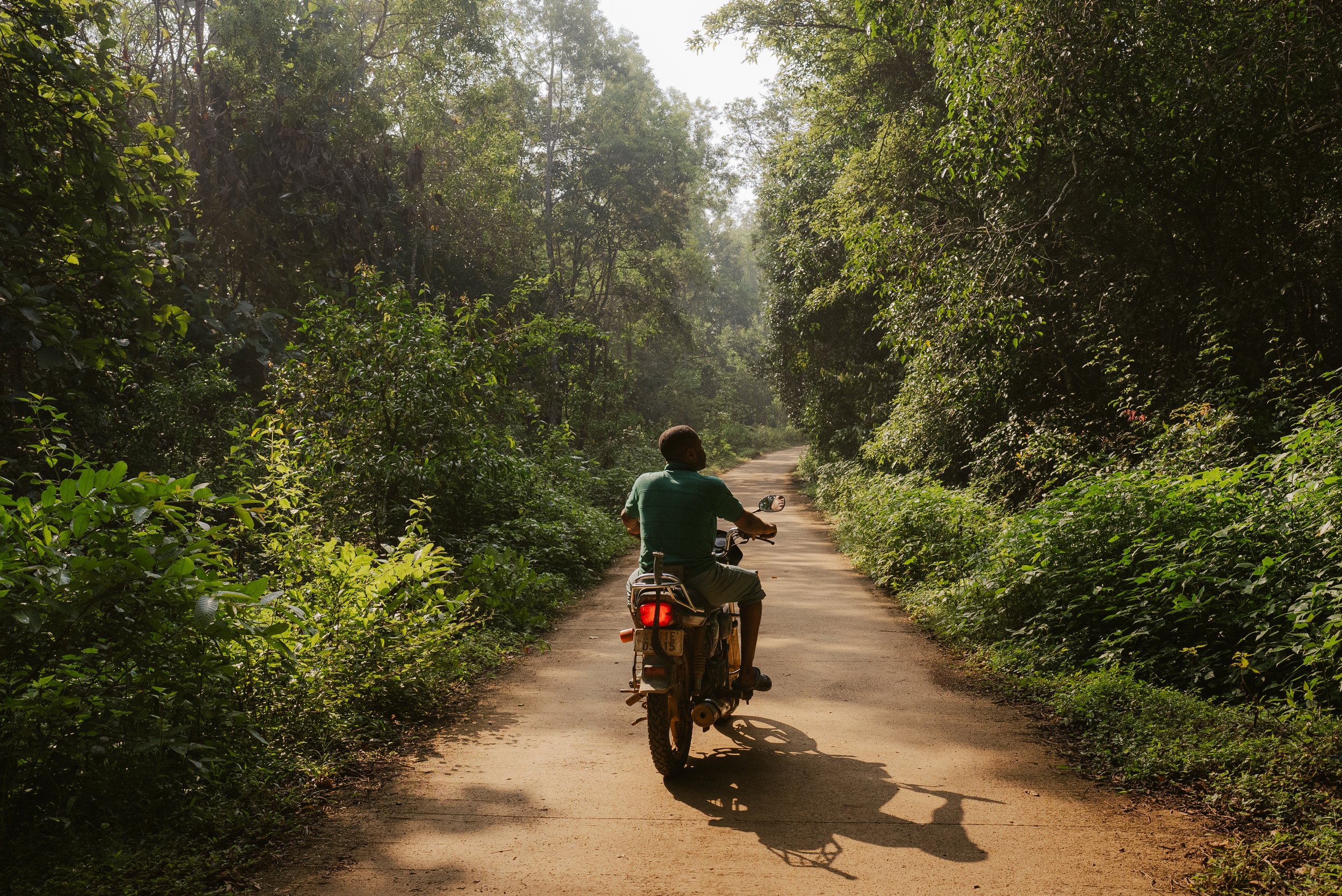
Those who survived faced different fates. Some escaped soon after arriving in India, and fled into the forests of the Western Ghats. Others were sold in slave markets and put to work. Many were recruited to the local kings’ armies. The forest groups lived in relative isolation for generations, gradually forming settlements near water sources and establishing relationships with nearby villages. Till about three decades ago, many Siddi families, from Karwar to Belgaum, relied largely on barter, exchanging forest produce for rice and grains.
The Evolving Life of the Siddis
The Siddis’ lives, Manjanna tells us, shifted in phases, shaped by displacement, labour, and finally, slow recognition.
Those who had been enslaved gained freedom at the time of Indian independence, and gradually united with the forest-dwelling Siddi communities. Over time, religious identities evolved depending on where each family settled, and whom they lived amongst. Siddis in Yellapur, Sirsi, and Ankola became largely Hindu, while those around Halliyala, Mundgod, and parts of Dharwad include Muslim and Christian communities. Formal recognition, however, remained inconsistent. Only some Siddi groups were granted Scheduled Tribe status, which allowed access to welfare schemes, facilitating NGO engagement with the community. Voting rights came during Indira Gandhi’s tenure, followed by land allocation. In his own family, Manjanna says, this meant his grandfather received ten acres of land.
But daily life, especially during his childhood, remained difficult. Siddis were often viewed as untouchable and impure, he says, shaped by prejudice against their African features and hair, and compounded by poverty and limited exposure to the outside world. There was also inherited fear. His grandfather would warn against allowing people wearing trousers come too close, a belief Manjanna links to memories of Portuguese slave-traders, and later, experiences of being socially marginalised by those who appeared more Westernised. In regions dominated by upper castes, Siddis worked largely as agricultural labourers, doing the hardest physical tasks — breaking soil, hoeing land, and climbing trees; work that continues even now.
Money, he explains, was never something they truly understood. Their logic was simple: if you worked, you ate. Families tried to grow small amounts of food on the land around their homes, but even that land was often taken away. He recalls repeated evictions, land lost without compensation, and moments of desperation “when acres of land were given up for a few laddoos to fill an empty stomach”.
Change has come slowly to the community. By the time he was 12, he realised that education could offer another path, though ill health kept him from pursuing it well. Now, many in the community are gradually gaining degrees, finding jobs, and learning to question authority. Forest produce remains central to life, even as memories of harassment by law enforcement, false cases, and hardship — especially for women — remain fresh.In his own family, the shift is visible; his younger brother is now a teacher at a government school, and his sister is a civil engineer.
Sharing the wealth of forest knowledge is one way that Siddis engage with the world at large.
A Siddi Feast
The pop-up in Bangalore, called Salt of the Leaves, was curated by Chef Goku in collaboration with Suyatri and Forest Post. Read: Chef Goku’s visit to the forests in Yellapur.
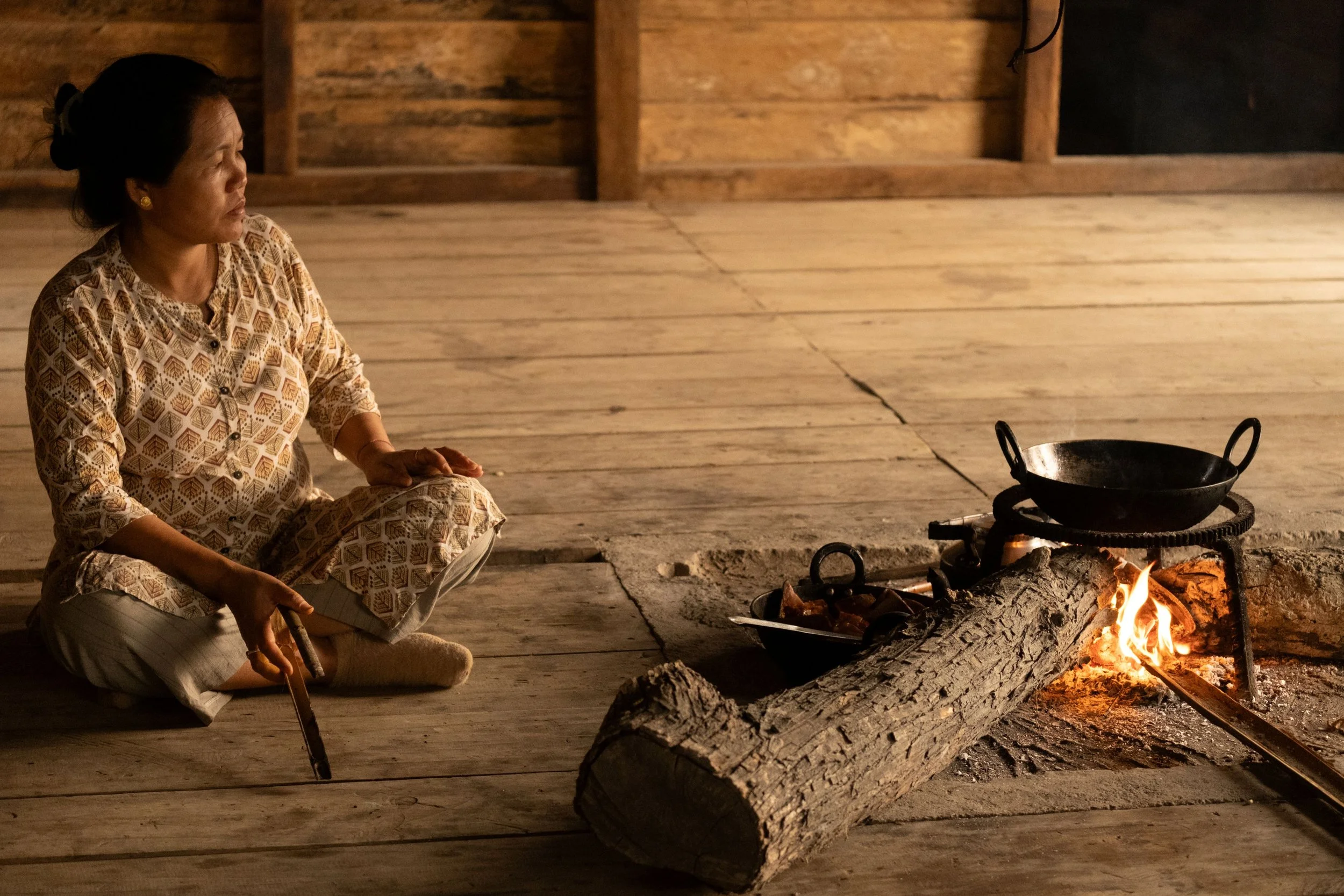
The ingredients for the meal were foraged from the community’s forests in Yellapur. Savitha, one of the cooks of the feast, (who also handles accounting at Damami), explains that in their day-to-day meals, at least one ingredient is always from the forest. “What we cannot carry from the aranya (forest), we grow around our homes,” she adds. She learned how to forage from her mother and other elders, and is passing this wisdom on to her children.
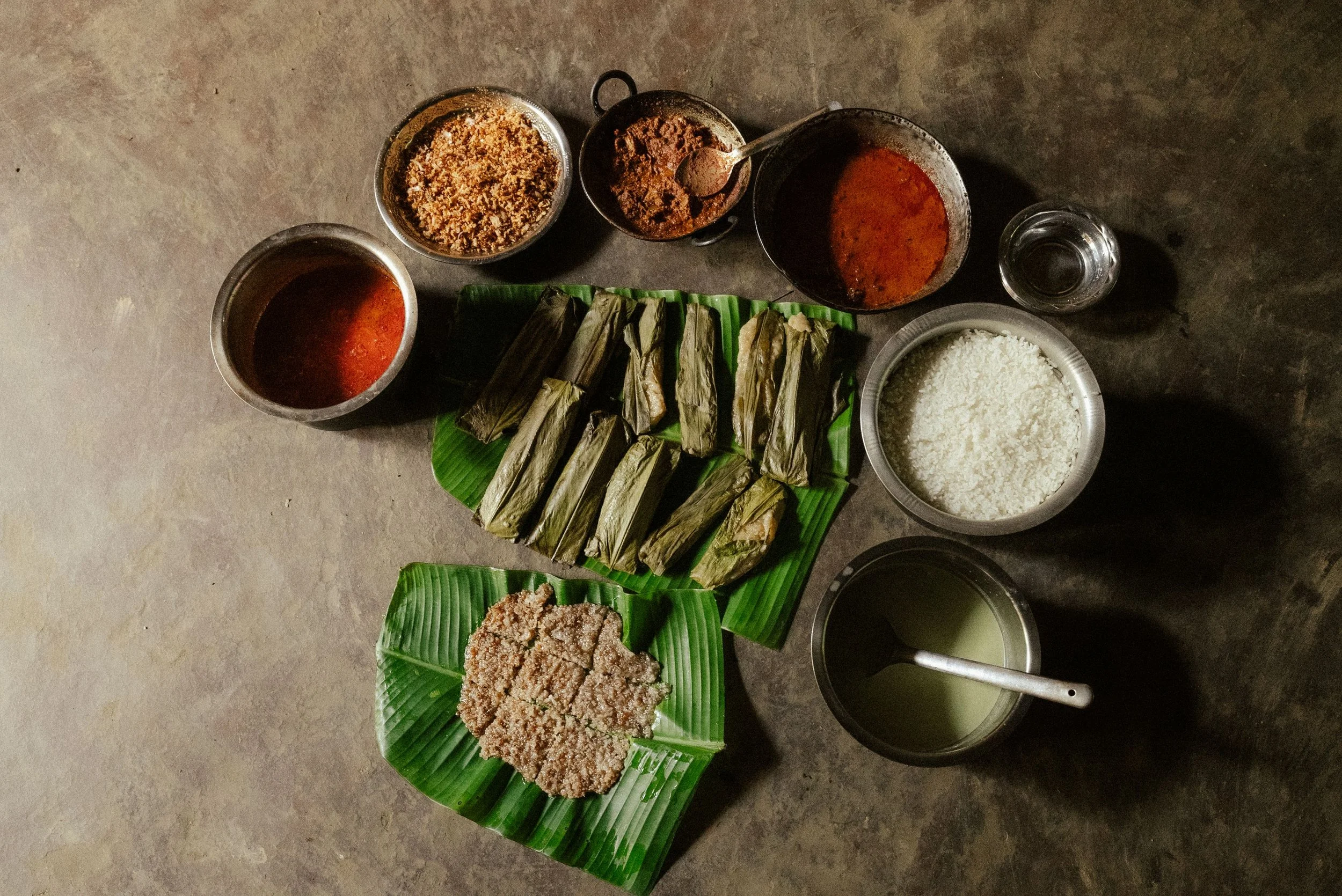
The meal begins with a copper tumbler of urli – a beverage made of horse gram, black jaggery and cardamom. Grainy and textural, the drink is almost a fragrant, watered-down payasam without the trimmings. It is served as an immunity booster, and certainly serves to whet the appetite.
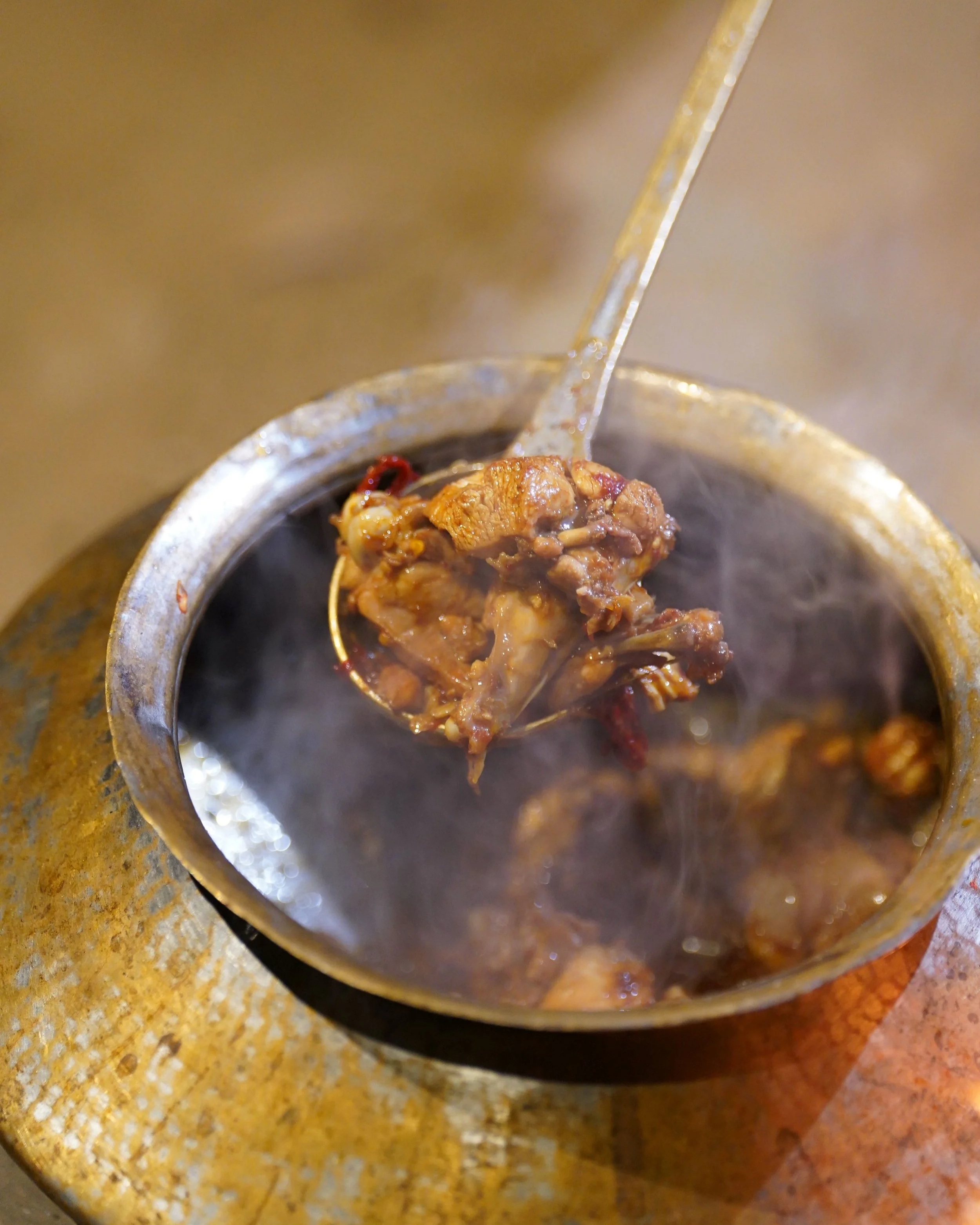
Since the meal is served buffet-style, we begin with souli, a red ant soup, made with coconut, spices and several forest herbs. Savitha tells us that red ants are an integral part of the Siddi diet. Harvesting involves removing only part of the colony, allowing the remaining ants to rebuild and repopulate the nest. Manjanna adds, quite proudly, that the soup protected his community from the Coronavirus. The community kitchen would prepare a medicinal soup of ants, spices, herbs and leaves from the forest. Each time, ten litres of the soup was boiled down to a single litre, to reach a syrup-like consistency. Every member of the community was given a cup, once a week. Manjanna vouches that no one in the community contracted the virus.
By way of appetisers, we taste a range of sukkas — kokkra (mackerel), ona (mutton) and anabe (mushroom) sukka, some dry-fried, others in a thick gravy, with onions and chillies in the mix, featuring coconut as the central ingredient.
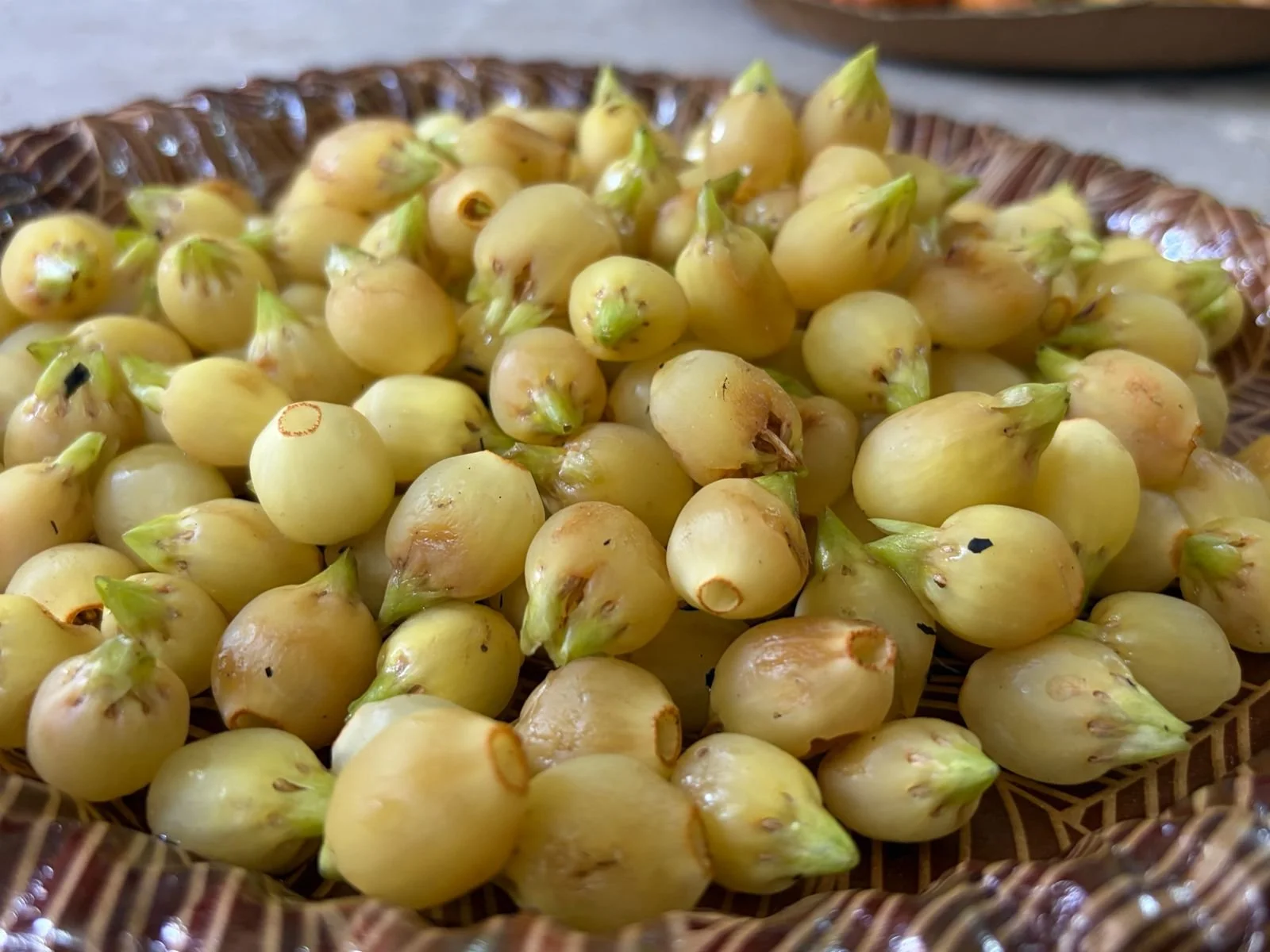
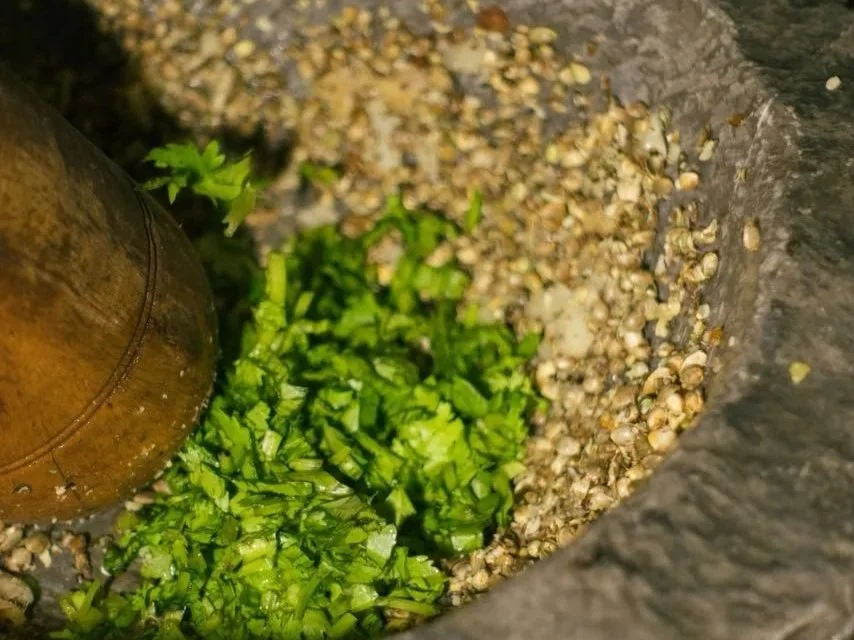
Besides souli, condiments included soppina (mixed greens) chutney, a dense mix of Brahmi (water hyssop), wild coriander, Ondelaga (Indian Pennywort), Sagude (Ceylon Oak tree leaves) and Murgulu (Kokum leaves).
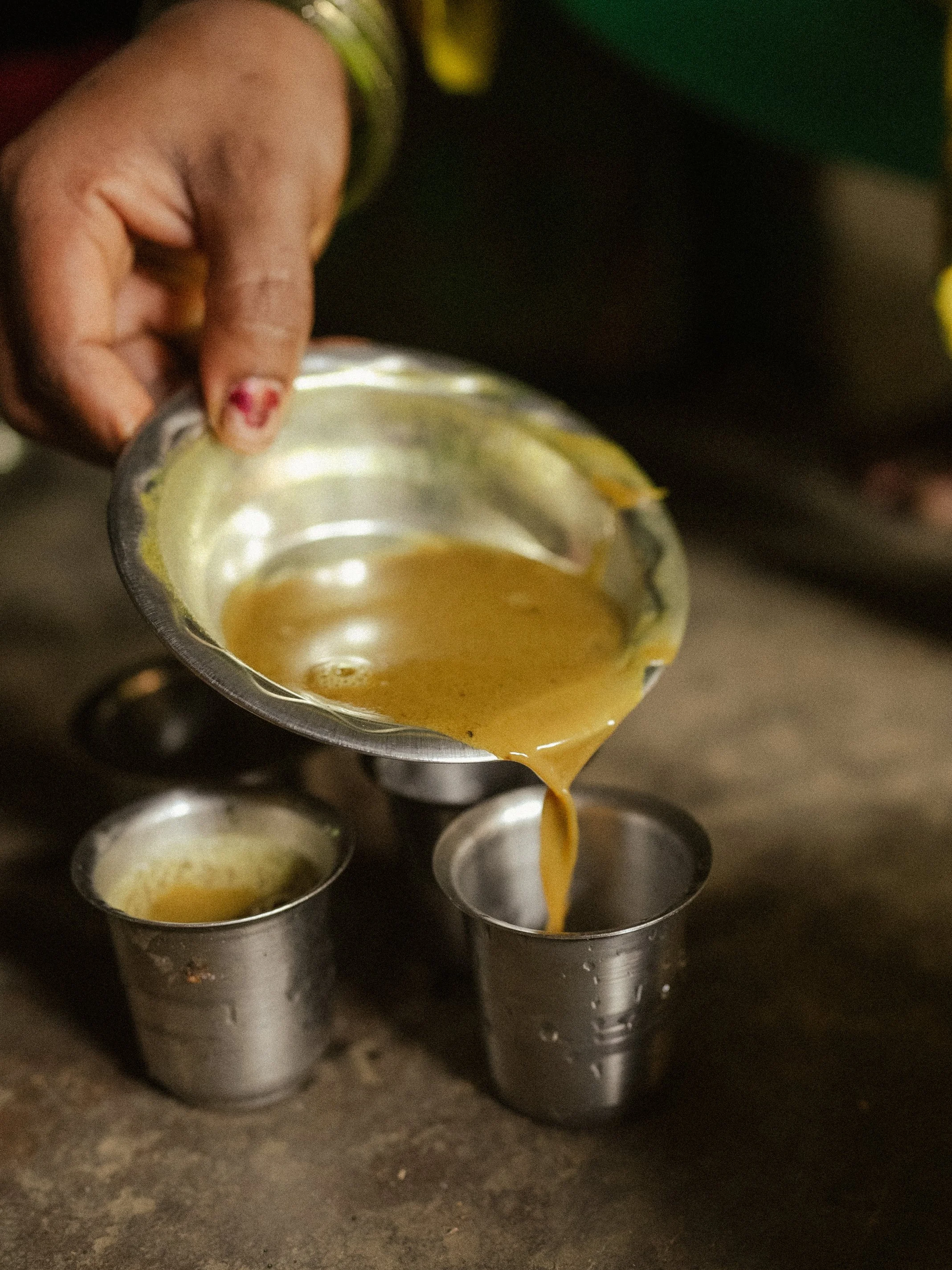
Souli is a red ant soup.
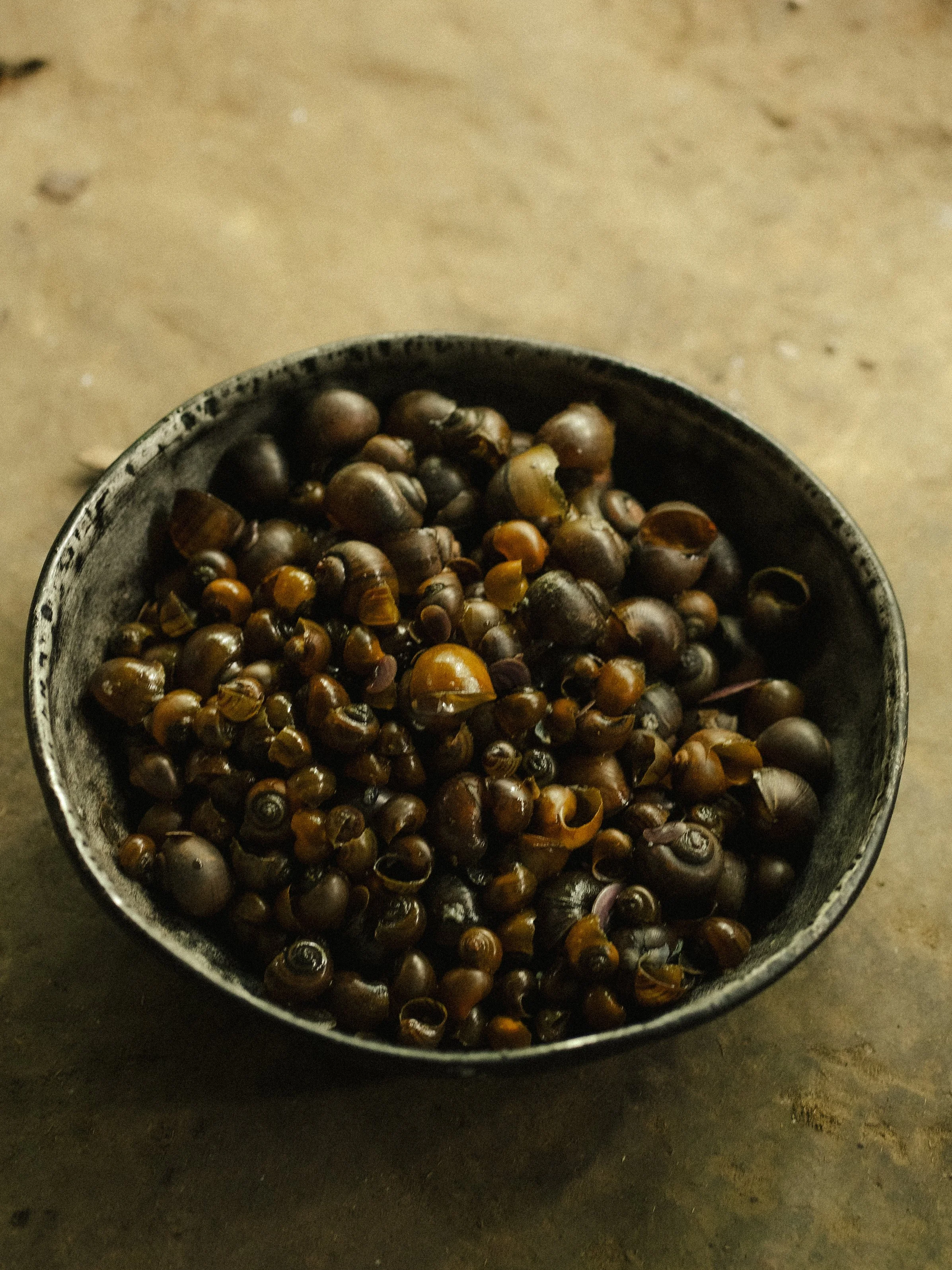
Konge or snails are turned into a sukka.
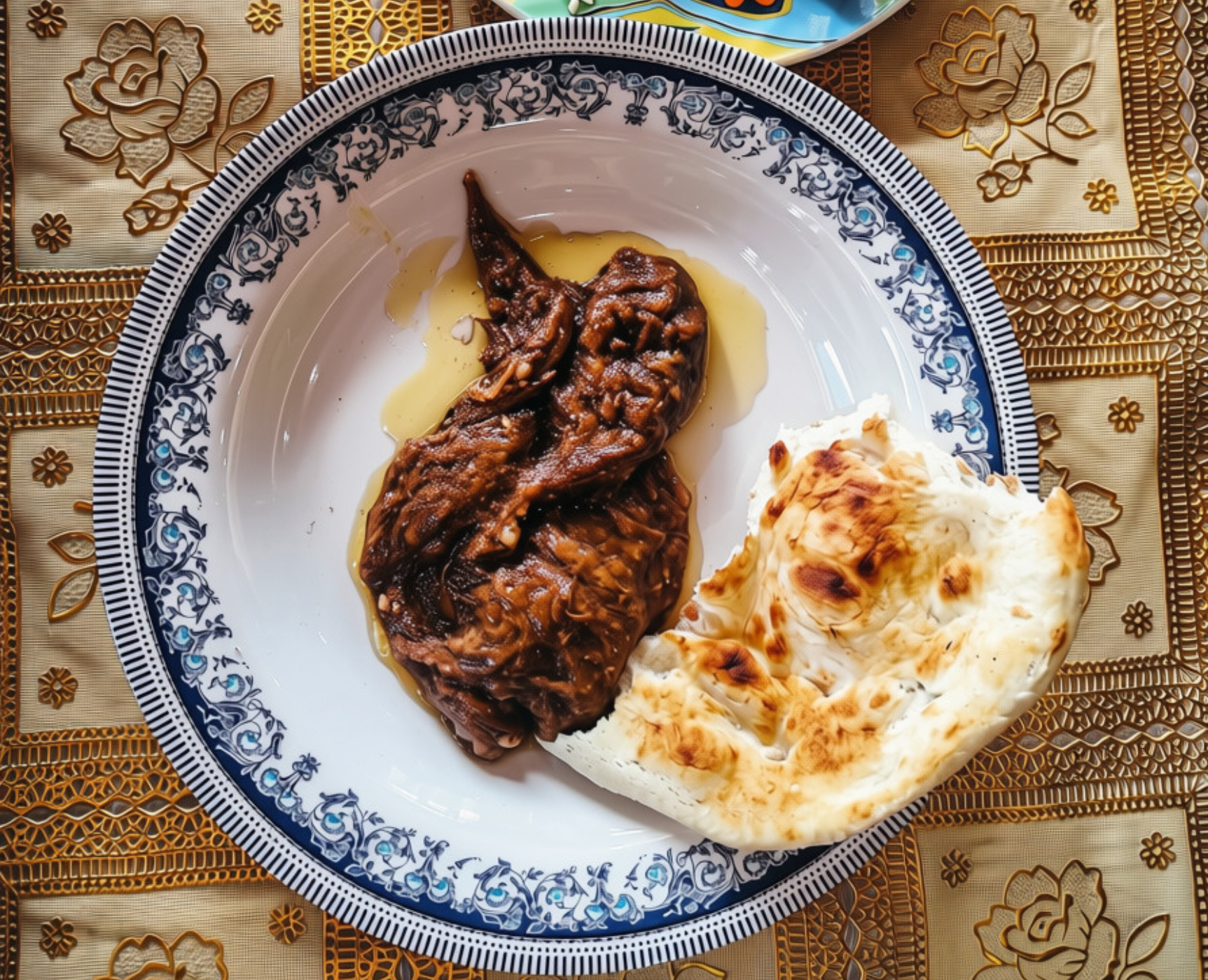
For mains, we begin with konge sukka: freshwater snails boiled, then tossed with coconut, chillies and spices. There was kalalee (bamboo shoot) palya, whose earthy shoots are shredded with fresh coconut, reminiscent of a Kodava-style preparation. The baine gadde (fishtail palm) saaru is a thick curry of wild palm stem. Manjanna explains that the tree is only cut down when it is about to die (state laws prohibit its felling). “Inside is a soft pith, treated like grain, much like ragi. It is pounded and soaked in water until it turns white. The heavier grains settle at the bottom and are sun-dried. One tree can yield close to a quintal (around 100 kg), which is used to make rotis and other dishes.” he says.
Lajje mullu thambuli is a cooling, mildly spicy buttermilk with touch-me-not and Pennywort leaves. A mix of wild ferns, visually similar to fiddlehead ferns, were given a modern twist, tossed in kokum butter and mustard seeds.
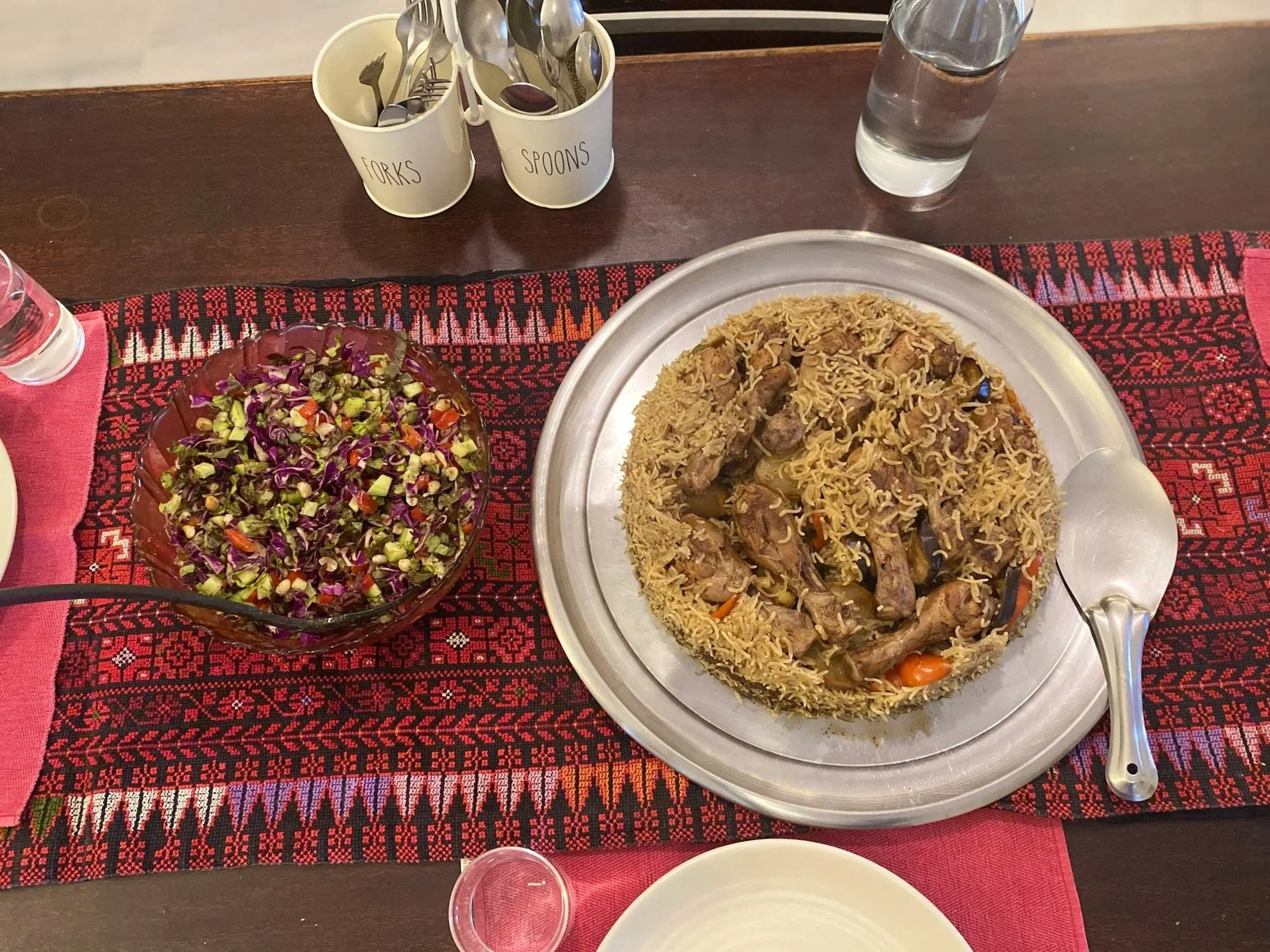
Mains include naati koli saaru (country chicken curry), a yedi curry (roasted mud crabs), mackerel, marinated with spices, peppers and vaate huli (monkey jack). Accompaniments include kauili, a mix of sweet and savoury steamed cucumber mixed with rice rava, jaggery and cumin.
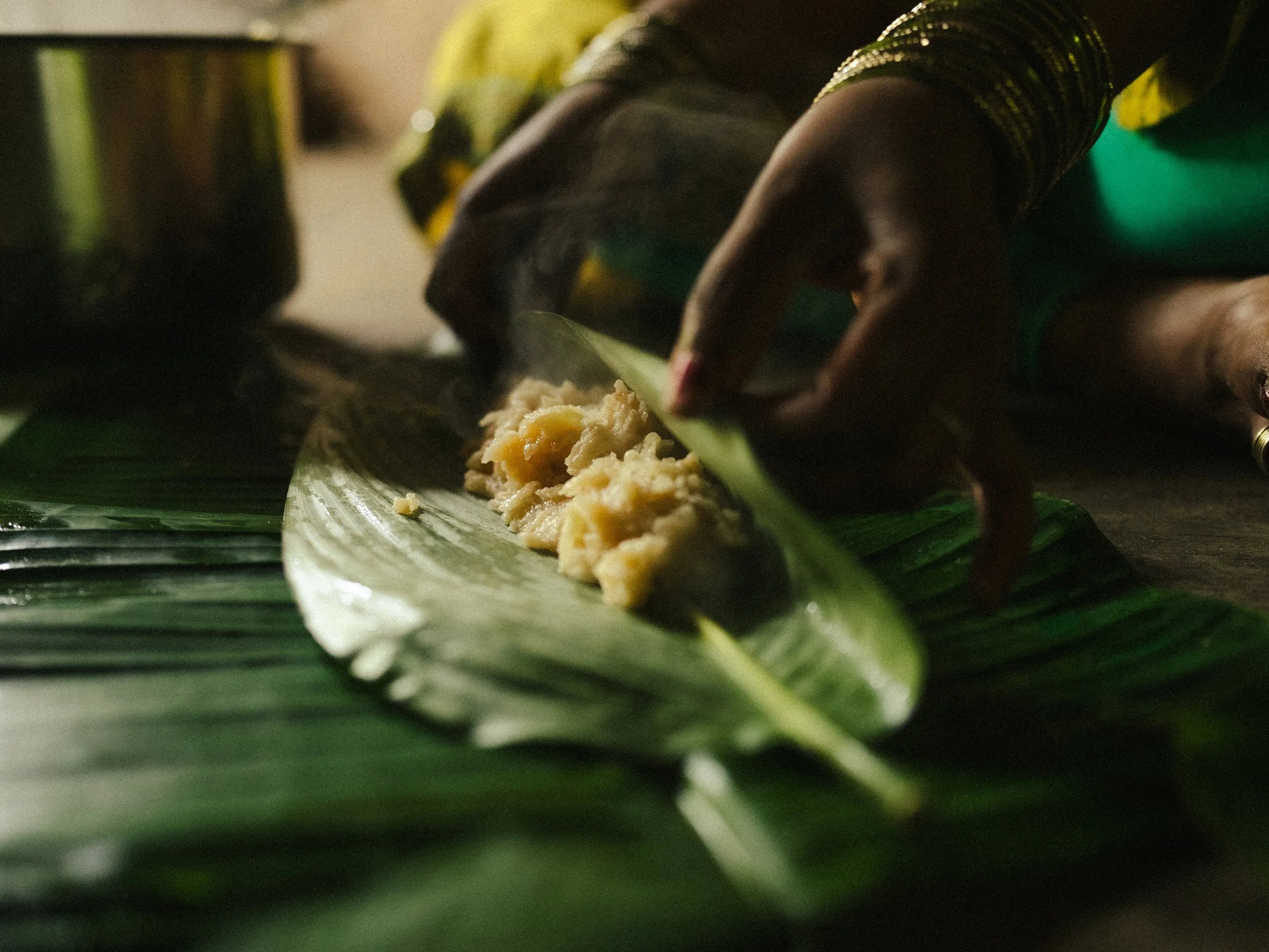
Kauili is a sweet and savoury steamed cucumber mixed with rice rava, jaggery and cumin.
For dessert, there is beele obbattu (jackfruit seed flatbread), and menthe payasa, a milk payasam with fenugreek, poppy seeds and cardamom, with a ghee tempering of cashew nuts.
Festive Celebrations
I speak to Savitha after the meal — she was basking in the afterglow of a community wedding that had just taken place. Earlier, weddings were a community affair; family and relatives would come together, and work would be divided. Now, everything is outsourced. “But, the Akki (rice) payasa always was, and continues to be, made in the bride’s house. We bring fresh paddy from the fields and use jaggery from the sugarcane we grow at home.”
Manjanna speaks of another celebratory community congregation called Siddinyasa, which takes place in summer in Satanabailu near Ankola. The deity comprises two black stones believed to have been brought by the original African community to India.“It is a secular celebration. One person from every Siddi household must attend. We have to take whatever we can afford to bring: rice, poultry, grains, etc and nothing is brought back. The festival runs for two days. Work is divided into three categories: food, worship, and culture. Each group takes responsibility, to plan and execute. There are Damami songs and dances, and now nearly 15,000 people gather, including people from other communities who come to watch and participate,” says Manjanna.
Through conversations with Manjanna and the Siddi women, I learn that the Siddi community, while still rooted in the forest is steadfastly redefining what the future looks like, for themselves, and for the outside world they engage with.
Ruth Dsouza Prabhu is an independent features journalist based in Bengaluru, India. She has been writing on food for almost two decades. Her work has appeared in New York Times, Al Jazeera, Mint Lounge, and Conde Nast Traveller, among others.
Images credit: Terrence Manne.
ALSO ON GOYA