#1000Kitchens: Sarah Edwards Makes a Sri Lankan Moju

At Goya, celebrating home cooks and recipes have always been at the heart of our work. Through our series, #1000Kitchens, we document recipes from kitchens across the country, building a living library of heirloom recipes that have been in the family for 3 generations or more. In this edition, Sarah Edwards gives Anisha Oommen a BTS look at that staple Sri Lankan dish, moju.
This season’s stories are produced in partnership with the Samagata Foundation, a non-profit that champions meaningful projects.
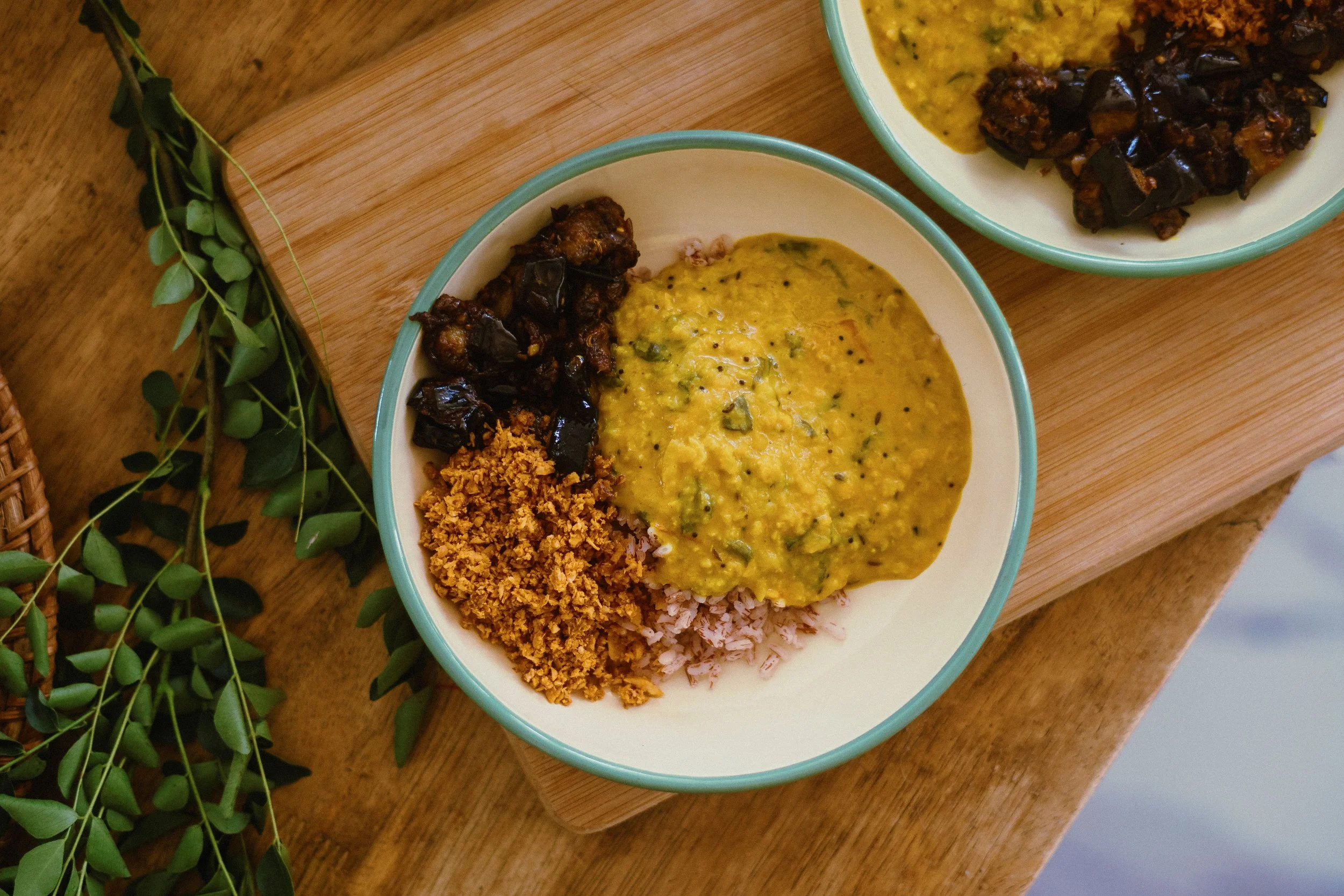
“In Sri Lanka, moju is everywhere.” Sarah Edwards stands in her bright dining room, heaping streaming red rice into butter yellow enamel plates, adding dal, sambol, and moju for the three of us. Sarah is the founder of Copper + Cloves, a plant-forward kitchen in Bengaluru, where she nurtures a vibrant community centred on mindful, plant-based eating.
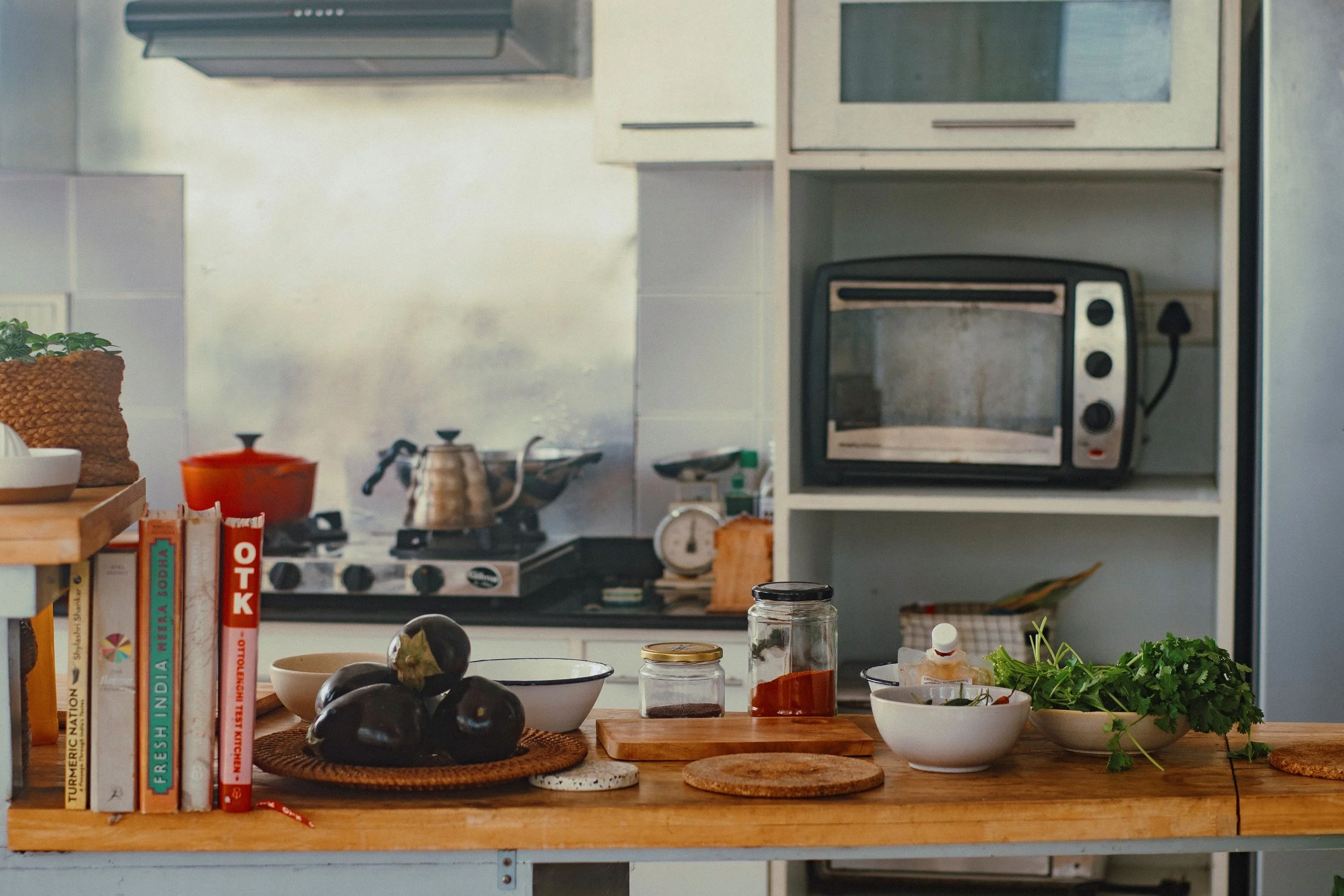
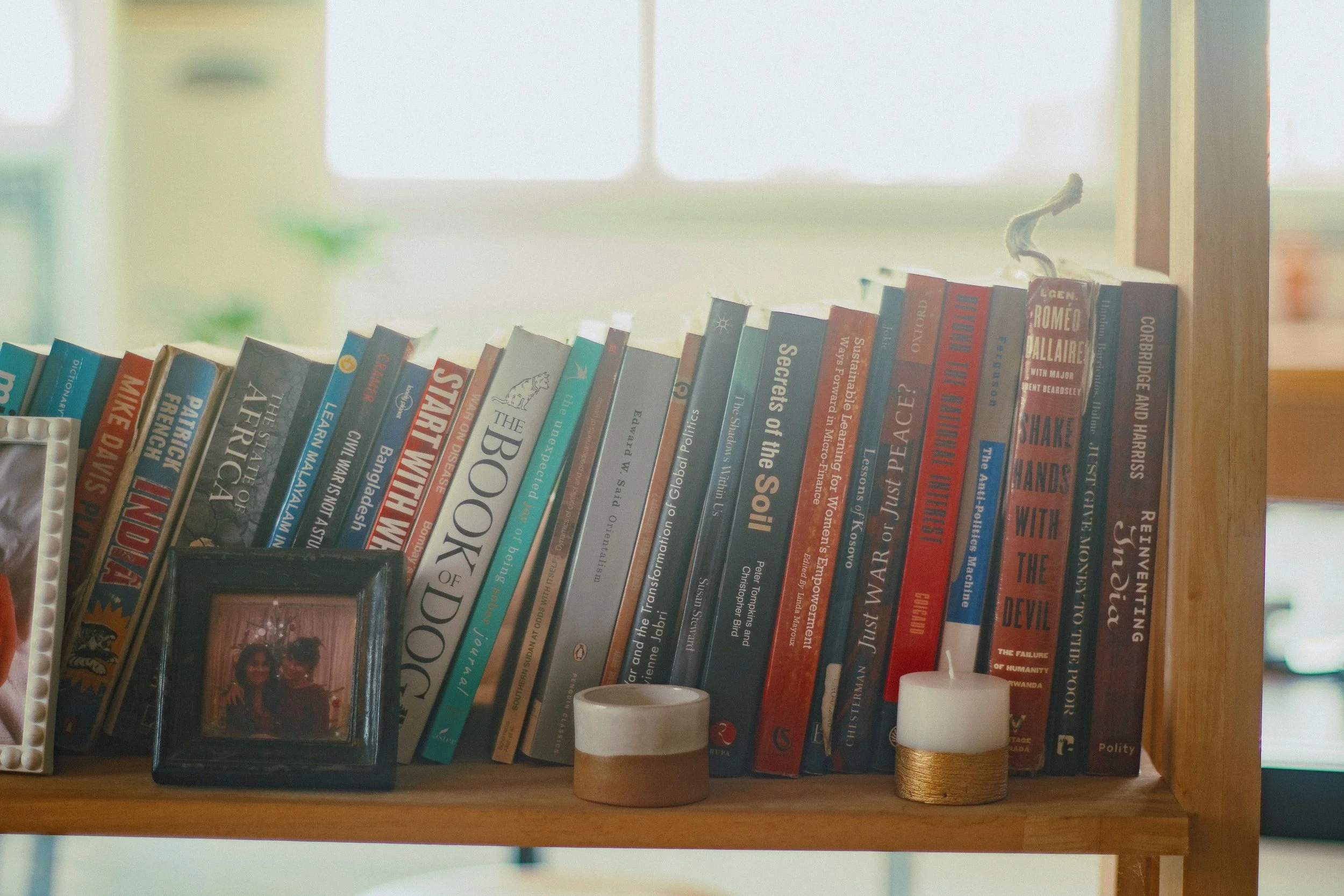
Two aubergines, fat and glossy, sit on a rattan placemat, and fresh curry leaves perfume the warm air. Her home feels like a living extension of herself: warm, sunny, rooted in the kitchen. There are cookbooks everywhere; a Hario kettle hums on the stove, and bowls of peeled garlic and sticky tamarind sit on the counter, half-prepped. A large map of Bangalore hangs on the wall, anchoring her to a city that she has made home.
Today Sarah is cooking moju, a Sri Lankan aubergine dish she learned from her maternal aunt, Arlene. Sarah’s family is Burgher, a term that once referred to communities who remained in Sri Lanka when the Dutch ceded rule to the British in 1802. Over time, it came to describe Sri Lankans with mixed European ancestry, many of whom eventually left the island after the Sinhala Only Act of 1956. She cubes the aubergine, salts and drains it, then moves on to the garlic. She sprinkles it with salt and crushes it beneath the flat of her knife.
“The salt basically helps you mince it into a paste,” she explains. “It’s especially satisfying with flaky salt — you can hear it crunch.” She pauses so we can listen. “I learnt that at a cooking course in Tuscany.”
Sarah describes herself as a Londoner, but a solo trip to India at 21 changed something; she felt instantly at home in India, in a way she couldn’t fully explain. Outside the food world, she is best known through her brand Copper + Cloves, which mirrors her aesthetic with uncanny fidelity. Copper + Cloves presently has two unique spaces in the city, one attached to a beloved independent library, and the second, a café and studio that hosts yoga lessons and supper clubs.

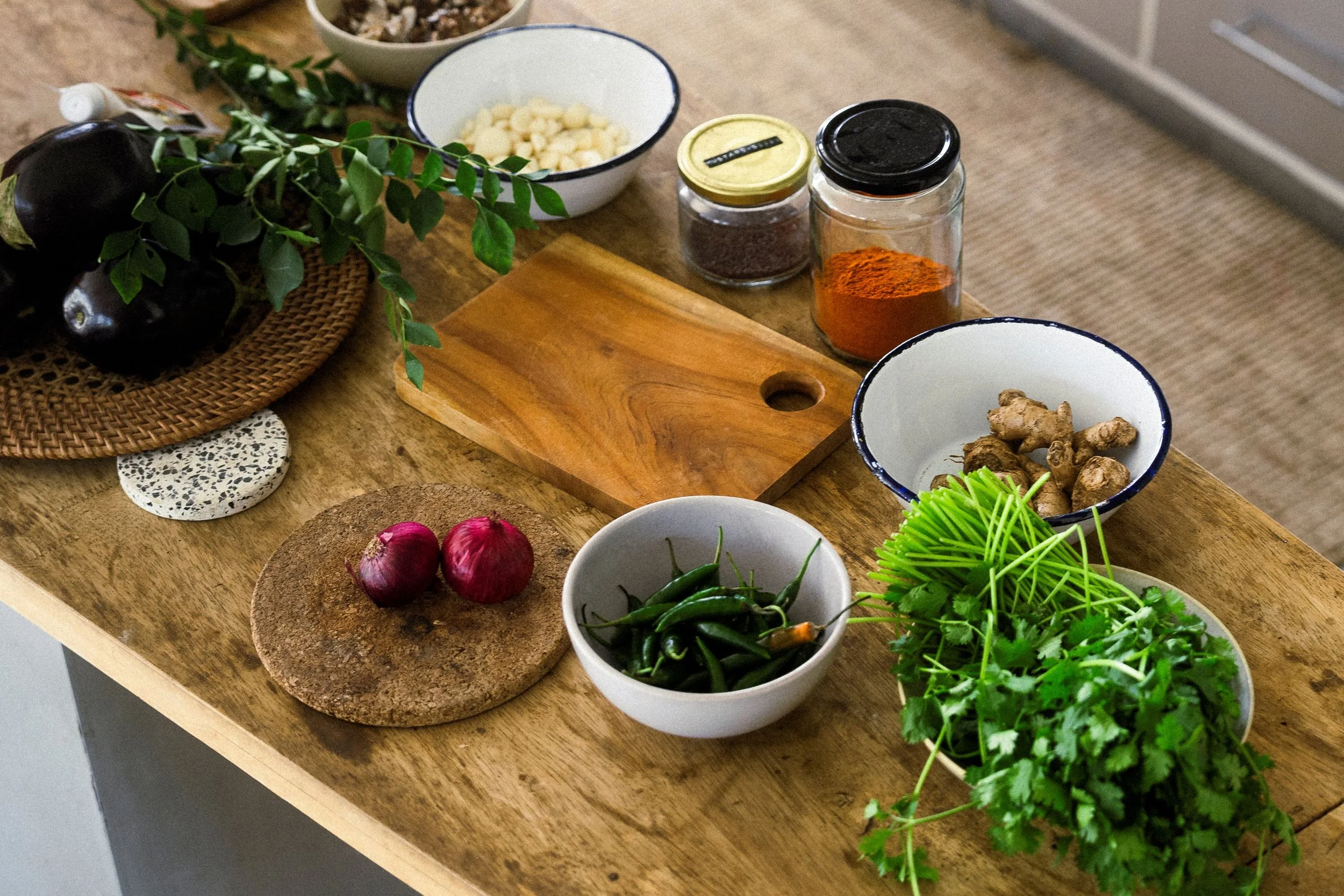

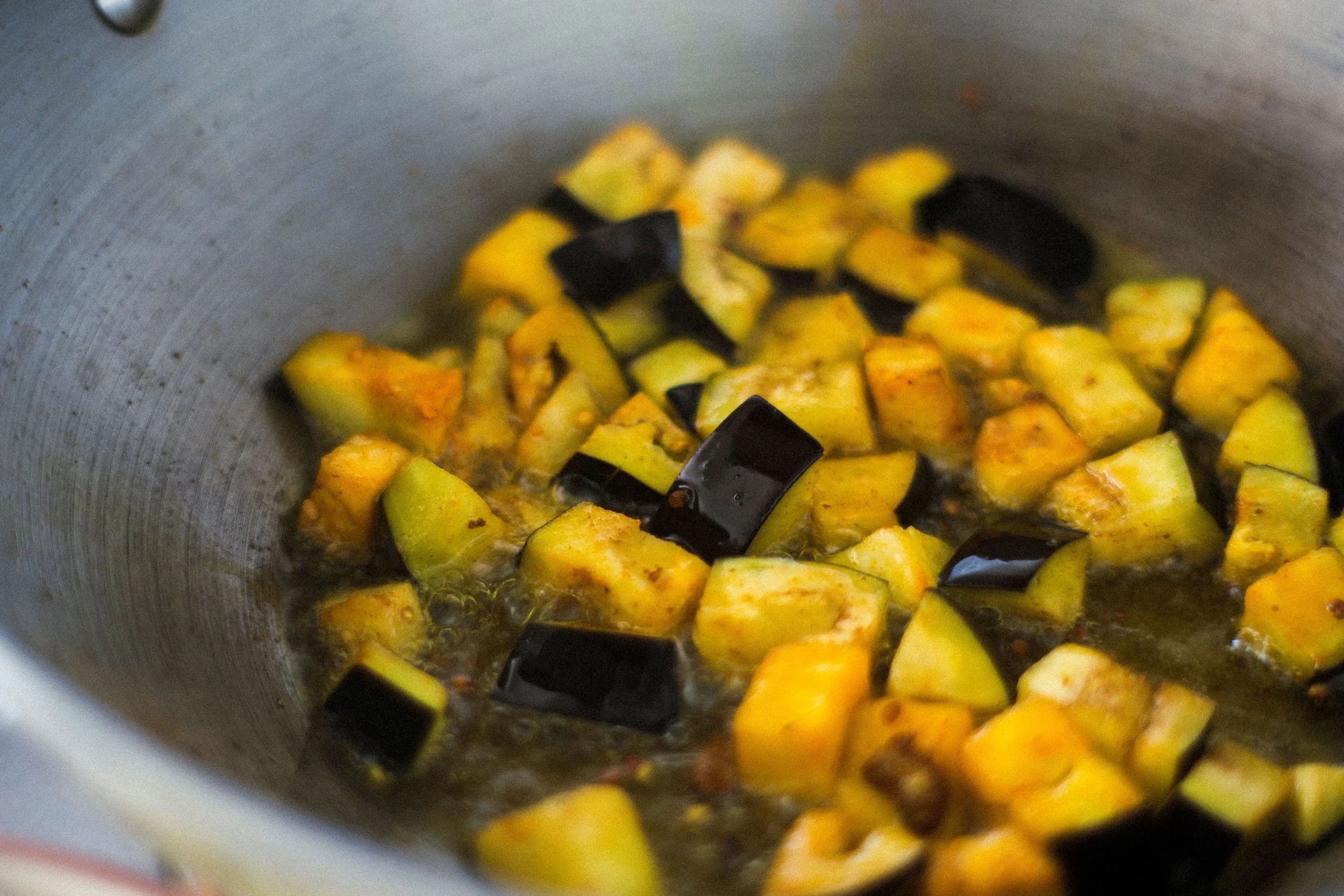
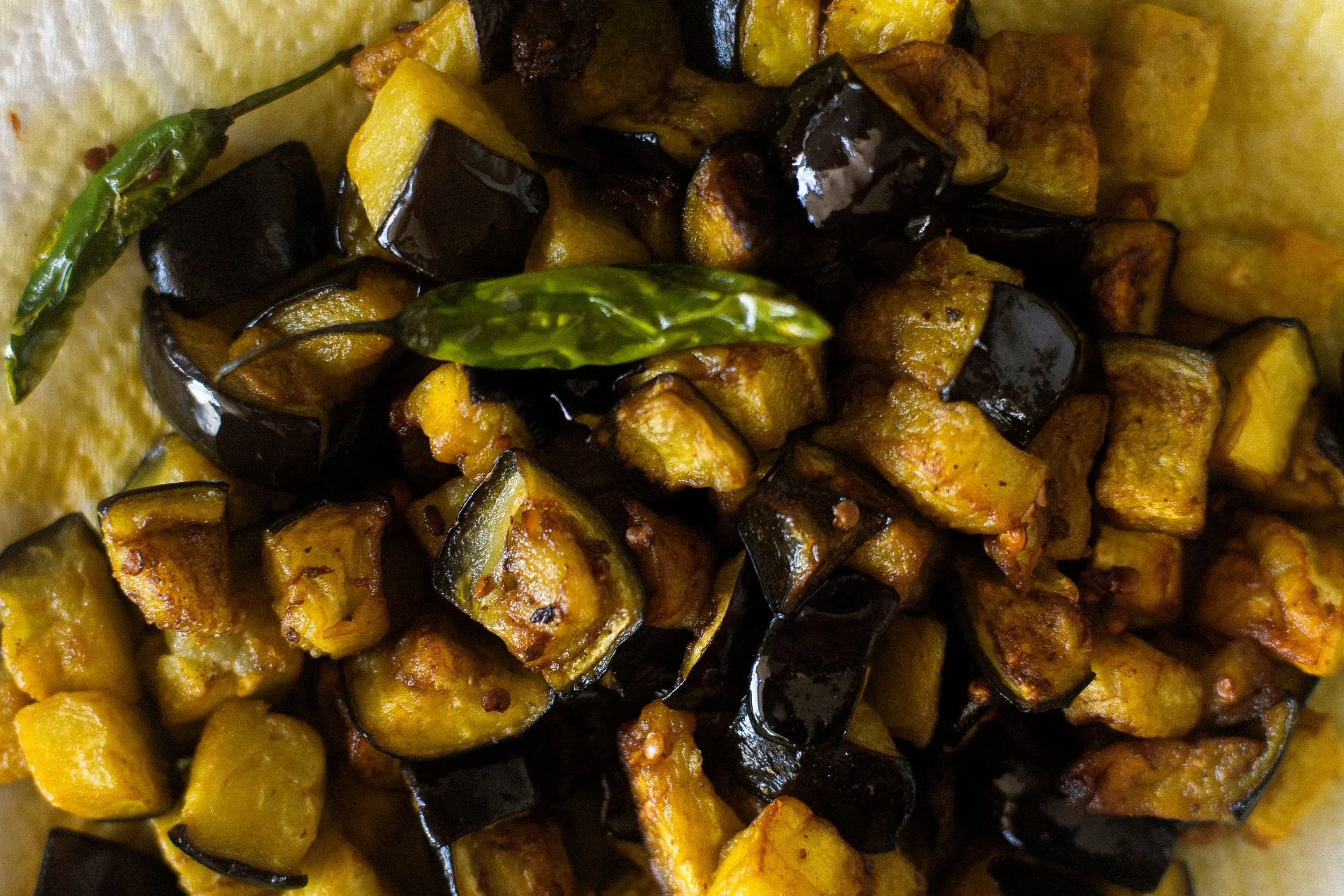
As the aubergines sizzle, she turns to a thumb of ginger, peeling it swiftly with a teaspoon. In a brown crop top and elastic-waisted pants, Sarah’s style appears effortless but intentional. Her movements are quick and precise, echoing the same conviction she brings to nutrition and flavour.
“In the recipe, famously, there’s this mystery,” she says. “It says ten green chillies… and then it never says what to do with them.” She laughs, then turns reflective.
“My mom wasn’t a very good cook,” she says, a confession out of step with the typical food-world mythology of grandmothers and inherited recipes. “Mum focussed on nutrition with us, but flavour – not so much. The unexpected upside was that by 13, I was cooking a lot of our meals at home – and we loved it!”
From there, her style evolved into Ottolenghi-tray bakes and roasts, dinner parties, and a growing obsession: cooking food that was deeply flavourful and deeply nourishing.
Growing up in London in the 90s, Sri Lankan food “hadn’t had its renaissance yet.” Few people outside the community recognised it. But at home, it was at every celebration and family occasion. “That was every family dinner,” she says.
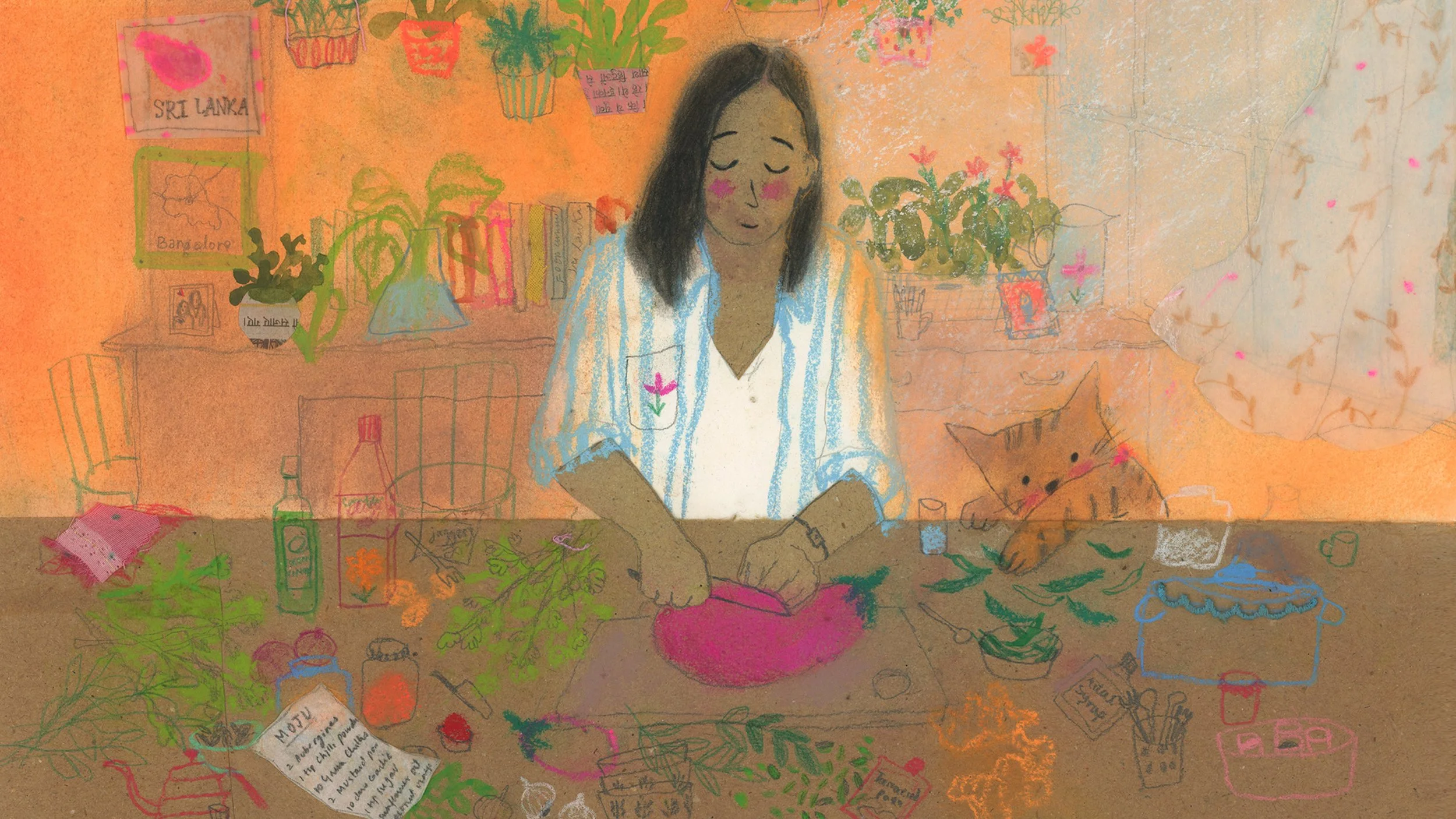
Lamprais, a complex, banana-leaf-wrapped rice dish, was the special-occasion standby. Her aunt, a gifted cook, lived nearby and passed on her handwritten recipes. It wasn’t until adulthood, after visiting Sri Lanka on her own, that the cuisine lodged itself into Sarah’s identity. “After I started visiting, I reconnected. You never appreciate what you have. It’s probably my favourite cuisine in the world now.”
Sustainability and long-term nourishment was the compass she kept returning to, so it made perfect sense that the first ever Copper + Cloves venture was a yoga brunch event. Consulting gigs with Champaca and Blue Tokai followed. Slowly, Sarah built a business that felt like her: steady, thoughtful, determined by values rather than scale.
“There’s so much joy in cooking – and employing 39 people now!” she says. “I’m still very involved in day-to-day operations. I still quality-control everything. We’re not big enough yet for a CEO or COO. But becoming some super-profitable wonder brand isn’t what drives me. I knew Copper + Cloves was a space the city needed.”
The real surprise was the community that Copper + Cloves fostered. Sarah lights up when she talks about it: “I love training the chefs. I love conceptualizing the menu. But most important has been the community and connection.”
That connection plays out visibly in her café and studio. She moves between tables, introducing strangers, carrying plates, guiding conversations into each other like threads. “I love chatting with people, putting them together. The analog social spilling out over the café, people meeting for the first time. that is my true passion. That’s hosting.”
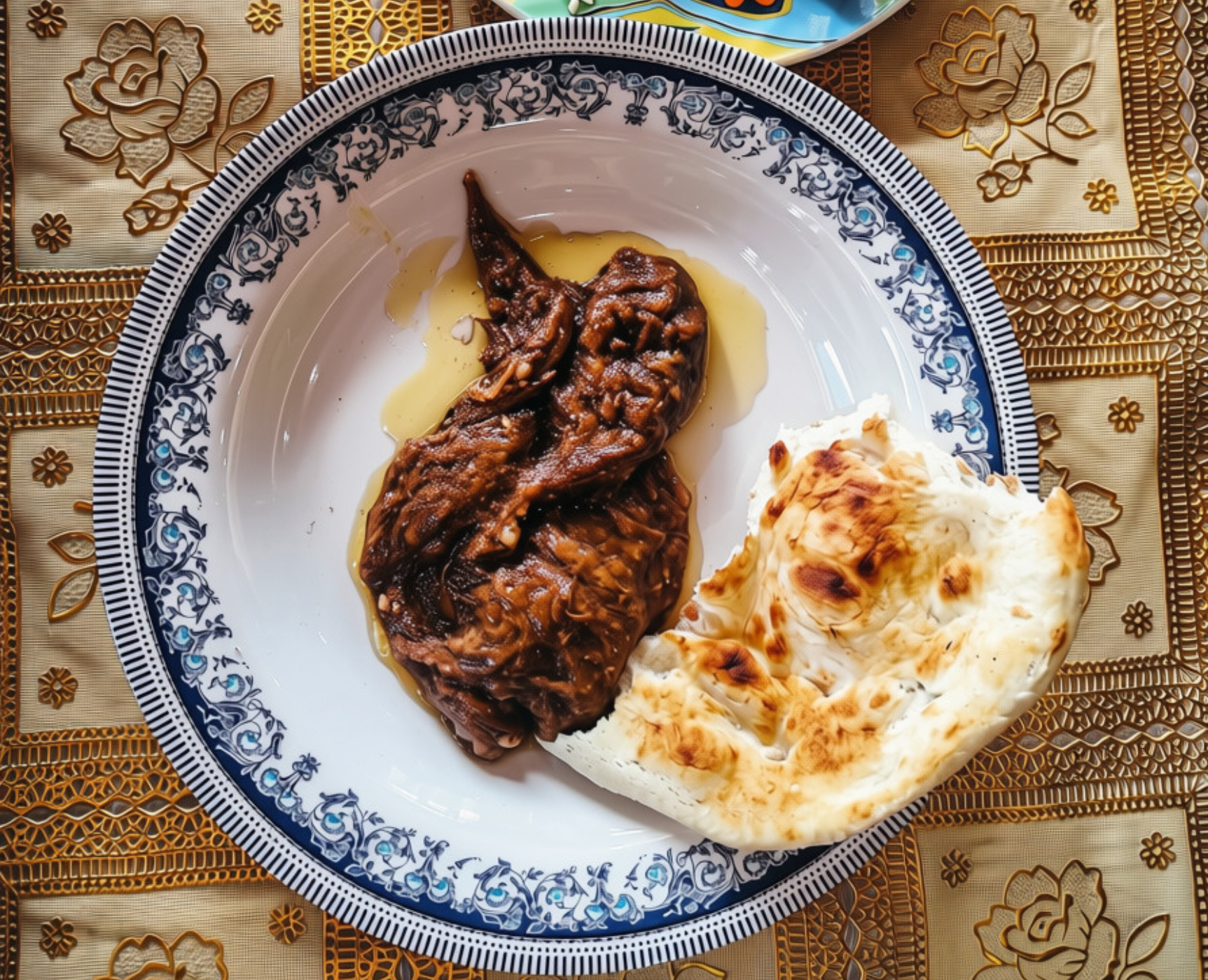
In the kitchen, the aubergines have softened, glossy and collapsing in the pan. Sarah tips them into a bowl, the perfume of vinegar and spice rising sharply.
Moju may be everywhere in Sri Lanka, but here, in this bright Bangalore kitchen, it feels like something else entirely: a homecoming, carried across oceans, held faithfully, and now shared generously, one plate at a time.
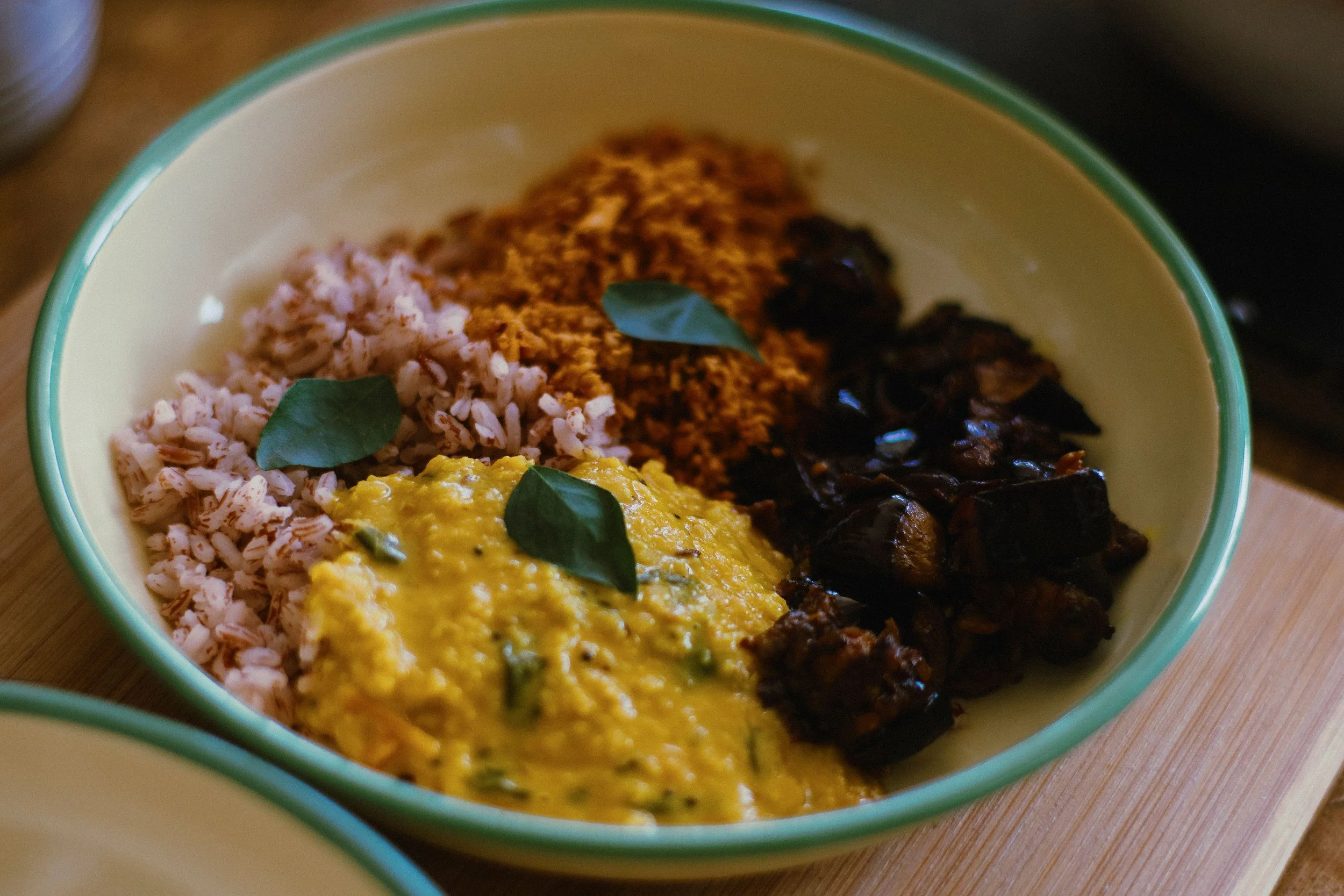
RECIPE FOR SARAH’S BRINJAL MOJU
Ingredients
1 + 1 tbsp cold pressed sunflower oil
1 tsp mustard seeds
1 tsp fennel seeds
1 tsp cumin seeds
1 handful curry leaves
1 large onion, finely diced
2 cloves garlic
1 tsp ginger, finely minced
Salt, to taste
½ tsp jaggery
2.5 tbsp coconut vinegar
100 ml tamarind paste
1 tsp turmeric powder
1 tsp chilli powder
2 large balloon brinjal
Method
First, prepare the brinjal.
Cut the balloon brinjals into 2 inch cubes.
Sprinkle the brinjal with 1-2 tsp salt and keep it in a sieve for half an hour. Let the liquid drain out through the sieve but also blot the cubes with kitchen roll at the end to remove the bitter liquid that came out.
In a bowl, toss the cubes in a teaspoon of turmeric and ½ tsp chilli powder until coated.
Heat 2 tbsp of oil until sizzling, and then add the cubes in batches (don’t overcrowd the pan to avoid creating a soggy mess) — until browned on all sides, with a golden brown colour and collapsing texture in the middle.
Remove and drain on kitchen roll to absorb any excess oil.
Now, it’s time to make the moju.
Toast 1 tsp mustard, fennel and jeera seeds in a pan until fragrant, then add 1 tbsp of oil and add a handful of curry leaves until they sizzle.
Finely chop the onion, the garlic and the ginger.
Add the onion, and pan-fry with the spices until they are golden brown and translucent. Add in the garlic and ginger. Cook them for a really long time.
Add the brinjal back in and stir in with the onions and combine.
Turn the heat up, and add in 100ml of tamarind paste and 1 tbsp of coconut vinegar/apple cider vinegar.
As you add to the hot pan, it should sizzle and be absorbed by the brinjal.
Add a ½ tsp of jaggery and salt to taste. It should be tangy, almost like a pickle.
Words by Anisha Oommen. Photographs by Bhavya Pansari. Artwork by Aditi Anand.
Special thanks to our partners.

ALSO ON GOYA