Tikhur: A Festive Monsoon Treat of Corn
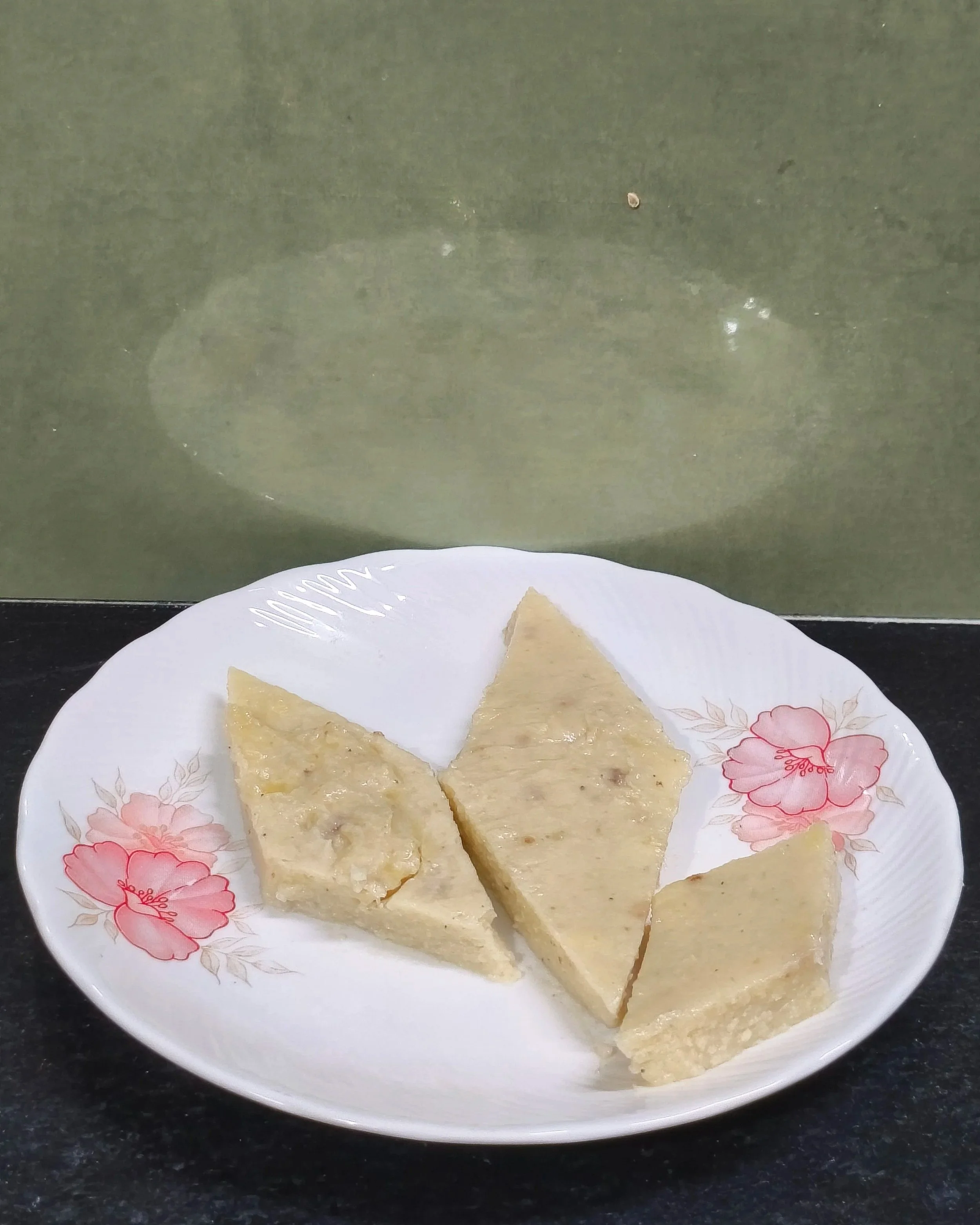
It is a seasonal fasting food that is also a popular celebratory sweet made for the festivals of Ram Navami, and Raksha Bandhan. And yet, very few actually make this tender corn, custard-like treat from scratch, writes Anushka.
The first flush of corn enters the local mandi with a characteristic sweetness to its grains — tender kernels that owe their flavours to the early monsoon.
Our earlier generations knew of a time when corn wasn’t perennially available, and thus seasonal eating included recipes that couldn’t be made any other time of the year.
One such seasonal recipe was a chilled custard-like dessert known as tikhur, gracing the dining table on festivals such as Janmashtami and Raksha Bandhan. This festive dessert doubles as a fast staple in Bihar, Jharkhand and Chhattisgarh. The women in my father’s side of the family have made it for generations, and would likely take offense to the fact that I, their descendent, just compared this heirloom recipe to custard. My grandmother making tikhur, the house enveloped in the grassy notes of corn and milk, is a memory that my father holds dearly even today, years after we lost her.
A minimalist recipe, tikhur asks for three principal ingredients — tender corn kernels, whole milk, and sugar, with a trace of cardamom and ghee. The most important ingredient in the making of this dessert, however, is time. It takes hours: grinding and extracting milky starch from the corn kernels, then reducing whole milk until it is halved, and then bringing everything together in the pot and chilling it in a steel tray, before it is ready to be cut and served.
In a zero-waste kitchen, as per the tradition of kifayat (making the best of limited means), nothing goes unused. The fibres remaining after sieving milk from blended kernels are kneaded into everyday dough that is then given shape using the water collected from the top of the settled corn milk sediment. The rotis made of this dough are more nutritious, rich in both protein and roughage.
All of this from the blending of kernels, to the reduction of milk to even incorporating the fibres and water in dough takes an inordinate amount of time. Time is what gives this recipe an edge over tikhur powders sold in markets. These days, it is mostly made for fasts such as the (fruit-based) falahaar and on Mondays, where women keep day long fasts for Lord Shiva, abstaining from grains and salt.
Good things take time, patience and sacrifice. Tikhur is an embodiment of all of these virtues.
The written recipe belongs to my grandmother, (late) Chandra Kala Devi, who inherited it as oral tradition from the many women who came before her.
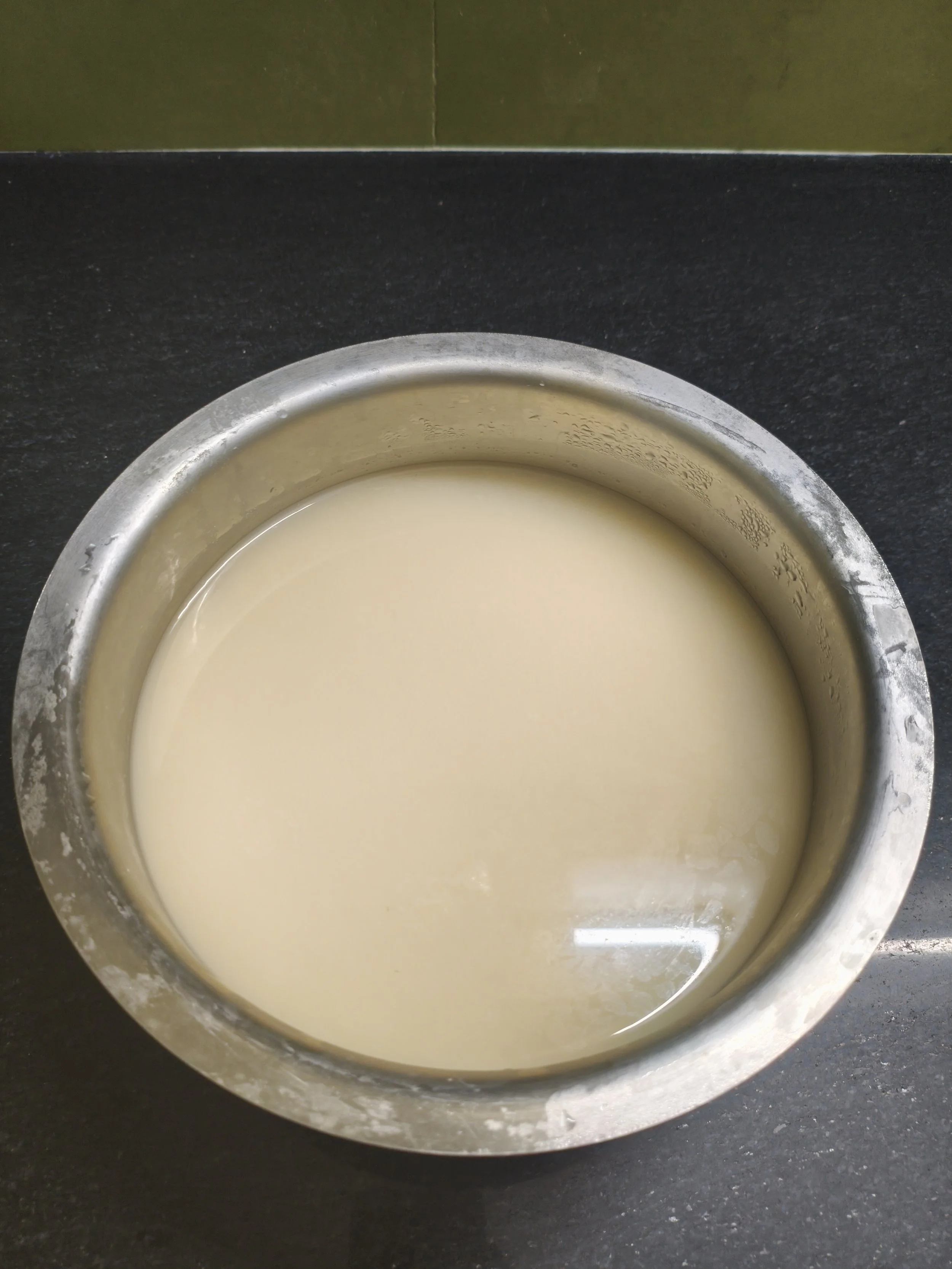
Watery corn milk
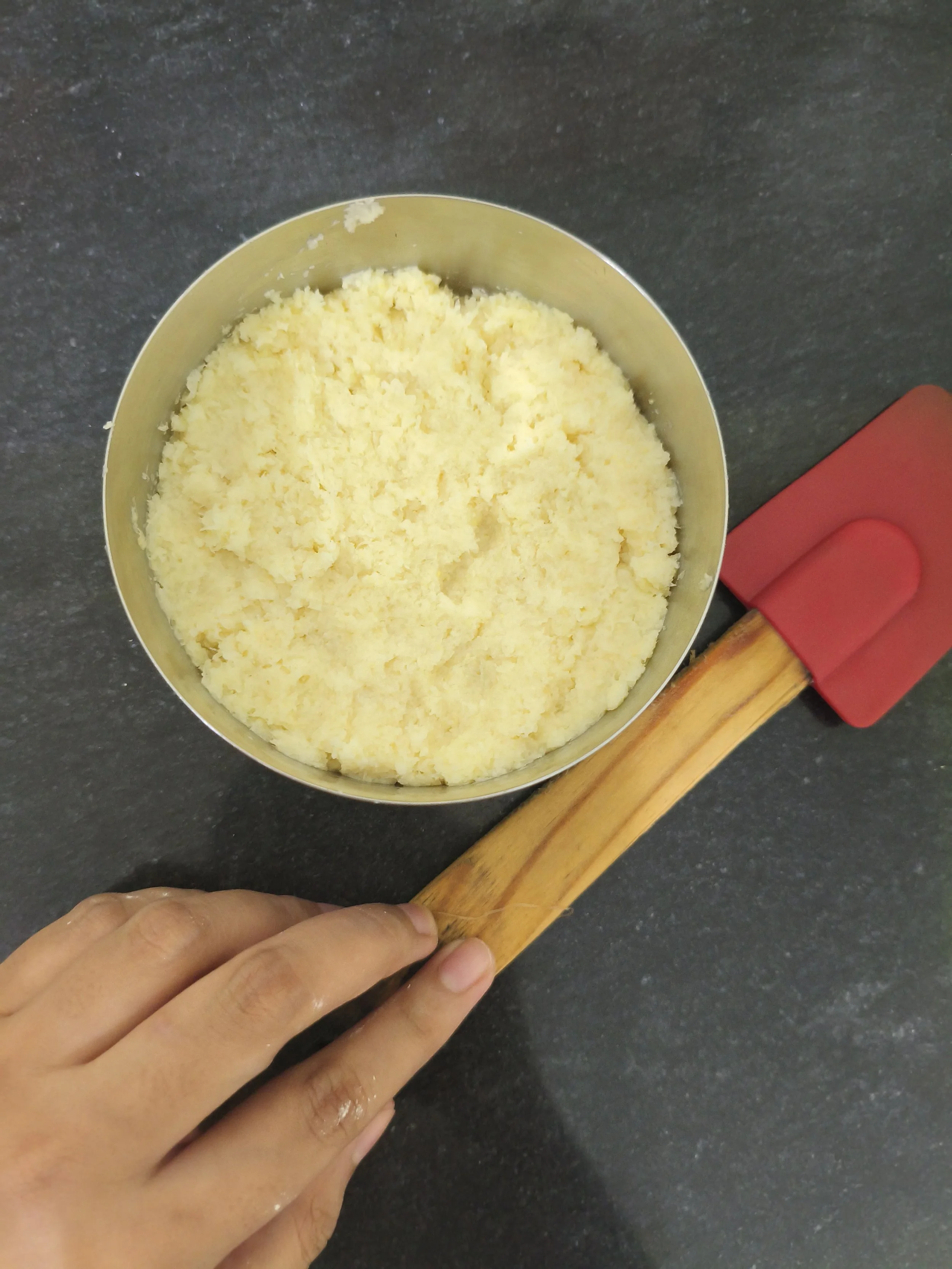
Leftover corn fibres after extracting the milk.
CHANDRAKALA DEVI’S RECIPE FOR TIKHUR
Ingredients
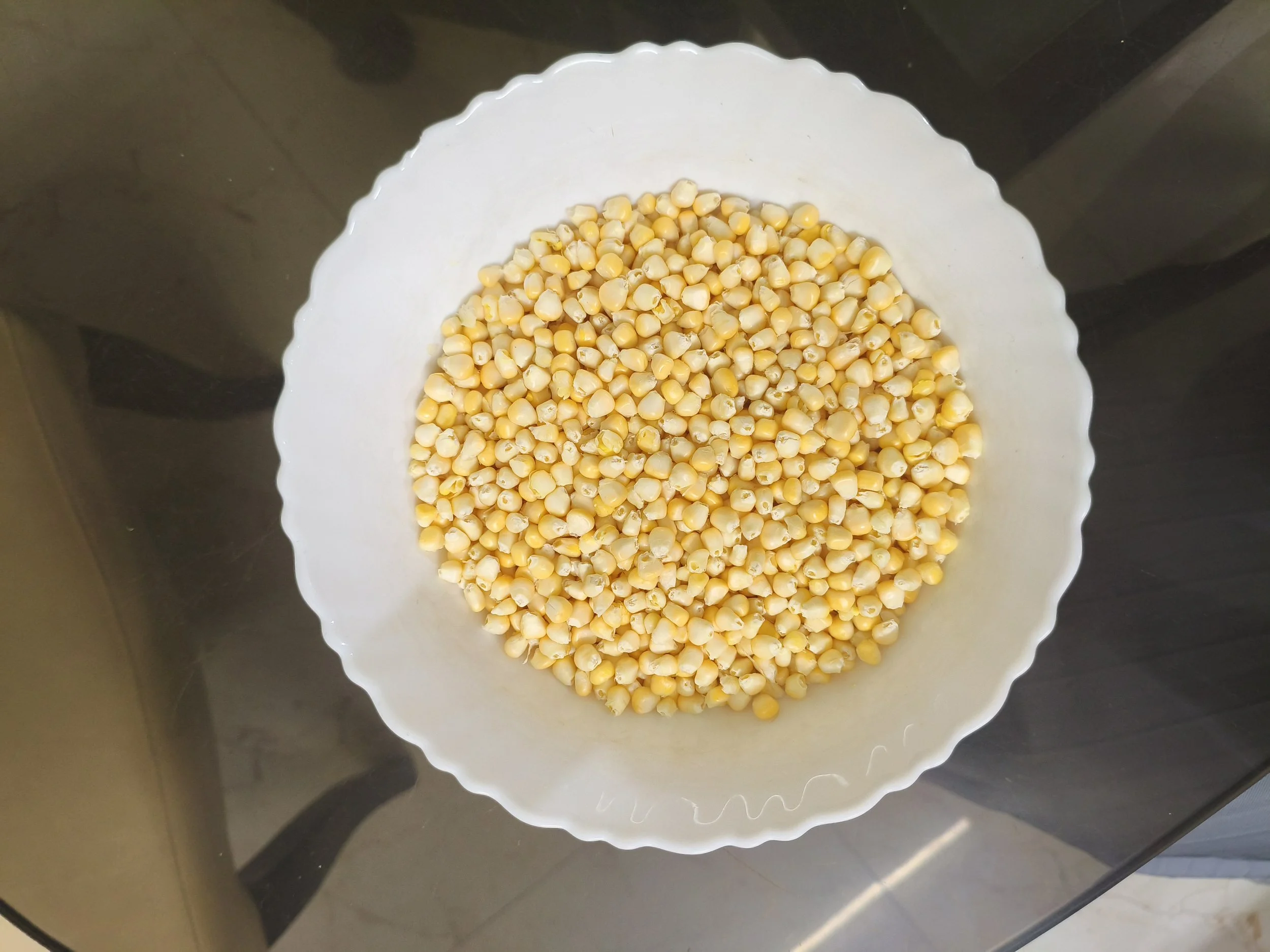
300-350 g tender corn kernels (3 cobs)
2 litres whole milk
100 g sugar (adjust as per taste)
2-3 cardamom pods (only seeds, roughly crushed)
1-2 tsp ghee
Method
Grind the corn kernels with very little water in a blender until it is a fine smooth paste. The finer, the better, so this may take up to 5 minutes.
Transfer it onto a sieve and separate the fibrous part of the corn paste, while collecting the liquid in a bowl. Additional water may be required to extract more of the liquid (the corn’s milk) from its fibres. Set aside the fibres, then leave the bowl to rest for a couple of hours.
When the starch of the corn’s milk settles at the bottom of the bowl in a thick layer, pour out the lighter top layer until the bowl is filled with nothing but the sediment.
Now, in a kadhai, boil the milk over a high flame until it reduces by half. This may take up to half an hour. Stir continuously so as to prevent it from sticking to the bottom of the pot and burning.
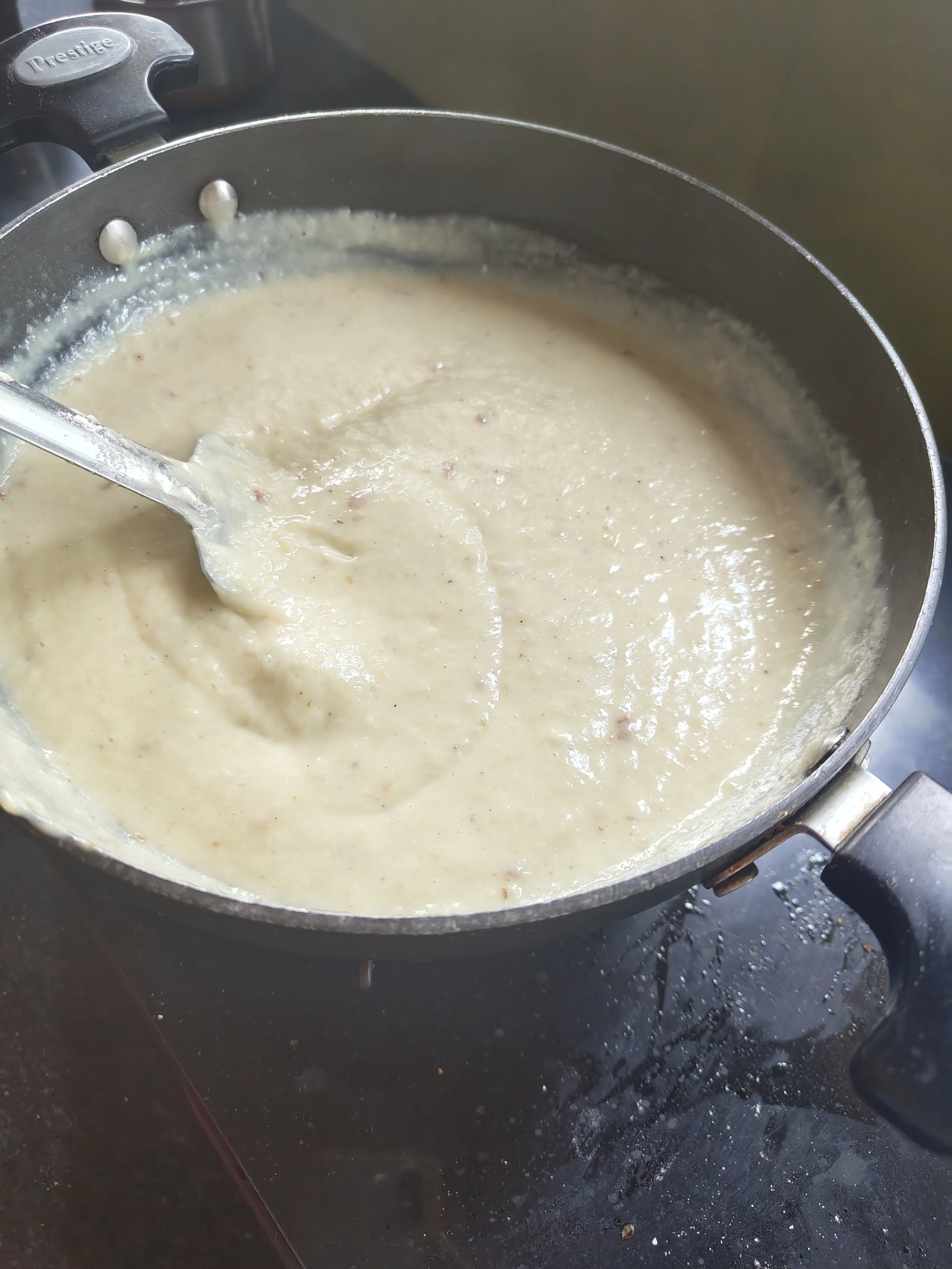
Once the milk has been halved, add the thick sediment from the corn milk to the kadhai and lower the flame.
Cook this mixture on low for a good 15-20 minutes, stirring constantly.
Just before you turn off the flame, add sugar and crushed cardamom seeds to the kadhai and mix well.
On a steel tray greased with ghee, pour this hot concoction and spread it evenly. At this stage, you can add chopped nuts such cashews and pistachios.
Cover this tray with a sheet or cling film and then pop it in the fridge for another couple of hours until it sets. Once firm, cut the sweet up into diamond-shaped barfis.
Served chilled.
Anushka is writer as much as she is a gastronome. Her work has appeared in Steam Ticket: A Third Coast Review and Sweet Potato Mag.
ALSO ON GOYA