Spices and Stories: A Shared Culinary History of Biryani
To understand how biryani became what it is today, we need to trace back not to a single moment of invention, but to the slow accumulation of ingredients, techniques, and people across thousands of years, argues Maryam Ahmad.
“The funeral biryani better be good”, we often joke back home.
And while in bad taste, it’s quite earnest because we take ziaqa, flavour, very seriously. Birthdays, funerals, weddings and religious festivities are all an attempt to outdo each other in the test of flavour.
From reigning monarchs to curious travellers and indigenous practices within South Asia and beyond, Pakistani cuisine is far from static. It’s alive, almost as if in a constant state of evolution and cultural translation. Birinj or biryani in contemporary South Asia, India and Pakistan specifically, is an example of an identity bearing years of contact, cooking techniques, and habits of people who have either lived, conquered or settled in the region.
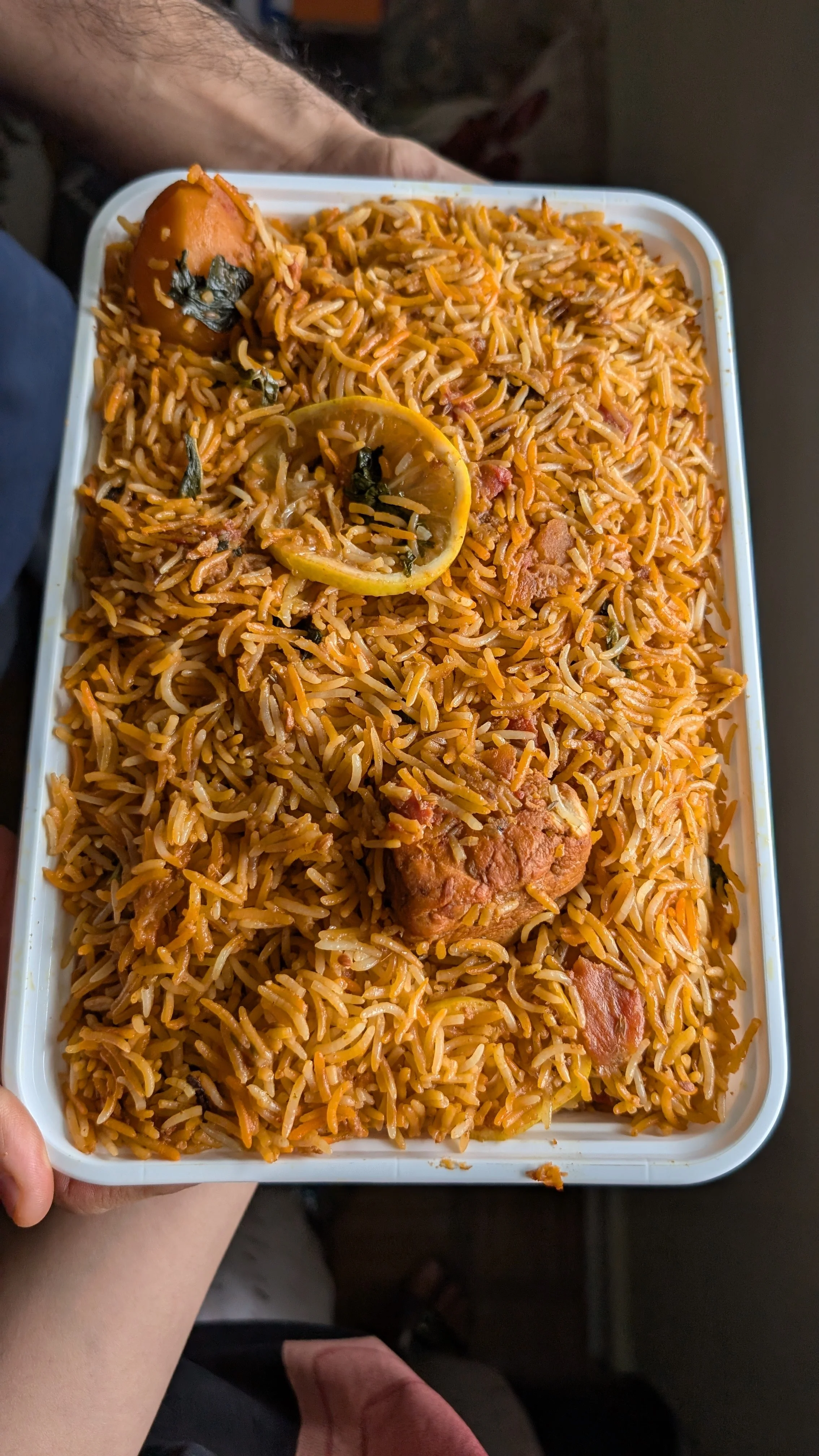
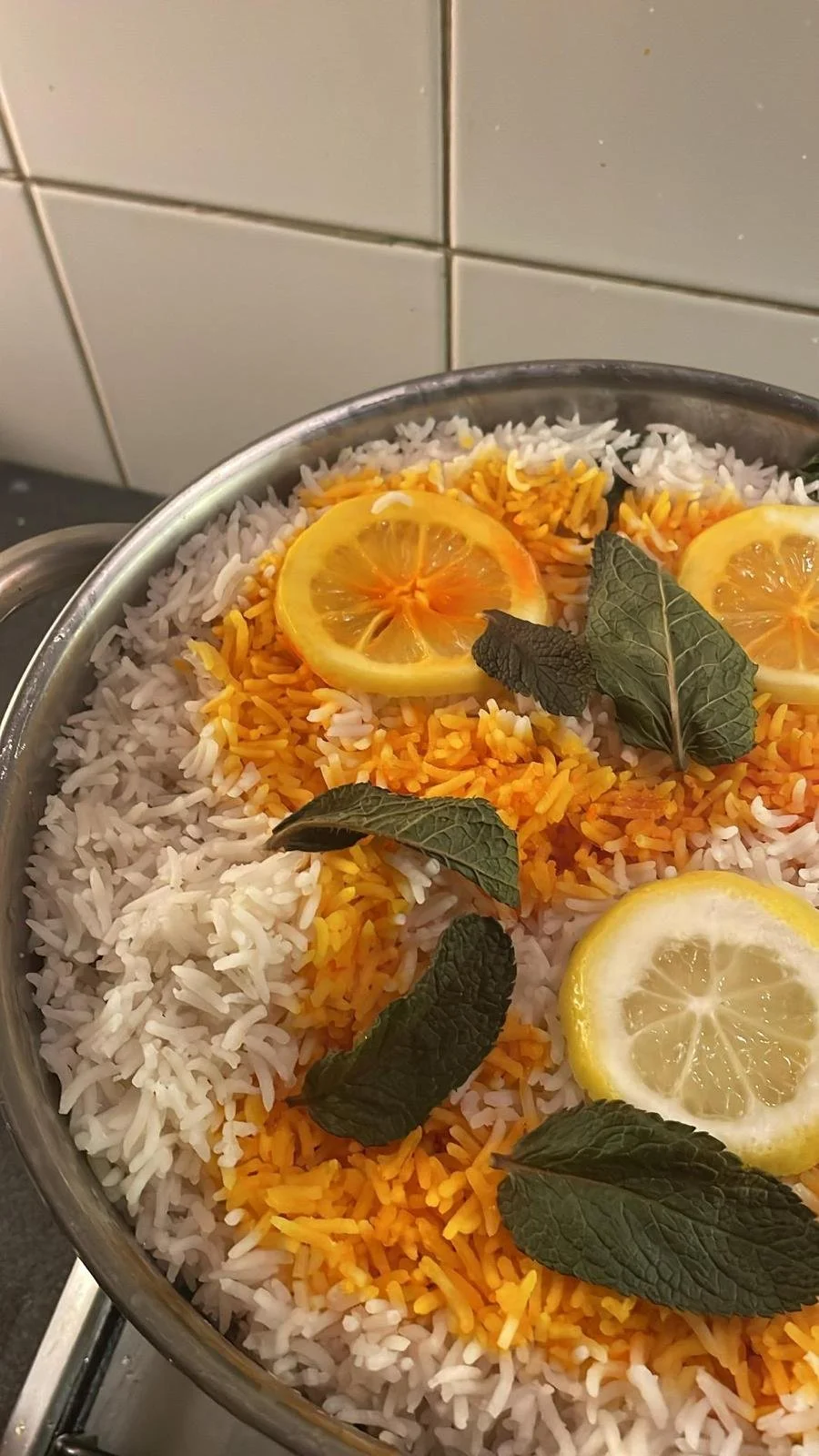
3000 BCE: The Foundation of Biryani
For years, foreign settlements and ruling kings introduced plants, spices and cooking techniques to the Indian subcontinent, making it quite literally a universe. With its diverse soil, languages, religions, and customs, the building blocks for biryani, such as turmeric, cardamom, black pepper, and mustard, started to make their way into the Indus Valley Civilisation by 3000 BCE.
Between 1800-1500 BCE, the Aryans, said to be excellent auxiliary cultivators, brought agricultural knowledge that helped the Vedic civilisation evolve into a pastoral and philosophical civilisation. Even though much of the Vedic diet is associated with grains and vegetables, poultry and other meats existed during the time, including ghee, the South Asian substitute for oil used in biryani. Ghee or clarified butter was considered pure and utilised in religious rituals.
Later, however, with the emergence of Buddhism, Jainism, and Brahmanism in 1000–450 BCE, some segments of the population shifted purely to a vegetarian diet. These contradictory dietary philosophies would later collide with the meat-loving Mughals. Pepper and cardamom continued to be exported from South India and asafoetida [hing], from Afghanistan.
By the 1400s, the Portuguese arrived in Kerala with new food products, augmenting the production of spices that included chilli pepper, cinnamon, cardamon, and ginger to meet demand in Europe.
As spices took their rightful place in South Asian cuisine, rice, the very soul of biryani and already abundantly grown in the South, witnessed increased production during the first decade of the 20th century, coinciding with the arrival of the Mughals. Generally cultivated in Kharif, the monsoon season, farming is labour-intensive and requires high levels of moisture and irrigation. Rice was hence a class signifier: long-grained aromatic Basmati for the elite and short-grain cheaper alternatives for common folk.
Not surprisingly then, rice [Persian. birinj; Hindi. chāwal; Oryza sativa], a staple diet from the South was heavily influenced by affluent Mughal centres in the North, eventually giving birth to the rice dish of biryani. Hence, both biryani and pulao [pilaf] proved to be more than just consolidation of Indian spices and Persian techniques; macroscopically it was the coming together of the North and the South of the subcontinent itself.
1400: Spice Routes
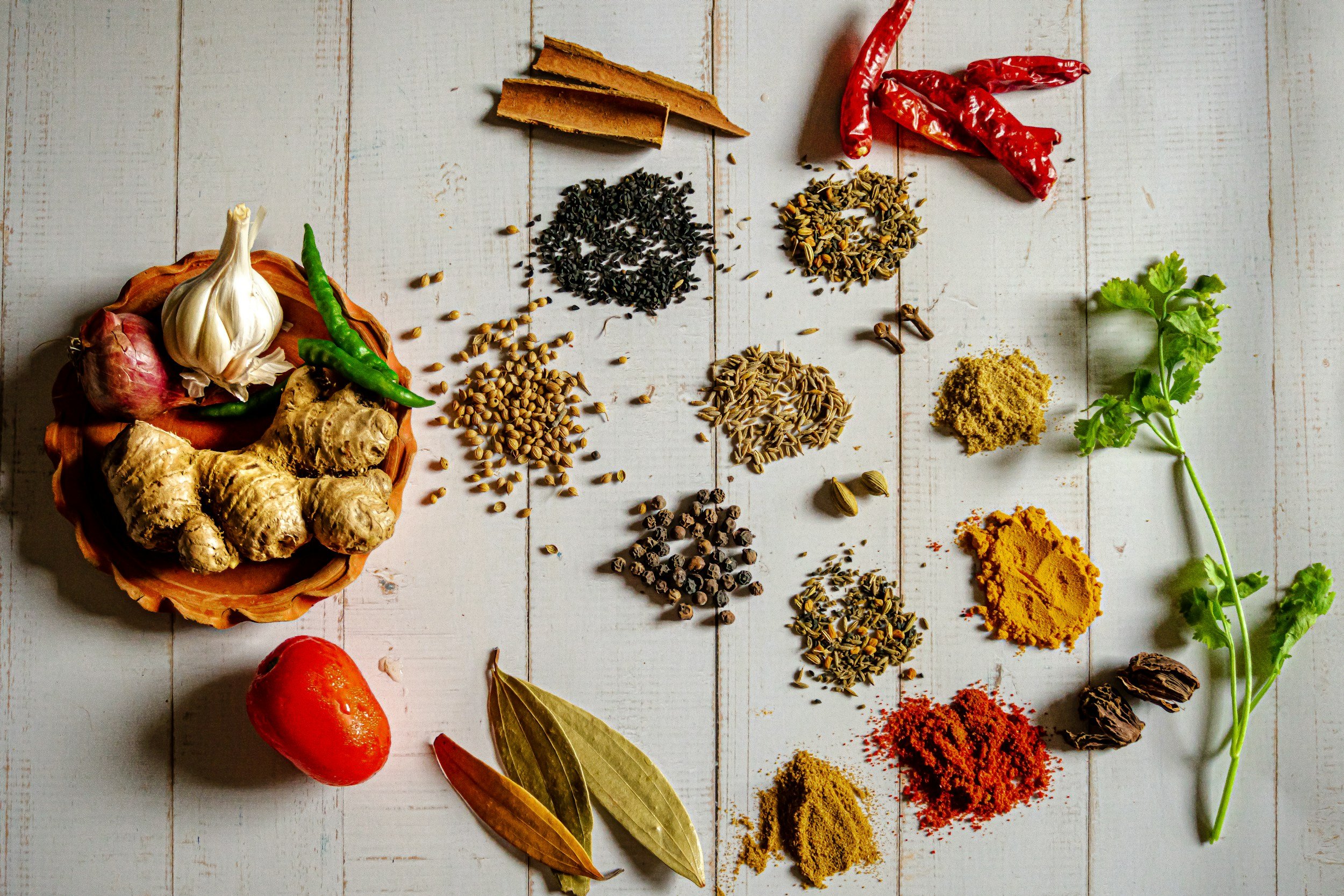
The demand for spices drove many across India’s shores. As new identities were being forged, foreign rulers established themselves at the ports of ancient India, shipping spices from the hills of Kerala to Arabia, to further Egypt and Mesopotamia. Chilli pepper, for example, was not common in Mughal cookery, and neither was local Indian food spicy. Portuguese traders from South America introduced it, and today it is a front-runner in a plate of well-spiced biryani.
Further into the 15th century, the Portuguese brought with them 300 other new plants, including tomatoes, potatoes, and papaya; all three integral to biryani. Arabs too should be credited with the spice trade before Vasco da Gama admitted that they had come to seek “Christians and Spices” in India. Arab traders discovered sea trade routes to India and other eastern countries producing spices. By the mid-16th century, the Malabar coast in South India became the principal producer of pepper and remained so for a while.
The timing was perfect. The rise of the Mughal Empire (1556-1707), the patrons of cooking, spread food systems and knowledge from the Mughal centres in the North to beyond. Bearing pilafs, leavened wheat breads, stuffed meat, braising and marinating techniques, and ultimately, what later would be the aromatic biryani, were all remnants of the glorious Mughal Empire.
David Burton maintains that it was “the whiff of spice” that lured Britain to India.
1526: Mughals and Meat
The Mughals were herdsmen who moved with their flock of sheep, goats and horses, often cooking over a campfire. The aromatic pilau in early cookery of the shepherds from Central Asia was an essential meat-and-rice dish, a precursor to biryani. While a centrepiece on many tables in Persia, the pilau had yet to undergo another transformation in Hindustan.
Babur, the first Mughal emperor, hated Hindustani cuisine. He came from a culture that took great pleasure in meat-eating. Having spent much of his time in the mountains of Samarkand, Babur often lamented his nomadic, horse-riding life and archived his awful food experiences. The shepherd from Central Asia describes vomiting after a Friday evening meal of rabbit stew, saffron-flavoured meat dressed in oil and served on a thin chapatti, one of his many lamenting memories of the cuisine.
When Babur conquered Hindustan, vegetarian food was introducing new hierarchies of purity in Indian society. For Mughals, however, it meant something else. Meat was meant for Kings, warriors and hunters. Like Mughals, who were burdened with the responsibility of governance, relied on a meaty diet.
The Mughal appetite for mutton and beef did not align with their new subjects, which was why only 4 of 50-60 cooks were retained from Babur’s predecessor, Ibrahim Lodhi.
Humayun, Babur’s son, however, would serve as the conduit. Humayun deployed Hindustani cooks in Persia; during exile, he entertained with Hindustani food. After15 years of exile in Afghanistan and Persia, ceding to Sher Shah Suri, the ruler of Bengal, Humayun reclaimed the throne in 1555. On his return, he matched his gluttony with expenditure on food, bringing with him Persian, Turkish, Arabic and Egyptian cooks honed under the Abbasid Caliphate of Baghdad. Additionally, Indian cooks from Sindh, presently Southern Pakistan, arrived with expertise developed during the Arab conquest in 713.
The class divide on the plate, however, continued. Among many European travellers, a French jeweller, Jean-Baptiste Tavernier, witnessed the lack of flesh and fish in Hindu markets as compared to Muslim-governed areas where he saw the availability of sheep and pigeon.
This patchwork of Indian eating habits is also illustrated by Friar Sebastien Manrique, a Portuguese missionary on his way to Rome, who calls “Biring” [birinj], the principal and most substantial aromatic rice dish, cooked in innumerable ways as he strides through the bazaars of Lahore in the late 15th century.
David Burton in The Raj at the Table explains the spread of what was, still Pilau in India: “In Spain, with the addition of seafood and an emphasis on saffron, it became paella. In Italy, butter transformed it into risotto”.
In Hindustan, where Persia, Central Asia and the Indian Subcontinent clashed, Pilau had yet to undergo another transformation.
1556-1605: Persia and Pulao
Then came Akbar, the third Mughal Emperor, who focused on consolidating his local subjects. It’s said that Babur strengthened India’s links with Central Asia, Humayun introduced Persian influences, and Akbar created a synthesis of all three. This process of synthesis also went on in Akbar’s kitchen where the Persian Pilaf became Biryani.
It is during Akbar’s reign that the Persian culinary technique dumpukht [sealed slow cooking of aromatic spices in a lid pot], marinating meat in curd, followed by heaping partially cooked rice over meat; Biyani, a more decadent version of the classic Pilaf, was created. “The resultant biryani was a much spicier Indian version of the Persian pilau”, Lizzie Collingham describes in A Tale of Cooks and Conquerors.
The repertoire of Akbar’s kitchen, Ain-i-Akbari [Administration of Akbar] compiled by the courtier, Abu’l Fazl, explicates accounts of the emperor’s non-gluttonous habits and general avoidance of meat despite Akbar’s kitchen being the cradle of conception for Biryani. However, Abu’l Fazl does not give us directions for cooking Biryani but writes ‘it is made in various ways’, speaking to its inherent flexibility and capacity to absorb regional preferences.

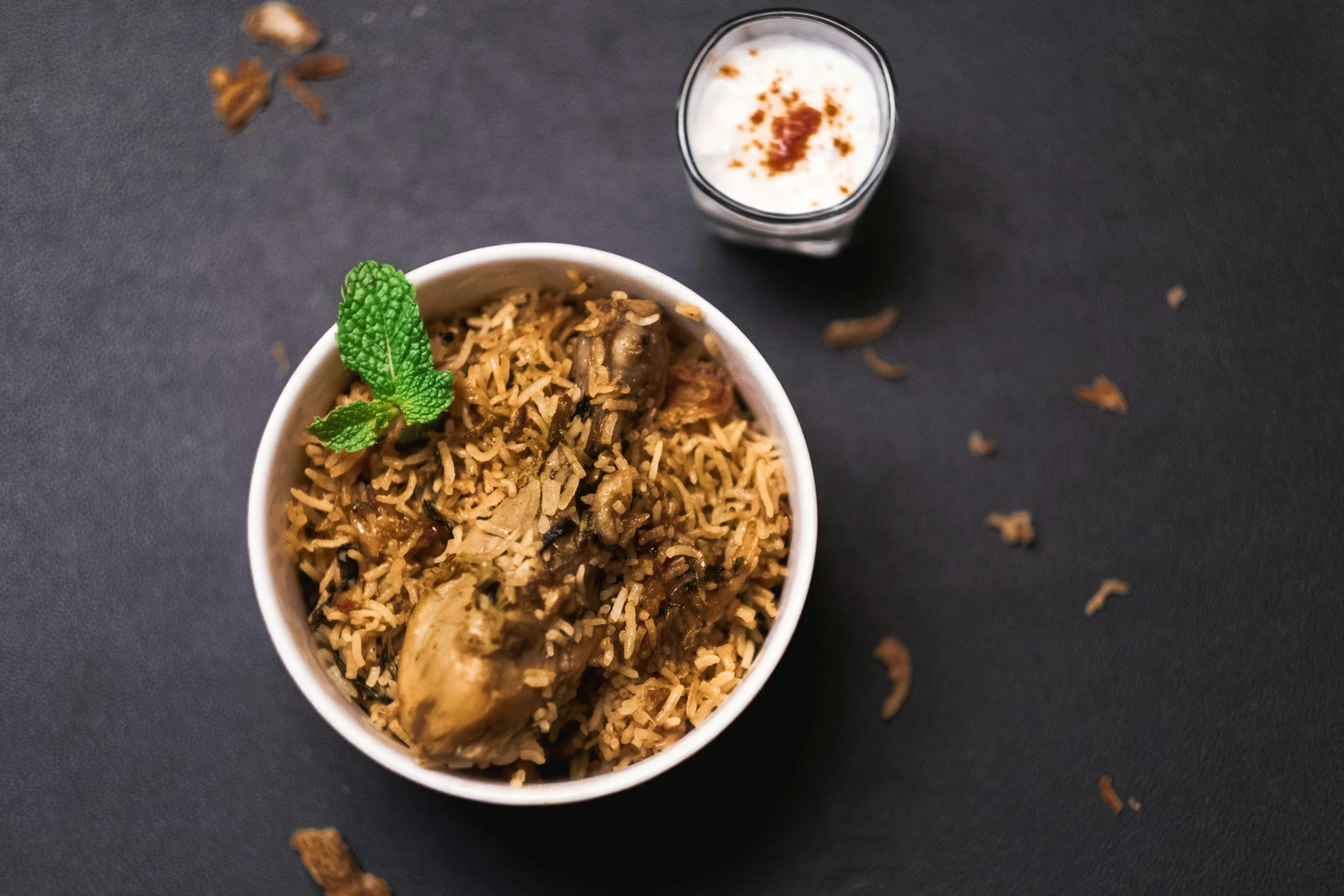
Blogger Kathryn Pauline’s Assyrian biryani.
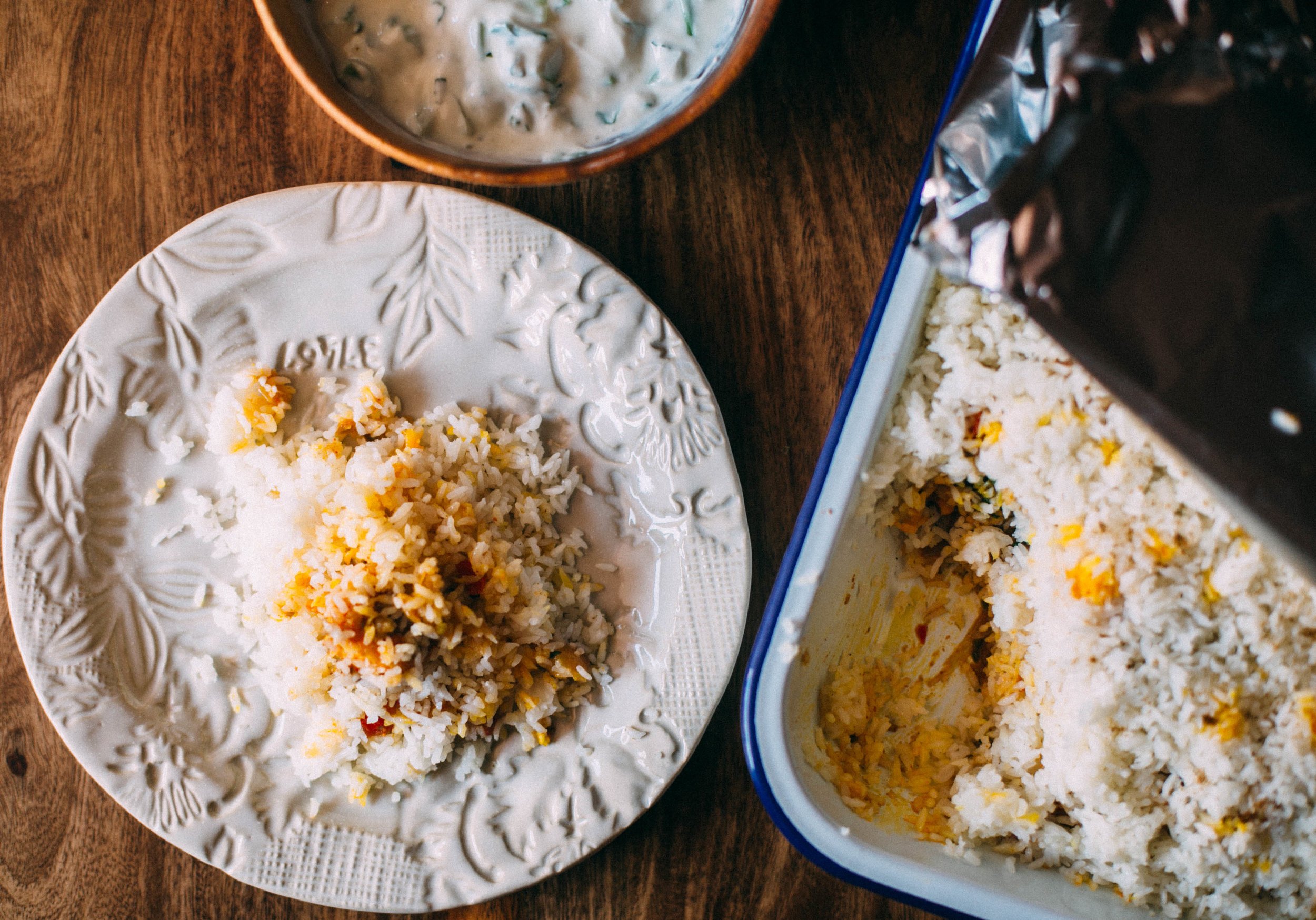
Thalassery chicken biryani
1605-1707: Blends and Biryani
Akbar’s successors, Jahangir and Shahjahan, from 1605-1627 to 1627-1658 respectively, administered the empire to its zenith. Jahangir and his Persian wife, Nur Jehan, are credited with inventing some of the finest rice dishes in Mughlai cuisine.
In the spring of 1964, two Portuguese priests observed Shahjahan and his wife at a reception in Lahore: lavish muslin, fine cuisine, garments of silken gold and silver. Biryani had become the symbol of sophistication. Meat-eating was equated with wealth and Mughlai cuisine with power.
Shahjahan’s son Aurangzeb was the extent of the Mughal empire. He had restrictive habits, and yet, food seemed to be his only archival indulgence. The dying breaths of the last reigning Sultan, Aurangzeb and his crumbling empire longed for a skilful cook, like Suliaman from the royal court:
“Exalted son…I remember the savour of your kichadi and biryani during the winter… you did not allow him to serve me as my cook. If you happen to find a pupil of his, skillful in the art of cookery, you will send him to me...The desire (for eating) has not entirely left me.”
Mughal-era cookbooks additionally mention Zerbiryans, [layered rice with meat or fowl]. While said to be uniquely Indian, Zerbiryans’ actual origins are in Iran, during the Safavid period.
Memory to Modernity
Even with the onset of the British East India Company, Biryani’s popularity only grew. Qanoon-e-Islam detailed at least 25 varieties of pulao, as the Crown continued to employ Indian cooks. Colonial influence also helped globalise Biryani in Burma, part of British India until 1948, creating the Burmese biryani. Similar traces of globalised biryanis are found in Thailand, Indonesia, Cambodia and Vietnam.
In South Asia, Lucknowi, Hyderabadi, Sindhi, among many others, expanded their repertoire to welcome fruits, vegetables, nuts and even sweets.

Beef biryani in Old Delhi.
A meal that traces back to the Indus Valley, becomes a war meal for soldiers in Central Asia, and is then placed on the dastarkhwan of one of the world’s largest early modern empires.
When we joke about funeral biryani needing to be good, we’re participating in a tradition that spans millennia. We’re honouring shepherds from Central Asia, spice traders from Arabia, Mughal emperors and their Persian wives, Portuguese sailors, and countless unnamed cooks who perfected the dampukht technique over charcoal fires.
Because that biryani at the funeral? It carries 5,000 years of history in every bite. It better be good. And not just for us, but for everyone who came before, everyone who stirred the pot, traded the spices, grew the rice, and passed down the recipe. That’s why we take ziaqa so seriously. We’re not just tasting flavour. We’re tasting memory, movement, and the profound act of keeping something alive.
Note: This article refers to the region India (pre-partition) or Hindustan which is divided into India, Pakistan, Bangladesh and some parts of Sri Lanka today.
Maryam is a Communications Specialist with a postgraduate degree in Global Cultures, History and Oriental Studies from the University of Bologna, focusing on South Asian history, culture, and decolonial narratives.
ALSO ON GOYA