An Illustrated Guide to Singapore’s Roti Canai

Four years into living in Singapore, Shruti Balaji finds a taste of home, and familiarity, in the humble roti canai. Cooked, and eaten by everyone, it is a dish that transcends religious and cultural boundaries.
You hear roti canai being made in Singapore before you see it. The rhythmic slapping of oily dough, the sizzle of the grill, the crackle of flakes on its golden exterior, and the crunch as it is folded and dipped into curry. It brings back happy memories of exploring local food when I first moved here four years ago.
Good Indian food can be found across the island, thanks to the earliest Indians who moved here in the early 1800s. Singapore is a melting pot shaped by waves of migration across South and Southeast Asia. When the British abolished slavery in the 1830s, indentured labour systems brought workers and convicts from South India to Singapore to work in dockyards and plantations.
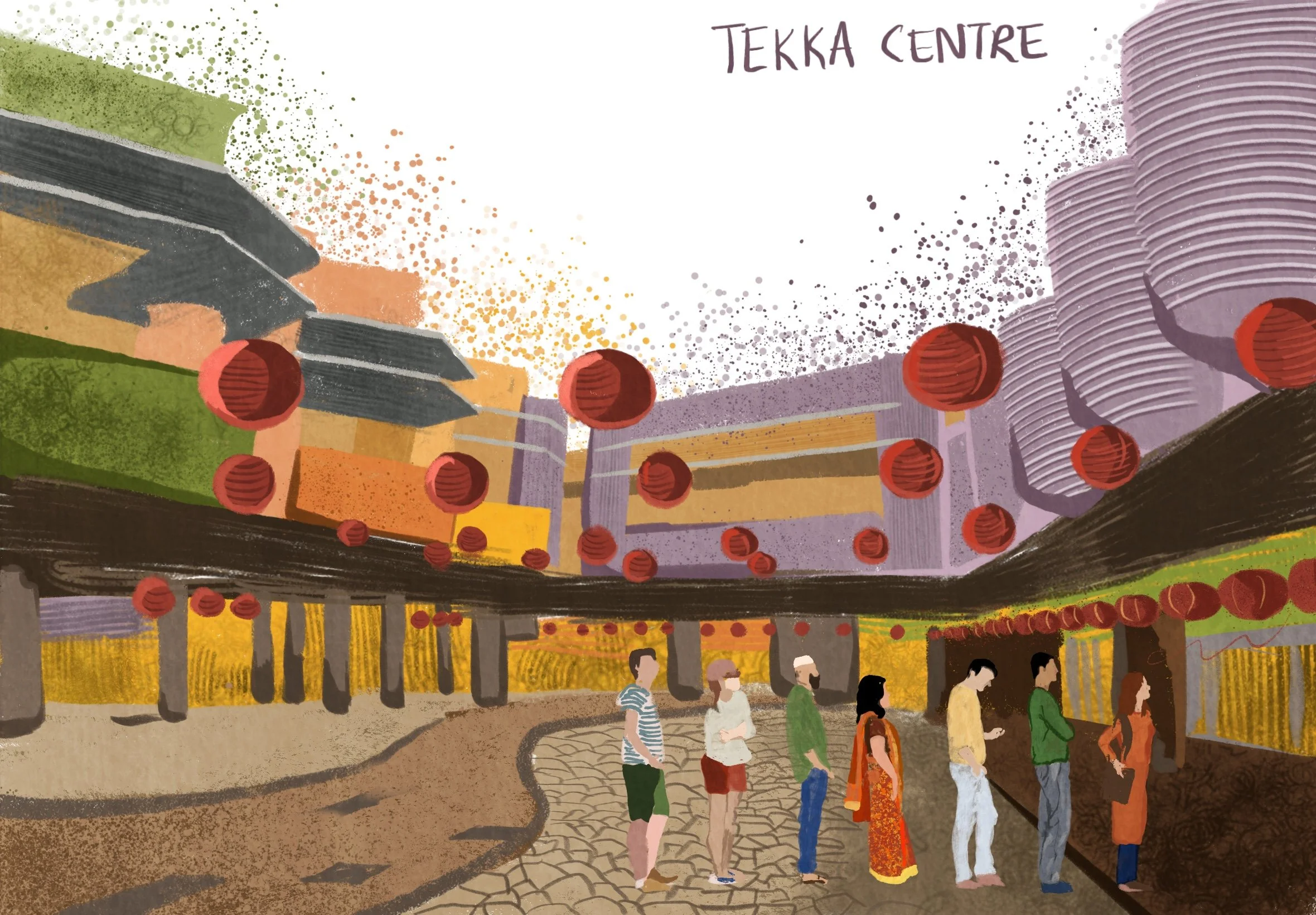
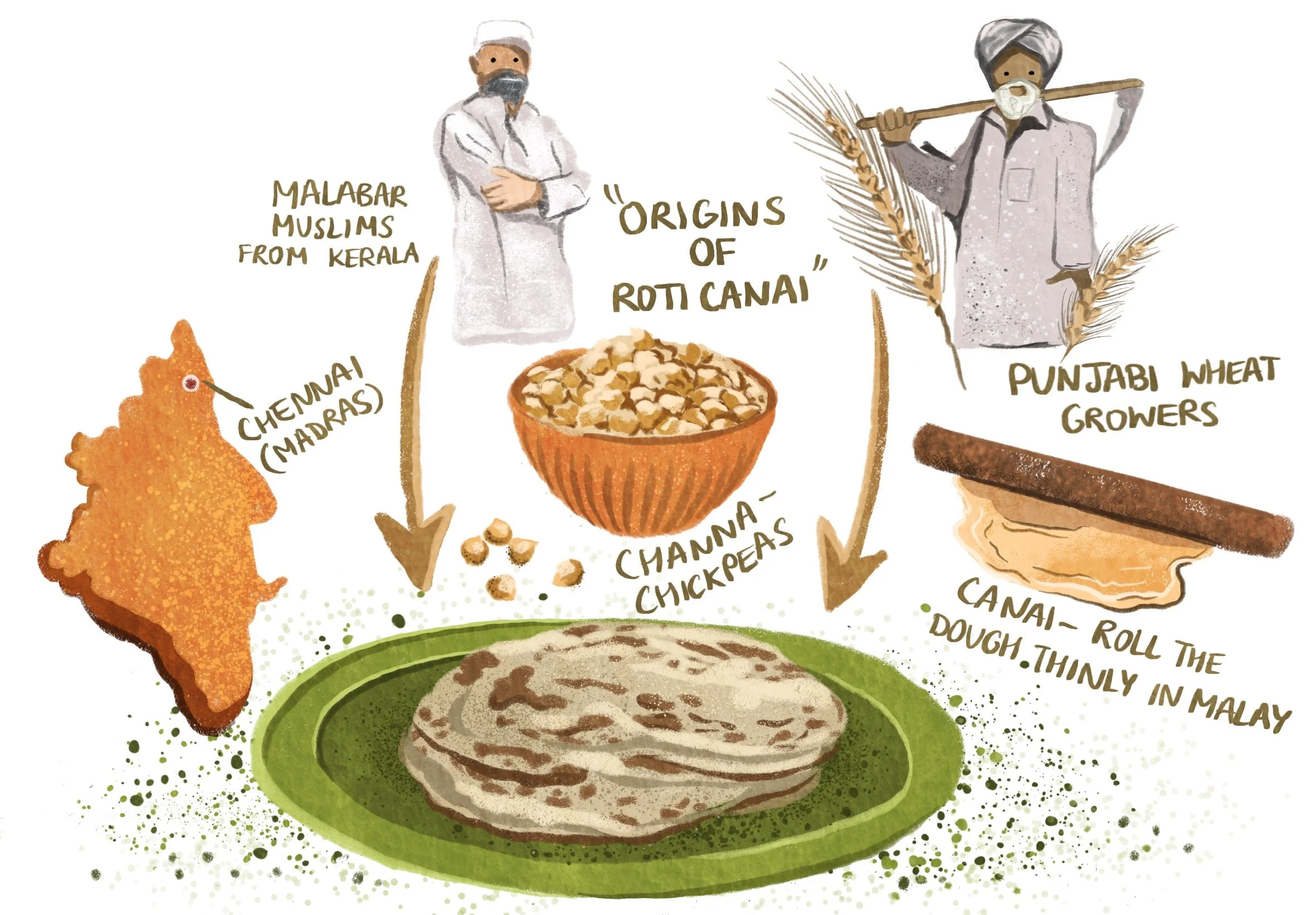
I have enjoyed early dinners at Little India’s Tekka Centre where roti canai and roti prata have been sold since the early 20th century. Some believe roti canai was introduced by Malabar Muslim migrants from Kerala because of its similarity to the Malabar paratha. Others point to Punjabi influence since the state grew a lot of wheat.
There are several theories about the name. Canai could refer to Chennai (formerly Madras), where Tamil migrant workers first came from. It could also come from the Malay word canai, meaning to roll dough thinly or to knead. Others believe it relates to channa, since roti and chickpeas are often eaten together.
But try to assign the dish to just one ethnic group and you run into a problem because everyone cooks and eats it. Chinese, Malay, Muslim and Indian vegetarian stalls: roti canai crosses all religious and cultural boundaries.
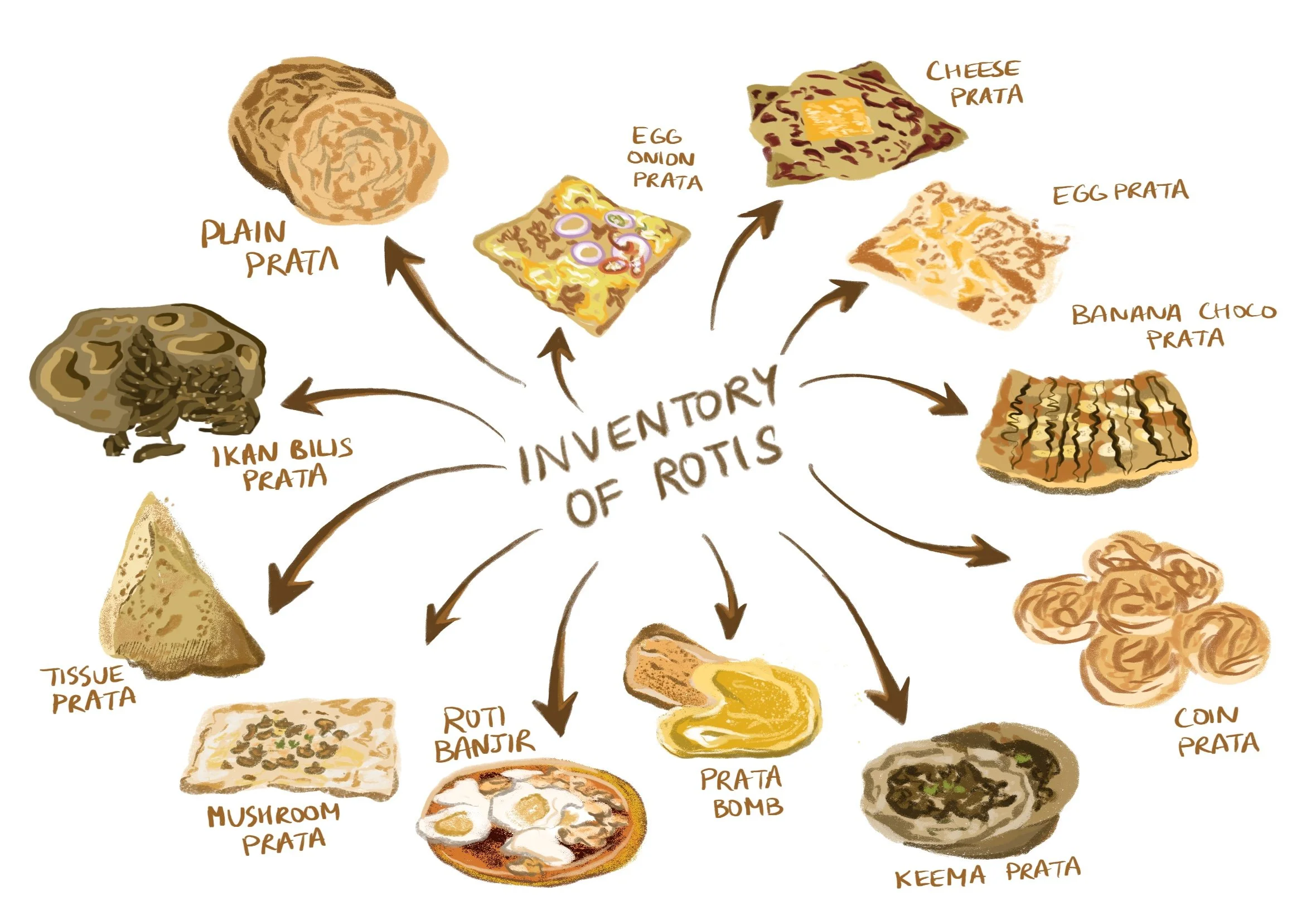
To a prata connoisseur there are subtle differences between prata and canai, but the dough and appearance remain largely the same. Most prata stalls will use the word canai interchangeably but the word also carries with it the indication that it's cooked by Malaysians: our siblings from the causeway who we begrudgingly admit might be the better cooks. There are many types of prata, but three things usually distinguish them: the dough composition, the folding technique, and the curries served alongside. To adapt to changing times and modern taste palettes, the roti canai and prata have been reinvented in a million ways — some of which likely cause the ancestors to shudder — using everything from cheese to Milo.
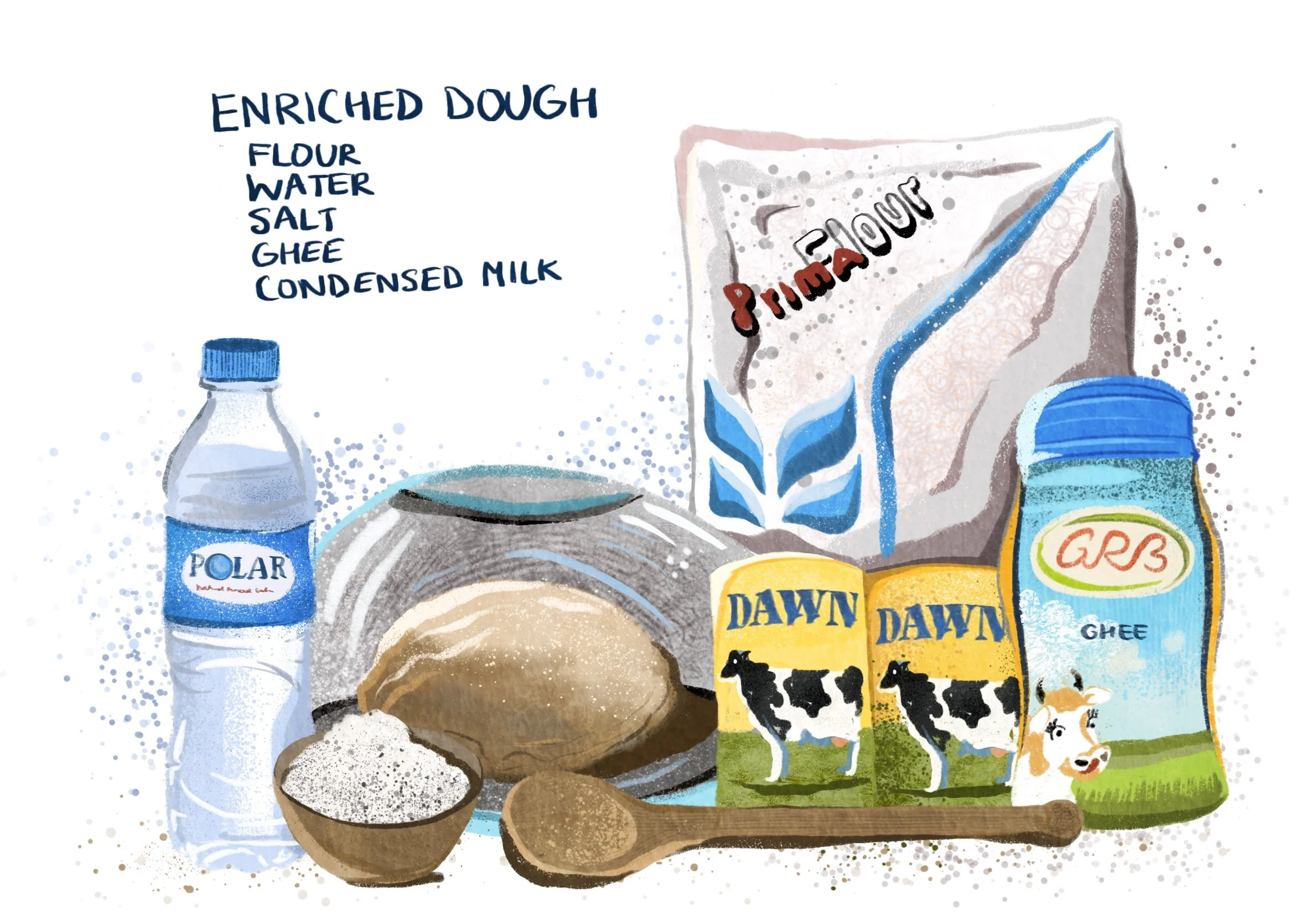
Roti canai dough is considered an enriched dough. Along with flour and water it often contains sugar, ghee and sometimes, condensed milk. The dough must rest so the gluten can develop, giving the bread its elasticity and structure. Every bite becomes a symphony of salt, fat, acid and heat.
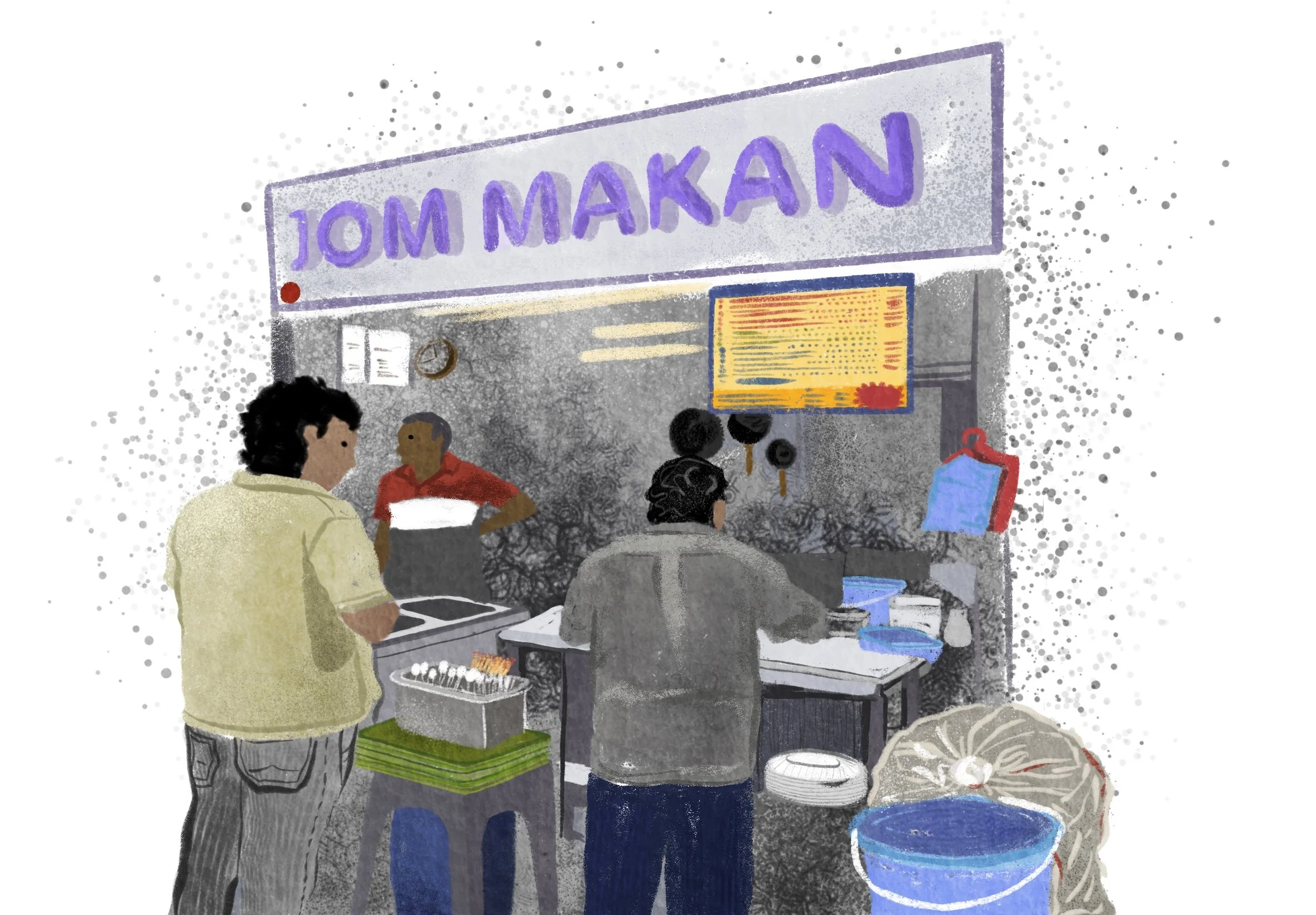
The real spectacle of any roti stall is the preparation. At Tekka Centre, my favourite stall is Jom Makan: Prata Saga Sambal Berlada, run by Mohammad Ilias. He happily chats with me in a mix of Tamil, Malay and English, greeting me with the phrase ‘Have you eaten?’ It fills me with warmth because in Singapore, asking if someone has eaten is a symbol of care and affection. You can hear stall owners ask the same question in english or in "nǐ chī le ma" in Mandarin, ‘saptacha’ in Tamil, or ‘sudah makan’ in Malay.
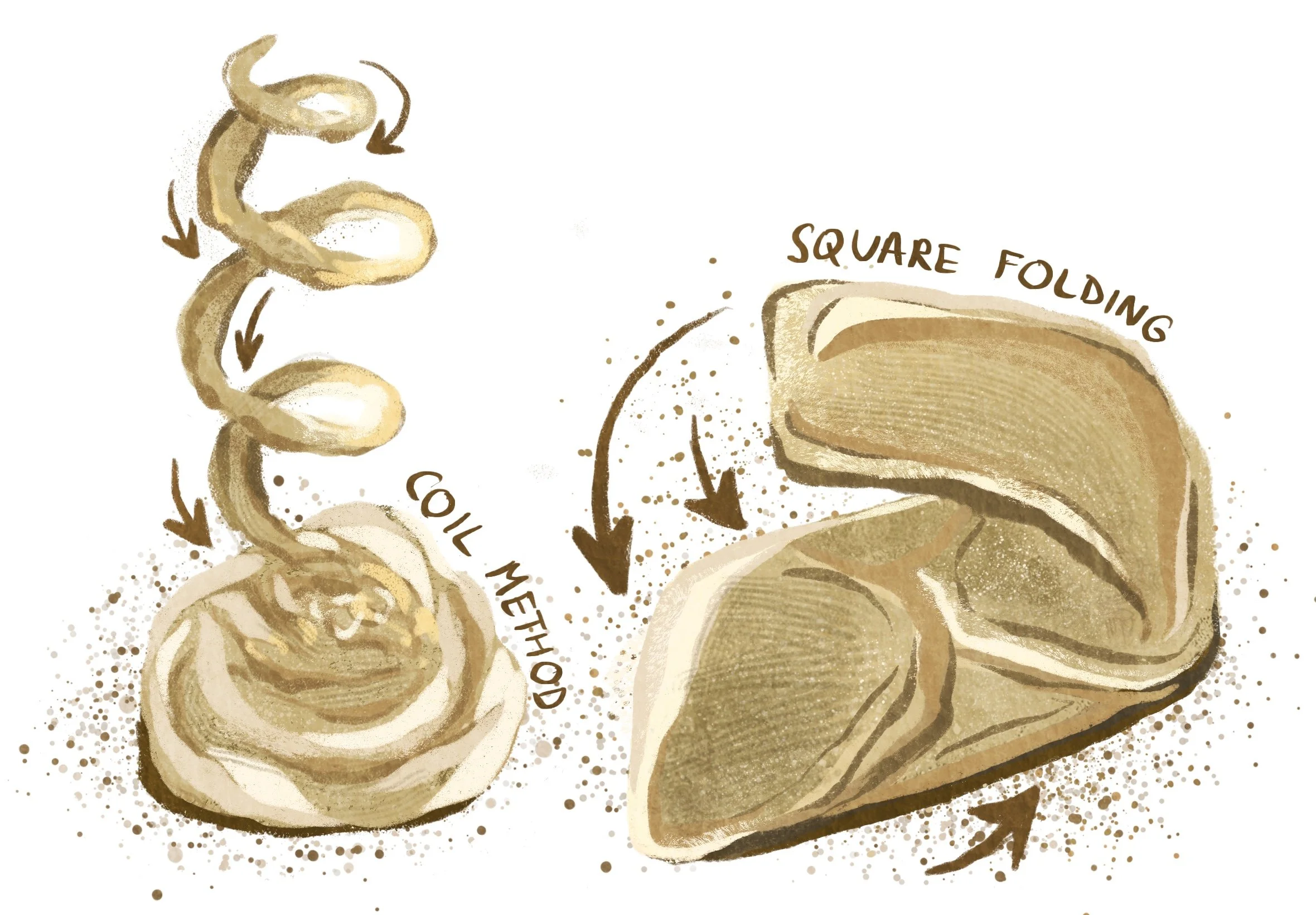
He prepares my plain roti prata in what he calls a ‘canai style’, which is slightly flakier on the outside. There are two main shaping techniques: the coil method rolls the dough into a rope before coiling and flattening it while the square method, used at the stall, stretches the dough thin by pulling the edges almost like spinning pizza dough, before folding it into a neat square.
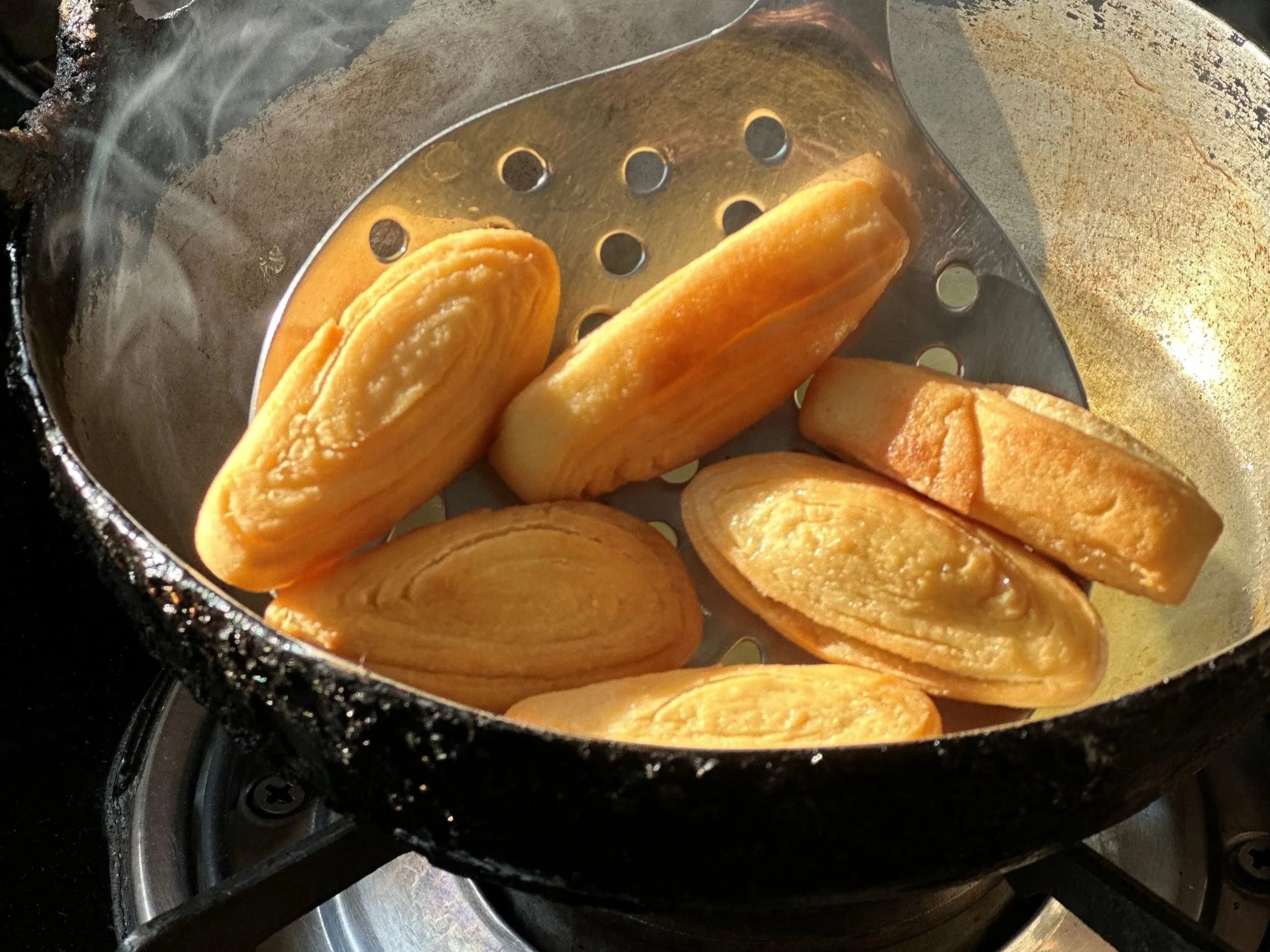
The secret to roti canai’s crispiness lies in its ghee-separated layers. When the square hits the hot griddle, the steam inside forces the layers to separate. The ghee allows the roti to become crisp and flaky without drying it out. The Maillard reaction is what gives the roti its nutty aroma and slight sweetness. Once cooked, the prata makers clap the roti between their hands, releasing steam and fluffing the layers into that perfectly flaky texture.
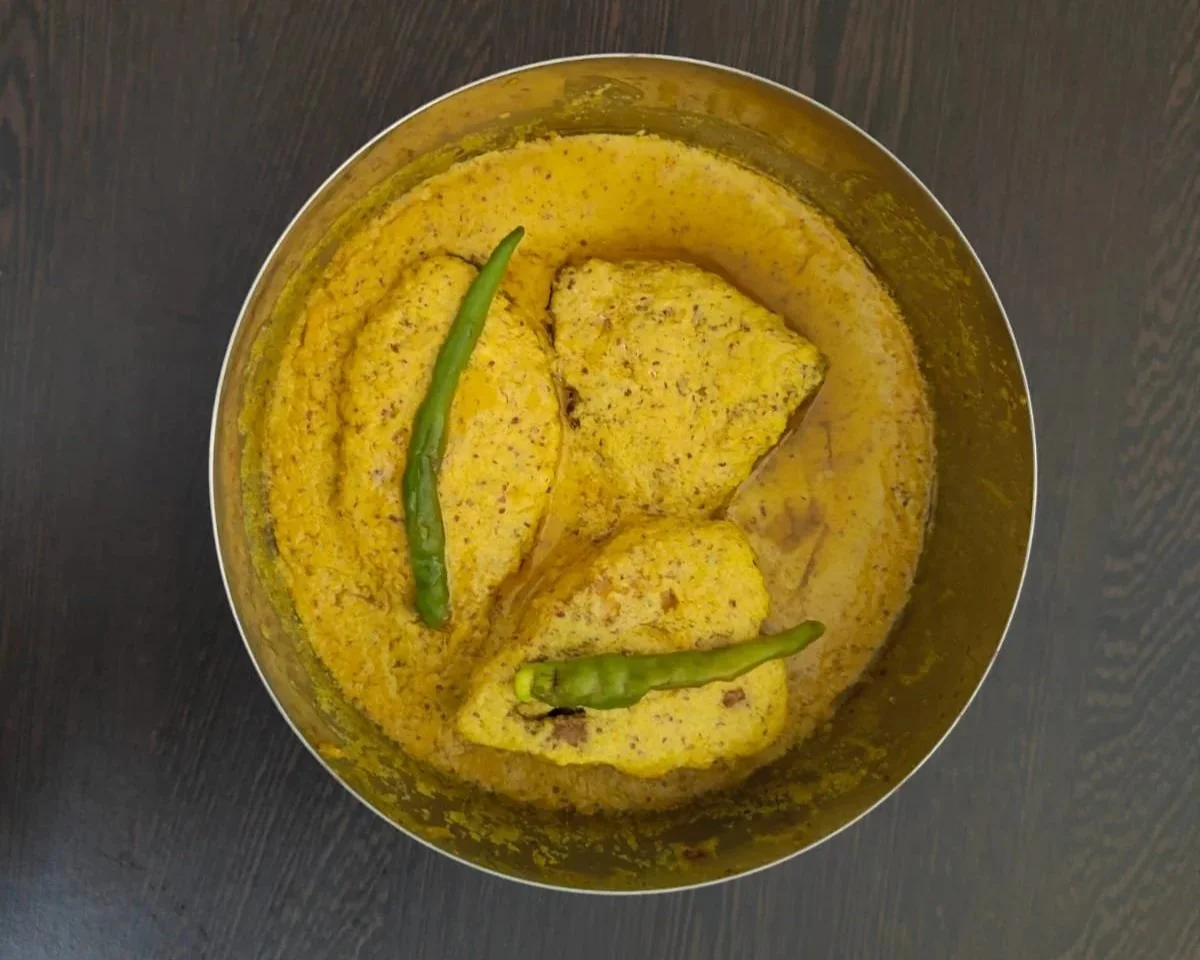
Ilias cuts up my roti using a sharp pair of scissors. On hearing I am craving something sweet, he sprinkles sugar on top. Two rotis cost just SGD 2.80 which is remarkable considering the decades of skill that goes behind perfecting the recipes. The stall also serves mutton and fish curries.
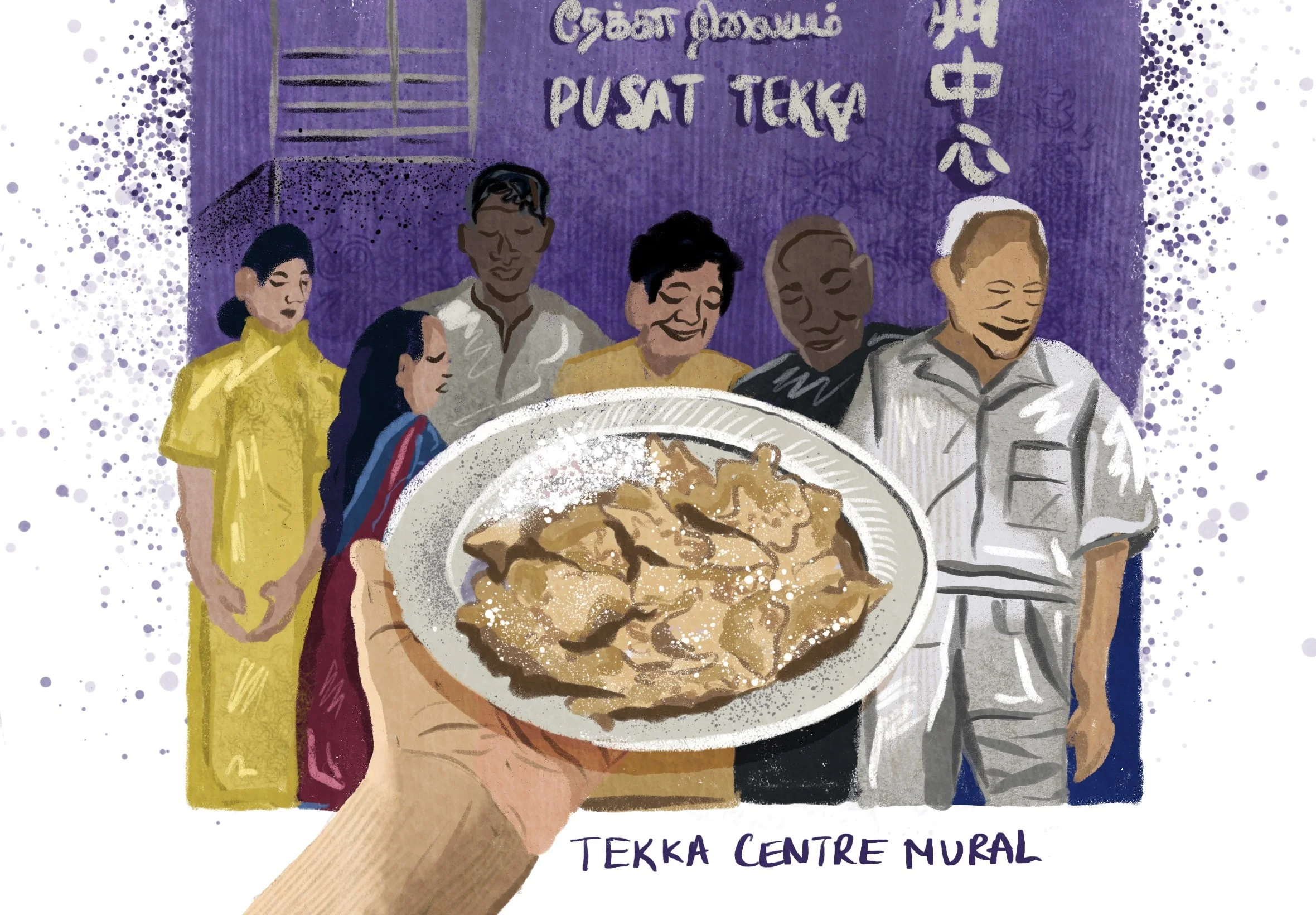
I take a seat near a mural of Singapore’s first Prime Minister, Lee Kuan Yew. Outside, the Buffalo Road HDB blocks stand as landmarks of the neighbourhood. The name Tekka comes from the Hokkien phrase Tek Kia Kha, meaning ‘foot of the small bamboo,’ referencing bamboo that once grew along the Rochor Canal.
Two hundred years ago, Tamil labourers grew rice and sugarcane here. Now I sit in the same place eating sugar on my roti canai. Every bite is crisp and sweet, the smell of burnt sugar, alluring and irresistible.
A dish created by migrants for comfort while far from home, still comforts many today across our island home and our counterparts across the causeway. It reminds me of my home Chennai, but in a completely different way. Food is the language that unites people lucky enough to call Singapore home, I’m lucky to be one of them.
Shruti Balaji is a Singapore based art director and illustrator raised in California and Chennai who loves libraries, urban planning and pop culture analysis. She believes in the power of a well packed Indian office tiffin.
References:
Indians in Singapore, 1819-1945: Diaspora in the Colonial Port-city By Rajesh Rai
Singapore's Pre-Colonial Ties with India from the book India on Our Minds by Tharman Shanmugaratnam
Indian Heritage Cooking by Sanmugam, Devagi and Kasinathan, Shanmugam
ALSO ON GOYA