Notes on Pluralism from a Multicultural Kitchen
Tamanna Rafique’s mixed family heritage finds reflection in her kitchen, where plates of her mother’s Christmas chicken curry and my father’s Eid pulao co-exist on the same table. She takes on a journey of coexistence, pluralism and belonging as she maps her inheritance through flavour.
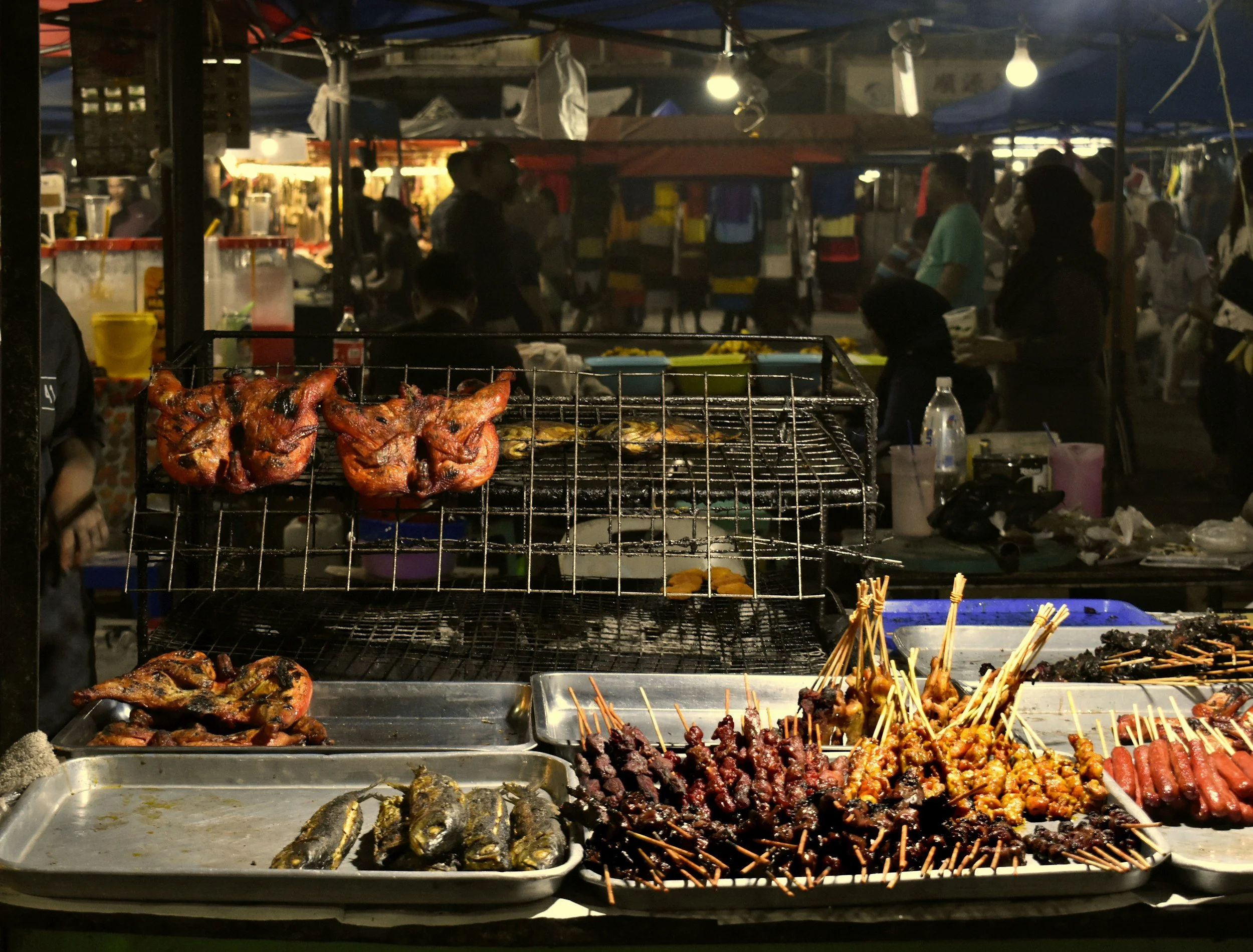
“Gahori mankho tu beleg fale thoba.” Set the pork on the other side, my father directs. He has a slight smile on his face. We are setting up the Christmas table for the feast along with our tenants. Chicken, pork, mutton, rice and cake fill the table, each with its own distinct aromas. I consider this the perfect harmony of our differences. The pork, cooked by our tenants was set a little apart, a gesture of respect, not prohibition. In that small distance is where my family’s food story begins: one shaped by different religions and cultures, each with its own flavours, but still learning to come together.
I come from a family where my mother’s Christmas chicken curry and my father’s Eid pulao co-exist on the same table, where the scent of cardamom mingles with the punchy scent of the zabrang (Sichuan pepper), where sewai and raisin cake share space on the table.
My family’s lineage is not a straight line, but a river with many tributaries. My mother comes from mixed heritage: her mother was Garo Christian, her father was Nepali Buddhist, and her grandmother Rabha Hindu. My father is Assamese Muslim. When these worlds came together through marriage, food became one of the ways they learned to understand each other. In our home, it was in the kitchen where these worlds met and, worked things out.
What is cooked, what isn’t, and what is shared? These decisions loomed heavier than I was able to understand as a child. Pork was cherished by my mother’s Garo side, but for my father's Muslim family, it held a different meaning. Chicken seemed like the easy compromise, and beef was cooked on special occasions. Some dishes were never prepared, out of respect, in the unspoken rules of coexistence.
But there were also acts of generosity. My mother would prepare pulao during Eid, although it was not from her childhood table. She learned to balance the spices exactly the way my father liked it. My father would prepare sweets during Christmas and eat raisin cake with enthusiasm. These were small acts, but they carried a language of radical love: cooking what is not mine, eating what is not mine, until it becomes mine through love.
These negotiations were as much about words as they were about the dishes themselves. In our kitchen, the names of ingredients often came from multiple tongues. Vegetables would be known by a multitude of names, Roselle leaves were called mesta tenga for the longest time by both my parents until one day, my friend asked me, ‘What’s that?’. It wasn’t until years later, that I figured that it was also called tenga mora in Assamese. It was the same story with my favourite pitha. In the bazaar near my house, I remember spotting something familiar being sold as tekeli mukhot diya pitha (steamed rice cake). It was only when my parents told me that it was the same as laudum (in Bodo) that I recognised it. I grew up slipping between words just as easily as I slipped between one cuisines and the next. The kitchen taught me polyphony, long before I knew the meaning of the word.
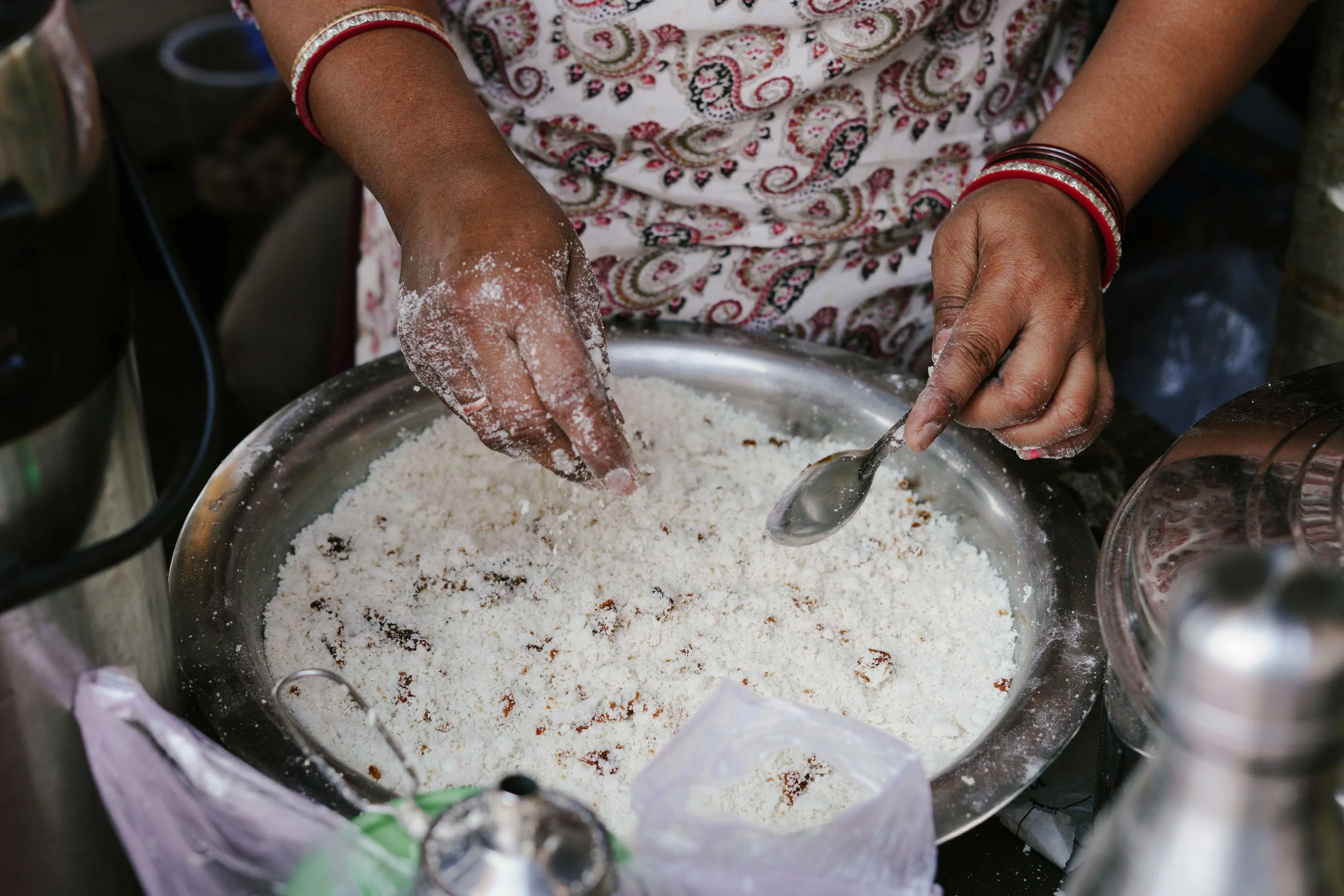
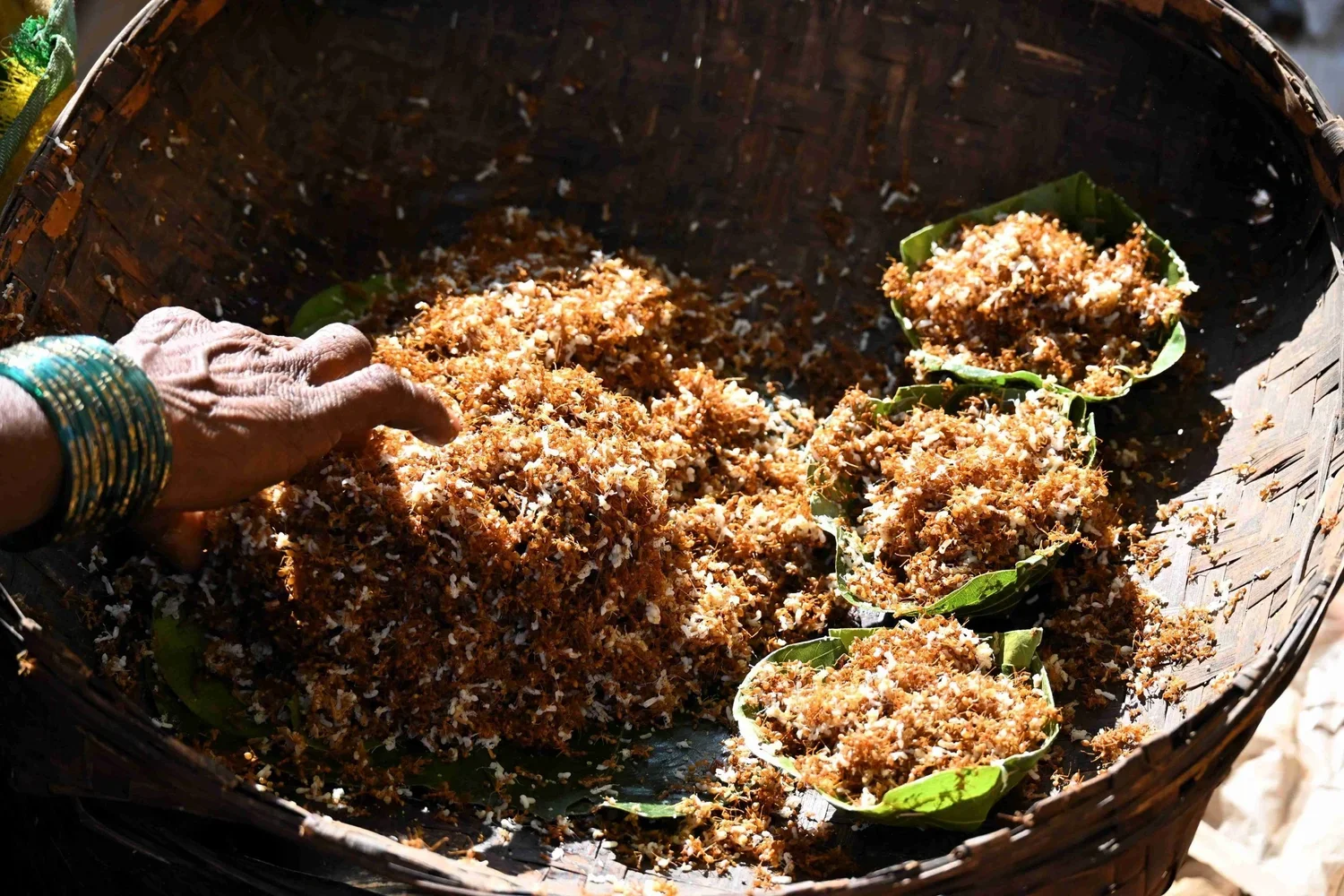
Grated coconut, rice powder, and jaggery for steamed rice cakes. Images credit: Tamanna Rafique
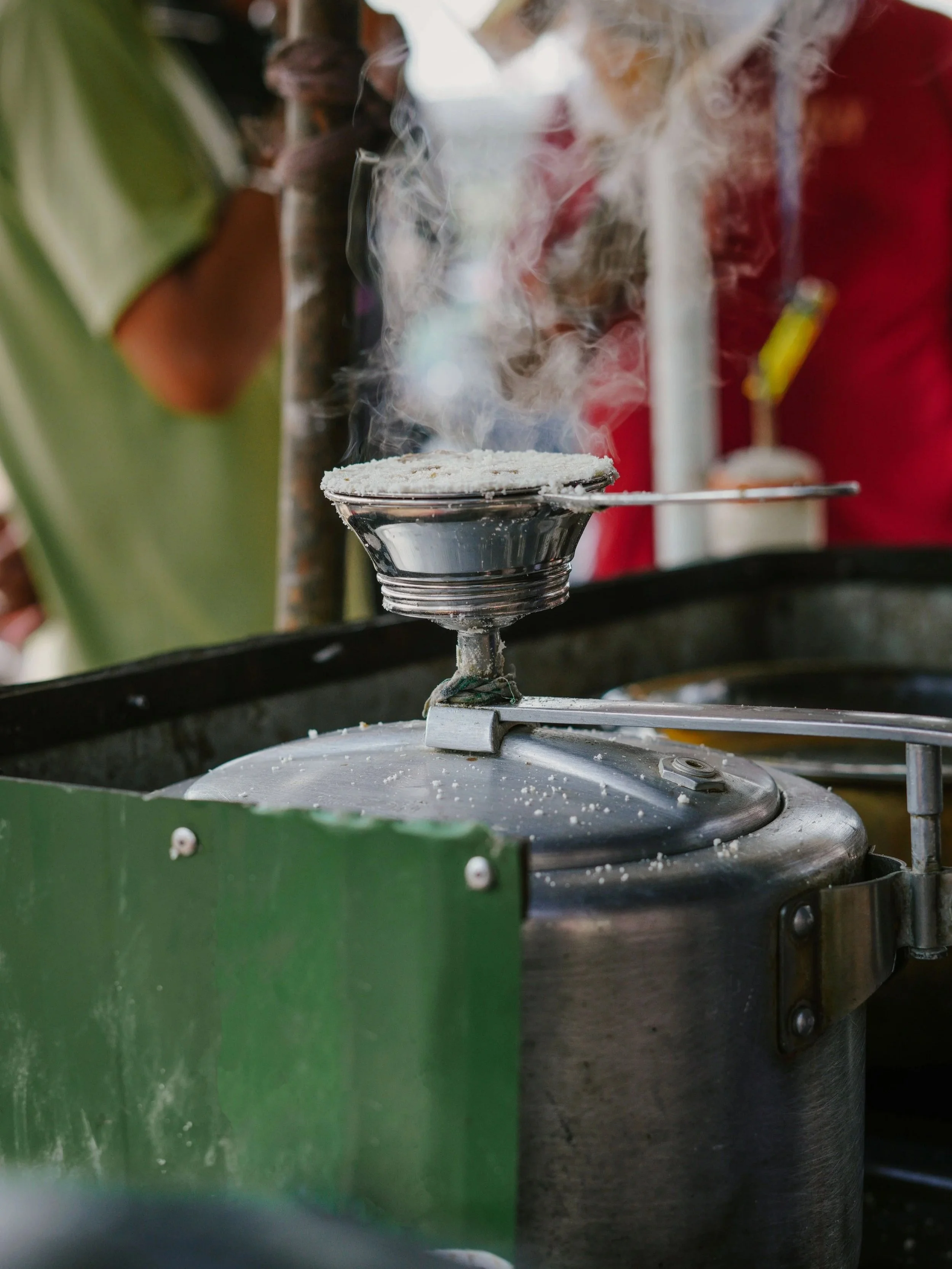
A tea strainer over a pressure cooker used for cooking rice cakes over direct heat.
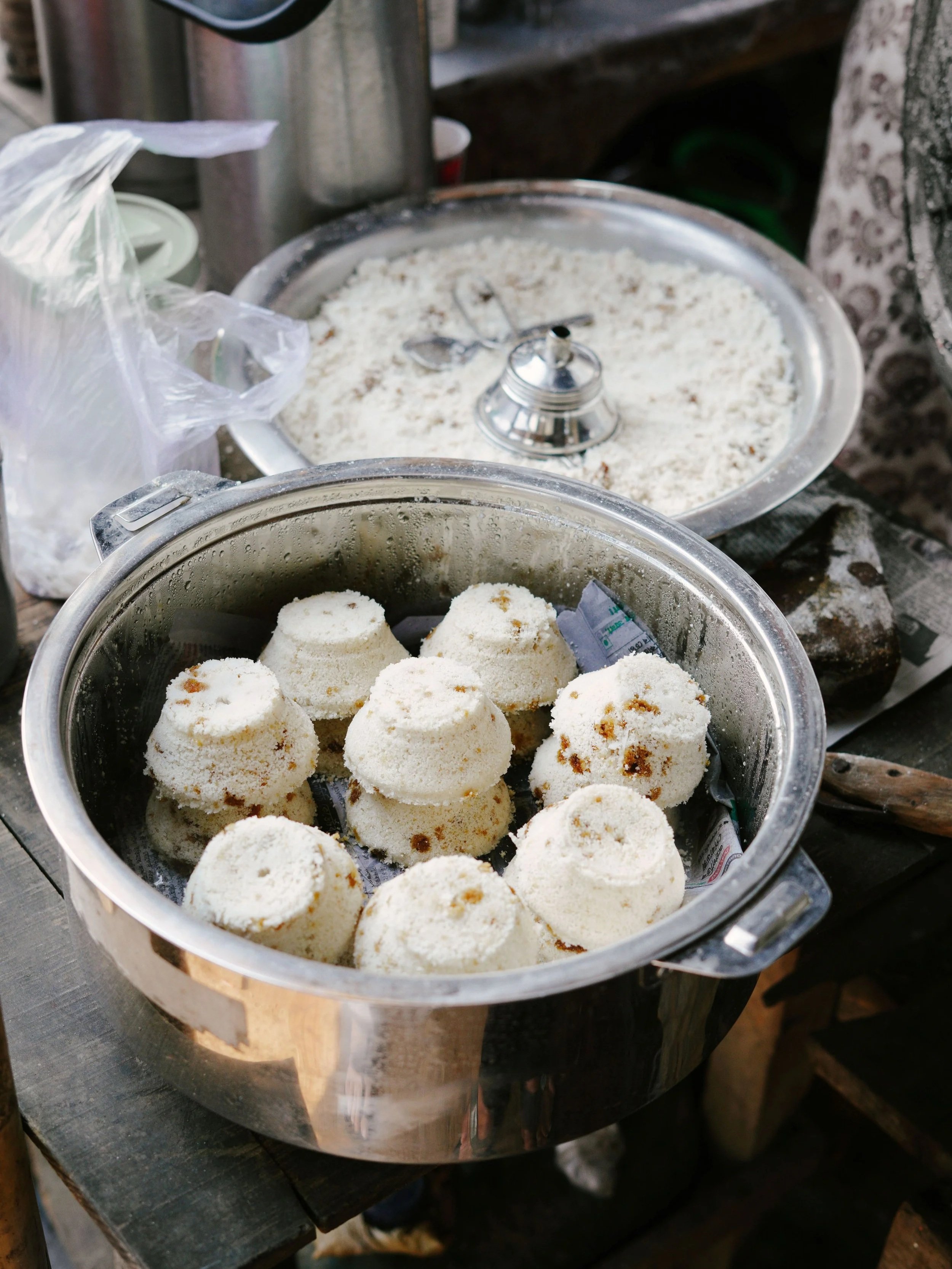
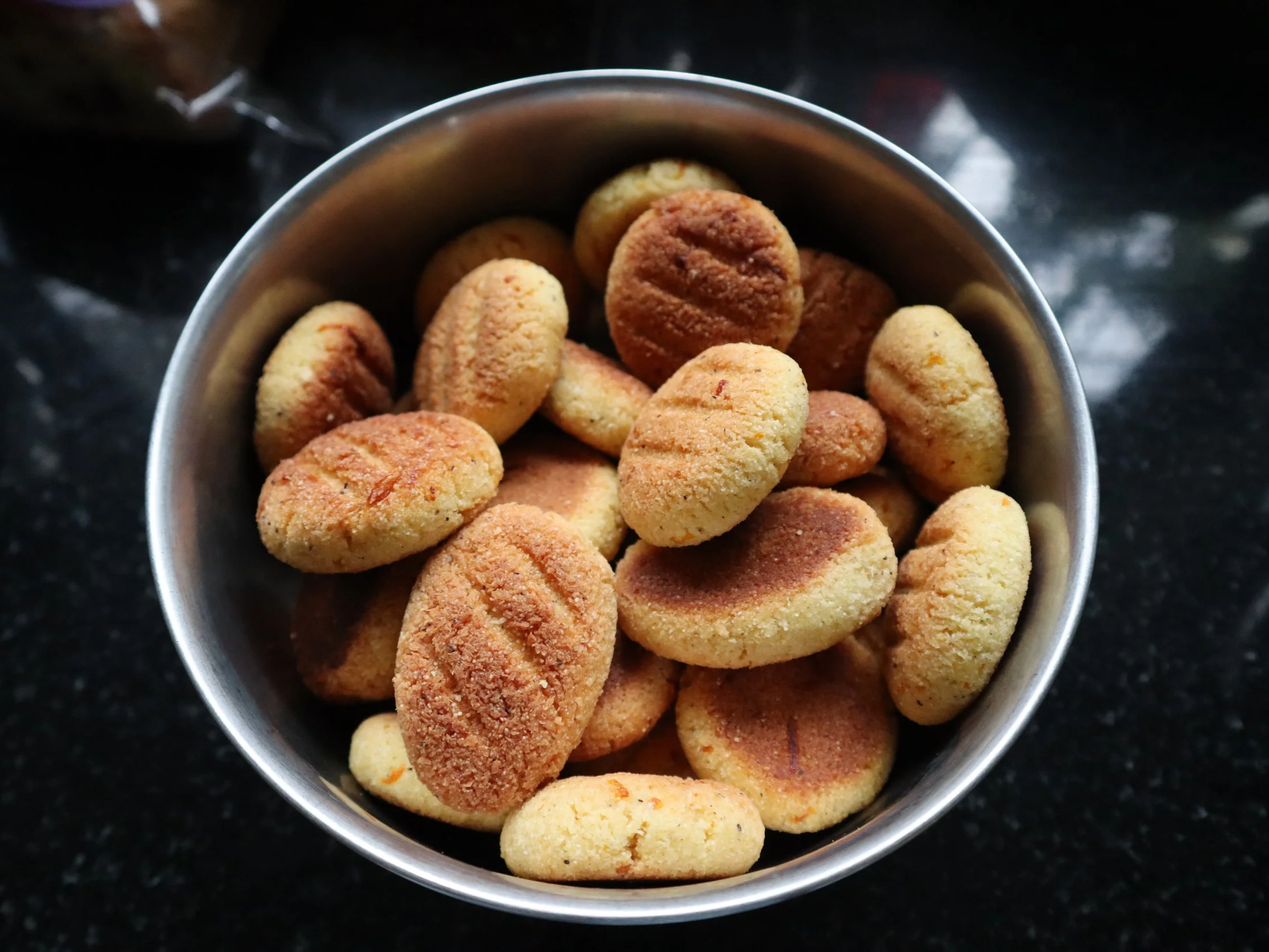
Freshly steamed coconut rice cakes, soft and lightly sweetened with jaggery.
If I trace my inheritance through taste, it comes out as a patchwork quilt. From my mother, I inherited the tang of fermented bamboo shoots, and the profound comfort of chicken cooked slowly with herbs and boiled vegetables. From my father, I inherited the warmth of slow-simmered gosht, the sweetness of milky sewai on Eid mornings, and the fragrance of spices from a plate of pulao.
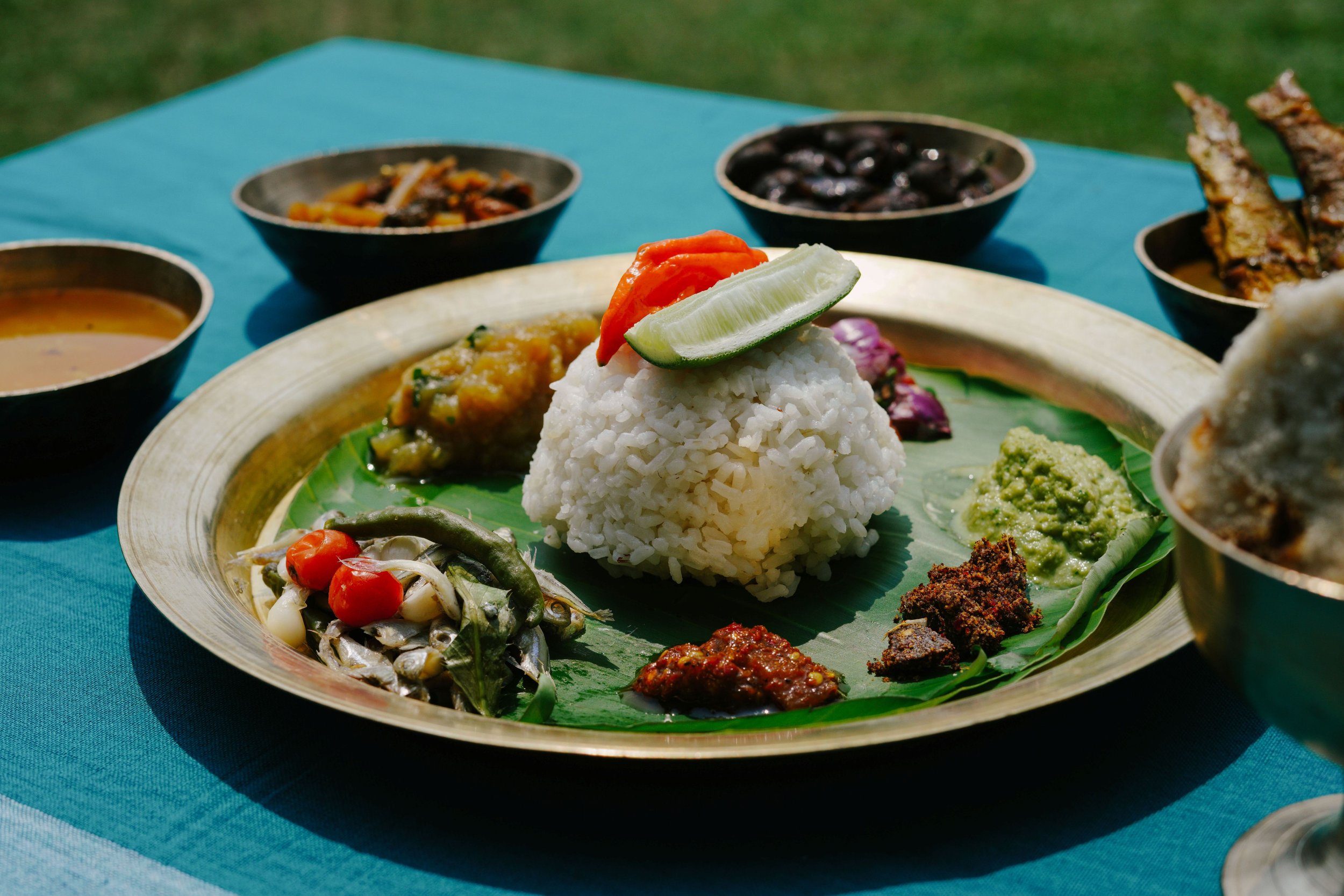
Sometimes I wonder if my memory of taste is confused or enhanced. Perhaps it is both. My plate has always had a little bit of everything, gundruk (Nepali fermented leafy vegetable) with rice, fish with ou tenga (elephant apple), pickles with dalle khursani (Nepali fireball cherry pepper) and if I get lucky, snails with mati ma (split black gram) that are sent in by my mother’s Bodo sister-in-law.
But, there are also absences, shadows of dishes that were never cooked. I imagine what new dishes my great-grandmother might have cooked as a Rabha Hindu woman, and I have a craving for flavours I have not yet experienced. The silence of those dishes is part of my inheritance as well.
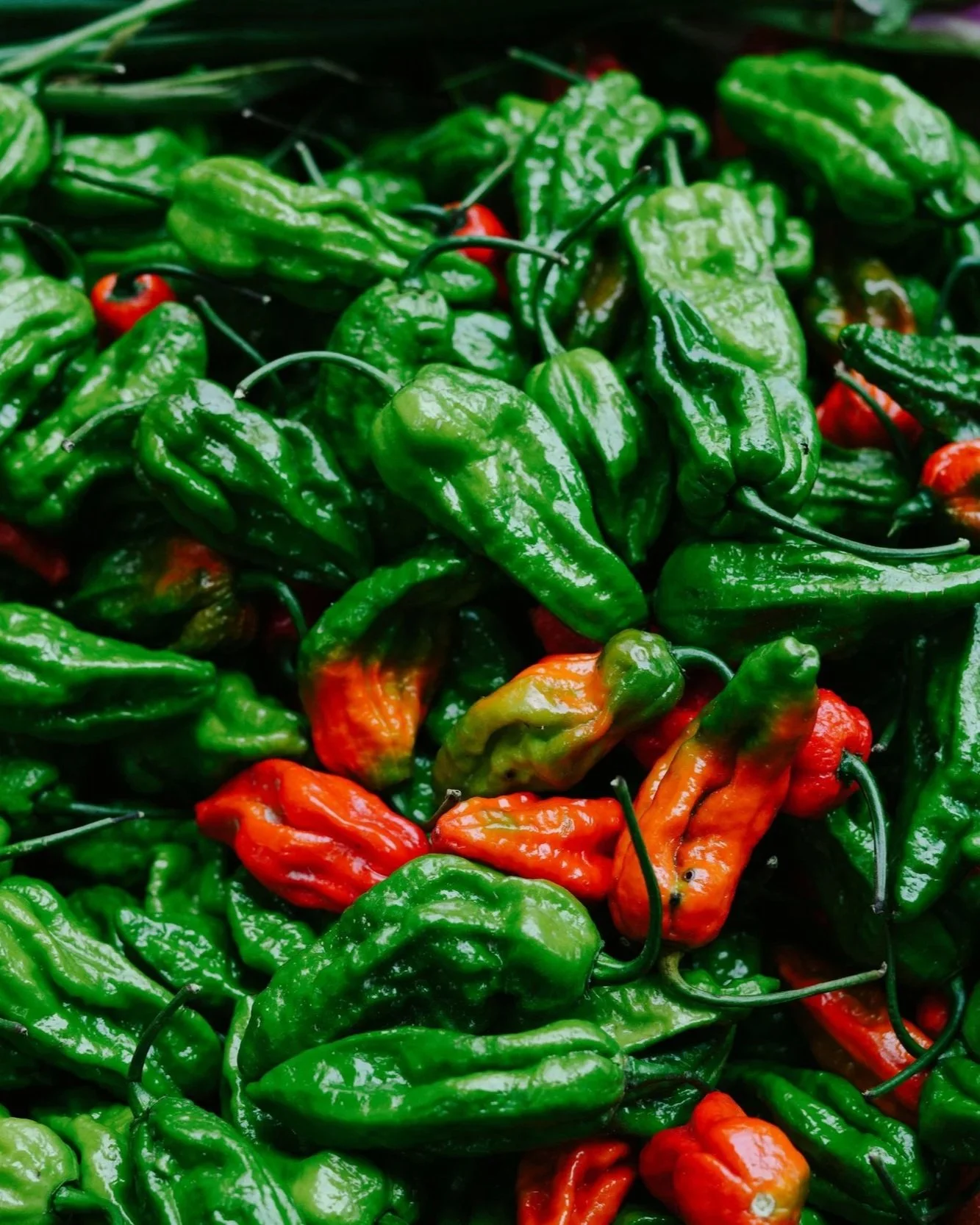
Bhut Jolokia (ghost pepper), a chilli cultivated locally in the North East, sold in local bazaars.
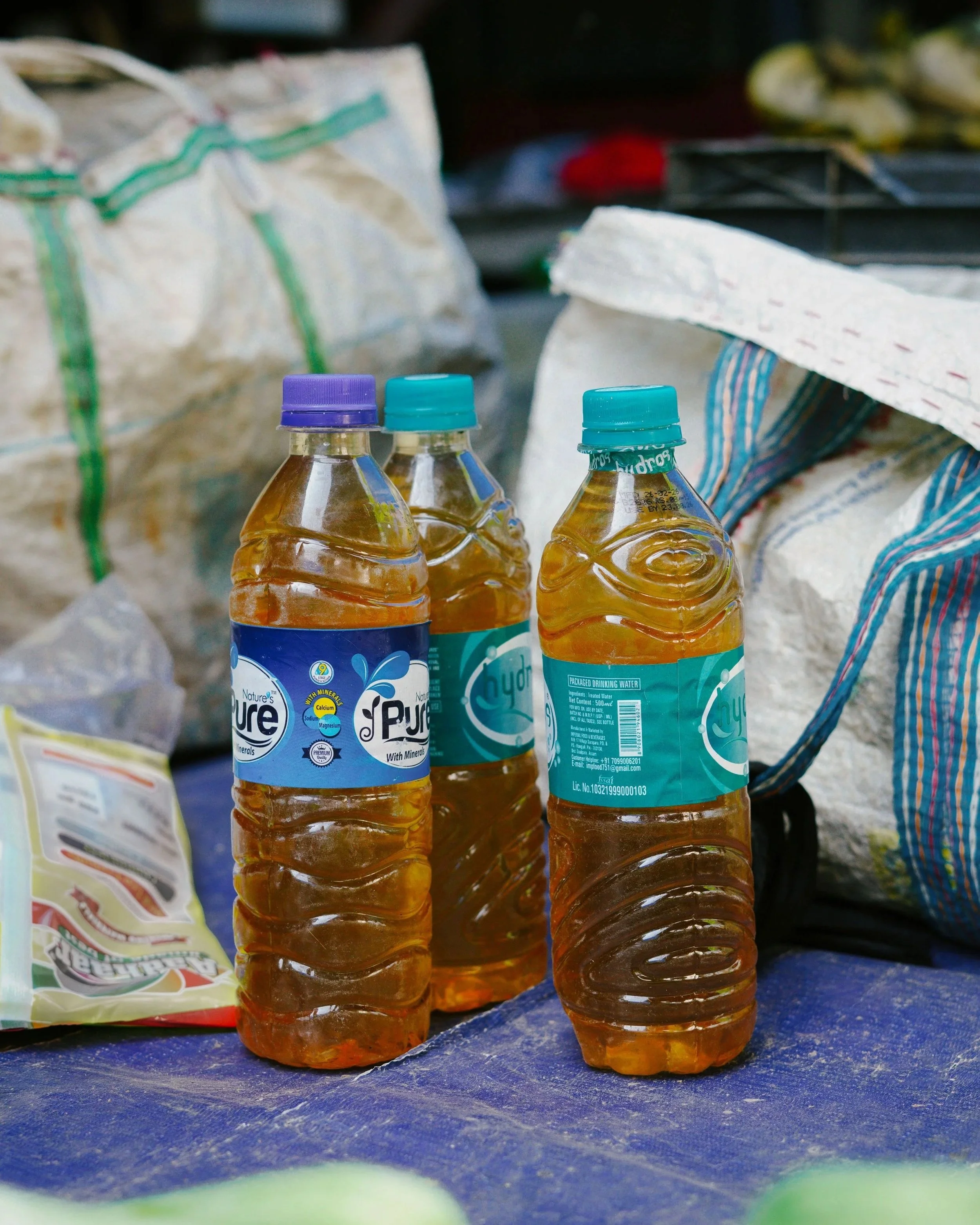
Khar, an alkaline extract made from the ashes of sun-dried Bhim kol (banana) peels and stems.
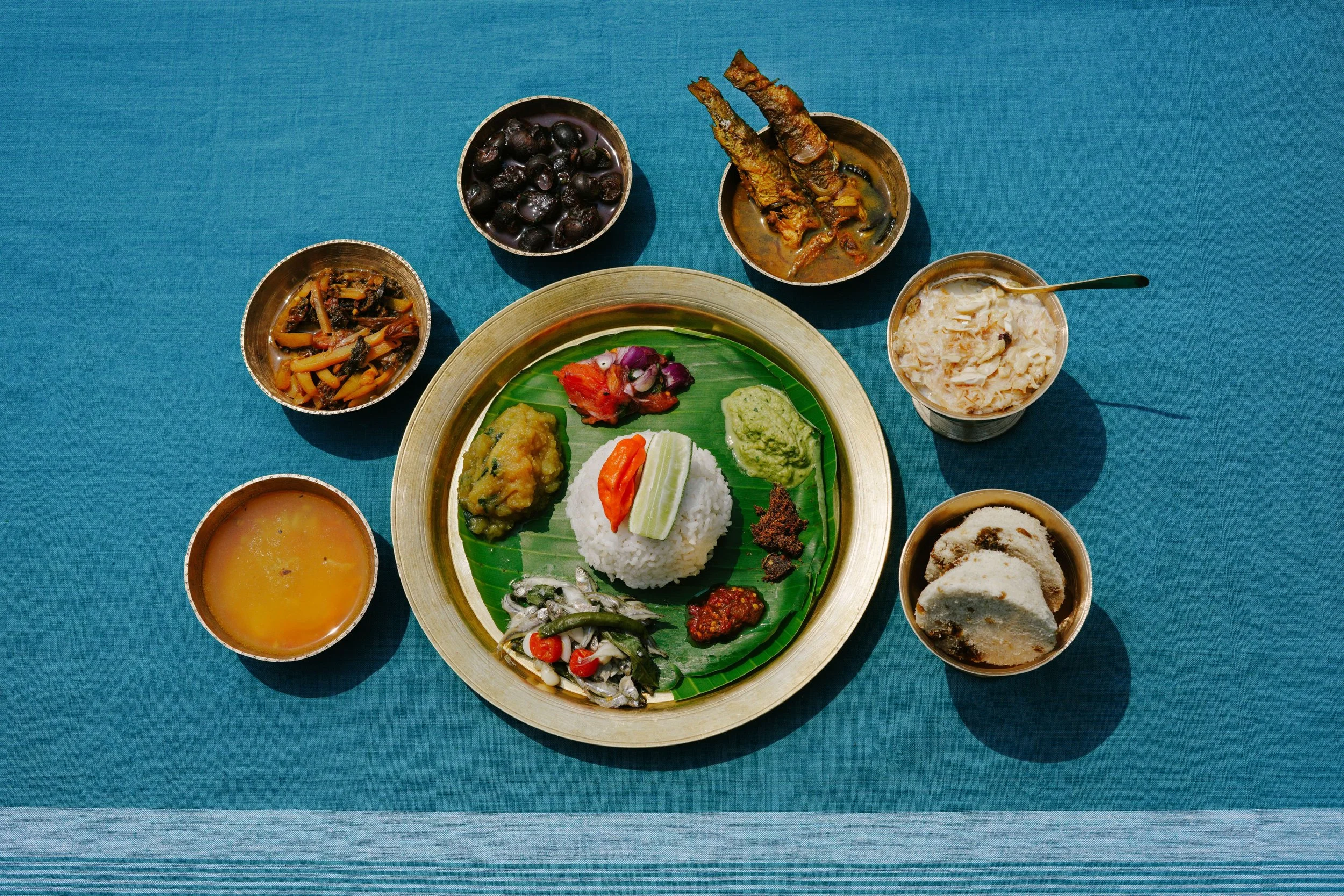
L-R on bowl: dal, Nepali gundruk with potato, Bodo-style river snails with black gram (mati ma), Assamese fish with thekera tenga, sewai, and rice cakes.
L-R on bowl: banana leaf–steamed fish, khar with raw papaya, charred tomato chutney, chana dal chutney, kharoli (fermented mustard seed chutney with kol khar), and bhut jolokia pickle.
Cooking, for my family, has always been more than daily labour. It is a language of care. I would come home from school to find the tenga aanja (sour curry) my mother had made — suka tenga (sour spinach) one day, mesta (roselle leaf) the next, thekera (Garcinia) or ou tenga (elephant apple). In that instant, in that tiny, sun-soaked kitchen, the world felt perfect. My father would have chicken kebabs waiting for me as well; golden brown edges crisped to perfection, the centre tender and soft. This ritual continued till the day I moved out of Assam for Delhi. Whenever I returned, familiar tastes would greet me, transporting me instantly back to carefree days.
Their affection was often masked in these gestures: extra spoonfuls, favourite dishes cooked on difficult days, or a willingness to eat what the other cherished. A multi-cultural marriage comes with its challenges, but in the kitchen, they are not as overwhelming. Where words failed, food did the heavy lifting.
Looking back, I realise that our family table was not only feeding ourselves, but a culinary map that carried the stories of cross-cultural marriage, adaptation, and survival. The different cuisines on my plate feel like an extension of my fragmented identity that I often struggle to articulate elsewhere.
What does my plate look like now, as I am older? It is still mixed: sometimes I make my mother’s food with my father’s spices and mix them into something that is neither completely hers nor his. Occasionally, I crave for what I can no longer taste, like my grandmother’s cooking, lost recipes, and meals that disappeared with time.
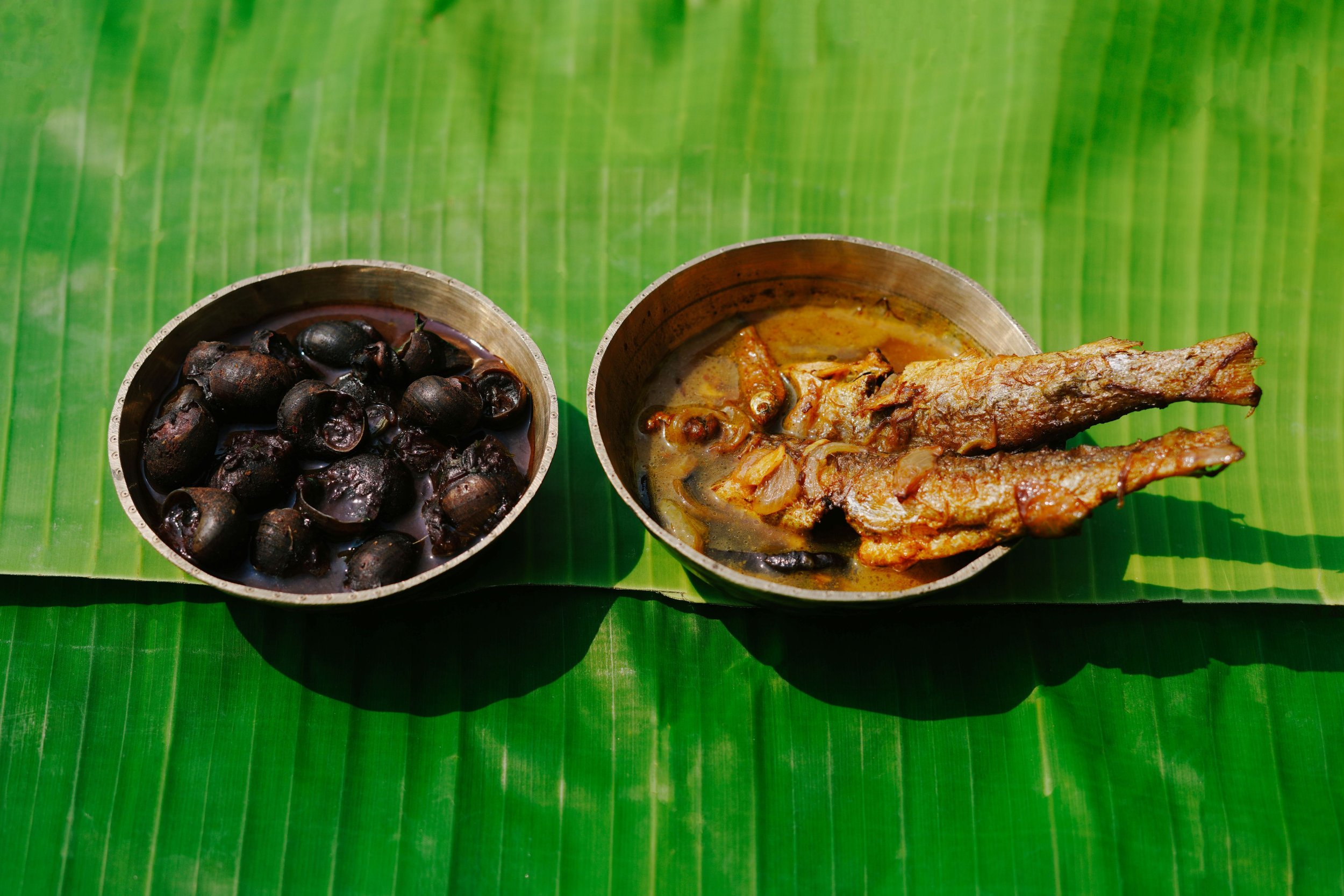
Bodo-style river snails cooked with mati ma (black gram), and Assamese river fish cooked with thekera tenga (Garcinia pedunculata).
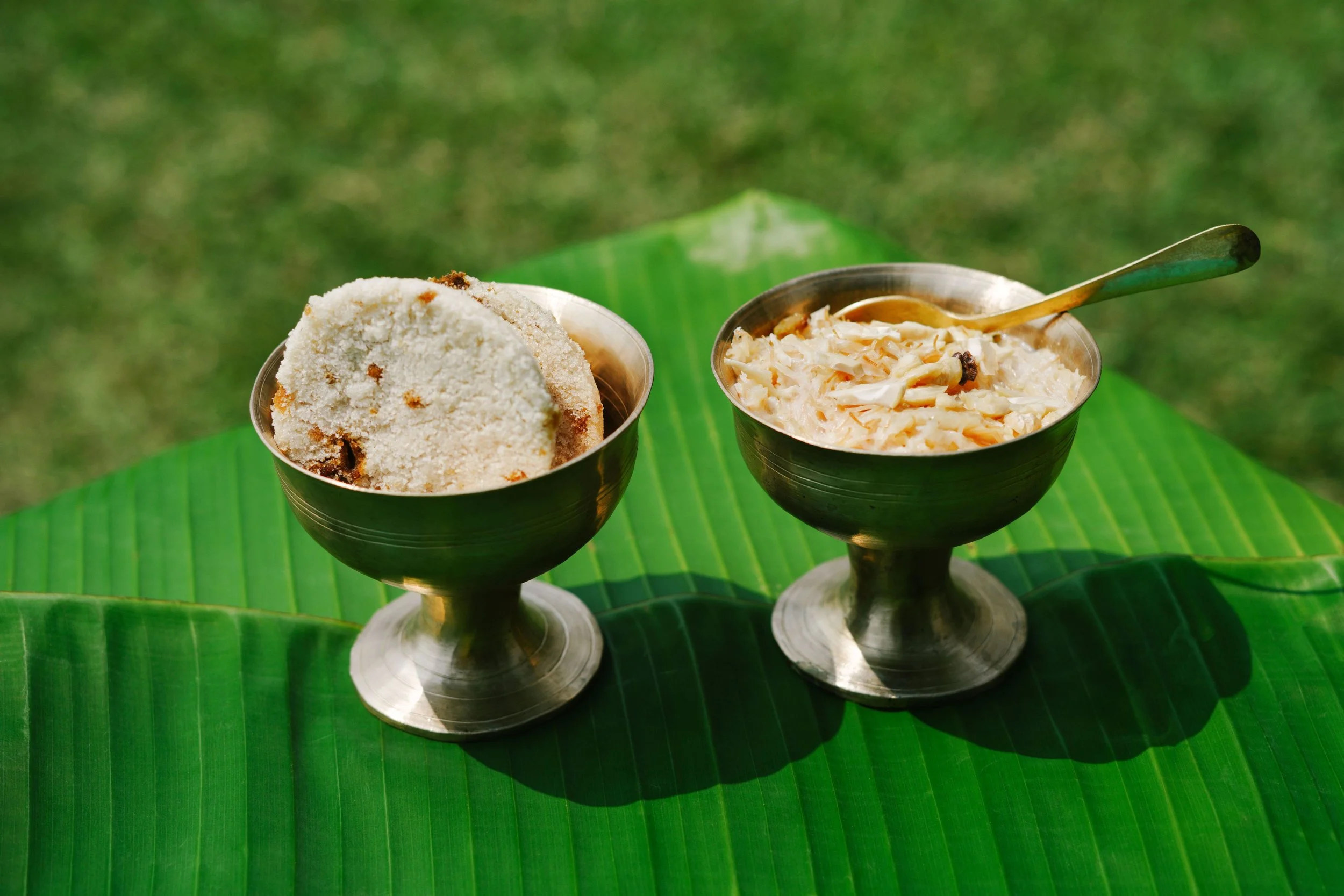
Steamed rice cake with coconut and jaggery served alongside sewai cooked in milk with nuts and spices.
I have also come to look at my plate not as confusion but as proof that identities can coexist, and that flavours can live together without erasing one another. It is a sign that love has space to thrive in food, even when traditions diverge.
If I think of food as an archive, then my kitchen is full of love letters, and each dish is a snippet of memory that I fully cherish. The pulao is a letter from my father’s side, written in cardamom and fragrant meat. The chicken curry and the raisin cake are my mother’s Christmas card, carrying warmth. The zabrang is a note from nature, the sewai a poem of festivity. Together, they make an anthology that is messy, incomplete, but profoundly alive.
My family’s kitchen conveys memory as an ever evolving narrative; not grand, but full of flavours that remind me where I come from, and where I belong.
Tamanna Rafique is a DoP from Assam, based between Delhi and Mumbai. Her interests lie at the intersections of environment, identity, culture, folklore, and food, and she extends this inquiry through writing.
ALSO ON GOYA