A Love Letter to Singapore's 'Point-Point' Rice
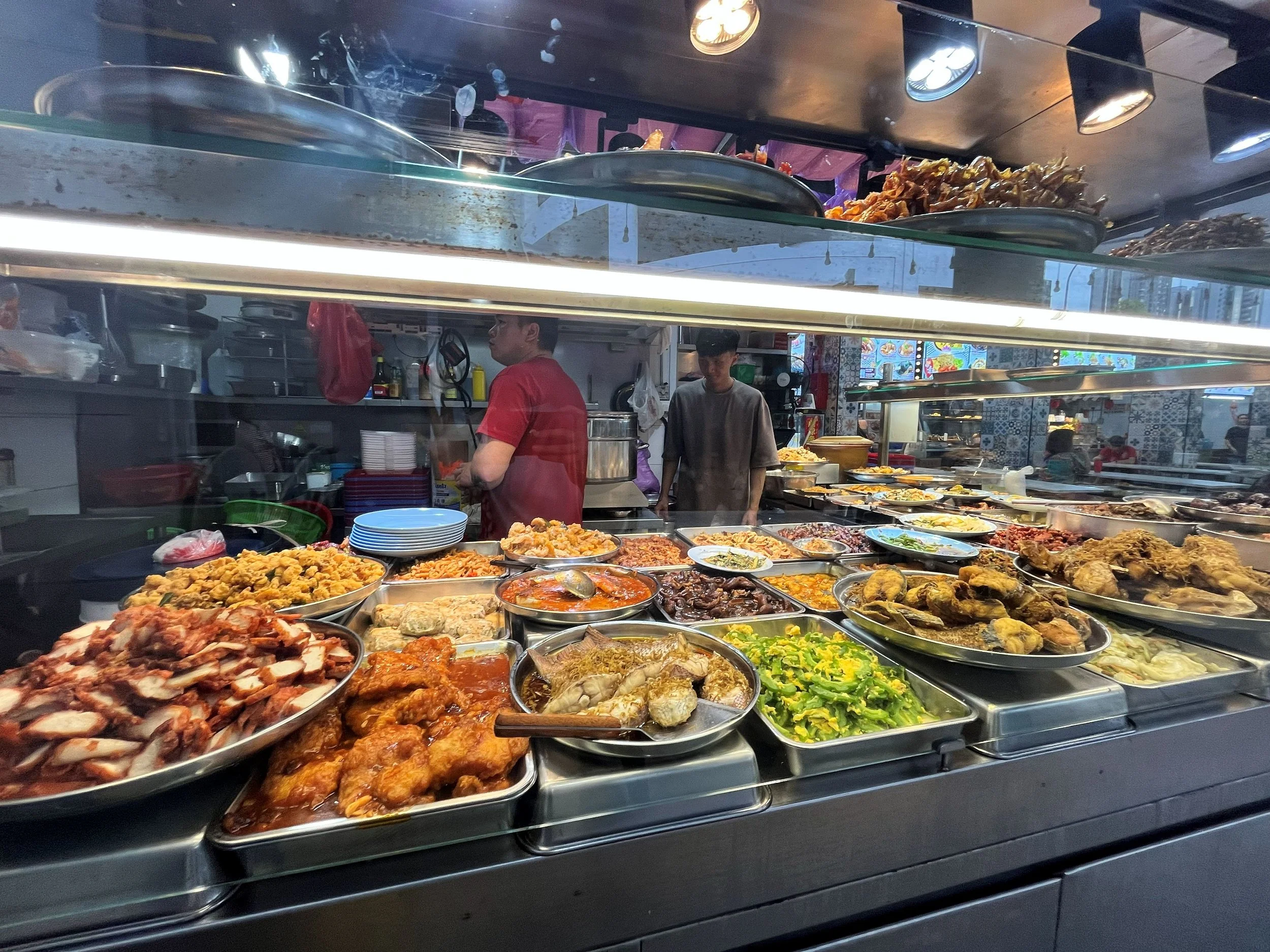
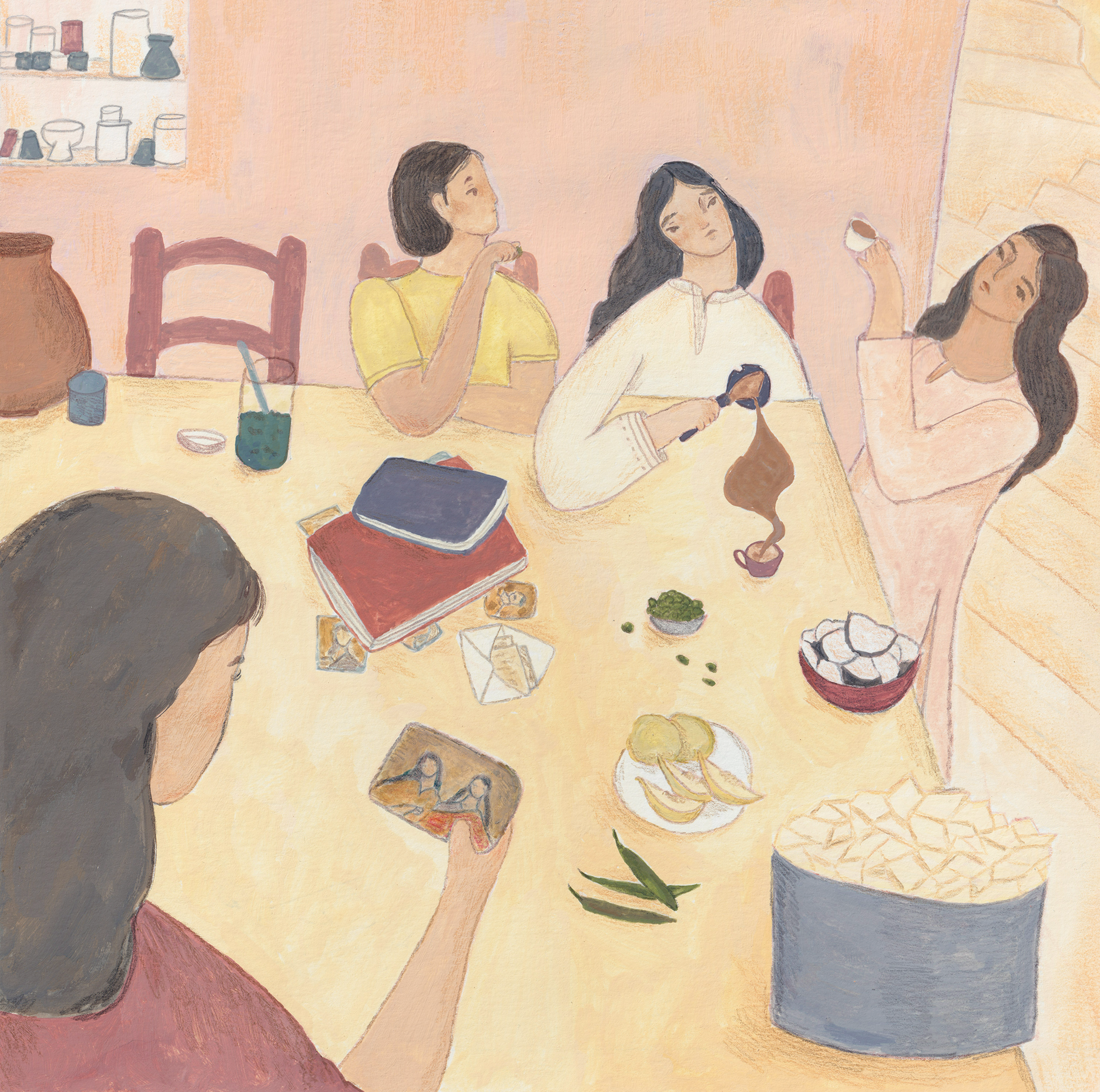
Can a plate of Economy Rice, or Point-Point Rice as it is affectionately known, reveal the little ways we belong to a city that is constantly remaking itself? Jayashree Panicker reflects on the everyday ritual of pointing out dishes to accompany rice, and how it holds ideas of home and belonging in Singapore.
I have a love-hate relationship with what is known in Singapore as Economy Rice or cai fan, affectionately called “Point-Point rice”.
The name refers to the act of ordering food, in which one points at trays of curries, vegetables, meats, and gravies to assemble a meal. It is not a single, specific dish, but more accurately, a ritual of eating in Singapore and Southeast Asia: a plate of rice paired with a selection of dishes, vegetables, meats, and curries, to create a deeply personal meal.
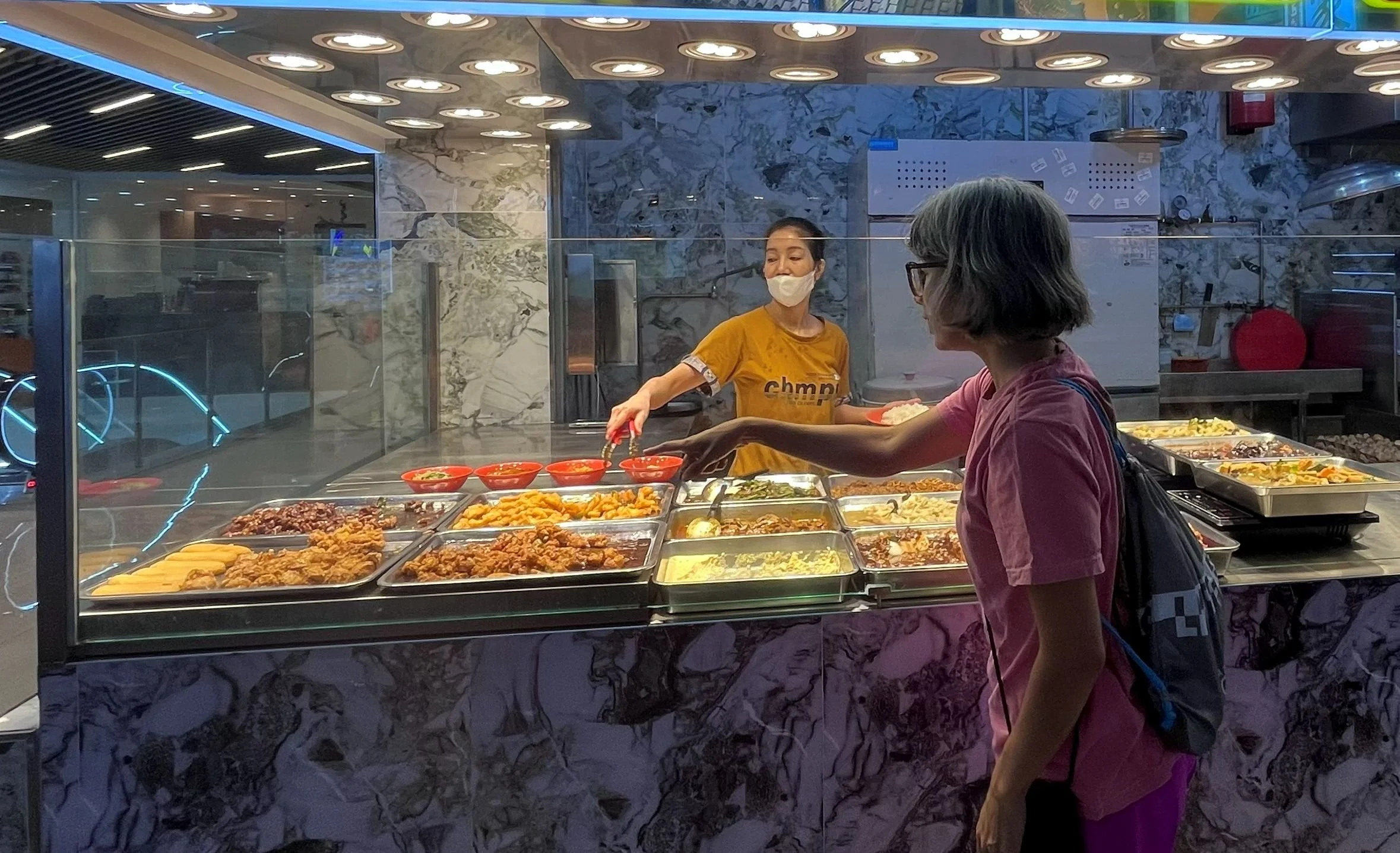
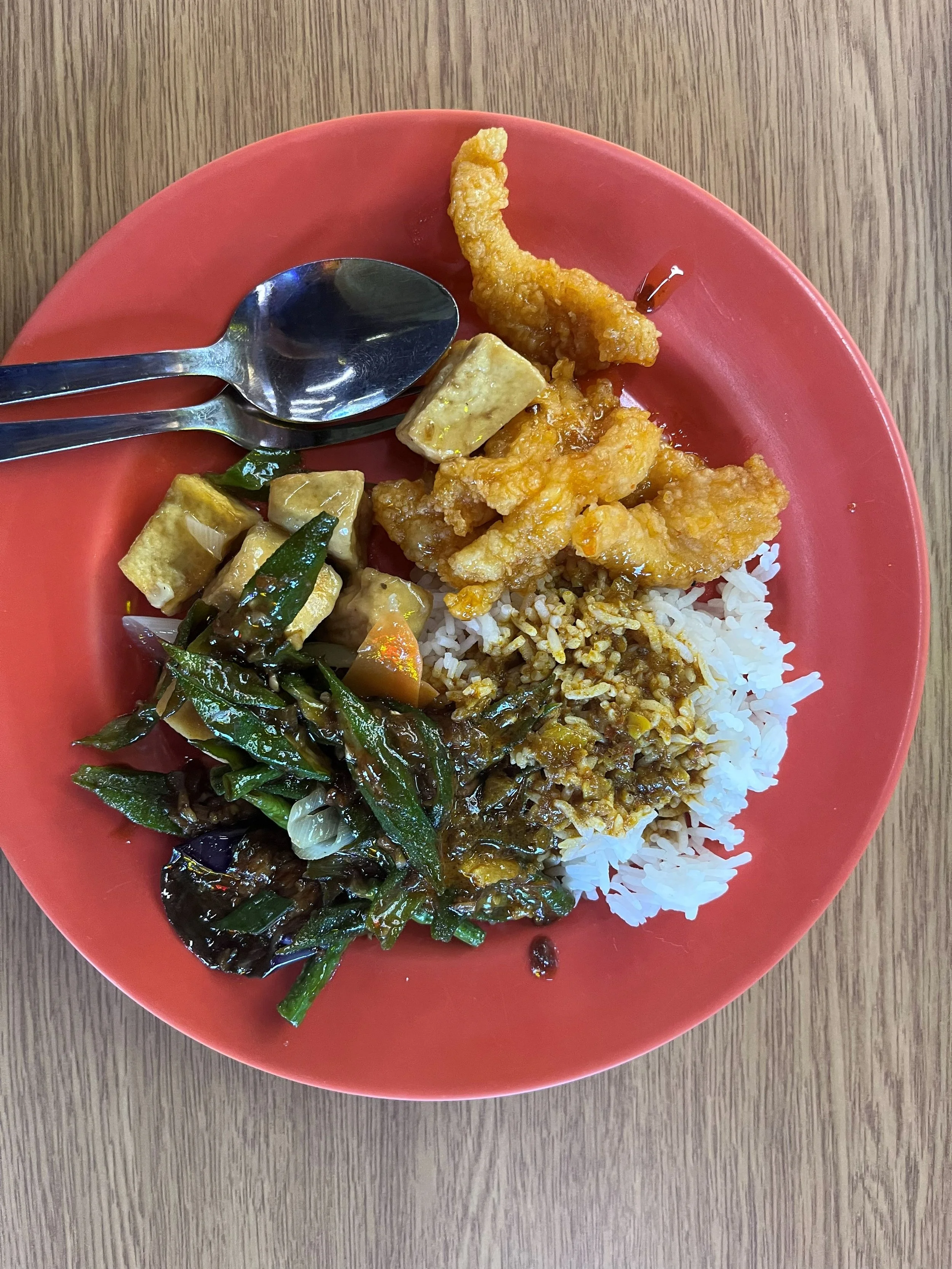
This way of eating shows up across local cultures from cai png to nasi padang. It is typically what I, and many people I know turn to when we don’t know what to eat at a hawker centre or food court; a convenient fix rather than orchestrated gastronomy. The permutations feel endless — “one meat, two veg,” and beyond — grounded in the idea of a balanced meal. For someone who grew up on rice, this way of eating feels only natural.
Yet, I have also felt spurned, having been overcharged for a plate more than once, impatiently tsk-ed at by brusque servers for hesitating a breath too long in front of the trays and frazzled by the pressure of having to know exactly what I want well before my turn. I am not alone. ‘Economy/Point-Point Rice Anxiety’ is a real thing. Cookbook author, pastry chef, and founder of the Food Museum Singapore, Yeo Min, confirms that she too feels “mildly anxious” when its her turn to order. There are social media guides devoted to decoding the Economy/Point-Point Rice ordering system. Local musicians and influencers have taken to airing the frustrations of ordering in music videos and parodies. There’s also the gripe about its mysterious pricing: how a piece of fish, or even a few bits of mince folded into a vegetable or egg stir-fry, can send the total soaring. At times, ordering feels akin to submitting to a kind of private divination.
In Singapore’s food lore, where hawker fare has reached Michelin-star heights and dishes like laksa and chicken rice are celebrated worldwide, Economy/Point-Point Rice is unremarkable, yet a staple we unhesitatingly take for granted.
Origin Stories
The concept of Point-Point Rice lacks a clear origin story. Food author Christopher Tan notes that nearly every rice-eating society has its own version of a meal built around rice and accompanying dishes, from nasi padang to nasi campur. After all, Singapore is a port city formed by the movement of people, goods, and habits. Food traditions did not arrive fully formed, but evolved in relation to one another, shifting ingredients, flavours, and context all at once. For example, within a cai png stall itself, curries and Southeast Asian dishes sit comfortably alongside Chinese-style braises and stir-fries, reflecting how these influences have overlapped.
There are glimpses of how Economy/Point-Point Rice came to be. For instance, Yeo points to a post-war pragmatism: affordable, home-style meals sold with a guaranteed meat portion. Content creator Bertam Yang, based on independant research, believes that the origins of Economy Rice were to really feed the public on a mass level during the post-war period. Christopher observes that even the term “cai png” in a hawker context arises only in local newspapers from the 1970s or 80s, suggesting it may not have been consciously recognised as part of Singapore’s ‘local food’ repertoire for that long. Essentially, it is, as Singaporean, US-based writer and cook, Lim Tse Wei suggests: a mirror of how we might eat at home — rice at the centre, with dishes arranged around it. Perhaps one way to define this concept is to consider what it means to people.
For instance, Christopher further shares how Point-Point Rice is “outsourced food heritage” in an era when fewer people have the time or resources to cook multiple dishes for their families at home. Additionally, Bertram notes that affordability lies at the heart of Point-Point Rice; its essence is in feeding the masses at a price point that remains accessible.
How to Compose a Plate
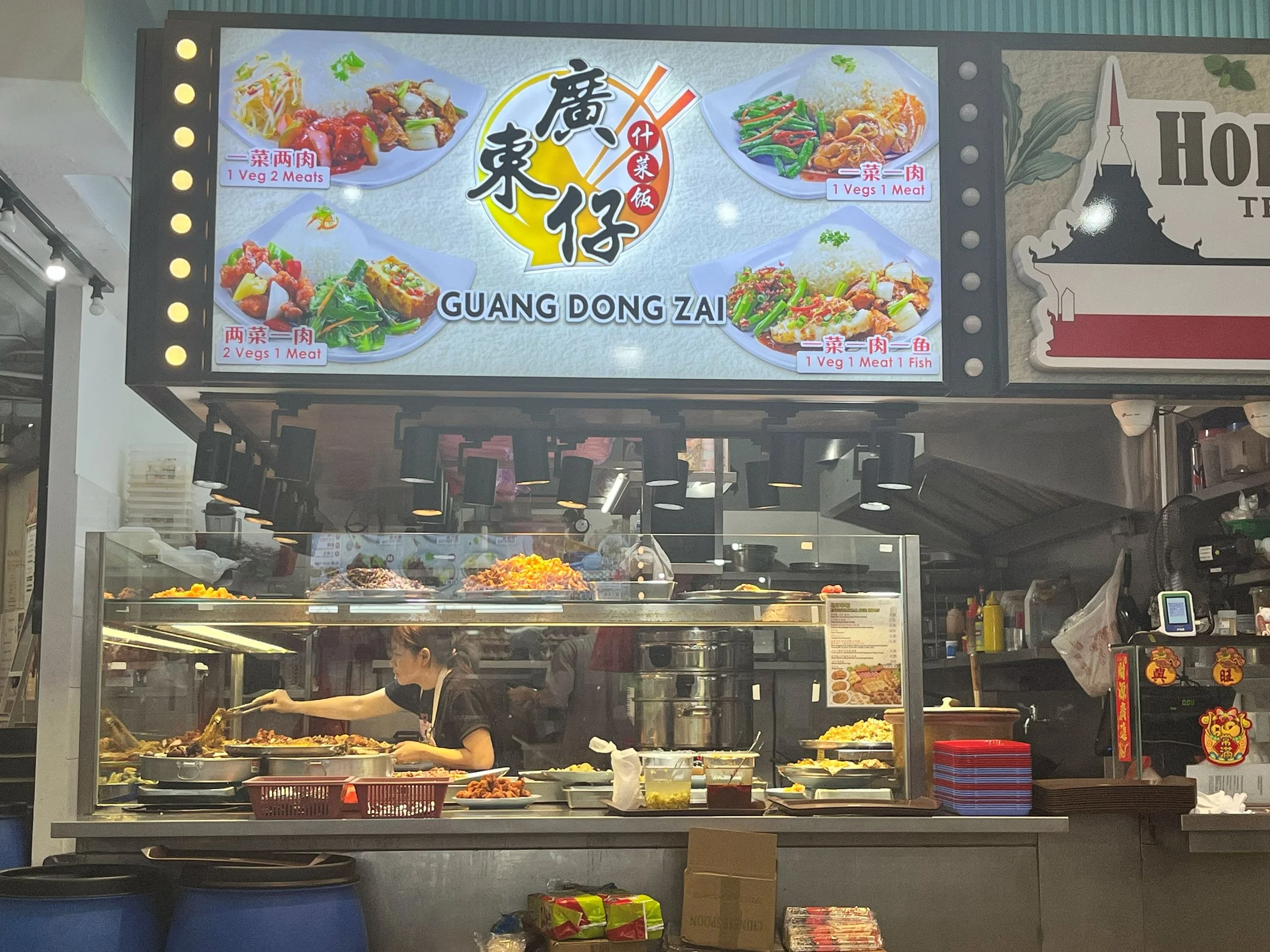
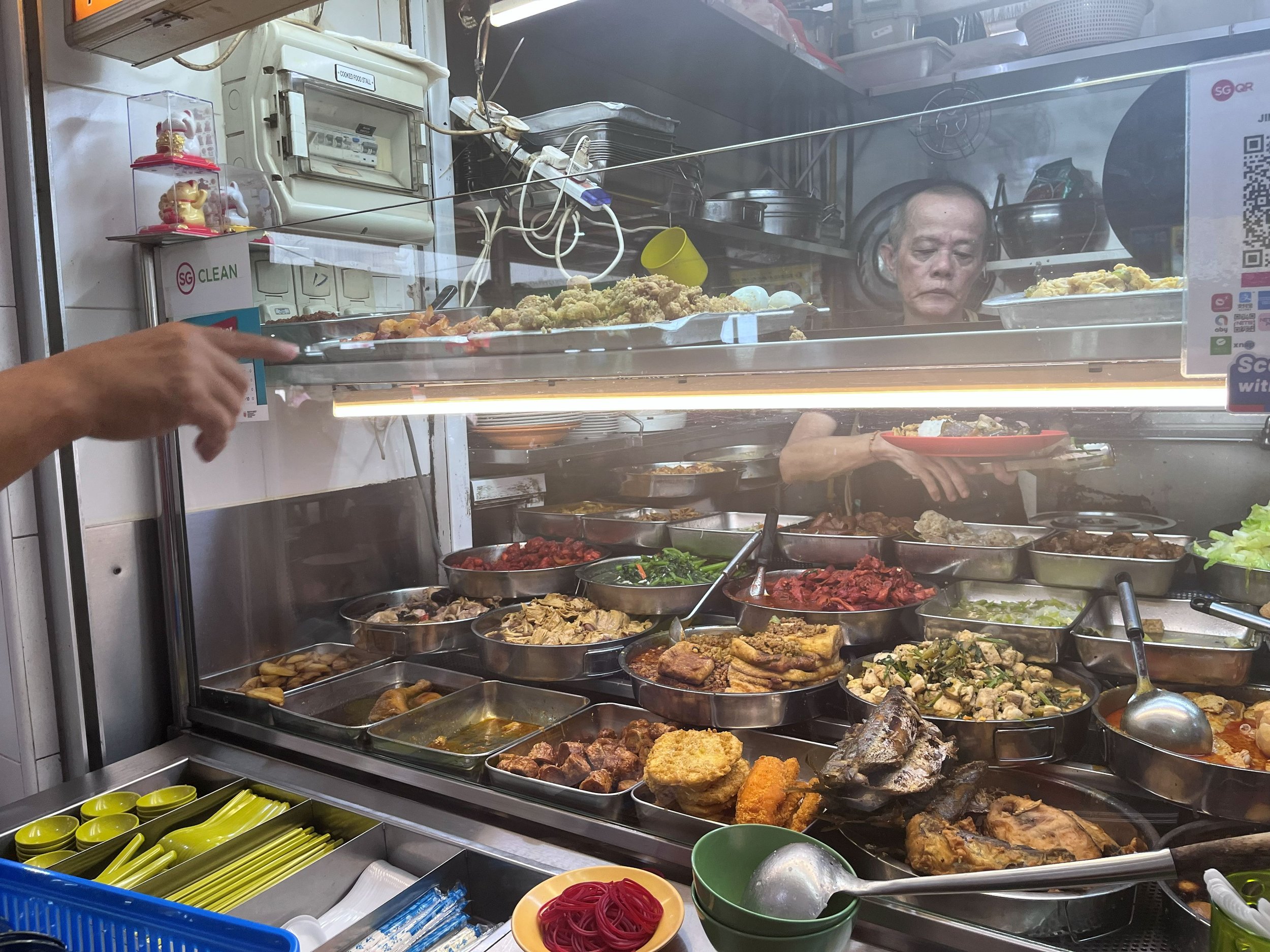
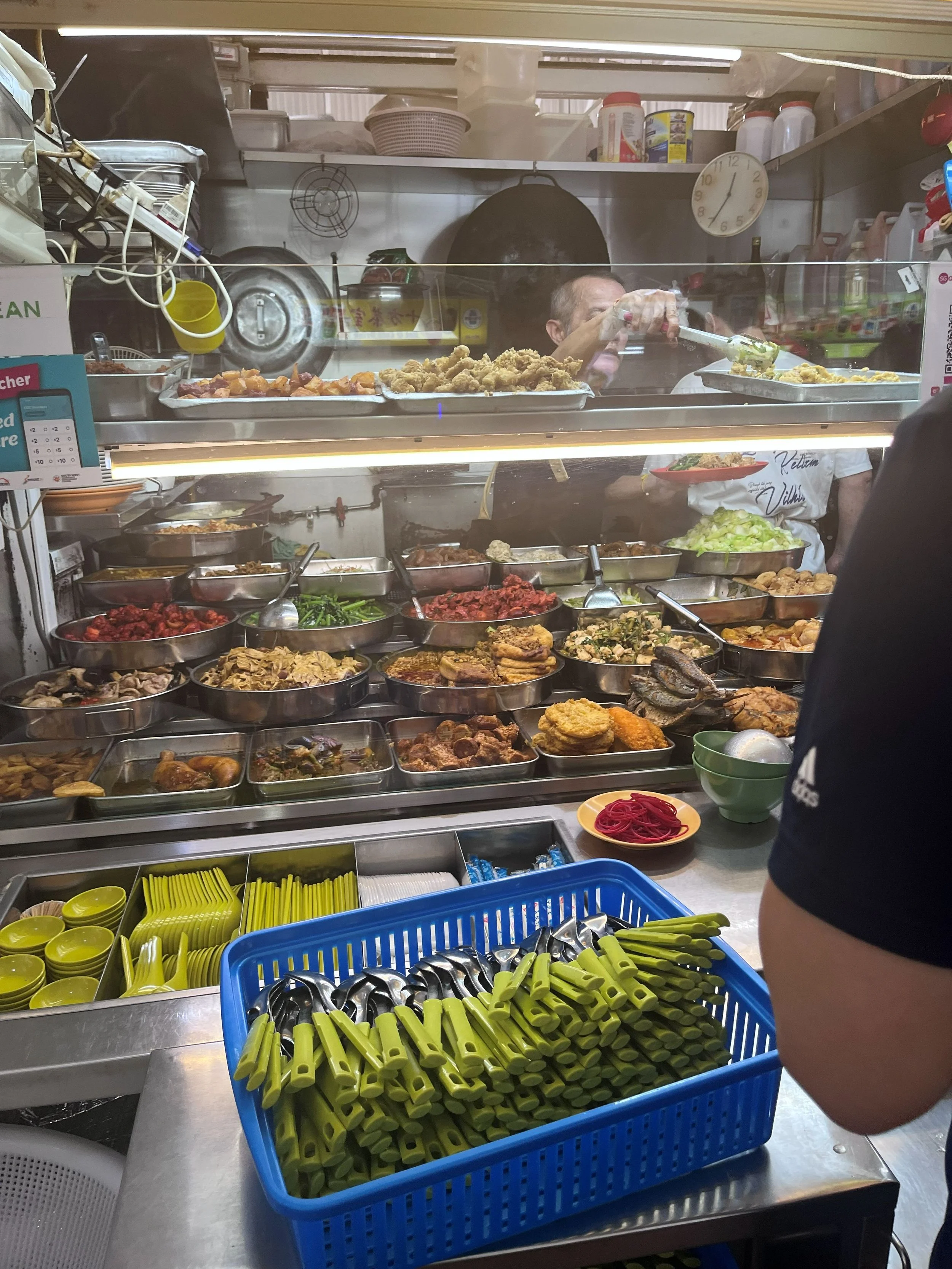
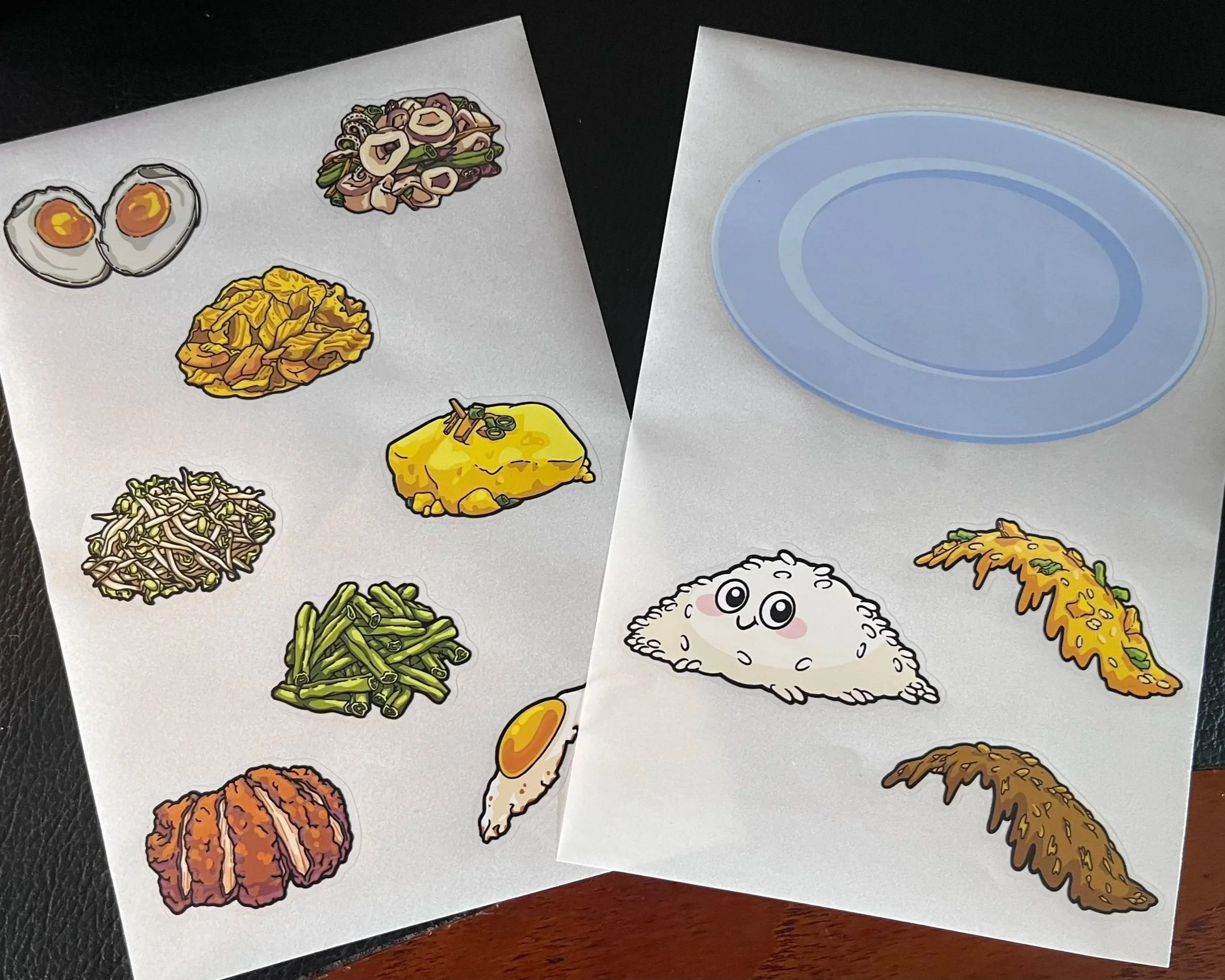
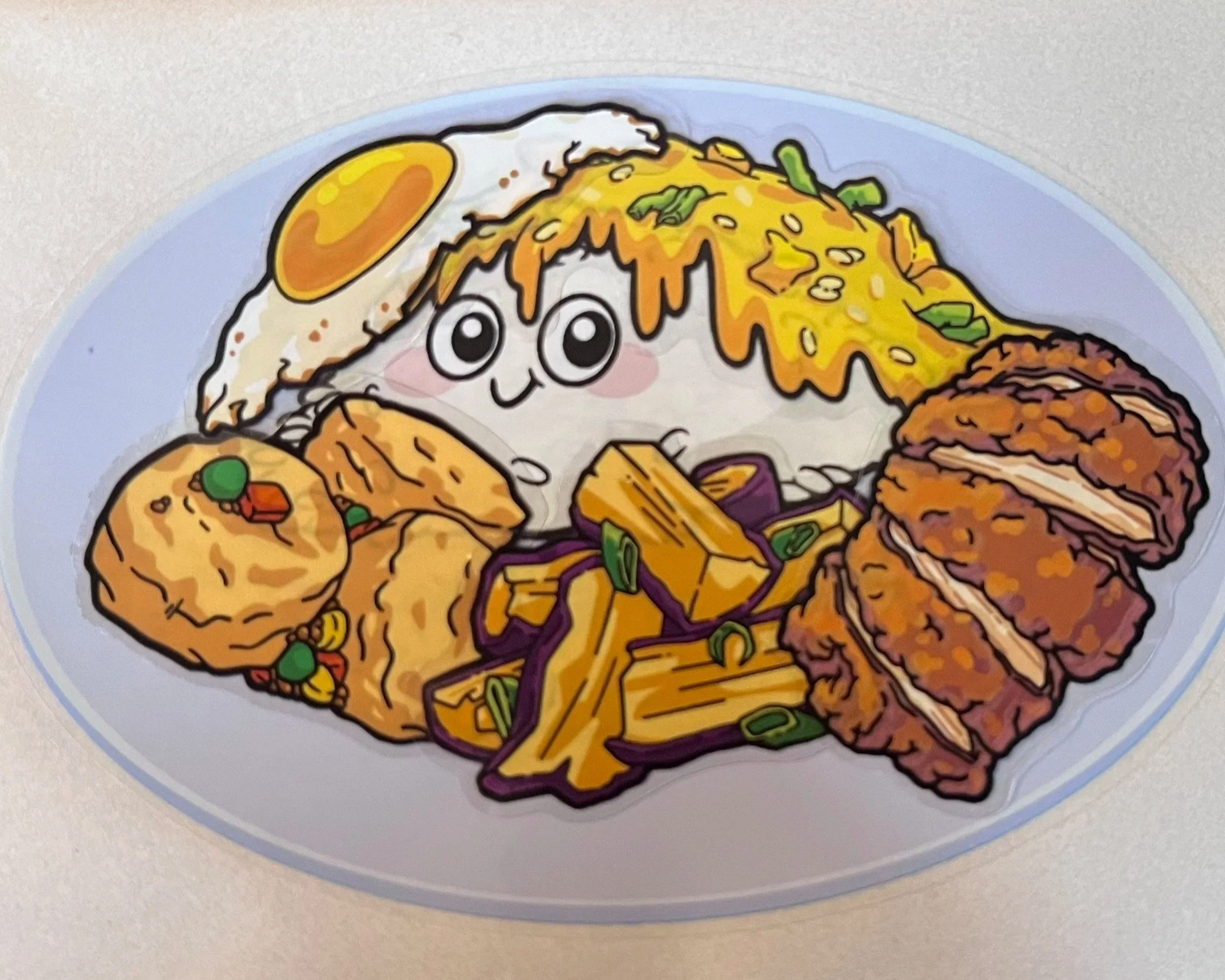
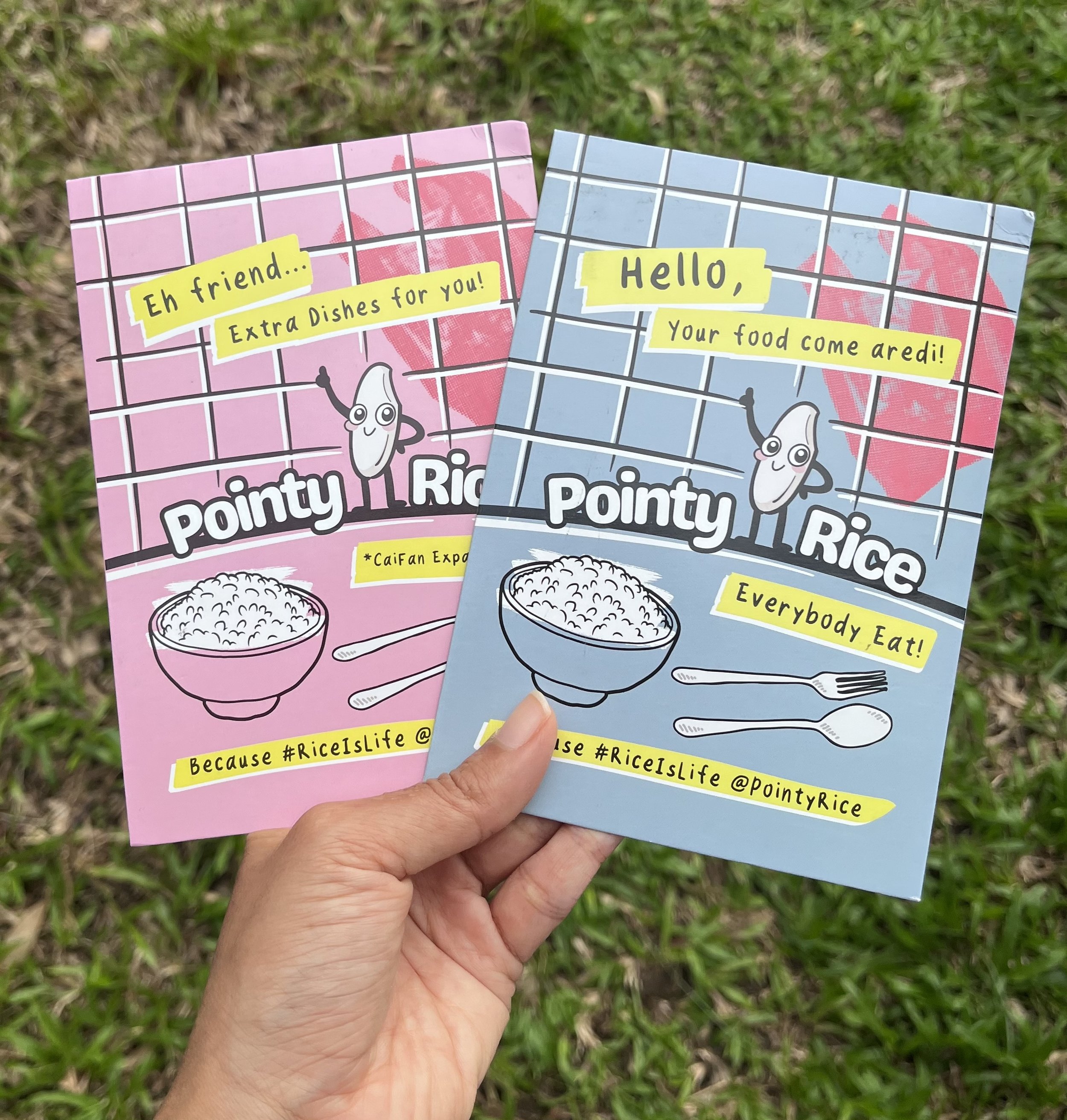
For many, composing a plate of Point-Point Rice is an art, maybe even science, guided by personal preference, how much one is willing to spend and what’s on offer. A typical cai fan stall, as Caitanya Tan’s PointyRice illustrations reflect, serves up a surfeit of fried meats, tofu in different forms, eggs, vegetables, and two familiar sauces: curry and a dark soy gravy. PointyRice is a celebration of Singapore's mixed rice, in sticker-form merch that captures the everyday experience of ordering it.
At nasi padang stalls, the spread features traditional dishes such as rendang, sayur lodeh (vegetables in a spicy coconut milk broth), ayam masak merah (chicken cooked in a rich and spicy tomato-chilli gravy), or sambal sotong (squid cooked in spicy sambal). At Indian stalls, similar combinations of home-cooking appear with some inflections, such as the familiar cabbage poriyal, potato-and-bean stir-fry, fried masala fish, and more. No two plates are ever quite the same, though I tend to keep within a familiar radius.
At a hawker centre, I might find myself inching forward in the snaking queue at an Economy Rice stall, trying to catch sight of the choice of dishes. My meal comes together in the moment, as I point out what I want, to the stall uncle or aunty: what I recognise, what I feel like eating, and what I am comfortable paying, usually somewhere between $3.50 and $4, where still possible! I hardly ever glance at the trays of fish, steamed or fried, wary of what it might cost. Instead, I default to a familiar structure: one vegetable, one tofu dish, one meat, with a portion of rice. There is almost always brinjal, usually cooked to silky perfection in spicy sambal sauce, or egg tofu discs in a light gravy; failing that, a bean curd dish. My choice of meat is whatever feels within reach, a fried chicken cutlet or a helping of glossy sweet-and-sour pork or chicken, and to finish, a ladle of curry sauce.
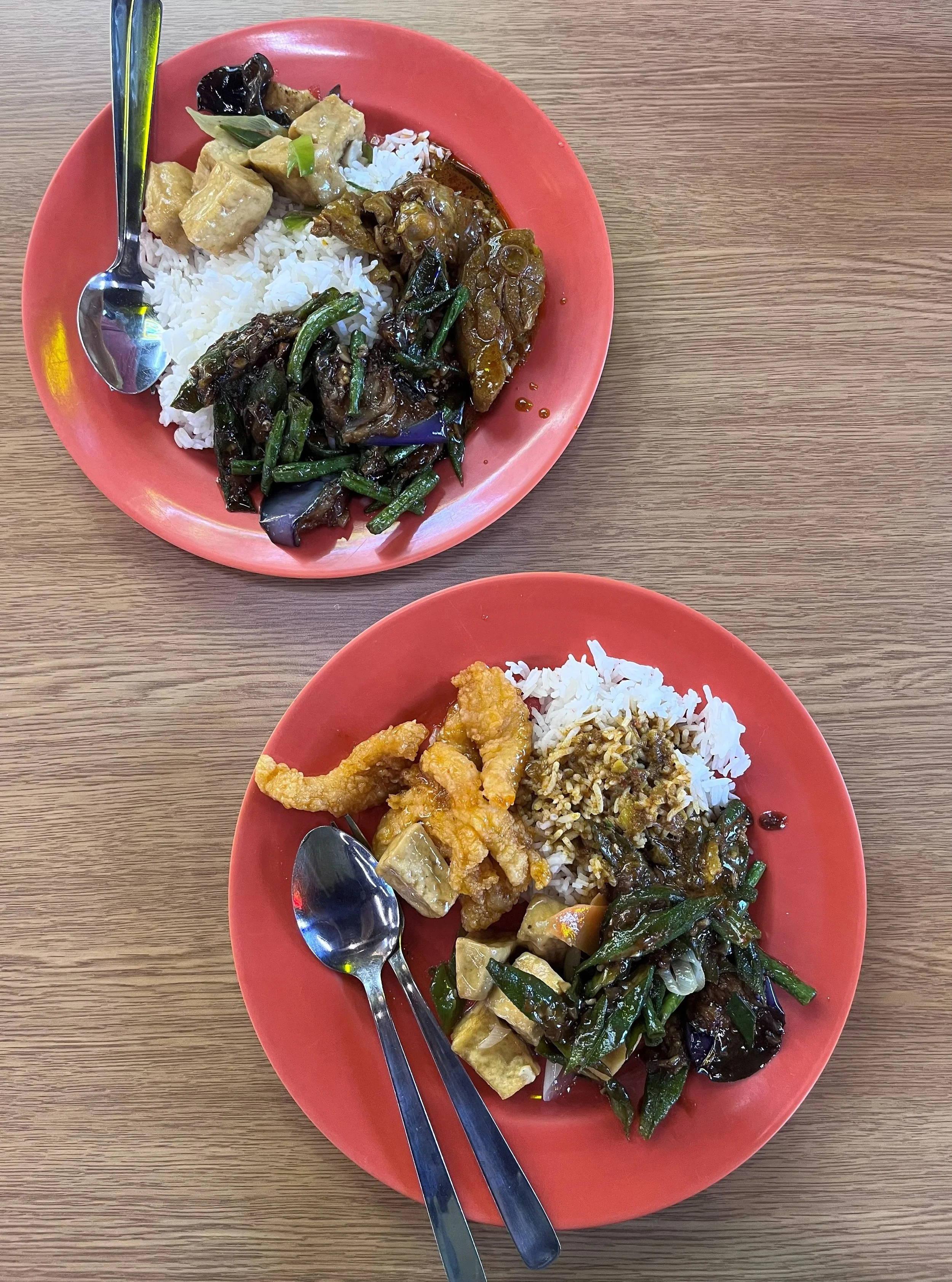
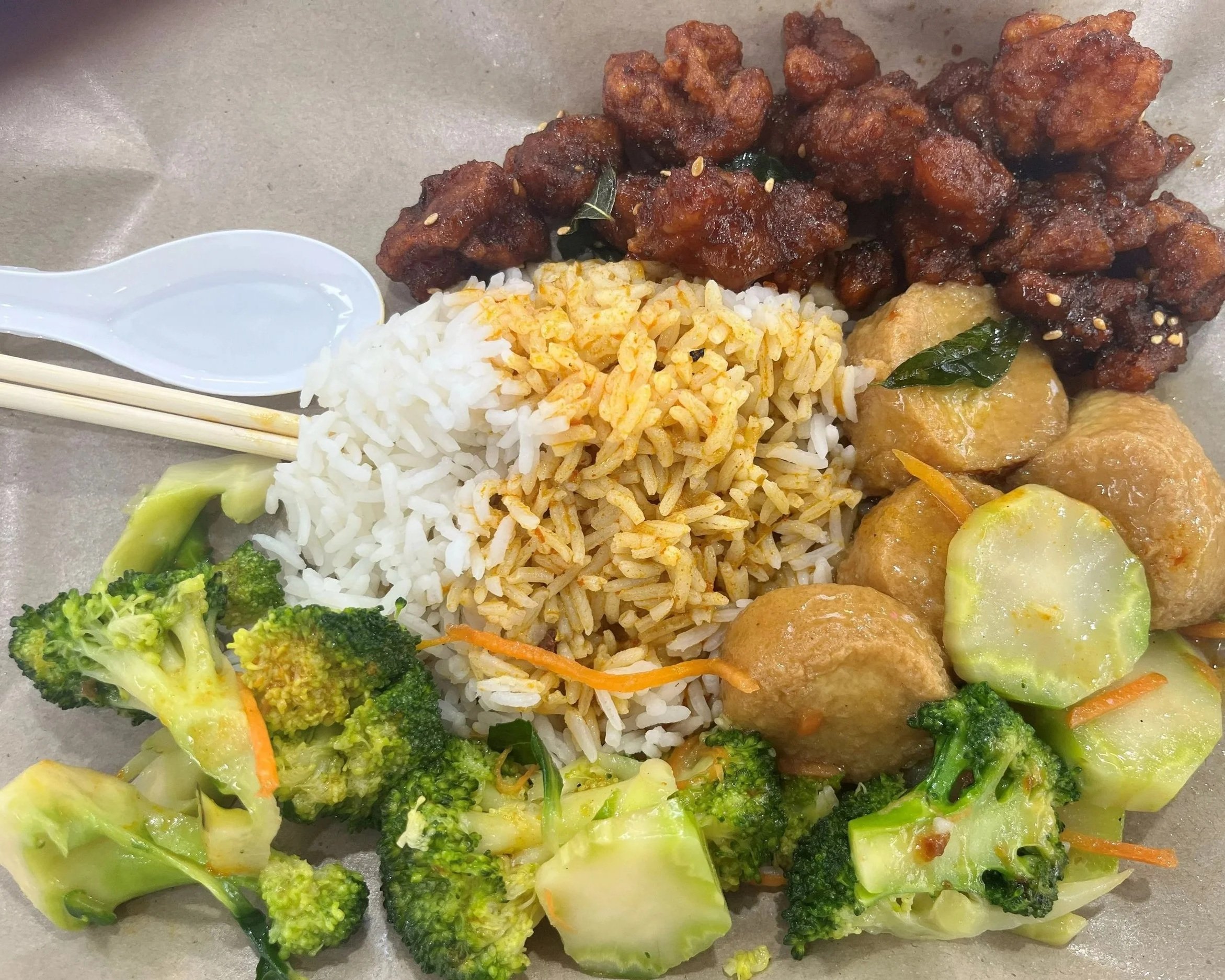
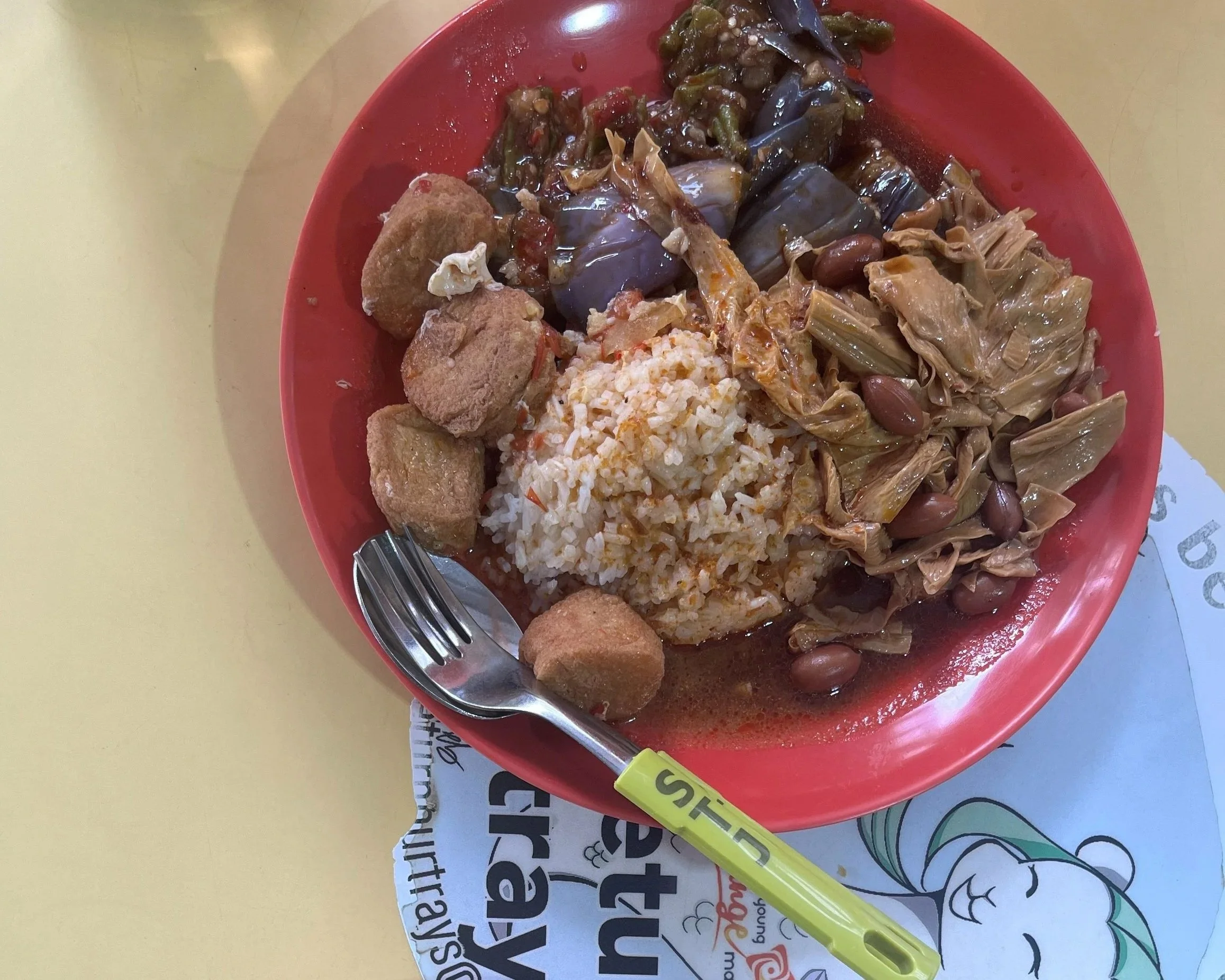
Yeo Min always reaches for brinjal, a leafy vegetable, and a fried meat, with curry (“a must”), and also avoids steamed fish entirely for that same understanding that it might “burn a hole in [her] pocket.” For Caitanya, her default plate instinctively recreates the childhood memory of her parents’ cooking. Her typical order of curry cabbage, egg, and brinjal mirror those early meals more closely than she first realised. Tse Wei recalls something more functional: Economy Rice was a regular default during his school years, with vegetables, three-cup chicken, and stewed tau kwa (extra-firm tofu), all eaten without much thought. “It is a default,” he nods.
Tay Jia Ling, co-owner of Curry Kong, grew up around Point-Point Rice. Her parents ran a cai png stall, where work meant survival: long hours, tight margins, and the daily labour of feeding others. “For them, it was really about survival — something that could make a living for the family,” she shares. One customer began eating at her parents’ stall while pregnant, and later returned with her child, who also grew up eating the same dishes. After more than a decade in the tech industry, stepping away from corporate life and returning to food was not straightforward. Her parents, who had spent years building a livelihood as hawkers, initially questioned the decision. But when she and her brother chose to continue, they found a way to build on their parents’ legacy.
Curry Kong, the home-based venture they now run, builds on the foundations of cai png, reshaping them into another iconic dish called ‘curry png’: wholesome pre-selected rice sets paired with a curated selection of dishes drawn from their family’s recipes. They distilled their parents’ original repertoire of around 30 dishes to seven. “We didn’t want to reinvent the wheel. We wanted to bring the legacy back,” she explains. Their menu now features rice bowls with a choice of chicken, mutton and squid curry. Each rice bowl comes with a portion of rice, crisp cabbage, a golden-fried egg, and a choice of curry. At the heart of it is their curry, made with the same sauce as the curry chicken itself, not a diluted version as is often served at cai pngs, which is often made used to stretch volume. Their decision limits scale but preserves flavour. “It’s very hard to find the old-school taste in Singapore now,” she says, as older hawkers retire without successors. The dish she remembers most from childhood is a simple one: sliced pork and potatoes in brown sauce, something she no longer finds in stalls today.
A Change of Intention
What changes is not only flavour, but a certain kind of specificity and the original intention of Economy Rice. For example, Christopher observes that what was once a landscape of independently run stalls has, in some cases, given way to corporatisation. “Many cai fan stalls have exactly the same range of dishes, each of which looks the same no matter which one you go to,” he notes. The older ‘uncle-and-auntie’ stalls, much like the one run by Jia Ling’s parents, moved to their own rhythms, each with its own way of doing things. This may be why so many dishes feel at once familiar and yet never quite identical.
Even as one thing recedes, other forms emerge. Caitanya notes, “Evolution is part of Singapore’s DNA. It makes sense that cai png would shift, repackage, reappear in new formats. And there’s space for that. But there should also be space for what’s familiar.” These days, chain-style outlets offer the same convenience, and a pay-by-weight concept offers some clarity. At the other end of the spectrum, one cai fan stall in Singapore has even entered more premium territory, with options like Angus beef cubes or unagi pushing plates towards $20. For Bertram, this feels like a departure from Economy Rice’s original urgency: the need to feed the public. He continues to return to certain stalls. “As long as there is the spirit of serving the [masses]”, where value and accessibility remain intact.”
Yeo suggests that what defines cai png is not its pricing model but its relationship to home cooking. “It has to reflect the dishes we enjoy at home to feel like genuine cai png,” she says. Caitanya also adds that “In a city that moves this quickly, sometimes what matters isn’t what’s new, it’s what remains recognisable. And that’s true for culture, just as much as it is for people.” While the format may evolve, its meaning as something ordinary, familiar, and rooted in feeding many affordably is what makes Point-Point Rice.
For Caitanya, this ordinariness of Point-Point Rice is precisely the point. Her project, Pointy Rice, translates this way of eating into playful form through stickers and illustrated ingredients, breaking the meal down into vegetables, meats, and gravies, each recognisable. It becomes something you assemble piece by piece, much like the act of ordering itself. “The things that actually make us feel seen are often small, ordinary, and overlooked,” she says. “It’s a personality test disguised as lunch,” she adds; a reflection of what we choose, what we avoid, and what feels familiar also makes up who we are. Yeo Min jokes, perhaps half-seriously, that one could build a dating app based on cai png preferences.
Here’s something that only struck me as I contemplated this way of eating: this kind of savviness, this palate literacy, signals a sense of belonging to a place and time. For those unfamiliar with its social mores, the pace, the language, the expectation that everything should already be understood, the experience can be disorienting. Tse Wei recalls how his wife, who is not Singaporean, remains “paralytically afraid” of ordering from such stalls. Even after years of exposure, the memory of her first attempt lingers: a long queue behind her, the pressure to decide quickly, the need to have everything explained on the spot by a brusque server. To stand before the trays and recognise each dish is to inhabit a shared, unspoken knowledge. It is, as Tse Wei suggests, a reassuring reminder that we belong, that we know how to move within this system without needing to be taught. Caitanya Tan puts it another way: “It’s one of the few systems where you need to belong first to understand.” It is not just about the food, but about what surrounds it: the gestures, the shared shorthand, the familiarity. Among locals, she notes, it becomes a small nod that says, “You’re from here too.” In a Singapore defined by constant change and multiple ways of being, it offers a small and steady sense of home however briefly.
I write this little time capsule, a love note to Point-Point Rice in the hole left by a recent, inexplicable closure of long-standing nasi padang institution, Warong Nasi Pariaman. It shut after nearly eight decades, and was once described as the oldest surviving stall of its kind in Singapore. Naturally, a part of me wonders whether this way of eating will endure across local cultures. Having watched beloved food haunts disappear, it is hard not to feel that this too could one day slip away as hawker stalls dwindle and the conditions that sustain them change. And if one day this way of eating slips away or morphs into something else, I think of Auden’s ‘empty sky’ and wonder how long it might take to stop looking for what is no longer there; a small reflection, perhaps, of how I used to eat, who I was, a time when I belonged.
Jayashree Panicker is a Singaporean writer and literary translator, writing, translating, and chasing the in-between at jpanicker.blog.
ALSO ON GOYA