Learning Singapore's Love Language in her Teahouses
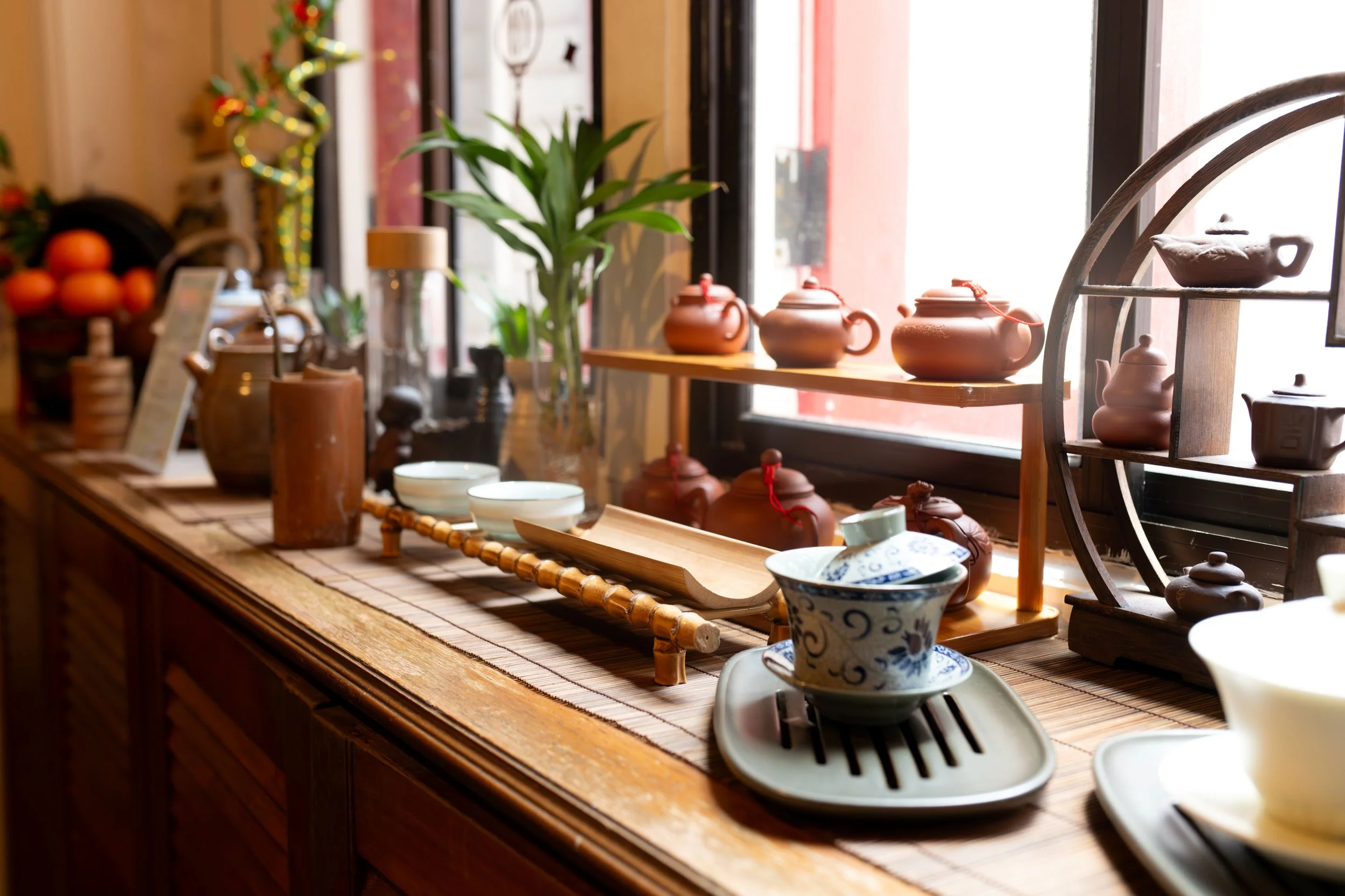
For Shradha Biyani, finding her sense of belonging in Singapore began with a cup of teh. Beyond the cup, she finds that Singapore’s tea culture is a vibrant landscape of brews, best explored in kopitiams and teahouses.
Like much else in Singapore, tea came to this island from many different directions.
Beginning in the early 1800s, it arrived through British colonial trade, with Chinese migrants from Fujian and Guangdong, followed by Tamils from southern India and Malays from next door. It came as cha in Chinese, teh in Malay, and thaeneer in Tamil, and seeped into the dailyness of Singapore life — from early morning to late evening, from a simple digestif to temple offerings, kitchen staple to prized gift.
When I moved here in the middle of the pandemic, the one familiar solace my desi heart found was teh halia — ginger tea, a close kin of cutting chai — brewed across the city, from hawker centres to kopitiams. I’d order it through a mask, hand over coins, and enjoy its familiar warmth.
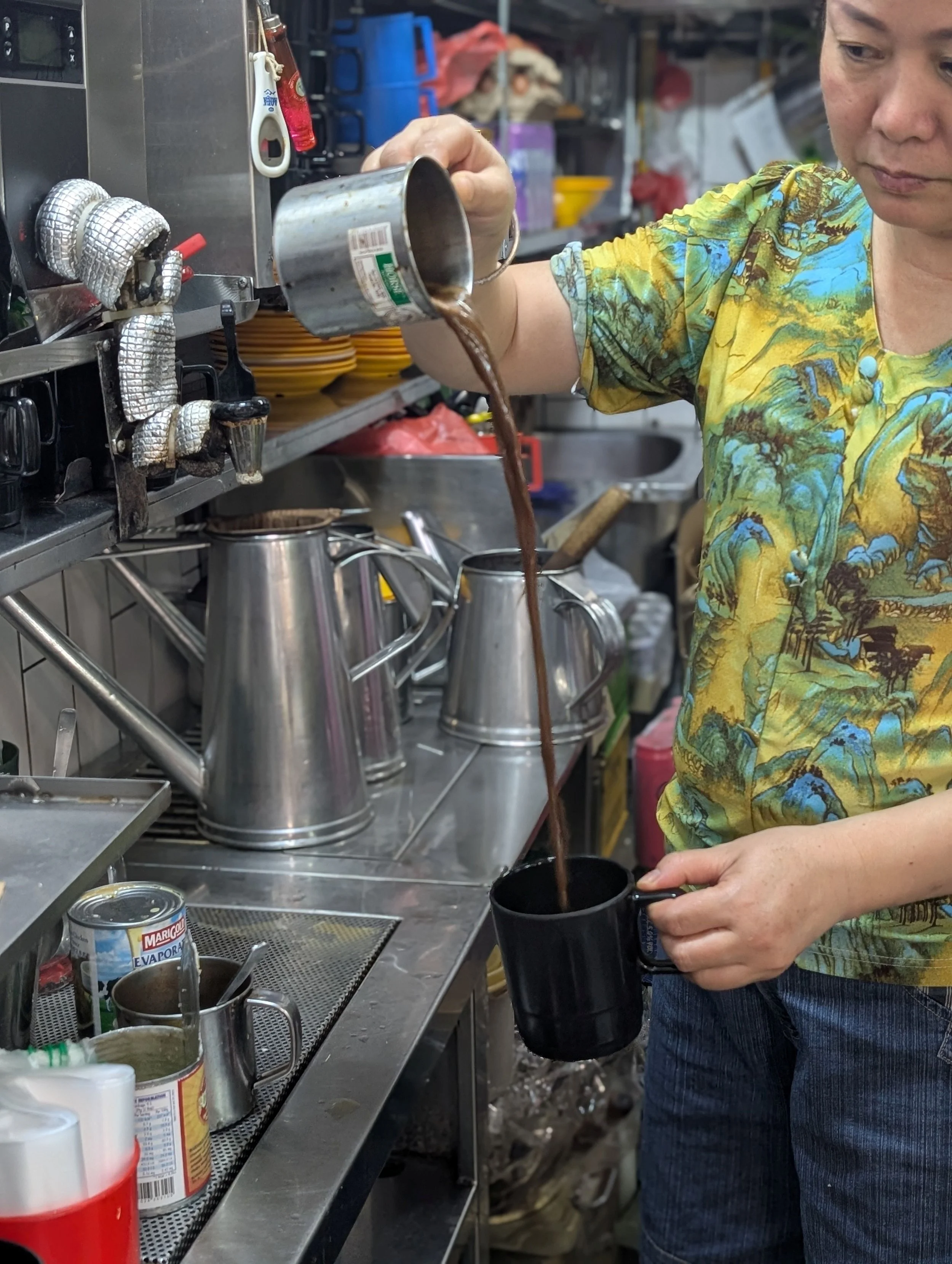
Kopitiams are casual street-side coffee shops. Photographs by Ashima Suri
Kopitiams are casual street-side coffee shops — kopi is Malay for coffee, tiam is Hokkien for shop — found all over this region, serving coffee, tea, and simple local fare. To order tea here is akin to learning a new language. The default is hot, sweet, milky, and usually made with condensed milk. From there on, you have choices: Peng for ice, O for no milk, C for evaporated milk, Siew Dai for less sugar, Gah Dai for more, Kosong for none at all, Tarik for pulled and frothy, Gau for strong, Pok for weak and Tapao/Dabao for takeaway. During my first few weeks, I fumbled and smiled. Eventually I learned to say, with some confidence, ‘Aunty, teh halia siew dai, tapao’ (less sweet, takeaway) and feel, briefly, like I belonged here. Getting your kopitiam order right is a small rite of passage.
You can stop in at the kopitiam before going to work, or sit under the fans with a newspaper, or with retired neighbours, sipping your tea from a porcelain cup and saucer with a floral motif, spending as long or as little time as you like.
But there is another kind of tea in Singapore altogether, served in old, tranquil teahouses, tucked away from the frenzy of takeaway cups and bags (that’s right, little plastic bags into which you can insert a straw).
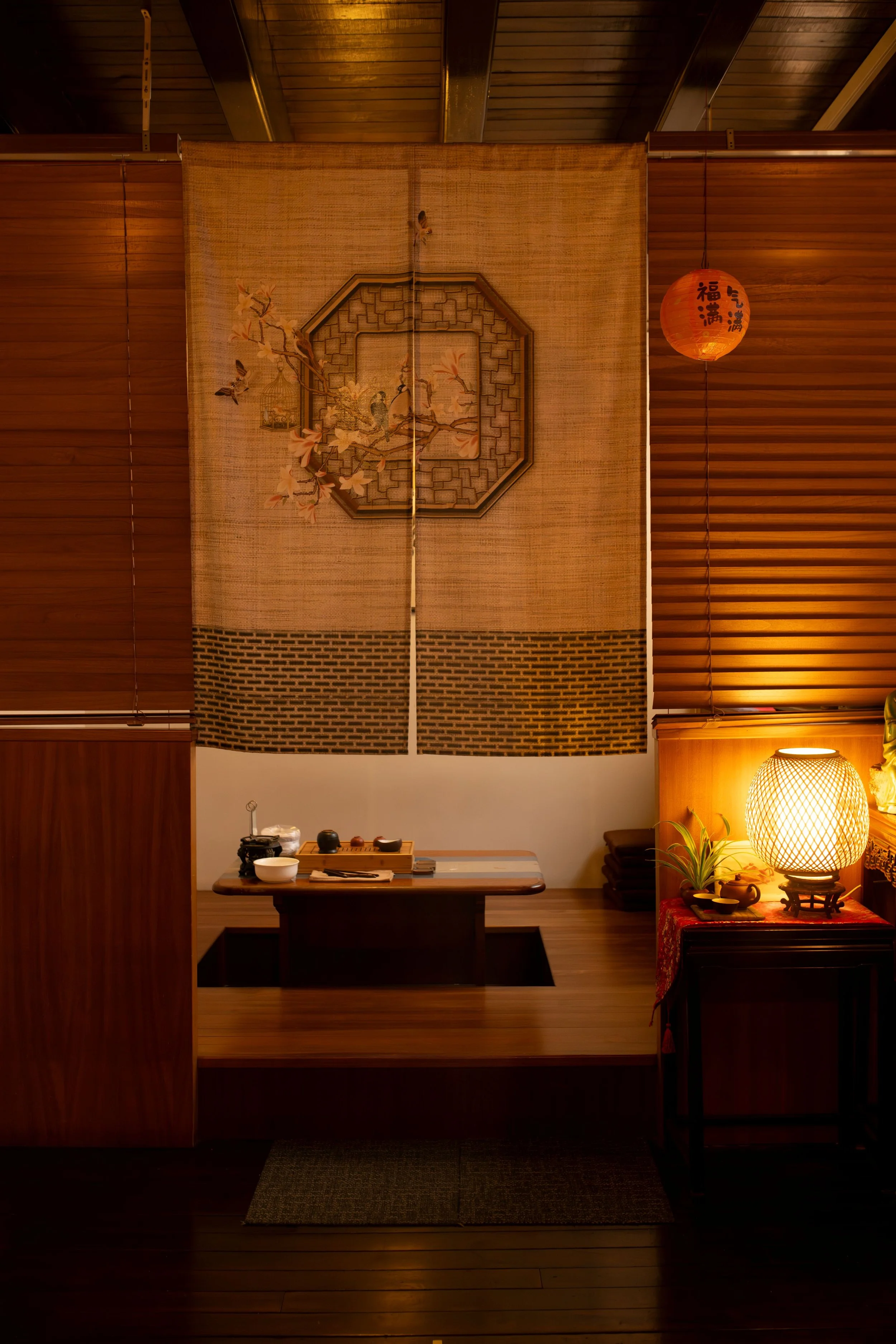
Tea Chapter is Singapore’s oldest and largest teahouse.
Entering Tea Chapter on Neil Road, Singapore’s oldest and largest teahouse, feels like entering a sacred tea spa. The ground floor sells tea; the upper storey serves it. We choose a Korean-style wooden booth with floor cushions and a low table. The soft lighting, Chinese calligraphy scrolls, and classical music helps us ease ourselves into a slower rhythm. For our party of two, we order the Imperial Golden Cassia, an oolong tea, along with sugared peanuts and a tea egg — a cracked egg boiled in tea leaves, spices and soy sauce for eight hours.
A young tea master enters our booth carrying a Gongfu tea tray, or cha pan, a slatted draining tray set over a deep bowl to catch the spills and overflows of this process. He sits with us at the low table, unfolding what looked like a miniature tea set, and begins to guide us through the process.
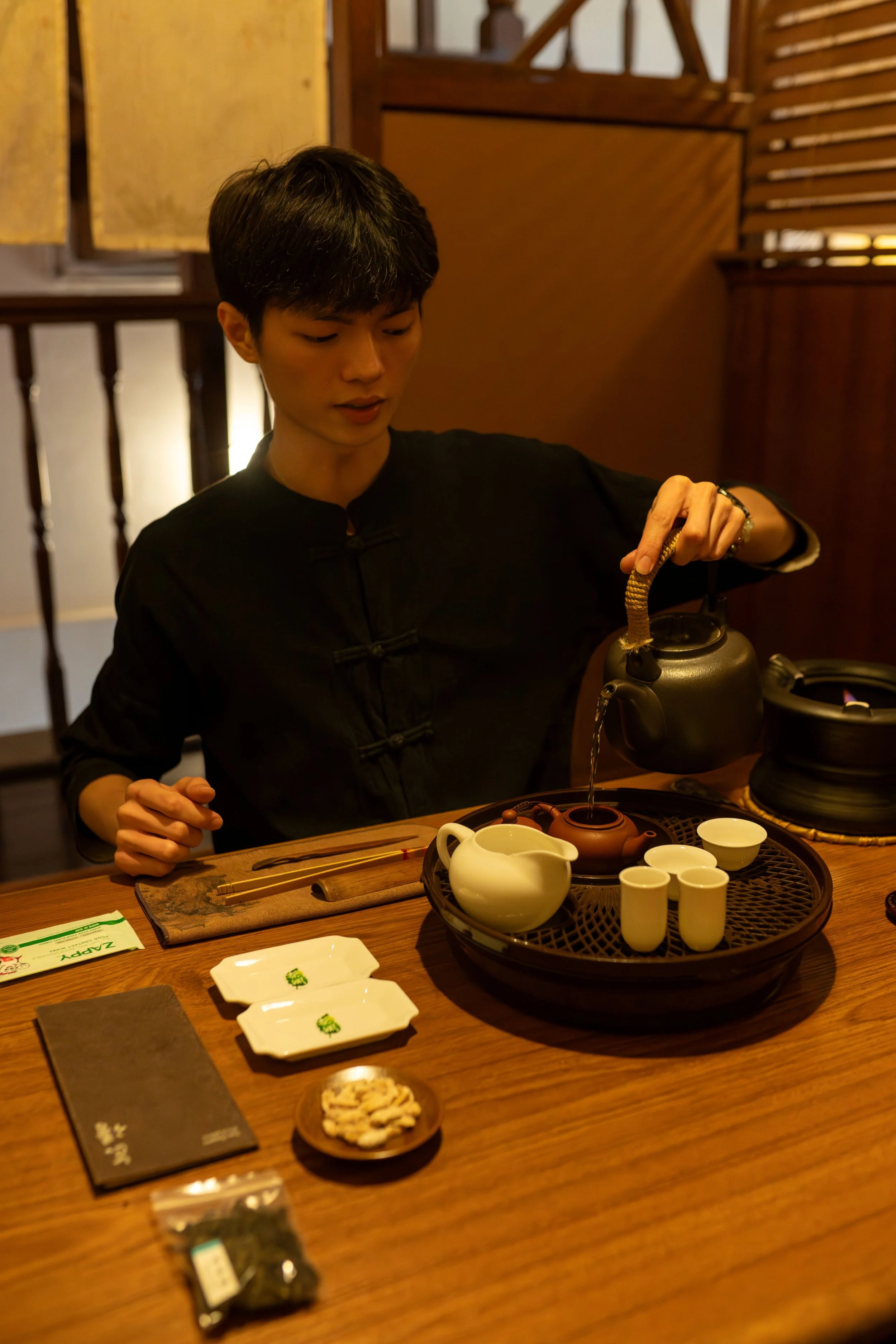
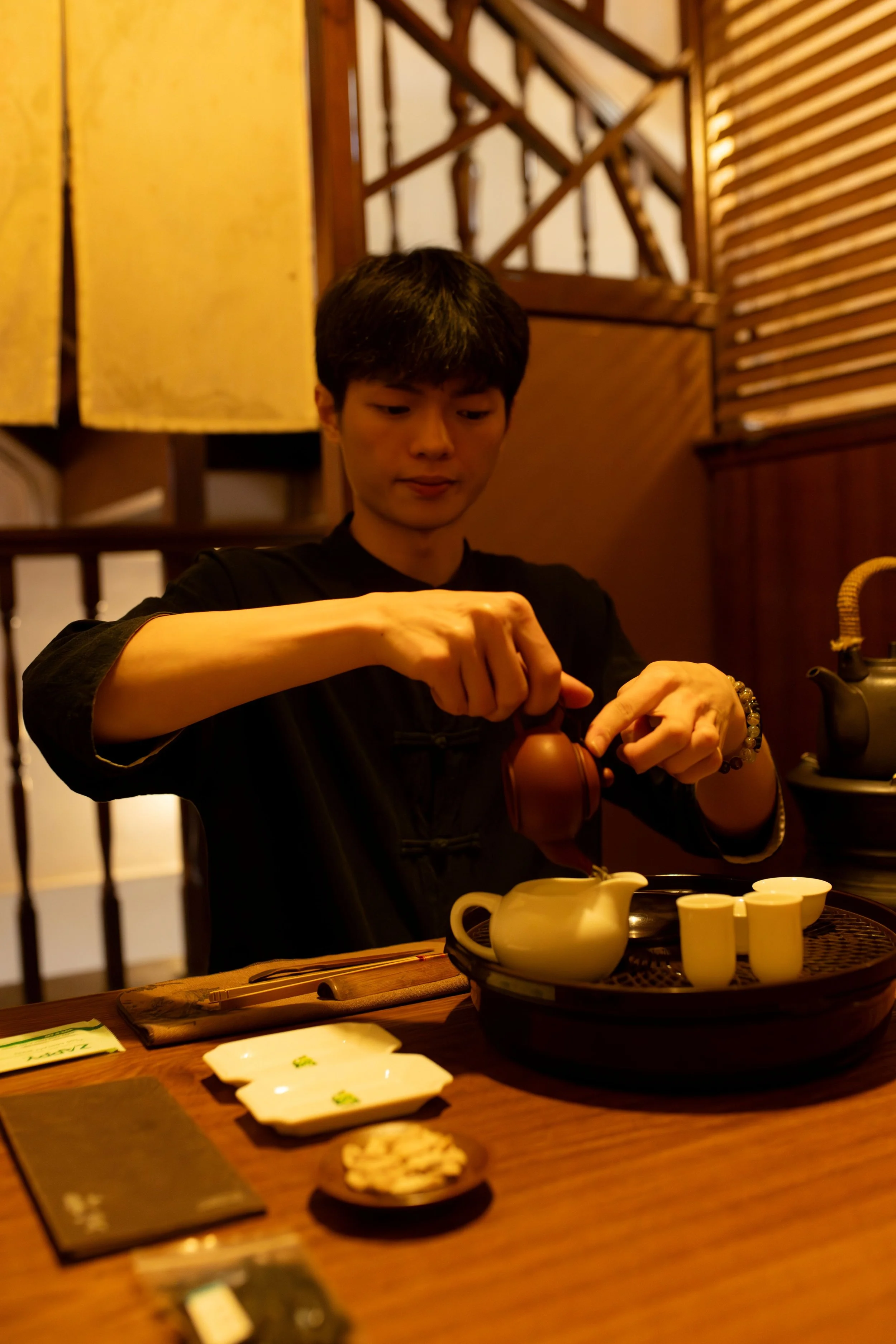
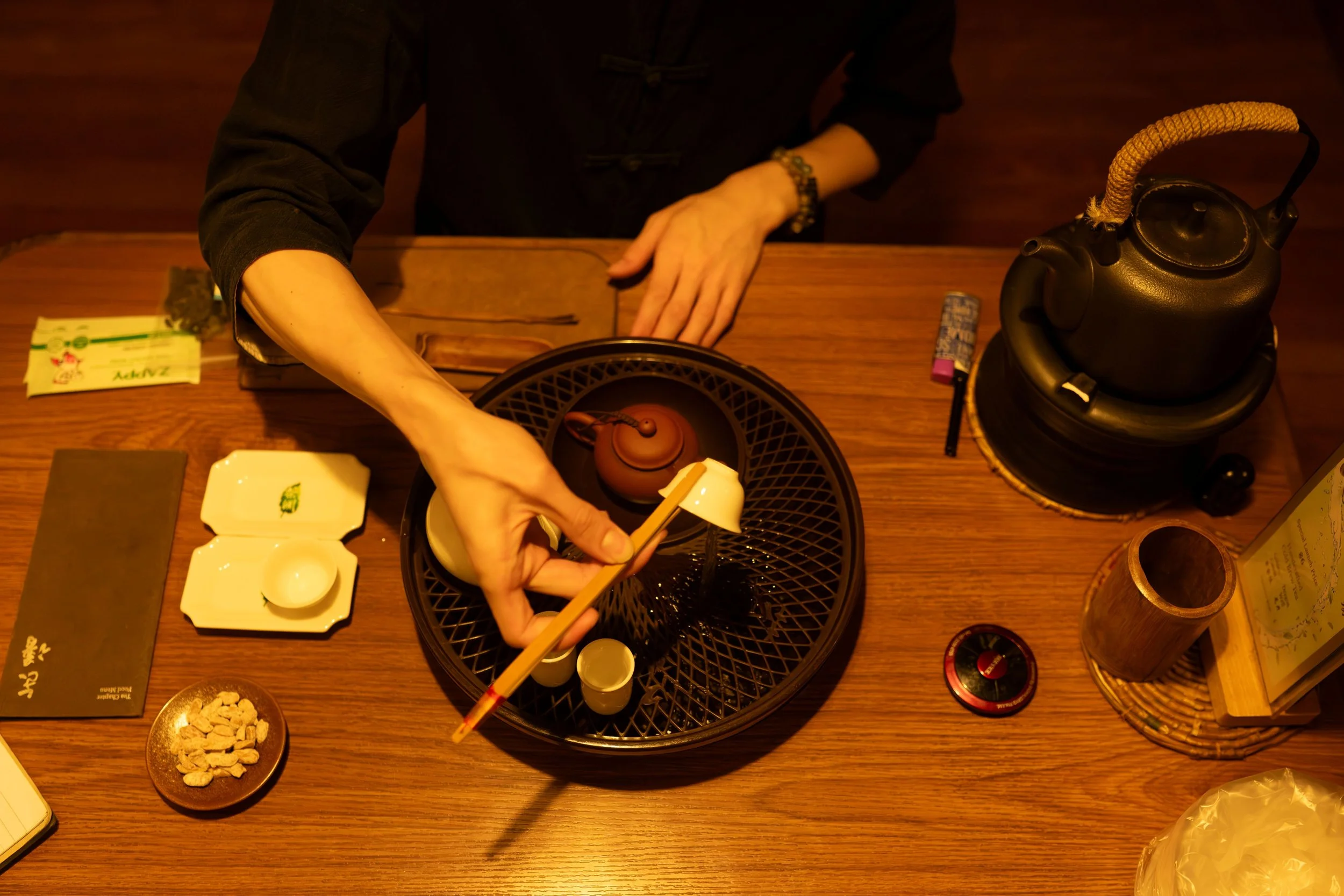
First, water is boiled in a kettle over a small tabletop stove, then poured into a clay teapot to warm it, and over the cups. All this before a single leaf is brewed. The tea leaves are rinsed with hot water, then steeped before being poured into a fair cup, and then into an aroma cup. You pause to take in the aroma and then pour it into the teacup. You take a sip, return to the empty aroma cup for its cooler scent, and repeat. There are instructions on what to do if the water is too hot, the tea is too bitter or too bland.
This tea culture in Singapore — green, white, yellow, oolong, red, dark, fermented, blended, smoked, graded, spiced, milky, sweet, gingery, brewed, steeped, pulled, frothy, iced — is nothing short of a saga.
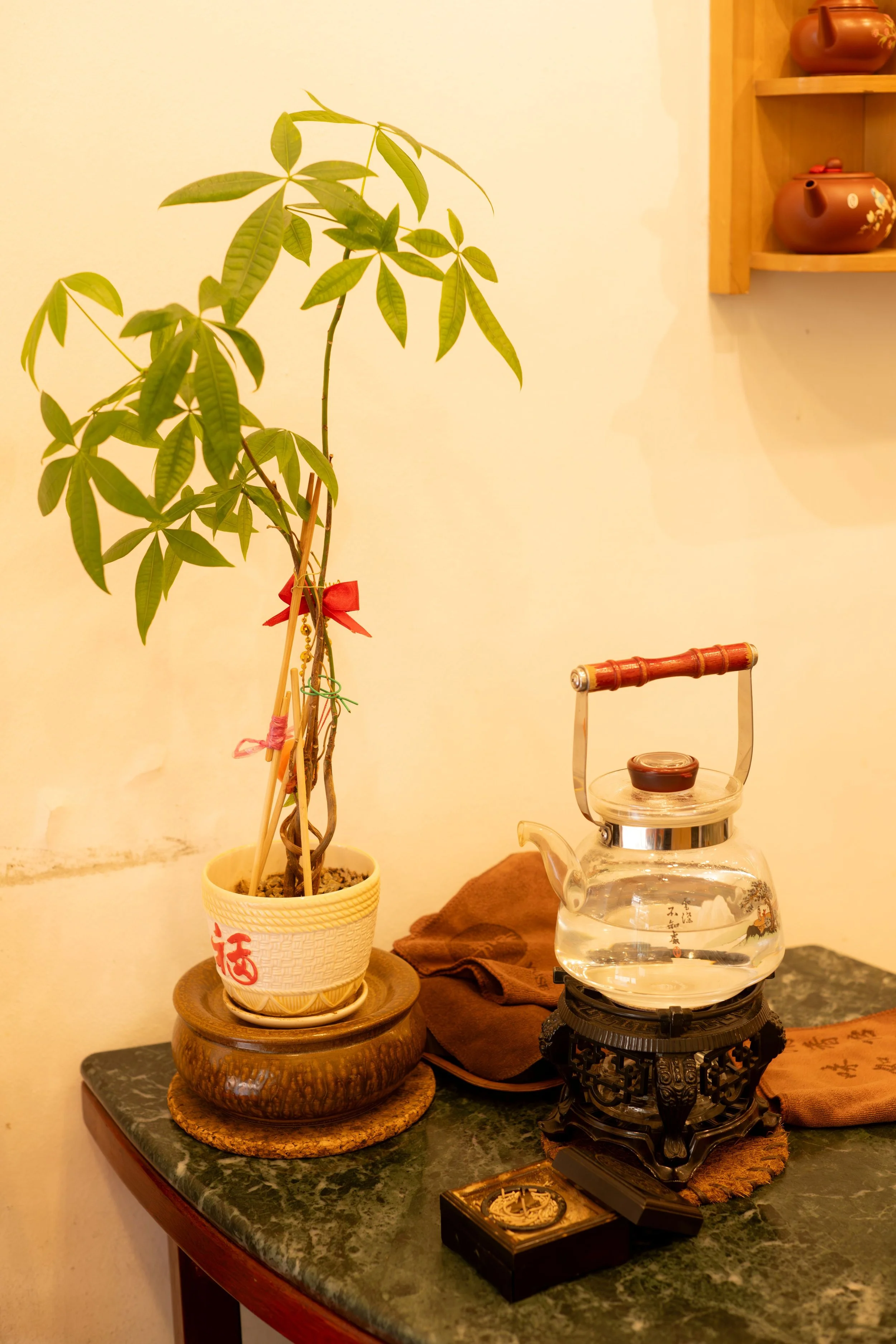
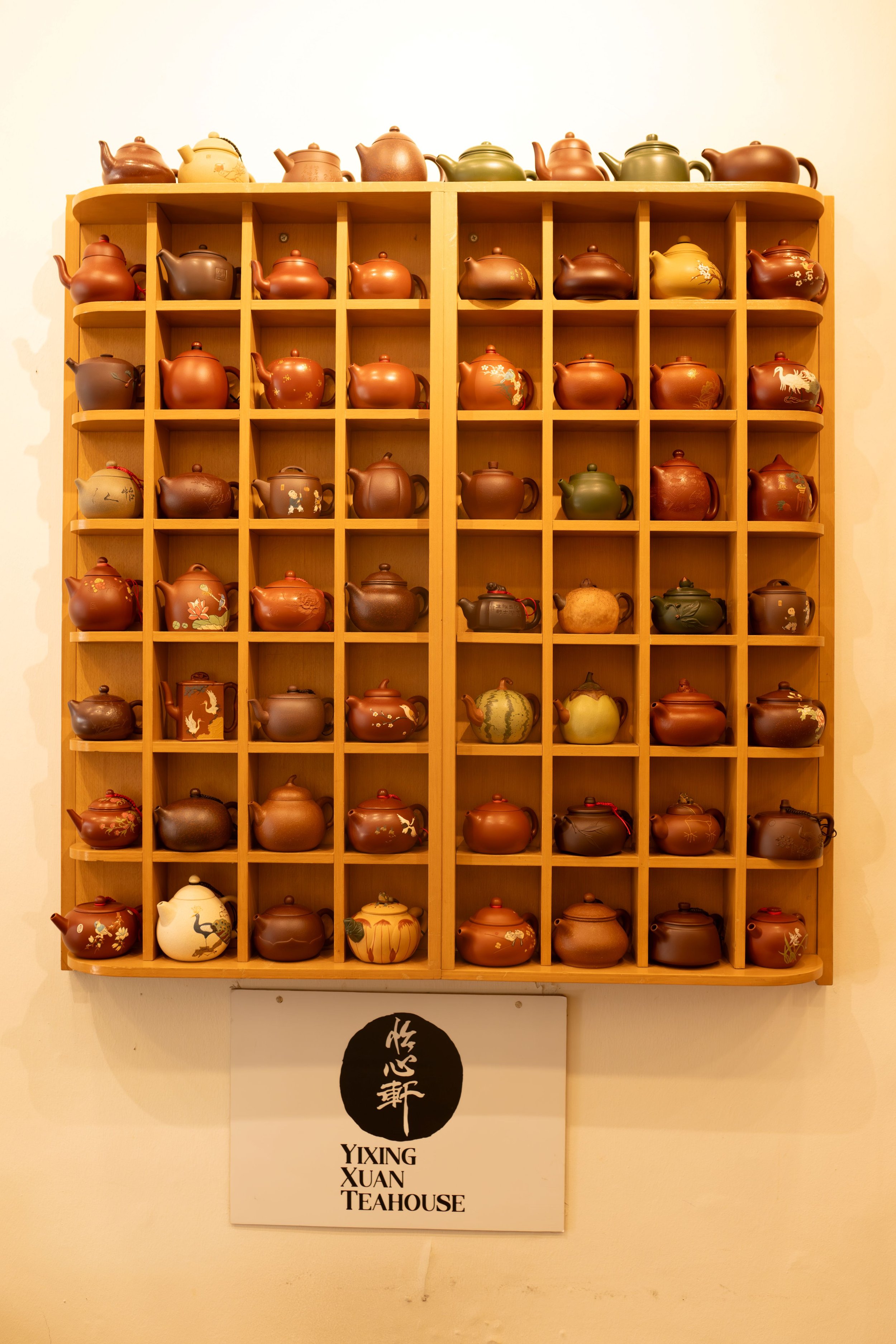
The Yixing Xuan Teahouse on Tanjong Pagar Road has about eighty teas on the menu, each listed with its grade, benefits, aroma, flavour profile and provenance. The walls are lined with shelves of tea-ware and tins of leaves, to either buy or just admire. My tea arrives in a lidded ceramic cup with a strainer of leaves, a flask of hot water, and a bowl of bite-sized biscuits.
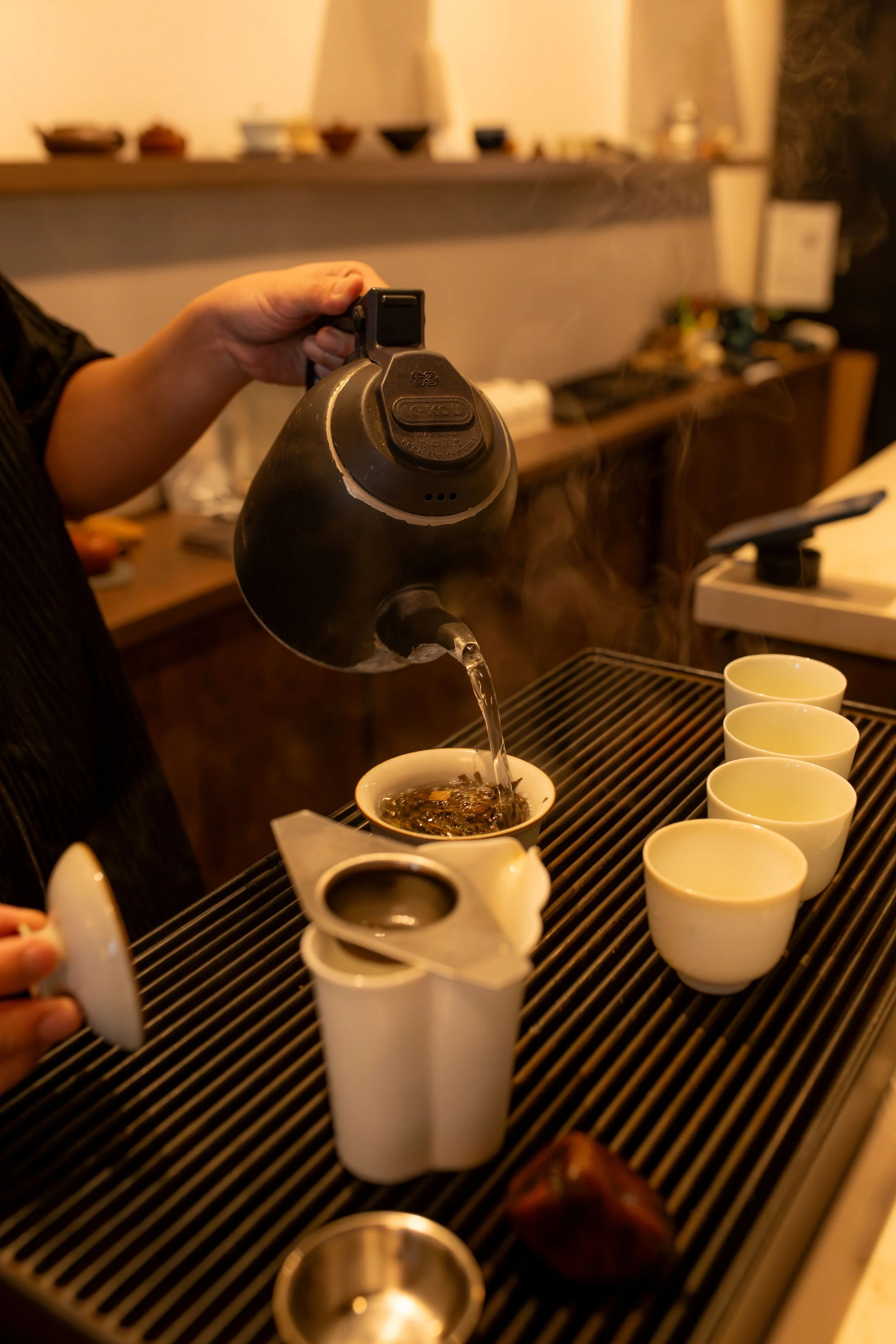
Silk Tea Bar is a chic modern teahouse tastefully decorated in cool whites and beiges.
But it is at the Silk Tea Bar on Sago Street, a chic modern teahouse tastefully decorated in cool whites and beiges, that I learn something I have not stopped thinking about since.
It is midday, a lull before the post-lunch crowd. We sit at the long bar counter, order cold brews, and get chatting with the young brew masters. It is mesmerizing to watch them pour, wash, steep the tea in little clay teapots with the precision and fluid grace of a tai chi master.
Traditionally, these artisanal teapots are made of zisha or purple sand clay from Yixing in China, porous enough to absorb tea oils over years of use. A seasoned pot grows shinier, less matte, developing a patina that deepens the flavour of everything brewed inside it. On the draining tray, among the teapots and cups, I notice two small rocks.
Melody, the brew master, tells us these are her ‘tea pets’.
Tea pets are small figurines made of zisha clay, placed on tea trays as ornaments and lucky charms. You feed them the extra tea that you are brewing. Because Chinese tea brewing is a wet process, there is always something to pour away. Over time, the pet absorbs the tea and becomes shinier, and more alive, almost taking on a lifelike quality.
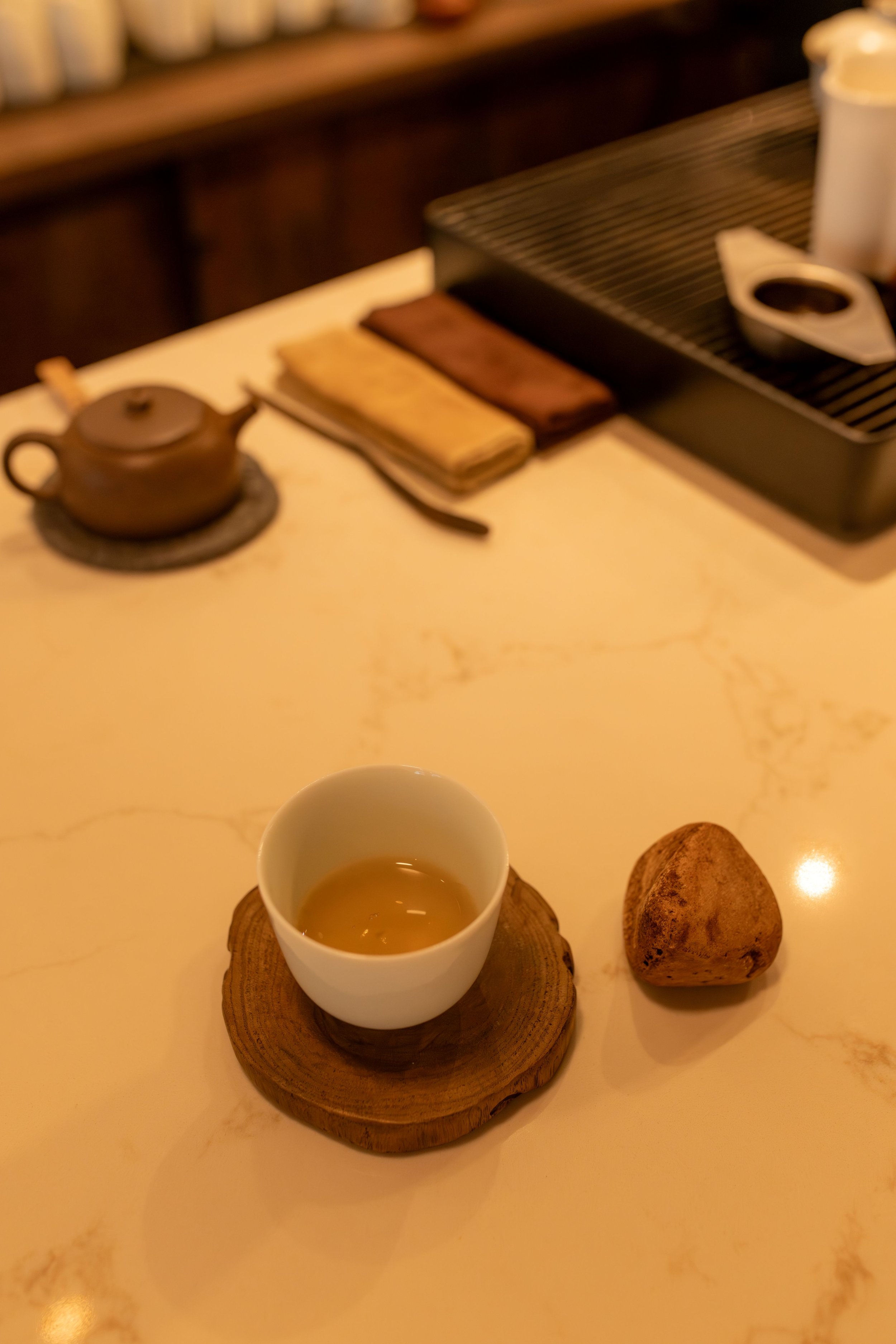
Tea pets are small figurines made of zisha clay, placed on tea trays as ornaments and lucky charms. They are fed the extra tea that is brewing.
But those rocks on the draining tray, Melody tells us, are a bit unorthodox since they are not made of zisha. ‘Some of our older guests tell us that it’s not a tea pet, so they gift us little zisha pets. We keep those too. You feed it, you raise it. It’s a marker of time, and it’s a friend on the tray that grows with you,’ she says.
These ‘pets’ bring a little bit of symbolism to daily tea practice, not just for professionals. Most people who brew tea in the Chinese style keep a pet on the tray.
I think about my own daily cup. The ginger, the cardamom, and the tea leaves from Darjeeling, where my grandmother used to live. I had not thought of my chai as a ritual that grows shinier with me, over time.
In Singapore, a cup of tea is never just a cup of tea. If we let it, it can sometimes become a meditation.
Shradha Biyani is an editor, book writing coach, and founder of Tashi Press, Singapore, with a background in journalism and urban planning from Harvard University. Her writing has appeared in Harvard Design Review, Hindustan Times, India Today, Men’s Health, and Undertow, among other publications.
Ashima Suri is the founder of Limitless Memories Pte. Ltd. and the lead photographer at Ashima Suri Photography. Specializing in newborn, baby, maternity, and family portraits, she trained at the London School of Photography and has worked across London, India, Hong Kong, and Singapore.
ALSO ON GOYA