Doghrama: Tearing Bread, Finding Home
In Turkmenistan, doghrama is more than a dish. It's a ritual performed at one of the most sacred gatherings for Turkmen people, called Hudayoly. It's prepared only for happy occasions. As Aylar writes, the magic of doghrama isn't just in the dish itself, it's in the act of making it together, in the way ritual creates space for connection, in how the simplest gestures of hospitality can make us feel less alone.
The night before Hudayoly, the whole family gathers. Relatives arrive without a formal invitation, neighbors appear at the door. There's a feeling in the ai r— something good has happened, or is about to, and tomorrow there will be a celebration. We spread a cloth across the floor and sit together, cross-legged, around a mountain of warm flatbread fresh from the tamdyr (clay oven).
Without ceremony, we begin to tear.
Our hands move in rhythm, ripping the thin and flaky petir bread into small, irregular pieces. The pile grows as we work. Stories of weddings, births, travels, and exciting happenings pass around the circle. The sound of tearing becomes a kind of music — the rustling of bread mixing in with voices, with plans for tomorrow, with the particular joy that comes from working toward celebration together.
This is the preparation for the dish, doghrama, and it means something special is happening.
I grew up between worlds, my life split down the middle — half my childhood in Turkmenistan, half my adolescence in Europe. This duality means I know my homeland both firsthand and through the particular ache of distance. In the diaspora, food became my language for home.
In Turkmen households, the kitchen is the heart of everything, and a gathering is sacred. Food is never just food — it's the language through which we speak love, gratitude, and belonging. I always knew a gathering was especially significant when doghrama appeared on the menu. Perhaps once or twice a year, I'd wake up giddy, knowing the ritual was about to unfold.
The word doghrama comes from dogramak — to cut into pieces. It describes exactly what we do: tear bread, shred meat, dice onions, mix everything by hand until the flavors marry, then bless it with hot, golden broth. But doghrama is more than a dish. It's a ritual performed at one of the most sacred gatherings for Turkmen people, called Hudayoly — literally, "the road to Allah" — a way of thanking the Almighty for joy. It's prepared only for happy occasions: weddings, the birth of a child, or Eid (Kurban Bayram in Turkmen). Doghrama is always the taste of gratitude.
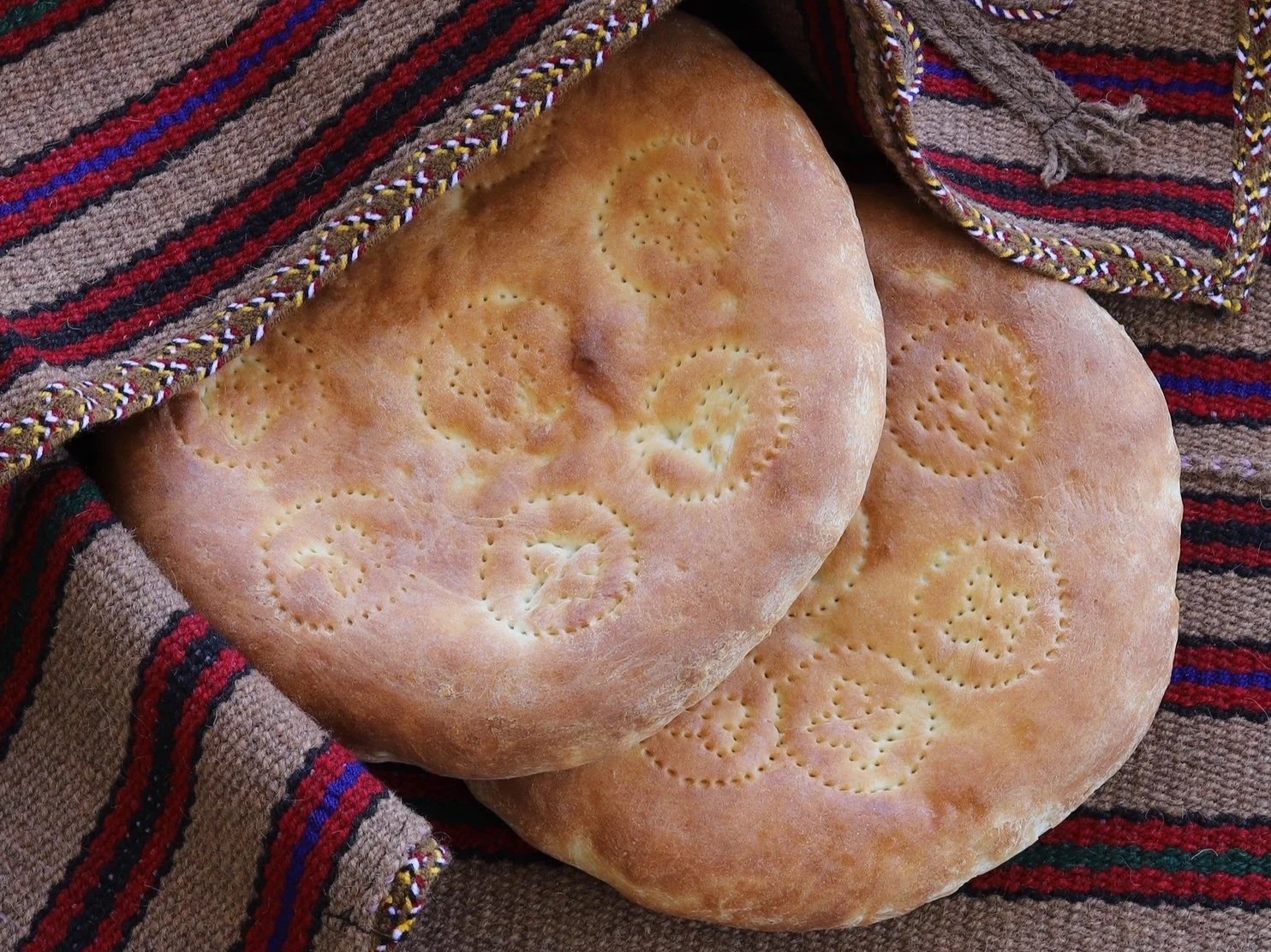
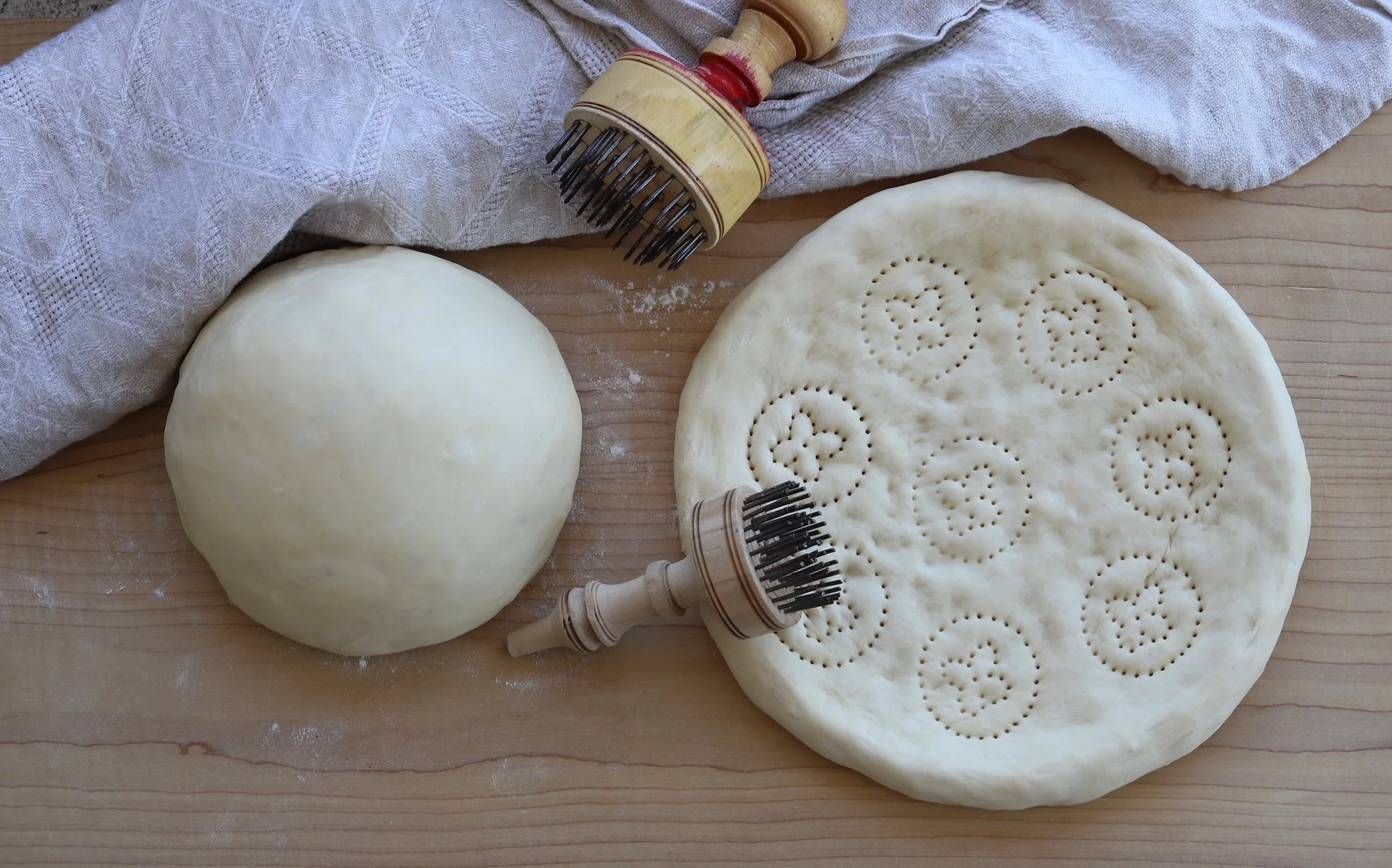
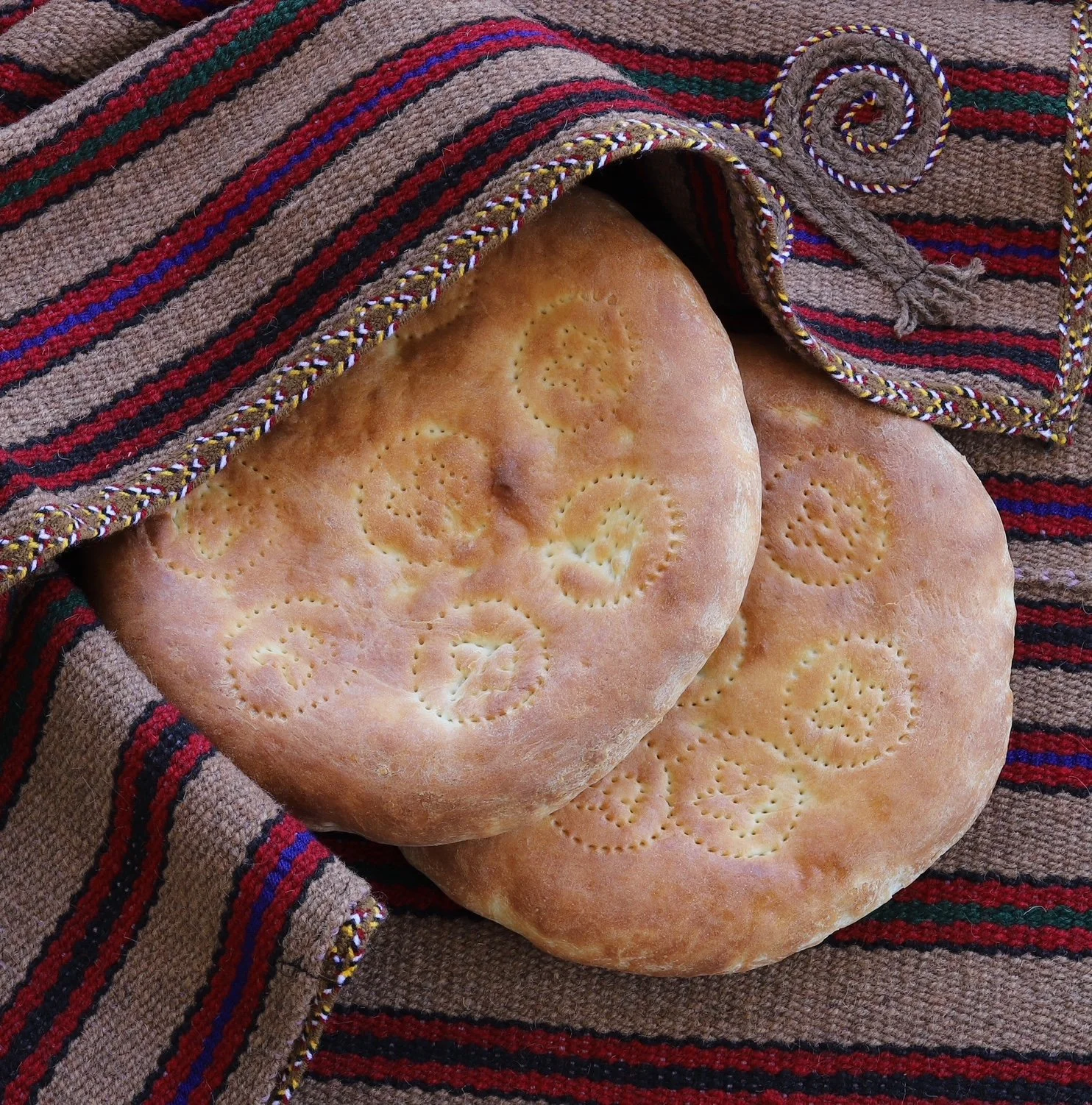
The preparation requires the whole household. The day before Hudayoly, a special bread is baked by the women of the family early in the morning. It's called petir — a flatbread with deliberately stiff dough. This stiffness is crucial: it keeps the bread from swelling too much when the hot broth hits it. It is baked in the tamdyr, following a recipe that's been passed down through generations.
This is one of the rare moments when everyone participates. Ordinarily, the kitchen belongs to women, but Hudayoly brings the whole family into the ritual. It's as if we're reaching back past our assigned roles to something ancient—a time when survival required all hands, when everyone was equal, connected in community.
On the day of Hudayoly, the men take on their essential work. It starts with an offering — a slaughtering of the lamb. This in itself is a ritual, one that honors the entire animal. The men set up the enormous kazans —cauldrons so large they must be placed outside in the courtyard. They carry water and tend the fire. The meat simmers for hours until it falls from the bone, the broth turning rich and aromatic.
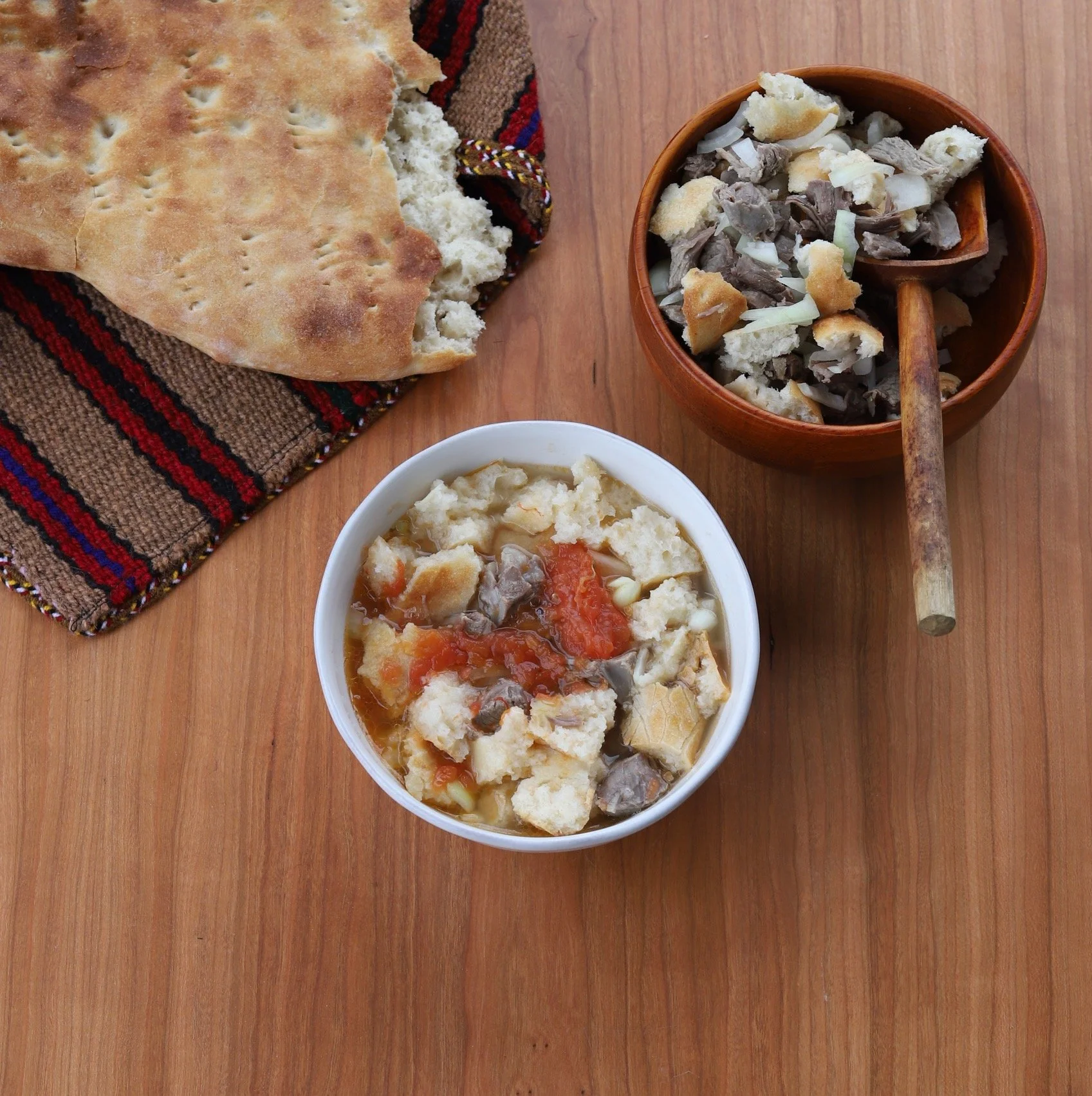
The men cut the cooked meat, dice fresh onions, and mix everything with the crumbled bread, kneading it by hand so the flavors infuse. When guests arrive, we scoop the mixture into hand-painted ceramic bowls, pour the steaming broth over it, and serve it with wooden spoons and a sprinkle of fresh black pepper.
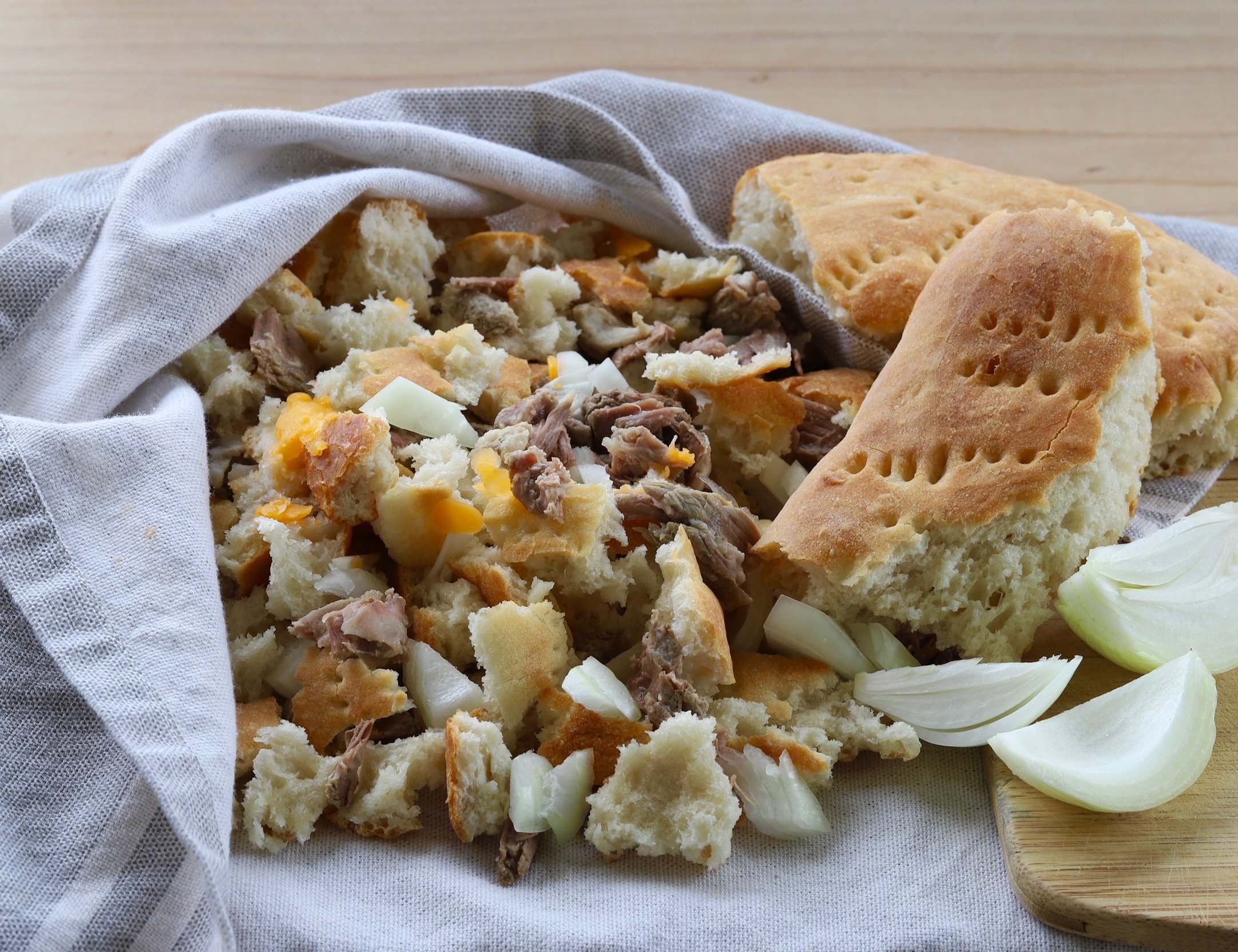
The aroma takes over the entire house. Doghrama is not for the faint-hearted — it's rich, hearty, deeply satisfying. By the time you finish, you feel a fullness that isn't just physical. It's the fullness of being fed by something larger than food. The feeling of celebration and belonging to something bigger stays with you long after that last bowl.
After the meal, in a gesture that speaks to the core of Turkmen hospitality, every guest leaves with a small packet of dry doghrama — a way of sharing the family's happiness. When guests leave, they say “kabul bolsun!” — may the Almighty accept your offering. The host has given more than food; they've created a space for the community to renew itself.
Doghrama reaches back to the nomadic roots of Turkmen tribes who crossed the Karakum Desert and survived its harsh conditions. The hard, dry bread was practical: it could be stored for weeks without molding, carried on camelback, eaten by shepherds on long journeys. Even if it became tough, it could be softened in tea or soup. This recipe embodies a fundamental Turkmen quality — using what you have wisely, making it last, wasting nothing.
The nomadic life shaped everything. Survival in the desert depended on adaptability, on community, on the bonds between people who understood that life meant depending on each other absolutely.
These values live on in Hudayoly. "Hudayoly is not about eating," my mother says. "It's about gathering." The occasion preserves what matters most: семейные узы (family bonds), добрососедство (good neighborliness), чтить старших (respect for elders).
The tradition survives through hands, not recipes. I remember being small, sitting on the floor with the adults, my hands busy tearing bread, absorbing the rhythm of preparation, the stories exchanged, the way celebration required everyone's participation. Children grow up, bring their own children, and then their grandchildren. The knowledge passes through the muscle memory of tearing, mixing, and serving.
When I left Turkmenistan, I carried this with me — not just the taste of doghrama, but the feeling of what it meant to be gathered, to be part of something larger than myself. Living far from home creates a particular longing, one that can only be satisfied through ritual and story.
In my life now, I gather women around tables to share food, stories, and the particular ache of living between worlds. Many of us left our homelands — by choice or necessity — and use food as the language to reconnect with what we left behind. When we come together, we recognise each other instantly. We understand what it means to belong nowhere and everywhere at once, to carry two homes in one heart.
Through these gatherings, I've learned that the magic of doghrama isn't just in the dish itself, it's in the act of making it together, in the way ritual creates space for connection, in how the simplest gestures of hospitality can make us feel less alone.
I think about my future children and what I'll pass on to them. Despite our international family, despite the distance from where this tradition was born, I'm determined they'll know this ritual.
They'll learn what doghrama teaches: that joyous occasions deserve celebration, that community requires hands ready to work, that anyone who comes to your door will be fed.
Strong traditions survive because they're lived, because children watch and participate, and eventually teach their own children. I'm proud that mine will be part of this continuity, that through the simple act of tearing bread together, they'll connect to something ancient and wise.
When I imagine teaching them, I see us sitting on the floor, hands busy, the smell of broth filling the air. I'll tell them about their grandmother, about the desert their ancestors crossed, about the hard bread that could last for weeks. I'll tell them that home isn't just a place — it's what we do with our hands, how we gather, the stories we tell while the bread is torn and the broth is poured.
And maybe, in that moment, with our hands working together toward celebration, they'll understand what I'm only now learning myself: that belonging is something we create, again and again, through the smallest rituals of care. That feeding each other — with intention, with gratitude, with joy — is how we find our way home.
RECIPE FOR DOGHRAMA
Serves 4
Ingredients
Petyr (Makes 2):
3½ cups plus 1 tbsp (500g) all-purpose flour, plus more for dusting
1 tsp kosher salt
1½ cups (360ml) water
7 tbsp (100g) butter or tallow, melted
Broth:
1kg lamb shoulder
2.8 litres water
1 large yellow onion, peeled and left whole
2 medium plum tomatoes, blanched and left whole
Kosher salt
Freshly ground black pepper
2 medium yellow onions, peeled
Method
For the bread:
Preheat the oven to 485°F (250°C). In a large bowl, combine the flour, salt, and water. Knead until smooth and elastic.
Cover with plastic wrap and refrigerate for 20–30 minutes.
Divide the dough into two equal halves (about 430g each).
On a floured surface, roll out one half into a thin sheet. Brush with melted butter (or tallow), roll into a log, then coil it into a spiral.
Flatten the coil, dust with flour, and roll out again into a 6-inch (15cm) round, about ¼-inch (6mm) thick.
Place on a parchment-lined baking sheet and bake for 10–15 minutes, until golden brown.
Repeat with the remaining dough.
Keep the flatbreads covered with a clean kitchen towel inside a plastic bag to stay soft.
For the broth:
In a large pot, combine the lamb and water. Bring to a boil and skim off any foam.
Add the whole onion, tomatoes, and 1 tbsp salt. Reduce the heat, cover, and simmer for 1 hour, until the meat is tender.
Ten minutes before the broth is ready, crumble the flatbreads into small pieces.
To Assemble:
Spread the crumbled bread onto a double layer of tablecloths — a fabric one underneath and a plastic one on top, to prevent the mixture from drying out or sticking.
Thinly slice the two remaining onions and scatter them over the bread.
Remove the lamb from the broth, shred it into bite-sized pieces, and add to the bread mixture.
Ladle some of the broth fat over the mixture and mix everything well with your hands to combine.
Cover with a clean cloth and let rest for 1 hour.
To serve, spoon portions of the bread-lamb mixture into individual bowls, ladle hot broth alongside, and finish with a sprinkle of black pepper.
Notes
The flatbread can be made a few hours or a day ahead.
Use butter for a vegetarian version (with vegetable broth) or tallow for a dairy-free version.
Aylar is a Turkmen-born writer and storyteller weaving narratives of home, heritage, and creativity across cultures. Instagram
ALSO ON GOYA