Andaaza Apna Apna: A Chef's Guide to Documenting Family Recipes
This New Year, if there’s one food resolution we’re getting behind, it’s this: document, document, document. Too many traditional recipes have slipped into the “forgotten” or “little known” category. One way to slow that loss is to record your own family recipes—by speaking to the generation before us, asking questions, and coaxing out those closely held kitchen secrets. Here, chef Rajat Mendhi does exactly that, sharing a tried-and-tested recipe — and a method — for you to do the same.
One night before bed, Jaydeep, my partner asked me a puzzling question. “Do you know white and black aloo?”
We were in our bedroom, finishing our usual night-time routine. “White and black aloo?” I laughed. “That’s not how anyone describes food.”
He was serious. He could taste it in his mind.
I ran through all the aloo dishes I knew, in my head. I asked, “Do you mean that aloo we make with lots of dhaniya powder?” But I knew it wasn’t. That dish was golden yellow, not white and black. Jaydeep shook his head. “No, no. This one’s different. It has hing, lots of amchur and maybe other masalas. We used to have it for breakfast when I was growing up.” We weren’t able to figure it out, and I couldn’t stop thinking about it.
We do this often; try to recall the food we grew up eating and then make it for each other. I don’t know what it is about food, but it tells the best stories of who we are and where we come from.
The next morning, I woke up knowing exactly what it was. Or close enough. Not a work of genius; I remembered that, just like Jaydeep’s mum, my mum made a white & black aloo. I still don’t know what it’s called, but this is roughly what it is: Boiled aloo stir-fried with jeera, lots of coarsely ground roasted dhaniya powder, a touch of hing, lots of amchur and fresh dhaniya to finish. Think samosa filling, but subtler. We had it with phulkas for breakfast. It hit the spot.
As a chef, nostalgia is my favourite exploration. Bombay Picnics was born from that — a way to share the foods I grew up eating, told through stories, communal tables, private dining, and home delivery.
Like with the white and black aloo, I’ve tried recreating dishes from memory, piecing together the smells and tastes of the food my mum and my family made. Many times, a quick call or a voice note from my mum helped guide me through the ingredients and process. The dish turns out good, but it’s never as I remember it.
I often wonder, is my mum hiding a trick, a step, an ingredient, like many cooks do? Or is it just difficult to communicate what really is muscle memory — the intuitive knowledge of what the right quantities and steps are. Something the holders of family recipes just know, because they’ve been cooking that same beloved dish for decades.
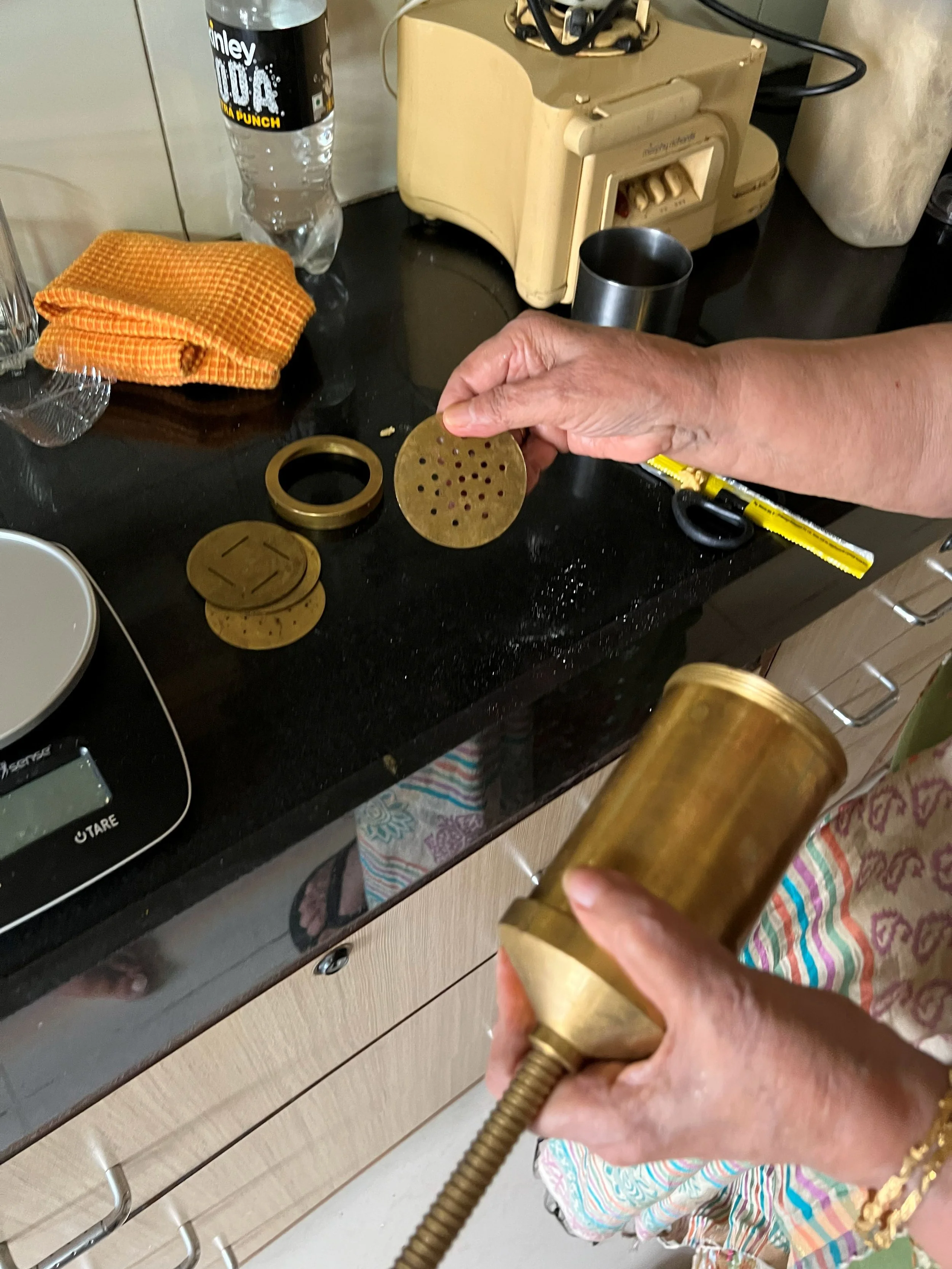
The author’s nani’s gajjak maker. He and his Renu mami used it to make gajjak ki mithai. After they finished it, she handed it to him…a quiet passing-on of something no one else in the family now wants to make.
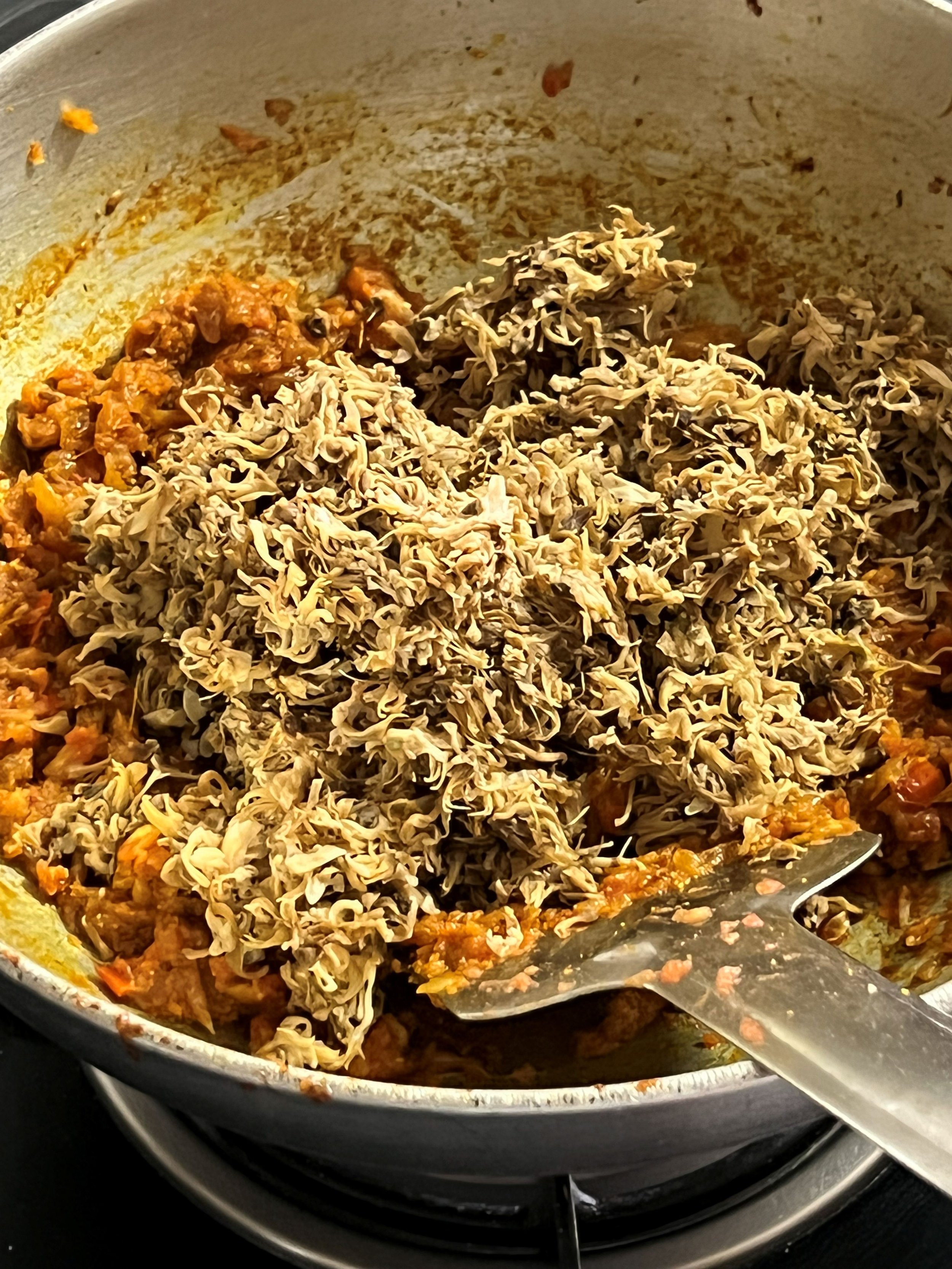
Swanjana or Moringa flower ki sabzi – it is cooked in a light tamar-pyaaz ka masala with ghee and dhaniya powder.
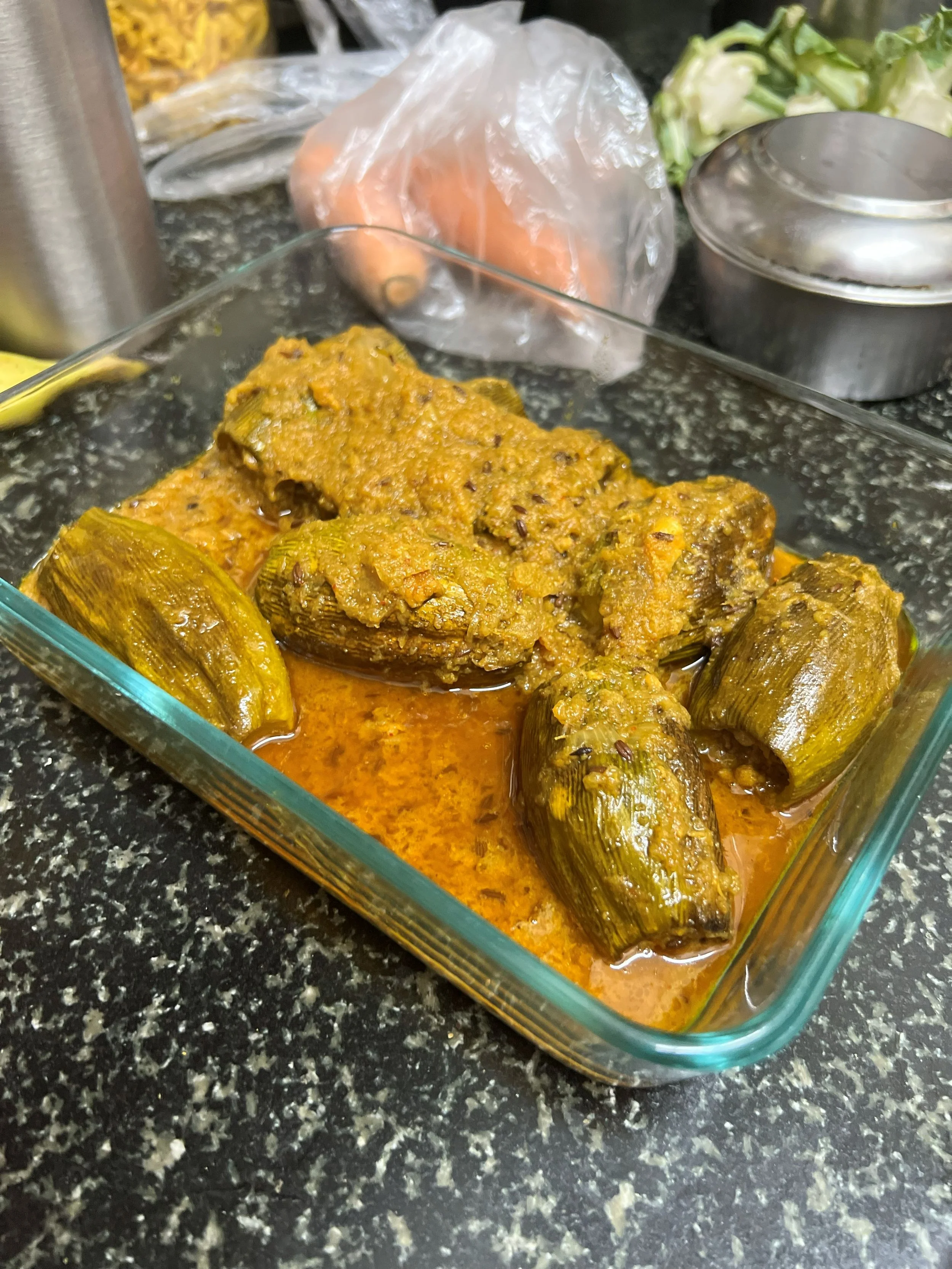
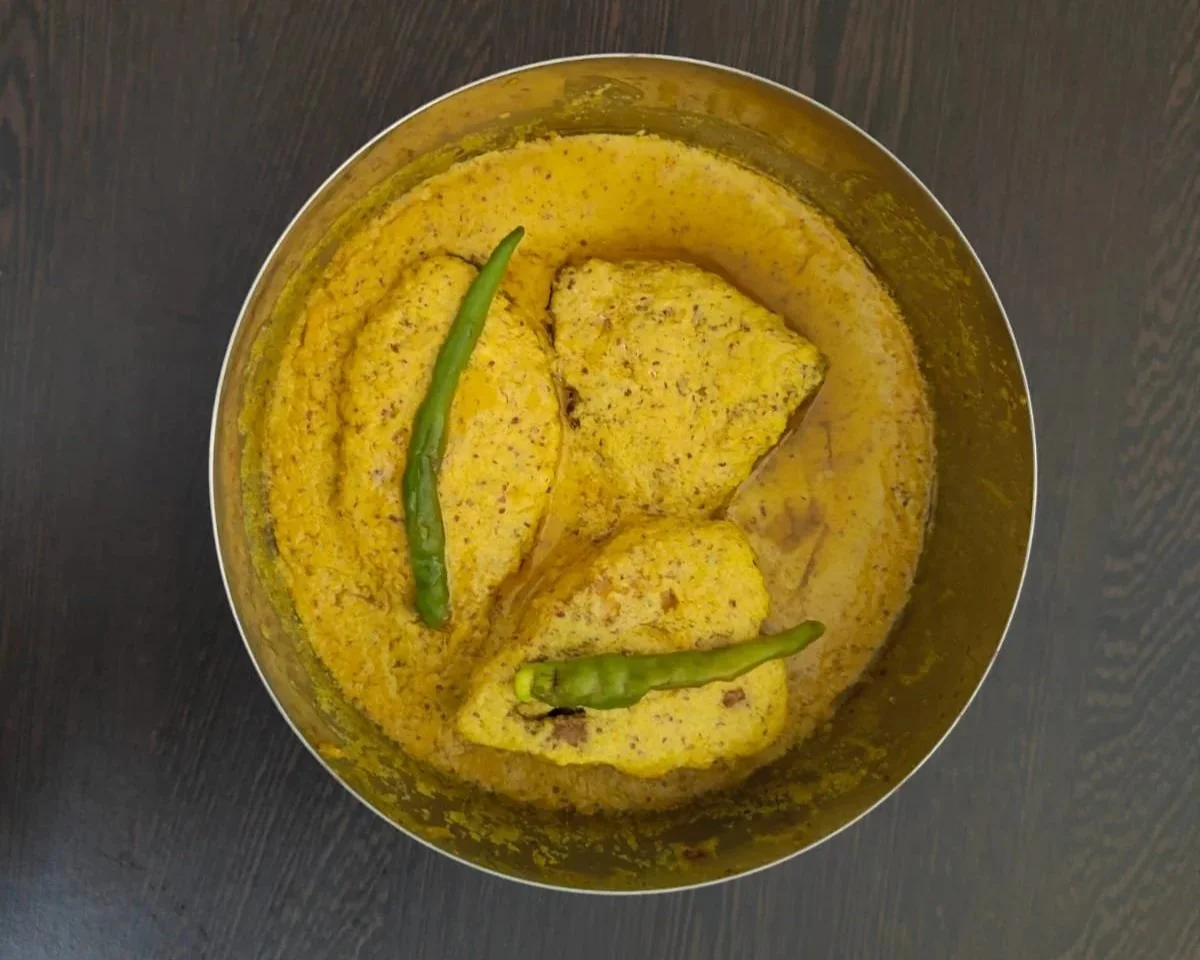
Chandana Mashi’s Patal’er Dorma: the most fun part of making this is gathering at the table to mash the fried fish making sure no bones remain.
How does one capture and measure the intuition behind andaaza? That’s what I needed to crack.
So this is what I did: I stopped asking, and started cooking with the holder of the recipe right next to me. This guide is everything I learnt in the process.
Step 1: Make a list
Make a list of all the dishes you want to document. Start with the food you remember. Talk to the people who made the dishes and the ones you ate with. Make a list: dals, sabzis, chutneys, achars, meetha, whatever form memory takes. The list will be long. It should be. Choose where you want to start. Ask your teacher — the holder of the recipe — if they will teach you. (Uff! You are going to make them so happy that you asked.)
Step 2: Plan
Block a day or a weekend. Decide what you both will cook together, and on which day. One to two dishes a day is manageable. Make your ingredient list. Make sure you have everything you need before the day.
Step 3: Pack your spy kit
Notebook and pen — carry two pens. One will definitely get lost behind a pot.
Phone camera: Your teacher will be a multitasker and a hurricane. So just shoot.
Weighing scales: A large one for staples/vegetables/meats, a tiny one (jewellery scale) for masalas where even a decimal matters.
3 small bowls and 3 plates: For weighing dry, wet, and unwashed ingredients separately.
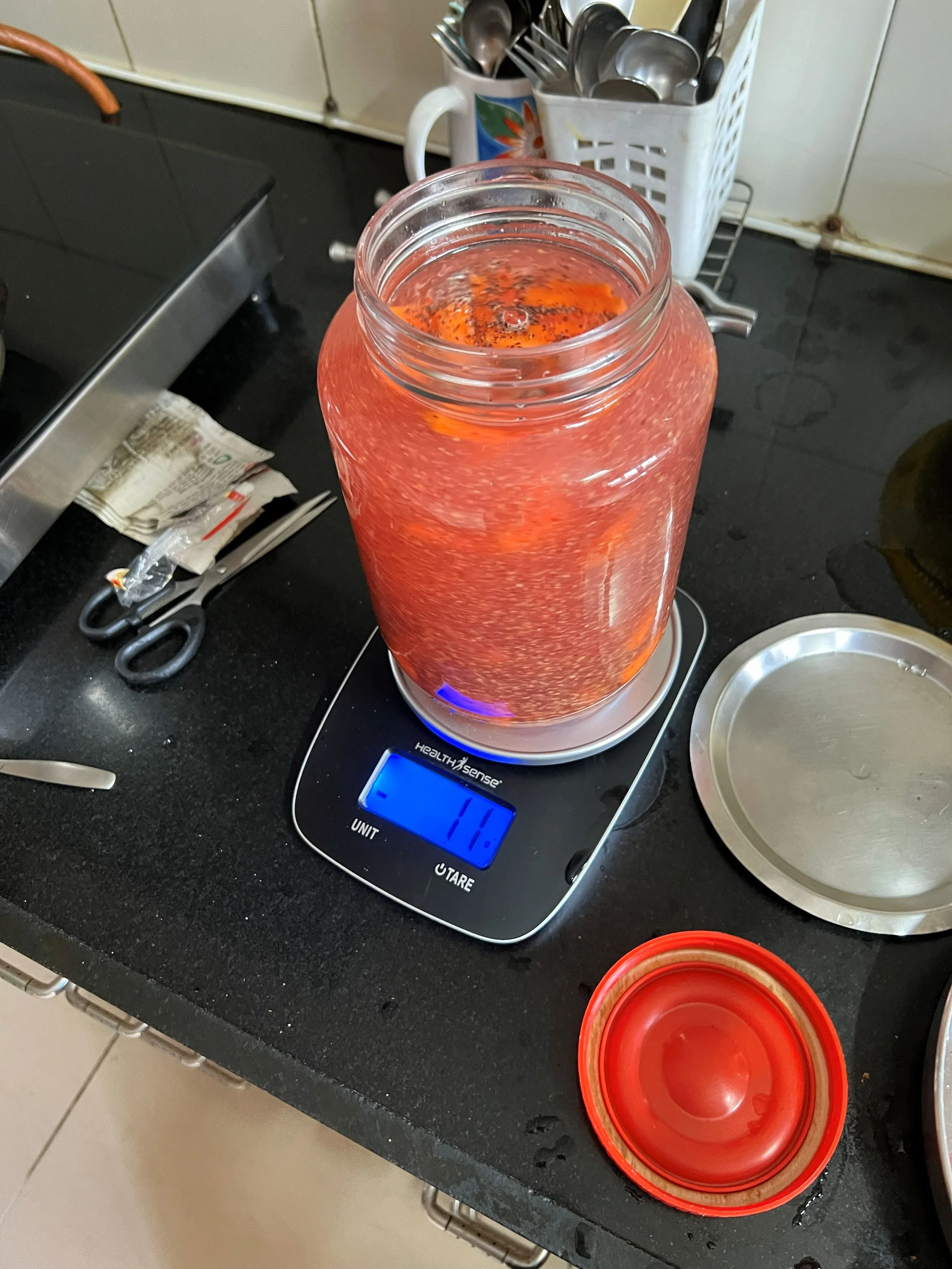
Long before lacto-fermentation became a trend, there was kanji. And before Noma’s 2% salt rule, the author’s Renu mami was already eyeballing it. When he weighed it, it was exactly 2% salt.
Step 4: Follow their hands, not just their words
Start with a chat. Get a rough sense of the sequence so you can be ready to capture as it happens.
Weighing
• Don’t fall for “it’s only just a pinch” or “1/2 tsp”. They’ve done this for decades. You haven’t. So weigh everything.
• You won’t have time to note the weights down, so take photographs of the weights.
• Weigh the water, the oil. It all adds up.
• And yes, your teacher will sneak in ingredients when you’re not looking so be alert.
Capturing Video and Photos
• Record how things are chopped, when ingredients go in, the flame strength.
• Ask questions: Why this order? Why now? Where’s that masala from? (My mum’s dhaniya powder is 10x stronger than mine. She roasts and grinds it fresh every week.)
• Look for what they’re not saying. Like Jaydeep’s aunt, who adds water to haldi three times, letting it reduce each time to build flavour. These small details change everything.
Writing
• When there’s a quiet moment, jot things down.
• Write the steps. The smells. The textures. The colours.
• It’ll help later when you’re piecing it all together.
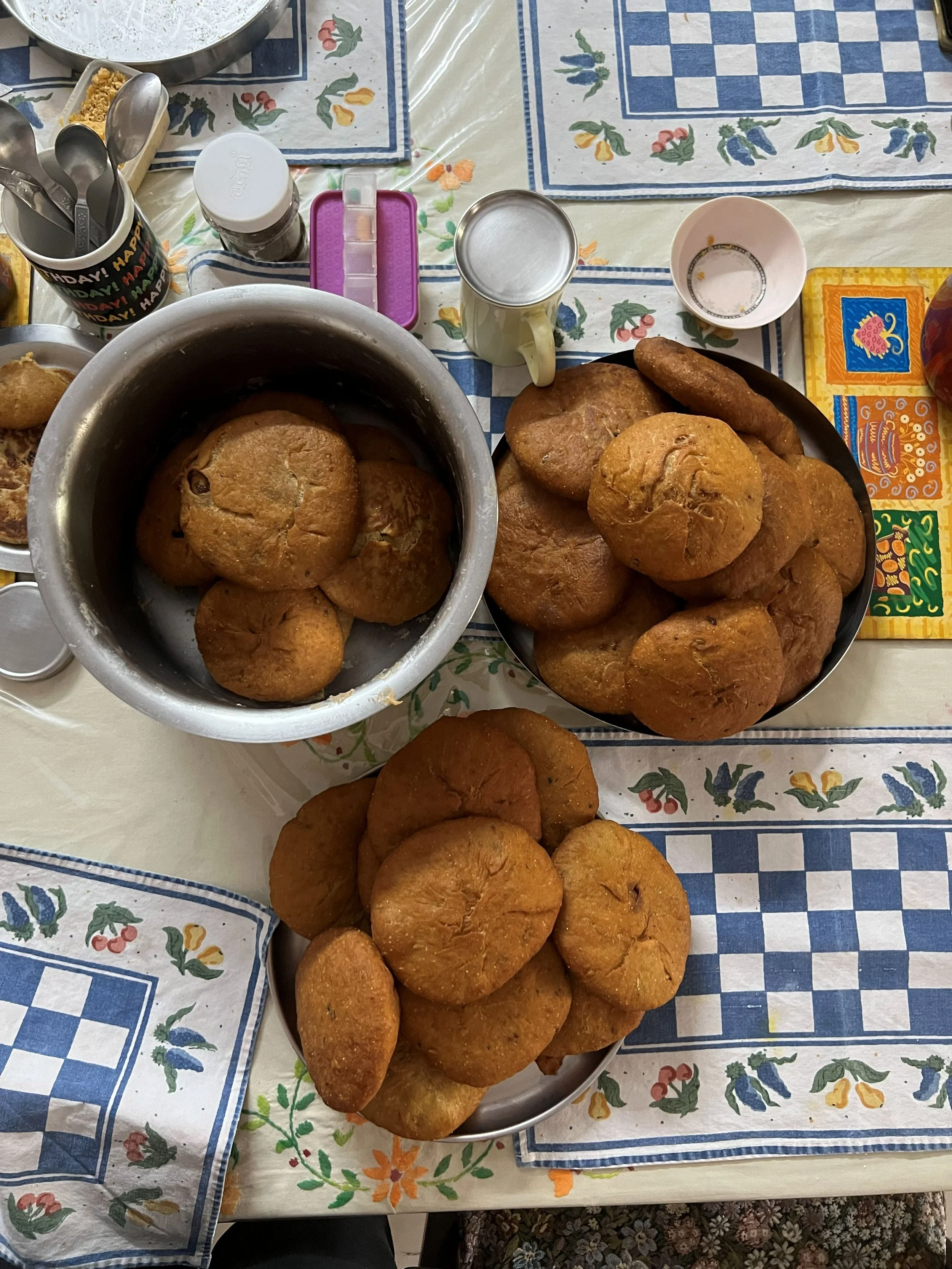
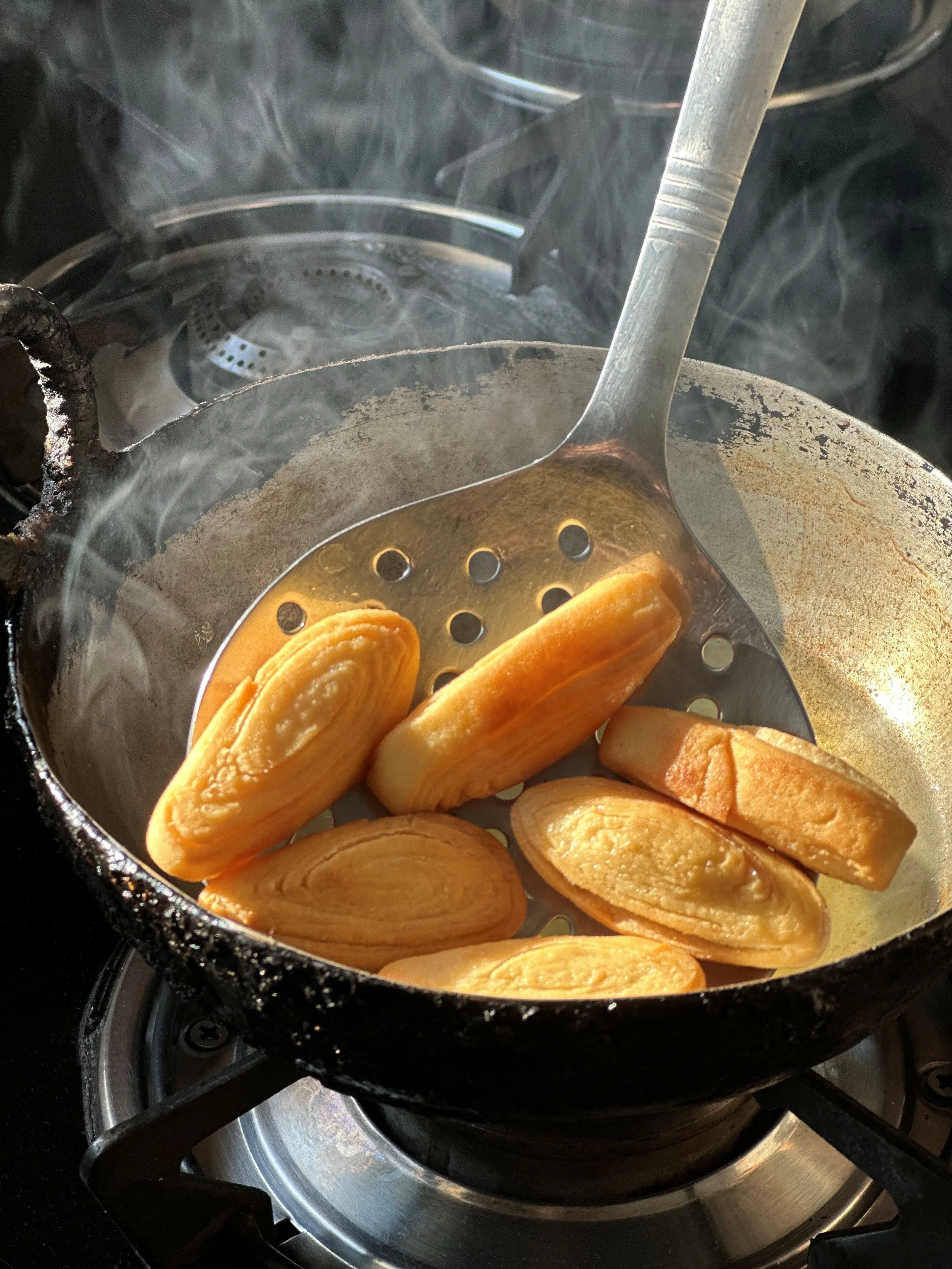
Doli ki Roti: As the name suggests, this was food given to the bride as she left for her in-laws. It’s fermented with a starter made from a decoction of fennel, cinnamon, green and black cardamom, pepper, and channa dal. The decoction is boiled and allowed to ferment overnight. And then used to flavour the dough and ferment it. These fried rotis are stuffed with a pyaaz or channa dal masala. It looks like a kachori, but eats like a savoury stuffed doughnut - crisp, soft and delicious.
Step 5: Fair out the recipe and instructions
Use your notes, the photos, videos and your memory to write the recipe down. Write all the details you found interesting, noting the smells, colours and taste at every stage so that it becomes your guide. If you can, do it the same day because you’ll remember all the little details and if you don’t, you can just ask.
I’ve now documented about 20 recipes from both sides of our family. With weighing scales and videos, I’ve tried to measure the unmeasurable and captured andaaza. But here’s what I’ve realised through this process of learning our families’ recipes.
I might be chasing a flavour from memory. The original. The authentic. That exact feeling. And these recipes, they bring me close. Really close. But inside each one of these recipes live all the people who came before me. Their personality. Their shortcuts. The things they learnt, the things they ignored. Their andaaza. And just like I look like my parents but turned out to be my own person, these dishes will carry something of me too. My job is to keep cooking them. Again and again. To build my own andaaza. To bring myself into it, like every generation before me has done.
Because a recipe isn’t just a set of steps. It’s a memory that lives through the hands that make it. It’s a story of a family, of change, of holding on and letting go. Maybe that’s why they are called family recipes. And maybe that’s why they tell the best stories; stories Jaydeep and I get to share with each other and write a new chapter of our family’s story through our recipes we cook.
This following recipe is best made in winter and the same method works beautifully with turnip, cauliflower stems, or even carrots.
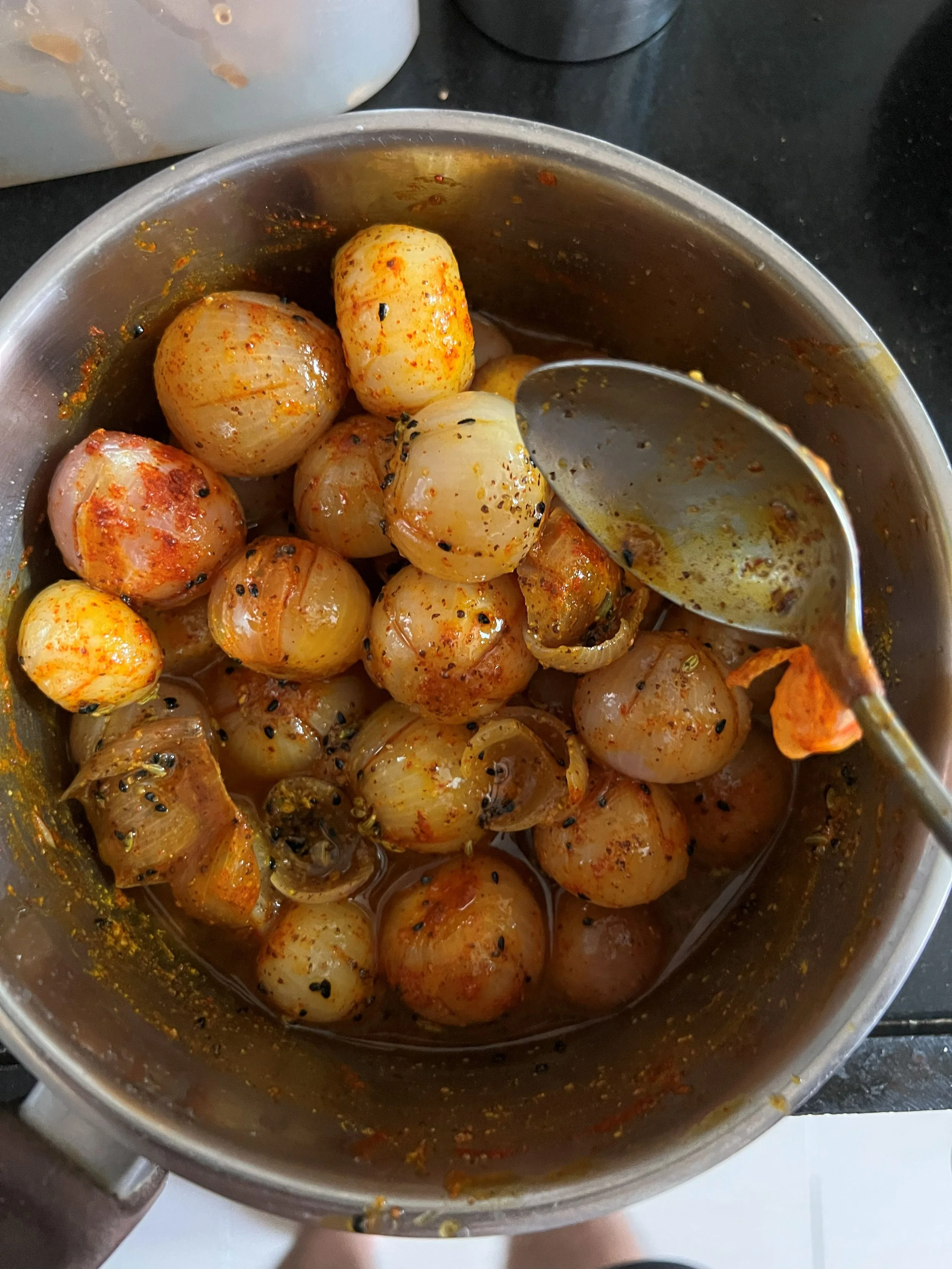
Lacto-fermented onions or pyaaz ka paani wala achaar in the making — this is a winter staple in the author’s family.
RENU SARDANA’S PYAAZ KA PAANI WALA ACHAAR
Ingredients
567 g onions (pyaaz) or mixed winter vegetables
Water and salt, enough for boiling (should taste distinctly salty)
Masala mix:
2 g methi seeds, lightly roasted and coarsely ground
2.5 g haldi (turmeric)
2.5 g saunf (fennel)
5 g kalonji
8 g rai (mustard seeds), coarsely ground
4 g red chilli powder
15 g salt
90 g water reserved from boiling
56 g mustard oil
Method
Peel, wash, and trim away any discoloured bits. Cut into equal-sized pieces. For small onions, score a deep “X” on the top. This helps them open up and absorb flavour.
Bring a large pot of salted water to a boil (it should taste like seawater). Add the onions and boil until they soften slightly but stay crisp (kacha-kach to the bite). The cut edges should just begin to flower.
Strain through a mesh. Reserve 90 g of the hot brine. Let both onions and brine cool completely.
In a bowl, combine the cooled brine with all the spices and mustard oil. Mix well until it becomes a fragrant emulsion.
Toss the onions in this mixture so each piece is coated evenly. Transfer to a clean glass jar (barni). Leave it in the sun for two days, shaking gently every 12 hours.
Once ready, refrigerate. The achaar keeps well for several weeks and deepens in flavour with time.
Rajat Mendhi is a brand strategist and chef working at the intersec4on of food, memory, and culture. He founded Bombay Picnics and has developed menus for restaurants, bou4que hotels, and F&B brands, and now leads brand strategy at an communica4ons agency.
ALSO ON GOYA