Peeling Back the Layers of the Chirote
Across South, Central and East India, a single technique produces different sweets. While these sweets may go by different names and carry varied social meanings, they are, at heart, part of a shared culinary conversation with roots embedded in oral history, courtly cookbooks, trade routes, and divine heritage. Tanushree Kulkarni reports on the chirote.
Aai’s kitchen comes alive before sunrise. It is morning, a few days before Diwali.
Carefully portioned ingredients are laid out with military precision to make a sweet that demands it. As the first rays of the sun pierce through the iron-grilled window, the ritual starts.
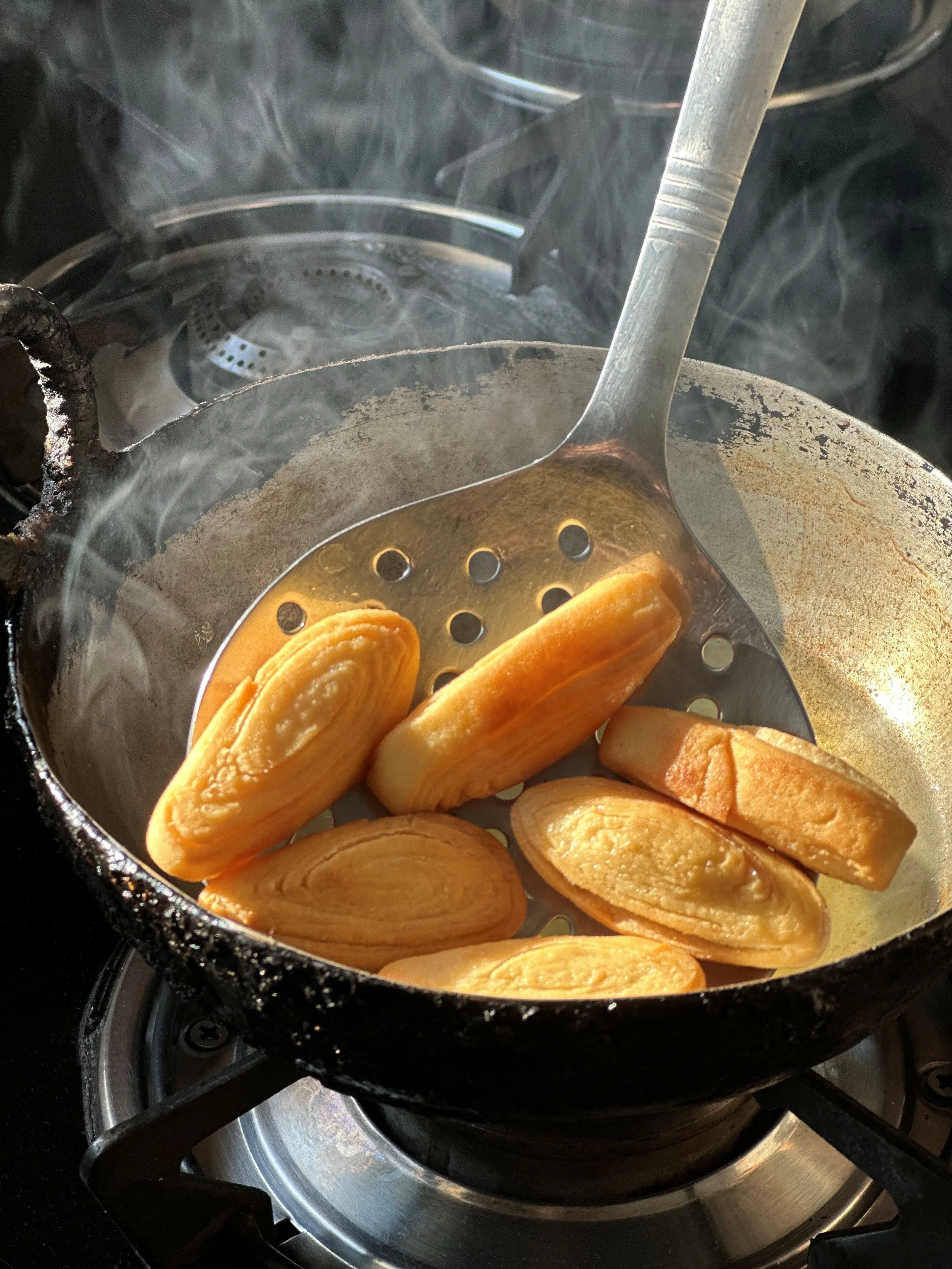
There is a singular, sublime instance in the making of chirote in a Maharashtrian kitchen: a thin disc of dough that comes alive when dropped in hot ghee. The layers of wheat separate, unraveling like an origami flower.
Chirote, derived from the Kannada chirot, meaning layers, doesn’t need any mechanical help but tactile literacy. In Maharashtra and Karnataka, flour, semolina, a pinch of cardamom and very little milk are gently rubbed together with hot ghee until the ingredients come together in a pliable dough that crumbles slightly under gentle pressure. The dough is then rested and rolled into wafer-thin, large discs that are stacked layer upon layer, and separated with a paste of ghee and rice flour. My grandmother was firm: “Never less than 4 layers!” The soft dough is then rolled into a log and cut into circular discs that puff and separate in the hot ghee, accompanied by a smoky sizzle. The tawny fried pastry is then lightly dusted with sugar while still piping hot.
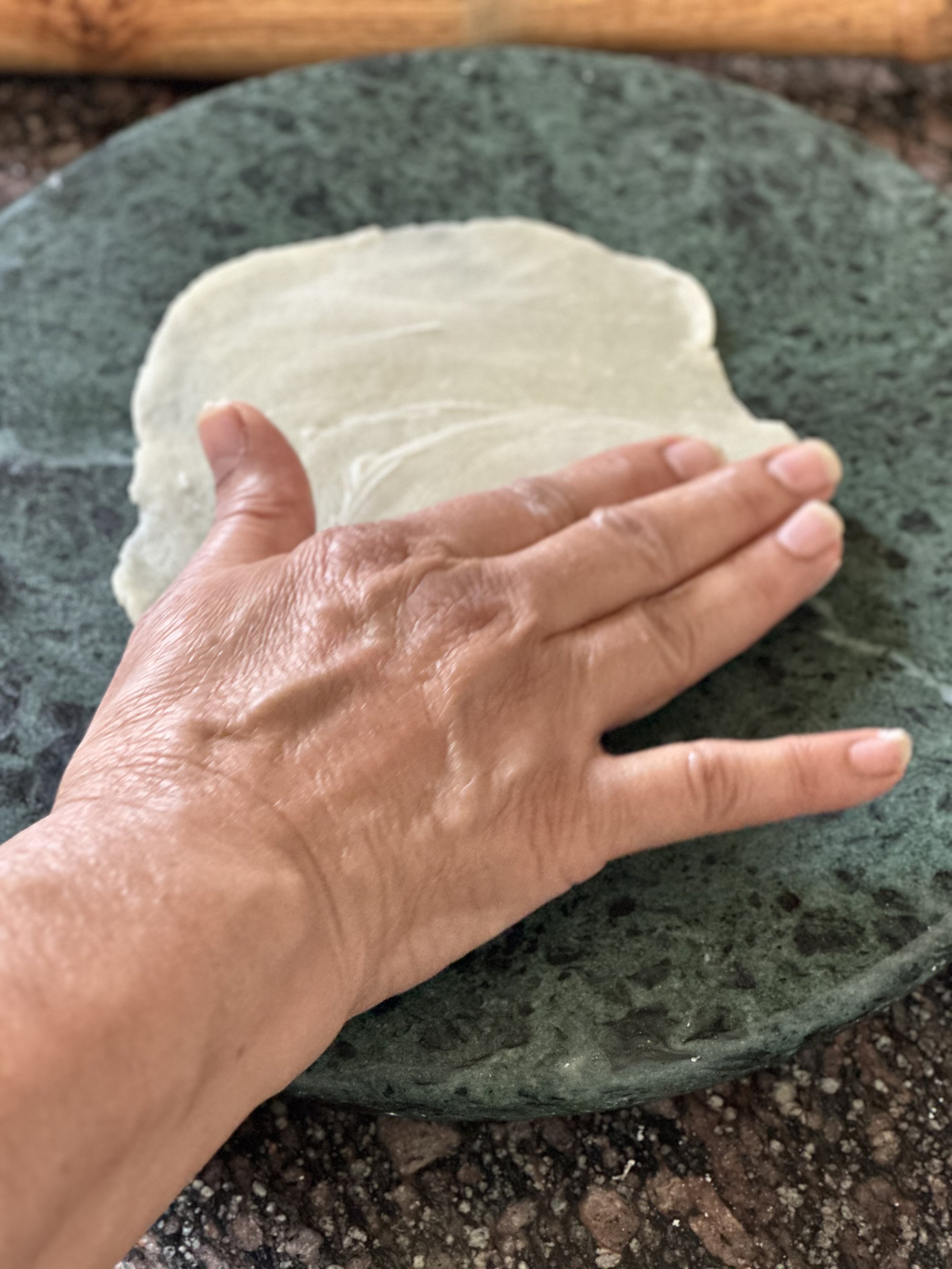
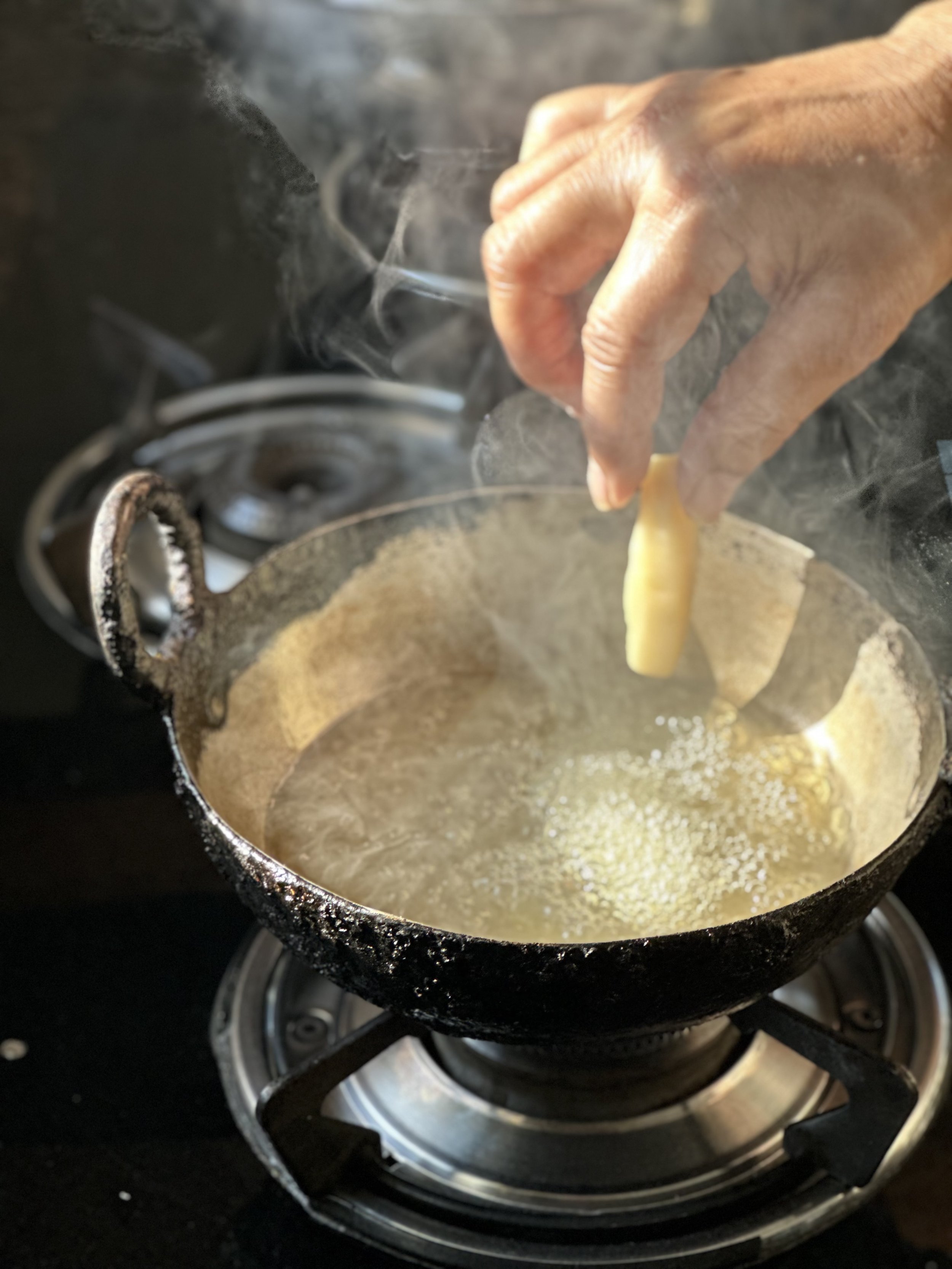
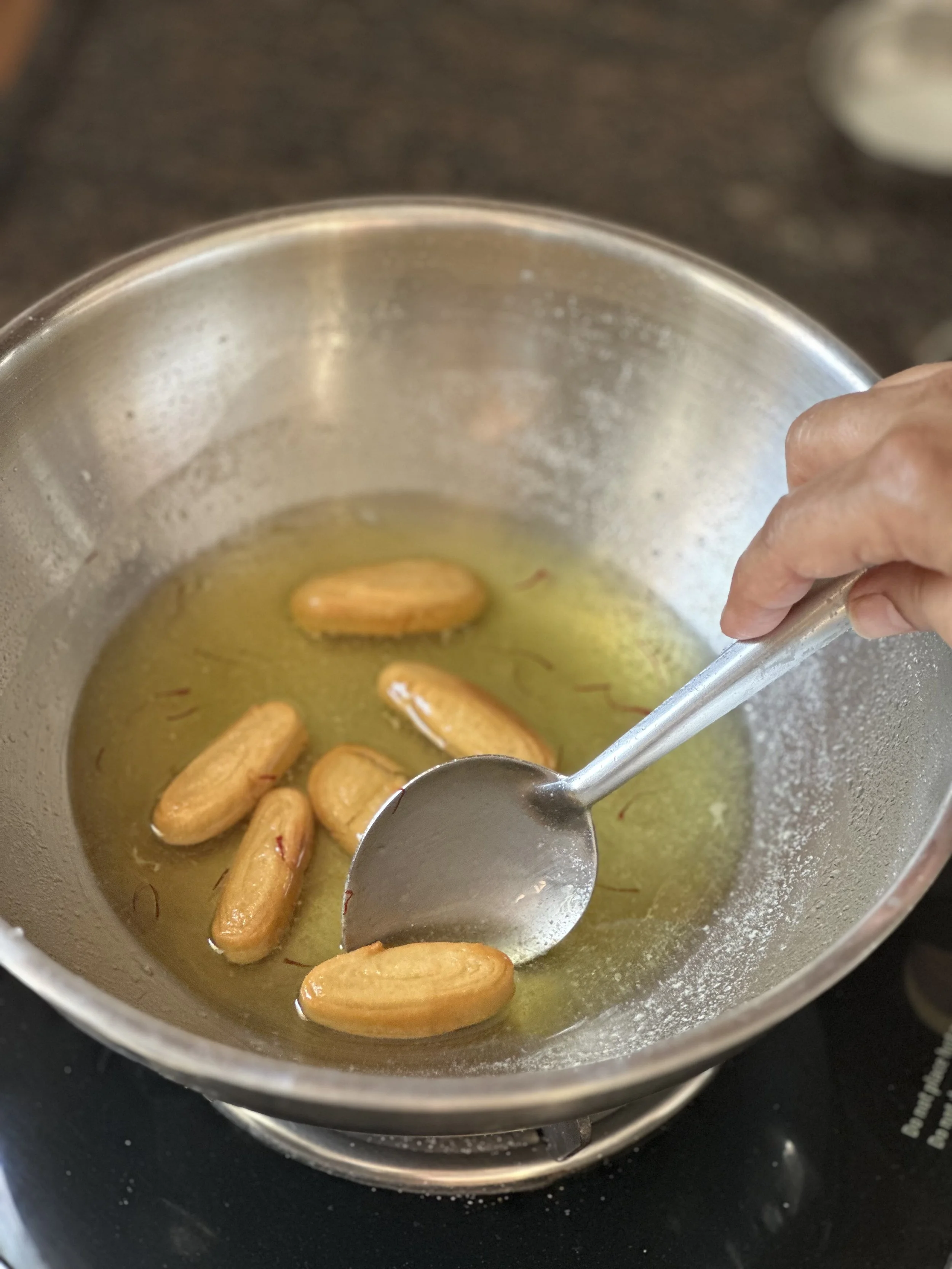
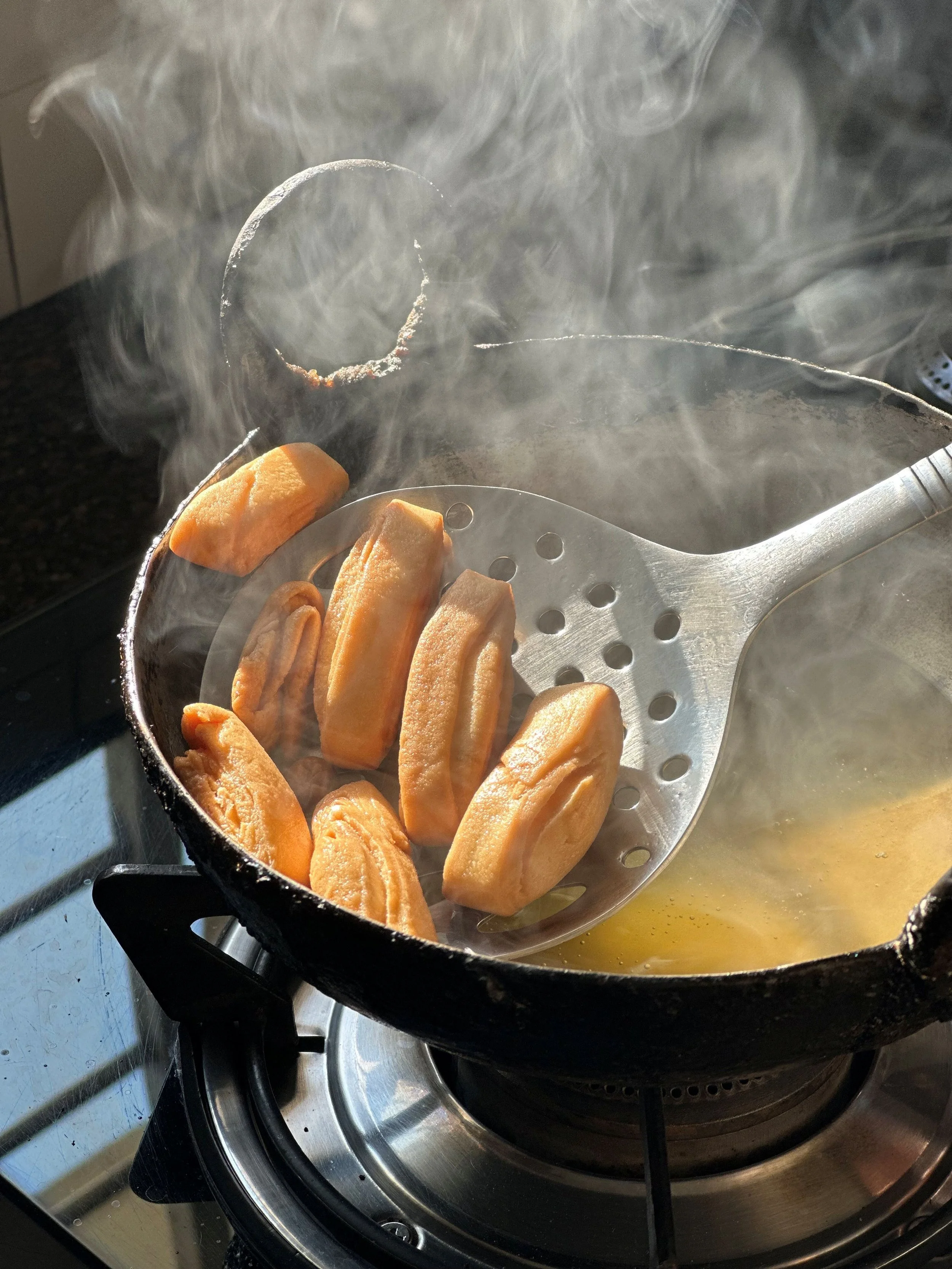
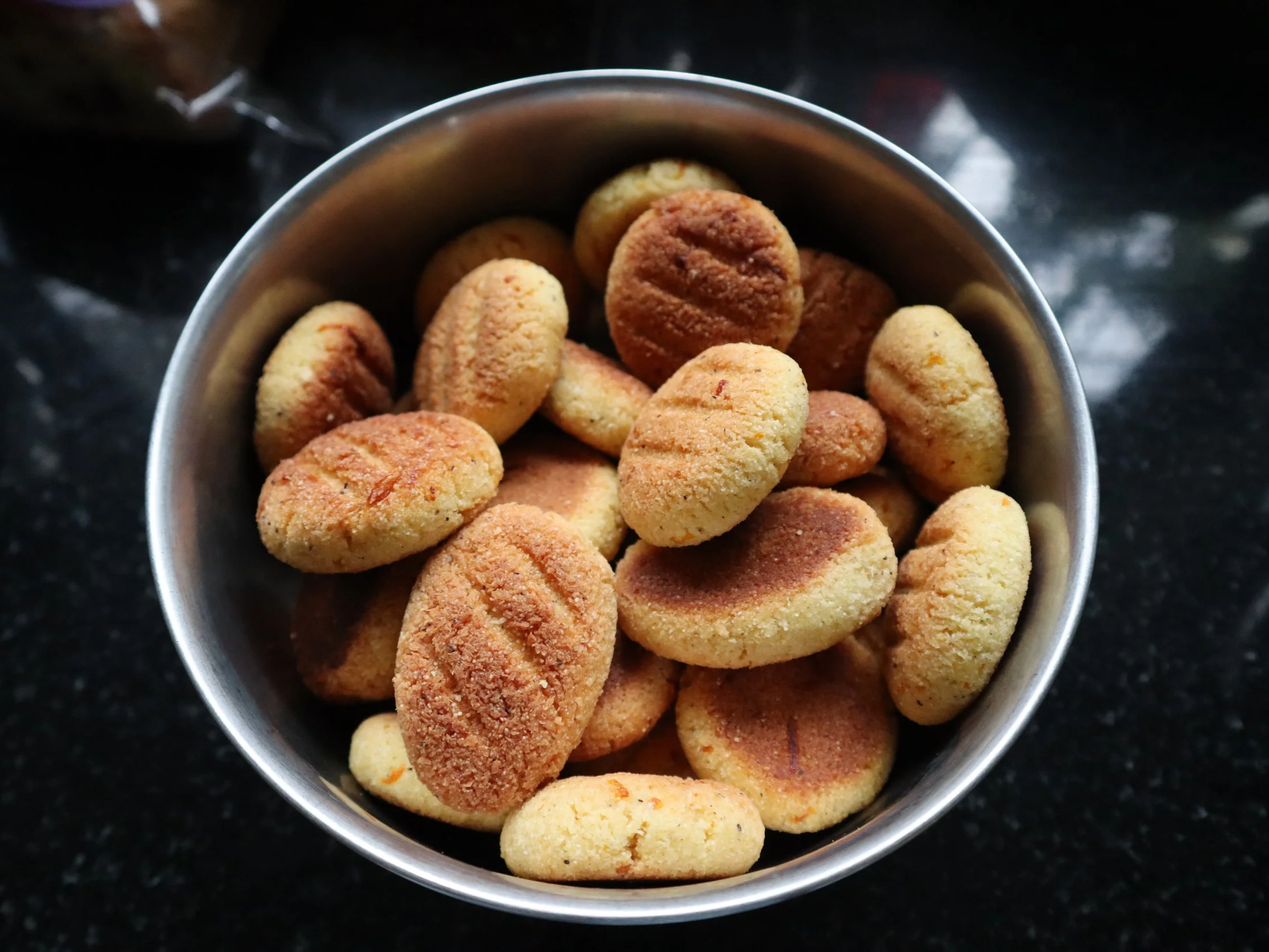
Chirote. Photos credit: Tanushree Kulkarni
The creation is remarkable for another reason. Lamination, the technique of separating layers of dough using fat, is almost universally associated in contemporary imagination with European pastry techniques. Unlike the European tradition which relies on cold butter folded into fresh dough to create layers, the ghee-laden, distinct layers of chirote (and its various cousins) are a result of fat preventing the layers from fusing together during frying. It is a parallel solution to the structural challenge of making dough light, and an ingenious use of lamination optimised for different fats, different climates and different cooking vessels.
And yet, this ingenuity is not the property of only two states’ kitchens or cultural repertoire. It is a story that connects cultural pride in Bihar to temple offerings in Odisha and commercial confections in the Deccan to liturgies in Goa.
A Shared Grammar of Layers
The Nalanda region in Bihar is blessed with a high water table due to alluvial deposits from the Ganga and its tributaries. The district is home to numerous wells that sustained students, monks, pilgrims and scholars from monastic establishments between 5th and 12th centuries CE. One such well, referred to as Bhauraya Kuan in the Archaeological Gazetteer of Nalanda District by Bijoy Kumar Choudhary, is cited in the text as the source of water for making Silao khaja, a GI-tagged, layered sweet and a distant cousin of the Deccani chirote.
For many foods that seek protection under India's 1999 GI Act, collective memory and oral testimony turn into evidence. But the system built to protect geographic origin strains considerably when applied to a technique that is distributed across the entire subcontinent. It reveals that once a culinary grammar is alive across multiple communities, it cannot be enclosed in a single definition.
Chef and author Sadaf Hussain, who has a personal affinity for khaja and fondly counts it among his childhood memories, offers a grounded case for why Bihar’s khaja deserves its GI tag. For him, the argument rests not just on folklore, but on something more tangible: a distinct, crisp texture. “The Silao khaja takes the textural snap a step ahead. Occasionally, it is fried in sesame oil, lending it a distinct aroma and flavour that is not found anywhere in the country,” he says. The fragility makes the Silao khaja prone to crumbling much like a puff pastry, which, Sadaf suggests, points to a more sophisticated lamination process than it is often given credit for.
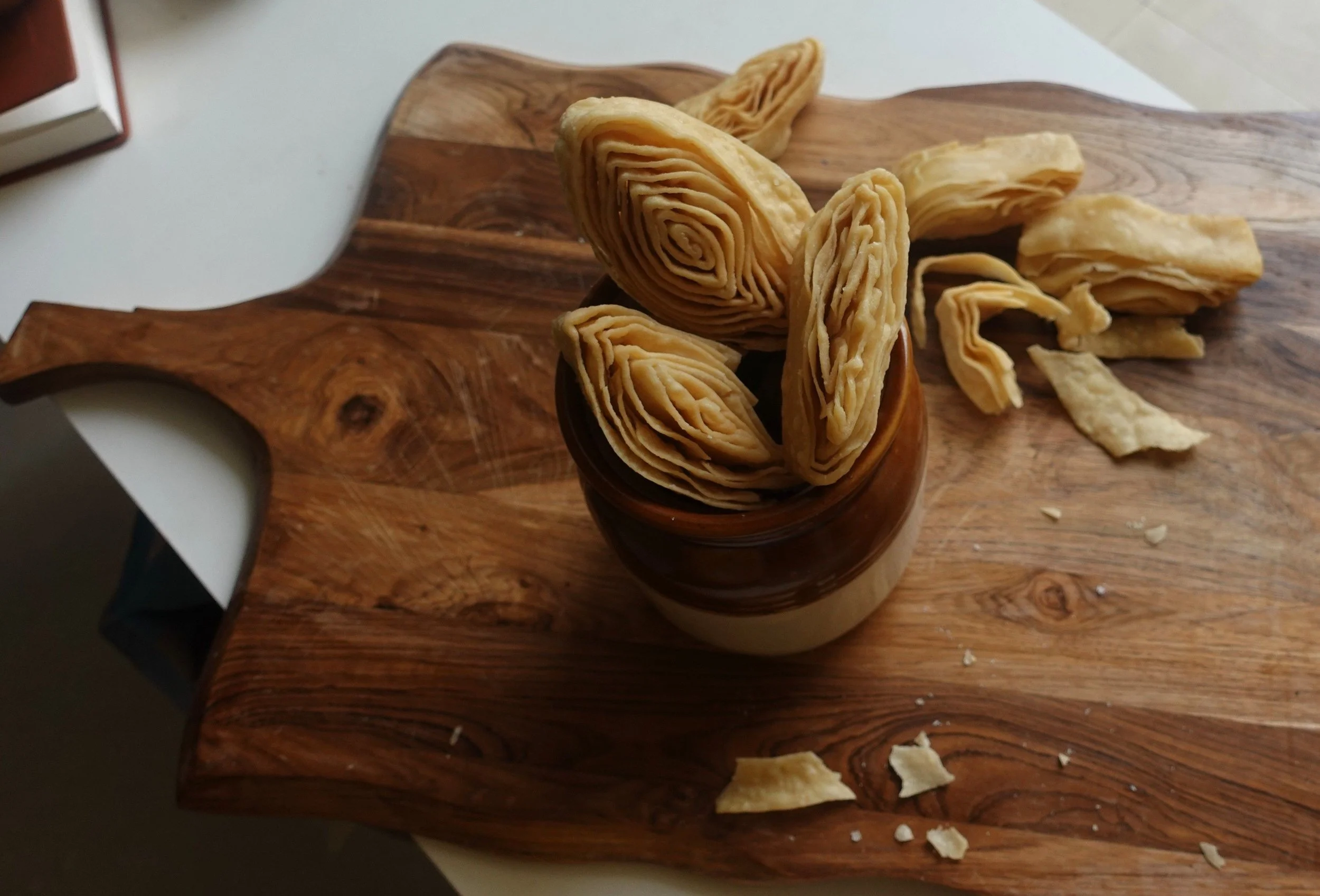
Khaja from Bihar. Photo credit: Jigyasa Mishra
The khaja travels eastward still, and becomes one of the fifty six offerings of Lord Jagannath at Puri's 12th-century temple where suaras or hereditary temple cooks have produced the sweet for years. The sweet is made to be seen by god first, placed before the deity early in the morning, when the oil from the frying has barely cooled and the layers are still audible when bitten into. But the khaja presented at the temple in Puri is distinct from those available commercially, both in shape and size. Made to withstand movement during its distribution and guided by liturgical tradition, the larger and thicker temple khaja is shaped like a petal, a form that is more difficult to master. Outside the temple, khajas are round or oval, sweeter, and produced with wider consumer appeal in mind.
“Most of the time, for khaja available outside, the shortening used between layers is just ghee. Sometimes, a bit of saunf (fennel) is added too,” says chef and visual storyteller from Orissa, Rachit Keertiman. “Even today, a month before a family wedding, khaja and other sweets are distributed amongst relatives”. In Orissa, khaja was a proof of pilgrimage — in earlier times, owing to financial and practical constraints, only one person in a family could afford the journey. The shelf stable, sugar-steeped sweet allowed people at home to partake in the sanctity of the journey.
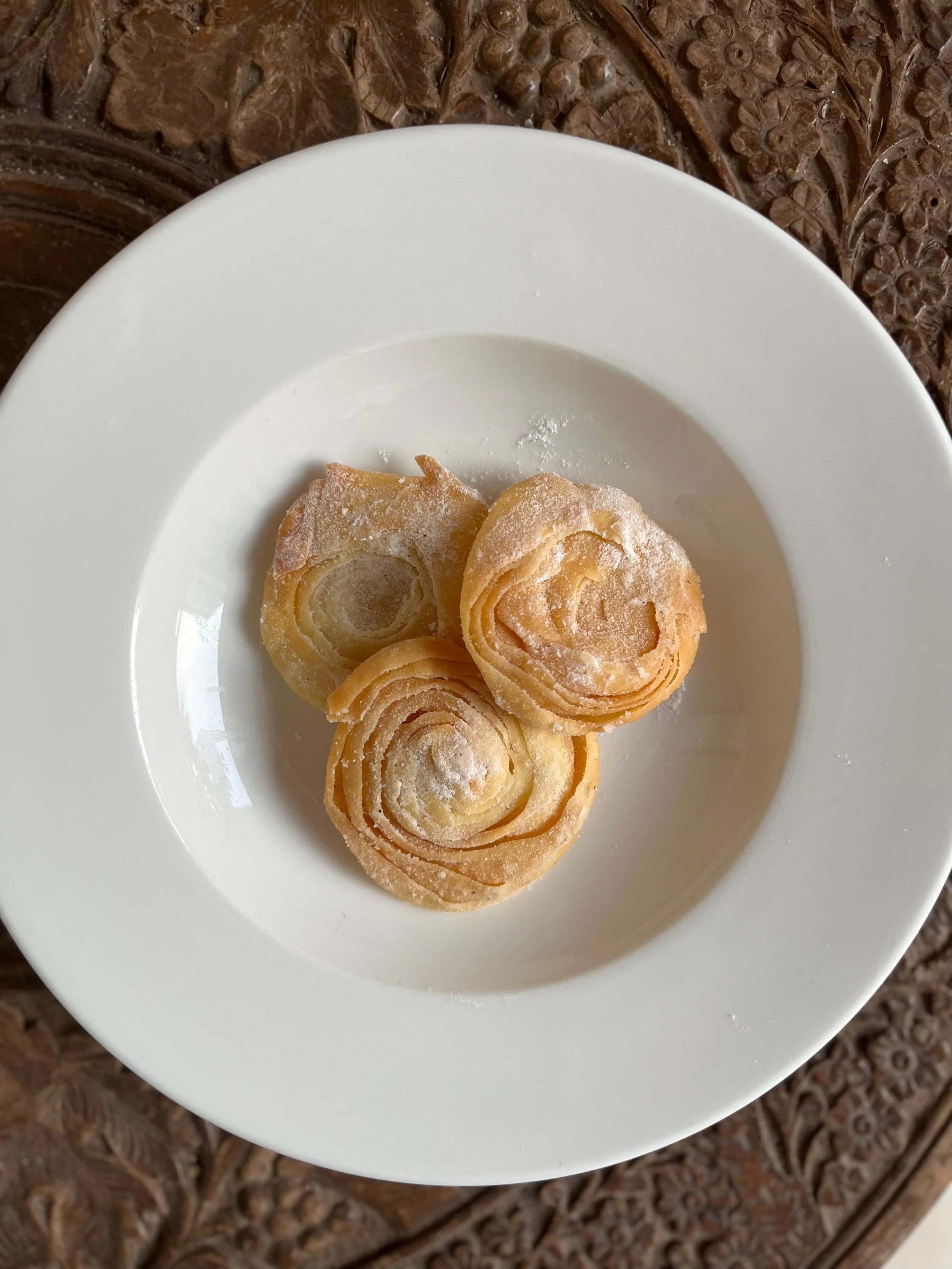
Phenori in Goa. Photo Credit: Shubhra Shankhwalker
Crossing to the South-East coast, the layered sweet takes its most commercially significant form in Andhra Pradesh, where multiple varieties of the sweet compete for recognition through regional identity and Geographical Indication claims documented by the Geographical Indications Registry of India. Within the prasadam system of the Tirumala Tirupati temple complex, the khaja remains one of the enduring sweet offerings associated with pilgrimage and ritual exchange, a tradition situated within the broader historical landscape of Indian foodways described by KT Achaya in Indian Food: A Historical Companion (1994). Historical references in the 12th-century encyclopedic Sanskrit text Manasollasa (also known as Abhilashitartha Chintamani), compiled under the Chalukya ruler Someshvara III and edited in the modern critical edition by G. K. Shrigondekar (1967–1971), placed techniques of preparing layered and fried sweets firmly within the Deccan’s gastronomic history.
The story of our sweet expands its layers further in Goa, where chirote is phenori. The name is believed to be derived from the Persian pheni, meaning fine or delicate. Phenori acquires a social position that outlasts its origins. Flour trade increased significantly due to rising bread consumption under Portuguese rule. The abundance of ingredients, especially rice flour and sugar, and an addition to the Catholic households’ traditional assortment of sweets around Christmas, allowed phenori to not just survive but thrive up until a few years ago. Goan home chef, Shubhra Shankhwalker, recounts the presence of phenori in the traditional vojem, a basket of sweets and snacks sent by a mother to her married daughter on festivals and days of celebrations. She adds that the sweet is now rarely made at home with very few vendors selling it in the long-standing and historic Mapusa market of North Goa.
South of Goa, Karnataka’s chirote ascends to the formal structure of the wedding banquet. Instead of being dusted with sugar and dunked in saffron-tinted sugar syrups, the chirote in Karnataka is finished with sweetened milk topped generously with almonds, or simply sweetened almond milk.
Every version of chirote, dunked or dusted, soaked or dry, arrives at the same question: what is it about this laminated sweet that made every culture that received it, proudly claim it as their own? It is worthwhile to consider what chirote, khaja and their cousins really signify. They demand patience and repetition, but once made, they keep. They not only keep legends and history alive, but have a long shelf life, holding strong in the country’s hot months. They ask for a little in terms of ingredients but return a great deal in texture and satisfaction.
Laminated sweets like chirote have survived in domestic kitchens through devotion, female festive labour, celebration, nostalgia and technical knowledge that does not translate easily to a factory floor. The pastry that blooms, separates, and satisfies is indifferent to the conversation of ownership. It belongs to everyone who has learned to watch for the bloom.
Citations/References
Achaya, K. T. (1994). Indian food: A historical companion. Oxford University Press.
Choudhary, B. K. (1998). Archaeological gazetteer of Nalanda district. Directorate of Archaeology and Museums, Government of Bihar.
Government of India. (n.d.). Geographical Indications Registry: Registered geographical indications of India. Department for Promotion of Industry and Internal Trade, Ministry of Commerce and Industry.
Mahapatra, S. (2015). Shri Jagannath Mahaprasad: Legends, miracles & myths. Bhairob Mahapatra Smruti Committee.
Pearson, M. N. (2006). The Portuguese in India. Cambridge University Press.
Starza, O. M. (1993). The Jagannatha temple at Puri: Its architecture, art, and cult. E. J. Brill.
Tanushree Kulkarni is a historian, food researcher, and pastry-trained author exploring the histories and design of Indian sweets.
ALSO ON GOYA