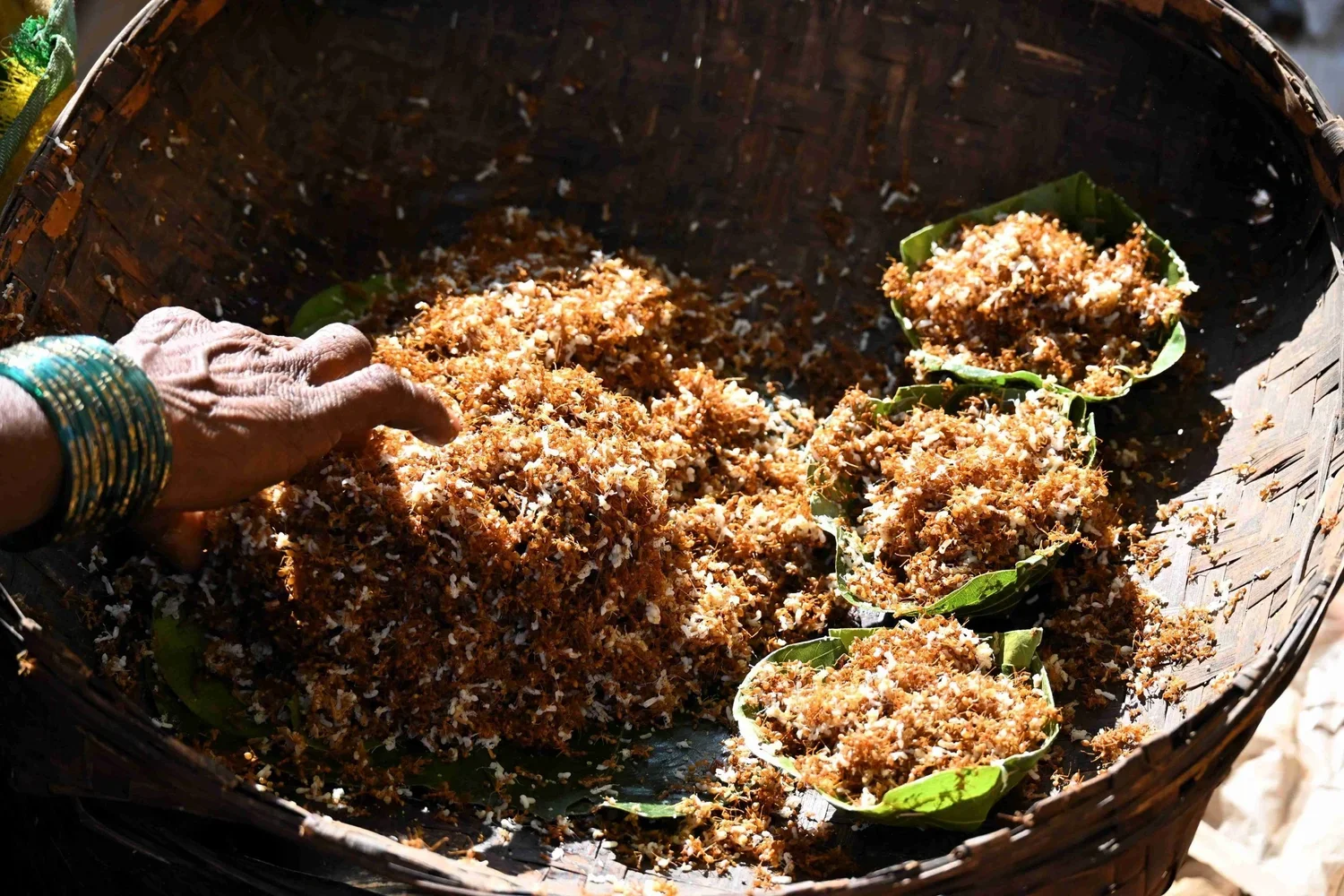
The Case of the Vanishing Silver Pomfret
Over the years, the demand for silver pomfret has only increased, even as the fish grows further out of reach. Caught younger, sold smaller, and consumed faster than it can recover, the declining fish is revealing how class, consumption and climate are reshaping Koli heritage and the fishing economy, finds Khushi Vora.
The declining population of the pomfret is a result of various problems compounding into one. From changing seas to unregulated fishing to urbanisation and industrial development, the fish is just another one in a long line of collapsing species.
It’s 6:43 am on a Saturday. I’m sitting with Geetanjali maushi and Deepa maushi at the Sassoon Docks Fish Market in Mumbai. They’ve been selling fish here for about 30 years. The noisy, bustling market is bathed in orange light from the morning sun. The air is heavy, swirling with a smell of fish, sweat and salt. Baskets of fish and crustaceans from the boats are being thrown onto the dock for auction to sellers. Above the throng of people, egrets and crows wait eagerly for a chance to swoop down and steal a fish or two. The ground is littered with crab shells, fins, and tiny paper cups.
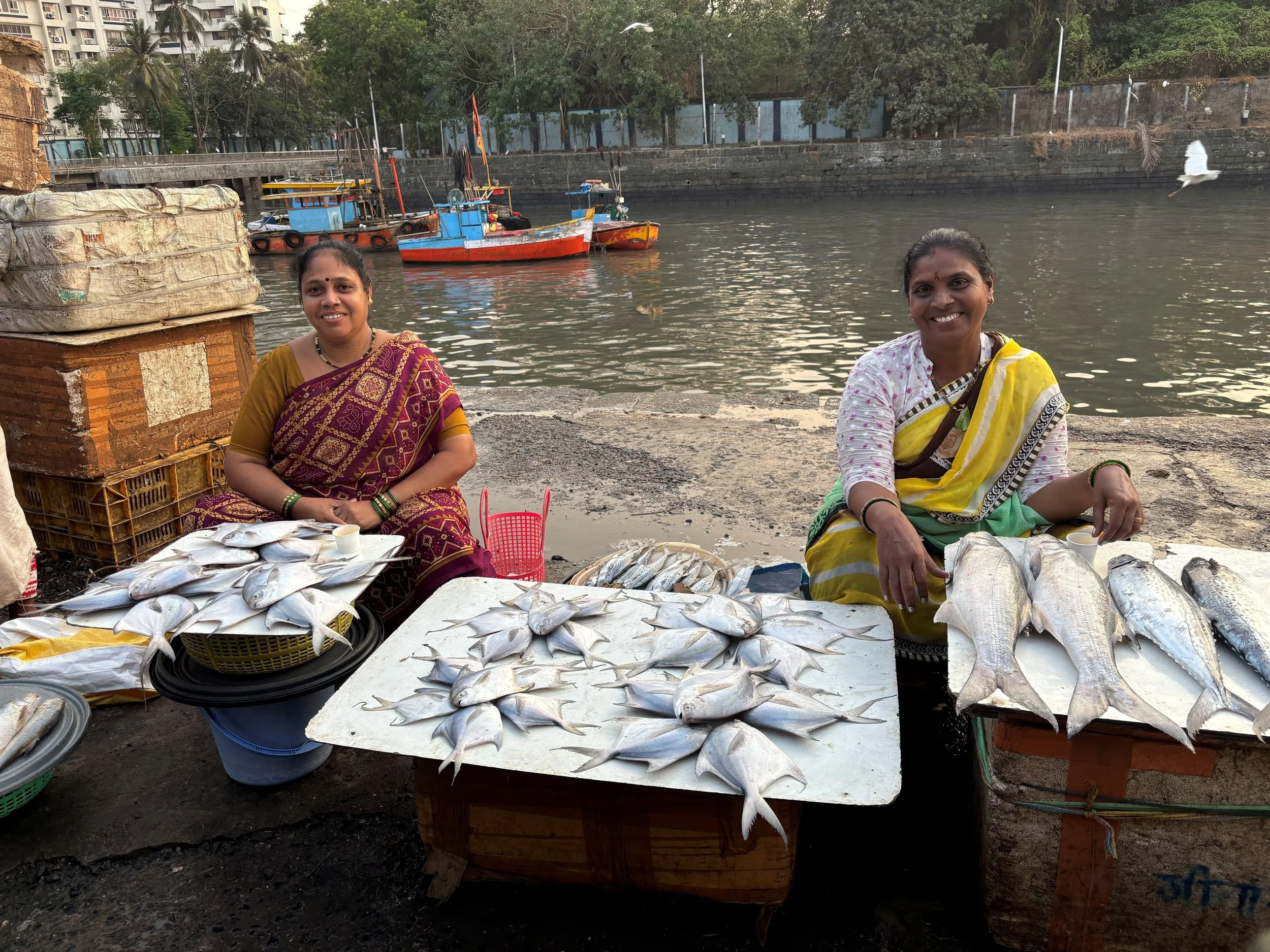
Deepa and Geetanjali with their baskets of pomfret at Sasoon Docks. Images credit: Khushi Vora
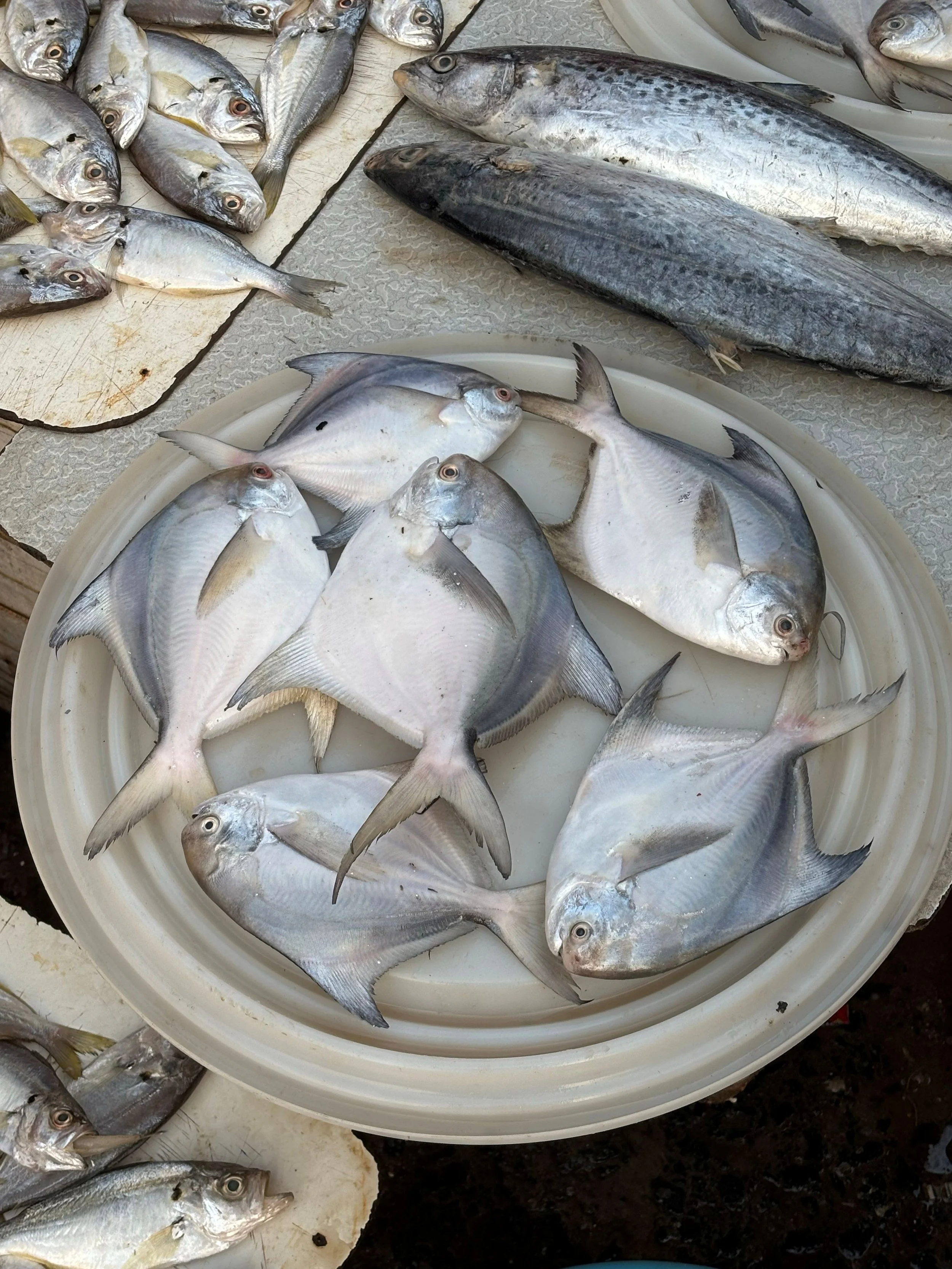
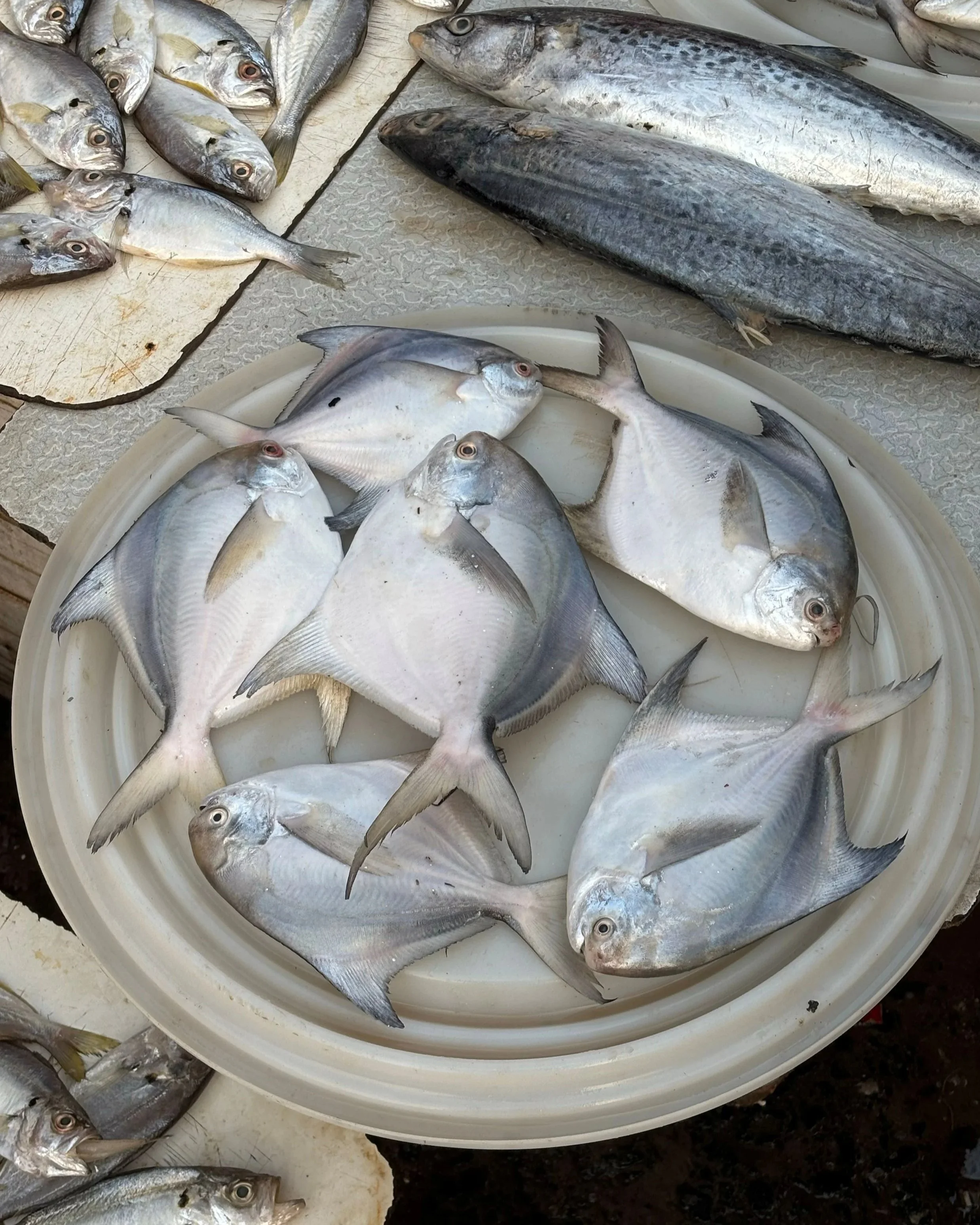
Adult pomfret at Sassoon Docks.
Geetanjali maushi sips hot chai from a similar cup and tells me about her children, who don’t eat fish. “Kahi varshani tar mulana chitratach dakhavayla lagel: hyala paplet mhantat, hyala surmai mhantat,” she says. In some years, we will only have pictures of pomfret and surmai left to show the children.
Earlier that morning, I found myself at the entrance to Crawford Fish Market, which opens 3am, long before most of the city is awake. It is already teeming with activity: loud bargaining, fish being thrown onto weighing scales, knives being sharpened, heads being chopped. Fifteen minutes in my jeans are soaked, I smell like fish, and I’ve lost sight of my guides for the day.
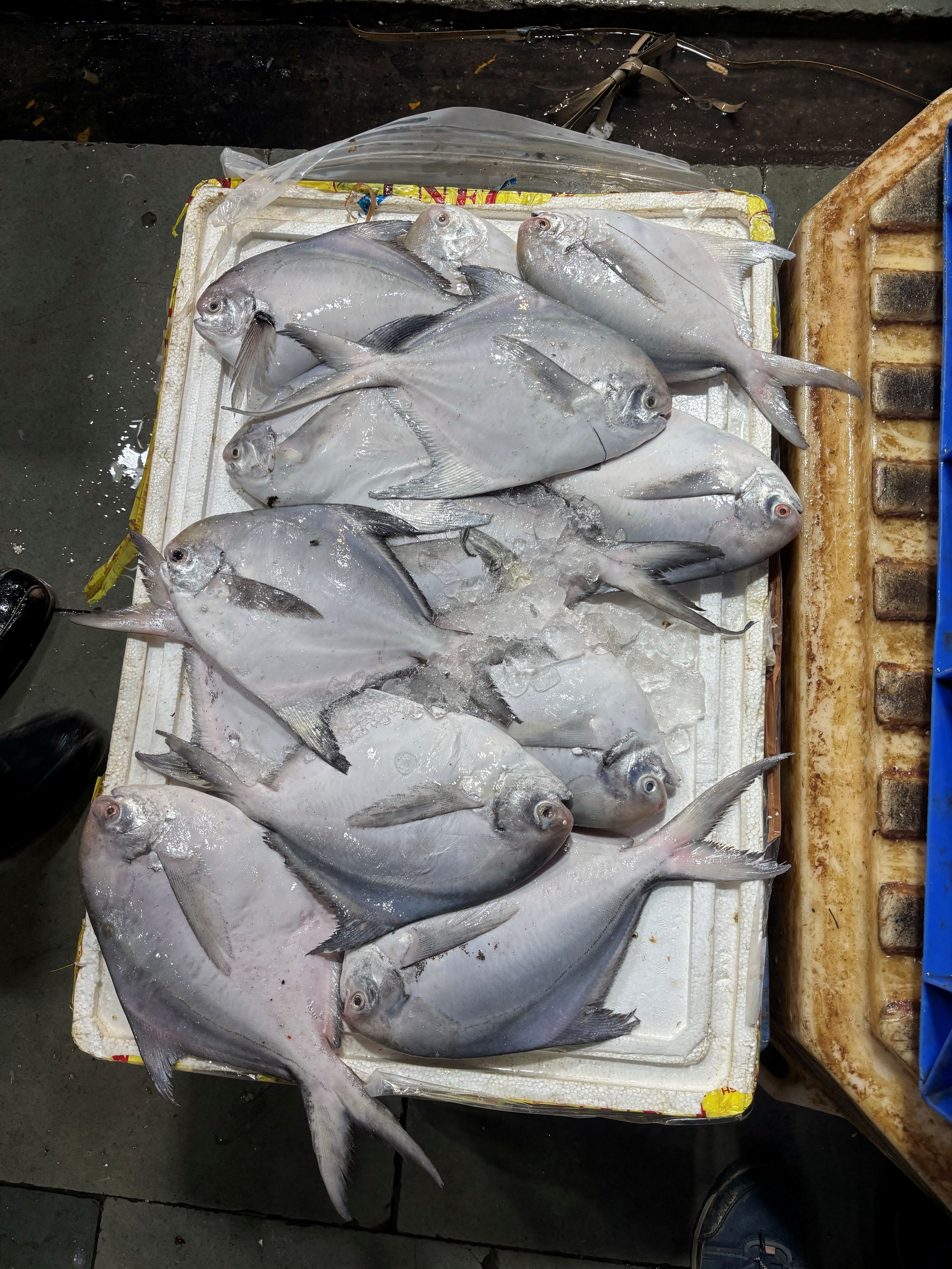
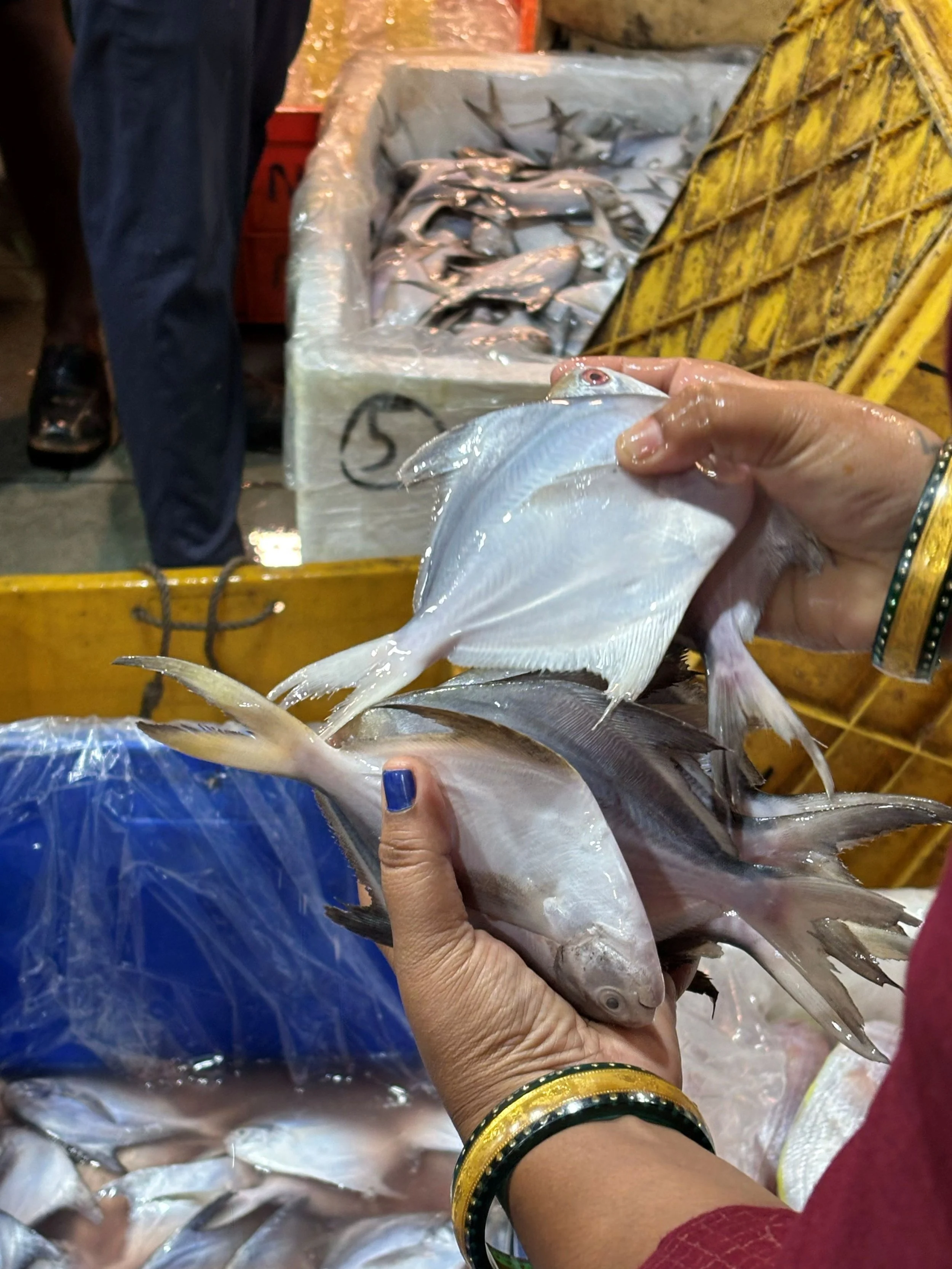
There, I meet Sunil More, affectionately known in the market as ‘baba’, who tells me, “Me ata 1993 pasna ya machhichya dhandyat ahe. Tyatla ata 25 paise pan nahi dhanda rahila ahe.” I’ve been supplying fish since 1993. Not even 25 per cent of that business is left now.
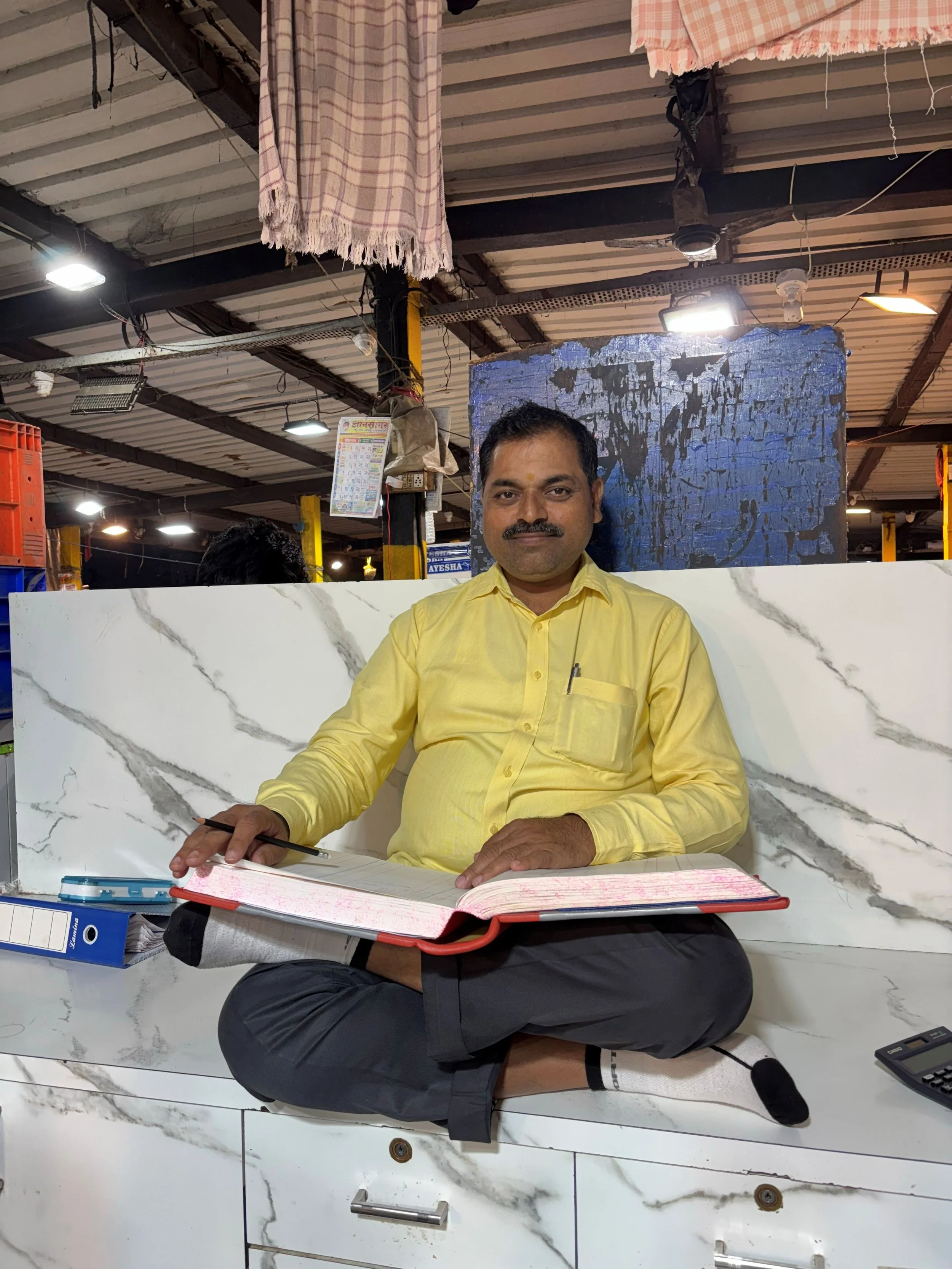
Sunil More or baba has been supplying fish at Crawford market since 1993.
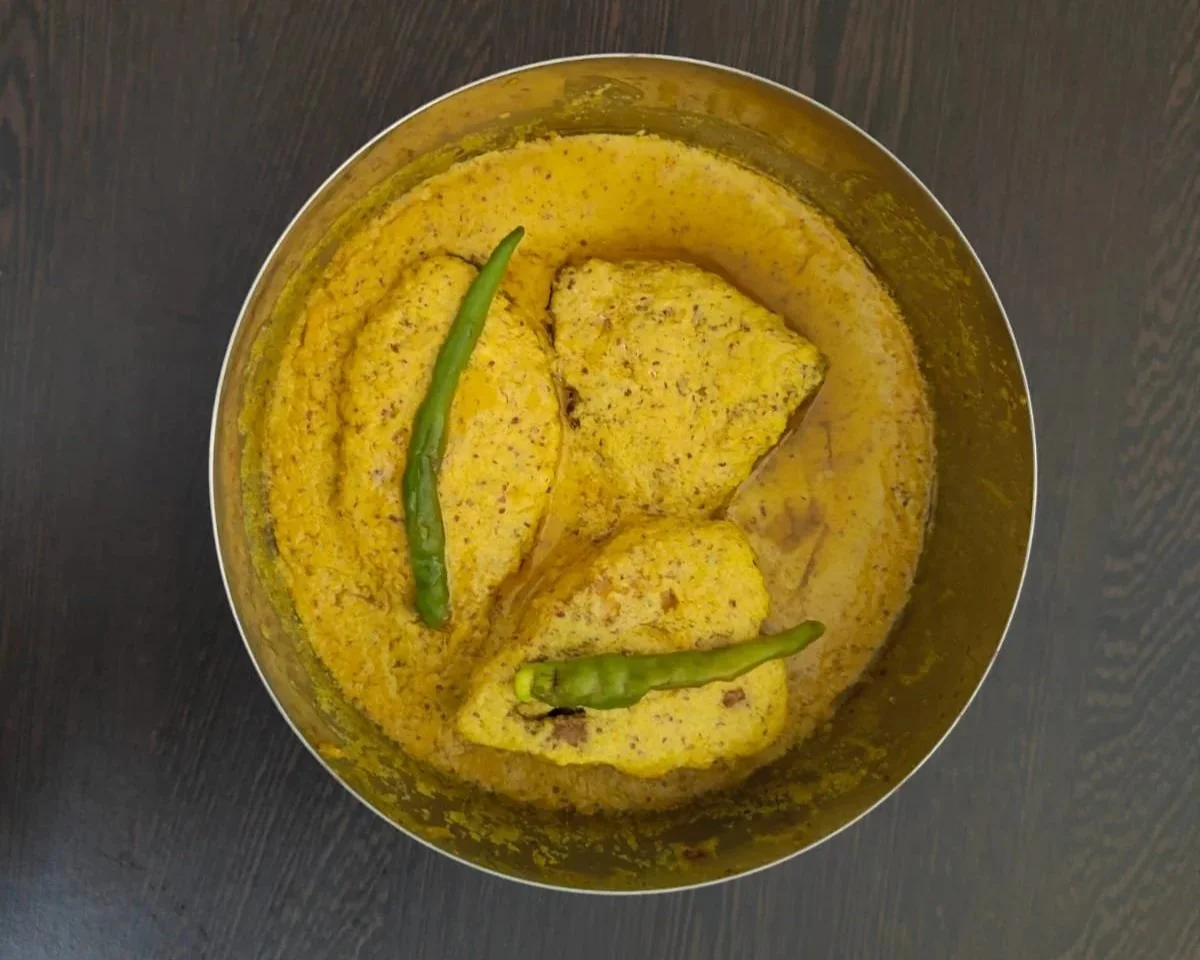
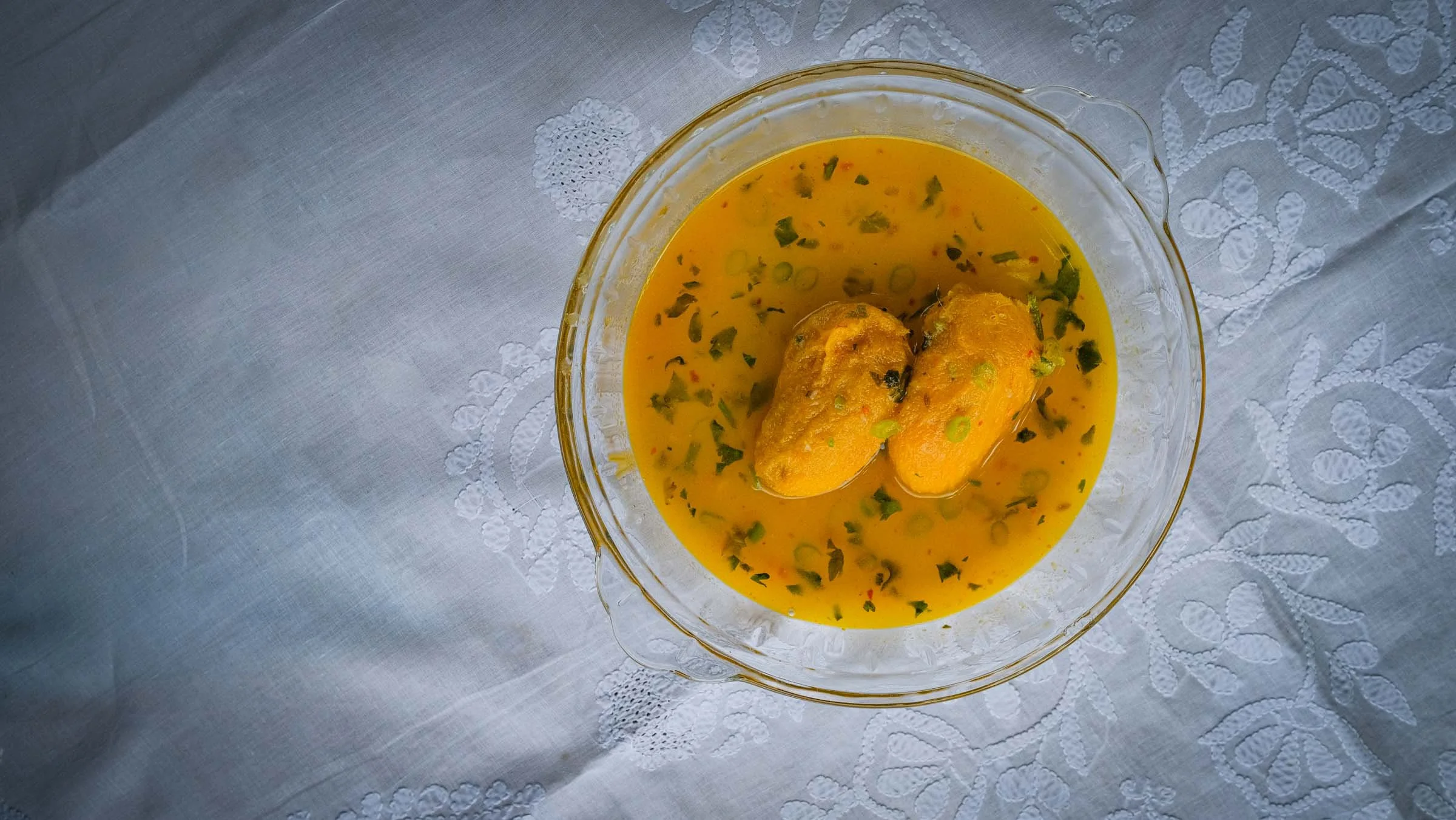
Baba and Geetanjali maushi represent an entire community of Koli fishing families, who are now losing a vital piece of their livelihood and heritage: the silver pomfret. Native to the western coast of India, the silver pomfret is among the most prized catches, making up around 40,000 metric tonnes of landings along the coast. Walk into a Koli home and you will immediately be greeted by the heady aroma of ambat, a tangy pomfret curry with a tamarind base, or lock eyes with a coconut-stuffed pomfret ready to be served. This buttery fish is heavily adored and highly overfished, leading to a slow but definite decline in its population.
The declining population of the pomfret is a result of various problems compounding into one. From changing seas to unregulated fishing to urbanisation and industrial development, the fish is just another one in a long line of collapsing species.
Omkar Bhurke, a Koli marine biologist based in Goa, explains that the primary reason for this decline is overfishing, where juvenile and sub-adult fish are caught during breeding seasons, before they have had a chance to lay eggs, reducing the adult population. The survival of the juveniles is also threatened by rising sea surface temperatures and changing water currents.
Additionally, local ecological knowledge—whether understood as an innate intuition or the accumulated wisdom of generations of observation passed down within the fishing community—is steadily disappearing. As younger generations move away from fishing, grow emotionally detached from the sea, and contend with rapidly changing marine and coastal ecosystems, this inherited knowledge is becoming increasingly difficult to sustain. “We are losing a significant chunk of local ecological knowledge. I remember someone telling me that they see a certain type of bird flying near the ship, and they’ll know where to cast the net. Now, there is someone else going out to fish. They have come to the city to earn money. So, they are more concerned about the amount of fish they catch,” he says. The issue, to sum up, is a “disconnect between the community and the occupation.”
Siddharth Chakravarty, a researcher working with small scale fishworkers and policymaking, sees this detachment as a result of a larger web of development along the coast. “The Koli identity is tied to the sea, and so it’s not that the community’s affect with the sea is missing. Development in Bombay has ghettoed them into very small corners where koliwada sizes haven't increased in 30-40 years, but the population has, leading to high population densities and cramping. Of course, we can't discard the amount of industrial effluent and waste that flows out from Mumbai into the sea and infrastructure development that blocks the natural flow of rivers,” he says. “Much needs to change for the Kolis to think of the sea in a different way, and think of themselves as being in a city that respects the sea.”
Ankush Shewale, an activist and seafood supplier, offers some insight into a very specific problem — the irregular mesh sizes of the fishing nets. While the prescribed mesh size for the pomfret is 150-166mm, to ensure juveniles are not caught, smaller sizes are used, particularly by fishermen trying to maximise their catch.
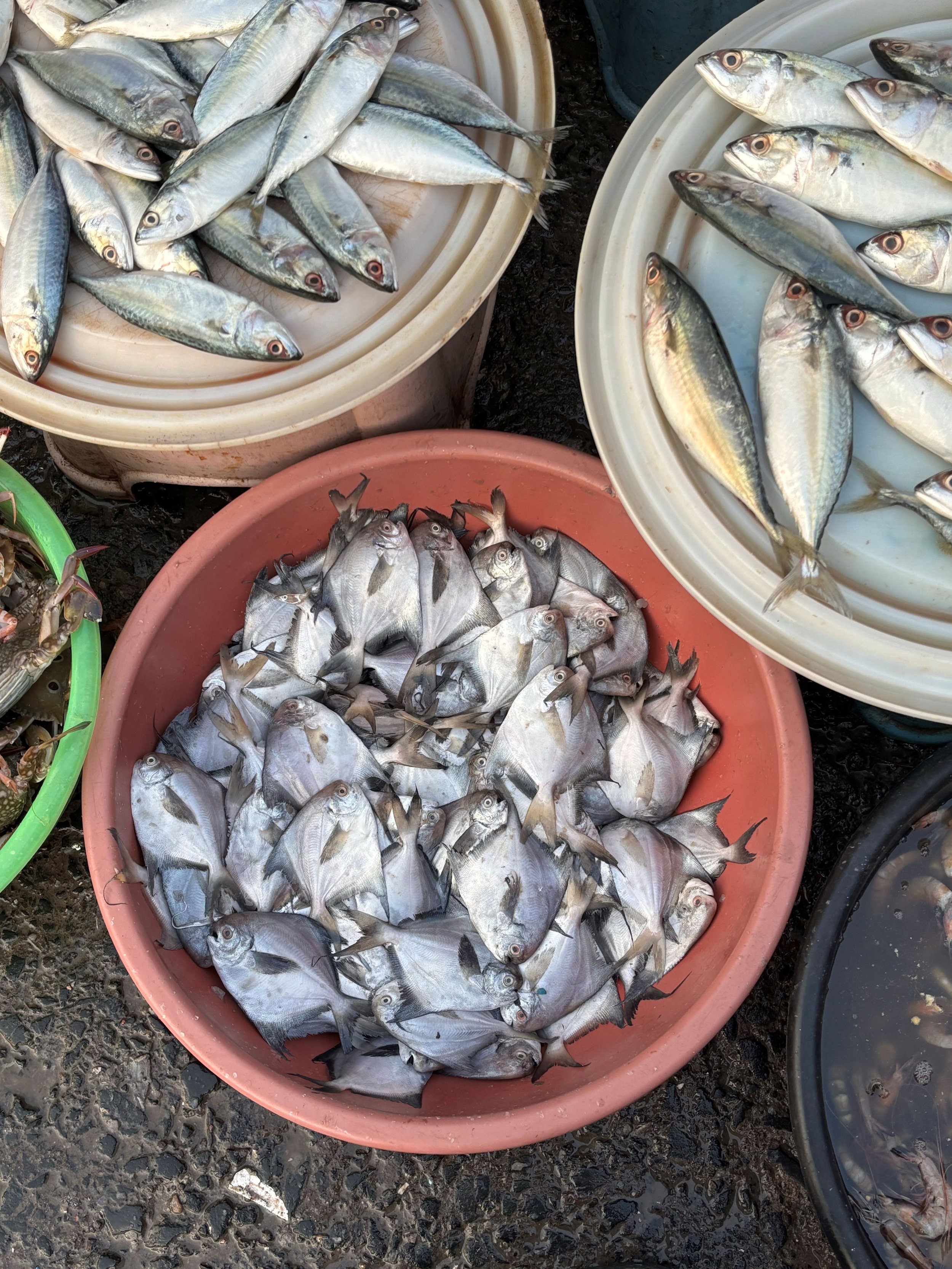
Juvenile pomfret at Sassoon Docks.
Seeing the size of the juveniles in person, I couldn’t help but wonder who actually buys such a small fish as there’s barely any meat on them. But the small size proves an affordable option for smaller eateries and restaurants. Shewale explains: “Chhotya hotel cha girayik pan chhotach na. Konala masa mhatla ki pomfret and surmai, hya donach goshta mahiti astat. Hey je chhote mase, tyanna kimmat phar naste. Mag te chhotya hotel la te parvadta na, tyanchya menu madhe navapurta pomfret vikayla.” Small eateries serve lower-income customers, who only know two names when it comes to fish: pomfret and surmai. Because juvenile pomfret is cheaper, it allows these places to keep it on the menu at a lower price.”
Geetanjali maushi expressed a similar sentiment about her customers at the docks. For many lower-income consumers, silver pomfret remains an aspirational delicacy. Unable to afford a fully grown fish, they often opt for smaller, younger pomfrets, which sell for nearly half the price but are caught before they have had a chance to mature and reproduce. A cost that has already doubled in the past few years. A full-grown 200g fish, which used to cost about ₹700-800, costs almost ₹1700-1800 today. At the same time, younger fish are sold by the kilo, costing only about ₹300 per kilo.
So, the question remains. Will the silver pomfret come back? What can you and I do to bring it back? How is the fishing community adapting? On an individual level, Bhurke recommends following seasonal calendars, like Know Your Fish and InSeason Fish, to only consume the fish that are regional and in season, while Shewale highlights a need for buying frozen fish only during the monsoon fishing ban, when most species are breeding.
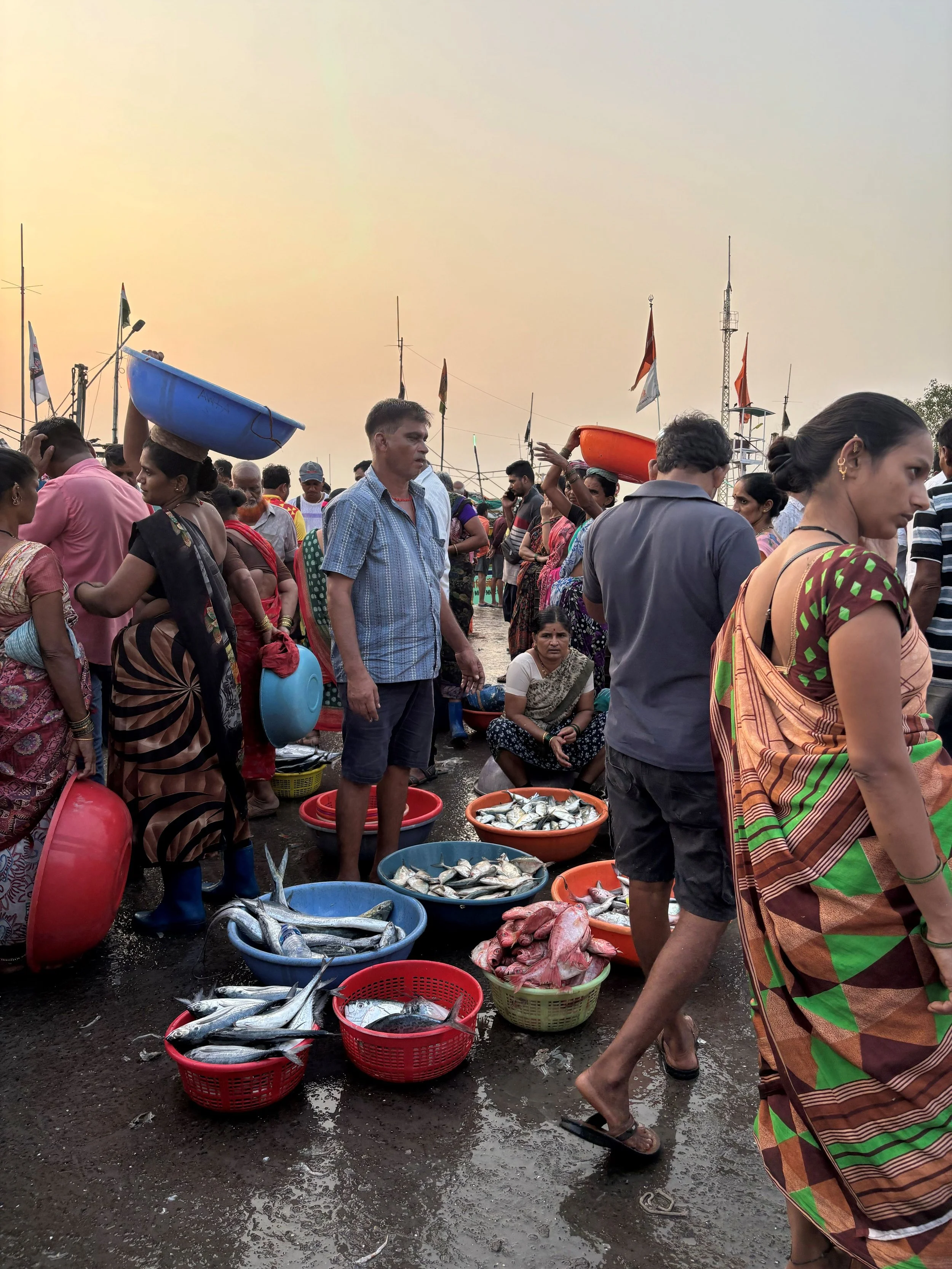
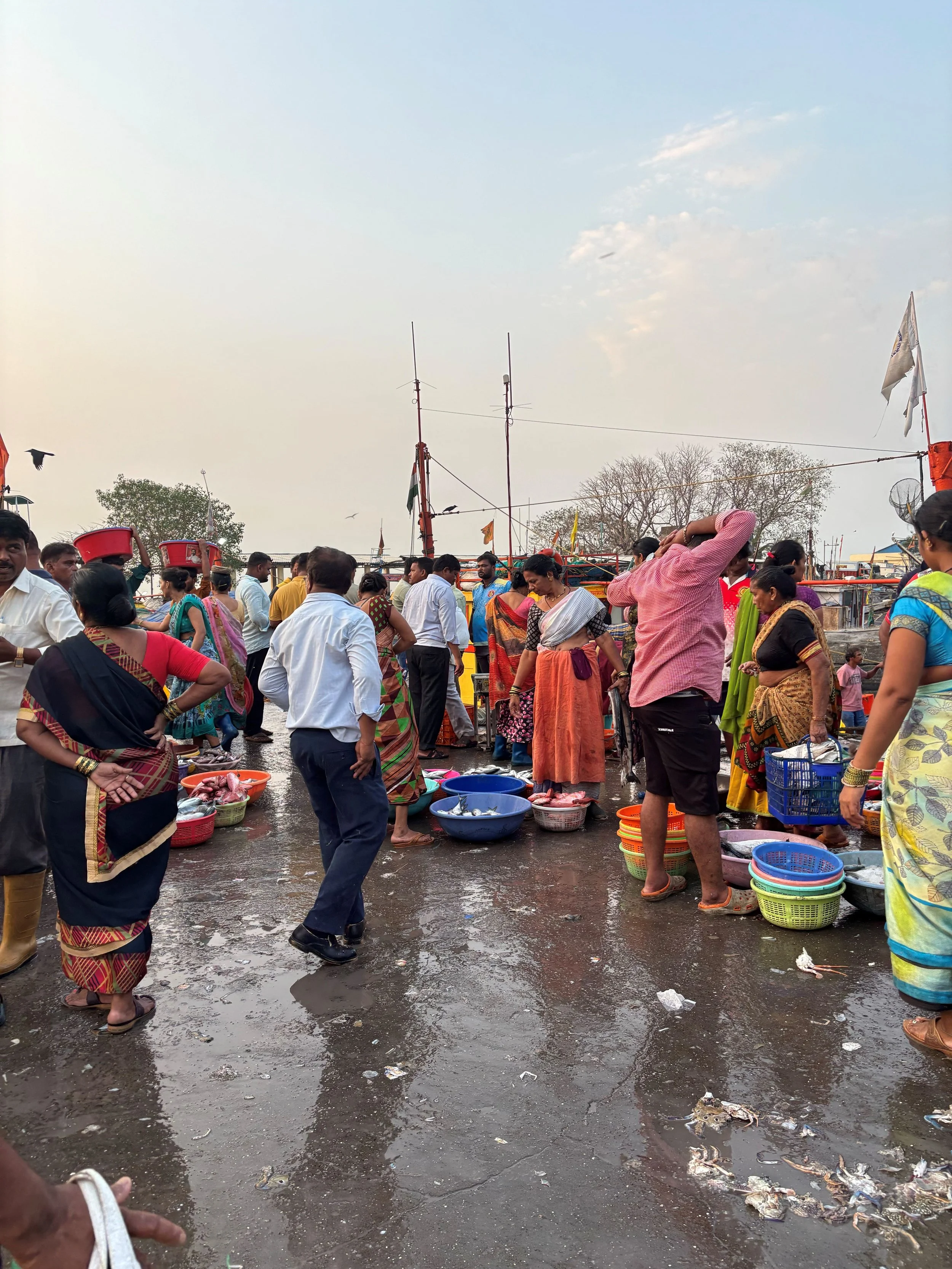
Bhurke says, “I want to start buying fish and support more local fishing operations, rather than traditional mass fishing operations like trawlers, especially because they are non-targeted. They actually destroy the entire seabed and sea flow when they operate, because they catch everything that comes in their way, and often a lot of unnecessary species get trapped in the nets.”
On an industrial level, they call for stricter enforcement of laws and fishing bans, alongside mindful construction, in order to protect the ecosystems that sustain life. Chakravarty explains that historically, such enforcement has largely come from public outrage and protests. “India's coastal and marine regulations, be that the Marine Fishing Regulation Act, fishing gear restrictions, coastal regulations, coastal aquaculture, all come from struggle. That space for struggle, in the last 15-20 years, has declined with a general sort of decline in fish and the ability of fishers to mobilise.” He also calls for more climate-sensitive governance, which takes into account the changing ecosystems of the sea, and reprieves for fishers losing out on fishing days or unable to find their desired fish.
For him, the future of conservation lies in addressing the social inequalities, which means trying to equalise the benefits that come from the fishery in a way that is able to meet the needs of most of the people in a fairer way. “About 85% of India's catch now is caught by the bigger, mechanised boats. Which means that a large share of the small-scale fishers are getting a much smaller share of the fish. Even on mechanised fishing vessels, there are wage differences between owners and workers. The third is that there's a gender difference as well. Women in households are working more, they're compensating for loss in household income by eating less, and they’re migrating more for daily wage work. That burden at the household level is quite exacerbated.”
Back on the docks with Geetanjali maushi, I wondered about her kids as we watched a pair of tourists fumbling with a film camera to capture the sunrise. Would they have chosen to work with her if the fish came back? Or would they keep chasing urban jobs? What is it like seeing the sea that you draw your identity from, completely change within your lifetime? The work continues around us as it always has, but what comes back from the sea and the lives built around it may never be the same again.
Khushi Vora is a culture and lifestyle writer based between London and Mumbai. With a background in fashion journalism, she is interested in stories about food, fashion, music, identity and climate, with a particular focus on emerging creative scenes, subcultures and communities.
ALSO ON GOYA