Daksha makes a Salam family favourite: Kangsoi
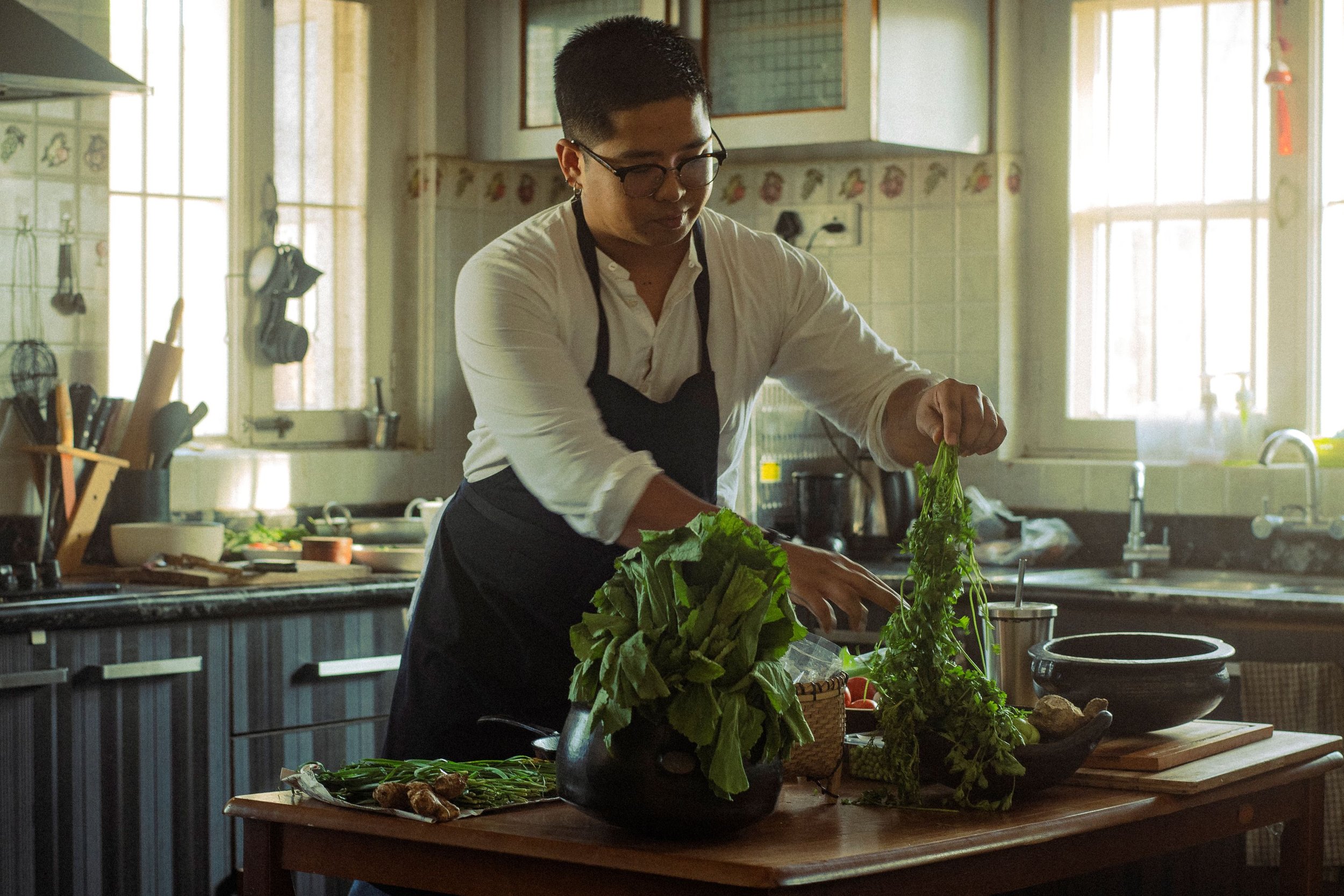
At Goya, celebrating home cooks and recipes have always been at the heart of our work. Through our series, #1000Kitchens, we document recipes from kitchens across the country, building a living library of heirloom recipes that have been in the family for 3 generations or more. In this edition, baker Daksha Salam tells Anisha Oommen how he added his take on the traditional kangsoi, a simple stew made with pork and fermented fish, and thoiding, mashed perilla seed balls.
This season’s stories are produced in partnership with the Samagata Foundation—a non-profit that champions meaningful projects.
Daksha Salam simply can’t be boxed in. At the moment, he is a baker at Nari & Kage, where he turns carefully sourced produce into stunningly beautiful baked goods. But this is only one aspect of a much wider practice.
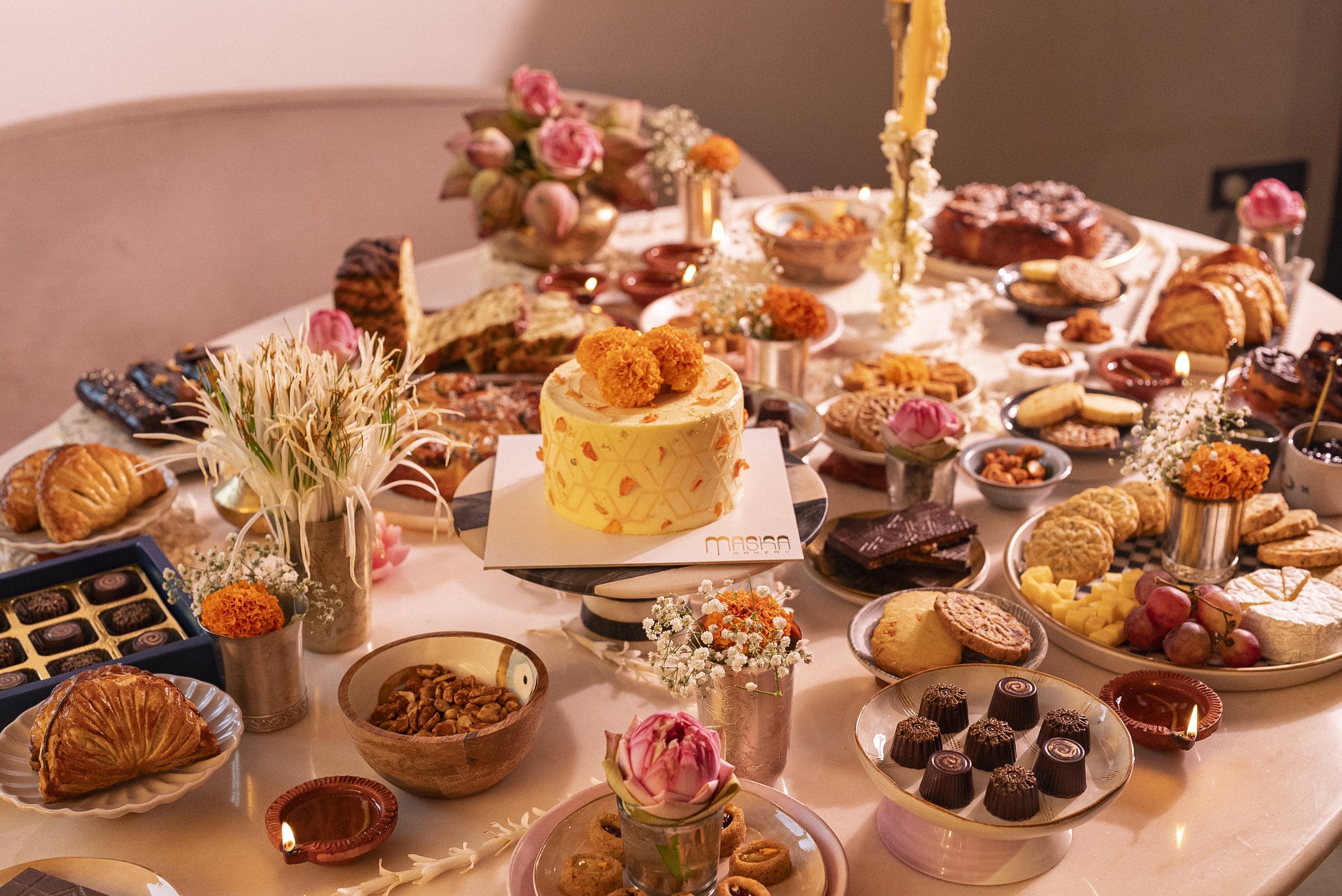
Formerly a designer for Indie fashion brand, Raw Mango, he carries that sensibility forward into his sculptural bakes, the tablescapes he designs, and most recently, a delicious limited-edition capsule for Daily Objects. It’s why we love working with him at Goya. He is able to bring a playful, modern tone to every partnership, whether it’s the Food Nerd Festival, or a celebration of Delhi’s hidden cuisines — laying out spectacular tables for communities that feed the city, and are so often invisible, and unacknowledged.
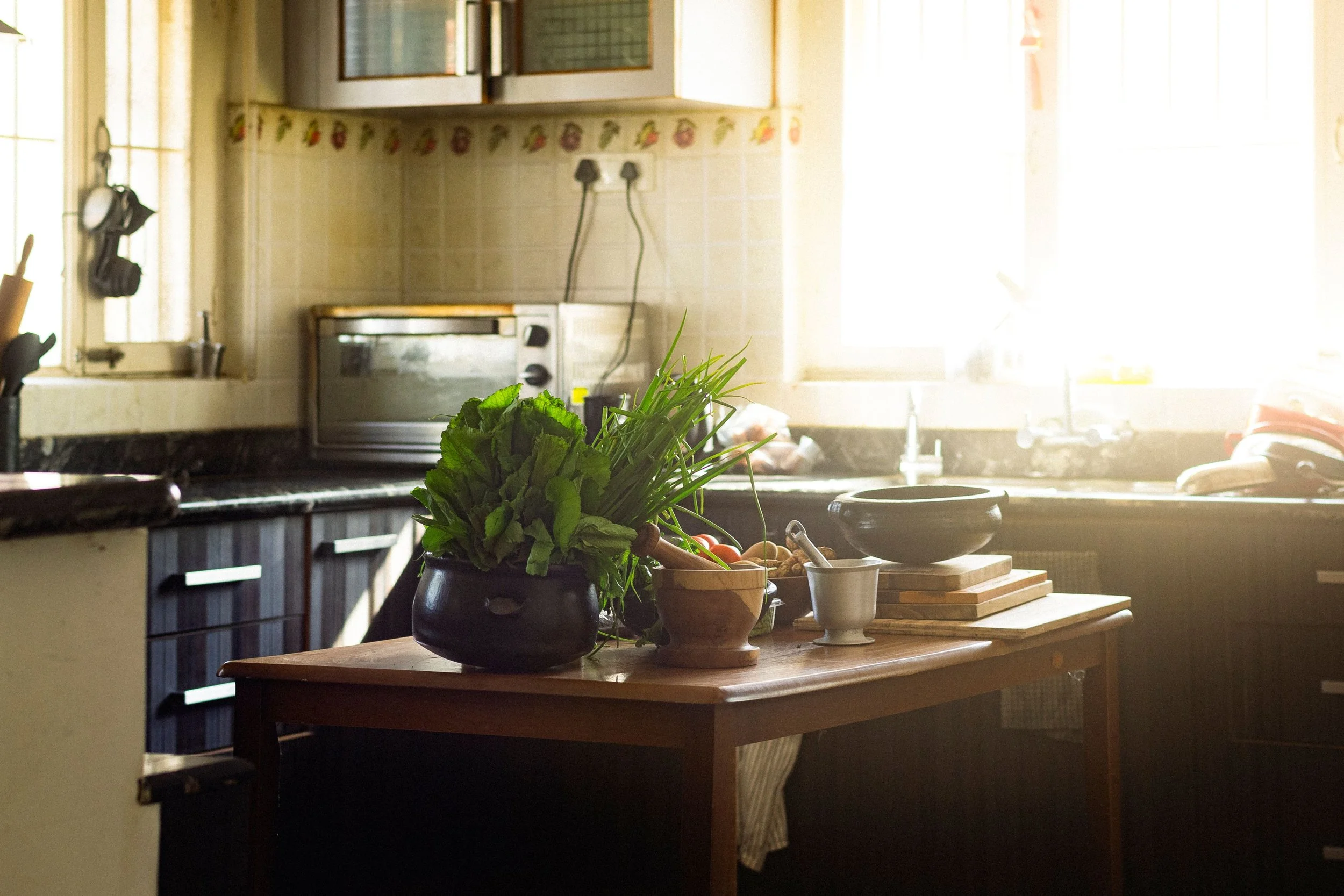
Today, we visit him in his kitchen in Koramangala. Off-duty, he is in denim shorts and a blue apron. His workstation is a black marble countertop, gleaming and beautifully veined. At the centre, a worktable holds fresh greens and ripe tomatoes, arranged across an assortment of baskets and pots.
“Come in,” he says, smoothly maneuvers us around the breakfast bar to give us the grand tour. “These I got from Karnataka Ham shop,” he points to slices of pink pork resting in a wok by the window. “It’s the best — we actually prefer it over the smoked pork we get from home.” He laughs at our shocked expressions.
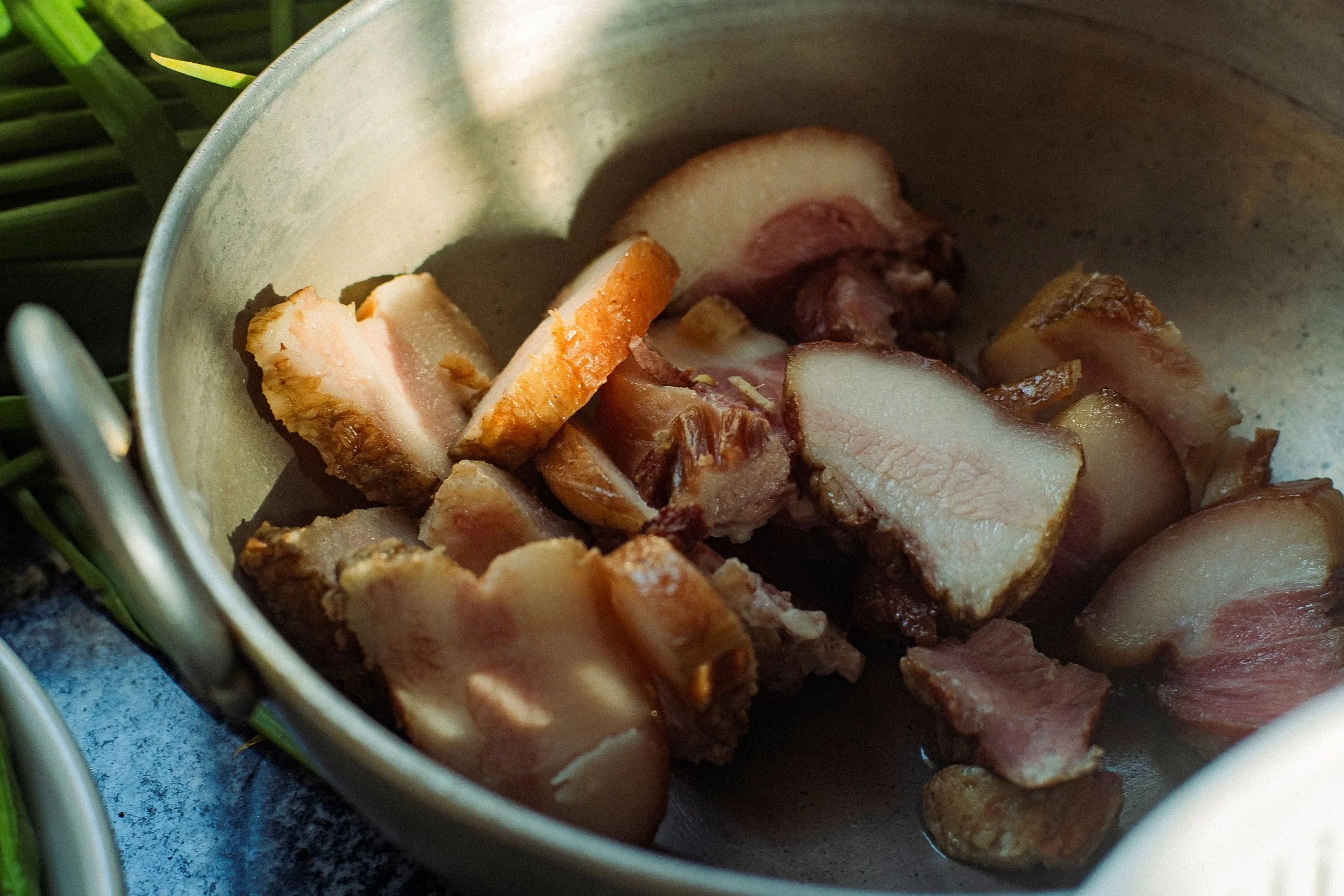
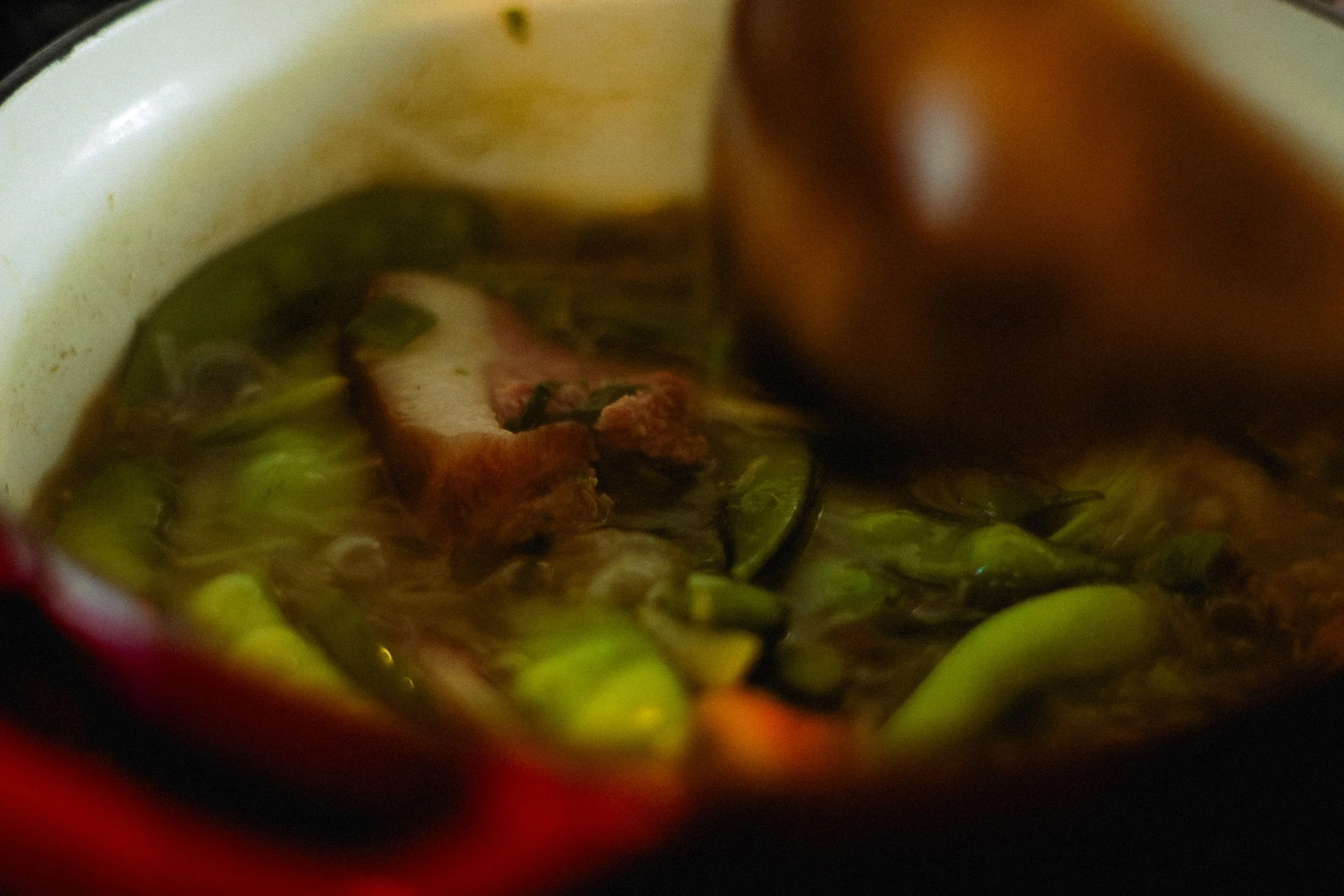
He’s making Kangsoi, or a Manipuri Jantong. “Jang means simple, tong means stew. We’re making, basically, it’s a simple stew.” Traditionally, the dish leans on fermented fish, smoked fish, and a generous hand with chilli. But this version skews closer to a Salam family favourite, than to a strict Meitei or Manipuri recipe. “It’s what I've learned through the years.” Daksha says. “An amalgamation of what I ate growing up in Assam, what my friends from Nagaland taught me, what my mom and dad cooked for us.”
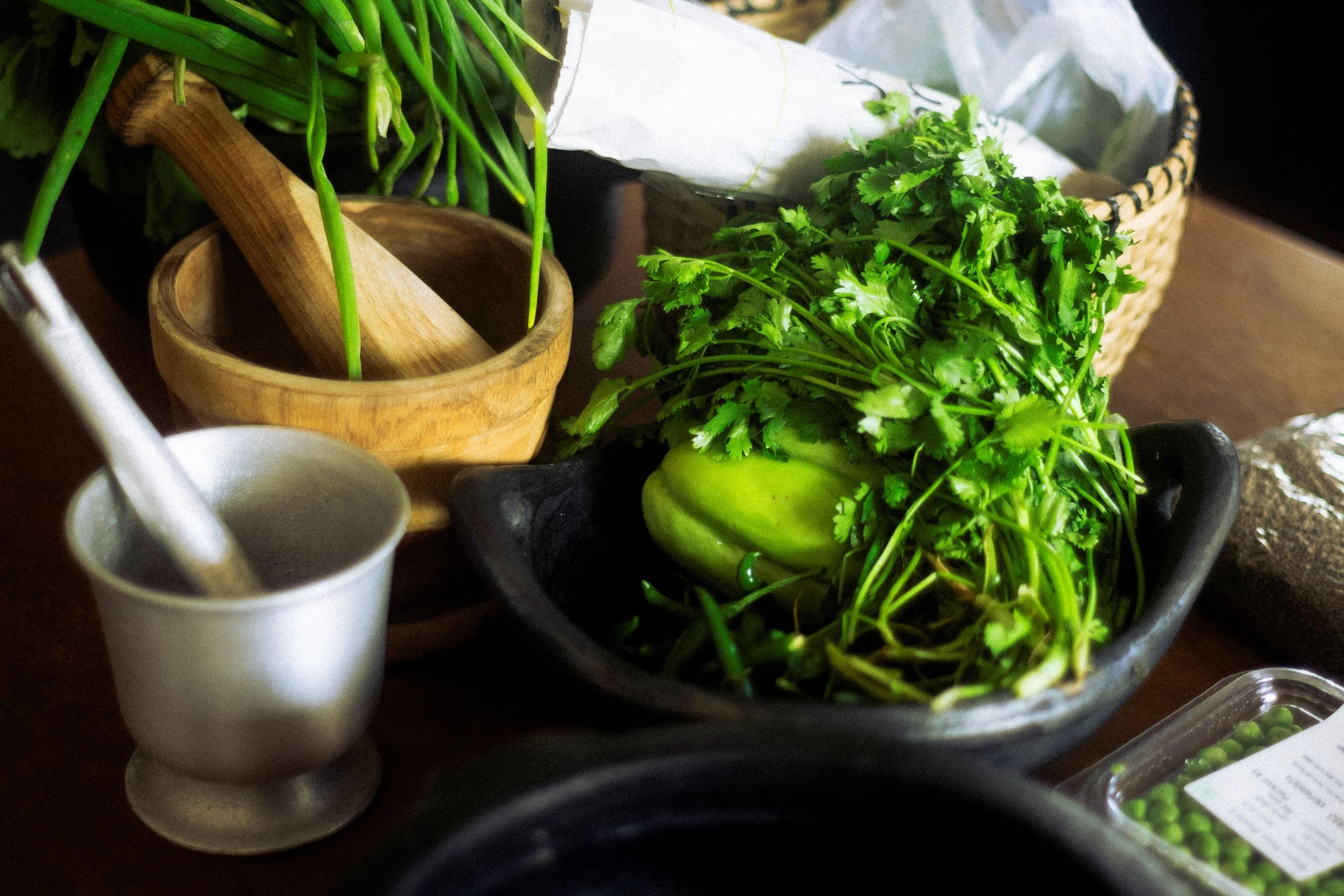
On the worktable, black Nungbi pots hold emerald green nakuppi; market haul from Ejipura, a neighbourhood that is home to a large community from the North East. “It looks like chives, but it’s a bit different,” he says, snapping a stem and holding it out. “Ejipura really has everything well almost everything.” He was home in Manipur just a few weeks ago and returned with the fattest red ginger from Mo village. “The flavour on those! Mom couldn’t wait for me to taste it.”
“She never really taught us how to cook,” he clarifies. Kat, his sister — and one half of the Nari & Kage partnership — nods as she joins us in the kitchen. “She never sat us down and said, here, these are the ingredients. We just watched her and just understood. Okay, that’s how much you put in.” Cooking was always been part of who he was — knowing what was going on the table. “I was so attached to my mom and grandma, the women in the household. They were always in the kitchen, so I was always in the kitchen. I was female when I was in the kitchen.”
He sets a pot to simmer, and a cloud of mist rises in the afternoon light. It’s exactly what his eye is drawn to as a designer, now purveyor of great ingredients. “Was I drawn to food? Forever. Food and flavours.” His favourite meal is disarmingly simple — a river fish from Manipur, called Ukabi, roasted on open flame, eaten with rice and a bit of salt. “I’m a minimalist with big flavours.”
But food and art were never far apart. Daksha has been putting them together effortlessly for as long as he can remember: adding a flower to a vase, absent-mindedly introducing beauty into every scene he occupies.
“I also did love my aunt’s little tailoring shop,” he says. “They’s give me like a scrap of paper and I’d just run an empty needle through them. I loved it. I guess whatever you pay attention to eventually blossoms into something.”
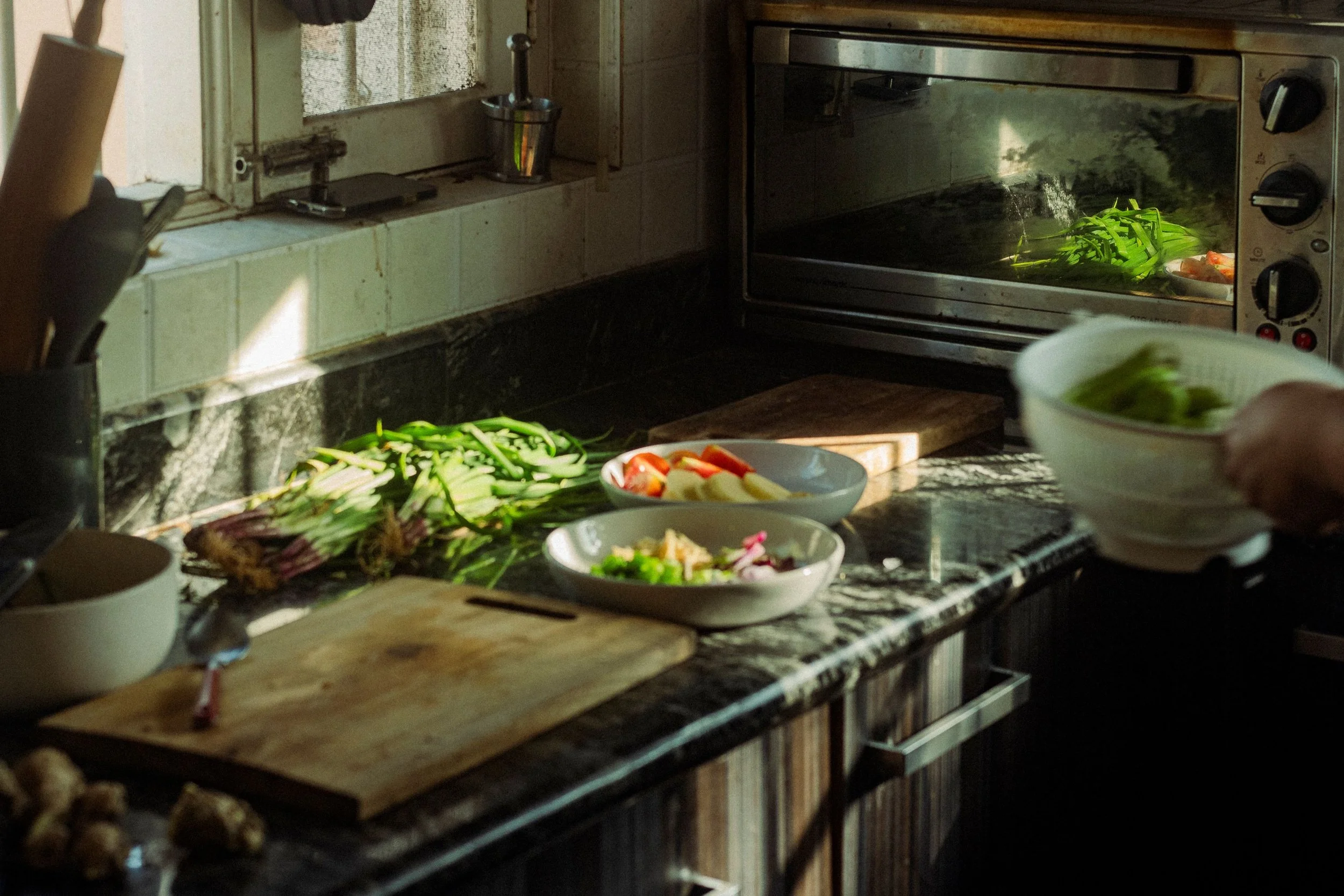
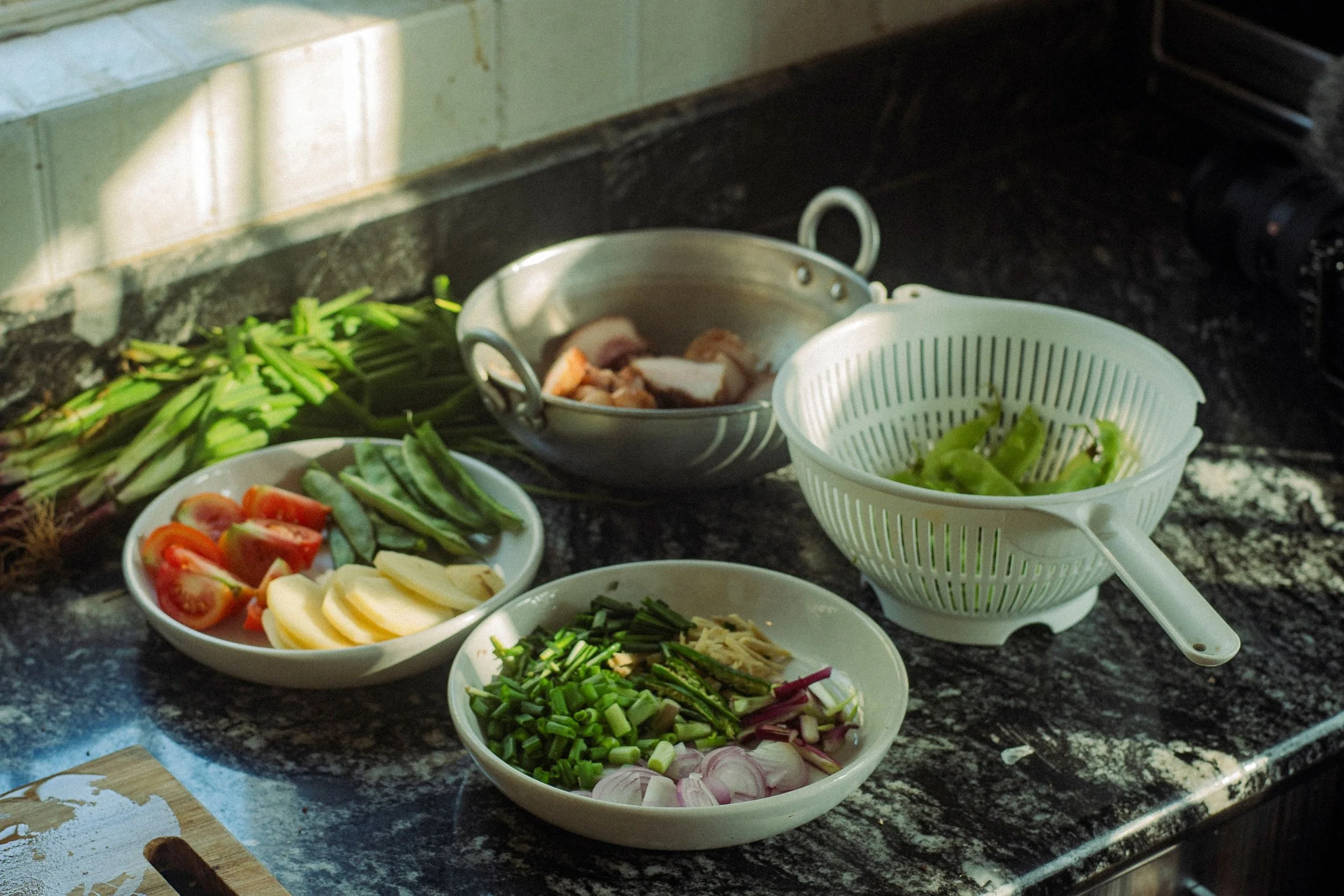
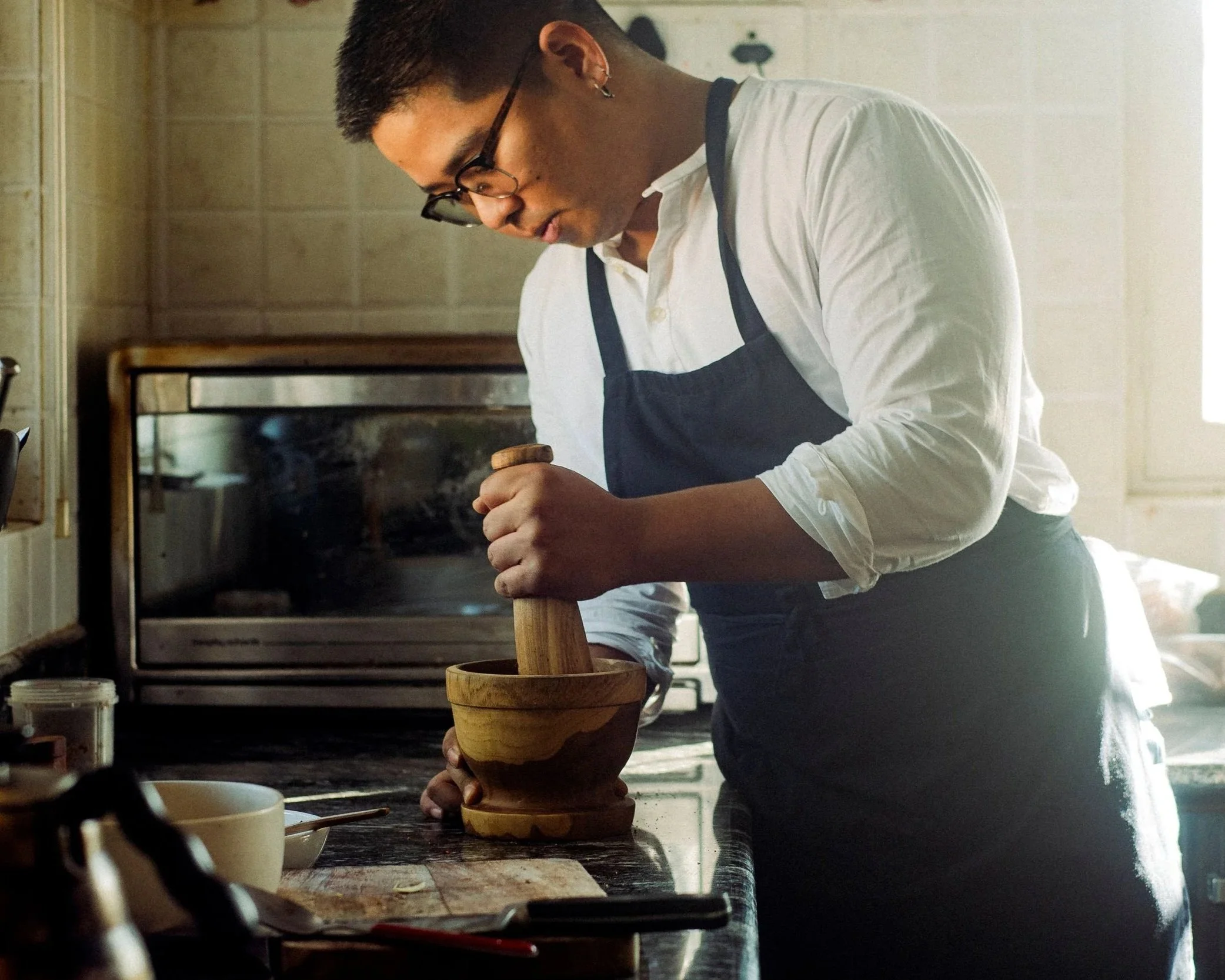
His kitchen softly glimmers in the afternoon sun. Flat beans, perilla seeds (“we call it toiting”), thick mustard greens, clean rounds of potato. Thin matchsticks of ginger perfume the air. As Daksha grinds ginger on a mortar and pestle, he points out that he keeps a second set. “This one’s for smaller, finer things,” he explains. “The broader flat base is great for raw ingredients, or larger quantity roasted tomatoes, chutneys, brinjal, maybe some fermented fish and chilli. Put it in here, add some salt, and it creates a kind of magic.
The space is filled with small, beautiful things gathered from his travels — ingredients and crockery alike. He admits that he’s stopped shopping for clothes on trips, returning instead with suitcases full of food. His most recent haul from Hong Kong includes sauces, condiments and dried meat; from Chiang Mai, sausages, fermented fish sauce, and chilli.
Strange, the things we inherit from our parents. “I always leave a little bit behind,” Daksha says, referring to his habit of never using up an entire portion he’s prepped. “I didn’t know you did it too!” “I don’t know who we leave it for — or why — but I do it as well,” Kat laughs.
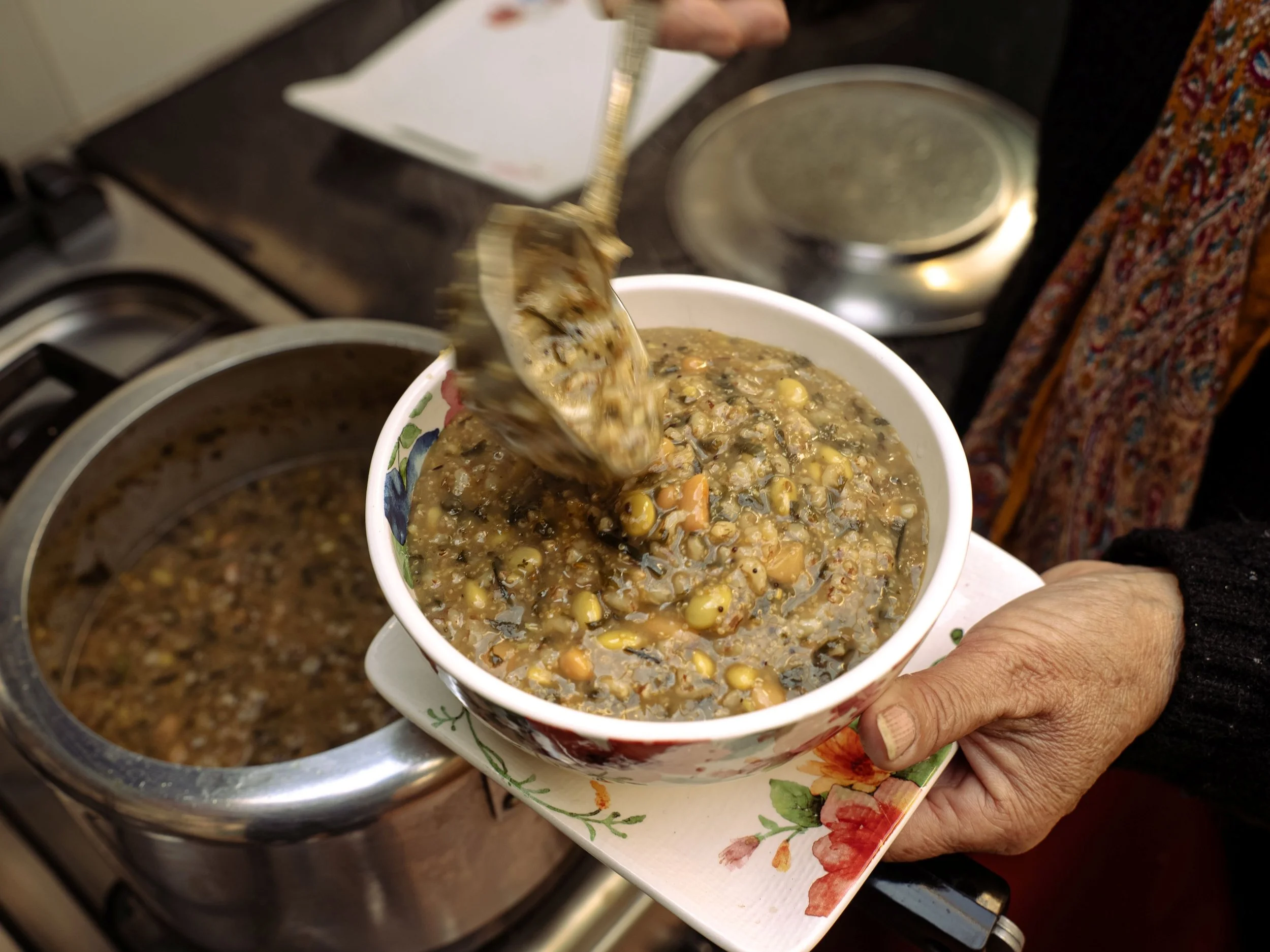
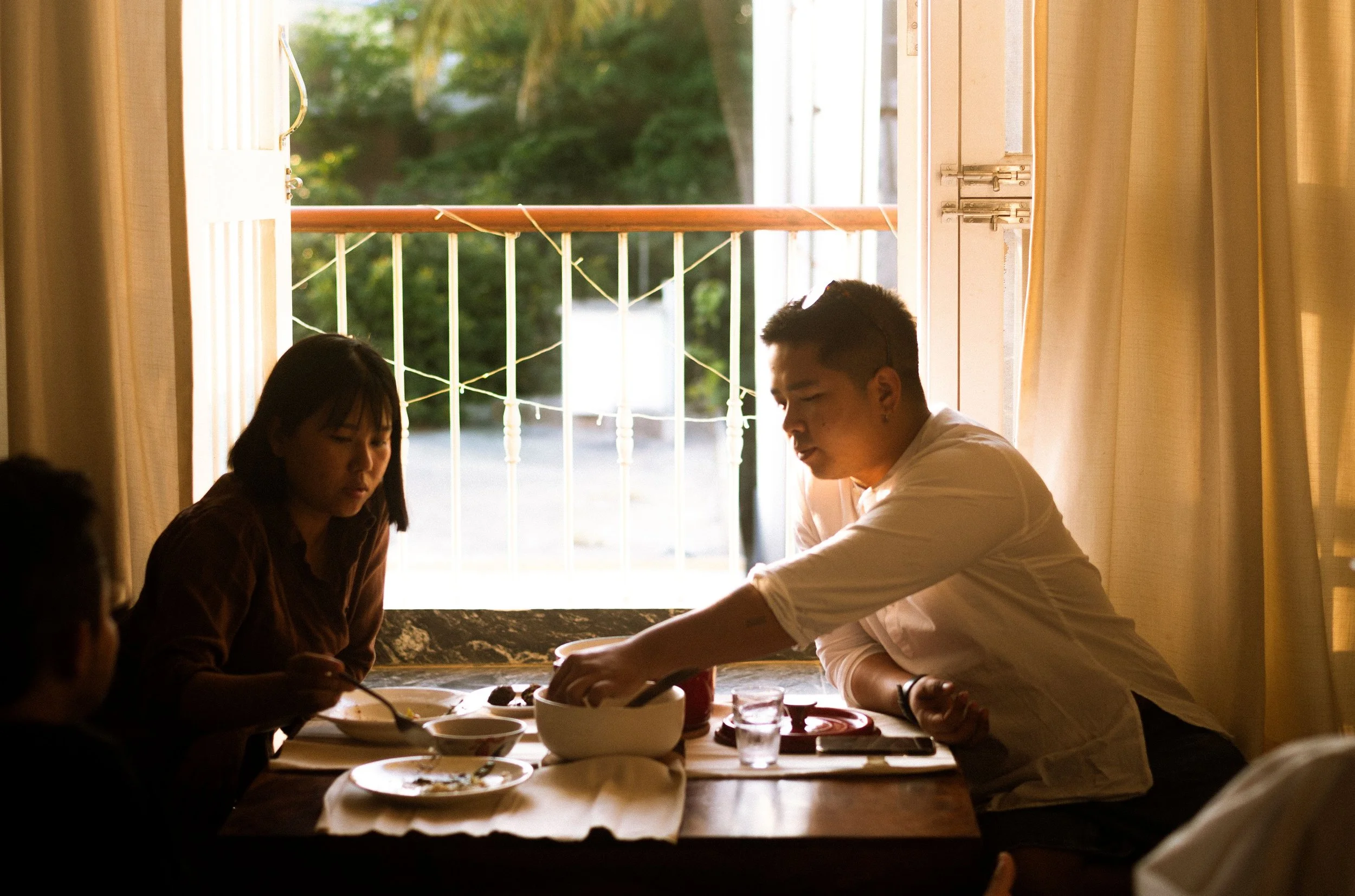
Later, they sit by the window, on cushions around a low table, Daksha serves rice into each plate, then spoons the stew generously over. There’s a small bowl of chutney that is served on the side. There’s greens from young peas and red from the tomato, and a smoky richness from the pork, flavouring everything.
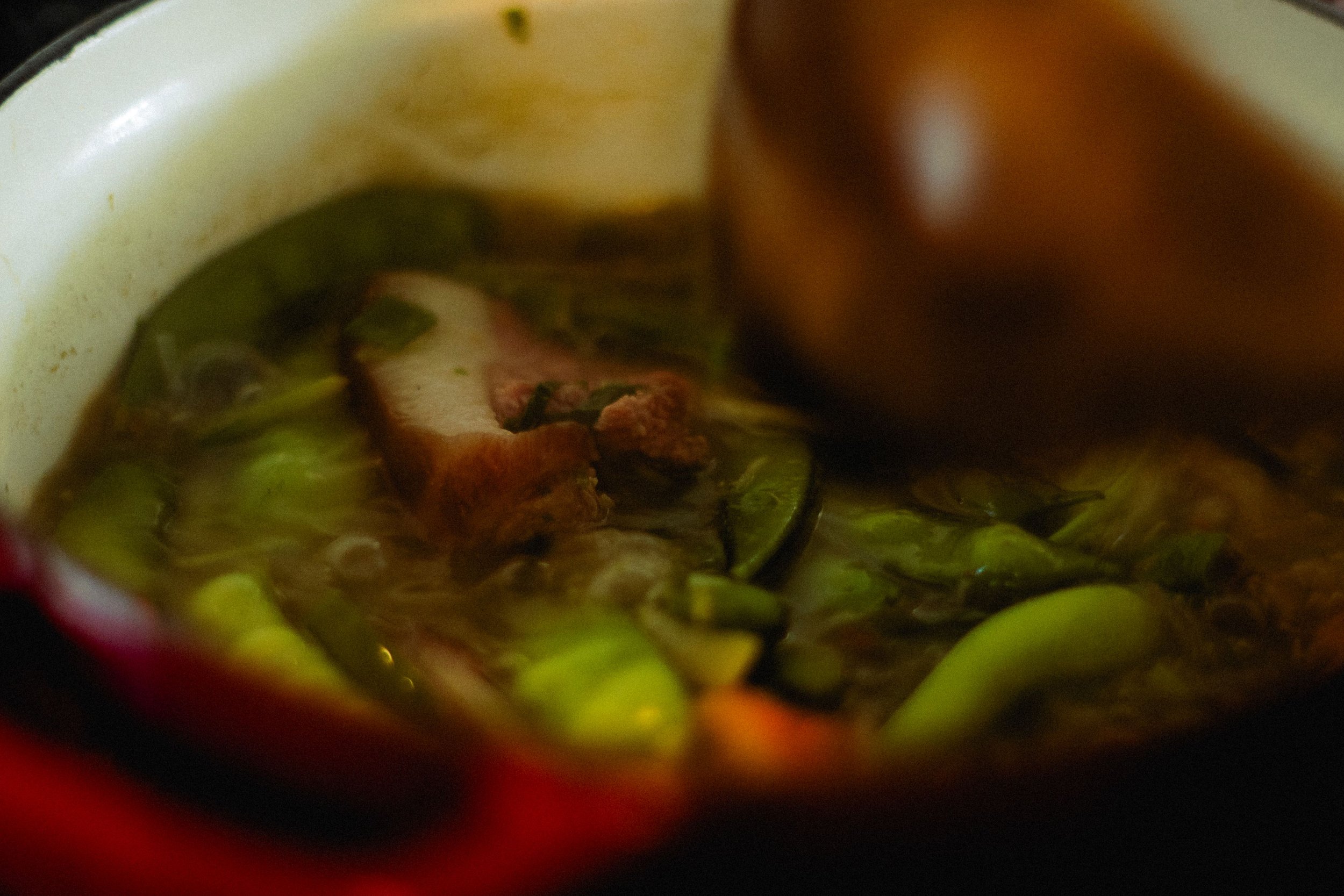
RECIPE FOR KANGSOI & THOIDING ASUBA
Ingredients
2 potatoes, peeled and thinly sliced (approx. 1 mm thick)
80 g hooker chives
2-3 green chillies, slit lengthwise (adjust to spice preference)
1 tomato, cut into thin crescent wedges (8 parts)
1 onion / 2 spring onions, large, thinly sliced
1 thumb ginger, peeled and finely mashed
1–2 small fish roasted fermented fish (ngaari)
A dozen flat peas, trimmed
80 g wild beans
200 g smoked pork, sliced very thin (approx. 0.5 mm)
cilantro, finely chopped
Method
To make kangsoi, prepare and cut all vegetables and aromatics as specified.
Bring a pot of water to a rolling boil.
Add the green chillies, sliced onions, hooker chives, smoked pork, and mashed ginger to the pot.
Roast the fermented fish (ngaari) over an open flame until aromatic; set aside.
Remove the green chillies from the pot. In a mortar, mash them with the roasted ngaari and a ladle of hot broth.
Return this mixture to the stew and stir gently.
Add the wild beans, potatoes, flat peas, and tomato.
Cover and simmer for approximately 10 minutes, until the vegetables are tender and the broth is well infused.
Finish with chopped cilantro, adjust salt, and remove from heat.
Words by Anisha Oommen. Photographs by Bhavya Pansari.
Special thanks to your partners.

ALSO ON GOYA